
Digital Radiology Market Demand, Trends & Forecast by 2034
Coverage: by Type (Stationary Digital Radiology Systems, Portable Digital Radiology Systems); Method (Computed Radiography (CR), Direct Radiography (DR)); Application (Cardiovascular Imaging, Chest Imaging, Dental Imaging, Mammography Imaging, Orthopedic Imaging, Others); End User (Hospitals and Clinics, Diagnostic Centers, Others), and Geography (North America, Europe, Asia Pacific, and South and Central America)
- Status : Data Released
- Report Code : TIPRE00007756
- Category : Life Sciences
- No. of Pages : 151
- Available Report Formats :


- Last update date : July 08, 2026


2025 Market Size
US$ 1.69 Bn
Base year value
2034 Forecast
US$ 2.32 Bn
Projected by 2034
CAGR 2026-2034
3.59 %
Growth rate
Addressable Market
US$ 18.22 Bn
(2026-2034)
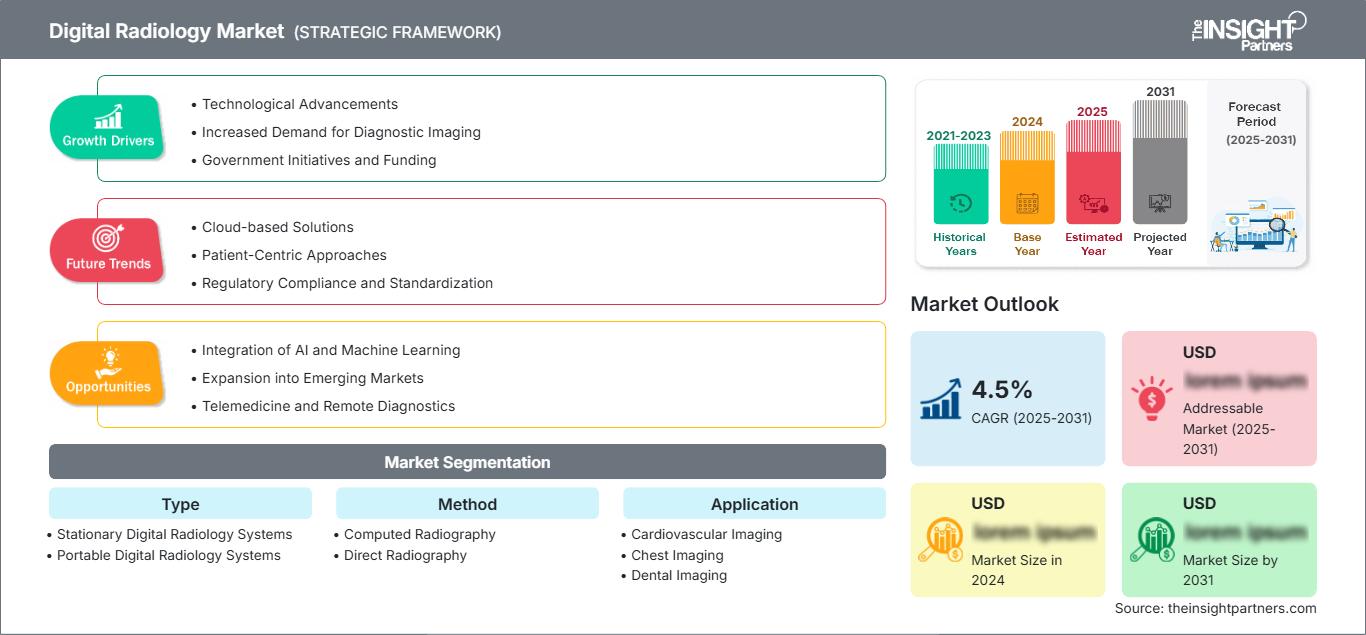
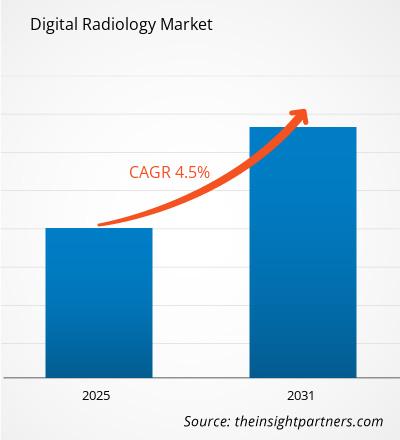
The digital radiology market is valued at US$ 1.69 billion in 2025 and is projected to reach US$ 2.32 billion by 2034, advancing at a CAGR of 3.59% during 2026–2034. The market continues to benefit from the replacement of conventional film-based imaging systems, growing demand for rapid diagnostic workflows, and increasing integration of digital imaging into healthcare networks. Advances in detector technology, image processing software, and workflow automation are further strengthening the role of digital radiology across clinical settings.
North America remains a pivotal contributor to the digital radiology market and is anticipated to expand at an estimated CAGR of around 3.2% through 2034. Growth is supported by high healthcare expenditure, widespread adoption of advanced diagnostic imaging infrastructure, and continuous modernization of hospital radiology departments. Rising demand for early disease detection, combined with increasing utilization of portable imaging solutions in emergency and intensive care environments, further supports regional market development.
Digital Radiology Market Assessment and Insights
- North America: North America accounted for 36–40% of the digital radiology market share in 2025 and is anticipated to expand at a CAGR of 3.2%–3.7% during 2026–2034. High digital imaging penetration, replacement of legacy radiography systems, and increasing demand for diagnostic imaging across hospitals continue to support regional market leadership.
- U.S.: The U.S. represented 82–86% of the North American digital radiology market size in 2025 and is projected to register a CAGR of 3.3%–3.8% during 2026–2034, supported by widespread adoption of digital radiography technologies, ongoing healthcare infrastructure modernization, and rising diagnostic imaging volumes.
- Europe: Europe held 27–31% of the digital radiology market share in 2025 and is expected to grow at a CAGR of 3.1%–3.6% during 2026–2034. Germany, the United Kingdom, and France remain the leading regional markets due to established healthcare infrastructure and continuous modernization of diagnostic imaging technologies.
- Asia Pacific: Asia Pacific accounted for 24–28% share in 2025 and is forecast to expand at a CAGR of 4.2%–4.7% during 2026–2034. China, Japan, and India continue to drive regional growth through increasing healthcare infrastructure investments, growing patient volumes, and rapid adoption of digital healthcare technologies.
- Largest Segment: End User – Hospitals and Clinics represented the largest market segment and is expected to record a CAGR of 3.4%–3.9% during 2026–2034, reflecting high diagnostic imaging procedure volumes and continued investments in advanced imaging infrastructure.
- High Growth Segment: Product – Portable Digital Radiology Systems is projected to grow at a CAGR of 4.8%–5.3% during 2026–2034, driven by increasing demand for point-of-care imaging, emergency diagnostics, and mobile healthcare delivery.
- Key companies analyzed in detail: Agfa-Gevaert NV; Canon Inc.; Carestream Health, Inc.; FUJIFILM Holdings Corporation; Hologic, Inc.; Koninklijke Philips N.V.; PROTEC GmbH & Co. KG; Shimadzu Corporation; Siemens Healthineers AG; and GE HealthCare Technologies Inc.
Source: The Insight Partners' analysis based on proprietary research, government publications, company annual reports, investor presentations, industry databases, and expert interviews.
The digital radiology market report has progressed from a technology replacement cycle toward a broader clinical efficiency strategy. Healthcare providers increasingly rely on digital radiology systems to improve diagnostic accuracy, reduce examination times, and streamline image sharing across departments. The convergence of advanced detectors, cloud connectivity, and intelligent software has transformed radiology into a more integrated component of patient management pathways.
Digital radiology market prospects remain supported by the growing prevalence of cardiovascular diseases, orthopedic disorders, respiratory conditions, and cancer screening programs. Healthcare systems are emphasizing productivity gains and diagnostic consistency, encouraging investments in next-generation radiography platforms. Vendors are focusing on workflow optimization, portability, and artificial intelligence capabilities to differentiate their offerings and address evolving clinical requirements.
Digital Radiology Market Report Scope
| Report Attribute | Details |
|---|---|
| Market size in 2025 | US$ 1.69 Billion |
| Market Size by 2034 | US$ 2.32 Billion |
| Global CAGR (2026 - 2034) | 3.59% |
| Historical Data | 2021-2024 |
| Forecast period | 2026-2034 |
Digital Radiology Market Analysis
Healthcare providers are focusing on imaging technologies that offer faster acquisition times, higher image quality, and seamless integration with electronic medical records. Digital radiology systems meet these needs by allowing immediate access to images, cutting down on repeat exams, and facilitating remote consultations. The rising number of patients in hospitals and diagnostic centers keeps driving the demand for efficient imaging infrastructure.
The value chain includes detector manufacturers, imaging equipment suppliers, software developers, healthcare providers, and service organizations. Digital radiology is increasingly part of connected healthcare systems, where image acquisition, storage, interpretation, and reporting are combined into cohesive workflows. This interconnected setup improves operational efficiency and speeds up diagnostic turnaround times.
Competition is mainly among well-known imaging technology firms like Canon Inc., FUJIFILM Holdings Corporation, Siemens Healthineers AG, Koninklijke Philips N.V., and Agfa-Gevaert N.V. Product differentiation now focuses on workflow intelligence, detector performance, dose optimization, and mobility features.
Investment is aimed at AI-assisted imaging, portable radiography systems, cloud-enabled diagnostics, and service-based business models. Companies are positioning themselves based on long-term partnerships with healthcare providers, local manufacturing capabilities, and software systems that boost clinical productivity. Vendors are also working on strengthening service networks to ensure equipment uptime and manage lifecycle needs.
● REPORT CUSTOMIZATION
Tailor This Report To Align With Your Specific Business Requirements
This report can be customized to align precisely with your business objectives, scope, and target markets. Customization options include tailored segmentation, geography, competitive analysis, and strategic insights to support informed decision-making.
Customize This Report →WHAT YOU CAN ADJUST
- ● Segmentations
- ● Geography
- ● Competitive Analysis
- ● Language Preferences
Digital Radiology Market: Strategic Insights
Regional Insights
North America Digital Radiology Market
North America has the largest share of the digital radiology market and is expected to grow at an estimated rate of about 3.2% through 2034. The region benefits from a strong healthcare system, high use of diagnostic imaging, and ongoing technology improvements. Hospitals are investing in digital imaging systems to enhance workflow efficiency and support value-based healthcare efforts.
The area also enjoys established reimbursement systems, a skilled radiology workforce, and a broad use of AI-assisted imaging technologies. The increasing demand for chest imaging, cardiovascular diagnostics, and orthopedic assessments drives ongoing replacement of equipment and upgrades of software.
US Digital Radiology Market
The U.S. makes up about 75 to 80% of the North American digital radiology market and is projected to grow at a compound annual growth rate of around 3.1% during the forecast period. The country's large network of hospitals and many imaging machines create steady demand for updates and replacement projects.
Major companies like Canon, Carestream Health, FUJIFILM, Hologic, Philips, and Siemens Healthineers have a strong presence across the country. Uses such as emergency imaging, mammography, cardiovascular diagnostics, and orthopedic exams continue to drive demand. The growing use of portable radiography systems in urgent care settings also aids market growth.
Europe Digital Radiology Market
Europe makes up about 25 to 30% of global market revenue and is expected to see a CAGR of nearly 3.3% through 2034. The region benefits from strong healthcare systems, established diagnostic imaging standards, and ongoing investments in digital healthcare transformation. Germany leads the national market due to its well-developed healthcare infrastructure and high adoption of modern medical technologies.
The need to replace old imaging equipment and the focus on efficient radiology workflows are driving investment. Healthcare providers increasingly look for systems that can support integrated diagnostics and image sharing across facilities.
The presence of major manufacturers and research institutions also helps drive technological progress in the region. AI-driven imaging solutions, dose optimization technologies, and mobile radiography platforms are gaining more acceptance among healthcare providers.
United Kingdom: The UK digital radiology market benefits from healthcare digitization efforts and rising demand for efficient diagnostic processes. Investment in imaging modernization programs and a greater focus on early disease detection support the adoption of advanced digital radiology systems.
Germany: Germany continues to lead in Europe due to its strong hospital infrastructure, high use of diagnostic imaging, and advanced healthcare ecosystem. Ongoing equipment upgrades and partnerships for innovation help maintain its market leadership.
France, Italy, and Spain: These countries are seeing a rise in the adoption of digital imaging technologies as healthcare facilities upgrade their diagnostic capabilities. The expansion of screening programs and a stronger emphasis on operational efficiency support market growth.
Asia Pacific Digital Radiology Market
Asia Pacific is expected to be the fastest-growing regional market, with an estimated CAGR over 4.5% through 2034. The region accounts for around 22% to 27% of global revenue and benefits from expanding healthcare infrastructure, rising healthcare spending, and increased awareness of diagnostics.
China leads the regional digital radiology market due to significant healthcare investments, a large number of patients, and better access to diagnostic services. Government programs that focus on improving healthcare infrastructure continue to support the uptake of digital radiology technologies.
Japan, South Korea, India, and Australia also help drive regional growth by upgrading technology, dealing with rising rates of chronic diseases, and increasing the use of advanced imaging systems. A growing focus on making healthcare more accessible and adopting digital solutions further boosts the market's long-term potential.
Middle East and Africa Digital Radiology Market
The Middle East and Africa digital radiology market is expected to grow at a rate of about 4.0% each year until 2034. Ongoing development of healthcare infrastructure and rising investments in diagnostic tools are creating chances for digital radiology vendors in the region.
Saudi Arabia leads the national digital radiology market due to significant healthcare modernization projects and continuous investment in modern medical technologies. The UAE is also seeing a rise in the use of digital imaging solutions in both public and private healthcare facilities.
South Africa is an important market in Africa, supported by better healthcare infrastructure and growing demand for diagnostic services. Wider regional development efforts are promoting the use of digital radiology systems in hospitals, specialty clinics, and diagnostic centers.
Segmentation Analysis
Type
- Stationary Digital Radiology Systems – Widely utilized in hospitals and high-volume imaging facilities due to superior throughput, comprehensive imaging capabilities, and integration with advanced diagnostic workflows supporting multiple clinical specialties.
- Portable Digital Radiology Systems – Experiencing strong adoption in emergency departments, intensive care units, and mobile healthcare environments where flexibility, rapid imaging access, and bedside diagnostics are critical.
Method
- Computed Radiography – Maintains relevance in facilities transitioning from conventional imaging environments, offering cost-effective digitization while supporting moderate-volume diagnostic workflows and operational flexibility.
- Direct Radiography – Increasingly preferred for delivering faster image acquisition, enhanced image quality, and streamlined workflow performance, making it a key technology across advanced healthcare settings.
Application
- Cardiovascular Imaging – Supports diagnosis and monitoring of cardiac conditions through rapid imaging capabilities and improved visualization of cardiovascular structures.
- Chest Imaging – Represents a major application area due to widespread use in respiratory disease diagnosis, infection monitoring, and routine clinical assessments.
- Dental Imaging – Benefits from increasing demand for digital diagnostics, treatment planning accuracy, and efficient patient management within dental practices.
- Mammography Imaging – Driven by expanding breast cancer screening programs and technological advancements that improve detection sensitivity and workflow efficiency.
- Orthopedic Imaging – Maintains significant demand owing to musculoskeletal disorders, trauma cases, and growing requirements for surgical planning and follow-up evaluations.
End User
- Hospitals and Clinics – Account for the largest market contribution due to high imaging volumes, broad clinical applications, and continuous investment in diagnostic infrastructure.
- Diagnostic Centers – Growing steadily as specialized imaging providers expand service offerings and adopt advanced technologies to improve operational efficiency.
Opportunity Snapshot
| Hospitals and Clinics | High | Workflow AI | Mature |
| Diagnostic Centers | Medium | Imaging Access | Scaling |
| Others | Low | Mobile Care | Emerging |
Digital Radiology Market Growth Drivers and Impact Analysis
Expansion of Chronic Disease Diagnostics
The rise in cardiovascular disorders, respiratory diseases, orthopedic conditions, and cancer is driving a steady demand for diagnostic imaging services around the world. Healthcare providers need dependable imaging platforms that can support early detection, disease monitoring, and treatment planning. Digital radiology systems allow for quick image acquisition and boost diagnostic confidence, making them vital to modern healthcare.
This demand significantly affects the market as healthcare facilities expand their imaging capacity to manage the increasing number of patients. Digital radiology allows for quicker workflows and better use of resources, helping institutions meet rising diagnostic needs while keeping operations efficient. As chronic diseases continue to increase globally, investing in imaging infrastructure will remain a key priority for healthcare.
Transition Toward Integrated Digital Healthcare Ecosystems
Healthcare organizations are increasingly using integrated digital platforms to connect imaging, patient records, clinical decision support tools, and reporting systems. Digital radiology is key in these setups, as it enables easy image sharing and cross-departmental, cross-facility teamwork in diagnostics.
This shift is affecting purchasing decisions, with healthcare providers focusing on systems that support interoperability and workflow improvements. Vendors that provide complete software integration, cloud connectivity, and strong data management features are boosting their competitive edge. This trend is also leading to the replacement of outdated systems that do not work with modern healthcare infrastructure needs.
Growing Demand for Portable and Point-of-Care Imaging
Portable digital radiology solutions are becoming increasingly important in emergency medicine, critical care, military healthcare, and remote clinical settings. These systems allow clinicians to obtain diagnostic-quality images at the point of care, reducing patient movement and improving clinical efficiency.
Consequently, the implications go beyond the conventional hospital setting. Providers are bringing imaging services closer to remote locations that require mobile capabilities. Companies continue to develop new ways to make machines lightweight, energy-efficient, and compatible with wireless connectivity, creating new opportunities across various healthcare segments.
Digital Radiology Market Future Trends
Artificial Intelligence Integration Across Imaging Workflows
Artificial intelligence is moving beyond image interpretation into broader radiology workflow management. Advanced algorithms are increasingly assisting with image acquisition optimization, quality control, triage prioritization, and report generation. Reflecting digital radiology market trends, these capabilities help providers tackle staffing challenges while boosting efficiency.
The future will see adoption accelerate as regulatory regimes continue to evolve and clinical validation becomes widespread. AI technologies may play an increasingly large role in the standardization of imaging diagnostics, reducing inconsistencies in interpretations and improving efficiency throughout the process in imaging centers.
Cloud-Enabled Radiology Infrastructure Expansion
Medical image storage, retrieval, and analysis are being transformed through cloud technologies. Organizations in the healthcare industry have been embracing cloud-based imaging environments to increase scalability, promote collaboration, and enable healthcare networks.
The trend is expected to continue as healthcare companies adopt cloud infrastructure to streamline their operations. Cloud radiology technology can enable tele-radiology, multisite imaging activities, and analytical software. Such features may become more relevant as healthcare providers focus on interoperability and digital transformation.
Digital Radiology Market Opportunities
Healthcare Infrastructure Development in Emerging Economies
Rapid expansion of healthcare infrastructure across emerging markets presents a significant opportunity for digital radiology providers. Governments and private healthcare operators are investing in diagnostic capabilities to improve healthcare accessibility and address growing disease burdens. Many facilities are bypassing legacy technologies as the digital radiology market forecast evolves.
Firms that develop robust regional distribution channels, localized manufacturing capabilities, and customized product ranges stand to gain from such investments. Long-term possibilities range from mere hardware sales to maintenance contracts, software updates, training services, and total life cycle solutions.
Specialized Imaging Solutions for Targeted Clinical Applications
Imaging devices tailored to specific workflows are in high demand among healthcare institutions – namely, mammography, orthopedics, cardiology, and emergency room imaging. Hence, there is room to develop more targeted solutions that suit specific workflow needs.
Investment may be made in developing sophisticated detection equipment, workflow software, AI-based medical applications, and portable imaging devices designed for narrow application scenarios. Organizations that can demonstrate their added value to healthcare facilities will gain a stronger foothold in this market segment.
Recent Developments
- July 2025: FUJIFILM Holdings Corporation launched the FDR Go iQ portable digital radiography system in the United States, introducing a lightweight mobile imaging platform designed for bedside imaging in hospitals and ambulatory surgery centers. The system emphasizes mobility, workflow efficiency, and image quality improvements for point-of-care diagnostics.
- November 2025: Siemens Healthineers AG introduced Optiq AI, an AI-powered imaging chain designed to improve image quality while maintaining low radiation doses across advanced imaging platforms. The development highlights the growing role of artificial intelligence in enhancing imaging performance and supporting increasingly complex image-guided procedures.
- November 2025: Hologic, Inc. announced new clinical evidence demonstrating the effectiveness of its AI-powered mammography technologies in supporting radiologist workflows and cancer detection. The studies presented at RSNA reinforced industry interest in AI-enabled breast imaging solutions and workflow optimization tools.
Frequently Asked Questions

- Comprehensive Market Sizing and Forecast Analysis
- Detailed Segmentation Analysis
- In-Depth Market Dynamics Assessment
- Regional and Country-Level Insights
- Competitive Landscape and Company Benchmarking
- Strategic Business Intelligence
Recent Reports
Testimonials

The Insight Partners' SCADA System Market report is comprehensive, with valuable insights on current trends and future forecasts. The team was highly professional, responsive, and supportive throughout. We are very satisfied and highly recommend their services.
RAN KEDEM Partner, Reali Technologies LTDs
I requested a report on a very specific software market and the team produced the report in a few days. The information was very relevant and well presented. I then requested some changes and additions to the report. The team was again very responsive and I got the final report in less than a week.
JEAN-HERVE JENN Chairman, Future Analytica
We worked with The Insight Partners for an important market study and forecast. They gave us clear insights into opportunities and risks, which helped shape our plans. Their research was easy to use and based on solid data. It helped us make smart, confident decisions. We highly recommend them.
PIYUSH NAGPAL Sr. Vice President, High Beam Global
The Insight Partners delivered insightful, well-structured market research with strong domain expertise. Their team was professional and responsive throughout. The user-friendly website made accessing industry reports seamless. We highly recommend them for reliable, high-quality research services
YUKIHIKO ADACHI CEO, Deep Blue, LLC.
This is the first time I have purchased a market report from The Insight Partners.While I was unsure at first, I visited their web site and felt more comfortable to take the risk and purchase a market report.I am completely satisfied with the quality of the report and customer service. I had several questions and comments with the initial report, but after a couple of dialogs over email with their analyst I believe I have a report that I can use as input to our strategic planning process.Thank you so much for taking the extra time and making this a positive experience.I will definitely recommend your service to others and you will be my first call when we need further market data.
JOHN SUZUKI President and Chief Executive Officer, Board Director, BK Technologies
I wish to appreciate your support and the professionalism you displayed in the course of attending to my request for information regarding to infectious disease IVD market in Nigeria. I appreciate your patience, your guidance, and the fact that you were willing to offer a discount, which eventually made it possible for us to close a deal. I look forward to engaging The Insight Partners in the future, all thanks to the impression you have created in me as a result of this first encounter.
DR CHIJIOKE ONYIA MANAGING DIRECTOR, PineCrest Healthcare Ltd.Reason to Buy
- Informed Decision-Making
- Understanding Market Dynamics
- Competitive Analysis
- Identifying Emerging Markets
- Customer Insights
- Market Forecasts
- Risk Mitigation
- Boosting Operational Efficiency
- Strategic Planning
- Investment Justification
- Tracking Industry Innovations
- Aligning with Regulatory Trends





 Get Free Sample for