
Direct to Consumer Laboratory Testing Market Demand, Trends & Forecast by 2034
Direct to Consumer Laboratory Testing Market Size and Forecasts (2021–2034), Global and Regional Share, Trends, and Growth Opportunity Analysis Report Coverage : by Sample Type (Blood, Urine, Saliva, Other Sample Types); Test Type (Routine Clinical Testing, Diabetes Testing, Genetic Testing, Thyroid Stimulating Hormone Testing, other Test Types); and Geography (North America, Europe, Asia Pacific, and South and Central America)
- Status : Data Released
- Report Code : TIPRE00040601
- Category : Life Sciences
- No. of Pages : 150
- Available Report Formats :


- Last update date : July 03, 2026


2025 Market Size
US$ 5.33 Bn
Base year value
2034 Forecast
US$ 19. Bn
Projected by 2034
CAGR 2026-2034
17.22 %
Growth rate
Addressable Market
US$ 115.32 Bn
(2026-2034)
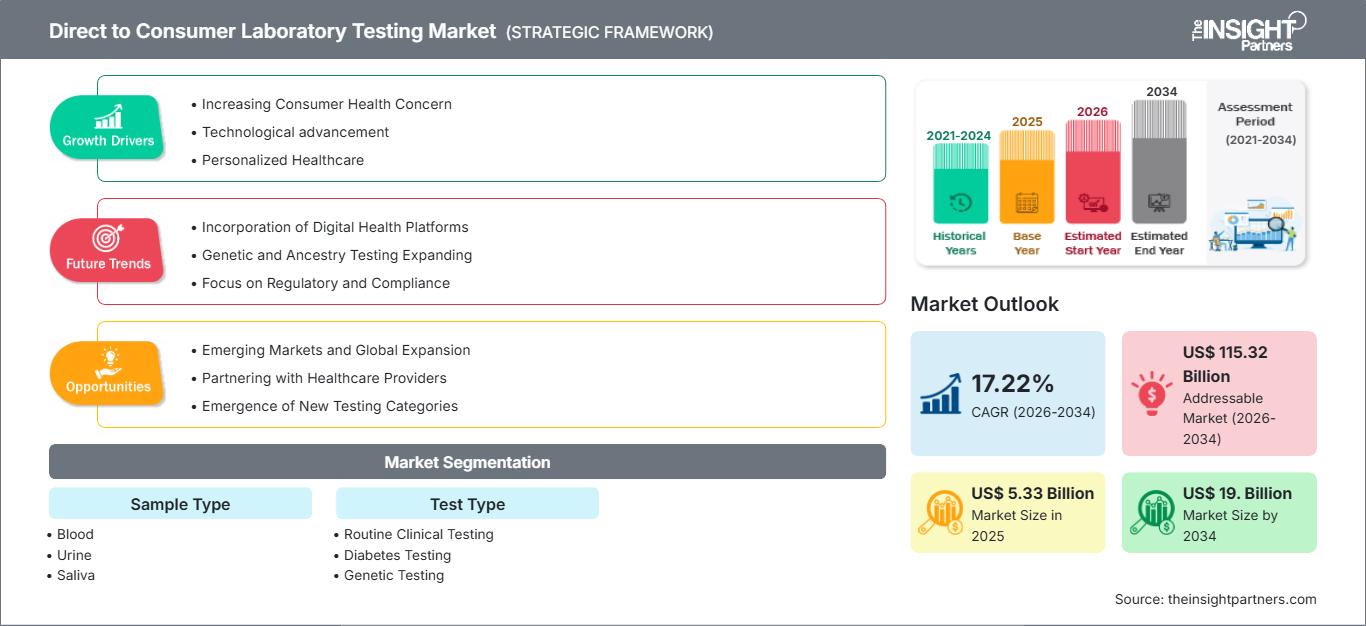
The Direct To Consumer Laboratory Testing Market was valued at US$ 5.33 billion in 2025 and is projected to reach US$ 19 billion by 2034, registering a CAGR of 17.22% during 2026–2034. The market is expanding as consumers increasingly seek convenient, privacy-focused, and digitally enabled diagnostic services that eliminate the need for traditional physician referrals for selected tests. Continuous improvements in home sample collection technologies, logistics infrastructure, and digital health platforms are strengthening accessibility while supporting broader adoption across preventive healthcare, wellness monitoring, and personalized medicine.
North America remains the leading regional market owing to high consumer awareness, well-established diagnostic laboratory networks, favorable digital health adoption, and increasing demand for preventive healthcare services. The region is anticipated to register a CAGR of 16.5–17.5% during 2026–2034, supported by expanding telehealth integration, rising acceptance of home-based diagnostics, evolving regulatory frameworks for laboratory-developed tests, and growing consumer willingness to proactively monitor chronic diseases, hereditary risks, and general wellness indicators.
Direct to Consumer Laboratory Testing Market Assessment and Insights
- North America: North America accounted for 37–41% market share in 2025 and is projected to expand at a CAGR of 16.5%–17.5% during 2026–2034. Growth is driven by advanced diagnostic infrastructure and rapid adoption of digital health solutions, which continue to strengthen regional demand for consumer genetic testing services.
- U.S.: The U.S. represented 82–86% of the North American direct to consumer laboratory testing market in 2025 and is anticipated to register a CAGR of 16.8%–17.8% during 2026–2034, supported by high penetration of direct-to-consumer testing, strong digital health adoption, and increasing awareness of personalized healthcare solutions.
- Europe: Europe held 25–29% share of the market in 2025 and is expected to grow at a CAGR of 15.5%–16.5% during 2026–2034. The United Kingdom, Germany, and France lead regional demand, supported by expanding preventive healthcare programs and rising adoption of consumer-directed diagnostic services.
- Asia Pacific: Asia Pacific accounted for 22–26% share of the direct to consumer laboratory testing market size in 2025 and is forecast to expand at a CAGR of 18.5%–19.5% during 2026–2034. China, Japan, and India drive regional growth through expanding digital healthcare ecosystems and improving access to genetic testing and diagnostic services.
- Largest Segment – Genetic Testing: Genetic testing represented the largest market segment and is expected to grow at a CAGR of 17.8%–18.8% during 2026–2034, driven by rising consumer interest in ancestry analysis, hereditary disease risk assessment, and personalized healthcare applications.
- High Growth Segment – Saliva Sample Testing: Saliva sample testing is projected to register the fastest growth with a CAGR of 19.0%–20.0% during 2026–2034, supported by convenient at-home collection methods, advancements in molecular diagnostics, and increasing preference for non-invasive sampling.
- Key companies analyzed in detail: 23andMe Holding Co.; Ancestry.com Operations Inc.; Everly Health Solutions, Inc.; Laboratory Corporation of America Holdings; HealthLabs.com LLC; DNAfit Ltd.; Verisana Laboratories GmbH; Ro Health, Inc. (Modern Fertility); LetsGetChecked, Inc.; Thryve GmbH.
Source: The Insight Partners' analysis based on proprietary research, government publications, company annual reports, investor presentations, industry databases, and expert interviews.
The practice of consumer-driven laboratory testing has expanded from a specialized area that concentrated mostly on ancestral testing to a comprehensive suite of diagnostics involving wellness tests, tracking of chronic diseases, fertility, nutrition, and genetics among others. These advancements include the development of digital ordering systems, laboratory certifications, home-based sample collection kits, and electronic reporting, which have revolutionized the availability of laboratory diagnostics while minimizing reliance on traditional methods of accessing healthcare in select areas of testing.
Moving forward, investments are growing at an increasing pace in digital diagnostics, interpretation using artificial intelligence tools, and personalized preventive healthcare services. The direct to consumer laboratory testing market report highlights growing adoption in developing countries supported by better internet connectivity, increased health awareness, and stronger logistics networks. Regulatory development in terms of the relationship between consumers and laboratory services, coupled with closer cooperation between diagnostic labs, telemedicine providers, and digital health firms, will further expand the business environment and build consumer trust.
Direct to Consumer Laboratory Testing Market Report Scope
| Report Attribute | Details |
|---|---|
| Market size in 2025 | US$ 5.33 Billion |
| Market Size by 2034 | US$ 19. Billion |
| Global CAGR (2026 - 2034) | 17.22% |
| Historical Data | 2021-2024 |
| Forecast period | 2026-2034 |
Direct to Consumer Laboratory Testing Market Analysis
Consumer interest in preventive health care has become central to the transformation of demand for direct-to-consumer laboratory testing services. Consumers now seek easy-to-use diagnostic tools for disease prevention, wellness tracking, and optimization without going through typical clinical tests. High incidence rates of chronic disease, increased consumer knowledge about genetic predisposition to certain ailments, and growing adoption of personalized healthcare methods have continued to drive demand for laboratory testing in genetic, metabolic, hormone, and clinical diagnostics.
Collaboration between accredited laboratories, digital healthcare platforms, logistics service providers, telemedicine companies, and software providers helps achieve a streamlined process from testing order to receipt of the results digitally. Advancements in specimen collection devices, automated laboratory processes, and health records stored in the cloud are some of the key advancements that continue to boost the efficiency of operations, consumer experience, and scalability of businesses in both developed and emerging healthcare markets.
Innovation in test portfolio, digital engagement channels, clinical alliances, and customer experience has marked the competitive environment within the industry. 23andMe Holding Co. and Ancestry.com Operations Inc. remain highly visible players in the consumer genetics segment, while Laboratory Corporation of America Holdings utilizes its existing laboratory network through Pixel by LabCorp. Everly Health Solutions, Inc., LetsGetChecked, Inc., and Ro Health, Inc. (Modern Fertility) are further refining their digital health capabilities through increased home tests and telehealth offerings.
The strategic investments made by key players in the direct to consumer laboratory testing market emphasize the growth of molecular diagnostics, laboratory automation technology, artificial intelligence-driven health analytics, and biomarker portfolio. The differentiation in test solutions offered by companies such as HealthLabs.com LLC, DNAfit Ltd., Verisana Laboratories GmbH, and Thryve GmbH specializes in nutrition, microbiome research, fitness, reproductive health, and preventive wellness.
● REPORT CUSTOMIZATION
Tailor This Report To Align With Your Specific Business Requirements
This report can be customized to align precisely with your business objectives, scope, and target markets. Customization options include tailored segmentation, geography, competitive analysis, and strategic insights to support informed decision-making.
Customize This Report →WHAT YOU CAN ADJUST
- ● Segmentations
- ● Geography
- ● Competitive Analysis
- ● Language Preferences
Direct to Consumer Laboratory Testing Market: Strategic Insights
Regional Insights
North America Direct To Consumer Laboratory Testing Market
North America constitutes the majority share of the direct to consumer laboratory testing market, contributing around 37-41% of total revenue generated in the year 2025. The region is expected to register a CAGR of 16.5-17.5% during 2026-2034, owing to increased awareness about preventive healthcare along with adoption of digital health solutions. High availability of wellness plans through health insurance and testing at the workplace has been propelling the market forward across various types of tests.
Growth is fueled by integration of laboratories, rising adoption of telehealth solutions, and growing consumer inclination towards home-based diagnostics. The direct to consumer laboratory testing market dynamics are backed up by the presence of prominent vendors such as Everly Health Solutions, Inc. and Laboratory Corporation of America Holdings.
U.S. Direct To Consumer Laboratory Testing Market
The US contributes 82–86% of the region’s total revenue, supported by its well-established diagnostic infrastructure and advanced digital healthcare sector. According to the direct to consumer laboratory testing market forecast, the industry is expected to expand at a CAGR of 16.8–17.8% between 2020 and 2034, driven by increasing adoption of personalized health monitoring and the growing integration of at-home testing solutions into preventive healthcare frameworks. Robust demand continues for genetic testing, metabolic health assessment, and chronic disease monitoring applications.
23andMe Holding Co., Ancestry.com Operations Inc., and Laboratory Corporation of America Holdings (Pixel by Labcorp) are a few key companies influencing the adoption trends among consumers. Growing use of subscription-based testing, artificial intelligence (AI) powered health insights, and telemedicine-related diagnostic procedures is also driving consumer engagement.
Europe Direct To Consumer Laboratory Testing Market
Europe accounts for an estimated 25–29% share of the global direct to consumer laboratory testing market in 2025, supported by rising awareness of preventive diagnostics and expanding access to certified laboratory testing services. The region is projected to grow at a 15.5–16.5% CAGR, with demand driven by healthcare digitization initiatives and increasing consumer willingness to adopt self-directed health monitoring tools. Regulatory frameworks supporting laboratory quality standards contribute to consumer trust across key markets.
The United Kingdom leads regional adoption due to strong private healthcare penetration and widespread use of digital diagnostic platforms. In Germany, structured healthcare systems and high emphasis on preventive screening are driving steady uptake, while France, Italy, and Spain are experiencing gradual expansion supported by growing telehealth integration and wellness-oriented healthcare models. Companies such as LetsGetChecked, Inc. and Verisana Laboratories GmbH are actively expanding service availability across European markets.
APAC Direct To Consumer Laboratory Testing Market
Asia Pacific represents approximately 22–26% of the global Direct To Consumer Laboratory Testing market share in 2025 and is projected to register the fastest regional growth at a 18.5–19.5% CAGR during 2026–2034. Expansion is fueled by rising healthcare awareness, rapid urbanization, and increasing adoption of digital health platforms. Government initiatives supporting healthcare digitization and preventive screening are further accelerating the Direct To Consumer Laboratory Testing market penetration across emerging economies.
China, Japan, South Korea, India, and Australia are key contributors to regional growth, with China leading in scale and India emerging as a high-potential market due to expanding middle-class healthcare spending. Japan and South Korea demonstrate strong adoption of advanced diagnostics, while Australia benefits from structured healthcare frameworks. Companies such as Thryve GmbH and DNAfit Ltd. are strengthening their presence through specialized wellness and microbiome testing offerings.
Middle East & Africa Direct To Consumer Laboratory Testing Market
The Middle East & Africa region accounts for a smaller yet steadily growing share of the global Direct To Consumer Laboratory Testing market, estimated at 5–8% in 2025, with a projected 17.0–18.5% CAGR during 2026–2034. Growth is driven by increasing healthcare modernization, rising private healthcare investments, and expanding adoption of digital health services in urban centers. Demand is particularly strong for preventive testing and chronic disease monitoring.
In the Gulf Cooperation Council (GCC) countries, including Saudi Arabia and the UAE, healthcare diversification programs and digital transformation initiatives are supporting rapid adoption of at-home diagnostics. South Africa represents a leading market in Sub-Saharan Africa due to relatively advanced diagnostic infrastructure. Across the broader region, expansion of logistics networks and telehealth platforms is improving access, while partnerships with international diagnostic providers are strengthening service availability.
Segmentation Analysis
Sample Type
- Blood: Blood-based diagnostics remain the most widely utilized category, supported by their high clinical accuracy and broad applicability across metabolic panels, infectious disease screening, and chronic condition monitoring. Increasing use of finger-prick collection kits and mail-in laboratory processing has significantly improved accessibility for at-home users.
- Urine: Urine testing is gaining traction due to its non-invasive nature and suitability for metabolic, hormonal, and infectious disease diagnostics. Rising adoption in fertility monitoring, kidney health assessment, and drug screening applications continues to strengthen demand across consumer health platforms.
- Saliva: Saliva-based testing is expanding rapidly as a convenient alternative for genetic analysis, microbiome profiling, and hormone assessment. Improved molecular diagnostic sensitivity and user-friendly collection kits are driving strong adoption in personalized health and wellness applications
Test Type
- Routine Clinical Testing: Routine diagnostics represent a foundational segment, covering general wellness panels, cholesterol testing, and basic metabolic assessments. Growing consumer preference for periodic health monitoring without clinical visits is strengthening adoption across digital healthcare platforms.
- Diabetes Testing: Diabetes-focused testing is witnessing sustained demand due to rising global prevalence of metabolic disorders. Home-based glucose monitoring and HbA1c testing solutions are increasingly integrated into direct-to-consumer platforms to support long-term disease management.
- Genetic Testing: Genetic testing remains a high-value segment driven by ancestry analysis, hereditary disease risk assessment, and personalized health insights. Consumer interest in preventive genomics and lifestyle optimization continues to expand adoption across global markets.
- Thyroid Stimulating Hormone Testing: TSH testing is gaining importance due to increasing thyroid disorder prevalence, particularly among aging populations and women. Digital diagnostic platforms are enabling easier access to hormone-level monitoring without clinical appointments.
Opportunity Snapshot
| Test Type | Revenue Contribution | Trend Tag | Adoption Stage |
| Routine Clinical Testing | High | Preventive Care | Scaling |
| Diabetes Testing | High | Chronic Care | Scaling |
| Genetic Testing | High | Genomics Insight | Mature |
| Thyroid Stimulating Hormone Testing | Medium | Hormone Health | Scaling |
| Other Test Types | Medium | Specialty Panels | Emerging |
Direct to Consumer Laboratory Testing Market Growth Drivers and Impact Analysis
Rising shift toward preventive and self-directed healthcare consumption patterns
The increasing inclination of consumers toward preventive healthcare is fundamentally reshaping diagnostic demand structures within the direct to consumer laboratory testing market. Individuals are progressively prioritizing early detection of chronic diseases, metabolic imbalances, and genetic predispositions without waiting for symptom-driven clinical consultations. This behavioral shift is reinforced by higher health literacy, digital health awareness, and widespread availability of online diagnostic platforms that simplify test ordering and result interpretation. As a result, testing frequency is rising across routine panels, genetic screening, and chronic condition monitoring.
Healthcare systems across developed and emerging economies are also experiencing pressure from rising patient loads, encouraging decentralization of basic diagnostic services. Employers and insurers are integrating wellness-linked testing programs, further normalizing consumer-driven diagnostics. This shift is particularly impactful in metabolic and lifestyle-related disease monitoring, where periodic testing improves long-term health outcomes while reducing system-level costs. The result is a structural expansion of demand beyond clinical necessity into continuous health optimization.
Expansion of digital health infrastructure and integrated diagnostic ecosystems
The rapid growth of digital health infrastructure has greatly increased the ease of use and process efficiency in the direct-to-consumer lab testing space. Ordering tests through mobile apps, using cloud-based health records, and telehealth have made the entire testing experience easier, enabling consumers to independently conduct health checks without any physical interaction with clinicians.
There is a growing trend among laboratories and companies offering health tech solutions to develop ecosystem services that integrate diagnostic solutions, artificial intelligence for test interpretation, and physician consultations. This improves the experience in both user engagement and the accuracy of diagnoses and test insights. The development of API-based health care platforms will facilitate interoperability between laboratories, pharmacies, and telemedicine service providers.
Advancements in home-based sample collection and molecular diagnostic technologies
Innovations in technologies used for sample collection in consumers' homes have greatly boosted the uptake of direct-to-consumer laboratory testing. Innovations in stabilization technology, microsampling, and prepackaged kits have improved the reliability of samples during transit, thereby facilitating accurate test results comparable to those obtained through clinical testing. This has led to increased consumer confidence in at-home diagnostic tests that can be conducted using blood, saliva, or urine.
In addition, innovations in molecular diagnostics, such as next-generation sequencing and high-sensitivity biomarker detection, have widened the range of tests available to consumers. This enables early detection of disease and improved health information for genetic and infectious diseases. With improved diagnostic capabilities and shortened turnaround times, there is increased uptake of nontraditional testing avenues among consumers.
Direct to Consumer Laboratory Testing Market Future Trends
Integration of AI-driven predictive health analytics and personalized insights
The adoption of artificial intelligence in direct-to-consumer laboratory testing systems is an innovative trend transforming how diagnostic data is analyzed and interpreted. Artificial intelligence technology is increasingly being deployed to analyze biomarker datasets, identify risk trends, and create customized health plans. The innovation adds greater value to diagnostic testing by moving from simply reporting on diagnostic tests to forecasting personal health.
With improved analytics capabilities, advanced diagnostic platforms can now leverage correlations among genetics, metabolism, and lifestyle habits to create personalized health profiles for individuals. The innovation helps design early prevention and continuous improvement of an individual’s health, especially within chronic disease management ecosystems, thereby strengthening engagement and long-term retention.
Growth of subscription-based and continuous health monitoring models
Diagnostic subscription programs are becoming increasingly popular among consumers who favor ongoing health monitoring over one-time testing. These offerings provide routine shipment of test kits, continuous biomarker assessment, and integrated digital platforms that enable users to track their health status. Reflecting key direct to consumer laboratory testing market trends, this model supports the rising preference for proactive wellness management and individualized health optimization.
Companies benefit from a recurring revenue model to retain more customers and increase their lifetime value. The use of continuous monitoring is especially important for metabolic diseases, hormones, and nutritional health, as periodic testing provides valuable data. Subscription-based services become scalable due to logistics automation and digital health applications, and thus represent an important structural trend.
Direct to Consumer Laboratory Testing Market Opportunities
Expansion into emerging economies with rising digital health adoption
Emerging markets present significant opportunities for DTC laboratory tests due to heightened awareness of healthcare needs, the expansion of the middle class, and the digitalization of healthcare solutions. Countries in the Asian Pacific region, the Latin American region, and even some in the Middle East are experiencing growing demand for affordable diagnostic tests that would help address existing healthcare limitations. Increased access to the Internet and adoption of mobile healthcare solutions have made the entry process much faster.
Firms that have entered such regions early will be able to capitalize on low market saturation and high diagnostic needs in these countries. Collaboration with local laboratories, telemedicine platforms, and logistics companies is vital for successful expansion. In addition, some emerging markets are currently encouraging preventive healthcare measures, further supporting the long-term adoption of consumer-directed diagnostic models.
Expansion of multi-omics and advanced personalized health testing portfolios
Multi-omics technology – genomics, proteomics, and metabolomics – offers an attractive avenue in the Direct To Consumer Laboratory Testing market. Modern testing frameworks based on multi-omics technologies enable a better understanding of individual patients' health conditions and contribute to precision medicine and highly personalized wellness plans. Consumers' growing interest in personalized medicine enables the use of more complex, data-intensive testing services.
Testing service providers can distinguish themselves by offering advanced predictive insights and health dashboards based on multi-omics technology. It will help them assess risks and implement long-term health improvement strategies for consumers. With continued development in computational biology and a decrease in sequencing cost, multi-omics consumer diagnostics are likely to go beyond premium offerings in the near future.
Recent Developments
- March 2026: Everly Health Solutions, Inc. expanded its at-home diagnostic portfolio by introducing next-generation metabolic and hormonal screening panels integrated with AI-based result interpretation tools. The initiative strengthens its position in preventive health monitoring by improving turnaround times, enhancing sample accuracy through improved collection kits, and integrating telehealth consultation pathways for faster clinical decision support. This development reflects a broader shift toward fully digitized diagnostic ecosystems supported by continuous patient engagement platforms.
- October 2025: Laboratory Corporation of America Holdings enhanced its direct-to-consumer testing ecosystem through the expansion of Pixel by Labcorp, focusing on broader test menu availability and improved logistics for home sample collection. The initiative includes deeper integration with physician networks and digital platforms to streamline order management and results delivery. This move strengthens Labcorp’s hybrid diagnostics strategy, combining centralized laboratory capabilities with consumer-facing accessibility to capture growing demand for preventive and wellness-based testing services.
- May 2025: LetsGetChecked, Inc. secured strategic investment to scale its global direct-to-consumer testing operations and expand its digital health infrastructure. The funding is directed toward enhancing automated laboratory processing systems, expanding test portfolios across chronic disease and reproductive health segments, and strengthening partnerships with healthcare providers. The company’s strategy emphasizes end-to-end virtual care integration, enabling users to access diagnostics, clinical interpretation, and treatment pathways within a unified platform.
Frequently Asked Questions

- Comprehensive Market Sizing and Forecast Analysis
- Detailed Segmentation Analysis
- In-Depth Market Dynamics Assessment
- Regional and Country-Level Insights
- Competitive Landscape and Company Benchmarking
- Strategic Business Intelligence
Recent Reports
Testimonials

The Insight Partners' SCADA System Market report is comprehensive, with valuable insights on current trends and future forecasts. The team was highly professional, responsive, and supportive throughout. We are very satisfied and highly recommend their services.
RAN KEDEM Partner, Reali Technologies LTDs
I requested a report on a very specific software market and the team produced the report in a few days. The information was very relevant and well presented. I then requested some changes and additions to the report. The team was again very responsive and I got the final report in less than a week.
JEAN-HERVE JENN Chairman, Future Analytica
We worked with The Insight Partners for an important market study and forecast. They gave us clear insights into opportunities and risks, which helped shape our plans. Their research was easy to use and based on solid data. It helped us make smart, confident decisions. We highly recommend them.
PIYUSH NAGPAL Sr. Vice President, High Beam Global
The Insight Partners delivered insightful, well-structured market research with strong domain expertise. Their team was professional and responsive throughout. The user-friendly website made accessing industry reports seamless. We highly recommend them for reliable, high-quality research services
YUKIHIKO ADACHI CEO, Deep Blue, LLC.
This is the first time I have purchased a market report from The Insight Partners.While I was unsure at first, I visited their web site and felt more comfortable to take the risk and purchase a market report.I am completely satisfied with the quality of the report and customer service. I had several questions and comments with the initial report, but after a couple of dialogs over email with their analyst I believe I have a report that I can use as input to our strategic planning process.Thank you so much for taking the extra time and making this a positive experience.I will definitely recommend your service to others and you will be my first call when we need further market data.
JOHN SUZUKI President and Chief Executive Officer, Board Director, BK Technologies
I wish to appreciate your support and the professionalism you displayed in the course of attending to my request for information regarding to infectious disease IVD market in Nigeria. I appreciate your patience, your guidance, and the fact that you were willing to offer a discount, which eventually made it possible for us to close a deal. I look forward to engaging The Insight Partners in the future, all thanks to the impression you have created in me as a result of this first encounter.
DR CHIJIOKE ONYIA MANAGING DIRECTOR, PineCrest Healthcare Ltd.Reason to Buy
- Informed Decision-Making
- Understanding Market Dynamics
- Competitive Analysis
- Identifying Emerging Markets
- Customer Insights
- Market Forecasts
- Risk Mitigation
- Boosting Operational Efficiency
- Strategic Planning
- Investment Justification
- Tracking Industry Innovations
- Aligning with Regulatory Trends





 Get Free Sample for