
Disabled and Elderly Assistive Technology Market Size, Growth & Demand by 2034
Coverage: by Product (Medical Mobility Aids and Ambulatory Devices, Assistive Furniture, Bathroom Safety and Assistive Products, Communication Aids, Activity Monitors, Location Monitors, Others); End-User (Hospitals and Nursing Homes, Assisted Living Facilities, Home Care), and Geography (North America, Europe, Asia Pacific, and South and Central America)
- Status : Data Released
- Report Code : TIPRE00007728
- Category : Life Sciences
- No. of Pages : 151
- Available Report Formats :


- Last update date : July 08, 2026


2025 Market Size
US$ 28.91 Bn
Base year value
2034 Forecast
US$ 55.37 Bn
Projected by 2034
CAGR 2026-2034
7.49 %
Growth rate
Addressable Market
US$ 379.89 Bn
(2026-2034)
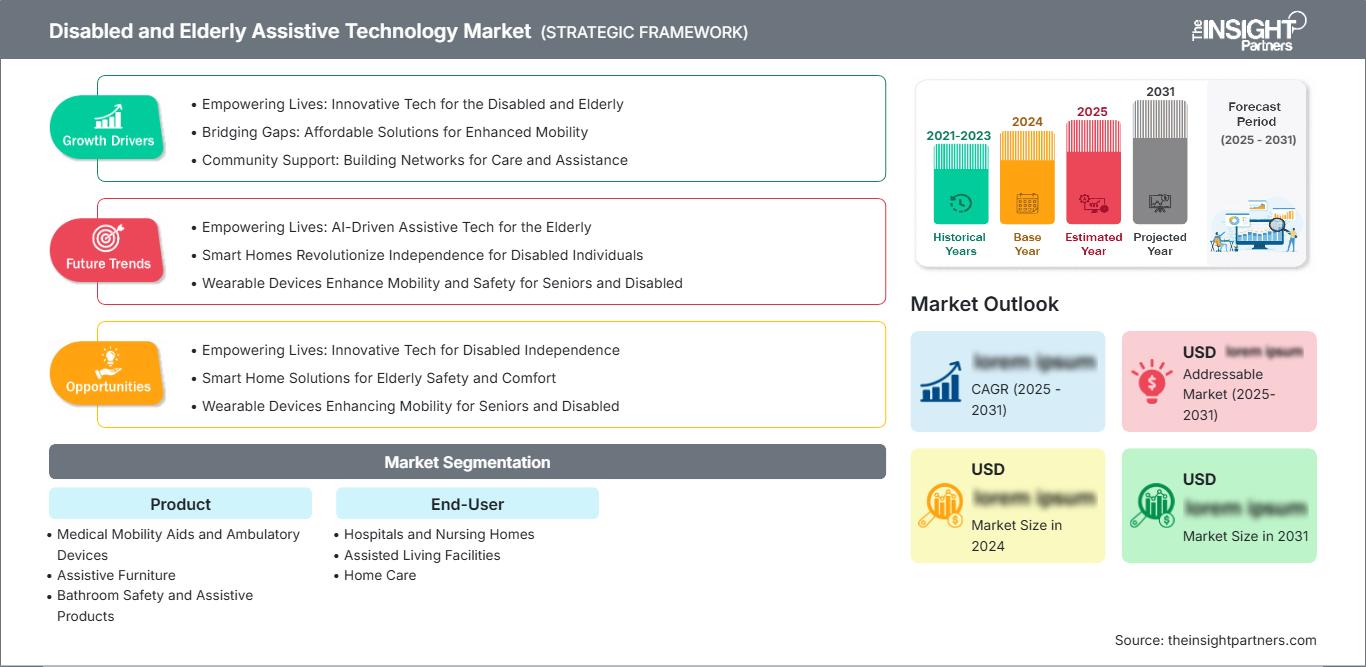
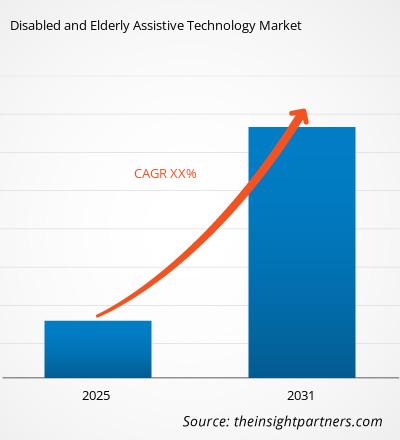
The Disabled And Elderly Assistive Technology market is expanding from US$ 28.91 Billion in 2025 to US$ 55.37 Billion by 2034, advancing at a CAGR of 7.49% during 2026–2034. Demand is being shaped by aging populations, higher disability inclusion priorities, wider home-care adoption, and steady innovation across mobility, communication, safety, and monitoring products designed to preserve independence and reduce caregiver burden.
North America remains a high-value region for the Disabled And Elderly Assistive Technology market, with an estimated CAGR of 6.8%–7.4%. Growth is supported by reimbursement coverage for durable medical equipment, established rehabilitation infrastructure, and rising preference for aging in place. Smart mobility aids, connected hearing solutions, and fall-prevention products are gaining traction as providers prioritize safety, autonomy, and coordinated long-term care.
Disabled and Elderly Assistive Technology Market Assessment and Insights
- North America: North America accounted for 36–40% of the Disabled And Elderly Assistive Technology market share in 2025 and is anticipated to expand at a CAGR of 7.0%–8.0% during 2026–2034. Growing aging populations, favorable reimbursement frameworks, and rapid integration of digital health technologies continue to support regional market leadership.
- U.S.: The U.S. represented 70–75% of the North American Disabled And Elderly Assistive Technology market size in 2025 and is projected to register a CAGR of 7.8%–8.2% during 2026–2034, supported by increasing demand for assistive technologies, expanding healthcare coverage, and wider adoption of connected care solutions.
- Europe: Europe held 25–29% of the Disabled And Elderly Assistive Technology market share in 2025 and is expected to grow at a CAGR of 6.8%–7.2% during 2026–2034. Germany, the United Kingdom, and France remain the leading regional markets due to strong healthcare infrastructure, supportive reimbursement policies, and increasing adoption of assistive technologies.
- Asia Pacific: Asia Pacific accounted for 30–34% share in 2025 and is forecast to expand at a CAGR of 8.0%–8.5% during 2026–2034. China, Japan, and India continue to drive regional growth through expanding healthcare investments, growing elderly populations, and increasing awareness of assistive mobility solutions.
- Largest Segment: Product Type – Medical Mobility Aids and Ambulatory Devices represented the largest Disabled And Elderly Assistive Technology market segment and is expected to record a CAGR of 7.8%–8.3% during 2026–2034, reflecting the rising prevalence of disabilities, increasing rehabilitation needs, and growing demand for mobility assistance.
- High Growth Segment: Product Type – Activity Monitors is projected to grow at a CAGR of 9.0%–9.5% during 2026–2034, driven by expanding remote patient monitoring ecosystems, increasing adoption of wearable health technologies, and greater emphasis on continuous health tracking.
- Key companies analyzed in detail: AI Squared, LLC; Blue Chip Medical Products, Inc.; Inclusive Technology Ltd; Invacare Corporation; Medline Industries, LP; Permobil AB; Siemens Limited; Sonova Holding AG; Sunrise Medical LLC; and Widex A/S.
Source: The Insight Partners' analysis based on proprietary research, government publications, company annual reports, investor presentations, industry databases, and expert interviews.
The Disabled And Elderly Assistive Technology market report has shifted focus from mere equipment for mobility and safety towards the provision of integrated solution packages that provide mechanical reliability, digital alerting, ergonomic design, and visibility of the care staff team. Mobility assistance tools, bathroom safety products, communication products, and monitors are not evaluated solely on the basis of cost but also based on their potential to help avoid falls, prevent hospital readmissions, and promote independent living.
Future demand would depend on an appropriate blend of affordability, interoperability, and clinical acceptance. Products that qualify as being reimbursable, easy to integrate into care processes, and provide meaningful improvements in safety or function would be preferred by providers. Examples of companies with specialized product portfolios include Permobil AB, Sonova Holding AG, Sunrise Medical LLC, Medline Industries, LP, and Invacare Corporation.
Disabled and Elderly Assistive Technology Market Report Scope
| Report Attribute | Details |
|---|---|
| Market size in 2025 | US$ 28.91 Billion |
| Market Size by 2034 | US$ 55.37 Billion |
| Global CAGR (2026 - 2034) | 7.49% |
| Historical Data | 2021-2024 |
| Forecast period | 2026-2034 |
Disabled and Elderly Assistive Technology Market Analysis
Disabled And Elderly Assistive Technology Market forces will be driven by demographics, presence of chronic diseases, need for post-acute rehabilitation, and move towards out-of-hospital care. The demand for assistive devices will be highest wherever they are used to overcome difficulties in mobility, communication, bathing, transferring, and monitoring. Hospitals and nursing homes will keep on purchasing standardized devices, whereas home care purchasers are likely to opt for lightweight and easy-to-use technology-supported devices.
The value chain involves device manufacturers, rehabilitation experts, distributors, insurers, care providers, and digital health partners. The factors that influence the value of the product include its durability, acceptability in clinical settings, customization capabilities, serviceability, and safety compliance. As the procurement process starts focusing on outcomes, vendors have to demonstrate that their products alleviate the burden of caregiving and increase patients' confidence levels.
The competitive landscape is divided among categories of mobility, hearing, furniture, safety, and monitoring. Permobil AB and Sunrise Medical LLC compete effectively within mobility devices, whereas Sonova Holding AG and Widex A/S define the hearing and communication segments. Medline Industries, LP and Blue Chip Medical Products, Inc. serve the professional and home-care supply market, and Inclusive Technology Ltd caters to learning and communication accessibility.
The trend of investments in the industry goes towards such features as smart sensing, compatibility with telecare, lightweight materials, modular construction, and logistics. The strategic position of the company is becoming dependent on the servicing of two distribution channels – professional care and consumer-directed. AI Squared, LLC and Siemens Limited exemplify the convergence of the market with accessibility software and monitoring devices.
● REPORT CUSTOMIZATION
Tailor This Report To Align With Your Specific Business Requirements
This report can be customized to align precisely with your business objectives, scope, and target markets. Customization options include tailored segmentation, geography, competitive analysis, and strategic insights to support informed decision-making.
Customize This Report →WHAT YOU CAN ADJUST
- ● Segmentations
- ● Geography
- ● Competitive Analysis
- ● Language Preferences
Disabled and Elderly Assistive Technology Market: Strategic Insights
Regional Insights
North America Disabled And Elderly Assistive Technology Market
North America is expected to record a CAGR of about 6.8%–7.4%, supported by mature reimbursement systems, strong durable medical equipment distribution, and expanding home-based care. Demand is especially visible in mobility aids, bathroom safety products, hearing technologies, and patient monitoring devices used to reduce falls and support chronic condition management.
Structural drivers include high healthcare spending, established rehabilitation networks, and active participation by mobility and medical supply companies. Providers are prioritizing devices that improve discharge planning and reduce dependence on institutional care. Connected monitoring is also gaining relevance as assisted living facilities and home-care agencies seek better visibility into safety events.
U.S. Disabled And Elderly Assistive Technology Market
The U.S. accounts for an estimated 75%–80% of North American revenue and is projected to advance at roughly 7% CAGR. The Disabled And Elderly Assistive Technology market benefits from large rehabilitation networks, private insurance participation, Medicare-linked durable medical equipment demand, and strong adoption across hospitals, nursing homes, assisted living facilities, and home-care settings.
Company presence is broad, including Medline Industries, LP, Invacare Corporation, Sunrise Medical LLC, and Permobil AB. Application trends are shifting toward customized wheelchairs, transfer support, connected fall alerts, and bathroom safety upgrades. Buyers increasingly value service responsiveness, product availability, and compatibility with caregiver workflows.
Europe Disabled And Elderly Assistive Technology Market
Europe represents approximately 25%–30% of the global Disabled And Elderly Assistive Technology market and is expected to grow at a CAGR of 6.5%–7.2%. Germany is the leading country, supported by established rehabilitation pathways, strong medical device engineering, and public healthcare procurement. The region favors clinically validated products, ergonomic design, and long-term serviceability.
The UK Disabled And Elderly Assistive Technology market is shaped by public healthcare purchasing, aging-in-place initiatives, and demand from residential care settings. Mobility aids, assistive furniture, and bathroom safety products remain core categories, while communication aids and monitoring devices are gaining relevance in dementia care and community support services.
Germany benefits from a strong assistive device ecosystem, an advanced rehabilitation culture, and a high acceptance of engineered mobility solutions. France, Italy, and Spain contribute through expanding elderly care infrastructure, public support for disability inclusion, and rising demand for safer bathrooms, transfer equipment, and hearing-related assistive products.
APAC Disabled And Elderly Assistive Technology Market
Asia Pacific is the fastest-growing region, with an estimated CAGR of 8.3%–9.1% and an approximate global Disabled And Elderly Assistive Technology market share of 20%–25%. Japan currently leads in mature adoption because of advanced eldercare systems, while China offers scale through manufacturing capacity, expanding healthcare access, and policy attention to aging populations.
China and Japan are central to product development, procurement, and localized production. South Korea is advancing connected healthcare and smart home applications, while India’s demand is rising through private hospitals, urban home-care services, and affordability-focused distribution. Australia shows steady uptake in mobility, hearing, and independent living products.
Industrial and policy drivers include local device manufacturing, public disability support programs, digital health expansion, and the need to reduce institutional care pressure. Regional buyers are highly price-sensitive, creating opportunities for durable mid-range devices, scalable monitoring platforms, and partnerships that combine global technology with local service networks.
Middle East & Africa Disabled And Elderly Assistive Technology Market
Middle East & Africa is developing from a smaller base, with an estimated CAGR of 6.9%–7.8% of the Disabled And Elderly Assistive Technology Market. Saudi Arabia is the leading country due to healthcare modernization, hospital expansion, and investment in rehabilitation services. Demand is concentrated in institutional procurement, mobility aids, and assistive products linked to long-term care capacity.
The UAE is building demand through premium healthcare infrastructure, medical tourism, and smart care environments. Energy and infrastructure investment indirectly supports the market by improving hospital capacity, logistics, and connected facility readiness. Assistive furniture, bathroom safety products, and monitoring devices are increasingly considered in senior living and rehabilitation projects.
South Africa and the rest of MEA show gradual adoption, constrained by affordability and uneven access to specialized care. Growth depends on public-private healthcare investment, NGO-supported disability programs, and stronger distribution channels. Products that combine durability, simple maintenance, and caregiver utility are best positioned in cost-sensitive environments.
Segmentation Analysis
Product
- Medical Mobility Aids and Ambulatory Devices: This segment leads demand as wheelchairs, walkers, canes, scooters, and transfer aids directly address movement limitations, discharge planning, and fall-risk reduction across care settings.
- Assistive Furniture: Adjustable beds, lift chairs, recliners, and positioning furniture support safer transfers, pressure management, and comfort, particularly in nursing homes, assisted living facilities, and long-term home-care environments.
- Bathroom Safety and Assistive Products: Grab bars, shower chairs, raised toilet seats, and anti-slip products are widely adopted because bathrooms remain a high-risk area for falls among elderly and mobility-impaired users.
- Communication Aids: Hearing devices, speech-support tools, adaptive keyboards, and accessible software improve social participation, care coordination, and workplace inclusion for users with sensory, speech, or cognitive limitations.
- Activity Monitors: Wearables and sensor-enabled systems track movement patterns, inactivity, sleep, and daily routines, helping caregivers detect functional decline and respond earlier to safety or health concerns.
- Location Monitors: GPS trackers, wandering-alert devices, and emergency location systems support dementia care, independent mobility, and caregiver reassurance, especially for home-care and assisted living populations.
End-User
- Hospitals and Nursing Homes: These settings require durable, standardized assistive products for patient mobility, rehabilitation, bathing support, and transfer safety, with procurement decisions shaped by clinical reliability and maintenance efficiency.
- Assisted Living Facilities: Assisted living facilities adopt assistive furniture, monitoring tools, bathroom safety products, and communication aids to support semi-independent residents while reducing staff workload and emergency response delays.
- Home Care: Home care is expanding as families and providers prioritize aging in place, creating demand for compact, affordable, easy-to-install devices that improve safety without complex clinical supervision.
Opportunity Snapshot
| End-User | Revenue Contribution | Trend Tag | Adoption Stage |
| Hospitals and Nursing Homes | High | Fall Prevention | Mature |
| Assisted Living Facilities | Medium | Resident Safety | Scaling |
| Home Care | High | Aging-in-place | Scaling |
Disabled and Elderly Assistive Technology Market Growth Drivers and Impact Analysis
Aging-in-place is reshaping assistive product demand
The strongest demand catalyst is the global movement toward aging in place, where elderly individuals remain at home or in community-based environments instead of entering institutional care earlier. This shift increases the need for mobility aids, bathroom safety equipment, assistive furniture, and monitoring devices that reduce avoidable accidents. Families, home-care agencies, and payers increasingly view assistive technology as a practical investment that delays higher-cost care.
The real-world market impact is visible in broader product purchasing outside hospitals, particularly through home-care channels and retail distribution. Vendors that design compact, easy-to-install, and caregiver-friendly devices can capture recurring demand from households managing mobility, bathing, and safety needs. The driver also increases demand for service models, training, and bundled solutions that help users adopt products confidently.
Rising disability inclusion and accessibility awareness
Disability inclusion has emerged as a pragmatic procurement and policy challenge across workplaces, educational institutions, public places, and health care systems. Communication aids, adaptive technology, mobility aids, and hearing aids can help people living with disabilities participate in activities at work and in daily life. With increasing accessibility, the use of tools for self-reliance and compliance becomes necessary for organizations.
The commercial effects go beyond health to social inclusion and productivity. Inclusive Technology Ltd., AI Squared, LLC, Sonova Holding AG, Widex A/S, and Siemens Limited highlight the role of communication and accessibility in the broader market environment. There will be higher demand where there is increased investment in public funds, employer accommodation, and digital accessibility standards.
Connected care is increasing the value of monitoring products
Activity monitors and location monitors are gaining importance as care models become more decentralized. These devices help caregivers identify changes in activity, wandering risk, inactivity, or potential emergencies before conditions escalate. Their value is especially relevant in dementia support, assisted living, post-discharge recovery, and chronic disease management, where continuous observation is difficult through staff visits alone.
The result is a shift from one-off device sales to safety ecosystems. Manufacturers of such devices that provide good quality hardware, an efficient alerting system, data protection procedures, and integration with care platforms may become the winners in the market. This trend also creates an opportunity for cooperation among providers of teleneeding services, senior living facilities, insurers, and home care providers to reduce emergencies and caregiver delays.
Disabled and Elderly Assistive Technology Market Future Trends
Personalized assistive devices will gain purchasing priority
A growing shift toward personalization is shaping Disabled And Elderly Assistive Technology market trends, driven by differences in disability severity, age, biomechanics, home environments, and caregiver capabilities. While standard products still have great value, there is increased demand for premium products, including customizable wheelchairs, adaptable furniture, customized hearing solutions, and software-based assisted communication solutions. Customization helps increase comfort, compliance, and clinical effectiveness, which is critical for consumers who require assistive products daily.
The future belongs to vendors capable of providing modular solutions, digital fitting solutions, consumer data, and a professional assessment process. The trend will benefit companies with strong rehabilitation networks and engineering capabilities in their products, such as Permobil AB and Sunrise Medical LLC. The trend also plays well with hearing and communication specialists, such as Sonova Holding AG and Widex A/S.
Assistive technology will integrate with smart care environments
The next phase of Disabled And Elderly Assistive Technology market development will connect assistive devices with smart home systems, facility monitoring platforms, and digital care coordination tools. Activity monitors, location devices, communication aids, and safety products are becoming more useful when they can share alerts, support remote supervision, and fit into care routines without adding technical complexity for users or staff.
The success of future adoption will depend on interoperability, privacy, power management, and ease of setup. Institutions such as assisted-living homes and home care organizations will be happy with technology that responds quickly and delivers results without being overly intrusive. Companies that manage to bridge the gap between medical device legitimacy and consumer usability can help make environments more connected and distributed.
Disabled and Elderly Assistive Technology Market Opportunities
Home-care bundles can unlock scalable adoption
Home care is among the most attractive areas for investment, as users rarely buy individual products. A patient who is being discharged after surgery or is experiencing progressive mobility loss may need items such as a walking stick, bathroom safety measures, help with transfers, furniture aids, and monitoring devices. Combination packages can streamline procurement, improve safety outcomes, and foster stronger relationships with caregivers and suppliers.
Strategic growth opportunities within the Disabled And Elderly Assistive Technology market forecast include partnerships with home healthcare providers, rehabilitation centers, pharmacies, and e-commerce platforms offering comprehensive equipment solutions. Home health care providers like Medline Industries, LP, and Invacare Corporation may handle the distribution requirements, and other niche products may also offer special features, such as custom equipment. Organizations that will assist with education, installation, and funding will help gain quick acceptance.
Emerging markets need durable and affordable solutions
The emerging market has tremendous potential, but the key to success lies in device cost, durability, and accessible service rather than premium feature density alone. A large number of older adults, growth in private healthcare investments, and greater recognition of disabilities are driving demand for wheelchairs, walkers, bathroom safety products, hearing aids, and monitoring equipment.
Companies need to consider localized device assembly, partnerships with distributors, training programs, and their product range. Companies that provide repair options, spare parts, and culturally specific education will be able to establish credibility much faster. The key challenge for the emerging market is not just in achieving high volume; it is also in building a sustainable services ecosystem that makes assistive technology usable beyond major urban hospitals.
Recent Developments
- March, 2026: Permobil AB introduced the new TiLite TR and TiLite ZR titanium wheelchairs, describing the launch as an evolution of its flagship titanium portfolio. The development reinforces competitive focus on ultralight mobility, customization, and advanced manual wheelchair performance for active users.
- April, 2026: Permobil AB appointed Ana Lopez as Chief Operating Officer to lead end-to-end global supply chain operations. The move is relevant to assistive mobility because reliable production, quality control, and distribution speed are increasingly important competitive factors in wheelchair and seating product availability.
- January, 2024: Starkey launched Genesis AI hearing aids in Australia and New Zealand, highlighting AI-enabled sound processing and personalized hearing experiences. The development reflects the broader assistive technology shift toward intelligent sensory support for elderly and disabled users.
Frequently Asked Questions

- Comprehensive Market Sizing and Forecast Analysis
- Detailed Segmentation Analysis
- In-Depth Market Dynamics Assessment
- Regional and Country-Level Insights
- Competitive Landscape and Company Benchmarking
- Strategic Business Intelligence
Recent Reports
Testimonials

The Insight Partners' SCADA System Market report is comprehensive, with valuable insights on current trends and future forecasts. The team was highly professional, responsive, and supportive throughout. We are very satisfied and highly recommend their services.
RAN KEDEM Partner, Reali Technologies LTDs
I requested a report on a very specific software market and the team produced the report in a few days. The information was very relevant and well presented. I then requested some changes and additions to the report. The team was again very responsive and I got the final report in less than a week.
JEAN-HERVE JENN Chairman, Future Analytica
We worked with The Insight Partners for an important market study and forecast. They gave us clear insights into opportunities and risks, which helped shape our plans. Their research was easy to use and based on solid data. It helped us make smart, confident decisions. We highly recommend them.
PIYUSH NAGPAL Sr. Vice President, High Beam Global
The Insight Partners delivered insightful, well-structured market research with strong domain expertise. Their team was professional and responsive throughout. The user-friendly website made accessing industry reports seamless. We highly recommend them for reliable, high-quality research services
YUKIHIKO ADACHI CEO, Deep Blue, LLC.
This is the first time I have purchased a market report from The Insight Partners.While I was unsure at first, I visited their web site and felt more comfortable to take the risk and purchase a market report.I am completely satisfied with the quality of the report and customer service. I had several questions and comments with the initial report, but after a couple of dialogs over email with their analyst I believe I have a report that I can use as input to our strategic planning process.Thank you so much for taking the extra time and making this a positive experience.I will definitely recommend your service to others and you will be my first call when we need further market data.
JOHN SUZUKI President and Chief Executive Officer, Board Director, BK Technologies
I wish to appreciate your support and the professionalism you displayed in the course of attending to my request for information regarding to infectious disease IVD market in Nigeria. I appreciate your patience, your guidance, and the fact that you were willing to offer a discount, which eventually made it possible for us to close a deal. I look forward to engaging The Insight Partners in the future, all thanks to the impression you have created in me as a result of this first encounter.
DR CHIJIOKE ONYIA MANAGING DIRECTOR, PineCrest Healthcare Ltd.Reason to Buy
- Informed Decision-Making
- Understanding Market Dynamics
- Competitive Analysis
- Identifying Emerging Markets
- Customer Insights
- Market Forecasts
- Risk Mitigation
- Boosting Operational Efficiency
- Strategic Planning
- Investment Justification
- Tracking Industry Innovations
- Aligning with Regulatory Trends





 Get Free Sample for