
Discography Market Growth, Trends & Demand by 2034
Coverage: by Coverage : Type (Lumbar Discography, Cervical Discography, Thoracic Discography, Others); Component (Contrast Agent, Imaging, Others); Application (Herniated Discs, Scoliosis, Burst Fracture, Others); Indication (Spinal Decompression, Lumbar Surgery, Laminectomy, Others); End User (Hospitals, Retail Pharmacies, Academic Institutes, Others), and Geography (North America, Europe, Asia Pacific, and South and Central America)
- Status : Data Released
- Report Code : TIPRE00007597
- Category : Life Sciences
- No. of Pages : 150
- Available Report Formats :


- Last update date : July 08, 2026


2025 Market Size
US$ 2.32 Bn
Base year value
2034 Forecast
US$ 4.34 Bn
Projected by 2034
CAGR 2026-2034
7.19 %
Growth rate
Addressable Market
US$ 30.02 Bn
(2026-2034)
The Discography Market size was valued at US$ 2.32 Billion in 2025 and is projected to reach US$ 4.34 Billion by 2034, reflecting a CAGR of 7.19% from 2026 to 2034. Growth is supported by rising degenerative spine disorders, higher imaging utilization, and demand for procedure-specific diagnostic confidence.
North America remains a high-value region for the Discography Market, with an estimated CAGR of 6.8%–7.4% through 2034. Growth is shaped by a large base of chronic back-pain patients, strong interventional radiology infrastructure, and continued adoption of advanced fluoroscopy, CT, and hybrid imaging systems. Procedure demand is also influenced by spine surgery planning, reimbursement scrutiny, and physician preference for targeted diagnostic confirmation before decompression or fusion decisions.
Discography Market Assessment and Insights
- North America: North America accounted for 35–40% share in 2025 and is anticipated to expand at a CAGR of 7.2%–7.6% during 2026–2034. High prevalence of spinal disorders, advanced diagnostic imaging infrastructure, and increasing adoption of minimally invasive spine procedures continue to support regional market leadership.
- U.S.: The U.S. represented 75–80% of the North American discography market in 2025 and is projected to register a CAGR of 7.3%–7.5% during 2026–2034, supported by growing demand for spinal diagnostics, advanced imaging technologies, and well-established healthcare infrastructure.
- Europe: Europe held 25–28% discography market share in 2025 and is expected to grow at a CAGR of 6.7%–7.1% during 2026–2034. Germany, the United Kingdom, and France remain the leading regional markets due to aging populations, increasing incidence of degenerative spinal disorders, and growing adoption of surgical innovations.
- Asia Pacific: Asia Pacific accounted for 30–33% discography market share in 2025 and is forecast to expand at a CAGR of 7.5%–7.9% during 2026–2034. China, Japan, and India continue to drive regional growth through expanding healthcare infrastructure, diagnostic modernization, and increasing access to advanced spinal imaging technologies.
- Largest Segment: Procedure Type – Lumbar Discography represented the largest market segment and is expected to record a CAGR of 7.6%–7.9% during 2026–2034, reflecting the high prevalence of lumbar disc degeneration and increasing demand for precise diagnostic evaluation.
- High Growth Segment: Product – Contrast Agent is projected to grow at a CAGR of 7.3%–7.6% during 2026–2034, driven by rising demand for enhanced imaging clarity and improved diagnostic accuracy in spinal assessment.
- Key companies analyzed in detail: Siemens Healthineers AG; Canon Medical Systems Corporation; Carestream Health, Inc.; GE HealthCare Technologies Inc.; Fujifilm Holdings Corporation; Johnson & Johnson; Royal Philips N.V.; Medtronic plc; Merit Medical Systems, Inc.; and Stryker Corporation.
Source: The Insight Partners' analysis based on proprietary research, government publications, company annual reports, investor presentations, industry databases, and expert interviews.
The Discography Market has transformed from a diagnostics tool heavily driven by procedures into an increasingly selective process with a focus on the evidential need for diagnosis within spinal medicine. Doctors are resorting to discography when there is a misfit between MRI diagnosis, patient symptoms, and operative decisions. In the future, the growth of this market would depend on the degree to which procedure providers manage to combine clinical value with safety concerns, dose control, and payer requirements.
The Discography Market Forecast indicates that future growth will depend on how effectively procedure providers balance clinical benefits with patient safety considerations and concerns regarding radiation exposure. Demand is expected to remain strongest among advanced spine care facilities that rely on contrast media, fluoroscopy, computed tomography verification, and interdisciplinary case reviews. Competitive differentiation is likely to be driven by the ability to deliver high-quality imaging, streamlined clinical workflows, and low-dose imaging solutions, with leading companies such as Siemens Healthineers AG, GE HealthCare Technologies Inc., Canon Medical Systems Corporation, and Royal Philips N.V. continuing to strengthen their market positions.
Discography Market Report Scope
| Report Attribute | Details |
|---|---|
| Market size in 2025 | US$ 2.32 Billion |
| Market Size by 2034 | US$ 4.34 Billion |
| Global CAGR (2026 - 2034) | 7.19% |
| Historical Data | 2021-2024 |
| Forecast period | 2026-2034 |
Discography Market Analysis
The discography market growth is driven by the clinical problem of detecting the pain-generating discs in patients with chronic spinal conditions. The demand drivers include growing degenerative disc disease, herniated discs, scoliosis-based structural analysis, and burst fracture evaluation due to trauma. The procedure is not considered primary diagnostic; however, it becomes more valuable if symptoms cannot be adequately explained with other medical imaging techniques or if surgical intervention needs to be justified.
The supply chain involves contrast agents' vendors, imaging devices producers, interventional radiology units, spine surgeons, ambulatory surgery centers, and hospital buying departments. The key inputs involve contrast media and imaging equipment, while the degree of adoption depends on the clinical experience. The care providers, such as Carestream Health, Inc., Fujifilm Holdings Corporation, and Canon Medical Systems Corporation, offer their contribution by diagnostics imaging technologies, while Medtronic plc, Johnson & Johnson, and Stryker Corporation impact adjacent spine care environments.
However, competition in the sector is not only related to discography equipment but also to more general imaging, spine intervention, surgical navigation, and procedure-related consumables' portfolios. The vendors who are capable of providing accurate needle placement, high-quality visualization and documentation are more prepared to enter the hospitals, where there is an intention to establish standardized spine care pathways. Merit Medical Systems, Inc. competes via relevance of its interventional products, while the imaging companies fight each other via usability, quality of detector, and compatibility with the pain management procedures.
The Discography Market Report highlights that hospitals are increasingly directing investments toward imaging upgrades, outpatient spine procedures, and integrated surgical planning rather than standalone diagnostic technologies. Healthcare providers are favoring multifunctional platforms that can support a wide range of procedures, including discography, vertebral interventions, pain management injections, and decompression planning. Consequently, investment priorities are expected to center on multipurpose imaging suites, radiation dose reduction technologies, AI-assisted workflows, and solutions that enhance overall clinical efficiency.
● REPORT CUSTOMIZATION
Tailor This Report To Align With Your Specific Business Requirements
This report can be customized to align precisely with your business objectives, scope, and target markets. Customization options include tailored segmentation, geography, competitive analysis, and strategic insights to support informed decision-making.
Customize This Report →WHAT YOU CAN ADJUST
- ● Segmentations
- ● Geography
- ● Competitive Analysis
- ● Language Preferences
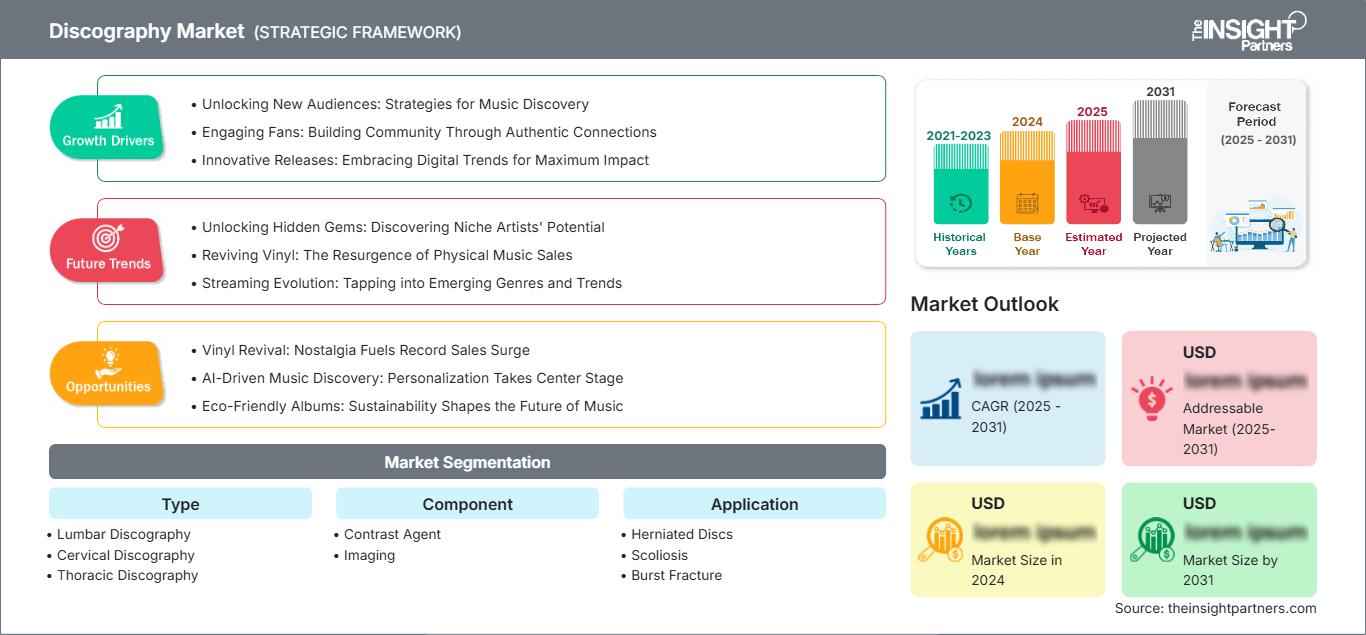
Discography Market: Strategic Insights
Regional Insights
North America Discography Market
North America leads the Discography Market, supported by advanced spine-care networks, interventional pain practices, and high use of image-guided diagnostics. The regional CAGR is estimated at 6.8%–7.4%, reflecting mature but resilient demand. Procedure volumes are concentrated in complex lumbar pain evaluation, pre-surgical planning, and cases where MRI alone does not resolve clinical uncertainty.
Structural determinants include aging population, degenerative spine diseases, and fluoroscopy & CT guidance suites available for the treatment procedure. Market is also influenced by the presence of companies dealing in imaging and spine devices such as GE HealthCare Technologies Inc., Siemens Healthineers AG, Medtronic plc, and Stryker Corporation. Payer influence acts as a moderating force with patient selection becoming a key market determinant.
U.S. Discography Market
The U.S. accounts for 75%–80% of North America’s Discography Market share and is projected to expand at a CAGR of around 7.0%. Demand is concentrated among spine centers, pain-management clinics, and hospitals evaluating patients for lumbar surgery, spinal decompression, and laminectomy. Procedure use is selective, but it remains relevant in difficult diagnostic scenarios.
Companies have established themselves well in imaging, navigation, implants, and intervention devices through GE Healthcare Technologies Inc., Siemens Healthineers AG, Johnson & Johnson, Medtronic plc, and Stryker Corporation, which provide infrastructure for spine care. The uses can be seen clearly in cases of herniation and discogenic pain, but rely on individual surgeon discretion for scoliosis and burst fractures.
Europe Discography Market
Europe represents roughly 24%–28% of the global Discography Market share, with an estimated CAGR of 6.2%–6.9%. Germany is the leading country, supported by strong orthopedic and neurosurgical capacity, high-quality imaging infrastructure, and structured spine-care pathways. Adoption remains clinically selective because health systems emphasize evidence-based utilization, radiation stewardship, and conservative care before invasive diagnostics.
The UK market demonstrates conservative yet consistent application in complicated spinal pain evaluation, particularly in cases where a multidisciplinary analysis aids in the preparation of patients for surgical procedures. The growth drivers include pressure on waiting lists, spine care in the private sector, and development of image-guided interventions. The German market is positively impacted by a large base of procedures, high adoption rate of medical technology and existence of Siemens Healthineers AG in the local imaging landscape.
Steady demand is generated in France, Italy, and Spain due to spine departments in hospitals and interventional radiology in the latter two markets. In France, there is an emphasis on clinical governance and high quality of imaging; in Italy, there is a growing demand from private and specialist orthopedic clinics. In Spain, it is the result of gradual modernization of diagnostics. In all these markets, the demand for discography is high when used in the course of decompression/lumbar surgery/refractory disc pain management program.
APAC Discography Market
Asia Pacific is the fastest-growing Discography Market, with an estimated CAGR of 7.8%–8.6% and an approximate global share of 20%–24%. China is the leading country due to expanding hospital capacity, rising spine procedure volumes, and broader access to advanced imaging. Demand is also shaped by aging populations, occupational back-pain burden, and growth in private specialty care.
Japan and South Korea have mature adoption profiles associated with superior imaging technology infrastructure and high procedural quality benchmarks. The presence of Canon Medical Systems Corporation and Fujifilm Holdings Corporation improves the region’s technology capability, while global players dominate premium imaging and interventional devices. In these regions, discography is employed sparingly, where there is a need for accurate distinction between symptomatic and incidental disc degeneration.
India and Australia contribute other growth factors. The adoption profile of India is driven by expansion of tertiary facilities, medical tourism, and growing awareness about spine surgeries, although cost impacts adoption. Demand in Australia is driven by pain clinics and spine care pathways. Factors driving adoption in APAC region include hospital infrastructure expansion, advancement in diagnostic imaging, and government concern with non-communicable disease burden on musculoskeletal health.
Middle East & Africa Discography Market
The Middle East & Africa Discography Market is smaller but gradually expanding, with an estimated CAGR of 6.5%–7.2%. Saudi Arabia is the leading country, supported by healthcare infrastructure investment, hospital modernization, and growing specialist spine services. Demand is concentrated in tertiary facilities where advanced imaging, surgical planning, and interventional pain management are available under one care pathway.
The UAE has high adoption potential, including through the use of private hospitals, medical tourism, and investments in superior diagnostic equipment. The economies of energy-producing countries in the region are also investing in diversified healthcare infrastructure, which favors imaging adoption. Demand for discography is driven by complicated evaluation of lumbar pain, occupational spine injury diagnosis, and surgery assistance in internationally certified hospitals.
South Africa and other MEA countries are emerging markets, where the adoption will be influenced by the lack of accessibility to diagnostic technologies and specialist services. Private hospitals have higher chances to conduct discography than public ones. Lack of infrastructure, costs, and expertise hamper the growth, but further investments in diagnostic imaging and spine treatment should favor adoption in the long run.
Segmentation Analysis
Type
- Lumbar Discography: Lumbar discography leads adoption because lower-back pain and lumbar disc degeneration create the largest diagnostic workload before decompression, fusion, or laminectomy decisions in specialist spine centers.
- Cervical Discography: Cervical discography is used more selectively because of anatomical sensitivity, but it supports complex neck-pain evaluation when imaging findings are inconclusive and surgical planning requires symptom-level confirmation.
- Thoracic Discography: Thoracic discography remains a niche procedure due to lower case prevalence and technical complexity, yet it is relevant for trauma, atypical pain, and difficult diagnostic workups.
Component
- Contrast Agent: Contrast agents enable disc morphology visualization, leakage assessment, and pain provocation correlation, making product quality, availability, and safety profile important for procedural confidence.
- Imaging: Imaging systems drive procedural accuracy through fluoroscopy, CT, and hybrid guidance, supporting needle placement, contrast spread interpretation, radiation management, and documentation for surgical planning.
Application
- Herniated Discs: Herniated discs generate substantial demand because discography can help distinguish symptomatic levels from incidental imaging findings when patients are being assessed for targeted surgical intervention.
- Scoliosis: Scoliosis applications are concentrated in complex deformity planning, where disc integrity, adjacent-level pain, and degeneration patterns influence surgical approach and long-term alignment strategy.
- Burst Fracture: Burst fracture use is limited but clinically relevant when trauma-related disc disruption or adjacent segment damage needs clarification before stabilization, decompression, or reconstructive planning.
Indication
- Spinal Decompression: Spinal decompression indications use discography to confirm whether pain-generating disc pathology aligns with neurological compression, helping reduce unnecessary intervention at non-symptomatic levels.
- Lumbar Surgery: Lumbar surgery represents a major indication because discography supports level selection, fusion planning, and evaluation of persistent discogenic pain when conservative therapy has failed.
- Laminectomy: Laminectomy-related use focuses on diagnostic confirmation in patients with mixed stenosis and disc symptoms, supporting procedural planning when imaging findings require additional clinical correlation.
Opportunity Snapshot
| Application | Revenue Contribution | Trend Tag | Adoption Stage |
| Herniated Discs | High | Level Selection | Mature |
| Scoliosis | Medium | Deformity Planning | Scaling |
| Burst Fracture | Low | Trauma Mapping | Emerging |
Discography Market Growth Drivers and Impact Analysis
Rising Burden of Degenerative Spine Disorders
Degenerative spine conditions are a central growth driver for the Discography Market because chronic lower-back pain often involves multiple possible pain sources. MRI may reveal disc degeneration at several levels, but imaging abnormalities do not always match symptoms. Discography becomes relevant when clinicians need to identify whether a specific disc reproduces concordant pain and demonstrates structural disruption under contrast. This is particularly important before lumbar surgery, fusion planning, spinal decompression, or laminectomy in patients who have not responded to conservative care.
The real-world effect is more pronounced in specialized centers that handle spinal conditions, since the quality of diagnosis affects the success rate, coverage, and consultation process of the surgery. Given the aging population and sedentary lifestyles, which accelerate the process of degeneration of the spinal column, there will always be need for selective diagnosis. This effect also favors imaging companies and contrast agents.
Growth in Image-Guided Spine Intervention Capacity
Expansion of fluoroscopy, CT, and hybrid intervention suites is strengthening the Discography Market by making complex spine diagnostics more accessible and standardized. Discography requires precise needle placement, careful contrast injection, controlled pain provocation, and accurate imaging interpretation. Facilities that already perform epidural injections, vertebral augmentation, decompression procedures, and image-guided biopsies can integrate discography into broader spine-service lines without building a standalone infrastructure.
The effect on the market is not limited to the procedure count alone. Hospitals that opt for advanced imaging solutions by companies such as Siemens Healthineers AG, GE HealthCare Technologies Inc., Canon Medical Systems Corporation, Royal Philips N.V., and Fujifilm Holdings Corporation are able to carry out several reimbursable procedures efficiently. For vendors, discography increases the importance of a multi-purpose imaging system that has low-dose fluoroscopy, good ergonomics, and digitized documentation. For providers, it helps integrate the patient care pathway in pain management, radiology, orthopedics, and neurosurgery.
Need for Better Surgical Planning and Level Confirmation
Discography remains relevant in the case where the success of spinal surgery depends on choosing the right level and the correctness of the intervention. Spinal conditions such as herniation, scoliosis, recurrence of symptoms or combination degeneration can present a difficult diagnosis. In such cases, discography allows gaining additional information about the connection between the production of pain and the disc, especially in the case of lumbar surgery, decompressions and laminectomies. This definitely does not represent the problem of conducting mass screening tests but rather serves as diagnostic tool.
In this case, the practical application of the technique is better planning of treatment, reduction in unnecessary procedures and properly documented cases for analysis within multidisciplinary team. Suppliers of surgical navigation systems and spinal interventions such as Medtronic plc, Johnson & Johnson and Stryker Corporation gain indirect benefit from the diagnosis procedure, as well.
Discography Market Future Trends
Integration of AI-Enabled Imaging and Workflow Intelligence
Discography Market Trends are increasingly shaped by the adoption of AI-enabled imaging technologies that enhance procedural efficiency, image clarity, and documentation quality. Although discography remains a clinician-led procedure, advanced imaging systems can improve patient positioning, reduce repeat radiation exposures, automate image optimization, and provide more consistent visualization of contrast distribution. These capabilities strengthen the overall diagnostic process by supporting greater technical accuracy and delivering higher-quality clinical evidence for informed treatment decisions.
Forward-looking adoption will likely center on systems that connect procedure rooms, radiology archives, and surgical planning workflows. Imaging companies are already positioning AI as a differentiator across interventional care, and discography can benefit from the same ecosystem. Over time, an AI-assisted workflow may reduce variability between operators, support radiation stewardship, and strengthen payer-facing documentation. The trend favors vendors that combine imaging hardware, software intelligence, service support, and compatibility with broader spine-care platforms.
Shift Toward Selective, Evidence-Based Discography Use
The future of the Discography Market will be defined by more selective utilization rather than broad procedural expansion. Clinical debate around diagnostic value, patient discomfort, infection risk, and reimbursement requirements has encouraged providers to reserve discography for cases where the result can materially change treatment strategy. This creates a more disciplined market in which volume growth is moderate, but procedure relevance remains strong in complex spine decision-making.
Forward-looking providers will emphasize patient selection, standardized protocols, sterile technique, and multidisciplinary interpretation. This trend supports premium imaging, procedural training, and documentation tools rather than low-cost commodity growth. It also aligns discography with value-based care because the procedure must demonstrate that it helps avoid unnecessary surgery or improves surgical targeting. Companies that support clinical confidence, safety, and workflow transparency will be better placed than those relying on procedure volume alone.
Discography Market Opportunities
Outpatient Spine Centers and Ambulatory Procedure Expansion
Outpatient spine centers create an important opportunity for the Discography Market as more diagnostic and interventional pain procedures shift away from inpatient settings. Ambulatory centers can offer efficient scheduling, lower overhead, and specialized workflows for patients requiring targeted spine evaluation. Discography fits best where facilities already perform fluoroscopy-guided injections, decompression assessment, and pre-surgical evaluations under standardized safety protocols.
Investment should focus on compact imaging systems, contrast-agent supply reliability, physician training, infection-control processes, and documentation platforms that support payer review. Vendors can target ambulatory centers with service packages that improve equipment utilization across multiple procedures rather than positioning discography as a standalone application. Providers that combine pain management, imaging, and surgical referral networks can capture higher-value cases while maintaining appropriate utilization and patient-safety standards.
Emerging Market Imaging Modernization and Spine-Care Access
Emerging markets offer a long-term opportunity as hospitals upgrade imaging infrastructure and expand specialist spine services. The opportunity is not based on immediate high procedure penetration, but on rising access to fluoroscopy, CT, orthopedic surgery, neurosurgery, and interventional pain management. As awareness of chronic discogenic pain increases, tertiary hospitals in China, India, the Gulf, and selected African markets are likely to integrate discography into complex diagnostic pathways.
Action-oriented strategies include training partnerships, bundled imaging-service models, affordable maintenance contracts, and protocol development with leading spine centers. Imaging companies and spine technology providers can work with hospitals to build procedure competency while avoiding overuse. The strongest returns will come from markets where private healthcare investment, medical tourism, and public infrastructure programs converge, creating demand for advanced diagnostics that support surgical planning and differentiated clinical services.
Recent Developments
- May, 2026: Siemens Healthineers AG received FDA clearance for six new interventional systems with its Optiq AI imaging chain, addressing precision and image quality in image-guided therapy. The development is relevant to discography because lower-noise live imaging and interventional workflow improvements can support spine procedures requiring accurate needle positioning and contrast visualization.
- February, 2026: Medtronic plc received U.S. FDA clearance for the Stealth AXiS surgical system, a platform integrating planning, navigation, and robotics for spine surgery. Although focused on surgical execution, the clearance underscores broader market movement toward connected spine-care ecosystems where diagnostic confirmation, imaging, navigation, and procedural planning increasingly influence treatment pathways.
- December, 2025: GE HealthCare Technologies Inc. showcased Allia Moveo, an image-guided interventional platform designed to improve mobility, workflow, patient access, and cone-beam CT capability in interventional suites. Such systems are relevant to discography and adjacent spine interventions because procedural efficiency, flexible C-arm positioning, and image quality are key priorities for hospitals modernizing minimally invasive care.
Frequently Asked Questions

- Comprehensive Market Sizing and Forecast Analysis
- Detailed Segmentation Analysis
- In-Depth Market Dynamics Assessment
- Regional and Country-Level Insights
- Competitive Landscape and Company Benchmarking
- Strategic Business Intelligence
Recent Reports
Testimonials

The Insight Partners' SCADA System Market report is comprehensive, with valuable insights on current trends and future forecasts. The team was highly professional, responsive, and supportive throughout. We are very satisfied and highly recommend their services.
RAN KEDEM Partner, Reali Technologies LTDs
I requested a report on a very specific software market and the team produced the report in a few days. The information was very relevant and well presented. I then requested some changes and additions to the report. The team was again very responsive and I got the final report in less than a week.
JEAN-HERVE JENN Chairman, Future Analytica
We worked with The Insight Partners for an important market study and forecast. They gave us clear insights into opportunities and risks, which helped shape our plans. Their research was easy to use and based on solid data. It helped us make smart, confident decisions. We highly recommend them.
PIYUSH NAGPAL Sr. Vice President, High Beam Global
The Insight Partners delivered insightful, well-structured market research with strong domain expertise. Their team was professional and responsive throughout. The user-friendly website made accessing industry reports seamless. We highly recommend them for reliable, high-quality research services
YUKIHIKO ADACHI CEO, Deep Blue, LLC.
This is the first time I have purchased a market report from The Insight Partners.While I was unsure at first, I visited their web site and felt more comfortable to take the risk and purchase a market report.I am completely satisfied with the quality of the report and customer service. I had several questions and comments with the initial report, but after a couple of dialogs over email with their analyst I believe I have a report that I can use as input to our strategic planning process.Thank you so much for taking the extra time and making this a positive experience.I will definitely recommend your service to others and you will be my first call when we need further market data.
JOHN SUZUKI President and Chief Executive Officer, Board Director, BK Technologies
I wish to appreciate your support and the professionalism you displayed in the course of attending to my request for information regarding to infectious disease IVD market in Nigeria. I appreciate your patience, your guidance, and the fact that you were willing to offer a discount, which eventually made it possible for us to close a deal. I look forward to engaging The Insight Partners in the future, all thanks to the impression you have created in me as a result of this first encounter.
DR CHIJIOKE ONYIA MANAGING DIRECTOR, PineCrest Healthcare Ltd.Reason to Buy
- Informed Decision-Making
- Understanding Market Dynamics
- Competitive Analysis
- Identifying Emerging Markets
- Customer Insights
- Market Forecasts
- Risk Mitigation
- Boosting Operational Efficiency
- Strategic Planning
- Investment Justification
- Tracking Industry Innovations
- Aligning with Regulatory Trends





 Get Free Sample for