
DNA Bowel Cancer Screening Kits Market Growth, Trends & Forecast by 2034
Coverage: By Sample type (Blood Sample, Fecal Sample); Application (Hospital, Clinic, Home), and Geography (North America, Europe, Asia Pacific, and South and Central America)
- Status : Data Released
- Report Code : TIPRE00018941
- Category : Life Sciences
- No. of Pages : 150
- Available Report Formats :


- Last update date : July 08, 2026


2025 Market Size
US$ 1.38 Bn
Base year value
2034 Forecast
US$ 3.74 Bn
Projected by 2034
CAGR 2026-2034
11.71 %
Growth rate
Addressable Market
US$ 22.50 Bn
(2026-2034)
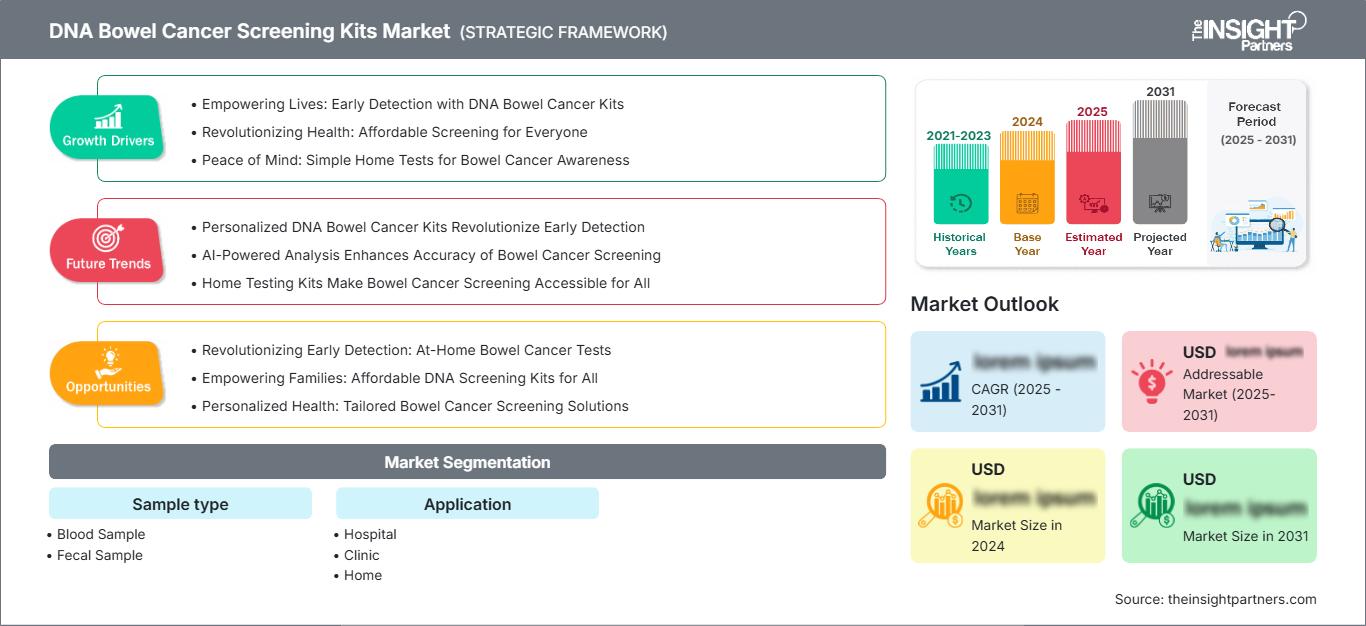
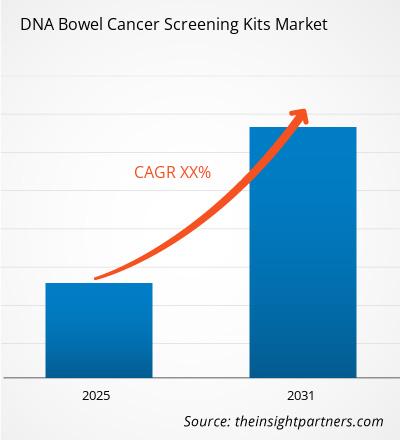
The DNA Bowel Cancer Screening Kits Market is advancing as healthcare systems prioritize earlier detection of colorectal malignancies through non-invasive screening technologies. Valued at US$ 1.38 Billion in 2025, the market is projected to reach US$ 3.74 Billion by 2034, expanding at a CAGR of 11.71% during 2026–2034. Increasing awareness of preventive healthcare, rising screening participation rates, and technological improvements in molecular diagnostics continue to strengthen demand across both clinical and home-based testing environments.
North America remains the most established regional DNA Bowel Cancer Screening Kits market, supported by structured screening programs, favorable reimbursement mechanisms, and high adoption of molecular diagnostics. The region is anticipated to expand at an estimated CAGR of around 11.2% through 2034. Growth is being reinforced by increasing colorectal cancer incidence among younger adults, wider acceptance of non-invasive testing methods, and ongoing investments in precision screening technologies that improve patient compliance and early-stage detection outcomes.
DNA Bowel Cancer Screening Kits Market Assessment and Insights
- North America: North America accounted for 41–45% share in 2025 and is anticipated to expand at a CAGR of 10.8%–12.4% during 2026–2034. Strong payer-backed preventive screening initiatives, broad laboratory infrastructure, and accelerating adoption of blood-based colorectal cancer (CRC) screening technologies continue to support regional market leadership.
- U.S.: The U.S. represented 84–88% of the North American DNA Bowel Cancer Screening Kits market size in 2025 and is projected to register a CAGR of 11.0%–12.6% during 2026–2034, supported by favorable reimbursement policies, widespread diagnostic laboratory access, and increasing uptake of blood-based CRC screening pathways.
- Europe: Europe held 24–28% of the DNA Bowel Cancer Screening Kits market share in 2025 and is expected to grow at a CAGR of 10.2%–11.6% during 2026–2034. Germany, the United Kingdom, and France remain the leading regional markets owing to well-established organized screening programs and expanding molecular diagnostics capabilities.
- Asia Pacific: Asia Pacific accounted for 20–24% share in 2025 and is forecast to expand at a CAGR of 12.6%–14.2% during 2026–2034. China, Japan, and India continue to drive regional growth through expanding screening infrastructure, improving diagnostic capacity, and rising colorectal cancer awareness initiatives.
- Largest Segment: Sample Type – Fecal Sample represented the largest DNA Bowel Cancer Screening Kits market segment and is expected to record a CAGR of 10.9%–12.1% during 2026–2034, reflecting established stool DNA and stool RNA testing workflows, high suitability for home-based collection, and strong clinical acceptance.
- High Growth Segment: Application – Home is projected to grow at a CAGR of 12.8%–14.3% during 2026–2034, driven by expanding adoption of mailed screening kits, increasing preference for convenient at-home testing, and growing emphasis on remote preventive healthcare participation.
- Key companies analyzed in detail: Quest Diagnostics Incorporated; Eiken Chemical Co., Ltd.; Abbott Laboratories; Beckman Coulter, Inc.; Sysmex Corporation; Siemens Healthineers AG; Exact Sciences Corporation; Guardant Health, Inc.; Geneoscopy, Inc.; Mainz Biomed N.V.
Source: The Insight Partners' analysis based on proprietary research, government publications, company annual reports, investor presentations, industry databases, and expert interviews.
The DNA Bowel Cancer Screening Kits Market report has evolved from a niche diagnostic category into a critical component of population-based cancer prevention strategies. Advances in molecular biology have improved the ability of screening kits to identify cancer-associated DNA biomarkers with greater sensitivity, supporting earlier intervention and reducing reliance on invasive diagnostic procedures for initial screening.
Over the coming decade, the DNA Bowel Cancer Screening Kits market development will be shaped by broader screening eligibility, growing consumer preference for convenient testing options, and integration of molecular diagnostics into national cancer control programs. Companies are increasingly focusing on improving test accuracy, enhancing sample collection processes, and expanding access through partnerships with healthcare providers and laboratory networks.
DNA Bowel Cancer Screening Kits Market Report Scope
| Report Attribute | Details |
|---|---|
| Market size in 2025 | US$ 1.38 Billion |
| Market Size by 2034 | US$ 3.74 Billion |
| Global CAGR (2026 - 2034) | 11.71% |
| Historical Data | 2021-2024 |
| Forecast period | 2026-2034 |
DNA Bowel Cancer Screening Kits Market Analysis
There has been an increased focus on preventive oncology, which has contributed to the growing demand for DNA bowel cancer screening kits globally. Increasing incidences of colorectal cancer, the aging population, and awareness about early detection have continued to fuel the adoption of such products. There is a concerted effort by healthcare practitioners to screen average-risk populations where there are low rates of compliance with colonoscopy guidelines.
The value chain of the DNA Bowel Cancer Screening Kits market includes diagnostic product manufacturers, molecular laboratories, healthcare organizations, insurance companies, and public health organizations. The companies in this sector include Quest Diagnostics, Abbott Molecular Inc., Siemens Healthcare, Sysmex Corporation, and Beckman Coulter Inc.
Innovation, collaboration, and laboratory testing capacity enhancement are some of the major competitive dynamics in the DNA bowel cancer screening kits market. The leading companies in this industry engage in cutting-edge biomarker discovery, advanced analytics through AI, and improved methods of sample processing in order to foster competitive advantage. The legacy players in the diagnostics space leverage their strong distribution channels and clinical relationships to fortify their presence in the DNA bowel cancer screening kits market.
The investment is now increasingly directed toward non-invasive screening solutions that would increase patient participation in the process. Some of the emerging companies, such as CompanianDx and Mode Diagnostics, are trying to explore new molecular techniques, whereas bigger companies are emphasizing integration of the screening services into cancer care management pathways.
● REPORT CUSTOMIZATION
Tailor This Report To Align With Your Specific Business Requirements
This report can be customized to align precisely with your business objectives, scope, and target markets. Customization options include tailored segmentation, geography, competitive analysis, and strategic insights to support informed decision-making.
Customize This Report →WHAT YOU CAN ADJUST
- ● Segmentations
- ● Geography
- ● Competitive Analysis
- ● Language Preferences
DNA Bowel Cancer Screening Kits Market: Strategic Insights
Regional Insights
North America DNA Bowel Cancer Screening Kits Market
North America represents the largest contributor to the global DNA bowel cancer screening kits market size and is anticipated to record a CAGR of approximately 11.2% through 2034. Advanced healthcare infrastructure, supportive reimbursement frameworks, and widespread screening awareness initiatives continue driving market adoption. Clinical guidelines increasingly promote early colorectal cancer detection, encouraging broader implementation of DNA-based screening technologies.
The region also benefits from substantial diagnostic innovation and active participation by major industry players. Growing demand for home-based screening solutions, combined with physician acceptance of molecular diagnostics, is expanding patient access. Continued investments in laboratory capacity and population screening initiatives are expected to reinforce regional leadership.
U.S. DNA Bowel Cancer Screening Kits Market
The United States represents roughly 75–80% of the North American DNA Bowel Cancer Screening Kits market and is expected to expand at a CAGR exceeding 11%. Screening uptake is supported by comprehensive healthcare networks, increasing employer-sponsored preventive health programs, and growing awareness among adults aged 45 years and older.
Leading diagnostic organizations including Quest Diagnostics, Abbott Molecular Inc, Siemens Healthcare, and Kaiser Permanente contribute to a highly developed screening ecosystem. Home-based applications are gaining momentum as patients seek convenient alternatives to invasive procedures. Growing adoption of DNA-based fecal and blood screening tests, supported by evolving clinical guidelines, continues to strengthen market penetration across diverse patient populations.
Europe DNA Bowel Cancer Screening Kits Market
Europe accounts for approximately 25–30% of global DNA Bowel Cancer Screening Kits market revenue and is forecast to expand at a CAGR near 10.8%. Regional growth is supported by organized cancer screening initiatives, favorable public health policies, and increasing emphasis on early disease detection. Widespread adoption of molecular diagnostics within healthcare systems continues to create opportunities for advanced screening solutions.
The United Kingdom remains a significant contributor due to established colorectal screening programs and strong healthcare infrastructure. Growing awareness campaigns and increasing acceptance of home-based diagnostic kits support consistent demand growth across both public and private healthcare channels.
Germany represents the leading European country market, benefiting from advanced laboratory networks, high healthcare expenditure, and strong adoption of preventive diagnostics. Healthcare providers increasingly incorporate molecular testing approaches to improve screening effectiveness and patient compliance.
France, Italy, and Spain collectively contribute substantial demand as governments continue expanding cancer prevention initiatives. Improvements in diagnostic accessibility, growing elderly populations, and broader implementation of screening recommendations are encouraging sustained adoption across these national markets.
APAC DNA Bowel Cancer Screening Kits Market
Asia-Pacific is expected to be the fastest-growing regional market, with CAGR approaching 13–14% through 2034. The region currently accounts for approximately 20–25% of global revenue, supported by rising healthcare investment, expanding middle-class populations, and increasing awareness regarding colorectal cancer prevention.
China leads regional demand due to its large target population, expanding diagnostic infrastructure, and government initiatives aimed at strengthening cancer screening coverage. Rapid urbanization and increasing healthcare access further support the DNA bowel cancer screening kits market expansion.
Japan, South Korea, India, and Australia are witnessing growing adoption of molecular diagnostics. National cancer control strategies, increasing healthcare digitization, and rising participation in preventive health programs are driving demand. Investments in laboratory modernization and precision medicine initiatives are expected to accelerate regional market development.
Middle East & Africa DNA Bowel Cancer Screening Kits Market
The Middle East & Africa DNA Bowel Cancer Screening Kits market is emerging steadily, supported by healthcare modernization programs and growing awareness of cancer prevention. Regional CAGR is anticipated to exceed 10% during the forecast period as governments prioritize early diagnosis and disease management initiatives.
Saudi Arabia represents the leading country, benefiting from substantial healthcare investments and ongoing expansion of diagnostic infrastructure. National transformation programs continue to encourage adoption of advanced screening technologies across public healthcare institutions.
The United Arab Emirates, South Africa, and the broader MEA region are experiencing increasing demand for molecular diagnostics. Infrastructure development, healthcare digitization, and efforts to improve access to preventive screening services are supporting long-term market opportunities despite varying levels of healthcare maturity across countries.
Segmentation Analysis
Sample Type
- Blood Sample: Blood-based DNA screening kits are gaining attention due to patient convenience, simplified collection procedures, and increasing clinical validation. Adoption is expanding as healthcare providers seek higher screening participation among individuals reluctant to undergo stool-based testing.
- Fecal Sample: Fecal sample-based DNA tests remain the dominant segment because of strong clinical evidence, established screening pathways, and proven effectiveness in detecting colorectal cancer biomarkers. Broad reimbursement support and physician familiarity further reinforce market leadership.
Application
- Hospital: Hospitals represent a major application segment due to integrated diagnostic workflows, specialist consultations, and access to confirmatory testing services. Large healthcare systems increasingly utilize molecular screening tools within comprehensive cancer prevention programs.
- Clinic: Clinics are expanding utilization of DNA bowel cancer screening kits through preventive care initiatives and routine health assessments. Their accessibility supports broader screening participation, particularly among average-risk populations seeking convenient healthcare services.
- Home: Home-based applications are experiencing rapid growth as consumers increasingly favor convenient and non-invasive screening options. Advances in sample collection technologies and digital health integration continue to enhance adoption and patient compliance.
Opportunity Snapshot
| Application | Revenue Contribution | Trend Tag | Adoption Stage |
| Hospital | High | Early Detection | Mature |
| Clinic | Medium | Preventive Care | Scaling |
| Home | High | Self Screening | Scaling |
DNA Bowel Cancer Screening Kits Market Growth Drivers and Impact Analysis
Expansion of Colorectal Cancer Screening Guidelines
In multiple countries, health authorities are reducing the age at which people should be screened and encouraging more people to take part in programs to prevent colorectal cancer. Data have shown an increasing incidence in younger adults, which has led to a change in screening recommendations, opening the door for DNA-based screening kits to reach a wider audience. With healthcare systems seeking cost-effective means of reducing the treatment burden associated with advanced-stage cancer, molecular screening technologies are taking on increasing importance.
The market impact is significant as broader screening eligibility directly increases the volume of tests. One benefit for diagnostic providers is recurring demand from periodic screening schedules. The expanded guidelines also require insurers and health-care organizations to support reimbursement, which will improve access. As a result, manufacturers are investing in production capacity, biomarker research, and physician education programs to capitalize on the opportunities created by a larger screening population.
Rising Preference for Non-Invasive Diagnostic Solutions
Reluctance of patients to undergo colonoscopy is one of the challenges that persist in the prevention of colorectal cancer. DNA bowel cancer screening kits help solve this problem by providing a less intrusive means that will increase compliance with the procedure. Patients are more likely to participate in screening through home collection capabilities, reduced preparation needs, and increased convenience.
However, the influence of this technology on the market is not limited to patient participation. The benefits of increased participation levels are becoming known to healthcare providers who understand that early disease detection improves public health. In response, diagnostic firms are focusing on improving kit design, logistics, and lab process efficiency. This leads to growing market demand.
Advancements in Molecular Biomarker Technologies
Genomic analysis and biomarker discoveries, along with improvements in data analysis techniques, have made DNA screening kits even better. Sensitivity and specificity improvements enhance the confidence of clinicians as well as minimize extra diagnostic steps that might not be necessary. Utilization of several biomarkers and sophisticated data analysis tools allows for more precise detection of alterations caused by cancers.
These advancements bring significant commercial benefits. Better tests have better chances to be approved by physicians, to get reimbursement, and to be included in screening guidelines. Research and development efforts of companies will result in the differentiation of their products and the filling of unmet medical needs. Improvements in performance standards should lead to more rapid adoption.
DNA Bowel Cancer Screening Kits Market Future Trends
Convergence of Blood-Based and Stool-Based Screening Platforms
The market is evolving toward a more diversified screening landscape, reflecting key DNA Bowel Cancer Screening Kits Market trends, where blood-based and stool-based DNA tests complement rather than directly compete with one another. Healthcare providers increasingly recognize that different patient populations require different screening approaches. Blood-based testing may improve participation among individuals unwilling to complete stool collection, while established fecal DNA methods continue to offer strong diagnostic performance.
Future market dynamics may revolve around individualized screening programs tailored to personal choices, risk levels, and access to care. Firms able to accommodate various screening programs might hold some competitive advantages. This development is anticipated to widen the pool of individuals opting for screening while promoting innovation in both samples.
Digital Integration Across Screening Workflows
Digital technology is gaining prominence as an essential part of bowel cancer screening programs. Digital applications and other innovations, such as patient portals, automated reminders, and telehealth consultations, are assisting in enhancing adherence rates as well as streamlining the screening process.
Looking ahead, digital integration may transform how screening kits are distributed, tracked, and results are interpreted. Digital strategies will improve the engagement rate of screening of underserved populations. Those companies that integrate their digital solutions together with molecular diagnostics will find themselves at a competitive advantage.
DNA Bowel Cancer Screening Kits Market Opportunities
Expansion into Underscreened Population Segments
Significant opportunities exist among populations with historically low colorectal cancer screening participation. Geographic barriers, limited healthcare access, and concerns about screening procedures continue to prevent many eligible individuals from being tested. Convenient DNA-based testing can help overcome these challenges, strengthening the DNA Bowel Cancer Screening Kits Market forecast and expanding screening adoption.
For organizations that are able to design an effective outreach strategy, collaborate with healthcare providers, and create educational programs that will resonate with the target population, there is a great opportunity to enter the marketplace and achieve great results both commercially and from a public health perspective.
Development of Multi-Cancer Screening Platforms
There are possibilities that the development of molecular diagnostics will lead to more than just the diagnosis of colorectal cancer. Firms are considering diagnostic methods that will enable the detection of many types of cancers using a single diagnostic method. This can improve screening efficiencies while providing greater value to healthcare facilities.
Investors and diagnostic firms are putting effort into multi-cancer detection. Companies with capabilities such as biomarker discovery, genomics, and laboratory facilities might take advantage of this trend. Achieving success in this field can change screening practices and create revenue streams in the field of oncology diagnostics.
Recent Developments
- March 2026: Freenome, an early cancer detection company developing blood-based screening tests, announced initial development data for its investigational lung cancer screening test. The data demonstrate the potential of a multi-omics approach that combines DNA methylation analysis and protein markers to detect lung cancer in high-risk individuals.
- March 2026: Walgreens announced to launch a nationwide colorectal cancer screening initiative this month, partnering with Exact Sciences and Workflow Services to connect eligible pharmacy customers with the Cologuard stool DNA test, an effort the companies say is aimed at closing persistent gaps in screening uptake across the US.
- September 2025: Guardant Health and Quest Diagnostics announced a strategic collaboration to expand U.S. access to the Shield blood-based colorectal cancer screening test. Through Quest Diagnostics’ nationwide provider network and electronic health record integrations, physicians gained streamlined ordering capabilities for the FDA-approved screening solution, supporting broader adoption of non-invasive colorectal cancer screening.
Frequently Asked Questions

- Comprehensive Market Sizing and Forecast Analysis
- Detailed Segmentation Analysis
- In-Depth Market Dynamics Assessment
- Regional and Country-Level Insights
- Competitive Landscape and Company Benchmarking
- Strategic Business Intelligence
Recent Reports
Testimonials

The Insight Partners' SCADA System Market report is comprehensive, with valuable insights on current trends and future forecasts. The team was highly professional, responsive, and supportive throughout. We are very satisfied and highly recommend their services.
RAN KEDEM Partner, Reali Technologies LTDs
I requested a report on a very specific software market and the team produced the report in a few days. The information was very relevant and well presented. I then requested some changes and additions to the report. The team was again very responsive and I got the final report in less than a week.
JEAN-HERVE JENN Chairman, Future Analytica
We worked with The Insight Partners for an important market study and forecast. They gave us clear insights into opportunities and risks, which helped shape our plans. Their research was easy to use and based on solid data. It helped us make smart, confident decisions. We highly recommend them.
PIYUSH NAGPAL Sr. Vice President, High Beam Global
The Insight Partners delivered insightful, well-structured market research with strong domain expertise. Their team was professional and responsive throughout. The user-friendly website made accessing industry reports seamless. We highly recommend them for reliable, high-quality research services
YUKIHIKO ADACHI CEO, Deep Blue, LLC.
This is the first time I have purchased a market report from The Insight Partners.While I was unsure at first, I visited their web site and felt more comfortable to take the risk and purchase a market report.I am completely satisfied with the quality of the report and customer service. I had several questions and comments with the initial report, but after a couple of dialogs over email with their analyst I believe I have a report that I can use as input to our strategic planning process.Thank you so much for taking the extra time and making this a positive experience.I will definitely recommend your service to others and you will be my first call when we need further market data.
JOHN SUZUKI President and Chief Executive Officer, Board Director, BK Technologies
I wish to appreciate your support and the professionalism you displayed in the course of attending to my request for information regarding to infectious disease IVD market in Nigeria. I appreciate your patience, your guidance, and the fact that you were willing to offer a discount, which eventually made it possible for us to close a deal. I look forward to engaging The Insight Partners in the future, all thanks to the impression you have created in me as a result of this first encounter.
DR CHIJIOKE ONYIA MANAGING DIRECTOR, PineCrest Healthcare Ltd.Reason to Buy
- Informed Decision-Making
- Understanding Market Dynamics
- Competitive Analysis
- Identifying Emerging Markets
- Customer Insights
- Market Forecasts
- Risk Mitigation
- Boosting Operational Efficiency
- Strategic Planning
- Investment Justification
- Tracking Industry Innovations
- Aligning with Regulatory Trends





 Get Free Sample for