
DNA Diagnostic Market Share, Growth & Forecast by 2034
Coverage: By Product Type (Instruments, Reagents, Software and Services); Technology (Polymerase Chain Reaction, In situ Hybridization, Microarrays, Mass Spectrometry, Sequencing Technology); Application (Oncology, Infectious Disease Testing, Myogenic Disorder Diagnosis, Clinical Diagnosis Confirmation, Pre-implantation Diagnosis, Prenatal Diagnosis); End User (Point of Care, Central Laboratories or Diagnostic Centers, Self-testing) , and Geography (North America, Europe, Asia Pacific, and South and Central America)
- Status : Data Released
- Report Code : TIPRE00004716
- Category : Life Sciences
- No. of Pages : 150
- Available Report Formats :


- Last update date : July 15, 2026


2025 Market Size
US$ 28.62 Bn
Base year value
2034 Forecast
US$ 58.57 Bn
Projected by 2034
CAGR 2026-2034
8.28 %
Growth rate
Addressable Market
US$ 391.54 Bn
(2026-2034)
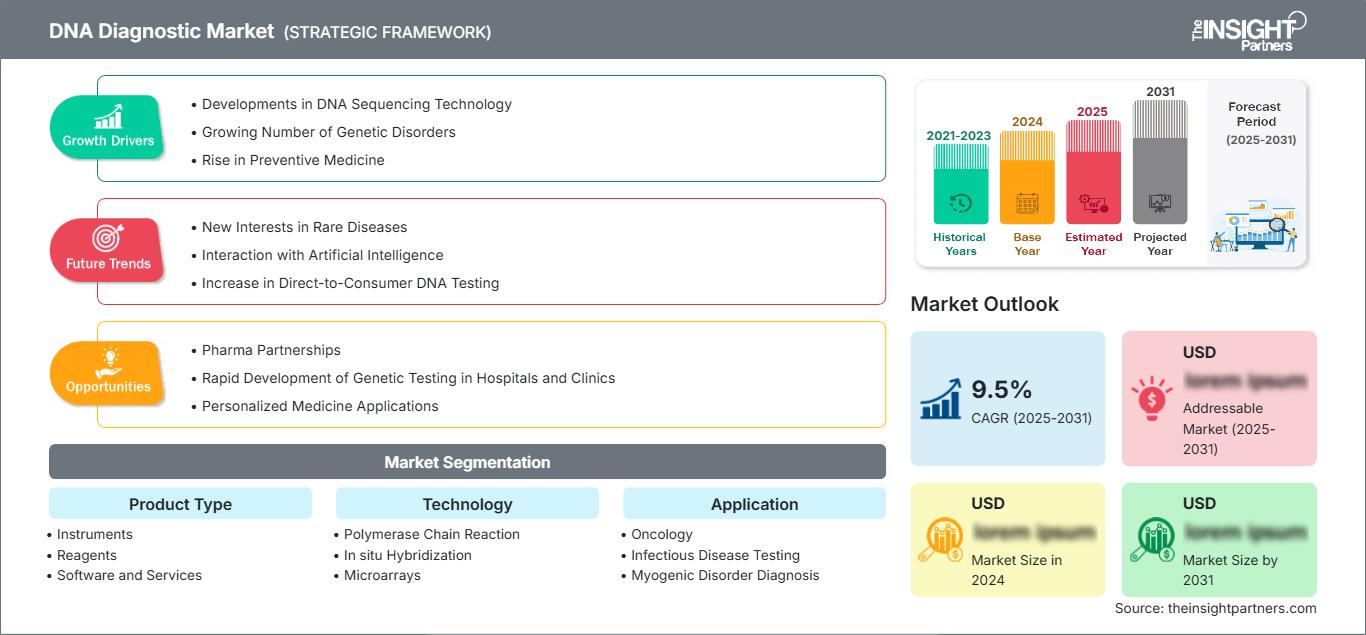
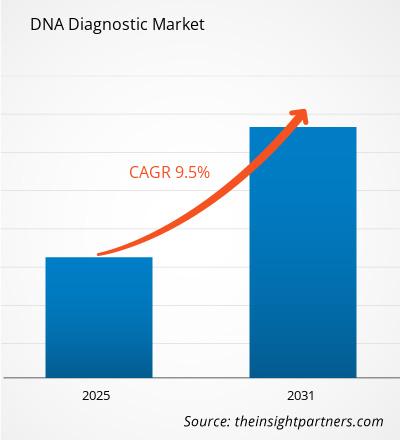
The DNA Diagnostic Market size was valued at US$ 28.62 billion in 2025, the market is projected to reach US$ 58.57 billion by 2034, advancing at a CAGR of 8.28% during 2026–2034. Growth is being reinforced by rising demand for precision medicine, wider adoption of genetic screening programs, and continuous innovation in sequencing, polymerase chain reaction, and bioinformatics platforms that improve diagnostic accuracy and clinical decision-making.
North America remains the most influential regional market and is anticipated to expand at an estimated CAGR of around 7.9% through 2034. Strong reimbursement frameworks, extensive genomic research investments, and the increasing prevalence of cancer and infectious diseases continue to support market development. The region also benefits from the presence of major industry participants, advanced laboratory infrastructure, and growing utilization of companion diagnostics across oncology and personalized treatment pathways.
DNA Diagnostic Market Assessment and Insights
- North America: North America accounted for 37–39% share in 2025 and is anticipated to expand at a CAGR of 7.8%–8.4% during 2026–2034. Strong adoption of oncology sequencing, favorable reimbursement coverage, and high testing volumes across integrated laboratory networks continue to support regional market leadership.
- U.S.: The U.S. represented 83–86% of the North American market in 2025 and is projected to register a CAGR of 7.9%–8.5% during 2026–2034, supported by widespread adoption of molecular diagnostics, expanding oncology testing, and strong clinical laboratory infrastructure.
- Europe: Europe held 26–28% DNA Diagnostic market share in 2025 and is expected to grow at a CAGR of 7.4%–8.0% during 2026–2034. Germany, the United Kingdom, and France remain the leading regional markets due to hospital laboratory modernization, national genomics initiatives, and increasing adoption of prenatal and hereditary disease testing.
- Asia Pacific: Asia Pacific accounted for a 23–25% share in 2025 and is forecast to expand at a CAGR of 9.3%–10.0% during 2026–2034. China, Japan, and India continue to drive regional growth through expanding diagnostic infrastructure, increasing private molecular laboratory capacity, and supportive precision medicine initiatives.
- Largest Segment: Product Type – Reagents represented the largest market segment and is expected to record a CAGR of 8.6%–9.2% during 2026–2034, reflecting recurring demand across PCR, sequencing, hybridization, and microarray workflows in both centralized and decentralized diagnostic settings.
- High Growth Segment: Technology – Sequencing Technology is projected to grow at a CAGR of 10.1%–10.8% during 2026–2034, driven by increasing adoption of oncology panel testing, rare disease diagnostics, reproductive genomics, and declining sequencing costs across high-throughput and targeted platforms.
- Key companies analyzed in detail: F. Hoffmann-La Roche Ltd; Abbott Laboratories; Sysmex Corporation; Illumina, Inc.; Thermo Fisher Scientific Inc.; Bio-Rad Laboratories, Inc.; QIAGEN N.V.; Danaher Corporation; Agilent Technologies, Inc.; Becton, Dickinson and Company.
Source: The Insight Partners' analysis based on proprietary research, government publications, company annual reports, investor presentations, industry databases, and expert interviews.
The DNA Diagnostic Market has evolved from a specialized laboratory discipline into a central component of modern healthcare delivery. Advances in molecular biology, genomic sequencing, and computational analytics have expanded the utility of DNA-based testing across oncology, prenatal screening, infectious disease detection, and rare disease identification. The convergence of laboratory automation and precision medicine initiatives has accelerated adoption among healthcare providers.
The DNA Diagnostic Market Forecast indicates that over the coming decade, the industry will be influenced by broader access to genomic testing, increasing adoption of decentralized diagnostic models, and deeper integration of digital health technologies. Companies are expected to prioritize workflow simplification, cost optimization, and advanced data interpretation capabilities, creating growth opportunities for both established diagnostic providers and emerging molecular technology developers.
DNA Diagnostic Market Report Scope
| Report Attribute | Details |
|---|---|
| Market size in 2025 | US$ 28.62 Billion |
| Market Size by 2034 | US$ 58.57 Billion |
| Global CAGR (2026 - 2034) | 8.28% |
| Historical Data | 2021-2024 |
| Forecast period | 2026-2034 |
DNA Diagnostic Market Analysis
The DNA diagnostic market growth is being driven by the growing burden of chronic diseases, rising cancer incidence, and the need for earlier disease detection. Molecular diagnostics provide actionable biological insights that support personalized treatment selection, enabling healthcare providers to move beyond traditional symptom-based approaches. Increasing awareness of hereditary disease risk and preventive healthcare strategies is also contributing to testing volumes.
The value chain encompasses reagent suppliers, instrument manufacturers, software developers, clinical laboratories, healthcare institutions, and regulatory stakeholders. Reagents continue to represent a substantial revenue stream due to recurring usage requirements, while software solutions are becoming increasingly important as genomic datasets grow in complexity and scale.
The DNA diagnostic market report highlights a competitive landscape driven by technological differentiation, platform integration, and portfolio expansion. Leading companies, including F. Hoffmann-La Roche Ltd, Sysmex Corporation, Abbott, Illumina, Inc., and Thermo Fisher Scientific, continue investing in advanced molecular platforms to enhance diagnostic speed, sensitivity, and scalability.
Investment activity increasingly targets next-generation sequencing, multiomics, bioinformatics, and AI-supported diagnostic interpretation. Strategic collaborations among pharmaceutical firms, diagnostic developers, and healthcare providers are strengthening precision medicine ecosystems. Companies are also expanding clinical utility through companion diagnostics, population genomics initiatives, and decentralized testing solutions.
● REPORT CUSTOMIZATION
Tailor This Report To Align With Your Specific Business Requirements
This report can be customized to align precisely with your business objectives, scope, and target markets. Customization options include tailored segmentation, geography, competitive analysis, and strategic insights to support informed decision-making.
Customize This Report →WHAT YOU CAN ADJUST
- ● Segmentations
- ● Geography
- ● Competitive Analysis
- ● Language Preferences
DNA Diagnostic Market: Strategic Insights
Regional Insights
North America DNA Diagnostic Market
North America is projected to maintain its leadership position with an estimated CAGR of approximately 7.9% through the forecast period. Strong healthcare spending, advanced laboratory infrastructure, and widespread adoption of precision medicine continue to support market expansion. Growing demand for genomic profiling in oncology and hereditary disease screening remains a significant contributor to testing volumes.
Advancements in research funding, reimbursement policies for molecular diagnostic tests, and collaboration between academia and industry have positively influenced the region. The growth of the application of sequencing technology and companion diagnostics has created more business opportunities.
U.S. DNA Diagnostic Market
The U.S. accounts for an estimated 75–80% share of the North American DNA Diagnostic market and is expected to grow at a CAGR of approximately 8.0% through 2034. The country's strong position stems from advanced healthcare infrastructure, extensive genomic research programs, and high adoption rates of molecular testing technologies across hospitals and diagnostic laboratories.
Companies such as Roche, Abbott, Illumina, Thermo Fisher Scientific, and Bio-Rad Laboratories have a considerable presence in the United States. Applications for oncology still carry great weight, but prenatal tests, infectious diseases, and rare diseases are becoming more clinically relevant. Increasing use of genomic information in the development of therapeutic strategies contributes to market growth.
Europe DNA Diagnostic Market
Europe represents approximately 25–30% of global DNA Diagnostic market revenue and is anticipated to expand at a CAGR near 7.6% through 2034. Regulatory support for personalized medicine, increasing adoption of genetic testing, and expanding cancer screening programs contribute to market growth. The region also benefits from strong academic research networks and public healthcare investment.
Genomic medicine in the United Kingdom continues to evolve with national genome sequencing projects and precision medicine initiatives. Increased availability of molecular pathology services and rising demand for genetic disease tests are enhancing market prospects in the clinical sector.
Germany is still the dominant European country because of its well-developed healthcare system, presence of advanced diagnostics market and large number of laboratories. Research investments in the field of molecular biology and automation are further consolidating its market leader position.
France, Italy, and Spain have together been generating huge demand owing to growing adoption of genomic testing and public health screening, along with increased knowledge of personalized medicine. Modernization of healthcare systems and laboratory capacity expansion are enabling greater use of DNA-based diagnostic solutions.
APAC DNA Diagnostic Market
Asia Pacific is expected to be the fastest-growing regional DNA Diagnostic market, with an estimated CAGR exceeding 10% through 2034. The region currently accounts for approximately 20–25% of global revenue, supported by expanding healthcare access, rising disease burden, and increasing investments in genomic medicine.
China leads regional demand due to large-scale healthcare modernization efforts, expanding biotechnology capabilities, and substantial investment in genomic research infrastructure. Government-backed precision medicine initiatives continue supporting market expansion across both public and private healthcare systems.
Japan, South Korea, India, and Australia are strengthening regional growth through advances in molecular diagnostics, increasing cancer screening adoption, and improved laboratory networks. Supportive healthcare policies, growing biotechnology sectors, and investments in genomic innovation are accelerating market development across diverse healthcare environments.
Middle East & Africa DNA Diagnostic Market
The Middle East & Africa DNA Diagnostic market is projected to register steady growth with increasing adoption of advanced healthcare technologies and expanding diagnostic capabilities. Rising awareness of genetic disorders and infectious disease surveillance is creating new opportunities for molecular testing providers.
Saudi Arabia is emerging as the leading regional market due to healthcare transformation programs, growing investments in genomic medicine, and modernization of laboratory infrastructure. National healthcare diversification initiatives continue encouraging adoption of advanced diagnostic technologies.
The United Arab Emirates, South Africa, and the broader MEA region are expanding molecular diagnostic capabilities through healthcare infrastructure investments and digital health initiatives. Economic diversification, population growth, and healthcare modernization programs are supporting demand for precision diagnostic solutions across public and private sectors.
Segmentation Analysis
Product Type
- Instruments: Essential diagnostic platforms supporting PCR, sequencing, and molecular analysis workflows. Demand is driven by laboratory modernization, automation requirements, and increasing testing throughput across clinical and research environments.
- Reagents: Represent the largest recurring revenue category in the DNA Diagnostic market due to continuous consumption in molecular testing procedures. Growth reflects expanding test volumes and broader adoption of genomic diagnostic applications.
- Software and Services: Increasingly important for genomic data interpretation, workflow management, and laboratory efficiency. Adoption is accelerating as healthcare organizations manage larger and more complex datasets.
Technology
- Polymerase Chain Reaction: Widely utilized for pathogen detection, genetic screening, and mutation analysis due to high sensitivity, speed, and established clinical acceptance.
- In situ Hybridization: Supports visualization of genetic abnormalities within tissue samples and remains important in oncology diagnostics and biomarker identification.
- Microarrays: Enable simultaneous analysis of multiple genetic markers and continue serving specialized applications in research and clinical genetics.
- Mass Spectrometry: Offers precise molecular characterization and supports advanced diagnostic workflows requiring high analytical specificity.
- Sequencing Technology: Experiencing rapid adoption as declining costs and improved throughput expand clinical utility across multiple diagnostic applications.
Application
- Oncology: Largest application segment in the DNA Diagnostic market due to increasing use of genomic profiling, companion diagnostics, and precision treatment selection.
- Infectious Disease Testing: Supports rapid pathogen identification and outbreak monitoring, particularly within public health and hospital settings.
- Myogenic Disorder Diagnosis: Facilitates detection of inherited muscular disorders through targeted genetic analysis and mutation screening.
- Clinical Diagnosis Confirmation: Enhances diagnostic confidence through molecular validation of disease-related genetic markers.
- Pre-implantation Diagnosis: Increasingly adopted in reproductive medicine to identify genetic abnormalities before embryo implantation.
- Prenatal Diagnosis: Supports early detection of chromosomal and genetic disorders, improving informed clinical decision-making during pregnancy.
End User
- Point of Care: Expanding due to demand for rapid molecular testing and decentralized healthcare delivery models.
- Central Laboratories or Diagnostic Centers: Remain dominant owing to advanced analytical capabilities, high throughput, and comprehensive testing infrastructure.
- Self-testing: Emerging segment in the DNA Diagnostic market, supported by consumer health awareness and advancements in user-friendly genetic testing technologies.
Opportunity Snapshot
| End User | Revenue Contribution | Trend Tag | Adoption Stage |
| Point of Care | Medium | Rapid Testing | Scaling |
| Central Laboratories or Diagnostic Centers | High | Genomic Workflows | Mature |
| Self-testing | Low | Consumer Genomics | Emerging |
DNA Diagnostic Market Growth Drivers and Impact Analysis
Expansion of Precision Medicine Programs
Precision medicine initiatives are redefining how healthcare is delivered by using treatments tailored to an individual’s genetic profile. DNA diagnostics, a cornerstone of this shift, facilitate the identification of disease-associated mutations, biomarkers, and predictors of response to therapy. The use of molecular information by healthcare providers to guide treatment selection is on the increase. This is particularly true in oncology, where targeted therapies demand accurate genomic characterization. Clinical demand is driven by government-supported genomics programs and pharmaceutical investments in companion diagnostics. With precision medicine becoming part of routine care pathways, laboratories are increasing their capacity for molecular testing and using advanced sequencing technologies. This driver simultaneously impacts equipment purchases, reagent consumption, and software adoption, driving widespread growth across the DNA Diagnostic market ecosystem and improving clinical outcomes with more individualized treatment strategies.
Growing Burden of Cancer and Genetic Disorders
The rising prevalence of cancer and inherited diseases continues to increase demand for highly accurate diagnostic tools capable of detecting molecular abnormalities at early stages. DNA diagnostics enable clinicians to identify genetic mutations associated with disease development, progression, and therapeutic response. Early detection facilitates better patient management and improves the efficiency of treatment. Within the field of oncology, molecular diagnostics has become an essential factor when it comes to selecting treatments and managing the disease. On the other hand, progress within hereditary disease tests is broadening the scope of use in reproduction, neonatal, and rare disease diagnostics. Health care systems looking to decrease the cost of treatment in the long term are becoming more focused on early intervention methods.
Technological Advancements in Sequencing and Bioinformatics
Advances in sequencing technologies, laboratory automation, and computational analytics are increasing the availability and clinical utility of DNA diagnostics. Faster processing times, lower sequencing costs, and enhanced analytical accuracy have made diagnostic applications more feasible. At the same time, advances in bioinformatics software are allowing healthcare professionals to make sense of increasingly complex genomic datasets. Tools that use artificial intelligence and machine learning are getting better at spotting variants and reporting them for clinical use. These innovations improve laboratory efficiency and extend the clinical relevance of molecular testing. The reduced operational barriers are expected to drive wider adoption among hospitals, diagnostic centers, and research bodies, which would, in turn, boost long-term market expansion and aid in the development of next-generation diagnostic services.
DNA Diagnostic Market Future Trends
Integration of AI with Genomic Diagnostics
AI plays an ever-increasing role in the processes of DNA diagnostics as genome data grows both in size and complexity. With the help of such tools, it is possible to achieve better interpretation of variants, predictive analysis, and automated reports without overburdening laboratory professionals and ensuring greater consistency of diagnoses. Machine learning combined with sequencing and other molecular tests allows more effective identification of meaningful genetic indicators. Further improvements will be related to real-time interpretation of information and decision support systems. As there is a need to increase speed and actionability of insights in health care, AI-driven genomics will likely become a part of the precision medicine infrastructure for all technology providers with advanced analytics capabilities.
Expansion of Multiomics-Based Diagnostic Approaches
One of the prominent DNA Diagnostic Market Trends is the growing adoption of multiomics approaches that combine genomics, transcriptomics, proteomics, and other biological datasets to provide a more comprehensive understanding of disease mechanisms. These integrated strategies improve biomarker discovery, patient stratification, and therapy optimization beyond what genomic information alone can offer. Going forward, diagnostic platforms are expected to incorporate multiple molecular data layers within unified workflows, creating opportunities for companies that deliver integrated analytical solutions while encouraging greater collaboration among sequencing providers, software developers, and healthcare organizations.
DNA Diagnostic Market Opportunities
Expansion of Decentralized Molecular Testing Infrastructure
Increased attention towards decentralized delivery of healthcare services provides an excellent opportunity for the DNA diagnostic firms. Portable devices that can provide reliable diagnosis results without being dependent on a conventional laboratory setting have become increasingly popular amongst healthcare networks that wish to make decisions faster. Advancements in technology are leading towards simpler workflows, minimized sample preparation needs, and better usability. Firms that have invested in developing portable devices, cartridges, and cloud solutions will be able to cater to the needs of community healthcare centers, rural healthcare centers, and outpatient centers.
Population Genomics and Preventive Healthcare Programs
Large-scale population genomics initiatives represent a substantial long-term growth opportunity in the DNA Diagnostic market. Governments and healthcare organizations increasingly recognize the value of genomic information for disease prevention, risk assessment, and personalized healthcare planning. Screening programs could create consistent demand for sequencing services, reagents, and bioinformatics. Companies that have the capacity to offer scalable testing systems and data management solutions could leverage such programs effectively. Investment in population-level genomics also supports the development of national health databases that can improve research capabilities, healthcare planning, and future precision medicine applications.
Recent Developments
- May 2026: BillionToOne, Inc, a next-generation molecular diagnostics company with a mission to create powerful and accurate tests that are accessible to all, announced the launch of Unity Confirm, a circulating fetal cell-based, non-invasive confirmation test, designed to address this need from a simple maternal blood draw.
- March 2026: VolitionRx Limited, a multinational epigenetics company, is the first to demonstrate the isolation and analysis of >99% pure circulating tumor-derived DNA (ctDNA). Volition announces the submission of an updated manuscript entitled "Direct analysis of transcription factor-protected cfDNA in plasma by ChIP-seq: Measurement of altered CTCF binding in cancer is a novel biomarker for liquid biopsy.
- October 2025: Illumina, Inc. launched BioInsight, a new business focused on combining sequencing, software, data assets, and artificial intelligence capabilities to accelerate biological discovery and improve genomic insight generation. The initiative expands Illumina’s presence beyond sequencing instruments into advanced analytics and multiomic interpretation, reflecting growing convergence between genomics and AI-driven diagnostics.
Frequently Asked Questions

- Comprehensive Market Sizing and Forecast Analysis
- Detailed Segmentation Analysis
- In-Depth Market Dynamics Assessment
- Regional and Country-Level Insights
- Competitive Landscape and Company Benchmarking
- Strategic Business Intelligence
Recent Reports
Testimonials

The Insight Partners' SCADA System Market report is comprehensive, with valuable insights on current trends and future forecasts. The team was highly professional, responsive, and supportive throughout. We are very satisfied and highly recommend their services.
RAN KEDEM Partner, Reali Technologies LTDs
I requested a report on a very specific software market and the team produced the report in a few days. The information was very relevant and well presented. I then requested some changes and additions to the report. The team was again very responsive and I got the final report in less than a week.
JEAN-HERVE JENN Chairman, Future Analytica
We worked with The Insight Partners for an important market study and forecast. They gave us clear insights into opportunities and risks, which helped shape our plans. Their research was easy to use and based on solid data. It helped us make smart, confident decisions. We highly recommend them.
PIYUSH NAGPAL Sr. Vice President, High Beam Global
The Insight Partners delivered insightful, well-structured market research with strong domain expertise. Their team was professional and responsive throughout. The user-friendly website made accessing industry reports seamless. We highly recommend them for reliable, high-quality research services
YUKIHIKO ADACHI CEO, Deep Blue, LLC.
This is the first time I have purchased a market report from The Insight Partners.While I was unsure at first, I visited their web site and felt more comfortable to take the risk and purchase a market report.I am completely satisfied with the quality of the report and customer service. I had several questions and comments with the initial report, but after a couple of dialogs over email with their analyst I believe I have a report that I can use as input to our strategic planning process.Thank you so much for taking the extra time and making this a positive experience.I will definitely recommend your service to others and you will be my first call when we need further market data.
JOHN SUZUKI President and Chief Executive Officer, Board Director, BK Technologies
I wish to appreciate your support and the professionalism you displayed in the course of attending to my request for information regarding to infectious disease IVD market in Nigeria. I appreciate your patience, your guidance, and the fact that you were willing to offer a discount, which eventually made it possible for us to close a deal. I look forward to engaging The Insight Partners in the future, all thanks to the impression you have created in me as a result of this first encounter.
DR CHIJIOKE ONYIA MANAGING DIRECTOR, PineCrest Healthcare Ltd.Reason to Buy
- Informed Decision-Making
- Understanding Market Dynamics
- Competitive Analysis
- Identifying Emerging Markets
- Customer Insights
- Market Forecasts
- Risk Mitigation
- Boosting Operational Efficiency
- Strategic Planning
- Investment Justification
- Tracking Industry Innovations
- Aligning with Regulatory Trends





 Get Free Sample for