
Drug Development Market Size, Share & Trends by 2034
Coverage: Drug Type (Small Molecule Drugs, and Biologic Drugs); Technology (High Throughput Screening, Pharmacogenomics, Combinatorial Chemistry, Nanotechnology, and Other Technologies); End Use (Pharmaceutical Companies, Contract Research Organizations (CROs), and Other End Users), and Geography (North America, Europe, Asia Pacific, and South and Central America)
- Status : Data Released
- Report Code : TIPRE00024322
- Category : Life Sciences
- No. of Pages : 150
- Available Report Formats :


- Last update date : July 06, 2026


2025 Market Size
US$ 105.0 Bn
Base year value
2034 Forecast
US$ 148.19 Bn
Projected by 2034
CAGR 2026-2034
3.90 %
Growth rate
Addressable Market
US$ 1,149.81 Bn
(2026-2034)
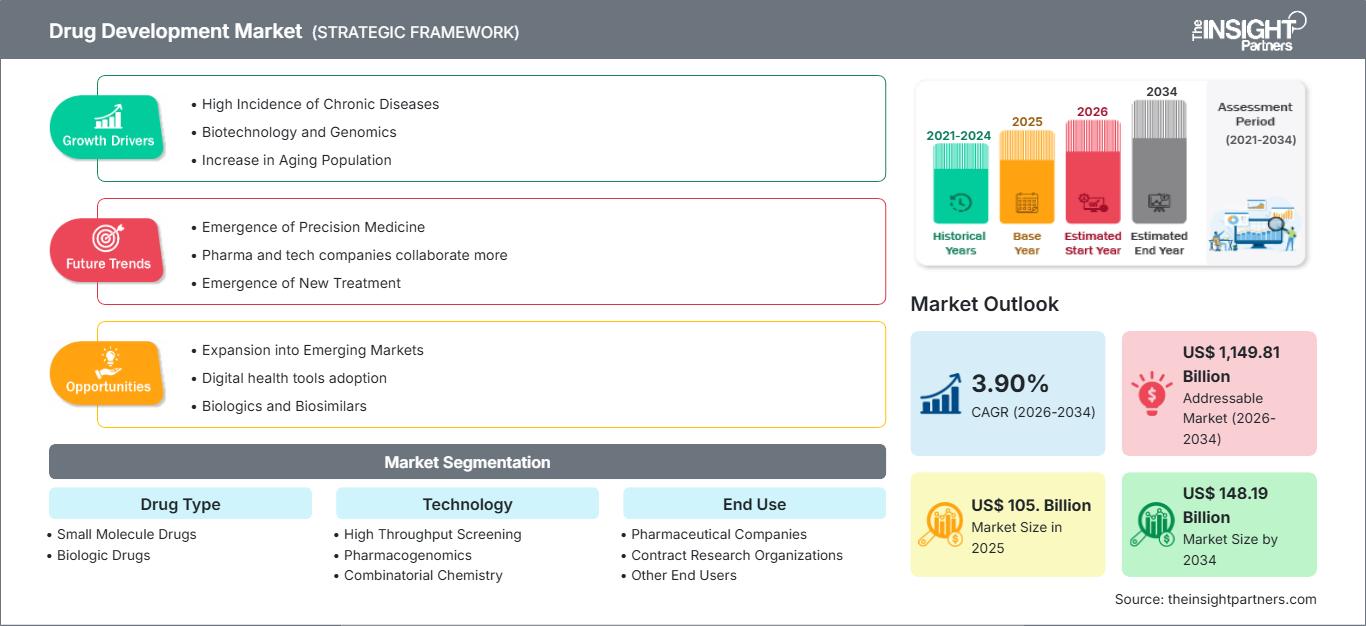
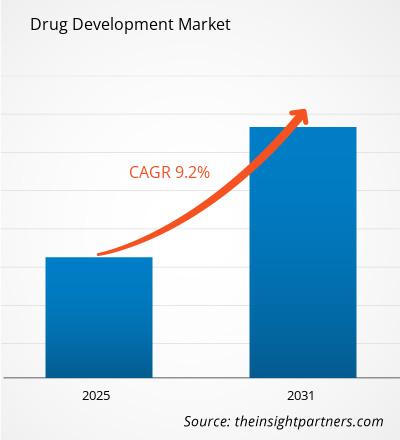
The drug development market was valued at US$ 105.0 billion in 2025 and is projected to reach US$ 148.19 billion by 2034, expanding at a CAGR of 3.90% during 2026–2034. Growth is being supported by increasing investments in novel therapeutics, rising prevalence of chronic and rare diseases, and broader adoption of advanced discovery technologies. The market continues to evolve as pharmaceutical companies seek to shorten development timelines while improving clinical success rates and regulatory outcomes.
North America remains the most influential regional drug development market and is anticipated to advance at an estimated CAGR of 3.8% through 2034. Strong biopharmaceutical research ecosystems, extensive clinical trial infrastructure, and sustained R&D expenditure are reinforcing regional leadership. The growing use of artificial intelligence, precision medicine platforms, and strategic collaborations between pharmaceutical companies and research organizations further contribute to long-term market expansion.
Drug Development Market Assessment and Insights
- North America: North America accounted for 40–44% of the drug development market share in 2025 and is projected to expand at a CAGR of 3.7%–4.1% during 2026–2034. Growth is driven by strong pharmaceutical R&D investments and expanding biologics pipelines, which continue to support long-term innovation across the drug discovery ecosystem.
- U.S.: The U.S. represented 84–88% of the North American market in 2025 and is anticipated to register a CAGR of 3.8%–4.2% during 2026–2034, supported by robust pharmaceutical research activities, increasing biologics development, and continued investment in advanced drug discovery technologies.
- Europe: Europe accounted for 26–30% of the drug development market size in 2025 and is projected to expand at a CAGR of 3.5%–3.9% during 2026–2034. Germany, the United Kingdom, and Switzerland continue to lead the region, supported by sophisticated pharmaceutical research capabilities and a strong culture of biotechnology innovation.
- Asia Pacific: Asia Pacific accounted for 22–26% market share in 2025 and is forecast to expand at a CAGR of 4.6%–5.1% during 2026–2034. China, Japan, and India drive regional growth through expanding clinical research activities and increasing investments in biopharmaceutical development.
- Largest Segment – Small Molecule Drugs: Small molecule drugs accounted for the largest segment of the market and are projected to expand at a CAGR of 3.6%–4.0% during 2026–2034. According to the drug development market forecast, growth is supported by their wide range of therapeutic uses, well-established manufacturing infrastructure, and successful commercialization pathways across multiple healthcare sectors.
- High Growth Segment – Pharmacogenomics: The pharmacogenomics segment is projected to register the fastest growth with a CAGR of 5.5%–6.0% during 2026–2034, supported by increasing adoption of personalized medicine and growing use of biomarker-driven drug development approaches.
- Key companies analyzed in detail: Abbott Laboratories; Agilent Technologies, Inc.; AstraZeneca PLC; Bayer AG; Bristol-Myers Squibb Company; Collaborative Drug Discovery, Inc.; Eli Lilly and Company; F. Hoffmann-La Roche Ltd; Gilead Sciences, Inc.; GSK plc; Merck & Co., Inc.; Novartis AG; Pfizer Inc.; Takeda Pharmaceutical Company Limited; Teva Pharmaceutical Industries Ltd.; Genome Biologics Pvt. Ltd.; AviVA Biosciences Corporation; Biotica Pharmaceuticals, Inc.; DeepBiome Therapeutics, Inc.; Seres Therapeutics, Inc.
Source: The Insight Partners' analysis based on proprietary research, government publications, company annual reports, investor presentations, industry databases, and expert interviews.
Drug development has transformed from a predominantly chemistry-driven process into a multidisciplinary ecosystem incorporating genomics, computational biology, biomarker science, and advanced analytics. Organizations are increasingly combining traditional discovery methodologies with digital technologies to identify promising candidates earlier, improve target validation, and reduce attrition rates throughout clinical development.
The drug development market report outlook remains favorable as healthcare systems prioritize innovative therapies for oncology, autoimmune disorders, neurological diseases, and metabolic conditions. Expanding biologics pipelines, growing demand for personalized medicine, and increasing collaboration between pharmaceutical companies and contract research organizations are expected to create sustained opportunities across discovery, preclinical, and clinical development stages.
Drug Development Market Report Scope
| Report Attribute | Details |
|---|---|
| Market size in 2025 | US$ 105.0 Billion |
| Market Size by 2034 | US$ 148.19 Billion |
| Global CAGR (2026 - 2034) | 3.90% |
| Historical Data | 2021-2024 |
| Forecast period | 2026-2034 |
Drug Development Market Analysis
The drug development market is shaped by the continuous need for novel therapies capable of addressing unmet medical needs. The rising incidence of cancer, cardiovascular diseases, neurodegenerative disorders, and rare genetic conditions is encouraging substantial investment in therapeutic innovation. Pharmaceutical companies are leveraging genomics, high-throughput screening, and molecular modeling technologies to improve candidate selection and accelerate early-stage research activities.
The value chain extends from target identification and lead optimization to preclinical testing, clinical trials, regulatory approval, and commercialization. Contract research organizations are playing an increasingly important role by providing specialized expertise, scalable research infrastructure, and cost-efficient development capabilities. This collaborative ecosystem allows developers to manage complex pipelines while optimizing operational efficiency.
A mix of established pharmaceutical leaders and emerging biotechnology innovators characterizes competition within the drug development market. Companies such as AstraZeneca PLC, Pfizer Inc., Novartis AG, F. Hoffmann-La Roche Ltd, Merck & Co., Inc., Eli Lilly and Company, GSK plc, and Bristol-Myers Squibb Company continue to strengthen their pipelines through strategic acquisitions, licensing agreements, and technology partnerships.
Investment activity remains concentrated around biologics, cell and gene therapies, precision medicine, and AI-enabled discovery platforms. Organizations are allocating capital toward digital infrastructure, biomarker-driven development programs, and advanced manufacturing capabilities. Strategic positioning increasingly depends on the ability to integrate scientific expertise with data-driven decision-making across the development lifecycle.
● REPORT CUSTOMIZATION
Tailor This Report To Align With Your Specific Business Requirements
This report can be customized to align precisely with your business objectives, scope, and target markets. Customization options include tailored segmentation, geography, competitive analysis, and strategic insights to support informed decision-making.
Customize This Report →WHAT YOU CAN ADJUST
- ● Segmentations
- ● Geography
- ● Competitive Analysis
- ● Language Preferences
Drug Development Market: Strategic Insights
Regional Insights
North America Drug Development Market
North America accounts for the largest share of the global drug development market and is expected to expand at a CAGR of approximately 3.8% through 2034. The region benefits from a highly developed pharmaceutical industry, advanced research infrastructure, and significant public and private investment in biomedical innovation. Strong regulatory frameworks and extensive clinical trial networks continue to support development activities across multiple therapeutic areas.
The presence of leading innovators, biotechnology clusters, and academic research institutions enhances commercialization potential. Growing adoption of AI-assisted drug discovery, biomarker-based development strategies, and precision medicine initiatives is improving research productivity and strengthening regional competitiveness. Demand remains particularly strong in oncology, immunology, and rare disease therapeutics.
U.S. Drug Development Market
The U.S. represents approximately 75–80% of the North American drug development market and is projected to register a CAGR near 3.9% during the forecast period. The country hosts a significant concentration of pharmaceutical and biotechnology companies, including Pfizer Inc., Merck & Co., Inc., Eli Lilly and Company, Bristol-Myers Squibb Company, and Gilead Sciences, Inc., creating a highly dynamic innovation ecosystem.
Strong venture capital activity, advanced clinical trial infrastructure, and widespread adoption of precision medicine continue to support growth. Oncology, metabolic disease, immunology, and neuroscience remain major areas of development focus. The increasing use of pharmacogenomics, real-world evidence, and AI-driven candidate identification is enhancing development efficiency while supporting the emergence of more targeted therapeutic solutions.
Europe Drug Development Market
Europe contributes approximately 25–30% of the global drug development market revenue and is forecast to expand at a CAGR of around 3.6% through 2034. The region benefits from robust scientific research capabilities, established pharmaceutical manufacturing infrastructure, and strong collaboration between academic institutions and industry participants.
The United Kingdom remains a leading center for pharmaceutical innovation due to its strong biotechnology sector, advanced clinical research capabilities, and supportive regulatory environment. Investments in genomics, precision medicine, and translational research continue to strengthen development pipelines and attract global partnerships.
Germany serves as Europe's leading pharmaceutical market, supported by substantial R&D expenditure, advanced manufacturing capabilities, and a strong presence of multinational drug developers. The country's emphasis on biotechnology innovation and digital health integration contributes significantly to regional competitiveness.
France, Italy, and Spain collectively play important roles in clinical research and pharmaceutical development. Expanding biotechnology ecosystems, increasing research collaborations, and supportive healthcare initiatives are encouraging innovation across biologics, specialty therapeutics, and personalized medicine applications.
APAC Drug Development Market
Asia Pacific is expected to be the fastest-growing regional drug development market, advancing at a CAGR of approximately 5.1% through 2034 while accounting for an estimated 20–25% share of global revenue. The region benefits from expanding healthcare expenditure, increasing clinical trial activity, and supportive government initiatives aimed at strengthening pharmaceutical innovation.
China leads the regional drug development market through substantial investments in biotechnology research, manufacturing infrastructure, and drug innovation programs. Regulatory reforms and growing domestic capabilities are encouraging both local and international development activities.
Japan still plays an important role in research on high-end pharmaceutical products, and South Korea is beginning to emerge as an innovative destination for biotechnological innovation. India is positioning itself as a strong destination by expanding research services, developing high-quality scientific skills, and providing affordable research infrastructure. Australia remains a preferred location for conducting clinical research trials.
Middle East & Africa Drug Development Market
The Middle East & Africa drug development market is expanding steadily, supported by healthcare modernization initiatives, growing pharmaceutical investments, and increasing demand for innovative therapies. The region is anticipated to record a CAGR of approximately 4.2% during the forecast period.
Saudi Arabia drives regional growth through transformation initiatives in healthcare, investments in pharmaceuticals, and the development of research facilities. Saudi Arabia has been actively engaging in international clinical research and biotechnology innovation.
UAE continues to build its healthcare and life science sector through strategic investments and partnerships. South Africa continues to be an important destination for conducting clinical trials and pharmaceutical research. Overall, MEA will benefit from developments in healthcare infrastructure and pharmaceutical innovations.
Segmentation Analysis
Drug Type
- Small Molecule Drugs – Continue to dominate development pipelines due to established regulatory pathways, scalable manufacturing processes, broad therapeutic applicability, and strong commercial viability across oncology, metabolic disorders, and cardiovascular diseases.
- Biologic Drugs – Experiencing accelerated adoption because of superior target specificity, expanding applications in immunology and oncology, and increasing success in addressing complex diseases with limited treatment alternatives.
Technology
- High Throughput Screening – Widely utilized to rapidly evaluate large compound libraries, improving lead identification efficiency and enabling pharmaceutical companies to accelerate early-stage discovery activities.
- Pharmacogenomics – Supports personalized medicine development by identifying genetic variations that influence drug response, improving treatment efficacy, and reducing adverse event risks.
- Combinatorial Chemistry – Enhances discovery productivity through systematic generation of diverse molecular libraries, enabling researchers to identify optimized compounds for targeted therapeutic applications.
- Nanotechnology – Expanding its role in drug delivery, targeted therapeutics, and formulation optimization by improving bioavailability, efficacy, and safety profiles of innovative medicines.
End Use
- Pharmaceutical Companies – Represent the largest end-use segment due to extensive R&D budgets, broad therapeutic pipelines, and growing investments in next-generation drug discovery technologies.
- Contract Research Organizations – Increasingly important partners providing specialized expertise, operational flexibility, and cost-effective development services across preclinical and clinical research activities.
Opportunity Snapshot
| End Use | Revenue Contribution | Trend Tag | Adoption Stage |
| Pharmaceutical Companies | High | Precision Medicine | Mature |
| Contract Research Organizations | Medium | Outsourcing Growth | Scaling |
| Other End Users | Low | Academic Research | Emerging |
Drug Development Market Growth Drivers and Impact Analysis
Rising Burden of Complex and Chronic Diseases
The growing prevalence of cancer, autoimmune disorders, neurological conditions, cardiovascular diseases, and rare genetic disorders continues to create significant demand for innovative therapeutics. Existing treatment options often provide limited efficacy or fail to address disease progression, encouraging pharmaceutical companies to pursue novel mechanisms of action and more targeted interventions. Increasing life expectancy and aging populations further contribute to disease burden, particularly in developed economies.
These drug development market trends are influencing the pharmaceutical development industry as healthcare systems increasingly prioritize therapies that enhance patient outcomes while lowering overall treatment costs. As a result, companies have intensified their research pipelines, conducted clinical trials, and produced drugs more quickly. The field of medicine that still lacks some solutions remains highly investable.
Expansion of Precision Medicine and Biomarker-Based Research
Progress in fields such as genomics, molecular diagnostics, and biomarker discovery is changing how new medicines are discovered and developed. Precision medicine strategies allow scientists to target patients who will benefit the most from particular treatments, thus increasing the chances of success in trials and minimizing the risk of development. Pharmacogenomics also helps to fine-tune the choice of therapy and its dosage.
This trend is affecting the investment decisions in the entire pharma sector. Pharmaceutical companies are increasingly relying on genomic information and using companion diagnostics and biomarkers in their R&D programs. It leads to increased efficiency and safety in innovation and commercialization opportunities across oncology, rare diseases, and immunology.
Growing Adoption of Advanced Discovery Technologies
Technological advancements are changing the processes of drug discovery and development at all levels, from discovery through pre-clinical development. Technological tools such as high-throughput screening, computational modeling, machine learning, and nanotechnology can make drug discovery more efficient while allowing researchers to derive significant biological insight in the process. These technologies not only save resources but also help make better drug selections.
The impact of the drug development market goes beyond productivity benefits. The use of technology allows companies to achieve shorter development times and better management of their resources and portfolios. Companies that can combine digital technology with science gain a competitive advantage through faster innovation cycles, stronger pipelines, and improved research outcomes.
Drug Development Market Future Trends
Artificial Intelligence Integration Across Development Workflows
Artificial intelligence is increasingly being incorporated in all areas of drug discovery and development. AI-based algorithms are helping scientists identify targets, design molecules, predict toxicity, and optimize clinical trials. With further advances in computational technology, AI is forecast to have an even greater impact on decision-making across the entire pharmaceutical value chain.
The next generation of R&D programs would likely integrate conventional laboratory experiments with highly sophisticated digital tools capable of processing large volumes of biological data. Early adopters of AI technologies could derive substantial benefits from shorter discovery processes, higher-quality candidates, and lower development costs. The trend is likely to affect the competitive landscape of both large pharmaceutical companies and new biotech startups.
Growing Importance of Biologics and Advanced Therapeutic Modalities
The rise of biologics remains steady because of their capability to treat complicated diseases more specifically than conventional treatments. Research on monoclonal antibodies, gene therapies, cell therapies, and RNA drugs has expanded and diversified the potential avenues for treating various diseases.
For the next decade, there will be increasing diversity in development as advanced modes of therapy will go out of their niches. Investment in manufacturing, regulation, and research will become stronger. Those companies that can successfully cope with challenges related to biologics are going to see substantial growth opportunities.
Drug Development Market Opportunities
Expansion of Drug Development Activities in Emerging Economies
These emerging markets are now increasingly becoming preferred investment choices for drug development because of the increasing need for healthcare services, scientific capabilities, and government policy changes. Asian-Pacific countries, Middle Eastern nations, as well as certain parts of Latin America, are increasingly improving their research infrastructure while stimulating innovations through regulatory policy changes and funding programs.
To both investors and the industry players, such emerging markets present a chance to tap into qualified labor, cut down on development costs, and form beneficial strategic partnerships. An increasing number of clinical trials and local demand for innovative drugs create good prerequisites for entering these markets in the long run. Organizations that will be forming a regional presence early will have competitive advantages.
Strategic Growth Through CRO Partnerships and Specialized Services
The growing complexity of development processes requires specialized skills and the outsourcing of research activities. Contract research organizations continue developing their competencies in areas of discovery, preclinical, clinical, regulatory, and data services. More and more pharmaceutical companies depend on such partners to achieve greater flexibility and speed up their development processes.
There are many good opportunities for investing in specialized research providers and innovative research platforms. The CROs with their competencies in biologics, precision medicines, data analytics, and global clinical trials management are especially promising. Strategic partnerships can bring great benefits to any company willing to increase efficiency and reduce costs.
Recent Developments
- June, 2026: Roche announced that it has entered into an exclusive licensing and collaboration agreement with Nurix Therapeutics, Inc. Under the terms of this agreement, the two companies will collaborate to co-develop and co-commercialise bexobrutideg, Nurix's investigational Bruton's Tyrosine Kinase (BTK) degrader. The collaboration encompasses a clinical development plan spanning B-cell malignancies, immunology, and neurology. The addition of bexobrutideg complements Roche's existing strengths in haematology and provides a cross-therapeutic opportunity to extend the pipeline's reach in immunology and neurology.
- November, 2025: Eli Lilly and Company announced plans to build a new $3 billion manufacturing facility in Katwijk, the Netherlands, located within the Leiden Bio Science Park. This major project will expand Lilly's capacity to produce oral medicines and strengthen the company's global supply chain.
- April, 2025: Johnson & Johnson announced it has completed its acquisition of Intra-Cellular Therapies, Inc. Intra-Cellular Therapies is now part of Johnson & Johnson and will operate as a business unit within Johnson & Johnson Innovative Medicine.
Frequently Asked Questions

- Comprehensive Market Sizing and Forecast Analysis
- Detailed Segmentation Analysis
- In-Depth Market Dynamics Assessment
- Regional and Country-Level Insights
- Competitive Landscape and Company Benchmarking
- Strategic Business Intelligence
Recent Reports
Testimonials

The Insight Partners provided valuable market intelligence that supported our global go-to-market strategy. Their team was professional, responsive, and attentive to our feedback, providing thoughtful analysis and helpful methodological clarifications throughout the project.
Junmo Kim Chief Financial Officer (CFO), Enertech Co., Ltd.
The Insight Partners' SCADA System Market report is comprehensive, with valuable insights on current trends and future forecasts. The team was highly professional, responsive, and supportive throughout. We are very satisfied and highly recommend their services.
RAN KEDEM Partner, Reali Technologies LTDs
I requested a report on a very specific software market and the team produced the report in a few days. The information was very relevant and well presented. I then requested some changes and additions to the report. The team was again very responsive and I got the final report in less than a week.
JEAN-HERVE JENN Chairman, Future Analytica
We worked with The Insight Partners for an important market study and forecast. They gave us clear insights into opportunities and risks, which helped shape our plans. Their research was easy to use and based on solid data. It helped us make smart, confident decisions. We highly recommend them.
PIYUSH NAGPAL Sr. Vice President, High Beam Global
The Insight Partners delivered insightful, well-structured market research with strong domain expertise. Their team was professional and responsive throughout. The user-friendly website made accessing industry reports seamless. We highly recommend them for reliable, high-quality research services
YUKIHIKO ADACHI CEO, Deep Blue, LLC.
This is the first time I have purchased a market report from The Insight Partners.While I was unsure at first, I visited their web site and felt more comfortable to take the risk and purchase a market report.I am completely satisfied with the quality of the report and customer service. I had several questions and comments with the initial report, but after a couple of dialogs over email with their analyst I believe I have a report that I can use as input to our strategic planning process.Thank you so much for taking the extra time and making this a positive experience.I will definitely recommend your service to others and you will be my first call when we need further market data.
JOHN SUZUKI President and Chief Executive Officer, Board Director, BK Technologies
I wish to appreciate your support and the professionalism you displayed in the course of attending to my request for information regarding to infectious disease IVD market in Nigeria. I appreciate your patience, your guidance, and the fact that you were willing to offer a discount, which eventually made it possible for us to close a deal. I look forward to engaging The Insight Partners in the future, all thanks to the impression you have created in me as a result of this first encounter.
DR CHIJIOKE ONYIA MANAGING DIRECTOR, PineCrest Healthcare Ltd.Reason to Buy
- Informed Decision-Making
- Understanding Market Dynamics
- Competitive Analysis
- Identifying Emerging Markets
- Customer Insights
- Market Forecasts
- Risk Mitigation
- Boosting Operational Efficiency
- Strategic Planning
- Investment Justification
- Tracking Industry Innovations
- Aligning with Regulatory Trends





 Get Free Sample for