
ECMO First Aid Equipment Market Size, Trends & Growth by 2034
Coverage: By Type (VA (Veno-Arterial) ECMO, and VV (Veno-Venous) ECMO); Application (Neonatal, Pediatric, and Adult), and Geography (North America, Europe, Asia Pacific, and South and Central America)
- Status : Data Released
- Report Code : TIPRE00024172
- Category : Life Sciences
- No. of Pages : 150
- Available Report Formats :


- Last update date : July 15, 2026


2025 Market Size
US$ 1,042.77 Mn
Base year value
2034 Forecast
US$ 1,974.65 Mn
Projected by 2034
CAGR 2026-2034
7.35 %
Growth rate
Addressable Market
US$ 13,605.00 Mn
(2026-2034)
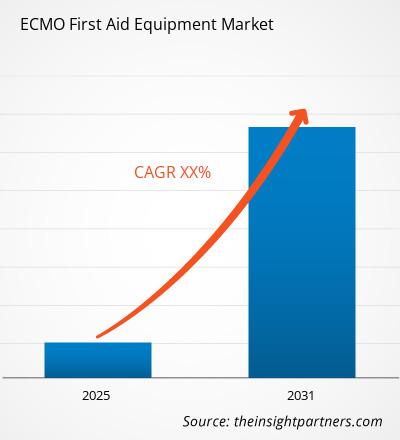
The ECMO First Aid Equipment Market was valued at US$ 1,042.77 Million in 2025 and is projected to reach US$ 1,974.65 Million by 2034, registering a CAGR of 7.35% during 2026–2034. The market covers advanced extracorporeal life support solutions designed for emergency cardiovascular and respiratory support across neonatal, pediatric, and adult applications. Increasing adoption of ECMO systems in critical care environments, improvements in portable equipment, and rising demand for rapid intervention technologies are influencing market development.
North America is expected to remain a significant contributor to the ECMO First Aid Equipment Market, supported by established critical care infrastructure, specialized ECMO centers, and continuous investments in extracorporeal technologies. Growth is driven by increasing utilization of ECMO for complex respiratory and cardiac failure cases, expansion of training programs, and regulatory focus on improving emergency medical response capabilities across healthcare systems.
ECMO First Aid Equipment Market Assessment and Insights
- North America: North America maintains a leading position due to advanced intensive care facilities, specialized ECMO networks, and strong adoption of emergency life-support technologies. The region accounted for a 34–38% share in 2025 and is expected to grow at a CAGR of 7–9% during 2026–2034.
- US: The US market benefits from extensive ECMO availability, high procedure volumes, and strong presence of global medical device manufacturers. The country represented a 75–80% share of North America in 2025 and is projected to expand at a CAGR of 7–9% between 2026–2034.
- Europe: Europe demonstrates steady expansion supported by established healthcare systems and increasing ECMO deployment across Germany, the UK, France, Italy, and Spain. The region held a 28–32% share in 2025 and is anticipated to register a CAGR of 6–8% during 2026–2034.
- Asia Pacific: Asia Pacific is witnessing accelerated adoption due to improving critical care infrastructure, healthcare modernization, and increasing investment in advanced medical equipment in China, Japan, South Korea, and India. The region captured a 22–26% share in 2025 and is expected to grow at a CAGR of 8–10% during 2026–2034.
- Largest Segment: VA ECMO represented the largest segment by type, supported by demand for combined cardiac and respiratory support applications. The segment accounted for a 55–60% market share in 2025 and is expected to grow at a CAGR of 6–8% during 2026–2034.
- High Growth Segment: VV ECMO is the fastest-growing segment due to rising respiratory failure cases and expanding applications in intensive care. The segment held a 40–45% market share in 2025 and is projected to grow at a CAGR of 8–10% between 2026–2034.
- Key companies analyzed in detail: Getinge AB, LivaNova PLC, Medtronic plc, Terumo Corporation, Abbott Laboratories, MicroPort Scientific Corporation, EUROSETS S.r.l., XENIOS AG, Inspira Technologies OXY B.H.N. Ltd., OriGen Biomedical, Inc.
Source: The Insight Partners' analysis based on proprietary research, government publications, company annual reports, investor presentations, industry databases, and expert interviews.
The ECMO First Aid Equipment Market has developed through ongoing innovations in ECMO devices that include compact systems, advanced oxygenators, sophisticated monitoring systems, and blood management systems. The manufacturers are now concentrating on the development of equipment which can ensure quick implementation of these systems during emergency situations as well as their effective use for long-term support of patients. Manufacturing of these devices is moving towards manufacturing of complete sets of pump, oxygenator, monitoring system, and disposables.
Future market trends will be driven by the growth of ECMO programs in new healthcare markets, greater investments into specialized intensive care facilities, as well as supportive regulatory initiatives for life support devices. The hospitals are increasingly becoming prepared for ECMO by means of training staff members and using simulation techniques and standardization of treatment protocol. Collaborations of healthcare organizations with device manufacturers are expected to facilitate the development of mobile and interconnected ECMO systems.
ECMO First Aid Equipment Market Report Scope
| Report Attribute | Details |
|---|---|
| Market size in 2025 | US$ 1,042.77 Million |
| Market Size by 2034 | US$ 1,974.65 Million |
| Global CAGR (2026 - 2034) | 7.35% |
| Historical Data | 2021-2024 |
| Forecast period | 2026-2034 |
ECMO First Aid Equipment Market Analysis
There is an increase in the demand for ECMO emergency equipment due to growing need for technologically advanced solutions in critical care applications. The ecosystem includes equipment manufacturers, healthcare providers, perfusionists, clinicians, distributors, and regulators associated with ECMO safety. The supply chain dynamics include the demand for reliable systems, the supply of consumables, and need for technology upgrade.
The value chain consists of the following stages: research and development; manufacture of pumps and oxygenators; integration of components; clinical trials; delivery; and maintenance after installation. The suppliers are concentrating on enhancing reliability, simplification of the equipment, and clinical efficiency. Expansion of ECMO centers and use in specialty hospitals will drive equipment usage in developed and developing healthcare markets.
Competitive activity in the ECMO First Aid Equipment Market is centered on technology innovation, product portfolio expansion, and strategic positioning in critical care segments. Companies such as Getinge AB, LivaNova PLC, Medtronic plc, Terumo Corporation, Abbott Laboratories, MicroPort Scientific Corporation, EUROSETS S.r.l., XENIOS AG, Inspira Technologies OXY B.H.N. Ltd., and OriGen Biomedical, Inc. are investing in advanced extracorporeal solutions, system integration, and clinical support capabilities.
Investment trends are focused on portable ECMO systems, digital monitoring platforms, and next-generation extracorporeal technologies designed to improve operational efficiency. Strategic collaborations, regulatory approvals, and product enhancements remain important approaches for companies seeking competitive differentiation. Market participants are also strengthening their presence through regional expansion, particularly in Asia Pacific and other emerging healthcare markets where critical care infrastructure is developing.
● REPORT CUSTOMIZATION
Tailor This Report To Align With Your Specific Business Requirements
This report can be customized to align precisely with your business objectives, scope, and target markets. Customization options include tailored segmentation, geography, competitive analysis, and strategic insights to support informed decision-making.
Customize This Report →WHAT YOU CAN ADJUST
- ● Segmentations
- ● Geography
- ● Competitive Analysis
- ● Language Preferences
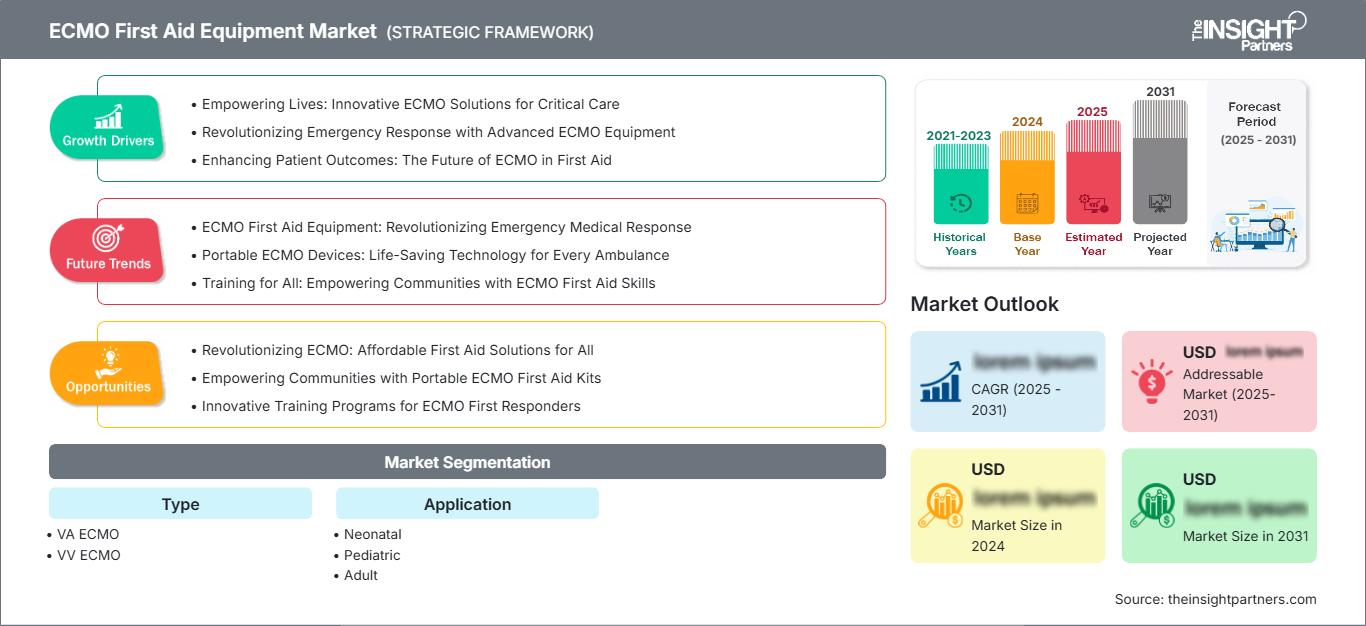
ECMO First Aid Equipment Market: Strategic Insights
Regional Insights
North America ECMO First Aid Equipment Market
North America remains one of the most developed regions for ECMO adoption, supported by advanced hospital networks, experienced clinical teams, and established extracorporeal support programs. The region accounted for a 34–38% share in 2025 and is expected to grow at a CAGR of 7–9% during 2026–2034. Growth is supported by increasing demand for emergency cardiovascular and respiratory support solutions.
The US represents the major contributor within North America due to higher ECMO procedure volumes, strong healthcare expenditure, and significant presence of leading manufacturers. Canada also contributes through expanding critical care capabilities and investments in specialized medical infrastructure. Adoption of portable systems and improved training initiatives continue to influence regional market development.
U.S. ECMO First Aid Equipment Market
The U.S. ECMO First Aid Equipment Market benefits from strong clinical adoption, advanced intensive care infrastructure, and a large network of ECMO centers. The country contributed 75–80% of the North American market share in 2025 and is projected to grow at a CAGR of 7–9% during 2026–2034. Increasing application across adult and pediatric critical care remains a major factor.
Major companies including Getinge AB, Medtronic plc, LivaNova PLC, and Terumo Corporation maintain strong market presence through advanced extracorporeal product portfolios and clinical support programs. Growing focus on emergency preparedness, respiratory failure management, and cardiac support applications continues to drive adoption. Healthcare institutions are also investing in ECMO training programs to improve operational readiness.
Europe ECMO First Aid Equipment Market
Europe accounted for a 28–32% share in 2025 and is expected to expand at a CAGR of 6–8% during 2026–2034. The region benefits from established healthcare systems, strong clinical research activity, and increasing implementation of ECMO programs across major countries. Germany remains a leading contributor due to advanced medical infrastructure and high adoption of critical care technologies.
The UK market is supported by structured intensive care networks and increasing utilization of ECMO for complex respiratory and cardiac conditions. Investments in specialized treatment centers and clinical expertise are supporting regional development. Germany continues to strengthen its position through technology adoption and hospital modernization initiatives.
France, Italy, and Spain are witnessing gradual expansion due to improving critical care capacity and increasing awareness among healthcare providers. These countries are adopting advanced ECMO technologies to support emergency treatment capabilities. European regulatory frameworks and healthcare investments continue to encourage adoption of reliable extracorporeal support equipment.
APAC ECMO First Aid Equipment Market
APAC ECMO First Aid Equipment Market is expanding due to improving healthcare infrastructure, rising critical care investments, and increasing availability of advanced life-support technologies. The region accounted for a 22–26% share in 2025 and is expected to grow at a CAGR of 8–10% during 2026–2034. China represents a leading market due to healthcare modernization and increasing hospital capabilities.
Japan and South Korea are strengthening ECMO adoption through advanced medical systems, while India is witnessing growing demand from expanding tertiary care facilities. Australia contributes through established critical care practices and specialized treatment centers. Government healthcare initiatives, medical technology investments, and increasing focus on emergency preparedness are supporting regional development.
Middle East & Africa ECMO First Aid Equipment Market
The Middle East & Africa ECMO First Aid Equipment Market is developing with increasing investment in healthcare infrastructure and specialized critical care services. The region is expected to register a CAGR of 6–8% during 2026–2034, supported by improving hospital capabilities and growing adoption of advanced medical equipment.
Saudi Arabia and the UAE are leading contributors due to healthcare transformation programs, private sector investments, and expansion of advanced hospitals. South Africa contributes through established healthcare facilities and increasing critical care applications. The remaining MEA markets are gradually adopting ECMO technologies as healthcare infrastructure improves.
Energy-driven economic development in Gulf countries is supporting healthcare modernization initiatives and investment in advanced treatment capabilities. Expansion of tertiary care centers, international healthcare partnerships, and increasing focus on specialized emergency services are expected to strengthen ECMO equipment adoption across the region.
Segmentation Analysis
Type
The type segment includes VA ECMO and VV ECMO solutions designed for different clinical applications. The segment is expected to grow at varying rates during 2026–2034 as healthcare providers select systems based on patient requirements, disease conditions, and emergency support needs. Increasing preference for efficient extracorporeal support technologies and improvements in system design are influencing adoption patterns across hospitals and critical care centers.
- VA ECMO: VA ECMO remains the dominant type due to its ability to provide combined cardiac and respiratory support for critically ill patients. The technology is widely used in cardiac failure management, postoperative complications, and emergency cardiovascular situations, making it strategically important for advanced intensive care facilities.
- VV ECMO: VV ECMO adoption is increasing due to rising demand for respiratory support applications and treatment of severe pulmonary conditions. Healthcare providers are expanding usage in specialized intensive care units as clinical expertise and ECMO availability continue improving globally.
Application
The application segment includes Neonatal, Pediatric, and Adult applications, each representing important clinical areas for ECMO deployment. The segment is expected to grow at a CAGR range of 7–9% during 2026–2034 due to increasing utilization of extracorporeal support across different patient groups. Improvements in clinical protocols, training programs, and equipment capabilities are supporting broader adoption.
- Neonatal: Neonatal ECMO applications focus on providing life-support solutions for newborns with severe respiratory or cardiac complications. Growing availability of specialized neonatal intensive care units and improved clinical capabilities are supporting demand for dedicated ECMO technologies.
- Pediatric: Pediatric applications are expanding as healthcare systems improve access to advanced critical care solutions for children. Increased awareness, specialized treatment centers, and improvements in pediatric ECMO protocols are contributing to wider adoption.
- Adult: Adult applications represent a significant portion of ECMO utilization due to rising cases of respiratory failure, cardiovascular complications, and complex critical illnesses. Expansion of adult intensive care capabilities continues to support market development.
Opportunity Snapshot
| Application | Revenue Contribution (High/Medium/Low) | Trend Tag | Adoption Stage |
| Neonatal | Medium | Neonatal Support | Scaling |
| Pediatric | Medium | Pediatric Care | Scaling |
| Adult | High | Critical Care | Mature |
ECMO First Aid Equipment Market Growth Drivers and Impact Analysis
Rising Demand for Advanced Critical Care Infrastructure
Expansion of intensive care infrastructure is a major factor influencing ECMO equipment adoption worldwide. Hospitals are increasing investments in specialized critical care units to manage complex respiratory and cardiovascular emergencies. The growing availability of trained healthcare professionals, improved patient monitoring capabilities, and increasing focus on emergency preparedness are supporting demand for ECMO systems. Healthcare providers are prioritizing technologies that enable timely intervention during life-threatening conditions. This infrastructure development is creating opportunities for equipment manufacturers to introduce advanced solutions with improved efficiency and operational flexibility. The impact is particularly visible in developing healthcare markets where modernization of hospitals is accelerating adoption of extracorporeal support technologies.
Increasing Incidence of Severe Respiratory and Cardiac Conditions
The rising burden of critical respiratory and cardiovascular conditions is contributing to increased utilization of ECMO first aid equipment. Severe cases requiring advanced life-support interventions are encouraging hospitals to strengthen ECMO capabilities. Factors such as aging populations, increasing prevalence of chronic diseases, and demand for specialized emergency care are influencing healthcare decision-making. ECMO systems provide an important support mechanism when conventional treatment methods are insufficient, creating sustained demand across adult, pediatric, and neonatal applications. This trend is encouraging manufacturers to improve system reliability, enhance patient monitoring features, and develop solutions suitable for different clinical environments.
Technological Advancements in Extracorporeal Support Systems
Innovation in ECMO equipment is making it more efficient and safer for patients. This innovation is seen in the development of portable designs, the incorporation of monitoring features, higher-performing oxygenators, and safety measures. This enables healthcare professionals to deal with complex situations more easily. Digitalization and workflow management have also affected the procurement process of healthcare institutions. With healthcare institutions increasingly needing technologically advanced equipment, innovation has become a major market driver in the ECMO equipment industry. This effect cuts across both developed and developing nations, as hospitals upgrade their ECMO technology.
ECMO First Aid Equipment Market Future Trends
Integration of Digital Monitoring and Connected ECMO Platforms
Future development of ECMO systems is expected to focus on digital connectivity, remote monitoring capabilities, and data-driven clinical decision support. Connected platforms may enable healthcare professionals to track equipment performance, patient parameters, and treatment progress more efficiently. Integration of advanced analytics can support improved workflow management and enhance operational visibility in intensive care environments. As hospitals increasingly adopt smart healthcare technologies, ECMO equipment manufacturers are expected to prioritize digital features that improve usability and clinical coordination. This trend may support the development of more efficient ECMO ecosystems combining hardware, software, and clinical management capabilities.
Expansion of Portable and Rapid Deployment ECMO Solutions
The future of ECMO technology is expected to involve greater emphasis on portability and rapid deployment capabilities. Emergency medical systems and healthcare providers are seeking solutions that can support faster patient transfer and timely intervention outside traditional intensive care settings. Compact ECMO designs may improve accessibility in emergency scenarios and expand applications across different healthcare environments. Increasing focus on disaster preparedness, emergency response systems, and specialized transport capabilities is likely to influence product innovation. Manufacturers are expected to invest in lightweight systems and simplified operating approaches to address evolving clinical requirements.
ECMO First Aid Equipment Market Opportunities
Expansion of ECMO Programs in Emerging Healthcare Markets
Healthcare market opportunities that have emerged are quite immense, owing to the growth in the availability of advanced critical care in hospitals and the development of special treatment infrastructure. Various nations in the Asia-Pacific region, the Middle East, and other emerging countries have begun spending more on health care and expanding access to advanced medical facilities. Business organizations can leverage these opportunities by forming regional partnerships, improving their distribution channels, and initiating programs to provide clinical training. Market growth opportunities arise from the increased need for advanced life support systems and the modernization of tertiary care centers. Market participants focusing on localized strategies, service support, and technology accessibility are positioned to address evolving healthcare requirements in these regions.
Development of Next-Generation Extracorporeal Technologies
Innovation in ECMO equipment design creates opportunities for manufacturers to introduce advanced systems with improved efficiency, safety, and usability. Investments in compact devices, integrated monitoring solutions, and enhanced disposable components can support differentiation in a competitive environment. Healthcare providers are increasingly evaluating equipment based on operational reliability, clinical workflow improvement, and long-term value. Companies investing in research partnerships, regulatory approvals, and technology upgrades can strengthen their market position. The opportunity landscape is shaped by demand for solutions that support diverse patient populations and improve the effectiveness of extracorporeal support across critical care applications.
Recent Developments
- November 2024: Fresenius Medical Care awarded a mechanical circulatory support agreement with Premier, Inc. for the Novalung ECMO System. Agreement expands access to ECMO solutions for hospitals, health systems, and patients nationwide in the U.S.
- September 2024: Medtronic plc, the global leader in medical technology, announced the launch of a new ECMO system called VitalFlow, which is a configurable one-system ECMO solution, built on simplicity and performance. The VitalFlow™ ECMO System bridges the gap between bedside care and intra-hospital transport, offering physicians and clinicians an easier, smarter ECMO experience.
- May 2024: Hemovent GmbH announced that its pioneering integrated portable pneumatic extracorporeal membrane oxygenation (ECMO) system, the MOBYBOX®, has completed its first batch of commercial deployments in Europe, successfully showcasing its exceptional portability through multiple intra-hospital and inter-hospital transfers. To date, MOBYBOX is the only ECMO system to have received Medical Device Regulation Certification. MOBYBOX® has been launched in global markets including Germany, the Netherlands, Italy, Greece, and Israel, and efforts are underway to advance market access in several Middle East Countries and in the United States and China.
Frequently Asked Questions

- Comprehensive Market Sizing and Forecast Analysis
- Detailed Segmentation Analysis
- In-Depth Market Dynamics Assessment
- Regional and Country-Level Insights
- Competitive Landscape and Company Benchmarking
- Strategic Business Intelligence
Recent Reports
Testimonials

The Insight Partners' SCADA System Market report is comprehensive, with valuable insights on current trends and future forecasts. The team was highly professional, responsive, and supportive throughout. We are very satisfied and highly recommend their services.
RAN KEDEM Partner, Reali Technologies LTDs
I requested a report on a very specific software market and the team produced the report in a few days. The information was very relevant and well presented. I then requested some changes and additions to the report. The team was again very responsive and I got the final report in less than a week.
JEAN-HERVE JENN Chairman, Future Analytica
We worked with The Insight Partners for an important market study and forecast. They gave us clear insights into opportunities and risks, which helped shape our plans. Their research was easy to use and based on solid data. It helped us make smart, confident decisions. We highly recommend them.
PIYUSH NAGPAL Sr. Vice President, High Beam Global
The Insight Partners delivered insightful, well-structured market research with strong domain expertise. Their team was professional and responsive throughout. The user-friendly website made accessing industry reports seamless. We highly recommend them for reliable, high-quality research services
YUKIHIKO ADACHI CEO, Deep Blue, LLC.
This is the first time I have purchased a market report from The Insight Partners.While I was unsure at first, I visited their web site and felt more comfortable to take the risk and purchase a market report.I am completely satisfied with the quality of the report and customer service. I had several questions and comments with the initial report, but after a couple of dialogs over email with their analyst I believe I have a report that I can use as input to our strategic planning process.Thank you so much for taking the extra time and making this a positive experience.I will definitely recommend your service to others and you will be my first call when we need further market data.
JOHN SUZUKI President and Chief Executive Officer, Board Director, BK Technologies
I wish to appreciate your support and the professionalism you displayed in the course of attending to my request for information regarding to infectious disease IVD market in Nigeria. I appreciate your patience, your guidance, and the fact that you were willing to offer a discount, which eventually made it possible for us to close a deal. I look forward to engaging The Insight Partners in the future, all thanks to the impression you have created in me as a result of this first encounter.
DR CHIJIOKE ONYIA MANAGING DIRECTOR, PineCrest Healthcare Ltd.Reason to Buy
- Informed Decision-Making
- Understanding Market Dynamics
- Competitive Analysis
- Identifying Emerging Markets
- Customer Insights
- Market Forecasts
- Risk Mitigation
- Boosting Operational Efficiency
- Strategic Planning
- Investment Justification
- Tracking Industry Innovations
- Aligning with Regulatory Trends





 Get Free Sample for