
Electrocompetent Cells Market Size, Growth & Demand by 2034
Coverage: by Product Type (Cloned Competent Cells, Agrobacterium tumefaciens Competent Cells, Expression Competent Cells); End users/Applications (Subcloning and Routine Cloning, Phage Display Library Construction, Toxic/Unstable Dna Cloning, High-Throughput Cloning, Protein Expression, Mutagenesis, Single-Stranded Dna Production, Bacmid creation, Cre-lox recombination (PIR1/PIR2)), and Geography (North America, Europe, Asia Pacific, and South and Central America)
- Status : Data Released
- Report Code : TIPRE00011634
- Category : Life Sciences
- No. of Pages : 150
- Available Report Formats :


- Last update date : July 03, 2026


2025 Market Size
US$ 2.66 Bn
Base year value
2034 Forecast
US$ 6.30 Bn
Projected by 2034
CAGR 2026-2034
10.07 %
Growth rate
Addressable Market
US$ 39.88 Bn
(2026-2034)
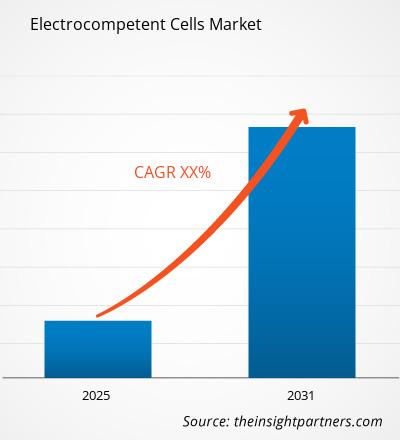
The Electrocompetent Cells Market was valued at US$ 2.66 Billion in 2025 and is projected to reach US$ 6.30 Billion by 2034, expanding at a CAGR of 10.07% during 2026–2034. Market expansion is supported by increasing adoption of molecular cloning technologies, growing demand for high-efficiency transformation systems, and expanding investments in synthetic biology, gene editing, and recombinant protein production across academic, biotechnology, pharmaceutical, and industrial research environments worldwide.
North America is expected to maintain its leadership throughout the forecast period, advancing at an estimated 9.4–10.0% CAGR between 2026 and 2034. Regional growth is reinforced by strong biotechnology research infrastructure, substantial public and private funding for life sciences, widespread commercialization of advanced genetic engineering technologies, and continuous demand for high-performance competent cell products supporting pharmaceutical discovery, precision medicine, and industrial biotechnology applications.
Electrocompetent Cells Market Assessment and Insights
- North America: Holds 39–43% share in 2025, growing at a CAGR of 9.4–10.0% during 2026–2034, driven by strong biotechnology investment, advanced genomic research, and expanding biopharmaceutical innovation across the region.
- US: Accounts for 82–86% of the North American market in 2025, expanding at a 9.5–10.1% CAGR due to robust biotechnology R&D, increasing recombinant DNA research, and growing demand for molecular biology applications.
- Europe: Represents 26–30% share in 2025, growing at a 9.0–9.6% CAGR, led by Germany, the UK, and France through strong pharmaceutical manufacturing, research collaborations, and expanding biotechnology commercialization.
- Asia Pacific: Holds 23–27% share in 2025, expanding at an 11.3–11.9% CAGR, led by China, Japan, and India with increasing biotechnology investments, expanding genomic research, and supportive government life science initiatives.
- Largest Segment: Expression Competent Cells hold the largest market share in 2025, growing at a 10.1–10.7% CAGR due to increasing recombinant protein production and expanding industrial biotechnology applications across research and manufacturing laboratories.
- High Growth Segment: High-Throughput Cloning is projected to register the fastest growth at a CAGR of 11.6–12.2% during 2026–2034, driven by automation-enabled molecular biology workflows and rising synthetic biology research requiring highly efficient electrocompetent cell transformation platforms.
- Key companies analyzed in detail: Agilent Technologies, Inc.; Bio-Rad Laboratories, Inc.; GenScript Biotech Corporation; Merck KGaA; New England Biolabs, Inc.; OriGene Technologies, Inc.; Promega Corporation; QIAGEN N.V.; Thermo Fisher Scientific Inc.; Zymo Research Corporation; Beijing TransGen Biotech Co., Ltd.
Source: The Insight Partners' analysis based on proprietary research, government publications, company annual reports, investor presentations, industry databases, and expert interviews.
Strain development, electroporation optimization, and manufacturing consistency improvements have made electrocompetent cells into key tools for molecular cloning, synthetic biology, protein expression, and genome editing. Suppliers are increasingly paying more attention to high transformation rates, genetic stability, and strain diversity to help labs speed up their experiments while retaining the ability to repeat their work in academia, pharma, and industry biotech studies.
Market growth opportunities may come due to the growth of investments in biotechnology in developing countries, the commercialization of cell and gene therapies, and the growth of synthetic biology communities. Advanced biologics regulations, funding for genomics research, and increased use of laboratory automation may drive demand for premium electrocompetent cells.
Electrocompetent Cells Market Report Scope
| Report Attribute | Details |
|---|---|
| Market size in 2025 | US$ 2.66 Billion |
| Market Size by 2034 | US$ 6.30 Billion |
| Global CAGR (2026 - 2034) | 10.07% |
| Historical Data | 2021-2024 |
| Forecast period | 2026-2034 |
Electrocompetent Cells Market Analysis
The increasing number of studies using techniques such as recombinant DNA technology, genome engineering, and synthetic biology continues to boost the market demand for efficient electrocompetent cells that can provide high transformation efficiencies. Educational establishments, contract research organizations, biotech firms, and pharmaceutical producers have been increasingly relying on efficient competent cells in order to enhance cloning efficiency, protein expression, mutagenesis, and molecular biology experiments. The rising prevalence of CRISPR-based studies has been increasing demand for robust transformation systems needed for genetic manipulation experiments.
Producers have been focusing on quality-controlled production, unique bacterial strains, and efficient storage methods in an attempt to ensure uniformity of products and their high performance in laboratory conditions. Partnerships in distribution networks, online ordering platforms, and technical support services have become increasingly essential within the whole supply chain due to laboratories' needs for reliable reagents providers.
Competition remains technology-driven, with suppliers emphasizing transformation efficiency, product reliability, specialized bacterial strains, and application-specific product portfolios. Thermo Fisher Scientific Inc., Merck KGaA, Bio-Rad Laboratories, Inc., Promega Corporation, New England Biolabs, Inc., Agilent Technologies, Inc., QIAGEN N.V., GenScript Biotech Corporation, OriGene Technologies, Inc., Zymo Research Corporation, and Beijing TransGen Biotech Co., Ltd. continue strengthening competitive positioning through portfolio expansion, strategic collaborations, manufacturing investments, and global distribution capabilities.
Investment activity increasingly targets automation-compatible competent cell products, synthetic biology solutions, and integrated molecular biology reagent portfolios. Companies continue allocating capital toward production expansion, digital laboratory support services, and innovative bacterial strain development while strengthening regional supply chains to address growing biotechnology demand across North America, Europe, Asia Pacific, and emerging life science markets.
● REPORT CUSTOMIZATION
Tailor This Report To Align With Your Specific Business Requirements
This report can be customized to align precisely with your business objectives, scope, and target markets. Customization options include tailored segmentation, geography, competitive analysis, and strategic insights to support informed decision-making.
Customize This Report →WHAT YOU CAN ADJUST
- ● Segmentations
- ● Geography
- ● Competitive Analysis
- ● Language Preferences
Electrocompetent Cells Market: Strategic Insights

Regional Insights
North America Electrocompetent Cells Market
North America accounted for 39–43% of the global Electrocompetent Cells Market in 2025 and is projected to expand at a 9.4–10.0% CAGR through 2034. Strong biotechnology ecosystems, continuous research funding, and widespread commercialization of molecular biology technologies support sustained regional demand.
The region benefits from well-established pharmaceutical and biotechnology industries, advanced laboratory infrastructure, and increasing investment in synthetic biology and precision medicine. Growing collaboration between research institutions and commercial organizations further accelerates adoption of high-efficiency electrocompetent cells across diverse molecular biology applications.
U.S. Electrocompetent Cells Market
The U.S. represented 82–86% of the North American market in 2025 and is forecast to register a 9.5–10.1% CAGR during the study period. Continuous investment in genomic research and recombinant DNA technologies strengthens domestic product demand.
Major suppliers maintain significant commercial operations across the country while expanding production and technical support capabilities. Demand is particularly strong for protein expression, high-throughput cloning, mutagenesis, and advanced synthetic biology workflows supporting pharmaceutical discovery and biotechnology innovation.
Europe Electrocompetent Cells Market
In 2025, Europe accounted for 26–30% of the worldwide market share and will be anticipated to expand at 9.0–9.6% CAGR until 2034. Research collaboration, biotechnology innovation, and pharmaceutical manufacturing will keep on helping the regional growth.
Germany is the largest market by virtue of its advanced biotechnology manufacturing, strong research environment in academic institutions, and large investments in industrial biotechnology. Growing application of recombinant proteins technology also drives commercial sales for premium electrocompetent cells.
The United Kingdom expands its biotechnology research through increased genomic medicine projects and investments in life sciences. France, Italy, and Spain together drive regional growth through increasing academic research, pharmaceutical production, and molecular diagnostics.
APAC Electrocompetent Cells Market
Asia Pacific represented 23–27% of global revenue in 2025 and is projected to record the fastest regional expansion at a 11.3–11.9% CAGR through 2034. Increasing biotechnology investments and government-backed research initiatives continue strengthening regional demand.
China leads the regional market owing to substantial investments in biotechnology manufacturing, synthetic biology, and genomic research infrastructure. Japan maintains strong demand through pharmaceutical innovation, while South Korea expands biotechnology commercialization supported by government funding.
India continues strengthening its biotechnology ecosystem through increasing research investments and expanding pharmaceutical manufacturing capabilities. Australia contributes through advanced academic research programs and collaborative biotechnology initiatives focused on next-generation molecular biology technologies.
Middle East & Africa Electrocompetent Cells Market
The Middle East & Africa market is expected to expand at a 8.3–8.9% CAGR during the forecast period. Growing investment in biotechnology infrastructure and healthcare research supports gradual market development across multiple countries.
Saudi Arabia and the United Arab Emirates continue investing in life science research infrastructure as part of broader economic diversification strategies. Expanding university research capabilities and biotechnology partnerships improve regional laboratory capacity.
South Africa remains an important biotechnology research hub within the region, while the Rest of the Middle East & Africa gradually increases adoption through expanding healthcare research programs, academic collaborations, and biotechnology infrastructure development.
Segmentation Analysis
Product Type
Product Type remains a fundamental market segment, with Expression Competent Cells representing the largest revenue contributor and projected to expand at a 10.1–10.7% CAGR during 2026–2034. Rising recombinant protein production, synthetic biology research, and industrial biotechnology applications continue driving adoption of high-performance transformation systems across research and commercial laboratories.
- Cloned Competent Cells support efficient plasmid propagation and routine molecular cloning applications. Their reproducibility, genetic stability, and compatibility with standard laboratory protocols make them widely adopted across academic and biotechnology research environments.
- Agrobacterium tumefaciens Competent Cells are increasingly utilized for plant genetic transformation, agricultural biotechnology research, and crop improvement studies requiring reliable DNA transfer into plant cells with enhanced transformation efficiency.
- Expression Competent Cells enable high-yield recombinant protein production and optimized gene expression workflows. Their superior transformation efficiency supports pharmaceutical research, enzyme production, vaccine development, and industrial biotechnology manufacturing.
End users/Applications
- Subcloning and Routine Cloning remain foundational laboratory applications supporting plasmid construction, vector preparation, and routine molecular biology research across academic institutions, biotechnology companies, and pharmaceutical development laboratories.
- Phage Display Library Construction supports antibody discovery, protein engineering, and therapeutic screening programs requiring highly efficient transformation processes and large, genetically diverse clone libraries.
- Toxic/Unstable DNA Cloning addresses specialized molecular biology applications involving genetically unstable constructs requiring optimized bacterial strains with enhanced stability and reduced recombination activity.
- High-Throughput Cloning represents the fastest-growing application area, benefiting from laboratory automation, synthetic biology expansion, large-scale genomic projects, and accelerated recombinant DNA workflow optimization.
- Protein Expression continues generating substantial commercial demand as biotechnology companies increasingly require efficient bacterial expression systems supporting therapeutic proteins, enzymes, vaccines, and industrial bioproduct manufacturing.
- Mutagenesis enables functional genomics research, protein engineering, and molecular optimization studies requiring precise genetic modifications supported by highly efficient transformation platforms.
- Single-Stranded DNA Production supports sequencing technologies, genome editing research, molecular diagnostics, and synthetic biology applications requiring specialized cloning workflows.
- Bacmid creation remains important for baculovirus expression systems supporting recombinant protein manufacturing, vaccine development, and advanced biological research requiring insect cell expression technologies.
- Cre-lox recombination continues expanding within functional genomics and transgenic research by enabling targeted genetic modification and conditional gene expression studies across biomedical research programs.
Opportunity Snapshot
| Segment Name | Revenue Contribution | Trend Tag | Adoption Stage |
| Subcloning and Routine Cloning | High | Vector Design | Mature |
| Phage Display Library Construction | Medium | Antibody Discovery | Scaling |
| Toxic/Unstable DNA Cloning | Medium | Stable Constructs | Scaling |
| High-Throughput Cloning | High | Lab Automation | Scaling |
| Protein Expression | High | Recombinant Proteins | Mature |
| Mutagenesis | Medium | Functional Genomics | Scaling |
| Single-Stranded DNA Production | Medium | Genome Editing | Emerging |
| Bacmid creation | Medium | Viral Expression | Scaling |
| Cre-lox recombination | Medium | Conditional Editing | Emerging |
Electrocompetent Cells Market Growth Drivers and Impact Analysis
Expansion of Synthetic Biology and Genome Engineering Research
The rapid advancement of synthetic biology and genome engineering continues creating sustained demand for highly efficient electrocompetent cells across research and commercial laboratories. Scientists increasingly require reliable transformation platforms capable of supporting complex DNA assembly, pathway engineering, and genome modification workflows with improved reproducibility. Growing investment in synthetic biology startups, academic research centers, and industrial biotechnology programs has expanded the need for premium competent cell products offering high transformation efficiency. This trend encourages manufacturers to develop specialized bacterial strains, broaden product portfolios, and strengthen technical support capabilities while accelerating innovation throughout the molecular biology reagent ecosystem.
Growing Recombinant Protein Manufacturing Across Biopharmaceutical Industry
Growing production of recombinant proteins, enzymes, vaccines, and other biological therapies also continues driving market growth into the future. The biotechnology industry makes use of electrocompetent cells of high performance in order to enhance their cloning efficiencies and optimize their bacterial expression systems. Growing investments in biologics, biosimilars, and therapeutic proteins are also driving market demands. More manufacturers are now coming up with competent cells that are tailored specifically for the application in order to improve lab efficiencies.
Increasing Laboratory Automation and High-Throughput Molecular Biology
Automation is changing the landscape of molecular biology laboratories by creating a need for standardized reagents that offer repeatable experimental results in larger scale research projects. The high throughput cloning, genome screening, and synthetic biology procedures that are automated require electrocompetent bacteria with guaranteed transformation efficiency and reproducible quality. Research laboratories are upgrading their facilities as more pharmaceutical companies and contract research organizations upgrade theirs to increase productivity. With the global adoption of automation systems, manufacturers are developing competent cell products that will differentiate them from their competitors and help meet laboratory demands.
Electrocompetent Cells Market Future Trends
Integration of Artificial Intelligence with Automated Molecular Biology Workflows
There has been growing integration of artificial intelligence in laboratory automation technologies, which allows scientists to accurately refine their approach to cloning procedures, transformation processes, and experimental design. With the increasing use of digitized workflow and robots in laboratories, the need for electrocompetent cells that exhibit high transformation efficiency has grown for automations. Cell manufacturers have reacted to this need by designing their products with uniform format, strain specificity, and quality control methods that suit high-throughput laboratory settings. The combination of artificial intelligence, laboratory automation, and molecular biology is predicted to accelerate product development time and create greater demand for superior electrocompetent cells during the forecast period.
Expansion of Customized Competent Cell Platforms for Specialized Research
Institutions carrying out research work and biotech companies are looking for electrocompetent cells that can be used for different applications related to cloning, protein expression, gene editing, and synthetic biology. Instead of using universal strains for all applications, there is an inclination towards producing customized cell strains that will help enhance the efficiency of transformation process for difficult DNA constructs. Companies are developing new electrocompetent cell strains that can improve genetic stability and performance in relation to different applications. It is anticipated that such an approach will help differentiate the products and provide more avenues for making money.
Electrocompetent Cells Market Opportunities
Expanding Commercial Opportunities Across Emerging Biotechnology Ecosystems
Rapid development of biotechnology industries in emerging economies presents substantial long-term opportunities for electrocompetent cell manufacturers. Countries across Asia Pacific, Latin America, and selected Middle Eastern markets continue increasing investment in genomic research, biopharmaceutical production, and university-based life science programs. Establishing regional manufacturing facilities, technical support centers, and distribution partnerships enables suppliers to improve market accessibility while reducing delivery times. Companies capable of offering cost-effective, high-quality competent cell products supported by localized technical expertise are expected to strengthen customer relationships and expand market penetration as biotechnology infrastructure continues to mature globally.
Strategic Portfolio Expansion Through Application-Specific Product Innovation
Manufacturers have significant opportunities to differentiate themselves by developing electrocompetent cells tailored for advanced applications including genome engineering, synthetic biology, therapeutic protein production, and high-throughput molecular screening. Continuous innovation in bacterial strain engineering, transformation efficiency, and product stability can help suppliers address evolving customer requirements while supporting premium pricing strategies. Combining specialized competent cell products with complementary molecular biology reagents, workflow solutions, and technical services further enhances customer value. Companies investing in integrated product portfolios and collaborative research initiatives are likely to strengthen competitive positioning while capturing additional revenue from rapidly expanding biotechnology research activities.
Recent Developments
- April 2026: Thermo Fisher Scientific Inc. introduced a new range of competent cells designed for high-efficiency cloning and synthetic biology applications. The launch strengthens the company's molecular cloning portfolio and addresses increasing demand for high-transformation-efficiency cells used in gene editing, recombinant protein production, and plasmid construction.
- March 2026: New England Biolabs announced the opening of NEB India, expanding local sales, technical support, and distribution for its molecular biology portfolio, including competent cell products, cloning reagents, and DNA assembly technologies. The expansion strengthens product accessibility for researchers performing bacterial transformation and synthetic biology experiments.
- April 2024: Takara Bio continued promoting its Stellar Electrocompetent Cells as a high-transformation-efficiency solution for molecular cloning, library construction, mutagenesis, and large-plasmid applications. The company expanded application support and technical resources for synthetic biology and genome engineering workflows, reinforcing its position in the electrocompetent cells segment.
Frequently Asked Questions

- Comprehensive Market Sizing and Forecast Analysis
- Detailed Segmentation Analysis
- In-Depth Market Dynamics Assessment
- Regional and Country-Level Insights
- Competitive Landscape and Company Benchmarking
- Strategic Business Intelligence
Recent Reports
Testimonials

The Insight Partners' SCADA System Market report is comprehensive, with valuable insights on current trends and future forecasts. The team was highly professional, responsive, and supportive throughout. We are very satisfied and highly recommend their services.
RAN KEDEM Partner, Reali Technologies LTDs
I requested a report on a very specific software market and the team produced the report in a few days. The information was very relevant and well presented. I then requested some changes and additions to the report. The team was again very responsive and I got the final report in less than a week.
JEAN-HERVE JENN Chairman, Future Analytica
We worked with The Insight Partners for an important market study and forecast. They gave us clear insights into opportunities and risks, which helped shape our plans. Their research was easy to use and based on solid data. It helped us make smart, confident decisions. We highly recommend them.
PIYUSH NAGPAL Sr. Vice President, High Beam Global
The Insight Partners delivered insightful, well-structured market research with strong domain expertise. Their team was professional and responsive throughout. The user-friendly website made accessing industry reports seamless. We highly recommend them for reliable, high-quality research services
YUKIHIKO ADACHI CEO, Deep Blue, LLC.
This is the first time I have purchased a market report from The Insight Partners.While I was unsure at first, I visited their web site and felt more comfortable to take the risk and purchase a market report.I am completely satisfied with the quality of the report and customer service. I had several questions and comments with the initial report, but after a couple of dialogs over email with their analyst I believe I have a report that I can use as input to our strategic planning process.Thank you so much for taking the extra time and making this a positive experience.I will definitely recommend your service to others and you will be my first call when we need further market data.
JOHN SUZUKI President and Chief Executive Officer, Board Director, BK Technologies
I wish to appreciate your support and the professionalism you displayed in the course of attending to my request for information regarding to infectious disease IVD market in Nigeria. I appreciate your patience, your guidance, and the fact that you were willing to offer a discount, which eventually made it possible for us to close a deal. I look forward to engaging The Insight Partners in the future, all thanks to the impression you have created in me as a result of this first encounter.
DR CHIJIOKE ONYIA MANAGING DIRECTOR, PineCrest Healthcare Ltd.Reason to Buy
- Informed Decision-Making
- Understanding Market Dynamics
- Competitive Analysis
- Identifying Emerging Markets
- Customer Insights
- Market Forecasts
- Risk Mitigation
- Boosting Operational Efficiency
- Strategic Planning
- Investment Justification
- Tracking Industry Innovations
- Aligning with Regulatory Trends





 Get Free Sample for