
Electromedical and X-Ray Equipment Market Size, Growth & Demand by 2034
Coverage: By Product Type (Digital Radiography (Dr), Computed Radiography (Cr), Retrofit Radiography System, Pacemakers, Patient-Monitoring Systems, MRI Machines, Diagnostic Imaging Equipment); End User (Hospitals, Diagnostic Centers, Others); and Geography , and Geography (North America, Europe, Asia Pacific, and South and Central America)
- Status : Data Released
- Report Code : TIPRE00018792
- Category : Life Sciences
- No. of Pages : 150
- Available Report Formats :


- Last update date : July 08, 2026


2025 Market Size
US$ 48.36 Bn
Base year value
2034 Forecast
US$ 84.69 Bn
Projected by 2034
CAGR 2026-2034
6.42 %
Growth rate
Addressable Market
US$ 601.78 Bn
(2026-2034)
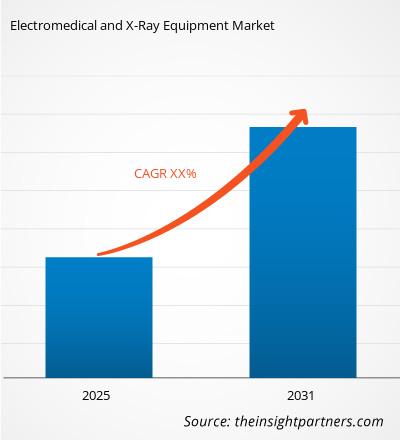
The global Electromedical and X-Ray Equipment market was valued at US$ 48.36 billion in 2025 and is expected to reach US$ 84.69 billion by 2034; it is estimated to record a CAGR of 6.42% during 2026-2034.
Electromedical and X-Ray Equipment Market Assessment and Insights
- North America: Holds 36–40% share in 2025, growing at a CAGR of 6.5–7.1% during 2026–2034, driven by replacement demand for imaging systems, expanding outpatient imaging services, and continued investments in diagnostic infrastructure.
- US: Accounts for 84–88% of the North American electromedical and X-Ray equipment market in 2025, expanding at a 6.6–7.2% CAGR due to increasing adoption of advanced diagnostic imaging technologies, equipment replacement cycles, and growing outpatient care volumes.
- Europe: Represents 24–28% share in 2025, growing at a 6.0–6.6% CAGR, led by Germany, the UK, and France through ongoing healthcare modernization, diagnostic imaging upgrades, and rising demand for advanced radiology solutions.
- Asia Pacific: Holds 25–29% share in 2025, expanding at an 8.1–8.7% CAGR, led by China, Japan, and India with expanding healthcare infrastructure, increasing diagnostic imaging capacity, and growing investments in medical technology.
- Largest Segment: Diagnostic Imaging Equipment holds the largest electromedical and X-Ray equipment market share in 2025, growing at a 7.0–7.6% CAGR due to multi-modality hospital modernization and increasing demand for higher imaging throughput.
- High Growth Segment: Digital Radiography is projected to register the fastest growth at a CAGR of 8.4–9.0% during 2026–2034, driven by the rapid replacement of analog and computed radiography systems with advanced digital imaging technologies.
- Key companies analyzed in detail: Medtronic plc; Hologic, Inc.; Siemens Healthineers AG; ZOLL Medical Corporation; Agfa-Gevaert N.V.; Koninklijke Philips N.V.; GE HealthCare Technologies Inc.; Ziehm Imaging GmbH; Boston Scientific Corporation; Canon Medical Systems Corporation.
Source: The Insight Partners' analysis based on proprietary research, government publications, company annual reports, investor presentations, industry databases, and expert interviews.
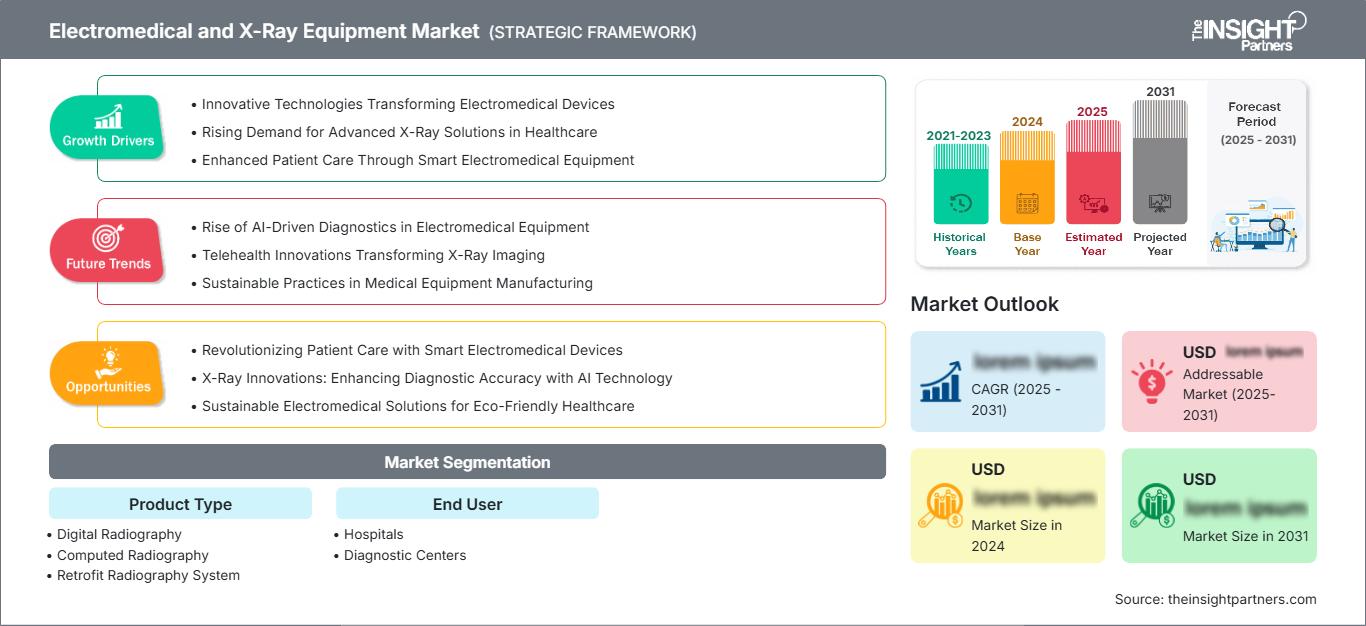
The electromedical and X-Ray equipment market has evolved from procurement based on hardware to a digitally integrated platform which enhances imaging quality, availability, and clinical workflows. Radiography has been experiencing fast migration from film-based imaging to computed radiography as well as from computed radiography to digital flat panel detectors while magnetic resonance imaging as well as the monitoring platforms increasingly depend on software and automation. The production environment will now focus on component robustness, detector availability, cybersecurity preparedness, and regional servicing capability.
The electromedical and X-Ray equipment market forecast indicates that future growth will be supported by expanding healthcare infrastructure initiatives across Asia Pacific and the Gulf region, increased accessibility to advanced imaging technologies, and the replacement of aging systems in mature markets. Growing regulatory emphasis on device safety, data security, and interoperability is expected to favor companies with validated platforms and strong post-market support capabilities. Additionally, investment activity is anticipated to focus on AI-enabled imaging solutions, mobile C-arms, patient-monitoring technologies, MRI efficiency enhancements, and advanced cardiac rhythm management systems.
Electromedical and X-Ray Equipment Market Report Scope
| Report Attribute | Details |
|---|---|
| Market size in 2025 | US$ 48.36 Billion |
| Market Size by 2034 | US$ 84.69 Billion |
| Global CAGR (2026 - 2034) | 6.42% |
| Historical Data | 2021-2024 |
| Forecast period | 2026-2034 |
Electromedical and X-Ray Equipment Market Analysis
The electromedical and X-Ray equipment market growth is driven by diagnostic backlog reduction, rising chronic disease burden, and the need to improve clinical throughput without proportionate staffing growth. Hospitals and diagnostic centers are prioritizing imaging equipment that shortens scan time, reduces repeat examinations, and supports consistent reporting. Patient-monitoring systems and pacemakers add recurring clinical relevance because they are tied to acute care, electrophysiology, and long-cycle chronic disease management.
The electromedical and X-Ray equipment market value chain combines precision components, detectors, generators, magnets, imaging software, regulatory validation, installation, and lifecycle service. Supply dynamics remain sensitive to semiconductor availability, rare-earth inputs, and specialized manufacturing capacity. Buyers increasingly assess total cost of ownership, uptime commitments, cybersecurity, training, and integration with hospital information systems, making service networks and digital workflow capabilities central to supplier selection.
The competitive landscape is concentrated around diversified medtech and imaging groups with strong installed bases. Siemens Healthineers AG, GE HealthCare Technologies Inc., Koninklijke Philips N.V., and Canon Medical Systems Corporation compete across diagnostic imaging and monitoring ecosystems, while Hologic, Inc. holds strength in women’s health imaging. Medtronic plc and Boston Scientific Corporation participate through cardiac rhythm and electrophysiology-linked technologies.
Investment is moving toward AI reconstruction, dose optimization, mobile imaging, remote monitoring, and flexible financing models. Ziehm Imaging GmbH and ZOLL Medical Corporation illustrate specialized positioning in mobile C-arm imaging and acute-care resuscitation systems, while Agfa-Gevaert N.V. remains relevant in radiology workflow and imaging informatics. Strategic advantage increasingly depends on pairing equipment performance with software upgrades, service responsiveness, and clinical workflow integration.
Procurement behavior is also becoming more evidence-led, with providers asking vendors to demonstrate workflow impact before committing capital. Evaluation criteria now include room utilization, integration burden, staff training time, and long-term upgrade pathways. This is especially important for diagnostic centers, where equipment productivity directly influences appointment capacity, radiologist workload, and cash-flow predictability across high-volume outpatient imaging operations.
● REPORT CUSTOMIZATION
Tailor This Report To Align With Your Specific Business Requirements
This report can be customized to align precisely with your business objectives, scope, and target markets. Customization options include tailored segmentation, geography, competitive analysis, and strategic insights to support informed decision-making.
Customize This Report →WHAT YOU CAN ADJUST
- ● Segmentations
- ● Geography
- ● Competitive Analysis
- ● Language Preferences
Electromedical and X-Ray Equipment Market: Strategic Insights
Regional Insights
North America Electromedical And X-Ray Equipment
North America accounted for 36-40% of the electromedical and X-Ray equipment market share in 2025 and is expected to grow at a 6.5-7.1% CAGR. The growth in demand is attributed to high imaging volumes, replacement of outdated X-ray units, and development of outpatient imaging centers.
Hospitals are implementing digital radiology, MRI efficiency solutions, patient monitoring, and heart rhythm monitoring technology to increase operational efficiency and care coordination. Vendors are favored by hospitals for service reliability, security, interoperability, and financing capabilities for multisite healthcare systems.
Imaging clinics are changing purchasing trends due to their preference for standard fleets, equipment performance monitoring, and maintenance. This creates ongoing opportunities for vendors capable of providing multisite installations and efficient services, and software integration.
U.S. Electromedical and X-Ray Equipment Market
The U.S. represented 84–88% of the North American electromedical and X-Ray equipment market in 2025 and is forecast to expand at a 6.6–7.2% CAGR. Large hospital systems, imaging chains, and ambulatory centers continue investing in digital radiography and MRI platforms.
Company presence is broad, led by GE HealthCare Technologies Inc., Siemens Healthineers AG, Hologic, Inc., Medtronic plc, and Boston Scientific Corporation. Application trends include breast imaging, cardiac monitoring, electrophysiology, emergency radiography, and imaging-guided intervention.
U.S. hospitals are also increasingly focused on cybersecurity certification, integration with enterprise image storage facilities, and applications. This benefits vendors that provide an integrated solution of equipment together with training, remote diagnostics, and a lifecycle management program.
Europe Electromedical and X-Ray Equipment Market
Europe accounted for 24–28% of the electromedical and X-Ray equipment market share in 2025 and is expected to grow at a 6.0–6.6% CAGR. Germany is the leading country because of its hospital density, engineering base, and strong diagnostic imaging replacement activity.
Imaging capability is being upgraded in the UK via hospital renovations, expansion of diagnostic centers, and reduction of waiting times. High demand is for digital X-rays, MRI scans, and monitoring equipment.
In Germany, growth at 6.1-6.7% CAGR will be fueled by technologically advanced hospitals. The same applies to France, Italy, and Spain growing at 5.8-6.4%, 5.6-6.2%, and 5.9-6.5%, respectively, because of radiology upgrades.
Procurement cycles in European countries depend on financing possibilities, tender terms, personnel limitations, and sustainability requirements. Increasingly hospitals pay attention to energy efficiency, durability, maintenance options, and upgrade potential of equipment.
APAC Electromedical and X-Ray Equipment Market
APAC held 25–29% of the electromedical and X-Ray equipment market in 2025 and is projected to post an 8.1–8.7% CAGR. China leads regional demand as hospital construction, county-level imaging access, and domestic equipment procurement expand.
Japan continues to provide a lucrative replacement market for MRI and patient monitoring and diagnostic imaging systems, whereas South Korea provides more developed opportunities for advanced radiology and interventional solutions. India is growing most rapidly as private hospitals, diagnostics chains, and health spending initiatives drive growth of equipment penetration.
Market CAGRs in respective countries are forecasted to be 8.3-8.9% for China, 5.7-6.3% for Japan, 7.2-7.8% for South Korea, 9.0-9.6% for India, and 6.2-6.8% for Australia. Industrial policies and local manufacturing boost supply chain reliability.
APAC manufacturers have to reconcile strong requirements for high-end imaging solutions in Japan and South Korea with cost-effectiveness and servicing capabilities in India and developing markets in Southeast Asia.
Middle East & Africa Electromedical and X-Ray Equipment Market
Middle East & Africa is projected to expand at a 6.8–7.4% CAGR, with Saudi Arabia the leading country market. Healthcare infrastructure programs, tertiary hospital construction, and diagnostic modernization are creating demand for radiography, MRI, and monitoring platforms.
Private hospital investments, medical tourism, and premium imaging purchases help the UAE. South Africa drives the demand for sub-Saharan region, while the other MEA regions see gradual rise in the number of X-ray, patient monitoring, and basic diagnostic imaging devices.
Energy-related budget enables big healthcare projects in Gulf countries but may differ in the timing of tenders. The growth rate for Saudi Arabia, UAE, and South Africa ranges between 7.1%-7.7%, 6.9%-7.5%, and 5.8%-6.4% CAGR, respectively.
In MEA region, projects are used to drive the procurement and demand for equipment, which depends on the opening of hospitals, national health initiatives, and private speciality care development.
Segmentation Analysis
Product Type
Product Type in the electromedical and X-Ray equipment market is led by diagnostic imaging equipment, projected to grow at a 7.0–7.6% CAGR through 2034 as hospitals and diagnostic centers replace legacy systems with digitally integrated, higher-throughput platforms.
- Digital Radiography: Fastest-growing category as providers replace analog rooms and computed radiography with flat-panel systems that improve image speed, dose control, and workflow efficiency.
- Computed Radiography: Demand persists in budget-sensitive facilities and phased modernization programs where providers require digital image capture without immediate full-room replacement.
- Retrofit Radiography System: Retrofit demand is supported by facilities seeking digital performance improvements while extending the useful life of installed X-ray rooms.
- Pacemakers: Growth reflects aging populations, arrhythmia diagnosis, and continued adoption of advanced cardiac rhythm management technologies across electrophysiology and cardiology settings.
- Patient-Monitoring Systems: Demand is expanding across ICUs, emergency departments, step-down units, and remote-care models where continuous physiologic data supports faster clinical intervention.
- MRI Machines: MRI investment is tied to neurology, oncology, musculoskeletal imaging, and productivity upgrades that reduce scan time and improve patient throughput.
- Diagnostic Imaging Equipment: This broad category includes imaging platforms used for diagnosis, intervention planning, and clinical follow-up across hospitals and diagnostic centers.
End User
End User demand in the electromedical and X-Ray equipment market is led by hospitals, projected at a 7.1–7.7% CAGR, because they operate the broadest mix of imaging, monitoring, and cardiac equipment across acute-care and specialty departments.
Across both end-user groups, purchasing decisions are becoming less transactional and more platform-oriented. Buyers prefer equipment families that can be standardized across departments, connected to existing information systems, and supported through long-term service agreements that protect uptime and operating consistency.
- Hospitals: Hospitals represent the primary revenue pool due to intensive use of MRI machines, digital radiography, patient monitoring, pacemakers, and diagnostic imaging equipment.
- Diagnostic Centers: Diagnostic centers are scaling equipment fleets to serve outpatient imaging demand, reduce hospital burden, and offer faster access to radiology and screening services.
Opportunity Snapshot
| End User | Revenue Contribution | Trend Tag | Adoption Stage |
| Hospitals | High | Fleet Renewal | Mature |
| Diagnostic Centers | Medium | Outpatient Imaging | Scaling |
Electromedical and X-Ray Equipment Market Growth Drivers and Impact Analysis
Imaging modernization across hospitals and diagnostic centers
The modernization of imaging infrastructure is the key driver for growth as many facilities are upgrading their existing X-ray, Computed Radiography, and MRI systems to digital systems, which are more efficient in terms of clinical workflow. Digital radiography allows faster exams, reduces dose and is easier to integrate with radiology information systems. Diagnostic facilities require equipment fleets to be flexible in order to respond to increasing demand from outpatients, whereas hospital facilities need those systems which allow for reducing repeat exams and room utilization.
The operation effect will exceed the effect of equipment upgrade, as modernization will change the way staff is used, turnaround time, and room utilization. Hospitals which implement digital imaging platforms have the ability to automate processes, provide remote access to images and have standardized protocols. It allows for optimizing utilization economics.
Rising chronic disease and cardiac monitoring needs
The aging of populations combined with an increased burden of cardiovascular, neurological, respiratory, and oncologic diseases results in an increased demand for electromedical products beyond one-off diagnostic purposes. Today, pacemakers, patient monitoring systems, and imaging solutions become more often incorporated into long-cycle treatment processes that include periodic patient examination, monitoring, and planning of intervention steps. Examples include improvements in ICU monitoring, electrophysiology procedures, oncology and neurological imaging procedures, and the wider implementation of monitoring systems, allowing to diagnose patient decline in time.
From a business perspective, this driver creates opportunities for strategy development for portfolios of implantable solutions, monitoring, and imaging systems along with software solutions. This driver makes the company consider partnering with hospitals engaged in chronic treatment pathways.
Workflow digitization and connected equipment ecosystems
Ecosystems of connected devices are driving purchase decisions due to the preference of hospitals toward devices capable of integrating with their picture archiving and communication systems, electronic medical records, dashboards, and remote servicing solutions. Devices with automatic protocol management, dosing control, predictive maintenance features, and ability for secure data sharing can alleviate operational burdens for overstretched clinical teams. This driver elevates the importance of software platforms as well as puts an advantage to vendors with advanced capabilities in informatics, cybersecurity, education, and life cycle services.
The impact of this trend is most noticeable within providers that consolidate technology decisions under the umbrella of their digital health strategies. In such settings, equipment vendors need to prove their abilities to integrate with the ecosystem, manage updates, and provide data governance.
Electromedical and X-Ray Equipment Market Future Trends
AI-enabled imaging reconstruction and clinical decision support
The role of AI is expected to become an important part of equipment differentiation through reconstruction, triage, quality assurance, and workflow management. In the fields of radiography and MRI, algorithms might be used to improve image quality, reduce acquisition time, and prioritize urgent examinations for assessment by radiologists. This is an interesting development, as buyers' decision-making process is shifting toward the platforms' future, not just on already available equipment. Vendors with validated AI algorithms and clear regulatory documentation will be more competitive in negotiations.
Commercial success will be determined by how well the algorithms are integrated into the workflow of radiologists and technologists. Algorithms that reduce friction or increase confidence and acquisition speed will have a better chance of acceptance than innovations that are just innovations.
Shift toward mobile, modular, and lower-footprint systems
A key electromedical and X-Ray equipment market trend is the growing preference for mobile C-arms, compact radiography systems, modular patient-monitoring solutions, and MRI productivity technologies designed for space-constrained healthcare environments. This shift is being driven by the migration of procedures to ambulatory care centers, emergency departments, and specialty clinics, where space availability, staffing levels, and capital investment requirements differ from those of large tertiary hospitals. As a result, lower-footprint equipment is gaining traction by simplifying installation, accelerating deployment timelines, and enabling broader access to imaging and monitoring services through decentralized care models.
This direction also supports resilient care delivery during demand surges, renovation phases, and regional access gaps. Mobile and modular equipment can help providers add capacity without waiting for large construction projects. As reimbursement and care pathways shift outward, flexible systems will become more relevant to capital planning.
Electromedical and X-Ray Equipment Market Opportunities
Outpatient imaging networks and diagnostic center expansion
Diagnostic center expansion creates a clear opportunity for equipment suppliers that can offer scalable imaging portfolios, financing support, and service coverage across multiple sites. Outpatient operators require systems that balance image quality, acquisition speed, patient comfort, and predictable operating cost. Digital radiography, MRI machines, and diagnostic imaging equipment are particularly attractive because they support high-volume screening and referral pathways. Suppliers can win by tailoring packages for compact facilities rather than repurposing hospital-centric offerings.
Actionable investment areas in the electromedical and x-ray equipment market include bundled equipment-service contracts, radiology workflow software, mobile imaging units, and standardized room packages for multisite outpatient operators. Vendors that combine financing, installation planning, and remote performance monitoring can reduce buyer risk and accelerate conversion from pilot sites to broader network rollouts.
Emerging-market localization and service infrastructure
Emerging markets offer investment opportunities in localized assembly, training, spare-parts availability, and regional service hubs. Equipment adoption often depends on uptime assurance and biomedical engineering support as much as purchase price. Manufacturers that build local partnerships in India, China, Southeast Asia, Saudi Arabia, and Africa can shorten service response times and improve public-sector tender competitiveness. This approach also supports long-term installed-base growth through upgrades, maintenance contracts, and software refreshes.
Localization also creates a pathway for mid-tier configurations tailored to local clinical volumes, infrastructure limits, and budget realities. Suppliers that adapt specifications without weakening reliability can address underserved facilities while preserving premium offerings for tertiary hospitals and advanced diagnostic centers.
Recent Developments
- May 2026: Siemens Healthineers AG — announced continued expansion of its photon-counting CT and AI-enabled imaging portfolio, reinforcing its strategy around advanced diagnostic imaging productivity, dose efficiency, and hospital workflow integration for radiology departments.
- February 2026: GE HealthCare Technologies Inc. — highlighted new imaging and patient-care solutions focused on precision care, including radiology workflow, monitoring, and AI-enabled clinical applications designed to support hospitals facing staffing and throughput pressures.
- November 2025: Hologic, Inc. — reported product and commercial progress in breast and skeletal health, reflecting continued investment in women’s health imaging systems, digital workflow, and screening technologies used by hospitals and diagnostic centers.
Frequently Asked Questions

- Comprehensive Market Sizing and Forecast Analysis
- Detailed Segmentation Analysis
- In-Depth Market Dynamics Assessment
- Regional and Country-Level Insights
- Competitive Landscape and Company Benchmarking
- Strategic Business Intelligence
Recent Reports
Testimonials

The Insight Partners' SCADA System Market report is comprehensive, with valuable insights on current trends and future forecasts. The team was highly professional, responsive, and supportive throughout. We are very satisfied and highly recommend their services.
RAN KEDEM Partner, Reali Technologies LTDs
I requested a report on a very specific software market and the team produced the report in a few days. The information was very relevant and well presented. I then requested some changes and additions to the report. The team was again very responsive and I got the final report in less than a week.
JEAN-HERVE JENN Chairman, Future Analytica
We worked with The Insight Partners for an important market study and forecast. They gave us clear insights into opportunities and risks, which helped shape our plans. Their research was easy to use and based on solid data. It helped us make smart, confident decisions. We highly recommend them.
PIYUSH NAGPAL Sr. Vice President, High Beam Global
The Insight Partners delivered insightful, well-structured market research with strong domain expertise. Their team was professional and responsive throughout. The user-friendly website made accessing industry reports seamless. We highly recommend them for reliable, high-quality research services
YUKIHIKO ADACHI CEO, Deep Blue, LLC.
This is the first time I have purchased a market report from The Insight Partners.While I was unsure at first, I visited their web site and felt more comfortable to take the risk and purchase a market report.I am completely satisfied with the quality of the report and customer service. I had several questions and comments with the initial report, but after a couple of dialogs over email with their analyst I believe I have a report that I can use as input to our strategic planning process.Thank you so much for taking the extra time and making this a positive experience.I will definitely recommend your service to others and you will be my first call when we need further market data.
JOHN SUZUKI President and Chief Executive Officer, Board Director, BK Technologies
I wish to appreciate your support and the professionalism you displayed in the course of attending to my request for information regarding to infectious disease IVD market in Nigeria. I appreciate your patience, your guidance, and the fact that you were willing to offer a discount, which eventually made it possible for us to close a deal. I look forward to engaging The Insight Partners in the future, all thanks to the impression you have created in me as a result of this first encounter.
DR CHIJIOKE ONYIA MANAGING DIRECTOR, PineCrest Healthcare Ltd.Reason to Buy
- Informed Decision-Making
- Understanding Market Dynamics
- Competitive Analysis
- Identifying Emerging Markets
- Customer Insights
- Market Forecasts
- Risk Mitigation
- Boosting Operational Efficiency
- Strategic Planning
- Investment Justification
- Tracking Industry Innovations
- Aligning with Regulatory Trends





 Get Free Sample for