
Electronic Bone Growth Stimulators Market Trends, Demand & Growth by 2034
Coverage: By Method (Invasive Electronic Bone Stimulation, Non- Invasive Bone Stimulation, Semi-Invasive Bone Stimulation); Product (Bone Growth Stimulation Devices, External Bone Growth Stimulators, Combined Magnetic Field (CMF) Devices, Capacitive Coupling (CC) Devices, Implanted Bone Growth Stimulators, Ultrasonic Bone Growth Stimulators, Bone Morphogenetic Proteins (BMP)); End User (Hospitals and Clinics, Home Care, Academic and Research Institutes, CROs); Application (Spinal Fusion Surgeries, Delayed Union and Nonunion Bone Fractures, Oral and Maxillofacial Surgeries, Others) , and Geography (North America, Europe, Asia Pacific, and South and Central America)
- Status : Data Released
- Report Code : TIPRE00020027
- Category : Life Sciences
- No. of Pages : 150
- Available Report Formats :


- Last update date : July 03, 2026


2025 Market Size
US$ 1.31 Bn
Base year value
2034 Forecast
US$ 2.56 Bn
Projected by 2034
CAGR 2026-2034
7.78 %
Growth rate
Addressable Market
US$ 17.47 Bn
(2026-2034)
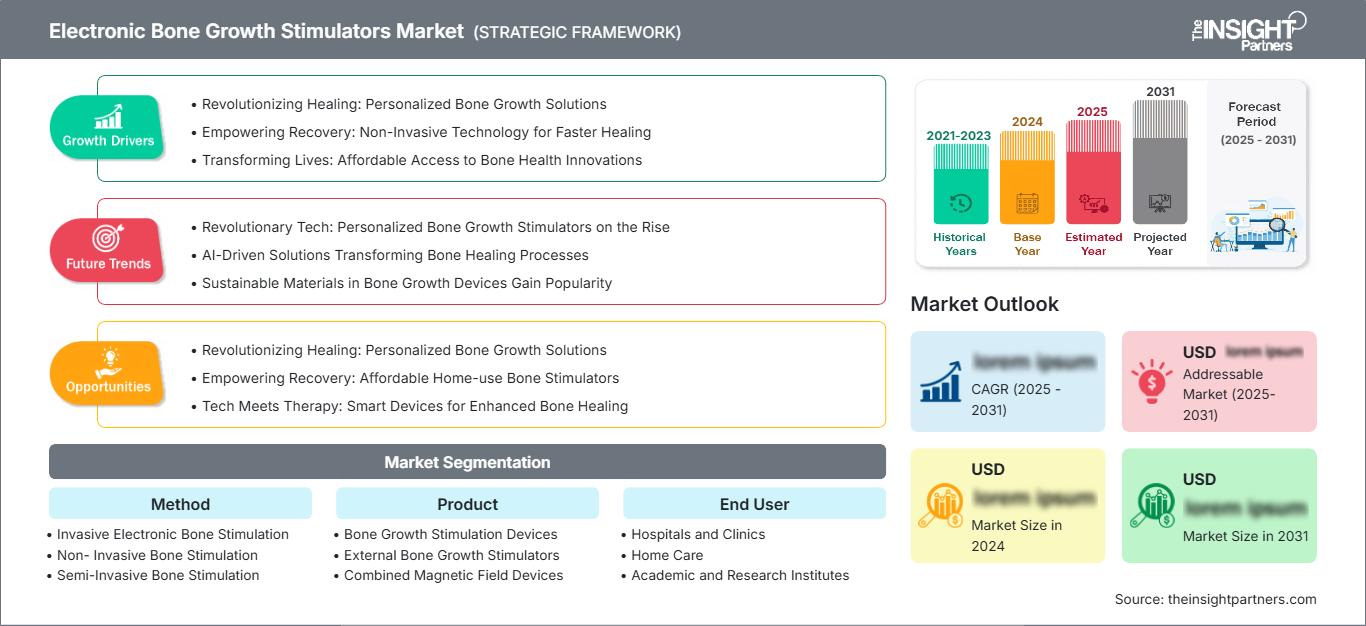
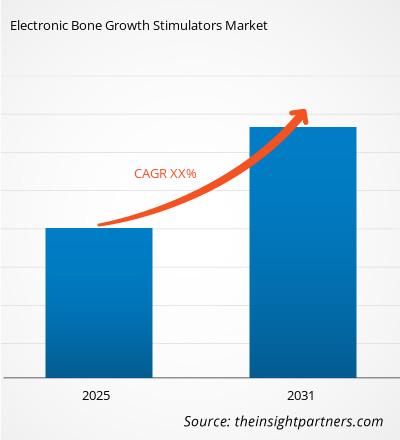
The Electronic Bone Growth Stimulators Market was valued at US$ 1.31 Billion in 2025 and is projected to reach US$ 2.56 Billion by 2034, expanding at a CAGR of 7.78% during 2026–2034. Market expansion is supported by the increasing incidence of musculoskeletal disorders, growing adoption of non-invasive orthopedic therapies, rising spinal fusion procedures, and continuous innovation in electrical and electromagnetic stimulation technologies. Healthcare providers are increasingly incorporating bone growth stimulation devices into fracture management and post-operative rehabilitation to improve healing outcomes and reduce revision surgeries.
North America continues to represent the most mature regional market, supported by favorable reimbursement frameworks, high procedural volumes, and widespread adoption of advanced orthopedic technologies. The region is expected to expand at a CAGR of 7.2–7.8% through 2034, driven by the growing elderly population, increasing prevalence of osteoporosis-related fractures, and ongoing investments in orthopedic innovation by leading medical device manufacturers.
Electronic Bone Growth Stimulators Market Assessment and Insights
- North America: Accounted for 39–43% share in 2025 and is projected to register a 7.2–7.8% CAGR during 2026–2034. Advanced orthopedic infrastructure, reimbursement support, and high spinal fusion volumes continue to strengthen regional demand.
- U.S.: Represented 82–86% of the North American market in 2025 and is expected to grow at a 7.3–7.9% CAGR owing to increasing orthopedic procedures, favorable clinical adoption, and extensive presence of leading manufacturers.
- Europe: Held 26–30% market share in 2025 and is anticipated to expand at a 6.8–7.4% CAGR. Germany, the UK, and France remain leading contributors due to established orthopedic care systems and expanding elderly demographics.
- Asia Pacific: Accounted for 21–25% share in 2025 while recording the fastest regional expansion at 8.6–9.2% CAGR, supported by rising healthcare investments across China, Japan, India, and South Korea.
- Largest Segment: Bone Growth Stimulation Devices represented 43–47% market share in 2025 and are projected to expand at a 7.5–8.1% CAGR, reflecting broad clinical acceptance across orthopedic and trauma applications.
- High-Growth Segment: Home Care accounted for 18–22% market share in 2025 and is forecast to grow at a 9.1–9.7% CAGR, driven by increasing preference for outpatient rehabilitation and portable stimulation technologies.
- Key companies analyzed in detail: Orthofix Medical Inc., Medtronic plc, Zimmer Biomet Holdings, Inc., Johnson & Johnson (DePuy Synthes), Arthrex, Inc., Terumo Corporation, Bioventus LLC, Elizur Corporation, Stryker Corporation, ZimVie Inc.
Source: The Insight Partners' analysis based on proprietary research, government publications, company annual reports, investor presentations, industry databases, and expert interviews.
The technology has advanced from implant-based stimulation devices to portable devices designed for patients that include pulsed electromagnetic fields, capacitive coupling, combined magnetic fields, and low-intensity ultrasonics. The inclusion of digital applications and compliance monitoring tools in order to increase the treatment adherence and decrease the recovery period is becoming common. Advancements in terms of battery efficiency, wearable device designs, and management through software-based treatments will result in better clinical acceptability in hospitals and home-based healthcare settings. In parallel, biologic technologies such as bone morphogenetic proteins will continue to complement electronic stimulation in difficult orthopedic surgeries.
In the future, growth is anticipated to get further assistance from investments in orthopedic innovations in Asia-Pacific and some selected countries from the Middle East region, along with increased spending on healthcare and development of trauma care facilities. Regulatory bodies keep on endorsing orthopedic technologies with clinical efficacy, thereby motivating the manufacturers to undertake multi-center studies and post-market surveillance of the product. Increasing physician knowledge about the product, increasing orthopedic care in outpatient setting, and adoption of digital health technologies will aid in creating future commercial prospects.
Electronic Bone Growth Stimulators Market Report Scope
| Report Attribute | Details |
|---|---|
| Market size in 2025 | US$ 1.31 Billion |
| Market Size by 2034 | US$ 2.56 Billion |
| Global CAGR (2026 - 2034) | 7.78% |
| Historical Data | 2021-2024 |
| Forecast period | 2026-2034 |
Electronic Bone Growth Stimulators Market Analysis
The prevalence of osteoporosis, delayed union fractures, spinal conditions, and trauma bone injuries is driving demand for bone growth stimulators. There is a growing population base within the developed nations that is undergoing spinal fusions and bone fracture repairs that require bone healing technologies. In addition, sports injuries among young patients increase the target patient population. The medical practitioners opt for less invasive and bone regenerative techniques without revisions.
Technological advancements are contributing positively to the ecosystem of bone growth stimulators since there are miniaturized bone growth stimulators, which have better patient compliance and also enable monitoring of the treatment process from remote locations. The medical device companies are continuously investing in technology development in relation to electromagnetic and capacitive coupling systems and digital platforms to give insights about patient therapy compliance.
Competition within the Electronic Bone Growth Stimulators Market remains moderately consolidated, with leading multinational manufacturers emphasizing innovation, regulatory approvals, physician education, and strategic acquisitions. Orthofix Medical Inc., Medtronic plc, Zimmer Biomet Holdings, Inc., Johnson & Johnson through DePuy Synthes, Arthrex, Inc., Bioventus LLC, and Terumo Corporation continue strengthening their portfolios through investments in advanced stimulation technologies and integrated orthopedic solutions. Emerging participants focus on niche innovations, including wearable systems, improved patient adherence platforms, and specialized stimulation protocols targeting difficult-to-heal fractures.
Investment activity increasingly prioritizes digital orthopedics, outpatient rehabilitation, and personalized therapy management. Manufacturers are allocating larger research budgets toward smart stimulation devices capable of collecting real-time treatment data while improving physician oversight. Strategic collaborations between medical device companies, academic institutions, and orthopedic hospitals are accelerating product validation and commercialization. As reimbursement policies gradually recognize evidence-based stimulation therapies, companies are expected to expand commercial presence across emerging healthcare markets while reinforcing leadership positions in North America and Europe through continuous product innovation.
● REPORT CUSTOMIZATION
Tailor This Report To Align With Your Specific Business Requirements
This report can be customized to align precisely with your business objectives, scope, and target markets. Customization options include tailored segmentation, geography, competitive analysis, and strategic insights to support informed decision-making.
Customize This Report →WHAT YOU CAN ADJUST
- ● Segmentations
- ● Geography
- ● Competitive Analysis
- ● Language Preferences
Electronic Bone Growth Stimulators Market: Strategic Insights
Regional Insights
North America Electronic Bone Growth Stimulators Market
North America accounted for 39–43% of the Electronic Bone Growth Stimulators Market share in 2025 and is projected to expand at a CAGR of 7.2–7.8% during 2026–2034. The region benefits from a high prevalence of osteoporosis, traumatic fractures, degenerative spinal disorders, and advanced reimbursement systems supporting bone stimulation therapies. Strong clinical acceptance of non-invasive technologies and continuous investment in orthopedic innovation continue to reinforce regional leadership.
The presence of major manufacturers, specialized orthopedic hospitals, and well-established outpatient care networks further strengthens adoption. Increasing utilization of wearable stimulation devices following spinal fusion surgeries and delayed union fractures supports sustained market expansion. Rising healthcare expenditure, favorable regulatory pathways, and continuous product improvements are expected to maintain North America's dominant position throughout the forecast period.
U.S. Electronic Bone Growth Stimulators Market
The U.S. represented 82–86% of the North American market in 2025 and is anticipated to record a CAGR of 7.3–7.9% through 2034. High procedural volumes for spinal fusion, trauma reconstruction, and orthopedic sports medicine continue to create consistent demand for advanced bone stimulation technologies. Physicians increasingly recommend non-invasive stimulators to reduce recovery time and improve healing outcomes for high-risk patients.
Orthofix Medical Inc., Medtronic plc, Zimmer Biomet Holdings, Inc., Johnson & Johnson through DePuy Synthes, Bioventus LLC, Arthrex, Inc., and other manufacturers maintain extensive commercial operations across the country. Increasing adoption of home-based recovery programs, digital patient monitoring, and value-based healthcare models continues to strengthen long-term demand while supporting innovation across both implantable and external electronic stimulation devices.
Europe Electronic Bone Growth Stimulators Market
Europe accounted for 26–30% of the Electronic Bone Growth Stimulators Market share in 2025 and is projected to grow at a CAGR of 6.8–7.4% during 2026–2034. An aging population, rising incidence of osteoporosis, and expanding orthopedic surgical volumes continue to stimulate regional demand. Germany remains the leading national market owing to advanced orthopedic infrastructure and favorable adoption of innovative medical technologies.
The United Kingdom continues to witness increasing utilization of electronic bone stimulation devices within orthopedic trauma centers and spinal surgery departments. Growing emphasis on reducing revision surgeries and improving patient recovery has encouraged broader integration of non-invasive stimulation therapies across public and private healthcare facilities, supporting stable market development during the forecast period.
France, Italy, and Spain are experiencing gradual expansion through modernization of orthopedic care services and growing awareness of advanced fracture management technologies. Investments in hospital infrastructure, increasing sports-related injuries, and wider access to minimally invasive orthopedic treatments are contributing to market growth, while collaborative clinical research initiatives continue to improve physician confidence in bone stimulation therapies.
APAC Electronic Bone Growth Stimulators Market
Asia Pacific accounted for 21–25% of the Electronic Bone Growth Stimulators Market share in 2025 and is forecast to register the fastest regional CAGR of 8.6–9.2% through 2034. China remains the largest regional contributor owing to expanding orthopedic services and rising healthcare investments.
Japan and South Korea continue to emphasize advanced orthopedic treatment technologies supported by aging populations and sophisticated healthcare systems.
India and Australia are witnessing increasing adoption driven by expanding trauma care infrastructure, growing spinal surgery volumes, and supportive government initiatives aimed at improving access to advanced orthopedic treatment.
Segmentation Analysis
Method
The Method segment is projected to grow at a CAGR of 7.4–8.0% during 2026–2034. Clinical preference increasingly favors minimally invasive and patient-friendly treatment approaches that improve fracture healing while reducing hospitalization. Technological advancements in electromagnetic stimulation and improved treatment compliance continue to support demand across orthopedic and trauma applications, contributing positively to overall Electronic Bone Growth Stimulators Market growth.
- Invasive Electronic Bone Stimulation: Primarily utilized during complex spinal fusion and revision surgeries where direct stimulation improves bone formation and long-term fusion success in patients with elevated risk of delayed healing.
- Non-Invasive Bone Stimulation: Represents the most widely adopted approach because of convenient outpatient treatment, improved patient comfort, growing physician confidence, and expanding use in delayed union and nonunion fracture management.
- Semi-Invasive Bone Stimulation: Serves selected orthopedic cases requiring localized stimulation while balancing surgical intervention and therapeutic effectiveness, making it valuable for specialized clinical applications.
Product
The Product segment is expected to expand at a CAGR of 7.7–8.3% during 2026–2034. Continuous innovation in wearable electronics, portable stimulators, and integrated monitoring technologies supports increasing clinical adoption. Product diversification enables physicians to select therapy options tailored to fracture severity, anatomical location, and patient characteristics, strengthening the overall Electronic Bone Growth Stimulators Market analysis.
- Bone Growth Stimulation Devices: Represent the largest product category because of broad clinical applicability across fracture repair, spinal fusion procedures, and orthopedic rehabilitation programs.
- External Bone Growth Stimulators: Widely adopted for outpatient therapy owing to portability, ease of use, and growing patient preference for home-based recovery.
- Combined Magnetic Field Devices: Deliver targeted electromagnetic stimulation that supports bone regeneration while improving treatment adherence and clinical efficiency.
- Capacitive Coupling Devices: Provide continuous electrical stimulation across fracture sites, supporting effective healing in selected delayed union and nonunion cases.
- Implanted Bone Growth Stimulators: Preferred during complex surgical procedures requiring continuous localized stimulation to improve spinal fusion outcomes.
- Ultrasonic Bone Growth Stimulators: Increasingly utilized for fresh fractures and delayed healing cases because of non-invasive operation and favorable clinical evidence.
- Bone Morphogenetic Proteins: Complement electronic stimulation therapies during complex orthopedic reconstruction by enhancing biological bone formation processes.
End User
The End User segment is anticipated to register a CAGR of 8.0–8.6% during 2026–2034. Expanding outpatient orthopedic care, increasing home rehabilitation, and greater availability of advanced stimulation technologies continue to diversify treatment settings. Healthcare providers increasingly emphasize patient-centered recovery pathways that optimize outcomes while reducing overall healthcare costs, supporting the long-term Electronic Bone Growth Stimulators Market scope.
- Hospitals and Clinics: Continue to generate the largest procedural demand owing to high volumes of trauma care, spinal fusion surgeries, and orthopedic reconstruction procedures.
- Home Care: Demonstrates strong adoption as wearable stimulation devices enable convenient treatment, remote monitoring, and improved patient compliance outside hospital environments.
- Academic and Research Institutes: Support clinical validation, technology assessment, and innovation through collaborative orthopedic research and translational medicine initiatives.
- CROs: Contribute to product commercialization by managing clinical studies, regulatory documentation, and evidence generation for next-generation orthopedic stimulation technologies.
Application
The Application segment is projected to expand at a CAGR of 7.9–8.5% during 2026–2034. Rising orthopedic surgical procedures, increasing fracture incidence, and broader clinical acceptance of adjunctive stimulation therapies continue to drive utilization across multiple treatment pathways. Growing awareness regarding accelerated bone healing further supports the Electronic Bone Growth Stimulators Market trends observed globally.
- Spinal Fusion Surgeries: Remain the leading application owing to increasing degenerative spinal disorders and strong evidence supporting improved fusion outcomes.
- Delayed Union and Nonunion Bone Fractures: Generate substantial demand as electronic stimulation offers an effective non-invasive treatment option before revision surgery.
- Oral and Maxillofacial Surgeries: Experience growing utilization through reconstructive procedures requiring enhanced bone regeneration and improved post-surgical healing.
Opportunity Snapshot
| Segment Name | Revenue Contribution | Trend Tag | Adoption Stage |
| Spinal Fusion Surgeries | High | Complex Fusion | Mature |
| Delayed Union and Nonunion Bone Fractures | High | Fracture Healing | Scaling |
| Oral and Maxillofacial Surgeries | Medium | Dental Reconstruction | Emerging |
Electronic Bone Growth Stimulators Market Growth Drivers and Impact Analysis
Increasing Incidence of Osteoporosis and Complex Bone Fractures
The rising incidence of osteoporosis, age-related degeneration of bones, trauma, and bone fractures due to physical sports activities is set to continue boosting the uptake of electronic bone growth stimulator devices across the world. Based on information released by various global public health organizations, musculoskeletal diseases are among the most prevalent forms of disabilities requiring medical interventions to facilitate bone healing and minimize revisions. Physicians are prescribing bone growth stimulator devices increasingly for delayed union and non-union bone fractures, which are boosting the adoption rate and contributing to growth in size of the Electronic Bone Growth Stimulators Market. The market is expected to grow further as manufacturers offer portable bone growth stimulator devices that promote patient adherence and reduce healthcare cost through outpatient treatment at home and clinics.
Growing Volume of Spinal Fusion and Orthopedic Reconstruction Procedures
The growing number of spinal fusions carried out to address problems related to degenerative disc diseases, spinal instabilities, spinal deformities, and spinal trauma is constantly creating an additional need for bone growth stimulators as an adjuvant therapy. An increasing use of electronic bone growth stimulators after surgery to promote successful fusion and prevent complications related to delayed bone healing process is becoming a common practice among surgeons. The factors such as growing costs of healthcare, availability of more complex orthopedic procedures, and constant improvements in surgical techniques also contribute to the market growth. The increasing popularity of minimally invasive spinal surgery provides another reason why there is constantly an increasing demand for wearable bone stimulators that allow patients to recover at home.
Technological Innovation Supporting Patient-Centric Orthopedic Care
Rapid progress made by electromagnetic field technology, battery life span improvement, wearable electronics, and digital treatment monitoring is revolutionizing orthopedic rehabilitation. Companies are now able to design small devices for providing customized treatment that can collect information regarding adherence to treatment protocols in order to make proper decisions for the physicians. The use of mobile applications and remote monitoring solutions allows clinicians to monitor patient compliance and adjust treatment periods without making regular trips to hospitals. Such technological improvements provide high clinical efficacy while also allowing the provision of outpatient care for cost-effective healthcare providers. Due to growing acceptance of evidence-based digital medical solutions by regulatory bodies, investments in intelligent orthopedic devices are increasing rapidly, thereby fueling the growth of the Electronic Bone Growth Stimulators market.
Electronic Bone Growth Stimulators Market Future Trends
Integration of Smart Digital Monitoring with Bone Stimulation Devices
Electronic bone growth stimulation technologies are evolving beyond conventional therapy delivery toward digitally connected treatment ecosystems. Manufacturers increasingly integrate wireless connectivity, cloud-based monitoring platforms, mobile applications, and physician dashboards into wearable stimulation systems. These capabilities allow clinicians to monitor treatment adherence, evaluate recovery progress, and optimize therapy schedules using real-time patient information. Healthcare organizations are simultaneously adopting remote rehabilitation models that reduce unnecessary hospital visits while improving patient engagement. Over the coming decade, digital integration is expected to become a competitive differentiator as providers prioritize personalized orthopedic care supported by measurable clinical outcomes. This transition will reinforce the Electronic Bone Growth Stimulators Market scope while encouraging continued investment in software-enabled medical devices.
Expansion of Home-Based Orthopedic Rehabilitation Programs
Healthcare systems are increasingly shifting post-operative orthopedic recovery from inpatient settings toward structured home-based rehabilitation supported by portable medical technologies. Electronic bone growth stimulators are well positioned to benefit from this transition because they enable continuous therapy without prolonged hospitalization. Rising patient preference for convenient treatment, combined with broader reimbursement support for outpatient care, is expected to accelerate adoption across multiple orthopedic indications. Manufacturers continue developing lightweight wearable devices designed for improved comfort, simplified operation, and longer battery life. As healthcare providers focus on reducing treatment costs while maintaining high-quality outcomes, home-based therapy programs are expected to become an important contributor to long-term Electronic Bone Growth Stimulators Market share across global healthcare systems.
Electronic Bone Growth Stimulators Market Opportunities
Expanding Commercial Presence Across Emerging Healthcare Markets
Rapid improvements in healthcare infrastructure across Asia-Pacific, Latin America, and selected Middle Eastern countries present substantial opportunities for manufacturers of electronic bone growth stimulation technologies. Governments continue investing in trauma centers, specialty orthopedic hospitals, and advanced surgical capabilities to address increasing musculoskeletal disease burdens. Rising healthcare expenditure and expanding insurance coverage are improving patient access to advanced orthopedic therapies. Companies that establish regional manufacturing partnerships, physician education programs, and localized distribution networks are expected to strengthen competitive positioning. Product affordability, regulatory compliance, and clinical evidence generation will remain important success factors as organizations pursue sustainable expansion strategies within these high-potential healthcare markets over the forecast period.
Development of Next-Generation Personalized Bone Healing Solutions
Future innovation opportunities increasingly center on personalized orthopedic treatment supported by artificial intelligence, predictive analytics, and advanced biomaterials. Combining electronic stimulation technologies with digital health platforms and biologic therapies may improve patient-specific treatment protocols while enhancing bone regeneration outcomes. Research collaborations among medical device manufacturers, academic institutions, and orthopedic specialists are expected to accelerate commercialization of integrated healing solutions. Companies investing in clinical evidence, software-enabled monitoring, and customized therapy algorithms will be well positioned to differentiate their product portfolios. These innovation initiatives are expected to strengthen long-term competitiveness while creating new revenue opportunities throughout the global orthopedic medical technology industry.
Recent Developments
- February 2026: Orthofix Medical Inc. announced expanded clinical evidence supporting its bone growth therapy portfolio through new multicenter outcome data presented at a major orthopedic meeting. The findings reinforced the effectiveness of non-invasive stimulation in spinal fusion and fracture healing, supporting broader physician adoption and strengthening the company's orthopedic biologics strategy.
- April 2024:Bioventus announced that its EXOGEN Ultrasound Bone Stimulation System received European Union Medical Device Regulation (EU MDR) certification, strengthening the company's regulatory position in Europe and supporting continued commercialization of its non-invasive bone healing technology.
- May 2024: Orthofix received the 2024 MedTech Breakthrough Award for its STIM onTrack mobile application, which integrates with the company's CervicalStim, SpinalStim, and PhysioStim bone growth therapy devices to improve patient compliance, remote monitoring, and treatment outcomes.
Frequently Asked Questions

- Comprehensive Market Sizing and Forecast Analysis
- Detailed Segmentation Analysis
- In-Depth Market Dynamics Assessment
- Regional and Country-Level Insights
- Competitive Landscape and Company Benchmarking
- Strategic Business Intelligence
Recent Reports
Testimonials

The Insight Partners' SCADA System Market report is comprehensive, with valuable insights on current trends and future forecasts. The team was highly professional, responsive, and supportive throughout. We are very satisfied and highly recommend their services.
RAN KEDEM Partner, Reali Technologies LTDs
I requested a report on a very specific software market and the team produced the report in a few days. The information was very relevant and well presented. I then requested some changes and additions to the report. The team was again very responsive and I got the final report in less than a week.
JEAN-HERVE JENN Chairman, Future Analytica
We worked with The Insight Partners for an important market study and forecast. They gave us clear insights into opportunities and risks, which helped shape our plans. Their research was easy to use and based on solid data. It helped us make smart, confident decisions. We highly recommend them.
PIYUSH NAGPAL Sr. Vice President, High Beam Global
The Insight Partners delivered insightful, well-structured market research with strong domain expertise. Their team was professional and responsive throughout. The user-friendly website made accessing industry reports seamless. We highly recommend them for reliable, high-quality research services
YUKIHIKO ADACHI CEO, Deep Blue, LLC.
This is the first time I have purchased a market report from The Insight Partners.While I was unsure at first, I visited their web site and felt more comfortable to take the risk and purchase a market report.I am completely satisfied with the quality of the report and customer service. I had several questions and comments with the initial report, but after a couple of dialogs over email with their analyst I believe I have a report that I can use as input to our strategic planning process.Thank you so much for taking the extra time and making this a positive experience.I will definitely recommend your service to others and you will be my first call when we need further market data.
JOHN SUZUKI President and Chief Executive Officer, Board Director, BK Technologies
I wish to appreciate your support and the professionalism you displayed in the course of attending to my request for information regarding to infectious disease IVD market in Nigeria. I appreciate your patience, your guidance, and the fact that you were willing to offer a discount, which eventually made it possible for us to close a deal. I look forward to engaging The Insight Partners in the future, all thanks to the impression you have created in me as a result of this first encounter.
DR CHIJIOKE ONYIA MANAGING DIRECTOR, PineCrest Healthcare Ltd.Reason to Buy
- Informed Decision-Making
- Understanding Market Dynamics
- Competitive Analysis
- Identifying Emerging Markets
- Customer Insights
- Market Forecasts
- Risk Mitigation
- Boosting Operational Efficiency
- Strategic Planning
- Investment Justification
- Tracking Industry Innovations
- Aligning with Regulatory Trends





 Get Free Sample for