
Electronic Pipettes Market Size, Share & Demand by 2034
Coverage: By Product Type (Fixed-volume, Variable-volume, Single-channel, Multi-channel, Picus Pipettes, Others); End User (Hospitals, Research and Academic Institutes, Diagnostic Laboratories, Others), and Geography (North America, Europe, Asia Pacific, and South and Central America)
- Status : Data Released
- Report Code : TIPRE00020482
- Category : Life Sciences
- No. of Pages : 150
- Available Report Formats :


- Last update date : July 03, 2026


2025 Market Size
US$ 1.34 Bn
Base year value
2034 Forecast
US$ 2.75 Bn
Projected by 2034
CAGR 2026-2034
8.34 %
Growth rate
Addressable Market
US$ 18.39 Bn
(2026-2034)
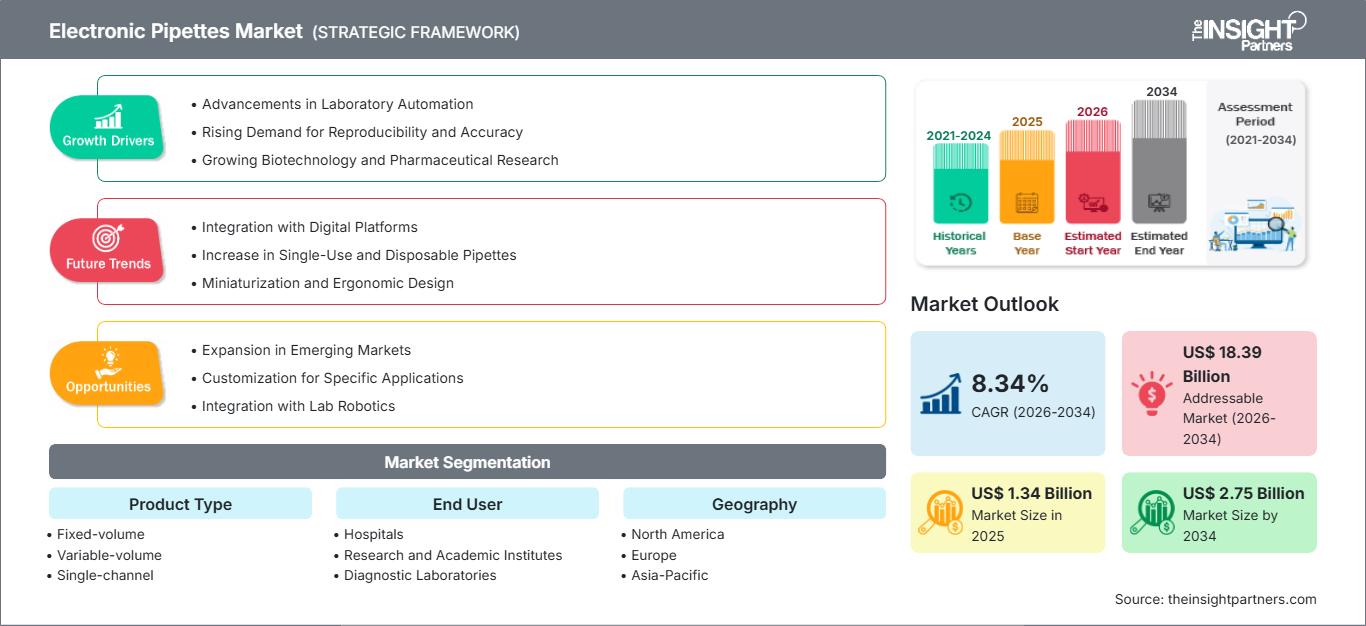
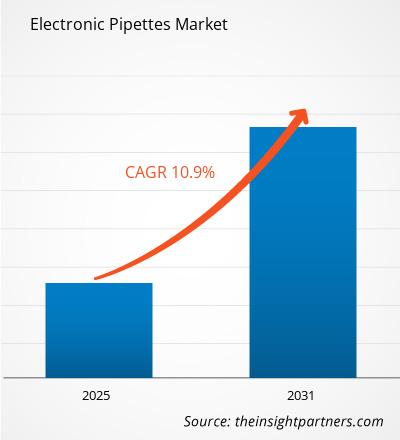
Electronic Pipettes Market was valued at US$ 1.34 Billion in 2025 and is projected to reach US$ 2.75 Billion by 2034, expanding at a CAGR of 8.34% during 2026–2034. Rising laboratory automation, increasing investments in life sciences research, and the growing adoption of precision liquid handling technologies across pharmaceutical, biotechnology, and clinical laboratories continue to strengthen demand. Continuous innovation in ergonomic and digitally enabled pipetting systems further supports long-term market expansion.
North America remains the leading regional hub for electronic pipetting technologies and is expected to register a CAGR of 7.8–8.4% during 2026–2034. Strong public and private funding for biomedical research, increasing automation across pharmaceutical manufacturing, and widespread implementation of quality-controlled laboratory workflows are reinforcing regional demand. Expanding genomics, cell therapy, and molecular diagnostics activities are also accelerating adoption across research institutions and healthcare laboratories.
Electronic Pipettes Market Assessment and Insights
- North America: Accounted for 36–40% share in 2025 and is projected to grow at a CAGR of 7.8–8.4% during 2026–2034. Strong biotechnology ecosystems, advanced laboratory infrastructure, and sustained research funding continue to support the widespread adoption of electronic liquid-handling solutions.
- U.S.: Represented 80–84% of the North American market in 2025 and is anticipated to expand at a CAGR of 7.9–8.5% during 2026–2034 due to continued pharmaceutical innovation and laboratory automation investments.
- Europe: Held 27–31% share in 2025 and is forecast to register a CAGR of 7.5–8.1% during 2026–2034. Germany, the UK, and France remain the leading contributors, supported by robust biomedical research programs and advanced clinical diagnostics infrastructure.
- Asia Pacific: Captured 22–26% share in 2025 and is expected to grow at a CAGR of 9.3–9.9% during 2026–2034. China, Japan, India, and South Korea continue expanding laboratory capacity through government-backed biotechnology and healthcare investments.
- Largest Segment – Research and Academic Institutes: Held a market share of 34–38% in 2025 and is projected to advance at a CAGR of 8.2–8.8% during 2026–2034, driven by expanding academic research funding and increasing laboratory modernization initiatives.
- High Growth Segment – Diagnostic Laboratories: Accounted for 23–27% market share in 2025 and is anticipated to record a CAGR of 9.1–9.7% during 2026–2034, supported by expanding molecular diagnostics, infectious disease testing, and precision medicine applications.
- Key companies analyzed in detail: Gilson, Inc., Sartorius AG, Thermo Fisher Scientific Inc., Integra Biosciences AG, Eppendorf SE, Corning Incorporated, Hamilton Company, Greiner Bio-One International GmbH, Accumax Lab Devices Pvt. Ltd., Oasis Scientific Inc., BRAND GMBH + CO KG, Nichiryo Co., Ltd., Accupet, BrandTech Scientific, Inc., Capp ApS, Labnet International, Inc., Oxford Lab Products, Socorex Isba SA, VistaLab Technologies, Inc., Heathrow Scientific LLC.
Source: The Insight Partners' analysis based on proprietary research, government publications, company annual reports, investor presentations, industry databases, and expert interviews.
Pipetting practices in laboratories have undergone developments from manual pipettes to automated pipettes that offer increased reproducibility, reduced fatigue for the user and the possibility for standardization of experiments. The use of laboratory automation techniques, the rise in the usage of high throughput screening methods, and the increased number of drugs in development pipelines have increased the incorporation of electronic pipettes in research and diagnostics laboratories. Pipette manufacturers have continued to develop automated dispensing functionalities, network compatibility, and ergonomic design aspects in order to increase efficiency while lowering human errors in laboratory work.
The future growth of the market will be aided by increased biotechnology investments in Asia Pacific, the Middle East, and some Latin American countries as well as the modernization of hospitals' laboratories. Regulations concerning quality management in laboratories, genomics medicine initiatives, and increased drug development outsourcing activities are encouraging laboratories to adopt better pipetting technologies. Integration with laboratory information systems and smart laboratories will offer new business prospects over the forecast period.
Electronic Pipettes Market Report Scope
| Report Attribute | Details |
|---|---|
| Market size in 2025 | US$ 1.34 Billion |
| Market Size by 2034 | US$ 2.75 Billion |
| Global CAGR (2026 - 2034) | 8.34% |
| Historical Data | 2021-2024 |
| Forecast period | 2026-2034 |
Electronic Pipettes Market Analysis
A greater need for repeatable test results makes electronic pipettes become more and more popular in drug manufacturing industries, biotech laboratories, diagnostic testing laboratories, food laboratories, and environmental laboratories. Growing use of molecular biology in practice, more genomics sequencing activities, as well as increased use of PCR test methods necessitate the development of precise liquid handling equipment that would reduce any possible impact on results caused by user error. Global standards for the quality of laboratory tests, along with automation demands, are motivating laboratories to abandon manual pipettes in favor of their electronic counterparts.
Precision engineering, digital electronics, batteries, and calibration services are still contributing to the effectiveness of the value chain. There is growing cooperation between suppliers and laboratory equipment vendors and software providers to create liquid handling solutions.
The industry is marked by continuous innovation, ergonomics, digitalization, and after-sales calibration service expansion. Top players like Thermo Fisher Scientific Inc., Sartorius AG, Eppendorf SE, Hamilton Company, Gilson, Inc., and Integra Biosciences AG keep improving the product line with programmable pipetting systems, improved ergonomics and user interfaces, and higher accuracy for complex lab processes. Local players are concurrently battling for the market through innovative cost-effective products that cater to the needs of the academic labs and emerging healthcare markets.
Investments are currently focused on lab automation, pharmaceutical research facilities, precision diagnostics, and biologics manufacturing. Corning Incorporated, Greiner Bio-One International GmbH, BRAND GMBH + CO KG, Nichiryo Co., Ltd., and VistaLab Technologies, Inc. keep expanding the product line capabilities to cope with growing demands of life science research institutions and diagnostic laboratories. The focus on digitalized lab integration, sustainability, and ergonomics will be critical for maintaining the competitive edge amid ongoing lab modernization worldwide.
● REPORT CUSTOMIZATION
Tailor This Report To Align With Your Specific Business Requirements
This report can be customized to align precisely with your business objectives, scope, and target markets. Customization options include tailored segmentation, geography, competitive analysis, and strategic insights to support informed decision-making.
Customize This Report →WHAT YOU CAN ADJUST
- ● Segmentations
- ● Geography
- ● Competitive Analysis
- ● Language Preferences
Electronic Pipettes Market: Strategic Insights
Regional Insights
North America Electronic Pipettes Market
North America accounted for 36-40% of the Electronic Pipettes Market in 2025, and it is anticipated that this region will grow at a CAGR of 7.8-8.4% during 2026-2034. This region is blessed with sophisticated pharmaceutical research, robust biotechnology developments, and effective laboratory automation framework. Public and private funding encourages procurement of high accuracy liquid handling tools on regular basis. Molecular diagnostics, personalized medicine, and cell and gene therapy studies are some other applications which are driving the market of electronic pipettes in laboratory settings.
Advanced quality standards in laboratory procedures along with automation of the process have resulted into better data reproducibility and efficiency in the process. Many pharmaceutical companies, contract research organizations, academic institutions, and diagnostic labs are spending money on programmable electronic pipettes due to lesser manual error rate and efficient throughput. Rising expenditures in research, supported by entities like National Institutes of Health, along with biologics development, are likely to sustain the regional demand.
U.S. Electronic Pipettes Market
The U.S. accounted for 80-84% of the North American market in 2025 and is forecasted to achieve a CAGR of 7.9-8.5% during the 2026-2034 period. The leadership of the country can be attributed to the presence of pharmaceutical companies, biotech firms, and top research institutes in the region. The constant investments made towards laboratory modernization and precision medicine projects have been driving the high adoption rate of electronic liquid handling equipment in laboratories.
Key vendors like Thermo Fisher Scientific Inc., Gilson, Inc., Hamilton Company, Corning Incorporated, and BrandTech Scientific, Inc. possess large-scale commercial activities throughout the country. The rising applications of genomics, drug discovery, vaccine development, and clinical diagnostics have led to increasing demand for automated pipetting instruments to enhance lab efficiency while meeting stringent quality management criteria.
Europe Electronic Pipettes Market
In 2025, Europe accounted for a market share of 27–31%, and it is projected to witness a growth rate of CAGR of 7.5–8.1% in 2026–2034. The dominance of Germany is driven by its strong base for the production of pharmaceuticals, advanced analytical labs, and biotechnological research investment.
The United Kingdom is set to see growth due to growing biomedical research efforts and advancements related to precision medicine and university laboratories' investment in the purchase of automated lab devices. Increased collaborations between academic centers, biotech companies, and healthcare facilities will promote the modernization of lab operations, while demand for reproducible analytical procedures will ensure increased purchases of electronic pipettes used for molecular biology and diagnostic tests.
France, Italy, and Spain drive demand in this region thanks to the growing research infrastructure in the healthcare industry, biotechnology sector development, and modernization of the clinical laboratories. In particular, France sees a focus on pharmaceutical innovation and translational research, Italy is benefiting from increasing investments into diagnostic laboratory research, while Spain continues developing its biotechnology research capacity.
APAC Electronic Pipettes Market
Asia Pacific captured 22–26% of the Electronic Pipettes Market share in 2025 and is projected to register the fastest regional expansion with a CAGR of 9.3–9.9% during 2026–2034. China leads regional demand through extensive biotechnology manufacturing and laboratory expansion.
Japan and South Korea continue investing in precision laboratory technologies supporting pharmaceutical innovation and advanced diagnostics. Increasing automation across research laboratories strengthens adoption of programmable electronic pipettes.
India and Australia are experiencing rising laboratory modernization supported by government healthcare investments, expanding clinical research, and growing pharmaceutical manufacturing capacity. These developments continue to broaden the Electronic Pipettes Market scope across Asia Pacific.
Middle East & Africa Electronic Pipettes Market
The Middle East & Africa market is projected to grow at a CAGR of 7.2–7.8% during 2026–2034, supported by expanding healthcare infrastructure and increasing investment in biomedical laboratories. Saudi Arabia continues leading regional adoption through healthcare transformation initiatives.
The United Arab Emirates is strengthening laboratory automation across hospital networks and research institutions, while South Africa remains an important hub for clinical diagnostics and academic research activities.
The Rest of the Middle East & Africa is gradually increasing investments in healthcare infrastructure, pharmaceutical production, and laboratory quality improvement programs. These developments are expected to support long-term Electronic Pipettes Market analysis across emerging economies as governments continue prioritizing scientific research and diagnostic capacity expansion.
Segmentation Analysis
Product Type
The Product Type segment is expected to register a CAGR of 8.3–8.9% during 2026–2034. Product innovation continues to focus on improving dispensing accuracy, ergonomic handling, programmable operating modes, and digital functionality. Laboratories are increasingly selecting electronic pipettes capable of supporting repetitive liquid handling with minimal operator fatigue. Expanding demand from pharmaceutical manufacturing, biotechnology research, and molecular diagnostics is encouraging manufacturers to introduce advanced models designed for high-throughput workflows and standardized laboratory procedures.
- Fixed-volume: Preferred for standardized laboratory protocols requiring consistent dispensing accuracy. These pipettes are widely adopted in quality control laboratories and routine analytical testing where repeatability, reliability, and operational simplicity remain critical performance requirements.
- Variable-volume: Represents the most versatile product category, supporting multiple laboratory applications with adjustable dispensing volumes. Their flexibility makes them suitable for research laboratories, pharmaceutical development, and clinical testing environments requiring diverse experimental protocols.
- Single-channel: Continues to dominate routine laboratory operations because of its precision, affordability, and suitability for individual sample handling. It remains extensively utilized across research institutions, hospital laboratories, and pharmaceutical quality assurance applications.
- Multi-channel: Increasingly adopted for high-throughput workflows involving PCR preparation, ELISA assays, genomics, and drug discovery. These systems improve operational efficiency by enabling simultaneous processing of multiple samples while reducing repetitive manual handling.
- Picus Pipettes: Premium electronic pipettes designed with lightweight construction, programmable dispensing modes, and ergonomic operation. They are increasingly selected by advanced research laboratories seeking enhanced precision, workflow efficiency, and user comfort during repetitive pipetting tasks.
End User
The End User segment is anticipated to expand at a CAGR of 8.4–9.0% during 2026–2034. Rising investments in healthcare research, laboratory automation, pharmaceutical innovation, and precision diagnostics continue supporting demand across diverse end-user categories. Increasing regulatory expectations regarding laboratory accuracy and data reproducibility are encouraging organizations to replace manual pipettes with electronically controlled systems that improve workflow consistency while reducing operational errors.
- Hospitals: Adoption continues increasing as hospital laboratories expand molecular diagnostics, infectious disease testing, and precision medicine capabilities. Electronic pipettes help improve analytical consistency while supporting efficient laboratory workflows and standardized sample preparation.
- Research and Academic Institutes: The largest end-user category benefits from sustained government research funding, university laboratory modernization, and expanding biotechnology innovation. Advanced electronic pipettes improve experimental reproducibility, supporting genomics, proteomics, pharmaceutical, and life sciences research programs.
- Diagnostic Laboratories: Represents the fastest-growing application area as laboratories expand molecular testing, companion diagnostics, and clinical pathology services. Increasing test volumes and quality assurance requirements continue accelerating investments in automated precision liquid handling technologies.
Opportunity Snapshot
| Segment Name | Revenue Contribution | Trend Tag | Adoption Stage |
| Hospitals | High | Molecular Testing | Mature |
| Research and Academic Institutes | High | Genomics Research | Mature |
| Diagnostic Laboratories | High | PCR Automation | Scaling |
| Others | Low | Specialty Labs | Emerging |
Electronic Pipettes Market Growth Drivers and Impact Analysis
Expansion of Laboratory Automation Across Life Sciences
The trend of laboratory automation keeps changing the face of liquid handling processes, as pharmaceutical manufacturers, biotech companies, and laboratories strive to achieve increased productivity along with enhanced analytical consistency. The electronic pipettes eliminate manual operator dependency and enable programmed dispensing operations. Increasing use of analytical systems and rising digitalization within laboratories are leading to the acquisition of more advanced pipetting devices that can work seamlessly with laboratory information management systems. With increasing use of high-throughput screening, biologics research, and molecular biology in research laboratories, the demand for electronic pipettes will increase even further. This is among the major growth drivers that would support the growth of the Electronic Pipettes Market in the coming years.
Growing Global Investment in Biotechnology and Pharmaceutical Research
Investment in biotechnology research, vaccines, precision medicine, and pharmaceutical manufacturing technologies on a global scale is contributing to increased construction of laboratories. Liquid-handling instrumentation is needed that can accurately deliver liquids in processes associated with genomics, proteomics, cell cultures, and molecular diagnostics. Electronic pipettes are more accurate and ergonomically designed tools that allow users to create customized protocols without suffering from fatigue caused by repetitive actions in laboratory settings. Increased public spending on research, private sector R&D spending, and collaborations between the two sectors are boosting the purchasing power of developed and emerging economies. Such investment ensures modernization of laboratories in the long term and drives the market growth during the forecast period.
Rising Quality Standards in Clinical and Diagnostic Laboratories
The focus on standardizing the test process among healthcare providers and diagnostic laboratories continues in order to increase the analytical accuracy and better care for patients. Electronic pipettes reduce manual error and provide the opportunity to calibrate and trace sample preparation in molecular diagnostics, infectious diseases, and clinical pathology laboratories. The growing trend of laboratory accreditation and quality management systems among the regulatory requirements will continuously push forward the change from manual pipettes to electronic ones. The use of precision medicine, increased molecular tests capabilities, and increased investments into automation in laboratories altogether drive the demand.
Electronic Pipettes Market Future Trends
Integration of Smart Connectivity into Laboratory Workflows
Increasingly, electronic pipettes are being designed with digital integration, programmable software, cloud-based calibration data, and interface with laboratory information management system. This helps to improve documentation processes, minimize errors associated with manual transcription, and compliance with regulatory requirements in pharmaceutical, biotech, and diagnostic labs. Lab equipment providers are paying close attention to building integrated laboratory environments that allow them to monitor instruments, schedule preventive maintenance, and manage protocols. With increasing adoption of digital transformation strategies by laboratories, the demand for intelligent pipettes that can integrate into the automated laboratory environment is forecast to grow substantially.
Growing Preference for Ergonomic and Sustainable Instrument Design
Manufacturers continue prioritizing lightweight materials, rechargeable battery technologies, intuitive interfaces, and environmentally responsible product development. Laboratory personnel increasingly prefer ergonomic electronic pipettes that minimize repetitive strain while improving user comfort during prolonged operation. Sustainability initiatives are also encouraging longer product lifecycles, improved energy efficiency, recyclable packaging, and serviceable instrument components. Combined with increasing emphasis on occupational safety and laboratory productivity, these innovations are reshaping purchasing decisions across research institutions, pharmaceutical companies, and clinical laboratories, establishing ergonomic sustainability as a defining competitive trend throughout the forecast period.
Electronic Pipettes Market Opportunities
Expansion of Life Sciences Infrastructure in Emerging Economies
Rapid expansion of biotechnology parks, pharmaceutical manufacturing facilities, academic research centers, and clinical laboratory networks across emerging economies presents substantial commercial opportunities for electronic pipette manufacturers. Governments continue investing in healthcare modernization, biomedical innovation, and domestic pharmaceutical production to strengthen scientific capabilities and improve healthcare resilience. These initiatives increase demand for advanced laboratory instrumentation capable of supporting internationally recognized quality standards. Companies expanding localized manufacturing, distribution partnerships, technical training, and after-sales service networks are well positioned to strengthen market penetration while benefiting from increasing procurement across rapidly developing laboratory ecosystems.
Development of AI-Enabled Precision Liquid Handling Platforms
Future laboratory environments are expected to integrate artificial intelligence with precision liquid handling systems to optimize workflow efficiency, automate protocol selection, and improve experimental reproducibility. Electronic pipettes equipped with intelligent software, predictive calibration functions, and adaptive dispensing algorithms will support increasingly complex research applications in genomics, biologics, and precision medicine. Manufacturers investing in digital innovation, cloud-based laboratory management, and interoperable automation platforms can differentiate their product portfolios while creating long-term value for pharmaceutical companies, contract research organizations, and advanced diagnostic laboratories seeking greater productivity and data integrity.
Recent Developments
- February 2026: Eppendorf SE — announced an expansion of its automated liquid handling portfolio with enhanced digital workflow integration and cloud-based calibration management designed for high-throughput genomics and pharmaceutical laboratories. The launch focuses on improving traceability, reducing manual documentation, and supporting standardized laboratory operations across research and clinical environments.
- October 2025: Sartorius AG — introduced upgraded electronic pipetting solutions featuring improved ergonomics, rechargeable battery systems, and programmable dispensing modes targeted at biotechnology and cell therapy laboratories. The company emphasized workflow efficiency and operator comfort as key priorities for laboratories performing repetitive liquid-handling procedures.
- May 2025: Thermo Fisher Scientific Inc. expanded its laboratory automation offerings by integrating advanced electronic pipettes with digital laboratory management platforms and automated sample preparation workflows. The development aims to support pharmaceutical research organizations and diagnostic laboratories seeking higher throughput, improved reproducibility, and stronger regulatory compliance capabilities.
Frequently Asked Questions

- Comprehensive Market Sizing and Forecast Analysis
- Detailed Segmentation Analysis
- In-Depth Market Dynamics Assessment
- Regional and Country-Level Insights
- Competitive Landscape and Company Benchmarking
- Strategic Business Intelligence
Recent Reports
Testimonials

The Insight Partners' SCADA System Market report is comprehensive, with valuable insights on current trends and future forecasts. The team was highly professional, responsive, and supportive throughout. We are very satisfied and highly recommend their services.
RAN KEDEM Partner, Reali Technologies LTDs
I requested a report on a very specific software market and the team produced the report in a few days. The information was very relevant and well presented. I then requested some changes and additions to the report. The team was again very responsive and I got the final report in less than a week.
JEAN-HERVE JENN Chairman, Future Analytica
We worked with The Insight Partners for an important market study and forecast. They gave us clear insights into opportunities and risks, which helped shape our plans. Their research was easy to use and based on solid data. It helped us make smart, confident decisions. We highly recommend them.
PIYUSH NAGPAL Sr. Vice President, High Beam Global
The Insight Partners delivered insightful, well-structured market research with strong domain expertise. Their team was professional and responsive throughout. The user-friendly website made accessing industry reports seamless. We highly recommend them for reliable, high-quality research services
YUKIHIKO ADACHI CEO, Deep Blue, LLC.
This is the first time I have purchased a market report from The Insight Partners.While I was unsure at first, I visited their web site and felt more comfortable to take the risk and purchase a market report.I am completely satisfied with the quality of the report and customer service. I had several questions and comments with the initial report, but after a couple of dialogs over email with their analyst I believe I have a report that I can use as input to our strategic planning process.Thank you so much for taking the extra time and making this a positive experience.I will definitely recommend your service to others and you will be my first call when we need further market data.
JOHN SUZUKI President and Chief Executive Officer, Board Director, BK Technologies
I wish to appreciate your support and the professionalism you displayed in the course of attending to my request for information regarding to infectious disease IVD market in Nigeria. I appreciate your patience, your guidance, and the fact that you were willing to offer a discount, which eventually made it possible for us to close a deal. I look forward to engaging The Insight Partners in the future, all thanks to the impression you have created in me as a result of this first encounter.
DR CHIJIOKE ONYIA MANAGING DIRECTOR, PineCrest Healthcare Ltd.Reason to Buy
- Informed Decision-Making
- Understanding Market Dynamics
- Competitive Analysis
- Identifying Emerging Markets
- Customer Insights
- Market Forecasts
- Risk Mitigation
- Boosting Operational Efficiency
- Strategic Planning
- Investment Justification
- Tracking Industry Innovations
- Aligning with Regulatory Trends





 Get Free Sample for