
Fuel Card Market Size, Share & Forecast by 2034
Coverage: By Type (Branded Fuel Cards, Merchant Fuel Cards, and Universal Fuel Cards); Application (Fuel Refill, Parking, Vehicle Service, Toll Charge, and Others)
- Status : Data Released
- Report Code : TIPRE00003099
- Category : Banking, Financial Services, and Insurance
- No. of Pages : 150
- Available Report Formats :


- Last update date : March 18, 2026


2025 Market Size
US$ 520.88 Bn
Base year value
2034 Forecast
US$ 1024.6 Bn
Projected by 2034
CAGR 2026-2034
7.41 %
Growth rate
Addressable Market
US$ 6,816.72 Bn
(2026-2034)
The global Fuel Card Market size is projected to reach US$ 1024.6 billion by 2034 from US$ 520.88 billion in 2025. The market is anticipated to register a CAGR of 7.41% during the forecast period 2026–2034
Key market dynamics include a heightening global focus on operational cost optimization, rising adoption of digital payment solutions across the logistics sector, and a significant shift toward integrated telematics and fleet management software. Additionally, the market is expected to benefit from the growing expansion of e-commerce delivery networks, stringent regulatory mandates for transparent fuel expense reporting, and the increasing inclusion of EV charging capabilities within traditional fuel card ecosystems.
Fuel Card Market Analysis
The fuel card market analysis indicates a fundamental shift from simple payment facilitation to comprehensive data-driven fleet intelligence. Procurement trends show that the market is bifurcating into traditional branded oil company networks and universal, multi-brand fintech solutions that prioritize flexibility and wide-area coverage. Strategic opportunities are emerging in the integration of Artificial Intelligence (AI) for predictive fuel spending and fraud detection, where real-time anomaly alerts provide a clear competitive advantage over manual reconciliation methods. The analysis also notes that market expansion depends on the seamless integration of payment systems with existing Enterprise Resource Planning (ERP) software and the scalability of mobile-first payment platforms. Competitive differentiation now hinges on providing value-added services such as automated tax recovery, carbon footprint tracking, and driver behavior analytics, allowing providers to secure long-term loyalty in a price-sensitive landscape.
Fuel Card Market Overview
Fuel card is evolving from a niche corporate convenience to a critical financial infrastructure for the global mobility industry. While historically focused on providing discounts at the pump for heavy-duty trucking, the market is expanding into diverse value-added services, including toll payments, parking, and vehicle maintenance. Both global energy giants and agile fintech disruptors are part of this market, leveraging contactless and cloud-based technologies to streamline the last mile of logistics payments. As businesses worldwide seek to mitigate the impact of volatile fuel prices, fuel cards have gained popularity as a strategic tool for budgetary control and transparency. Europe remains a mature leader in adoption, but the Asia-Pacific region is rapidly emerging as a high-growth corridor driven by infrastructure development and the modernization of commercial transport in emerging economies. For instance, the market in the US represents a highly sophisticated and dominant segment of the global landscape, characterized by an extensive network of commercial freight and long-haul logistics. The market is defined by a high penetration of universal cards that offer broad interstate accessibility. There is an increasing emphasis on integrating fuel payments with advanced telematics and regulatory compliance tools to enhance fleet productivity.
Market Research Highlights
- Global market for Fuel Card was valued at US$ 520.88 Billion in 2025
- Annual market size is expected to reach US$ 1,024.60 Billion by 2034
- Total addressable market (TAM) during 2026-2034 is projected to reach approximately US$ 6,816.72 Billion
- Market is anticipated to register a CAGR of 7.41% during the forecast period
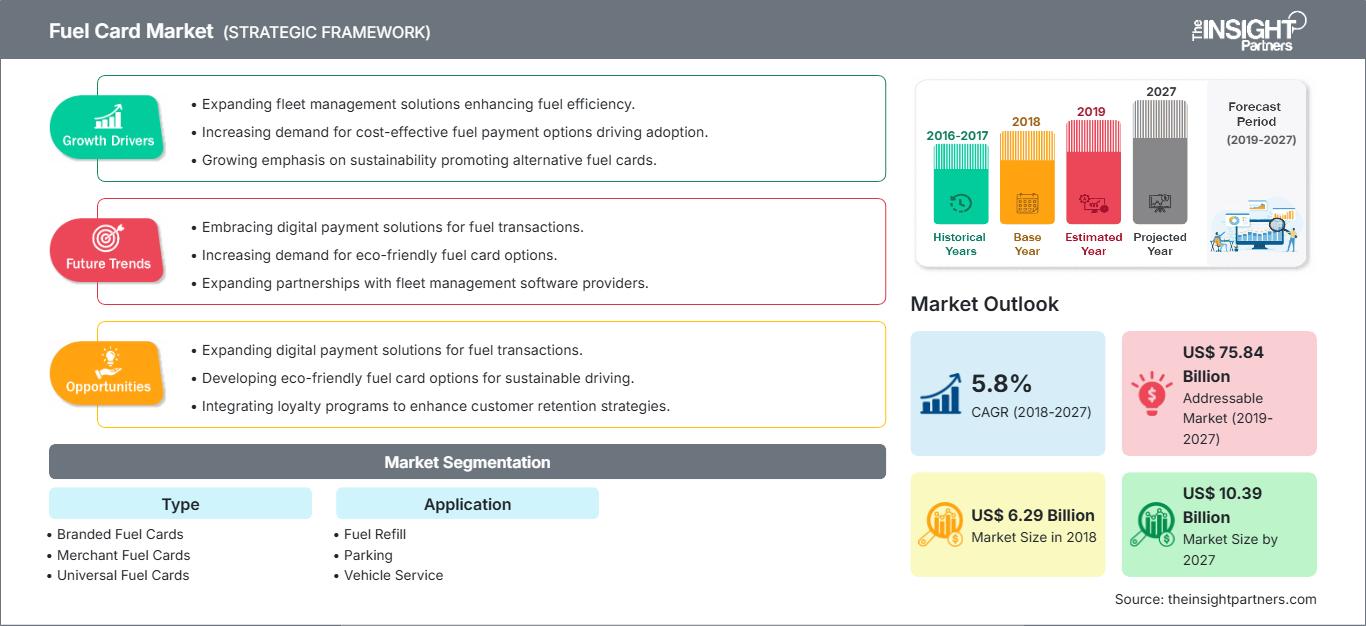
- The United States represents a key market, supported by Expanding fleet management solutions enhancing fuel efficiency., Increasing demand for cost-effective fuel payment options driving adoption., Growing emphasis on sustainability promoting alternative fuel cards., as well as evolving industry dynamics
- Market analysis covers North America, Europe, Asia-Pacific, South and Central America, Middle East and Africa, with growth evaluated across the forecast period
- Market opportunities such as Expanding digital payment solutions for fuel transactions., Developing eco-friendly fuel card options for sustainable driving., Integrating loyalty programs to enhance customer retention strategies. are expected to influence market dynamics and addressable market
- Report profiles industry participants, including BP P.L.C., Exxon Mobil Corporation, Fleetcor Technologies, Inc., Royal Dutch Shell plc, U.S. Bank, Wex Inc., DKV, World Fuel Services, Edenerd, Radius Payment Solutions, while analyzing competitive strategies and innovation developments
-
Source: The Insight Partners' analysis based on proprietary research, government publications, company annual reports, investor presentations, industry databases, and expert interviews.
● REPORT CUSTOMIZATION
Tailor This Report To Align With Your Specific Business Requirements
This report can be customized to align precisely with your business objectives, scope, and target markets. Customization options include tailored segmentation, geography, competitive analysis, and strategic insights to support informed decision-making.
Customize This Report →WHAT YOU CAN ADJUST
- ● Segmentations
- ● Geography
- ● Competitive Analysis
- ● Language Preferences
Fuel Card Market: Strategic Insights
-
Get Top Key Market Trends of this report.This FREE sample will include data analysis, ranging from market trends to estimates and forecasts.
Fuel Card Market Drivers and Opportunities
Market Drivers:
- Need for Enhanced Fleet Efficiency and Cost Control: Volatile fuel prices compel businesses to seek granular visibility into consumption. Fuel cards provide real-time tracking and volume-based discounts, allowing fleet managers to reduce operational overhead and eliminate unauthorized spending through strict purchase controls.
- Rapid Digitization of Payment Ecosystems: The global transition toward cashless economies has accelerated the adoption of fuel cards. The integration of mobile apps and contactless payment technologies simplifies the transaction process for drivers while providing immediate digital receipts for back-office reconciliation.
- Stringent Regulatory and Tax Compliance Requirements: Modern fuel cards automate the complex process of recording fuel taxes and generating audit-ready reports. This is particularly critical for international transport operators who must navigate varying tax jurisdictions and environmental reporting mandates.
Market Opportunities:
- Expansion into Electric Vehicle (EV) and Multi-Energy Solutions: As commercial fleets transition to sustainable energy, there is a significant opportunity for providers to offer hybrid cards that support both traditional petroleum refueling and EV charging within a single payment and reporting platform.
- Integration of Telematics and AI-Driven Analytics: Beyond payments, there is a growing demand for platforms that combine fuel data with vehicle diagnostics. Opportunities exist in developing predictive maintenance alerts and route optimization tools based on real-time fuel efficiency data.
- Growth in SME and Micro-Fleet Segments: While large enterprises are well-served, the small-to-medium enterprise (SME) sector remains underserved. Tailoring simplified, low-fee fuel card products for smaller delivery businesses presents a high-margin growth avenue in developing markets.
Fuel Card Market Report Segmentation Analysis
The Fuel Card Market share is analyzed across various segments to provide a clearer understanding of its structure, growth potential, and emerging trends. Below is the standard segmentation approach used in most industry reports:
By Type:
- Branded Fuel Cards: Issued by specific oil companies, these cards are typically used within a proprietary network of stations. They are preferred by fleets that operate on fixed routes and seek high brand-specific loyalty rewards and discounts.
- Universal Fuel Cards: These cards offer the widest coverage, accepted across multiple brands and independent stations. They are the fastest-growing segment due to the flexibility they provide to long-haul drivers who require diverse refueling options.
- Merchant Fuel Cards: Issued by retailers or specialized providers, these cards often focus on specific niches or localized regions, offering tailored benefits for regional logistics and specialized service vehicles.
By Application:
- Fuel Refill: The primary application segment, focusing on the streamlined procurement of petrol, diesel, and alternative fuels while capturing critical transaction data at the point of sale.
- Parking: A growing value-added segment where fuel cards are used to pay for secure commercial vehicle parking, simplifying expense management for drivers in urban corridors.
- Vehicle Service: This application allows fleet managers to consolidate maintenance, repair, and tire replacement costs into a single billing cycle, improving oversight of the total vehicle cost of ownership.
- Toll Charge: Integrated toll payment features enable seamless highway transit, reducing delays and administrative burdens associated with manual toll booth payments.
- Others: Includes miscellaneous services such as roadside assistance, driver amenities, and cabin-related expenses.
By Geography:
- North America
- Europe
- Asia Pacific
- South & Central America
- Middle East & Africa
Fuel Card Market Report Scope
| Report Attribute | Details |
|---|---|
| Market size in 2025 | US$ 520.88 Billion |
| Market Size by 2034 | US$ 1024.6 Billion |
| Global CAGR (2026 - 2034) | 7.41% |
| Historical Data | 2021-2024 |
| Forecast period | 2026-2034 |
| Segments Covered |
By Type
|
| Regions and Countries Covered |
North America
|
| Market leaders and key company profiles |
|
Fuel Card Market Players Density: Understanding Its Impact on Business Dynamics
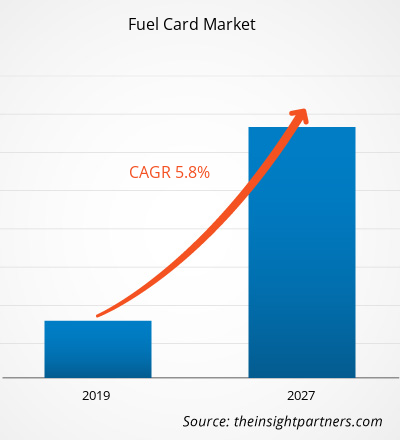
The Fuel Card Market is growing rapidly, driven by increasing end-user demand due to factors such as evolving consumer preferences, technological advancements, and greater awareness of the product's benefits. As demand rises, businesses are expanding their offerings, innovating to meet consumer needs, and capitalizing on emerging trends, which further fuels market growth.
Fuel Card Market Share Analysis by Geography
Asia-Pacific is expected to grow fastest in the coming years. Emerging markets in South & Central America, the Middle East, and Africa also have many untapped opportunities for digital payment providers and fleet management specialists to expand.
The fuel card market is undergoing a significant transformation, moving from a regional convenience tool to a global data-driven financial ecosystem. Growth is driven by the rising need for logistics transparency, a surge in e-commerce-led transportation, and the adoption of smart city technologies. Below is a summary of market share and trends by region:
North America
- Market Share: Holds a leading position globally, underpinned by a massive commercial trucking infrastructure and early adoption of telematics.
- Key Drivers:
- High volume of long-haul freight operations requires centralized payment solutions.
- Widespread integration of Electronic Logging Devices (ELD) with fuel payment platforms.
- Intense focus on fraud prevention through advanced chip-and-PIN and AI monitoring technologies.
- Trends: A shift toward all-in-one mobility apps that manage fuel, tolls, and lodging, alongside a rapid pilot-to-scale transition for EV charging infrastructure.
Europe
- Market Share: Represents a highly mature market with the highest density of fuel card usage among SMEs and corporate car fleets.
- Key Drivers:
- Complex cross-border logistics necessitate multi-currency and multi-tax reporting.
- Strong government mandates for carbon emission tracking and sustainable fleet management.
- High fuel prices are driving extreme demand for loyalty-based discount programs.
- Trends: Heavy emphasis on Green fuel cards that offer carbon offsetting features and support for HVO (Hydrotreated Vegetable Oil) and Bio-LNG fuels.
Asia-Pacific
- Market Share: The fastest-growing region, fueled by massive infrastructure investments in China, India, and Southeast Asia.
- Key Drivers:
- Rapid urbanization and the proliferation of organized logistics and delivery services.
- Government-led initiatives to digitize the economy and move away from cash-based transit payments.
- Rising vehicle ownership and the formalization of the commercial transport sector.
- Trends: Integration of fuel payments with popular super-apps and a significant push from national oil companies to launch digital-first loyalty programs.
South and Central America
- Market Share: An emerging market with significant growth potential in the artisanal and regional logistics sectors of Brazil and Argentina.
- Key Drivers:
- Increasing need to combat fuel theft and fraud through secure digital transaction limits.
- Modernization of fleet management practices among agricultural and mining transport providers.
- Expansion of retail fuel networks into previously underserved rural regions.
- Trends: Growth of prepaid fuel card models to manage credit risks and an increasing focus on mobile-wallet compatibility for independent owner-operators.
Middle East and Africa
- Market Share: A developing market transitioning from traditional informal fuel management to formalized commercial systems.
- Key Drivers:
- Large-scale regional transport projects and Smart City initiatives in the GCC region.
- Need for efficient fuel tracking in the heavy-duty construction and oil-and-gas service sectors.
- Strategic shifts by national petroleum companies toward diversified retail service offerings.
- Trends: Implementation of RFID-based vehicle identification for automated refueling and a growing focus on UHT-stable digital infrastructure for remote desert operations.
High Market Density and Competition
Competition is intensifying due to the presence of established leaders such as WEX Inc. and Corpay (formerly FleetCor Technologies). Regional specialists and niche players like Edenred (Right Fuel Card), DKV Mobility, and Radius Payment Solutions also contribute to a diverse and rapidly expanding market landscape.
This competitive environment pushes vendors to differentiate through:
- Data Integration and Ecosystem Connectivity: Position fuel cards as gateways to broader fleet management software, emphasizing real-time data sync with ERPs and telematics.
- Expanded Service Portfolios: Including non-fuel expenses like EV charging, tolls, and maintenance to provide a one-stop financial tool for drivers.
- Vertical Integration: Managing the transaction from the pump to the back office ensures higher security, faster settlement, and the ability to offer customized credit terms to specific industries.
- Security and Fraud Mitigation: Utilizing AI and machine learning to detect suspicious transaction patterns and provide geofencing capabilities that restrict card use to specific locations.
Opportunities and Strategic Moves
- Strategic Partnerships with EV Infrastructure Providers: To remain relevant during the energy transition, fuel card companies are partnering with charging network operators to offer seamless roaming for electric fleets.
- Agile Fintech Collaborations: Partnering with mobile payment and blockchain startups to enhance transaction transparency and reduce the float time for international payments.
Major Companies operating in the Fuel Card Market are:
- BP P.L.C.
- Exxon Mobil Corporation
- Fleetcor Technologies, Inc.
- Royal Dutch Shell plc
- U.S. Bank
- Wex Inc.
- DKV
- World Fuel Services
- Edenerd
- Radius Payment Solutions
Disclaimer: The companies listed above are not ranked in any particular order.
Fuel Card Market News and Recent Developments
- In September 2025, Right Fuel Card, part of the Edenred Group, announced the launch of Edenred Black, a premium fuel card that marked a significant evolution in the UK fleet’s fuel management. As the only fuel card in the country to combine access to both BP and Shell sites on a single card at a fixed weekly price, Edenred Black offered fleet operators a powerful new tool to streamline operations, reduce costs, and, in another industry-first, unlock loyalty rewards.
- In July 2025, Corpay revolutionized the road ahead for fleet managers with the launch of its newest innovations: the Corpay One Select Mixed Fleet Fuel Card and the Corpay One Select Diesel Fuel Card. These next-gen solutions combined market-leading rebates, streamlined spend controls, and smarter maintenance management—all of which were integrated into the powerful Corpay One platform.
Fuel Card Market Report Coverage and Deliverables
The Fuel Card Market Size and Forecast (2021–2034) report provides a detailed analysis of the market covering below areas:
- Fuel Card Market size and forecast at global, regional, and country levels for all the key market segments covered under the scope
- Fuel Card Market trends, as well as market dynamics such as drivers, restraints, and key opportunities
- Detailed PEST and SWOT analysis
- Fuel Card Market analysis covering key market trends, global and regional framework, major players, regulations, and recent market developments
- Industry landscape and competition analysis covering market concentration, heat map analysis, prominent players, and recent developments in the Fuel Card Market.
- Detailed company profiles
Frequently Asked Questions

- Comprehensive Market Sizing and Forecast Analysis
- Detailed Segmentation Analysis
- In-Depth Market Dynamics Assessment
- Regional and Country-Level Insights
- Competitive Landscape and Company Benchmarking
- Strategic Business Intelligence
Recent Reports
Testimonials

The Insight Partners' SCADA System Market report is comprehensive, with valuable insights on current trends and future forecasts. The team was highly professional, responsive, and supportive throughout. We are very satisfied and highly recommend their services.
RAN KEDEM Partner, Reali Technologies LTDs
I requested a report on a very specific software market and the team produced the report in a few days. The information was very relevant and well presented. I then requested some changes and additions to the report. The team was again very responsive and I got the final report in less than a week.
JEAN-HERVE JENN Chairman, Future Analytica
We worked with The Insight Partners for an important market study and forecast. They gave us clear insights into opportunities and risks, which helped shape our plans. Their research was easy to use and based on solid data. It helped us make smart, confident decisions. We highly recommend them.
PIYUSH NAGPAL Sr. Vice President, High Beam Global
The Insight Partners delivered insightful, well-structured market research with strong domain expertise. Their team was professional and responsive throughout. The user-friendly website made accessing industry reports seamless. We highly recommend them for reliable, high-quality research services
YUKIHIKO ADACHI CEO, Deep Blue, LLC.
This is the first time I have purchased a market report from The Insight Partners.While I was unsure at first, I visited their web site and felt more comfortable to take the risk and purchase a market report.I am completely satisfied with the quality of the report and customer service. I had several questions and comments with the initial report, but after a couple of dialogs over email with their analyst I believe I have a report that I can use as input to our strategic planning process.Thank you so much for taking the extra time and making this a positive experience.I will definitely recommend your service to others and you will be my first call when we need further market data.
JOHN SUZUKI President and Chief Executive Officer, Board Director, BK Technologies
I wish to appreciate your support and the professionalism you displayed in the course of attending to my request for information regarding to infectious disease IVD market in Nigeria. I appreciate your patience, your guidance, and the fact that you were willing to offer a discount, which eventually made it possible for us to close a deal. I look forward to engaging The Insight Partners in the future, all thanks to the impression you have created in me as a result of this first encounter.
DR CHIJIOKE ONYIA MANAGING DIRECTOR, PineCrest Healthcare Ltd.Reason to Buy
- Informed Decision-Making
- Understanding Market Dynamics
- Competitive Analysis
- Identifying Emerging Markets
- Customer Insights
- Market Forecasts
- Risk Mitigation
- Boosting Operational Efficiency
- Strategic Planning
- Investment Justification
- Tracking Industry Innovations
- Aligning with Regulatory Trends





 Get Free Sample for