
Graphene Nanoplatelets Market Size, Share & Growth by 2034
Coverage: by Application (Composites, Energy and Power, Conductive Inks and Coatings, Others) , and Geography (North America, Europe, Asia Pacific, and South and Central America)
- Status : Data Released
- Report Code : TIPRE00003941
- Category : Chemicals and Materials
- No. of Pages : 150
- Available Report Formats :


- Last update date : July 27, 2026


2025 Market Size
US$ 417.73 Mn
Base year value
2034 Forecast
US$ 1,845.0 Mn
Projected by 2034
CAGR 2026-2034
17.94 %
Growth rate
Addressable Market
US$ 9,378.86 Mn
(2026-2034)
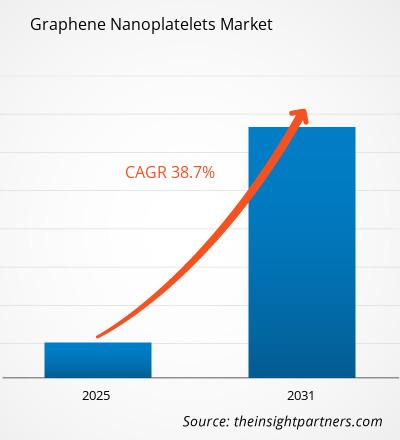
The global Graphene Nanoplatelets market was valued at US$ 417.73 million in 2025 and is expected to reach US$ 1845 million by 2034; it is estimated to record a CAGR of 17.94% during 2026-2034.
Graphene Nanoplatelets Market Assessment and Insights
- North America: North America accounted for 34–38% share in 2025 and is projected to expand at a CAGR of 18–21% during 2026–2034. Strong nanotechnology research capabilities, rising electric vehicle production, and increasing adoption of conductive composite materials continue to support regional market expansion.
- US: The US represented 78–82% of the North American market in 2025 and is expected to record a CAGR of 18–21% during 2026–2034, supported by investments in aerospace, defense, battery innovation, and advanced manufacturing applications.
- Europe: Europe held 25–29% share in 2025 and is estimated to grow at a CAGR of 19–22% during 2026–2034. Germany, the UK, France, and Italy remain leading contributors owing to automotive electrification, composite material development, and industrial sustainability initiatives.
- Asia Pacific: Asia Pacific captured 29–33% share in 2025 and is anticipated to register the highest CAGR of 22–25% during 2026–2034. China, Japan, South Korea, and India continue expanding graphene manufacturing capacity while increasing investments in batteries, electronics, and advanced materials.
- Largest Segment: Composites accounted for an estimated 38–42% market share in 2025 and is projected to grow at a CAGR of 19–22% during 2026–2034, supported by increasing demand for lightweight, mechanically reinforced materials across transportation and aerospace industries.
- High Growth Segment: Energy Storage represented 22–26% market share in 2025 and is forecast to expand at a CAGR of 23–26% during 2026–2034, driven by the rapid commercialization of lithium-ion batteries, supercapacitors, and next-generation energy storage technologies.
- Key companies analyzed in detail: ACS Material, LLC, CVD Equipment Corporation, Directa Plus S.p.A., First Graphene Ltd., Graphenea S.A., NanoXplore Inc., Thomas Swan & Co. Ltd., Universal Matter Inc., XG Sciences, Inc., Xiamen Knano Graphene Technology Co., Ltd.
Source: The Insight Partners' analysis based on proprietary research, government publications, company annual reports, investor presentations, industry databases, and expert interviews.
Material innovation continues to reshape the graphene nanoplatelets market as manufacturers improve production efficiency, product consistency, and dispersion technologies. Advancements in exfoliation processes, larger commercial manufacturing capacities, and improved quality control have accelerated adoption across composites, polymer additives, conductive coatings, and battery materials. Increased collaboration between industrial producers, research organizations, and downstream manufacturers has strengthened commercialization while reducing technical barriers associated with integrating graphene nanoplatelets into high-value industrial applications. These developments collectively support long-term graphene nanoplatelets market growth across diverse end-use industries.
Growing investment in advanced manufacturing ecosystems is expected to broaden commercialization opportunities over the coming decade. Expanding industrial activity across Asia Pacific, supportive government nanotechnology initiatives, and increasing sustainability requirements are encouraging manufacturers to develop scalable graphene-enabled materials. Strategic partnerships, capacity expansion projects, and application-specific product development are expected to strengthen the graphene nanoplatelets market analysis, particularly across electric mobility, renewable energy infrastructure, aerospace components, and high-performance electronic materials.
Graphene Nanoplatelets Market Report Scope
| Report Attribute | Details |
|---|---|
| Market size in 2025 | US$ 417.73 Million |
| Market Size by 2034 | US$ 1,845.0 Million |
| Global CAGR (2026 - 2034) | 17.94% |
| Historical Data | 2021-2024 |
| Forecast period | 2026-2034 |
Graphene Nanoplatelets Market Analysis
The expanding transition toward lightweight, multifunctional materials is strengthening demand across several industrial value chains. The graphene nanoplatelets market is benefiting from increasing adoption in electric vehicles, renewable energy systems, advanced electronics, and high-performance polymer formulations, where enhanced thermal conductivity, electrical conductivity, and mechanical reinforcement are critical. The increasing capital expenditure on batteries, lightweight transportation components, and conductive coatings continues to drive business demands. The interaction between suppliers, graphene makers, compounders, component makers, and the original equipment manufacturer (OEM) is growing as they try to refine dispersion technologies and make them compatible with current manufacturing systems.
In addition to the already proven applications, advancements in the scalability of production are contributing to the expansion of industrial use. Continuous exfoliation technologies, surface functionalization, and quality standardization are being invested in by manufacturers to decrease production costs and keep up material performance. This leads to better supply chain management through increased availability of products and moving from lab innovations to mass production. With more focus on durability, weight reduction, corrosion resistance, and energy efficiency, graphene nanoplatelets become a highly desired additive for engineering materials.
Competitive intensity continues to increase as established graphene manufacturers expand production capacity while technology-focused companies pursue differentiated product portfolios targeting specialized applications, contributing to the growth of the graphene nanoplatelets market share. Companies including ACS Material, LLC, Directa Plus S.p.A., First Graphene Ltd., Graphenea S.A., NanoXplore Inc., and XG Sciences, Inc. are emphasizing application-specific material development, strategic collaborations, and vertically integrated manufacturing capabilities. At the same time, Thomas Swan & Co. Ltd., Universal Matter Inc., CVD Equipment Corporation, and Xiamen Knano Graphene Technology Co., Ltd. are strengthening their global presence through investments in scalable production technologies, distribution partnerships, and customer-specific technical support, reinforcing competition across both mature and emerging markets.
Investment activity is increasingly directed toward commercialization rather than fundamental research, reflecting growing confidence in industrial adoption. Public funding programs supporting advanced materials, clean energy technologies, and sustainable manufacturing are encouraging private-sector investments in production facilities and downstream application development. Automotive suppliers, battery manufacturers, aerospace companies, and electronics producers are expanding collaborative development programs to accelerate product qualification and reduce commercialization timelines. These initiatives are expected to improve manufacturing economics, expand end-use adoption, and strengthen the long-term competitive positioning of participants operating throughout the global graphene nanoplatelets ecosystem.
● REPORT CUSTOMIZATION
Tailor This Report To Align With Your Specific Business Requirements
This report can be customized to align precisely with your business objectives, scope, and target markets. Customization options include tailored segmentation, geography, competitive analysis, and strategic insights to support informed decision-making.
Customize This Report →WHAT YOU CAN ADJUST
- ● Segmentations
- ● Geography
- ● Competitive Analysis
- ● Language Preferences
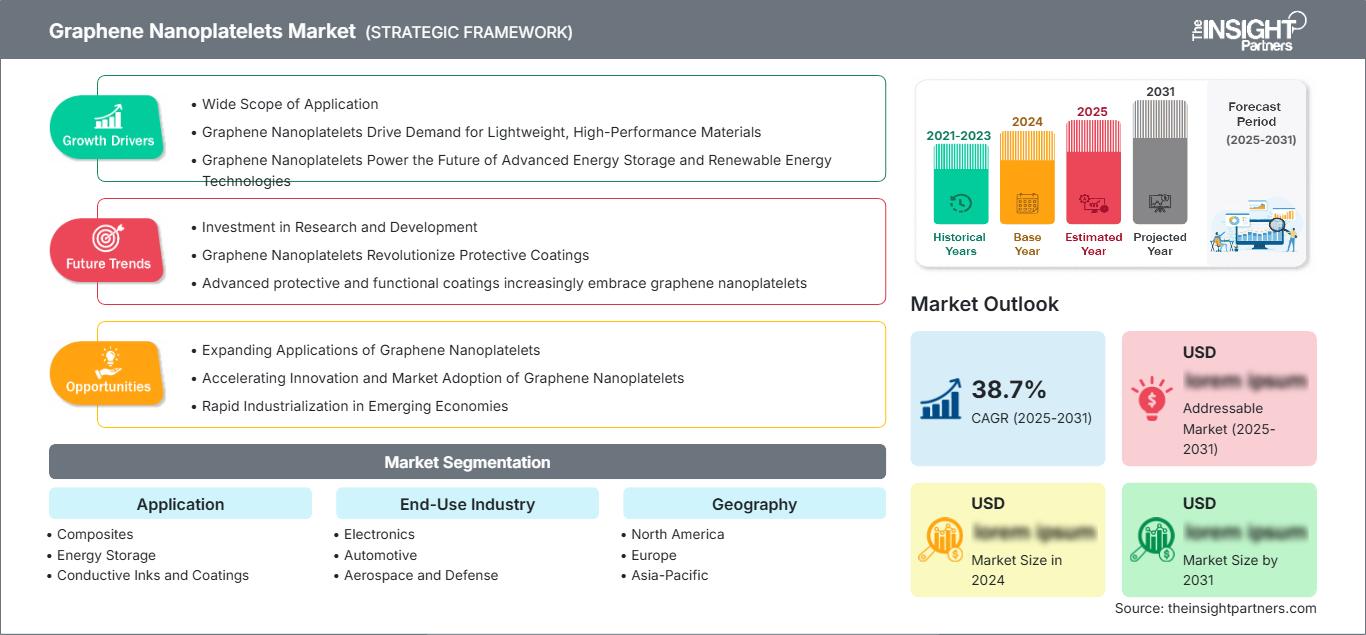
Graphene Nanoplatelets Market: Strategic Insights
Regional Insights
North America Graphene nanoplatelets market
Graphene nanoplatelets market reports indicate that North America represented 34–38% of the market share in 2025 and is projected to expand at a CAGR of 18–21% during 2026–2034. The region benefits from strong research capabilities, advanced manufacturing infrastructure, and rising adoption of graphene-enhanced materials across automotive, aerospace, electronics, and energy applications. The United States remains the primary contributor due to established nanotechnology research networks and increasing commercialization activities.
Industrial investments in lightweight materials and battery technologies are creating additional opportunities across the regional value chain. Partnerships between graphene producers, material developers, and end-use manufacturers are supporting application development, particularly for electric mobility, thermal management solutions, and conductive formulations. Increasing focus on domestic advanced material supply chains is expected to further strengthen regional adoption.
U.S. Graphene nanoplatelets market
Graphene nanoplatelets market trends indicate that the U.S. accounted for approximately 78–82% of the North American market in 2025 and is anticipated to register a CAGR of 18–21% during 2026–2034. Demand growth is being driven by the aerospace, defense, automotive electrification, and semiconductor sectors, which increasingly require advanced materials with enhanced conductivity, mechanical strength, and thermal performance.
Companies including XG Sciences, Inc., ACS Material, LLC, and other technology developers are supporting commercialization through customized graphene solutions. Growing battery innovation programs and increasing interest in advanced composites are encouraging manufacturers to integrate graphene nanoplatelets into next-generation products.
Europe Graphene nanoplatelets market
Europe held 25–29% share in 2025 and is forecast to grow at a CAGR of 19–22% during 2026–2034. Germany remains one of the leaders in its powerful automotive industry and knowledge of composites, along with the industry’s attention to lightweighting solutions. The UK continues to be an active participant in the graphene market through graphene research and material innovation efforts.
France, Italy, and Spain see the growing use of graphene-containing materials in transportation, coatings, and industry. Manufacturers in Europe pay attention to sustainable production technologies and circular materials use in their operations, which promotes the usage of advanced carbon materials.
APAC Graphene nanoplatelets market
APAC accounted for 29–33% share in 2025 and is expected to record the highest CAGR of 22–25% during 2026–2034. China dominates the regional demand owing to the increased ability to manufacture graphene, batteries, and electronics. Graphene is being increasingly adopted in Japan and South Korea in energy storage and electronic applications.
India and Australia have started making efforts towards investments in the field of advanced materials. The government efforts in promoting clean energy, electric mobility, and advanced manufacturing are providing an enabling environment for the regional market.
Middle East & Africa Graphene nanoplatelets market
Middle East & Africa is expected to witness a CAGR of 15–18% during 2026–2034, supported by emerging applications in energy, infrastructure materials, and advanced manufacturing. Saudi Arabia and the UAE are exploring advanced materials adoption as part of industrial diversification strategies and technology development initiatives.
South Africa contributes through research activities and industrial material applications, while other MEA countries are gradually adopting graphene-enhanced solutions. Growth opportunities are linked with energy sector modernization, infrastructure development, and increasing interest in performance-improving additives for industrial materials.
Segmentation Analysis
Application
The Application segment represented a major portion of the graphene nanoplatelets market and is expected to expand at a CAGR of 19–22% during 2026–2034. Increasing integration of graphene nanoplatelets into advanced composites, energy storage devices, conductive formulations, and polymer systems is improving material performance across industrial applications. The segment reflects the broad scope of graphene nanoplatelets as manufacturers continue developing solutions for enhanced mechanical strength, electrical conductivity, thermal management, and durability.
- Composites: Composite applications represent a significant demand area due to graphene nanoplatelets’ ability to improve strength, stiffness, weight efficiency, and thermal properties. Adoption is increasing across automotive parts, aerospace components, and industrial materials requiring enhanced performance.
- Energy Storage: Energy storage applications are gaining importance as graphene nanoplatelets support improved electrode conductivity, charge transfer efficiency, and cycle performance. Battery manufacturers and research organizations are exploring graphene-based solutions for lithium-ion batteries and advanced storage systems.
- Conductive Inks and Coatings: Conductive inks and coatings utilize graphene nanoplatelets for applications requiring electrical conductivity, electromagnetic shielding, and thermal resistance. Demand is expanding in electronics, sensors, printed components, and protective industrial coating systems.
- Polymer Additives: Polymer additives benefit from graphene nanoplatelets through improved reinforcement, conductivity, and barrier properties. Manufacturers are incorporating graphene materials into engineering plastics and specialty polymers to enhance product performance and extend application possibilities.
End-Use Industry
The End-Use Industry segment is estimated to grow at a CAGR of 20–23% during 2026–2034, supported by increasing adoption across electronics, automotive, aerospace and defense, and energy and power sectors. Industries are integrating graphene-enhanced materials to achieve improved efficiency, durability, and functional performance. Demand is particularly influenced by electrification trends, lightweight material requirements, and the need for advanced thermal and electrical management solutions.
- Electronics: Electronics manufacturers are adopting graphene nanoplatelets for thermal management materials, conductive components, and electromagnetic interference shielding applications. Increasing miniaturization and performance requirements are encouraging the use of advanced conductive materials.
- Automotive: Automotive applications are expanding due to electric vehicle development, lightweight component demand, and the requirement for improved battery and structural material performance. Graphene-enhanced solutions support vehicle efficiency and durability improvements.
- Aerospace and Defense: Aerospace and defense industries are exploring graphene nanoplatelets for lightweight composites, protective coatings, and advanced structural materials. Performance advantages such as strength improvement and weight reduction support adoption in specialized applications.
- Energy and Power: Energy and power industries are utilizing graphene nanoplatelets in battery materials, energy storage technologies, and conductive systems. Increasing renewable energy deployment and grid modernization efforts are supporting demand for advanced material solutions.
Opportunity Snapshot
| Application | Revenue Contribution | Trend Tag | Adoption Stage |
|---|---|---|---|
| Composites | High | Lightweight Structures | Scaling |
| Energy Storage | High | Battery Enhancement | Scaling |
| Conductive Inks and Coatings | Medium | Smart Electronics | Emerging |
| Polymer Additives | Medium | Material Reinforcement | Scaling |
Graphene Nanoplatelets Market Growth Drivers and Impact Analysis
Rising Demand for Lightweight High-Performance Materials
The growing demand for lighter materials with improved mechanical and functional attributes is promoting the use of such materials in transportation, aerospace, and industrial sectors. The automobile sector has become more concerned about weight reduction so that it could make its cars more efficient, especially those powered by electricity, since their range and fuel consumption depend on the attributes of the components used in them. Graphene nanoplatelets can offer the benefits of reinforcement when added to polymers and composites, which helps achieve a higher strength-to-weight ratio. The aerospace sector is also exploring advanced carbon materials.
Expansion of Advanced Battery and Energy Storage Technologies
With increased focus on electric transportation solutions and renewable energy storage, the need for advanced electrodes and conductivity additives increases as well. The use of graphene nanoplatelets may be helpful in improving electricity flow paths, thermals, and material performance in batteries. Manufacturers of batteries are considering adding graphene into their products to improve the performance properties of the electrodes used. Due to governmental incentives related to the transition towards renewables and increased production of batteries, the market for graphene providers keeps growing.
Increasing Industrial Adoption of Conductive Materials
Conducting materials that have enhanced properties are required owing to the increased usage of smart electronics, sensors and advanced coatings. It is possible to achieve conductivity, electromagnetic protection, and thermal regulation properties by using graphene nanoplatelets in appropriate formulations. Electronics manufacturers, coating manufacturers and polymer producers are researching graphene materials in order to enhance their product capabilities. The sophistication level of electronics and other industrial products is leading to the search for more advanced conducting materials. Conducting materials that also provide high strength are required by manufacturers of industrial products.
Graphene Nanoplatelets Market Future Trends
Integration of Graphene Materials in Next-Generation Battery Platforms
The adoption of graphene nanoplatelets in the future is anticipated to gain momentum by incorporating them in innovative battery designs such as advanced lithium-ion batteries and upcoming energy storage technologies. Studies are currently being undertaken aimed at enhancing electrode designs, efficiency in charging, and durability in battery performance using graphene materials. With the increasing capacity in battery manufacturing worldwide, the graphene suppliers are likely to come up with customized forms of graphene for use in energy. The scenario is likely to foster collaboration among graphene suppliers, battery designers, and automobile manufacturers.
Development of Application-Specific Graphene Formulations
The graphene nanoplatelets market trends indicate increasing movement toward customized materials designed for specific industrial requirements. Manufacturers are supposed to concentrate on particle size control, surface properties, dispersibility, and compatibility with various matrices. Formulations for particular applications could enhance results in terms of performance of the material in composites, coatings, polymers, and electronics. This tendency would be likely to promote cooperation of manufacturers and customers who seek the optimized material rather than a standardized one. With the development of the commercialization process, product differentiation and technical expertise would play an important role for manufacturers.
Graphene Nanoplatelets Market Opportunities
Expansion into Emerging Electric Mobility Applications
The growing adoption of electric vehicles creates significant opportunities for graphene suppliers developing solutions for batteries, lightweight components, and thermal management systems. Automotive manufacturers are investing in materials that improve efficiency while maintaining safety and performance standards. Companies capable of providing consistent quality graphene nanoplatelets with scalable production capabilities can benefit from expanding partnerships across the electric mobility ecosystem. Increasing battery manufacturing investments in the Asia Pacific, Europe, and North America are expected to create additional demand channels. Graphene nanoplatelets market Forecasts indicate that energy-focused applications will remain among the most attractive investment areas during the forecast period.
Commercialization Through Strategic Industrial Partnerships
Strategic partnerships among graphene producers, research organizations, and end-users in industry provide a great opportunity for accelerated commercialization. Cooperation can help validate applications, improve products, and speed up incorporation into manufacturing processes. Businesses are becoming increasingly interested in customer-focused development programs aimed at solving technology problems associated with dispersion, compatibility, and scalable production. Growing industrial ecosystems built around advanced materials allow material suppliers to build sustainable partnerships with auto-makers, electronics manufacturers, and energy firms. Continued investment in application development and manufacturing will be vital to meet future demand.
Recent Developments
- January 2026: Directa Plus Plc announced its full-year 2025 trading update, reporting revenue growth, improved EBITDA performance, and continued optimization of its graphene production platform. The company also expanded capabilities for manufacturing advanced graphene materials targeting PFAS remediation, defense, and regulated industrial applications while strengthening operational efficiency.
- December 2025: First Graphene Ltd. — The company completed production of approximately 600 tonnes of graphene-enhanced low-carbon cement using its PureGRAPH technology. The material is intended for multiple downstream applications, including sustainable construction products, while supporting broader commercialization of graphene-enhanced materials beyond traditional industrial applications.
Frequently Asked Questions

- Comprehensive Market Sizing and Forecast Analysis
- Detailed Segmentation Analysis
- In-Depth Market Dynamics Assessment
- Regional and Country-Level Insights
- Competitive Landscape and Company Benchmarking
- Strategic Business Intelligence
Recent Reports
Testimonials

The Insight Partners provided valuable market intelligence that supported our global go-to-market strategy. Their team was professional, responsive, and attentive to our feedback, providing thoughtful analysis and helpful methodological clarifications throughout the project.
Junmo Kim Chief Financial Officer (CFO), Enertech Co., Ltd.
The Insight Partners' SCADA System Market report is comprehensive, with valuable insights on current trends and future forecasts. The team was highly professional, responsive, and supportive throughout. We are very satisfied and highly recommend their services.
RAN KEDEM Partner, Reali Technologies LTDs
I requested a report on a very specific software market and the team produced the report in a few days. The information was very relevant and well presented. I then requested some changes and additions to the report. The team was again very responsive and I got the final report in less than a week.
JEAN-HERVE JENN Chairman, Future Analytica
We worked with The Insight Partners for an important market study and forecast. They gave us clear insights into opportunities and risks, which helped shape our plans. Their research was easy to use and based on solid data. It helped us make smart, confident decisions. We highly recommend them.
PIYUSH NAGPAL Sr. Vice President, High Beam Global
The Insight Partners delivered insightful, well-structured market research with strong domain expertise. Their team was professional and responsive throughout. The user-friendly website made accessing industry reports seamless. We highly recommend them for reliable, high-quality research services
YUKIHIKO ADACHI CEO, Deep Blue, LLC.
This is the first time I have purchased a market report from The Insight Partners.While I was unsure at first, I visited their web site and felt more comfortable to take the risk and purchase a market report.I am completely satisfied with the quality of the report and customer service. I had several questions and comments with the initial report, but after a couple of dialogs over email with their analyst I believe I have a report that I can use as input to our strategic planning process.Thank you so much for taking the extra time and making this a positive experience.I will definitely recommend your service to others and you will be my first call when we need further market data.
JOHN SUZUKI President and Chief Executive Officer, Board Director, BK Technologies
I wish to appreciate your support and the professionalism you displayed in the course of attending to my request for information regarding to infectious disease IVD market in Nigeria. I appreciate your patience, your guidance, and the fact that you were willing to offer a discount, which eventually made it possible for us to close a deal. I look forward to engaging The Insight Partners in the future, all thanks to the impression you have created in me as a result of this first encounter.
DR CHIJIOKE ONYIA MANAGING DIRECTOR, PineCrest Healthcare Ltd.Reason to Buy
- Informed Decision-Making
- Understanding Market Dynamics
- Competitive Analysis
- Identifying Emerging Markets
- Customer Insights
- Market Forecasts
- Risk Mitigation
- Boosting Operational Efficiency
- Strategic Planning
- Investment Justification
- Tracking Industry Innovations
- Aligning with Regulatory Trends





 Get Free Sample for