
Infant, Child, and Maternal Probiotic Supplements Market Size, Trends & Demand by 2034
Coverage: By Form (Capsules and Softgels, Gummies, Liquid, and Others) and End User (Infant and Toddler, Children, and Maternal Women)
- Status : Upcoming
- Report Code : TIPRE00029530
- Category : Consumer Goods
- No. of Pages : 150
- Available Report Formats :


- Last update date : March 12, 2026


2025 Market Size
US$ 857.06 Mn
Base year value
2034 Forecast
US$ 1,876.87 Mn
Projected by 2034
CAGR 2026-2034
9.1 %
Growth rate
Addressable Market
US$ 12,226.50 Mn
(2026-2034)
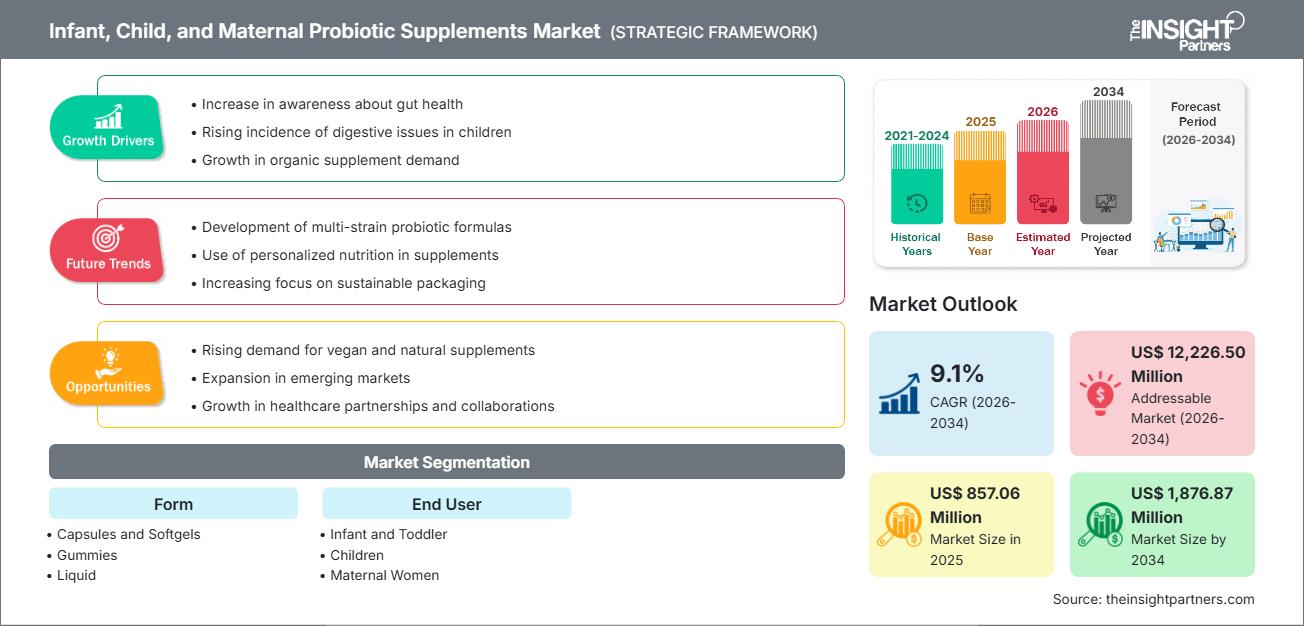
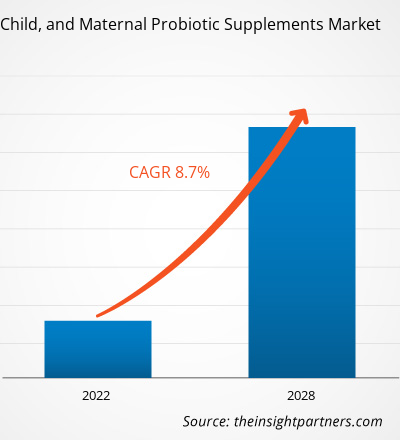
The global Infant, Child, and Maternal Probiotic Supplements market size is projected to reach US$ 1,876.87 million by 2034 from US$ 857.06 million in 2025. The market is anticipated to register a CAGR of 9.1% during the forecast period 2026–2034.
Key market dynamics include an escalating clinical emphasis on the first 1,000 days of life, a surge in maternal health awareness regarding the microbiome's role in pregnancy outcomes, and the rising prevalence of pediatric lifestyle-related conditions such as eczema, colic, and childhood obesity. Additionally, the market is expected to benefit from the mainstreaming of synbiotics (combined pre- and probiotics), the expansion of e-commerce platforms specializing in family wellness, and the increasing integration of probiotic strains into prenatal and postnatal care protocols.
Infant, Child, and Maternal Probiotic Supplements Market Analysis
The Infant, Child, and Maternal Probiotic Supplements market analysis reveals a pivot toward strain-specific efficacy as healthcare providers and parents move away from generic one-size-fits-all formulations. Procurement trends indicate a growing demand for premium, clean-label products that exclude allergens, artificial colors, and sugar, particularly in the pediatric segment. Strategic opportunities are emerging in the development of specialized maternal probiotics designed to address pregnancy-related issues like gestational diabetes and mastitis, which offer a distinct competitive edge over general women's health supplements. The analysis also highlights that market success is increasingly dependent on the cold-chain integrity of live-culture logistics and the adoption of advanced microencapsulation technologies to ensure shelf stability. Competitive differentiation is now defined by rigorous clinical validation and transparent sourcing, allowing brands to command premium pricing in a landscape increasingly scrutinized by pediatricians and regulatory bodies.
Infant, Child, and Maternal Probiotic Supplements Market Overview
The infant, child, and maternal probiotic supplements market is evolving from a niche wellness category into a standard component of preventive healthcare. Historically focused on digestive relief for infants, the market has expanded to include immune support, brain-health axis formulations, and prenatal metabolic wellness. The market comprises a mix of global pharmaceutical giants and specialized biotech firms, all leveraging advancements in microbiome sequencing to target the A2 protein and human milk oligosaccharide (HMO) sectors. As health literacy improves, consumers in North America and Asia-Pacific are increasingly seeking hypoallergenic and non-GMO options, driving innovation in delivery formats such as gummies and liquid drops. While Europe remains a center for rigorous clinical research, emerging markets in Oceania and Southeast Asia are witnessing rapid growth through the adoption of Westernized pediatric nutrition standards. For instance, the market in the US represents a mature yet dynamic landscape characterized by high consumer awareness and a robust retail infrastructure. The market is defined by a shift toward personalized nutrition, where parents prioritize clinically backed strains for infant immunity and gut health. The widespread availability of premium supplements in high-end grocery and specialized pharmacies further sustains growth.
Market Research Highlights
- Global market for Infant, Child, and Maternal Probiotic Supplements was valued at US$ 857.06 Million in 2025
- Annual market size is expected to reach US$ 1,876.87 Million by 2034
- Total addressable market (TAM) during 2026-2034 is projected to reach approximately US$ 12,226.50 Million
- Market is anticipated to register a CAGR of 9.1% during the forecast period
- The United States represents a key market, supported by Increase in awareness about gut health, Rising incidence of digestive issues in children, Growth in organic supplement demand, as well as evolving industry dynamics
- Market analysis covers North America, Europe, Asia-Pacific, South and Central America, Middle East and Africa, with growth evaluated across the forecast period
- Market opportunities such as Rising demand for vegan and natural supplements, Expansion in emerging markets, Growth in healthcare partnerships and collaborations are expected to influence market dynamics and addressable market
- Report profiles industry participants, including Bayer Corporation, Nestle S.A., Mommy, while analyzing competitive strategies and innovation developments
-
Source: The Insight Partners' analysis based on proprietary research, government publications, company annual reports, investor presentations, industry databases, and expert interviews.
● REPORT CUSTOMIZATION
Tailor This Report To Align With Your Specific Business Requirements
This report can be customized to align precisely with your business objectives, scope, and target markets. Customization options include tailored segmentation, geography, competitive analysis, and strategic insights to support informed decision-making.
Customize This Report →WHAT YOU CAN ADJUST
- ● Segmentations
- ● Geography
- ● Competitive Analysis
- ● Language Preferences
Infant, Child, and Maternal Probiotic Supplements Market: Strategic Insights
-
Get Top Key Market Trends of this report.This FREE sample will include data analysis, ranging from market trends to estimates and forecasts.
Infant, Child, and Maternal Probiotic Supplements Market Drivers and Opportunities
Market Drivers:
- Growing Recognition of the Gut-Brain Axis: New research linking early childhood gut health to cognitive development and mood regulation is a powerful driver. Parents are increasingly investing in probiotics not just for digestion, but as a foundational tool for long-term mental and physical resilience.
- Rising Prevalence of Pediatric Allergies and C-Section Births: The clinical correlation between microbiome imbalance and the rise in childhood eczema and food allergies has boosted demand. Probiotics are now widely recommended for C-section-born infants to help establish a healthy bacterial baseline similar to that of naturally born infants.
- Increased Focus on Maternal Preventive Care: The maternal segment is driven by a shift toward proactive pregnancy management. Supplements that claim to reduce the risk of pre-eclampsia, gestational diabetes, and postpartum depression are gaining significant traction among health-conscious expectant mothers.
Market Opportunities:
- Integration into Postnatal and Breastfeeding Support: Significant opportunities exist in the development of probiotic strains targeted at lactating mothers to prevent mastitis and improve the nutritional quality of breast milk, tapping into the Breast is Best global movement.
- Expansion of Targeted Clean Label Formulations: As millennials and Gen Z become parents, there is a massive opening for organic, vegan, and non-GMO certified probiotics that use natural fruit-based flavors and sustainable packaging, aligning with modern ethical consumption values.
- Strategic Growth in APAC Healthcare Channels: Partnering with pediatric clinics and maternal hospitals in emerging Asian markets provides a high-margin entry point. Establishing trust through professional medical channels is key to capturing the rapidly expanding middle-class demographic in China and India.
Infant, Child, and Maternal Probiotic Supplements Market Report Segmentation Analysis
The Infant, Child, and Maternal Probiotic Supplements Market share is analyzed across various segments to provide a clearer understanding of its structure, growth potential, and emerging trends. Below is the standard segmentation approach used in most industry reports:
By Form:
- Capsules and Softgels: A staple segment for maternal health due to their ease of storage and precise dosage, often preferred by adults for prenatal and postnatal supplementation.
- Gummies: The fastest-growing segment in the child category, designed to overcome pill fatigue and improve compliance through appealing flavors and textures.
- Liquid: The dominant form for infants and toddlers, offering ease of administration via drops that can be added to milk or water without altering taste.
- Others: Includes powders and chewable tablets, which provide high-potency alternatives for varied age groups.
By End User:
- Infant and Toddler: Focuses on foundational gut colonization and immune priming during the first two years of life.
- Children: Targets the 3–12 age group with a focus on school-age immunity and digestive balance.
- Maternal Women: Includes specialized supplements for the prenatal, pregnancy, and postnatal (lactation) phases.
By Geography:
- North America
- Europe
- Asia Pacific
- South & Central America
- Middle East & Africa
Infant, Child, and Maternal Probiotic Supplements Market Report Scope
| Report Attribute | Details |
|---|---|
| Market size in 2025 | US$ 857.06 Million |
| Market Size by 2034 | US$ 1,876.87 Million |
| Global CAGR (2026 - 2034) | 9.1% |
| Historical Data | 2021-2024 |
| Forecast period | 2026-2034 |
| Segments Covered |
By Form
|
| Regions and Countries Covered |
North America
|
| Market leaders and key company profiles |
|
Infant, Child, and Maternal Probiotic Supplements Market Players Density: Understanding Its Impact on Business Dynamics
The Infant, Child, and Maternal Probiotic Supplements Market is growing rapidly, driven by increasing end-user demand due to factors such as evolving consumer preferences, technological advancements, and greater awareness of the product's benefits. As demand rises, businesses are expanding their offerings, innovating to meet consumer needs, and capitalizing on emerging trends, which further fuels market growth.
Infant, Child, and Maternal Probiotic Supplements Market Share Analysis by Geography
Asia-Pacific is expected to grow fastest in the coming years due to rising birth rates and increasing urbanization. Emerging markets in South & Central America and the Middle East also offer untapped potential as pediatric healthcare infrastructure modernizes and consumer spending on premium health products rises.
The market is undergoing a significant transformation, moving from basic digestive aids to sophisticated, life-stage-specific wellness solutions. Below is a summary by region:
North America
- Market Share: Holds the largest revenue share globally, supported by a highly developed nutraceutical industry and significant healthcare spending.
- Key Drivers:
- Strong consumer preference for clinically validated and branded probiotic strains.
- High incidence of pediatric autoimmune and allergic conditions.
- Widespread availability of advanced delivery formats in mass-market retail.
- Trends: Increasing demand for synbiotic products and the rapid growth of the D2C (Direct-to-Consumer) subscription model for maternal supplements.
Europe
- Market Share: A major player anchored by strict regulatory standards and a long history of fermented food science in countries like Germany and France.
- Key Drivers:
- Rigorous European Food Safety Authority (EFSA) guidelines that enhance consumer trust.
- Integration of probiotics into standard hospital postnatal care protocols.
- High demand for organic-certified pediatric supplements.
- Trends: A shift toward clear label manufacturing and the development of sustainable, eco-friendly packaging for family-oriented brands.
Asia-Pacific
- Market Share: The fastest-growing region, driven by the massive consumer bases in China and India and a cultural emphasis on gut health.
- Key Drivers:
- Rapidly rising middle-class disposable income and a focus on premium infant nutrition.
- Growing awareness of the benefits of probiotics through digital health platforms and social media.
- Government initiatives promoting maternal and child health in Southeast Asia.
- Trends: Heavy reliance on cross-border e-commerce and a surge in domestic innovations combining probiotics with traditional herbal medicine.
South and Central America
- Market Share: An emerging market with steady growth in urban centers such as Brazil and Argentina.
- Key Drivers:
- Expansion of organized pharmacy chains is making supplements more accessible.
- Increasing medical recommendations by pediatricians for gut health issues.
- The growing middle-income segment is seeking Western-standard wellness products.
- Trends: Rise of affordable value-pack probiotic powders and liquid drops to penetrate price-sensitive demographics.
Middle East and Africa
- Market Share: A developing segment with high growth potential in the Gulf Cooperation Council (GCC) countries.
- Key Drivers:
- High birth rates and a young population are driving long-term pediatric demand.
- Strategic focus on smart healthcare and nutritional security in the UAE and Saudi Arabia.
- Rising adoption of shelf-stable, high-heat-resistant probiotic strains.
- Trends: Implementation of temperature-controlled supply chains to handle arid climates, coupled with a focus on high-potency infant formulas.
High Market Density and Competition
Competition is intensifying due to the presence of established leaders such as Nestlé Health Science, Danone S.A., and BioGaia AB. Regional experts and niche innovators like Culturelle (i-Health), Probi, and Lallemand Health Solutions contribute to a diverse landscape. This competitive environment pushes vendors to differentiate through:
- Strain-Specific Marketing: Emphasizing patented strains like L. rhamnosus GG or Bifidobacterium animalis for specific health outcomes like colic relief or mastitis prevention.
- Advanced Formulation Tech: Using microencapsulation to ensure bacteria survive the stomach's acidity, guaranteeing that the live and active count on the label is delivered to the gut.
- Vertical Scientific Integration: Controlling the process from strain discovery in the lab to clinical human trials, ensuring a high level of transparency and trust.
Opportunities and Strategic Moves
- Cross-Sector Partnerships: Collaborating with fertility clinics and pediatric hospitals to embed probiotics into the standard of care for expecting and new parents.
- E-commerce and Education-First Marketing: Leveraging digital platforms to educate parents on the science of the microbiome, building brand loyalty through high-value content and subscription models.
Major Companies operating in the Infant, Child, and Maternal Probiotic Supplements Market are:
- Bayer Corporation
- Nestlé S.A.
- Mommy™ Bliss Inc.
- LoveBug Probiotics
- Biogaia AB
- MaryRuth Organics, LLC
- Pharmavite LLC
- Evolve Biosystems
- Biomeology
- Nordic Naturals
Disclaimer: The companies listed above are not ranked in any particular order.
Infant, Child, and Maternal Probiotic Supplements Market News and Recent Developments
- In September 2025, in collaboration with the Complutense University of Madrid, Kerry became the first to isolate beneficial bacterial strains, including LC40 and BfM26, from human breast milk. The food and beverage service company utilized an in-house screening method that evaluated more than 40 criteria to select the most potent candidates for the Infant, Child, and Maternal Probiotic Supplements market.
- In January 2024, the collaboration of Novozymes and Chr. Hansen was completed, creating Novonesis—a leading global biosolutions partner poised to drive innovation within the Infant, Child, and Maternal Probiotic Supplements market. By uniting their specialized expertise in microbial science and enzyme technology, the newly formed entity strengthened its ability to develop high-performance probiotic strains tailored for prenatal health and early childhood development. This merger allowed the company to scale its research and production capabilities, ensuring a more robust supply chain for manufacturers seeking clinically documented ingredients for their Infant, Child, and Maternal Probiotic Supplements portfolios.
Infant, Child, and Maternal Probiotic Supplements Market Report Coverage and Deliverables
The Infant, Child, and Maternal Probiotic Supplements Market Size and Forecast (2021–2034) report provides a detailed analysis of the market covering below areas:
- Infant, Child, and Maternal Probiotic Supplements Market size and forecast at global, regional, and country levels for all the key market segments covered under the scope
- Infant, Child, and Maternal Probiotic Supplements Market trends, as well as market dynamics such as drivers, restraints, and key opportunities
- Detailed PEST and SWOT analysis
- Infant, Child, and Maternal Probiotic Supplements Market analysis covering key market trends, global and regional framework, major players, regulations, and recent market developments
- Industry landscape and competition analysis covering market concentration, heat map analysis, prominent players, and recent developments in the Infant, Child, and Maternal Probiotic Supplements Market.
- Detailed company profiles
Frequently Asked Questions

- Comprehensive Market Sizing and Forecast Analysis
- Detailed Segmentation Analysis
- In-Depth Market Dynamics Assessment
- Regional and Country-Level Insights
- Competitive Landscape and Company Benchmarking
- Strategic Business Intelligence
Recent Reports
Testimonials

The Insight Partners' SCADA System Market report is comprehensive, with valuable insights on current trends and future forecasts. The team was highly professional, responsive, and supportive throughout. We are very satisfied and highly recommend their services.
RAN KEDEM Partner, Reali Technologies LTDs
I requested a report on a very specific software market and the team produced the report in a few days. The information was very relevant and well presented. I then requested some changes and additions to the report. The team was again very responsive and I got the final report in less than a week.
JEAN-HERVE JENN Chairman, Future Analytica
We worked with The Insight Partners for an important market study and forecast. They gave us clear insights into opportunities and risks, which helped shape our plans. Their research was easy to use and based on solid data. It helped us make smart, confident decisions. We highly recommend them.
PIYUSH NAGPAL Sr. Vice President, High Beam Global
The Insight Partners delivered insightful, well-structured market research with strong domain expertise. Their team was professional and responsive throughout. The user-friendly website made accessing industry reports seamless. We highly recommend them for reliable, high-quality research services
YUKIHIKO ADACHI CEO, Deep Blue, LLC.
This is the first time I have purchased a market report from The Insight Partners.While I was unsure at first, I visited their web site and felt more comfortable to take the risk and purchase a market report.I am completely satisfied with the quality of the report and customer service. I had several questions and comments with the initial report, but after a couple of dialogs over email with their analyst I believe I have a report that I can use as input to our strategic planning process.Thank you so much for taking the extra time and making this a positive experience.I will definitely recommend your service to others and you will be my first call when we need further market data.
JOHN SUZUKI President and Chief Executive Officer, Board Director, BK Technologies
I wish to appreciate your support and the professionalism you displayed in the course of attending to my request for information regarding to infectious disease IVD market in Nigeria. I appreciate your patience, your guidance, and the fact that you were willing to offer a discount, which eventually made it possible for us to close a deal. I look forward to engaging The Insight Partners in the future, all thanks to the impression you have created in me as a result of this first encounter.
DR CHIJIOKE ONYIA MANAGING DIRECTOR, PineCrest Healthcare Ltd.Reason to Buy
- Informed Decision-Making
- Understanding Market Dynamics
- Competitive Analysis
- Identifying Emerging Markets
- Customer Insights
- Market Forecasts
- Risk Mitigation
- Boosting Operational Efficiency
- Strategic Planning
- Investment Justification
- Tracking Industry Innovations
- Aligning with Regulatory Trends






 Get Free Sample for