
Microbial Bacterial Cellulose Market Size, Share & Growth by 2034
Coverage: by By Growth Medium (Synthetic Growth Medium, Natural Growth Medium); By Production Process (Fermentation Production, Reactor Based Production); By Application (Composites Materials, Nonwovens Adsorbent Webs, Paper and Board, Food Products, Biomedical, Others) , and Geography (North America, Europe, Asia Pacific, and South and Central America)
- Status : Data Released
- Report Code : TIPRE00009217
- Category : Chemicals and Materials
- No. of Pages : 150
- Available Report Formats :


- Last update date : August 06, 2026


2025 Market Size
US$ 28.64 Mn
Base year value
2034 Forecast
US$ 79.55 Mn
Projected by 2034
CAGR 2026-2034
12.02 %
Growth rate
Addressable Market
US$ 474.44 Mn
(2026-2034)
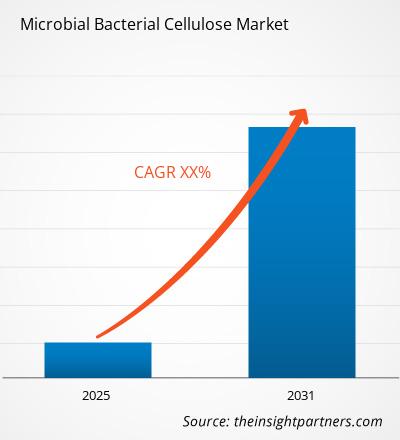
The microbial bacterial cellulose market was valued at US$ 28.64 million in 2025 and is projected to reach US$ 79.55 million by 2034, registering a CAGR of 12.02% during 2026–2034. Increasing commercialization of bio-based materials, growing utilization of high-purity cellulose in biomedical products, and expanding research into sustainable advanced materials continue to support market expansion. Superior mechanical strength, water retention capacity, biocompatibility, and purity compared with plant-derived cellulose are encouraging wider industrial adoption across multiple application sectors.
North America continues to represent one of the leading innovation hubs for bacterial cellulose technologies due to strong investments in biomaterials research, advanced healthcare manufacturing, and sustainable material development. The microbial bacterial cellulose market size across the region is projected to expand at a CAGR of 11.4–12.2% through 2034. Growing demand for regenerative medicine materials and increasing commercialization of renewable bio-based products remain major structural growth drivers.
Microbial Bacterial Cellulose Market Assessment and Insights
- North America: Accounted for 33–36% share in 2025 and is projected to register a CAGR of 11.4–12.2% during 2026–2034, supported by advanced biotechnology research, biomedical innovation, and increasing investments in sustainable biomaterials.
- US: Represented nearly 80–84% of North American revenue in 2025 and is expected to expand at a CAGR of 11.5–12.3%, driven by strong research commercialization and growing medical biomaterial applications.
- Europe: Held approximately 29–32% share in 2025 and is forecast to grow at a CAGR of 11.2–12.0%, led by Germany, Sweden, Norway, Poland, and France through advanced biomaterial research and sustainable manufacturing initiatives.
- Asia Pacific: Accounted for approximately 25–28% share in 2025 and is anticipated to witness the fastest expansion at a CAGR of 13.0–13.8%, supported by China, Japan, South Korea, and India through biotechnology investments and food innovation.
- Largest Segment: Biomedical accounted for 35–39% market share in 2025 and is expected to register a CAGR of 12.8–13.6% owing to increasing utilization in wound care, tissue engineering, and regenerative medicine.
- High Growth Segment: Reactor-based production represented 18–22% market share in 2025 and is projected to expand at a CAGR of 13.6–14.4%, driven by higher production efficiency, scalability, and process consistency.
- Key companies analyzed in detail: American Process Inc., Borregaard ASA, Bowil Sp. z o.o., CelluForce Inc., Chemfield Cellulose, FZMB GmbH, Hainan Yeguo Foods Co., Ltd., Innventia AB, Nympheas International Biomaterial Corp., Sigachi Industries Limited.
Source: The Insight Partners' analysis based on proprietary research, government publications, company annual reports, investor presentations, industry databases, and expert interviews.
Commercial development of bacterial cellulose has accelerated as biotechnology companies improve fermentation efficiency, downstream purification, and industrial-scale production capabilities. Continuous advances in reactor design, microbial strain optimization, and renewable feedstock utilization have enhanced production economics while maintaining exceptional purity and mechanical performance. Growing demand from healthcare, specialty paper, food ingredients, and advanced composite applications continues to expand commercial opportunities for manufacturers worldwide.
Microbial bacterial cellulose market future growth is expected to be supported by increasing public and private investment in sustainable biomaterials, circular bioeconomy initiatives, and healthcare innovation. Emerging production facilities across Asia Pacific, together with collaborative research between universities and biotechnology companies, are expected to improve production capacity and reduce manufacturing costs. Regulatory encouragement for renewable materials and biodegradable products is also likely to accelerate commercialization across multiple industrial sectors.
Microbial Bacterial Cellulose Market Report Scope
| Report Attribute | Details |
|---|---|
| Market size in 2025 | US$ 28.64 Million |
| Market Size by 2034 | US$ 79.55 Million |
| Global CAGR (2026 - 2034) | 12.02% |
| Historical Data | 2021-2024 |
| Forecast period | 2026-2034 |
Microbial Bacterial Cellulose Market Analysis
Increasing emphasis on sustainable biomaterials and renewable manufacturing solutions continues to strengthen demand across healthcare, food processing, specialty materials, and industrial applications. The microbial bacterial cellulose market growth is supported by expanding utilization in wound dressings, tissue scaffolds, cosmetic formulations, food stabilizers, filtration materials, and biodegradable composites. Organizations including the World Health Organization and various national healthcare agencies continue encouraging innovation in advanced wound management materials, creating favorable long-term demand for high-purity bacterial cellulose.
The market value chain begins with microbial strain development, nutrient formulation, fermentation technology, purification, drying, and downstream processing before supplying manufacturers serving biomedical, packaging, specialty paper, and industrial applications. Increasing investments in automated fermentation systems, renewable feedstocks, and bioprocess optimization are improving manufacturing scalability while reducing operational costs and supporting broader commercial adoption.
Competition continues to intensify as biotechnology companies expand production capabilities and develop application-specific cellulose grades. The microbial bacterial cellulose market analysis indicates that companies such as American Process Inc., Borregaard ASA, CelluForce Inc., Sigachi Industries Limited, and Bowil Sp. z o.o. are strengthening competitive positioning through strategic partnerships, research collaborations, intellectual property development, and investments in advanced bioprocess technologies. Several manufacturers are also focusing on customized solutions for medical and specialty industrial applications.
Investment activity increasingly targets industrial fermentation infrastructure, process automation, sustainable raw materials, and high-value biomedical applications. Companies are pursuing collaborations with academic institutions, medical device manufacturers, and specialty chemical producers to accelerate commercialization of next-generation bacterial cellulose products. Expansion of pilot-scale production facilities and continuous innovation in reactor technology are expected to improve production economics while supporting long-term global market development.
● REPORT CUSTOMIZATION
Tailor This Report To Align With Your Specific Business Requirements
This report can be customized to align precisely with your business objectives, scope, and target markets. Customization options include tailored segmentation, geography, competitive analysis, and strategic insights to support informed decision-making.
Customize This Report →WHAT YOU CAN ADJUST
- ● Segmentations
- ● Geography
- ● Competitive Analysis
- ● Language Preferences
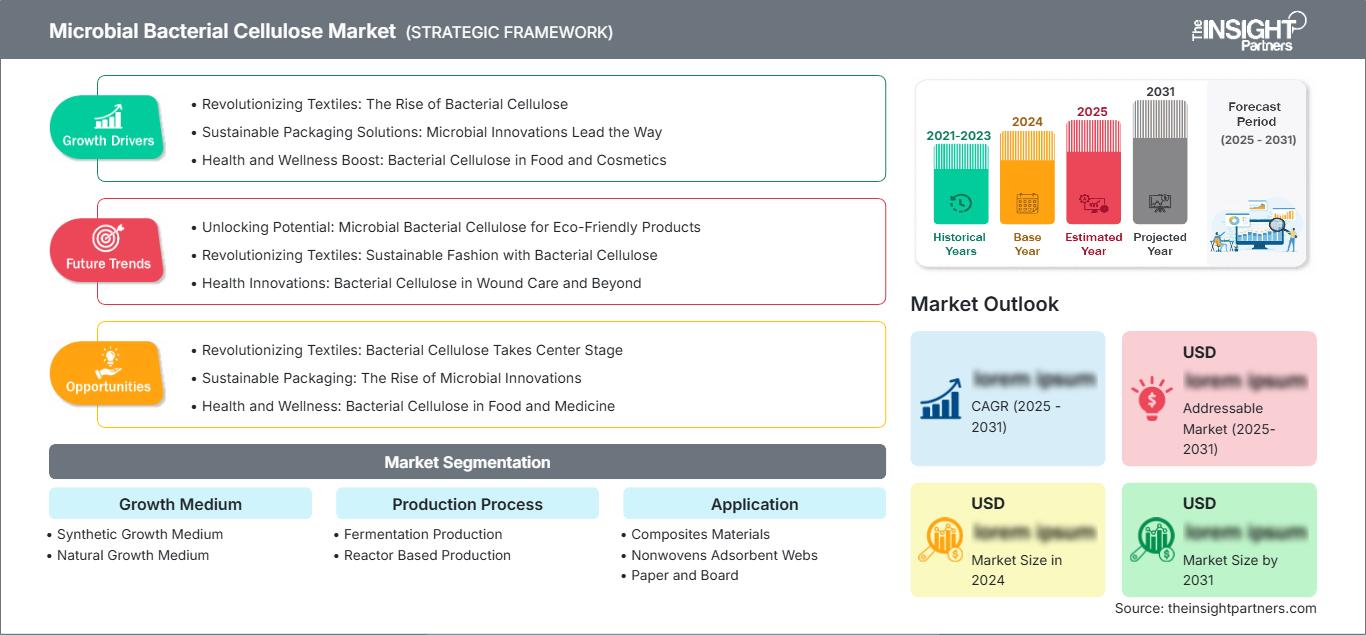
Microbial Bacterial Cellulose Market: Strategic Insights
Regional Insights
North America Microbial Bacterial Cellulose Market
North America accounted for 33–36% of the global microbial bacterial cellulose market share in 2025 and is expected to expand at a CAGR of 11.4–12.2% during 2026–2034. The region benefits from a well-established biotechnology ecosystem, extensive biomedical research, and growing commercialization of sustainable biomaterials. Increasing investments in regenerative medicine, advanced wound care products, and bio-based specialty materials continue to drive demand. Strong intellectual property protection and collaborations among universities, biotechnology firms, and healthcare companies further strengthen innovation and product commercialization across the region.
The United States and Canada continue investing in industrial biotechnology, supported by government initiatives promoting bioeconomy development and sustainable manufacturing. Demand is also expanding from specialty food ingredients, filtration materials, and high-performance composites. Continuous improvements in fermentation technologies and scale-up capabilities are expected to improve production efficiency while supporting broader industrial adoption of bacterial cellulose across healthcare and advanced material applications.
U.S. Microbial Bacterial Cellulose Market
The United States represented 80–84% of North American revenue in 2025 and is projected to register a CAGR of 11.5–12.3% through 2034. The country remains the regional center for biotechnology innovation, biomedical engineering, and the commercialization of advanced biomaterials. Significant research funding, established life sciences infrastructure, and increasing collaboration between academic institutions and private companies continue to support market expansion.
Firms like American Process Inc. and numerous biotechnology start-ups are intensifying their research efforts to develop bacterial cellulose for applications such as wound care, tissue engineering, drug delivery systems, and eco-friendly packaging. Advances in precision fermentation technology, coupled with the growing need for sustainable materials, are expected to enhance manufacturing capabilities during the forecast period.
Europe Microbial Bacterial Cellulose Market
Europe accounted for 29-32% of the world market share in 2025 and is projected to grow at a CAGR of 11.2-12.0% between 2026 and 2034. Germany leads in the region due to its robust biotechnology sector, research facilities, and investment in sustainable material production. Meanwhile, Sweden has been expanding its contribution through innovations in cellulose research, and Poland has developed its production expertise in the biomedical and industrial sectors.
France, Italy, and Spain are witnessing increasing adoption of bio-based materials across healthcare, food processing, and specialty manufacturing industries. The European Union’s policies promoting the circular economy and renewable materials have continued to support commercialization efforts. Research collaborations between academic institutions and manufacturers are likely to accelerate technological development and manufacturing scale-up in the region.
APAC Microbial Bacterial Cellulose Market
Asia Pacific accounted for 25-28% of global revenue in 2025 and is anticipated to exhibit the highest CAGR of 13.0-13.8% during the forecast period. China, the leading producer in the region with a growing industrial biotechnology sector, is on the Rise; on the other hand, Japan has been advancing research into the medical and electronic applications of bacterial cellulose.
South Korea and India are increasing their investment in biotechnology manufacturing, and Australia is contributing to the field through its research projects and healthcare innovations. Government initiatives supporting bio-based industries, together with expanding food processing and biomedical sectors, continue to strengthen regional demand.
Middle East & Africa Microbial Bacterial Cellulose Market
The Middle East & Africa market is anticipated to grow at a CAGR of 10.2–11.0% through 2034 as biotechnology research and sustainable material initiatives gradually expand across the region. Saudi Arabia and the United Arab Emirates are increasing investments in biotechnology, healthcare infrastructure, and advanced materials research.
South Africa continues to strengthen research activities involving biomaterials for healthcare and environmental applications, while the Rest of MEA remains at an early commercialization stage. Long-term opportunities are expected to emerge through expanding bioeconomy initiatives and industrial diversification strategies.
Segmentation Analysis
Growth Medium
The Growth Medium segment is expected to experience a CAGR of 11.9% to 12.7% from 2026 to 2034. The microbial bacterial cellulose market scope continues to grow due to manufacturers’ advancements in optimizing nutritional formulations to increase fermentation efficiency and enhance cellulose output. The selection of growth media is crucial for commercialization as it affects microbial productivity, product purity, scalability, and manufacturing expenses.
- Synthetic Growth Medium – Widely adopted in research laboratories and commercial production because it provides consistent nutrient composition, controlled fermentation conditions, and reliable product quality suitable for biomedical and specialty industrial applications.
- Natural Growth Medium – Increasingly preferred for sustainable manufacturing owing to its utilization of agricultural residues, fruit-based substrates, and renewable feedstocks that reduce production costs while supporting environmentally responsible processing.
Production Process
The Production Process segment is expected to experience a CAGR of 12.3–13.1% between 2026 and 2034. Advances in fermentation technologies, process automation, and reactor designs have enabled companies to increase production efficiency and commercialize at a larger scale. Manufacturers continue investing in advanced bioprocess systems that improve product consistency, reduce contamination risks, and support industrial-scale manufacturing.
- Fermentation Production – Represents the dominant manufacturing approach due to established commercial experience, relatively simple processing requirements, and suitability for producing high-purity bacterial cellulose across diverse industrial applications.
- Reactor-Based Production – Rapidly gaining adoption because automated bioreactor systems improve oxygen transfer, nutrient utilization, process monitoring, production consistency, and scalability required for high-volume commercial manufacturing.
Application
The Application segment is estimated to record a CAGR of 12.6% to 13.4% between 2026 and 2034. The commercialization of bio-based materials in healthcare, food processing, specialized paper manufacturing, composites, and environmental technology has been driving consistent demand. Due to its excellent mechanical strength, purity, biodegradability, and water-holding ability, bacterial cellulose has numerous applications.
- Composite Materials – Utilized as a reinforcing material in lightweight composite structures because of its exceptional tensile strength, nanoscale fiber network, and compatibility with sustainable manufacturing technologies.
- Nonwovens Adsorbent Webs – Applied in filtration, environmental remediation, and absorbent products requiring high surface area, excellent moisture retention, and effective contaminant adsorption performance.
- Paper and Board – Incorporated into specialty paper formulations to improve mechanical strength, durability, printability, and barrier performance in premium packaging and industrial paper applications.
- Food Products – Used as a stabilizer, thickener, texture modifier, and dietary fiber source in specialty food formulations because of its purity, water-holding capacity, and regulatory acceptance.
- Biomedical – Represents the largest application owing to extensive utilization in wound dressings, tissue engineering scaffolds, artificial skin substitutes, regenerative medicine products, and controlled drug delivery systems.
Opportunity Snapshot
| Application | Revenue Contribution | Trend Tag | Adoption Stage |
| Composites Materials | Medium | Bio Composites | Scaling |
| Nonwovens Adsorbent Webs | Medium | Water Filtration | Emerging |
| Paper and Board | Medium | Sustainable Packaging | Scaling |
| Food Products | Medium | Clean Label | Mature |
| Biomedical | High | Wound Healing | Mature |
Microbial Bacterial Cellulose Market Growth Drivers and Impact Analysis
Growing Demand for Advanced Biomaterials in Healthcare
The rising incidence of chronic wounds, burns, diabetic ulcers, and surgeries has increased the demand for advanced wound dressings that possess excellent moisture absorption, biocompatibility, and mechanical properties. Bacterial cellulose possesses excellent purity, high tensile strength, and a network of nanofibers, which make it an ideal choice for wound dressings, tissue engineering scaffolds, and regenerative medicine applications. Research programs supported by health care institutions and public funding agencies have continued to expand clinical research on bacterial cellulose biomaterials. As health care systems focus on enhanced healing and recovery, manufacturers are developing new techniques for producing and formulating such materials. This trend is predicted to boost prospects for commercialization and increase demand among medical device makers globally.
Expansion of Sustainable Bio-Based Material Manufacturing
Governments and industrial manufacturers are increasingly promoting renewable raw materials to reduce dependence on fossil-derived products and improve circular economy performance. The bacterial cellulose produced by microbes offers benefits such as degradability, sustainable production processes, and superior properties, which can be applied in the packaging, composite, special paper, and food industries. New developments in microorganism strain engineering and the use of agricultural waste as a basis for fermentation have contributed to increased process efficiency and reduced production costs. The policy promoting the development of the bioeconomy in North America, Europe, and Asia Pacific also contributes to industry growth. This structural shift creates opportunities for companies producing bacterial cellulose seeking to commercialize environmentally sustainable alternatives to conventional synthetic materials.
Technological Advancements in Industrial Fermentation
The constant improvements in industrial fermentation processes are enhancing the efficiency, scale-up potential, and consistency of the final product in bacterial cellulose production. The modern bioreactor design, which involves automated monitoring, oxygen management, and digital process optimization, can facilitate increased cellulose production with minimal contamination and reduced cost. Techniques for process intensification, along with improved downstream processing, help expand the business opportunities for cellulose mass production. Moreover, biotech companies have been striving to develop optimal microbial strains and precise fermentation techniques to target specific cellulose structures across various industries.
Microbial Bacterial Cellulose Market Future Trends
Precision Fermentation Accelerates Commercial Production
Precision fermentation is emerging as one of the most influential microbial bacterial cellulose market trends, enabling manufacturers to optimize microbial productivity, increase cellulose production, and minimize production variability. The introduction of artificial intelligence, bioprocess digital control, and metabolic engineering could help reduce product development time and increase production efficiency. In future production facilities, efforts will be made to automate the fermentation process and utilize renewable raw materials. The innovations would improve cost-effectiveness and promote the commercialization of products in industries such as biomedical, packaging, filtration, and food industries while supporting sustainability objectives established by governments and industrial stakeholders.
Expansion into High-Value Functional Materials
Future product development will increasingly rely on multifunctional materials based on bacterial cellulose that possess antimicrobial and conductive properties, and improved mechanical performance. Scientists are developing next-generation bacterial cellulose-based materials that incorporate nanoparticles, bioactive materials, and functional polymers for use in flexible electronics, intelligent bandages, biosensors, and environmental remediation. With the growth of commercialization, manufacturers will increasingly expand their product range beyond the limited biomedical sector into other high-value-added industrial applications where lightweight and renewable materials are in high demand.
Microbial Bacterial Cellulose Market Opportunities
Commercial Scale-Up of Biomedical Manufacturing
Healthcare continues to represent the highest-value commercialization opportunity for bacterial cellulose manufacturers because of increasing demand for regenerative medicine, advanced wound care, tissue engineering, and implantable biomaterials. Microbial bacterial cellulose market Forecasts suggest continued investment in the manufacture of medicines through biotechnological processes, driven by an aging population, high rates of chronic ailments, and rising health care spending. Firms capable of producing pharmaceutical-grade bacterial cellulose in regulated manufacturing settings are expected to establish long-term supply arrangements with medical device manufacturers. Investment in cleanroom production, regulatory approvals, and clinical validation will become increasingly important competitive differentiators throughout the forecast period.
Development of Sustainable Packaging and Functional Food Ingredients
Growing environmental regulations and consumer preference for renewable products create significant opportunities for bacterial cellulose producers serving the packaging and food industries. The use of bacterial cellulose as a biodegradable reinforcing agent in sustainable packaging, edible films, and food formulations is under exploration by manufacturers. Effective collaboration among food producers, packaging firms, and biotech research groups would facilitate faster deployment and reduce development costs. Further optimization of fermentation processes and the utilization of renewable substrates will enhance the cost-effectiveness of bacterial cellulose production.
Recent Developments
- March 2026: Stony Brook University and biotechnology company SWFT Labs announced an expanded research partnership through a newly executed Master Research Agreement (MRA) with the Research Foundation for the State University of New York, accelerating the commercialization of a breakthrough materials platform originally developed at the university and further strengthening the growing SWFT–Stony Brook partnership. The agreement positions Long Island at the forefront of the emerging bio-based materials economy and reinforces the region’s role as a hub for advanced materials, biotechnology and sustainable manufacturing.
- February 2026: Kiefel presented a 100% cellulose-based barrier solution for fibre packaging at interpack. This innovation enables the creation of grease and oil barriers made entirely from natural fibres, without the need for an additional plastic coating.
Frequently Asked Questions

- Comprehensive Market Sizing and Forecast Analysis
- Detailed Segmentation Analysis
- In-Depth Market Dynamics Assessment
- Regional and Country-Level Insights
- Competitive Landscape and Company Benchmarking
- Strategic Business Intelligence
Recent Reports
Testimonials

The Insight Partners' SCADA System Market report is comprehensive, with valuable insights on current trends and future forecasts. The team was highly professional, responsive, and supportive throughout. We are very satisfied and highly recommend their services.
RAN KEDEM Partner, Reali Technologies LTDs
I requested a report on a very specific software market and the team produced the report in a few days. The information was very relevant and well presented. I then requested some changes and additions to the report. The team was again very responsive and I got the final report in less than a week.
JEAN-HERVE JENN Chairman, Future Analytica
We worked with The Insight Partners for an important market study and forecast. They gave us clear insights into opportunities and risks, which helped shape our plans. Their research was easy to use and based on solid data. It helped us make smart, confident decisions. We highly recommend them.
PIYUSH NAGPAL Sr. Vice President, High Beam Global
The Insight Partners delivered insightful, well-structured market research with strong domain expertise. Their team was professional and responsive throughout. The user-friendly website made accessing industry reports seamless. We highly recommend them for reliable, high-quality research services
YUKIHIKO ADACHI CEO, Deep Blue, LLC.
This is the first time I have purchased a market report from The Insight Partners.While I was unsure at first, I visited their web site and felt more comfortable to take the risk and purchase a market report.I am completely satisfied with the quality of the report and customer service. I had several questions and comments with the initial report, but after a couple of dialogs over email with their analyst I believe I have a report that I can use as input to our strategic planning process.Thank you so much for taking the extra time and making this a positive experience.I will definitely recommend your service to others and you will be my first call when we need further market data.
JOHN SUZUKI President and Chief Executive Officer, Board Director, BK Technologies
I wish to appreciate your support and the professionalism you displayed in the course of attending to my request for information regarding to infectious disease IVD market in Nigeria. I appreciate your patience, your guidance, and the fact that you were willing to offer a discount, which eventually made it possible for us to close a deal. I look forward to engaging The Insight Partners in the future, all thanks to the impression you have created in me as a result of this first encounter.
DR CHIJIOKE ONYIA MANAGING DIRECTOR, PineCrest Healthcare Ltd.Reason to Buy
- Informed Decision-Making
- Understanding Market Dynamics
- Competitive Analysis
- Identifying Emerging Markets
- Customer Insights
- Market Forecasts
- Risk Mitigation
- Boosting Operational Efficiency
- Strategic Planning
- Investment Justification
- Tracking Industry Innovations
- Aligning with Regulatory Trends





 Get Free Sample for