
Polydimethylsiloxane Market Growth, Demand & Size by 2034
Coverage: by Type (Low-Molecular Weight, High-Molecular Weight, Ultra-High Molecular Weight); Form (Elastomers , Fluids , Resins , Others ); End-Use Industry (Industrial Process , Building and Construction , Household and Personal Care , Transportation , Electrical and Electronics , Healthcare , Others) , and Geography (North America, Europe, Asia Pacific, and South and Central America)
- Status : Data Released
- Report Code : TIPRE00005864
- Category : Chemicals and Materials
- No. of Pages : 150
- Available Report Formats :


- Last update date : July 08, 2026


2025 Market Size
US$ 1.94 Bn
Base year value
2034 Forecast
US$ 3.04 Bn
Projected by 2034
CAGR 2026-2034
5.12 %
Growth rate
Addressable Market
US$ 22.60 Bn
(2026-2034)
The polydimethylsiloxane market continues to benefit from expanding applications across industrial manufacturing, personal care formulations, healthcare products, electronics, and construction materials. The market is valued at approximately US$ 1.94 billion in 2025 and is projected to approach US$ 3.04 billion by 2034, advancing at a compound annual growth rate of around 5.12% between 2026 and 2034. Increasing demand for versatile silicone-based materials with excellent thermal stability, flexibility, and chemical resistance remains a key contributor to long-term market expansion.
North America represents a major regional market for polydimethylsiloxane, supported by advanced manufacturing capabilities, robust healthcare spending, and continuous innovation in specialty chemicals. The regional market is anticipated to expand at an estimated CAGR of 4.9% through 2034, driven primarily by the growing use of silicone materials in medical devices, personal care products, electronics manufacturing, and high-performance industrial processing applications, strengthening the polydimethylsiloxane market share across the region.
Polydimethylsiloxane Market Assessment and Insights
- North America: North America accounted for 29–33% of the market share in 2025 and is anticipated to expand at a CAGR of 4.7–5.1% during 2026–2034. Expanding healthcare manufacturing, growing electronics production, and continuous innovation in specialty silicone products continue to support steady regional market growth.
- U.S.: The U.S. represented 80–84% of the North American market in 2025 and is projected to register a CAGR of 4.8–5.2% during 2026–2034, driven by increasing investments in healthcare manufacturing, advanced electronics production, and specialty silicone technologies.
- Europe: Europe held 24–28% market share in 2025 and is expected to grow at a CAGR of 4.8–5.2% during 2026–2034. Germany, France, and the United Kingdom remain leading markets, supported by advanced industrial manufacturing, automotive innovation, and stringent product quality standards.
- Asia Pacific: Asia Pacific accounted for 34–38% market share in 2025 and is forecast to expand at a CAGR of 5.8–6.2% during 2026–2034. China, Japan, and India continue to lead regional demand, driven by expanding electronics production, rising healthcare investments, and increasing industrial manufacturing capacity.
- Largest Segment: Industrial Process represented the largest market segment and is expected to record a CAGR of 5.0–5.4% during 2026–2034, reflecting increasing utilization of silicone fluids, lubricants, processing aids, and specialty industrial formulations across diverse manufacturing industries.
- High Growth Segment: Healthcare is projected to grow at a CAGR of 6.3–6.7% during 2026–2034, driven by rising demand for biocompatible silicone materials used in medical devices, pharmaceutical processing, implants, and diagnostic equipment.
- Key companies analyzed in detail: Avantor, Inc.; BRB International B.V.; CHT Germany GmbH; Dow Inc.; Elkem ASA; KCC Corporation; Shin-Etsu Chemical Co., Ltd.; Spectrum Chemical Manufacturing Corp.; Thermo Fisher Scientific Inc.; Wacker Chemie AG.
Source: The Insight Partners' analysis based on proprietary research, government publications, company annual reports, investor presentations, industry databases, and expert interviews.
The polydimethylsiloxane market has evolved into a critical segment of the global silicone industry due to its broad functionality and adaptability. Manufacturers utilize the material in applications ranging from lubricants and coatings to personal care products and medical technologies. Its combination of thermal stability, low surface tension, chemical inertness, and flexibility has enabled widespread adoption across multiple industrial ecosystems.
Market prospects remain favorable as industries seek materials capable of enhancing performance, durability, and process efficiency. Continued investments in electronics manufacturing, healthcare infrastructure, advanced construction materials, and sustainable industrial processes are expected to generate additional opportunities. Innovations in specialty silicone chemistry and customized formulations are likely to further strengthen the role of polydimethylsiloxane and contribute to the polydimethylsiloxane market size growth across high-value applications worldwide.
Polydimethylsiloxane Market Report Scope
| Report Attribute | Details |
|---|---|
| Market size in 2025 | US$ 1.94 Billion |
| Market Size by 2034 | US$ 3.04 Billion |
| Global CAGR (2026 - 2034) | 5.12% |
| Historical Data | 2021-2024 |
| Forecast period | 2026-2034 |
Polydimethylsiloxane Market Analysis
The polydimethylsiloxane market is supported by a diverse demand base spanning industrial processing, personal care, electronics, healthcare, transportation, and construction sectors. The material's unique combination of lubricity, thermal resistance, water repellency, and biocompatibility allows manufacturers to address a wide range of technical requirements. Rising consumption of silicone-based products in consumer and industrial applications continues to create favorable conditions for market growth.
A well-established value chain contributes to market stability, beginning with silicon metal production and progressing through silicone intermediates, polymer manufacturing, formulation, distribution, and end-use product integration. Collaboration between raw material suppliers, specialty chemical producers, and application developers is fostering innovation. The polydimethylsiloxane market report highlights how the increasing use of customized silicone formulations is helping manufacturers address evolving customer requirements across highly specialized industries.
The level of competition is represented by the existence of both global silicone producers and regional specialty chemicals companies. Some of these firms are Dow Inc., Wacker Chemie AG, Shin-Etsu Chemical Co., Ltd., Elkem ASA, and KCC Corporation. They are always seeking ways to develop their products and expand capacities. Differentiation of competing players will be increasingly based on technology and market value.
Investment trends focus on expanding specialty silicone production, improving supply chain resilience, and developing sustainable manufacturing processes. Market participants are strengthening research capabilities to address growing demand from healthcare, electronics, and personal care sectors. Strategic partnerships and regional expansion initiatives highlighted in the polydimethylsiloxane market forecast are expected to play an important role in maintaining market competitiveness and capturing future growth opportunities.
● REPORT CUSTOMIZATION
Tailor This Report To Align With Your Specific Business Requirements
This report can be customized to align precisely with your business objectives, scope, and target markets. Customization options include tailored segmentation, geography, competitive analysis, and strategic insights to support informed decision-making.
Customize This Report →WHAT YOU CAN ADJUST
- ● Segmentations
- ● Geography
- ● Competitive Analysis
- ● Language Preferences
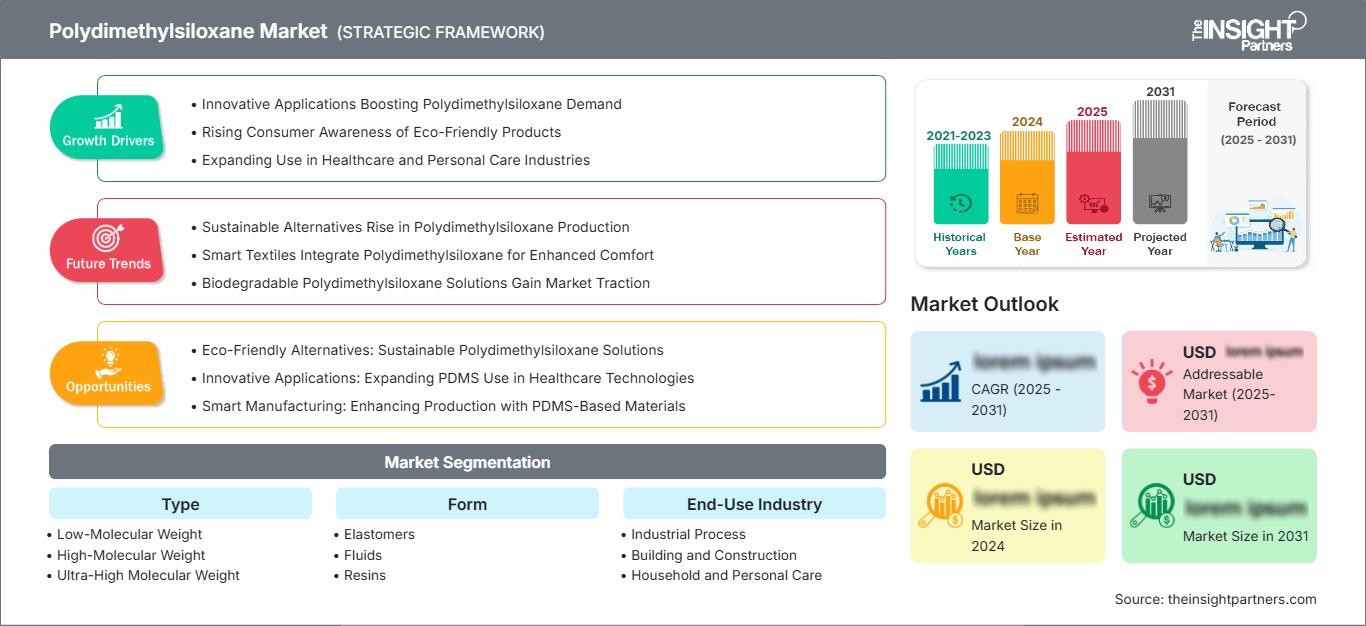
Polydimethylsiloxane Market: Strategic Insights
Regional Insights
North America Polydimethylsiloxane Market
North America remains an important market for polydimethylsiloxane and is projected to expand at a CAGR of approximately 4.9% through 2034. Strong demand from healthcare, personal care, electronics, and industrial processing sectors supports regional growth. The region benefits from advanced research infrastructure, high product quality standards, and significant investments in specialty materials that require high-performance silicone formulations.
Industrial modernization and continued innovation in medical technologies are creating favorable conditions for market expansion. Manufacturers increasingly utilize polydimethylsiloxane in lubricants, coatings, adhesives, medical devices, and specialty formulations designed for demanding operating environments. Growing adoption of silicone-based solutions in advanced manufacturing processes reflects key polydimethylsiloxane market trends and is expected to reinforce long-term market development.
U.S. Polydimethylsiloxane Market
The United States represents the largest market within North America and is estimated to account for approximately 72–77% of regional demand. The market is anticipated to register a CAGR of nearly 5.0% during the forecast period, supported by strong activity across healthcare, personal care, electronics, and industrial manufacturing industries. Demand for high-purity silicone materials remains particularly strong in medical and pharmaceutical applications.
Availability of leading companies, research organizations, and chemical suppliers is contributing to competitiveness. Usage trends in consumer products have been focusing on biocompatibility, high-tech coatings, and silicone technology. It can be predicted that investments in the production of semiconductors, healthcare equipment, and premium personal care products will keep demand for PDMS high throughout the USA.
Europe Polydimethylsiloxane Market
Europe accounts for an estimated 24–29% share of the global polydimethylsiloxane market and is expected to expand at a CAGR of approximately 4.8% through 2034. Advanced manufacturing industries, stringent quality requirements, and widespread use of silicone materials in automotive, healthcare, and industrial applications support demand. The region also benefits from strong research capabilities focused on specialty chemicals and sustainable materials development.
Germany remains the leading country within the European market due to its robust industrial base and extensive use of silicone materials in automotive engineering, electronics manufacturing, and industrial processing. Investments in advanced materials research and precision manufacturing within the polydimethylsiloxane market continue to support demand for high-performance silicone products.
The United Kingdom, France, Italy, and Spain contribute significant demand through healthcare products, construction materials, consumer goods, and specialty industrial applications. Increasing emphasis on sustainable product development and high-value manufacturing is encouraging the adoption of innovative silicone technologies. These factors are expected to sustain stable market growth throughout the forecast period.
APAC Polydimethylsiloxane Market
Asia Pacific represents both the largest and fastest-growing regional market, accounting for approximately 38–43% of global demand. The region is projected to expand at a CAGR approaching 6.3% through 2034, supported by rapid industrialization, electronics manufacturing growth, infrastructure development, and expanding consumer goods production. Strong demand for silicone materials across multiple industries continues to strengthen the polydimethylsiloxane market position in the region.
China leads the Asia Pacific market due to its extensive manufacturing ecosystem and significant production of electronics, construction materials, and consumer products. Government support for advanced manufacturing and domestic chemical production is contributing to market expansion. The country's large-scale industrial capacity creates substantial demand for silicone-based materials.
Japan and South Korea are strong markets due to their electronics and specialty chemicals industries, whereas India is an up-and-coming growth market owing to growth in its healthcare, construction, and personal care industries. Australia is contributing via industrial processes and mining. Overall, all of these markets will be responsible for the growth of future demand.
Middle East & Africa Polydimethylsiloxane Market
The Middle East & Africa market is gradually expanding as industrial diversification, infrastructure investment, and healthcare development increase demand for specialty materials. The regional polydimethylsiloxane market is projected to register a CAGR of approximately 4.7% through 2034. Growing awareness of silicone-based products and increasing adoption across industrial and consumer applications support market development.
Saudi Arabia continues to be the dominant market in this region, owing to the industrial growth programs and investment in the downstream production of chemicals. The United Arab Emirates also continues to make strides through construction projects, health care improvements, and advanced manufacturing ventures. This has opened up avenues for the suppliers of silicon materials.
South Africa contributes through industrial processing, mining, and consumer product applications, while the rest of the region is witnessing the gradual adoption of advanced specialty chemicals within the polydimethylsiloxane market. Expanding infrastructure projects, rising healthcare expenditures, and growing demand for durable industrial materials are expected to create additional opportunities for polydimethylsiloxane suppliers throughout the forecast period.
Segmentation Analysis
Type
- Low-Molecular Weight: Low-molecular-weight polydimethylsiloxane is widely utilized in specialty coatings, release agents, surfactants, personal care formulations, and industrial additives. Its low viscosity, excellent spreadability, and surface modification capabilities make it suitable for applications requiring lubrication, wetting enhancement, and smooth processing characteristics across diverse manufacturing environments.
- High-Molecular-Weight: High-molecular-weight polydimethylsiloxane represents a major commercial segment due to its balanced mechanical properties, thermal stability, flexibility, and chemical resistance. It is extensively incorporated into elastomers, sealants, medical devices, industrial components, and advanced silicone products that require durability and long-term performance under varying operating conditions.
- Ultra-High Molecular Weight: Ultra-high molecular weight variants are increasingly used in highly specialized applications requiring exceptional mechanical strength, abrasion resistance, and durability. These grades support demanding industrial environments, advanced medical technologies, high-performance electronics, and engineered products where superior structural integrity and extended service life are critical performance requirements.
Form
- Elastomers: Elastomer-based polydimethylsiloxane products account for significant demand across automotive, healthcare, construction, and electronics industries. Their flexibility, weather resistance, thermal stability, and sealing performance support widespread use in gaskets, tubing, medical implants, insulation systems, and protective components requiring long-term reliability.
- Fluids: Fluids represent the leading form segment due to extensive usage in personal care products, lubricants, industrial processing, antifoaming agents, and specialty coatings. Their low surface tension, chemical inertness, and excellent lubrication characteristics make them indispensable across consumer, industrial, and healthcare applications worldwide.
- Resins: Polydimethylsiloxane resins are increasingly utilized in coatings, adhesives, protective finishes, and specialty formulations requiring thermal stability and environmental resistance. These materials enhance durability, weatherability, and surface protection, supporting demand across industrial manufacturing, electronics, transportation, and infrastructure-related applications.
End-Use Industry
- Industrial Process: Industrial process applications represent a substantial market segment due to widespread use of polydimethylsiloxane in lubricants, antifoaming agents, processing aids, and specialty coatings. The material enhances operational efficiency, equipment performance, and process reliability across chemical manufacturing, food processing, textile production, and various industrial operations.
- Building and Construction: The construction industry utilizes polydimethylsiloxane in sealants, coatings, waterproofing systems, insulation materials, and architectural applications. Its resistance to moisture, temperature fluctuations, and environmental degradation contributes to improved structural durability and reduced maintenance requirements for residential, commercial, and infrastructure projects.
- Household and Personal Care: Household and personal care products extensively incorporate polydimethylsiloxane to improve texture, spreadability, conditioning performance, and sensory characteristics. The material is commonly found in skincare products, hair care formulations, cosmetics, cleaning products, and specialty consumer goods designed to enhance user experience and product effectiveness.
- Transportation: Transportation applications leverage polydimethylsiloxane for sealing systems, coatings, lubricants, electrical insulation, and vibration-control components. The material supports vehicle performance, durability, and reliability while helping manufacturers meet increasingly demanding operational and environmental requirements across automotive, rail, and specialty transportation sectors.
- Electrical and Electronics: Electrical and electronics manufacturers utilize polydimethylsiloxane for insulation, encapsulation, thermal management, protective coatings, and component protection. The material's dielectric properties, thermal stability, and environmental resistance support expanding demand from semiconductor production, consumer electronics, telecommunications equipment, and advanced electronic systems.
- Healthcare: Healthcare applications continue expanding due to the material's biocompatibility, flexibility, and chemical stability. Polydimethylsiloxane is widely used in medical devices, tubing, implants, wound care products, diagnostic equipment, and pharmaceutical processing systems requiring high purity and reliable long-term performance.
Opportunity Snapshot
| End-Use Industry | Revenue Contribution | Trend Tag | Adoption Stage |
| Industrial Process | High | Process Efficiency | Mature |
| Building and Construction | High | Waterproofing | Mature |
| Household and Personal Care | High | Premium Formulations | Scaling |
| Transportation | Medium | Lightweighting | Scaling |
| Electrical and Electronics | High | Semiconductor Expansion | Scaling |
| Healthcare | Medium | Medical Devices | Emerging |
Polydimethylsiloxane Market Growth Drivers and Impact Analysis
Growing Demand from Personal Care and Consumer Product Manufacturing
The use of Polydimethylsiloxane is important in the manufacture of personal care products as it helps improve the performance and quality of these products in terms of improving the texture, conditioning performance, and product stability. Personal care product manufacturers continue to utilize silicones for their superior benefits and performance. Growing consumer expenditure on personal care products in APAC and developing countries fuels the growth of the market.
The flexibility of this ingredient enables the formulation of cosmetics with qualities such as ease of application, moisture resistance, and longevity. Within the polydimethylsiloxane market, the growing preference for high-end beauty, anti-aging, and multi-purpose personal care products is likely to increase consumption further. Moreover, product innovation and expanded distribution channels are making these formulations more accessible.
The impact on the market extends beyond volume growth. Increased demand from personal care manufacturers encourages suppliers to develop specialized grades and application-specific formulations, driving value creation throughout the silicone supply chain while supporting long-term market expansion.
Expansion of Electronics and Semiconductor Manufacturing Activities
The rapid development of the electronics industry and semiconductor fabrication has created a considerable need for high-quality silicones. Within the polydimethylsiloxane market, polydimethylsiloxanes are commonly used for insulation, encapsulation, thermal protection, and protective coatings that prevent damage to electronic parts. With advances in electronic devices, the need for high-quality materials that perform well under harsh conditions has been rising.
Investments made in semiconductor manufacturing plants, telecommunication equipment, consumer electronics, and computing have led to various growth opportunities for the producers of silicon. Its heat resistance, dielectric nature, and resilience in the environment make it ideal for use in precise and durable applications. The development of electric vehicles, AI systems, and the Internet of Things continues to fuel the growth in demand.
These developments will be important in developing the technological backbone in the market as well as in formulating specialty silicones. Companies that will be able to adapt to the evolving demands of the electronics market will have a competitive advantage.
Rising Adoption of Silicone Materials in Healthcare Applications
Healthcare remains one of the most promising growth areas for the polydimethylsiloxane market, driven by increasing demand for biocompatible materials used in medical devices and healthcare systems. The material is valued for its flexibility, chemical stability, low toxicity, and compatibility with human tissues. These characteristics support widespread use in tubing, implants, wound care products, respiratory devices, and diagnostic equipment.
High healthcare costs, increasing ages of populations, and more availability of healthcare services are some of the factors contributing to the growing demand for modern technologies used in the healthcare sector globally. Healthcare organizations and device manufacturers are now looking for materials that not only meet high-quality standards but are also safe for patients. Polydimethylsiloxane fits such criteria perfectly.
The market effects within the polydimethylsiloxane market will include the development of higher-value-added products, greater regulatory-driven innovation, and increased cooperation between silicone suppliers and healthcare technology companies. It is anticipated that these developments will contribute to long-term revenue generation.
Polydimethylsiloxane Market Future Trends
Specialty Silicone Formulations for High-Growth Technology Applications
The polydimethylsiloxane market is witnessing a significant shift toward highly specialized silicone formulations designed for advanced technology applications. Traditional uses in lubricants and personal care products continue to generate stable demand, but higher-value opportunities are emerging in electronics, electric vehicles, renewable energy systems, and medical technologies. Manufacturers are increasingly developing customized grades with enhanced thermal conductivity, dielectric properties, and environmental resistance to address evolving industry requirements.
Semiconductor fabrication and electronics manufacturing play a special role in determining future directions for product development. As technology advances and electronic components become smaller and more powerful, there is a growing need for materials that can effectively insulate sensitive parts and provide reliable protection. Polydimethylsiloxane-containing compounds have become widely used in such applications.
Looking ahead, the polydimethylsiloxane market is expected to attract significant capital investments in research focused on specialty silicone chemistries. Companies that succeed in developing application-specific solutions for emerging technologies will be well-positioned to capitalize on favorable margins and strengthen their competitive standing. Such developments are expected to drive innovation across the silicone industry value chain, particularly in rapidly expanding industries.
Sustainability-Driven Product Development and Low-Impact Manufacturing
Sustainability considerations are becoming increasingly important across the global silicone industry, influencing both product development and manufacturing strategies. Consumers across industries such as construction, healthcare, and personal care are becoming increasingly concerned about environmental friendliness and compliance. Therefore, within the polydimethylsiloxane market, companies are developing formulations to meet changing sustainability expectations while maintaining technical performance.
Modern innovations focus on low-emission production processes, increased efficiency of these processes, and special formulas that can minimize the environmental impact. Manufacturers are also working on innovative solutions that increase the durability and service life of products while minimizing material losses throughout their entire lifecycle. Such qualities are especially important for industries that seek sustainability improvements without sacrificing performance requirements.
Future market growth will depend on stricter environmental laws as well as rising customer preference for eco-friendly materials. Suppliers who can combine quality with innovation aimed at sustainability will have greater opportunities for differentiation. A shift towards environmentally responsible production is believed to become a decisive factor in competition in the PDMS market over the next decade.
Polydimethylsiloxane Market Opportunities
Expansion Across Emerging Healthcare and Medical Device Manufacturing Hubs
The use of polydimethylsiloxane in the healthcare industry is a promising business prospect, associated with the growing development of medical device manufacturing in both the developed world and emerging markets. Due to the material's biocompatibility, flexibility, optical clarity, and chemical stability, it is well-suited for medical tubes, breathing systems, implants, diagnostics, and pharmaceutical machinery.
The modernization of the healthcare sector is leading to higher demand for quality materials, including silicone. Emerging manufacturing centers in regions such as Asia Pacific, Eastern Europe, and parts of Latin America are attracting investment in healthcare systems and medical technology production, creating favorable opportunities within the polydimethylsiloxane market for businesses that can provide specialty materials meeting stringent requirements.
By building relationships with medical technology producers, healthcare equipment manufacturers, and contract manufacturers, companies may have an advantage when entering new market segments. The investments into regulatory compliance and product certification are likely to provide long-term returns. Demand from the healthcare sector will play an increasingly significant role in the industry's profitability and diversification.
Growing Demand from Electric Vehicles and Energy Infrastructure
The increasing presence of electric vehicles and innovative energy networks creates an important opportunity for the polydimethylsiloxane market. Silicone is widely used in batteries, vehicle-recharging infrastructure, power electronics, insulating materials, and thermally efficient materials across a variety of systems. Resistance to high temperatures and tough conditions makes such materials highly valued in the sphere of electrification.
Governmental bodies across the globe continue to fund the development of renewable energy sources, upgrades to energy grids, and systems for transportation electrification. Such efforts are creating demand for high-quality materials, which will improve reliability, efficiency, and safety. Polydimethylsiloxane-based solutions are used in photovoltaic cells, wind turbines, batteries, and electrical protective equipment.
Firms that coordinate product development with the electrification trend within the polydimethylsiloxane market will achieve steady growth. Improvements in technical services and the development of specialized formulations for energy applications will enable companies to strengthen their market position. The ongoing transformation of energy networks worldwide is expected to create an attractive environment for silicone material producers.
Recent Developments
- September, 2025: Dow Inc. launched DOWSIL EG-4175 Silicone Gel, a highly reliable protective solution for next-generation insulated gate bipolar transistor (IGBT) modules that operate at higher voltages. This new advanced material resists the higher temperatures associated with these IGBTs and supports greater reliability, lower power losses, and higher power efficiencies in electric vehicle (EV) batteries and inverters for photovoltaic (PV) panels and wind turbines.
- July, 2025: Elkem ASA, one of the world's leading providers of advanced silicon-based materials, announced the launch of innovative cosmetic formulations featuring low-cyclic silicone ingredients. These deliver exceptional synergistic performance in color cosmetics, makeup removal, hair, and skin care while reinforcing our commitment to supporting our customers' sustainability journeys.
- January, 2025: Wacker Chemie AG started up two new production facilities for specialty silicones in Japan and South Korea. The expansion strengthens the company's activities in the Asian growth market. The new plants, located in Tsukuba, Japan, and in Jincheon, South Korea, will serve the growing demand from the automotive and construction industries for these products.
Frequently Asked Questions

- Comprehensive Market Sizing and Forecast Analysis
- Detailed Segmentation Analysis
- In-Depth Market Dynamics Assessment
- Regional and Country-Level Insights
- Competitive Landscape and Company Benchmarking
- Strategic Business Intelligence
Recent Reports
Testimonials

The Insight Partners' SCADA System Market report is comprehensive, with valuable insights on current trends and future forecasts. The team was highly professional, responsive, and supportive throughout. We are very satisfied and highly recommend their services.
RAN KEDEM Partner, Reali Technologies LTDs
I requested a report on a very specific software market and the team produced the report in a few days. The information was very relevant and well presented. I then requested some changes and additions to the report. The team was again very responsive and I got the final report in less than a week.
JEAN-HERVE JENN Chairman, Future Analytica
We worked with The Insight Partners for an important market study and forecast. They gave us clear insights into opportunities and risks, which helped shape our plans. Their research was easy to use and based on solid data. It helped us make smart, confident decisions. We highly recommend them.
PIYUSH NAGPAL Sr. Vice President, High Beam Global
The Insight Partners delivered insightful, well-structured market research with strong domain expertise. Their team was professional and responsive throughout. The user-friendly website made accessing industry reports seamless. We highly recommend them for reliable, high-quality research services
YUKIHIKO ADACHI CEO, Deep Blue, LLC.
This is the first time I have purchased a market report from The Insight Partners.While I was unsure at first, I visited their web site and felt more comfortable to take the risk and purchase a market report.I am completely satisfied with the quality of the report and customer service. I had several questions and comments with the initial report, but after a couple of dialogs over email with their analyst I believe I have a report that I can use as input to our strategic planning process.Thank you so much for taking the extra time and making this a positive experience.I will definitely recommend your service to others and you will be my first call when we need further market data.
JOHN SUZUKI President and Chief Executive Officer, Board Director, BK Technologies
I wish to appreciate your support and the professionalism you displayed in the course of attending to my request for information regarding to infectious disease IVD market in Nigeria. I appreciate your patience, your guidance, and the fact that you were willing to offer a discount, which eventually made it possible for us to close a deal. I look forward to engaging The Insight Partners in the future, all thanks to the impression you have created in me as a result of this first encounter.
DR CHIJIOKE ONYIA MANAGING DIRECTOR, PineCrest Healthcare Ltd.Reason to Buy
- Informed Decision-Making
- Understanding Market Dynamics
- Competitive Analysis
- Identifying Emerging Markets
- Customer Insights
- Market Forecasts
- Risk Mitigation
- Boosting Operational Efficiency
- Strategic Planning
- Investment Justification
- Tracking Industry Innovations
- Aligning with Regulatory Trends





 Get Free Sample for