
Polymethyl Methacrylate (PMMA) Market Size, Share & Growth by 2034
Coverage: by Grade (General Purpose Grade, Optical Grade); Form (Extruded Sheet, Pellets, Beads, Others); Application (Signs and Displays, Construction, Automotive, Electronics, Lighting Fixtures, Others) , and Geography (North America, Europe, Asia Pacific, and South and Central America)
- Status : Data Released
- Report Code : TIPRE00004684
- Category : Chemicals and Materials
- No. of Pages : 150
- Available Report Formats :


- Last update date : July 08, 2026


2025 Market Size
US$ 6.15 Bn
Base year value
2034 Forecast
US$ 10.84 Bn
Projected by 2034
CAGR 2026-2034
6.50 %
Growth rate
Addressable Market
US$ 76.84 Bn
(2026-2034)
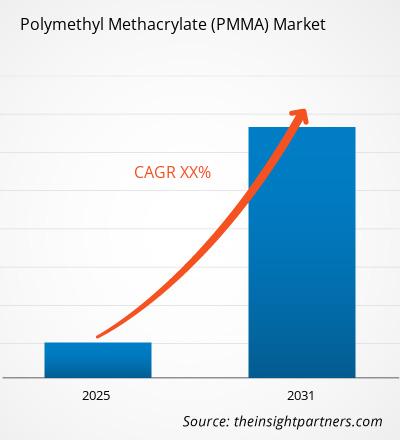
The polymethyl methacrylate market size was valued at US$ 6.15 Billion in 2025 and is projected to reach US$ 10.84 Billion by 2034, expanding at a CAGR of 6.50% during 2026–2034. Market expansion is supported by the growing adoption of lightweight, durable, and transparent engineering plastics across construction, automotive, electronics, signage, and lighting applications. Continuous product innovation and increasing demand for sustainable material solutions are also strengthening long-term market prospects across developed and emerging economies.
North America is expected to register a CAGR of 5.8–6.3% during the forecast period, supported by robust investments in advanced manufacturing and modernization of commercial infrastructure. Rising adoption of lightweight materials in transportation and increasing replacement of conventional glass in architectural and industrial applications continue to reinforce regional demand. Technological advancements in specialty acrylic products and strong downstream processing capabilities further enhance market expansion across the region, supporting the evolving polymethyl methacrylate market trends.
Polymethyl Methacrylate (PMMA) Market Assessment and Insights
- North America: North America accounted for 29–31% of the polymethyl methacrylate market share in 2025 and is anticipated to expand at a CAGR of 5.8–6.3% during 2026–2034. Strong construction renovation activity, increasing automotive lightweighting initiatives, and growing demand for high-performance transparent materials continue to support regional market growth.
- U.S.: The U.S. represented 81–84% of the North American market in 2025 and is projected to register a CAGR of 5.9–6.4% during 2026–2034, driven by expanding construction renovation projects, advanced manufacturing capabilities, and increasing adoption of premium PMMA materials across automotive and industrial applications.
- Europe: Europe held 23–25% market share in 2025 and is expected to grow at a CAGR of 5.5–6.0% during 2026–2034. Germany, France, and the United Kingdom remain leading markets, supported by advanced manufacturing, automotive production, and growing demand for sustainable construction materials.
- Asia Pacific: Asia Pacific accounted for 37–40% polymethyl methacrylate market share in 2025 and is forecast to expand at a CAGR of 7.2–7.8% during 2026–2034. China, Japan, and India continue to lead regional demand, driven by expanding electronics manufacturing, infrastructure development, and increasing industrial investments.
- Largest Segment: Application – Construction represented the largest market segment and is expected to record a CAGR of 6.2–6.7% during 2026–2034, reflecting sustained demand for durable glazing, architectural panels, weather-resistant building materials, and renovation projects.
- High Growth Segment: Application – Electronics is projected to grow at a CAGR of 7.4–8.0% during 2026–2034, driven by expanding consumer electronics production and increasing demand for optical-grade transparent components.
- Key companies analyzed in detail: Arkema SA; Asahi Kasei Corporation; Chi Mei Corporation; Evonik Industries AG; GEHR Plastics, Inc.; KOLON Industries, Inc.; Kuraray Co., Ltd.; Mitsubishi Chemical Corporation; SABIC; Sumitomo Chemical Co., Ltd.
Source: The Insight Partners' analysis based on proprietary research, government publications, company annual reports, investor presentations, industry databases, and expert interviews.
There has been an increasing shift towards specialized polymethyl methacrylate with enhanced optical quality and resistance to environmental factors and impact as far as manufacturing concerns are concerned. There are constant improvements in polymerization processes, recycling efforts, and feedstock efficiency by producers, in addition to increased downstream production capabilities. Cooperation between resin producers, compounders, sheet makers, and final users has helped make supply chains more resilient and broadened use of polymethyl methacrylate in transport, building, electronics, medical applications, and industry all around the world.
The polymethyl methacrylate market forecast indicates that future market development will be based increasingly on capacity expansion, circular material processes, and advanced acrylic production. The further development of the industry in Asia Pacific, infrastructure development in developing countries, as well as the need for sustainable and recyclable materials in compliance with regulation will contribute to increased demand for the product. Another factor that could help increase competitiveness is partnerships and innovations concerning bio-based feedstocks.
Polymethyl Methacrylate (PMMA) Market Report Scope
| Report Attribute | Details |
|---|---|
| Market size in 2025 | US$ 6.15 Billion |
| Market Size by 2034 | US$ 10.84 Billion |
| Global CAGR (2026 - 2034) | 6.50% |
| Historical Data | 2021-2024 |
| Forecast period | 2026-2034 |
Polymethyl Methacrylate (PMMA) Market Analysis
Demands for PMMA are continuing to increase, owing to its popularity among producers looking for lightweight materials that offer good visibility, resistance to weather, and longevity. The construction sector is one of the main demand sectors for PMMA, which is increasingly being used in skylights, façade panels, partitions, and safety barriers. Automakers are using acrylic parts in lights, glazing, and other interiors in an effort to cut down on vehicle weights. Producers in the electronics sector are making use of optical grade PMMA in panels, light guides, and coverings, driven by consumer demands for better-quality electronic gadgets.
The value chain in PMMA starts with petrochemicals, through monomers, polymerization, compounding, sheet extrusion, bead manufacture, and fabrication. Supply dynamics depend on availability of raw materials, process efficiency, cost of energy, and manufacturing capacities in regions.
Competition within the polymethyl methacrylate market is characterized by established global producers emphasizing product differentiation, capacity optimization, and specialty material development. Arkema SA, Evonik Industries AG, Mitsubishi Chemical Corporation, and Asahi Kasei Corporation continue expanding high-performance PMMA portfolios targeting automotive, electronics, and architectural applications. Meanwhile, Chi Mei Corporation, Kuraray Co., Ltd., and KOLON Industries, Inc. strengthen regional competitiveness through technology upgrades and customer-focused product innovation.
According to the polymethyl methacrylate market report, investment trend is focused toward sustainable manufacturing, circular economy projects, and high-end specialty grades. Manufacturers are increasing their extrusion capabilities, improving optical-grade products, and developing recycled or low-carbon acrylic to meet customer needs. SABIC, Sumitomo Chemical Co., Ltd., and GEHR Plastics, Inc. are also reinforcing their strategic positions through new materials research, application engineering, and working together with downstream manufacturers.
● REPORT CUSTOMIZATION
Tailor This Report To Align With Your Specific Business Requirements
This report can be customized to align precisely with your business objectives, scope, and target markets. Customization options include tailored segmentation, geography, competitive analysis, and strategic insights to support informed decision-making.
Customize This Report →WHAT YOU CAN ADJUST
- ● Segmentations
- ● Geography
- ● Competitive Analysis
- ● Language Preferences
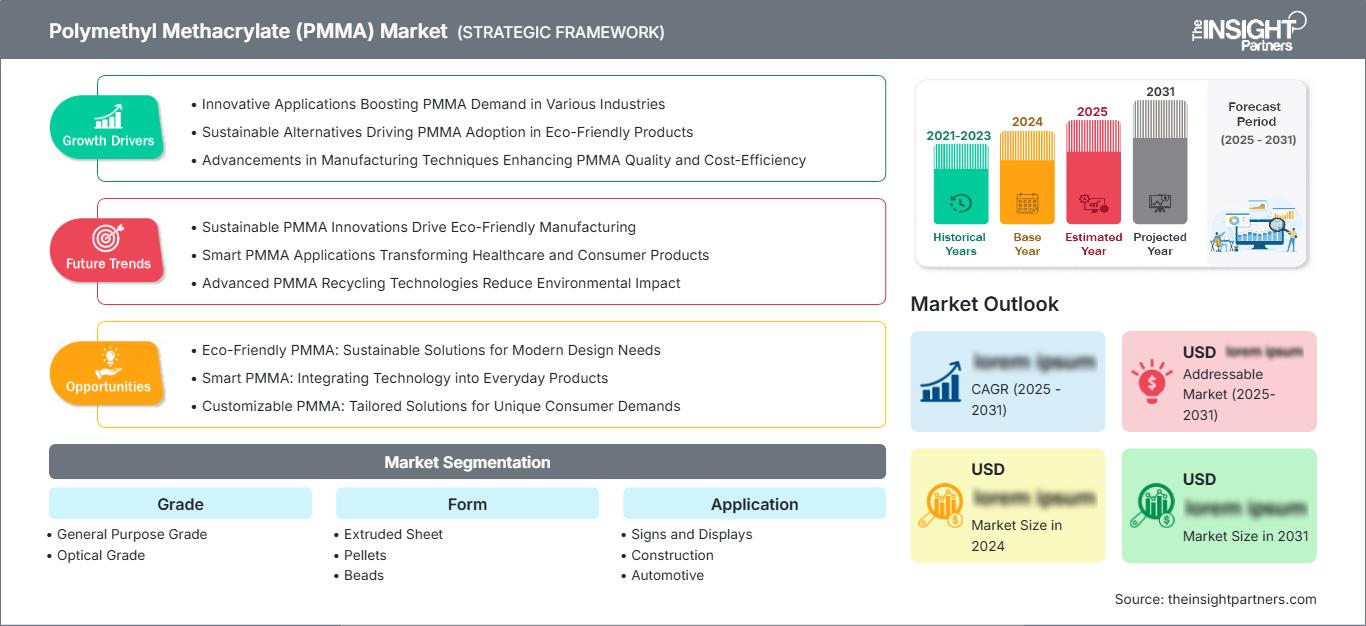
Polymethyl Methacrylate (PMMA) Market: Strategic Insights
Regional Insights
North America Polymethyl Methacrylate Market
North America accounted for 29–31% of the global polymethyl methacrylate market in 2025 and is projected to expand at a CAGR of 5.8–6.3% through 2034. Stable industrial production and modernization of commercial buildings continue supporting regional consumption.
Demand is further reinforced by automotive lightweighting, infrastructure renovation, and increasing adoption of durable transparent materials in architectural and industrial applications. Growing investment in advanced manufacturing technologies also supports consistent PMMA utilization across multiple high-value sectors.
U.S. Polymethyl Methacrylate Market
The United States represented 81–84% of North American PMMA demand in 2025 and is anticipated to record a CAGR of 5.9–6.4% during the forecast period. Strong domestic manufacturing and innovation continue supporting steady polymethyl methacrylate market expansion.
Leading suppliers maintain production, distribution, and technical support networks throughout the country, ensuring reliable supply for industrial customers. Increasing applications in automotive lighting, commercial construction, medical equipment, signage, and electronics manufacturing further strengthen long-term demand for specialty PMMA products.
Europe Polymethyl Methacrylate Market
Europe captured 23–25% of the global polymethyl methacrylate market in 2025 and is expected to register a CAGR of 5.5–6.0% through 2034. Germany leads in the polymethyl methacrylate market because of its advanced automotive, engineering, and industrial manufacturing ecosystem.
The United Kingdom continues experiencing healthy demand supported by commercial refurbishment, transportation projects, and expanding use of lightweight glazing materials. Investments in sustainable construction practices further contribute to PMMA consumption across building and infrastructure applications.
France, Italy, and Spain form an important cluster, in which regional growth is enhanced by improvements in infrastructure, consumer goods production, and lighting. The growing trend toward automation and recyclability in engineering plastics is boosting the market in the region.
APAC Polymethyl Methacrylate Market
Asia Pacific represented 37–40% of the global polymethyl methacrylate market in 2025 and is forecast to achieve the fastest regional expansion with a CAGR of 7.2–7.8%. China remains the largest regional contributor owing to its extensive manufacturing base and integrated chemical industry.
In Japan, premium optical grade PMMA is used in automobiles and electronics industry applications, while South Korea leverages its semiconductor and display manufacturing capabilities. These industries consistently generate demand for high-performance acrylic materials with excellent optical properties.
India and Australia support the polymethyl methacrylate market with significant infrastructure spending, industrialization, and increased construction activity. Domestic manufacturing with government support, coupled with growth in transportation and electronics manufacturing, is expected to ensure continued demand in the region throughout the forecast period.
Middle East & Africa Polymethyl Methacrylate Market
The Middle East & Africa polymethyl methacrylate market is projected to expand at a CAGR of 5.3–5.8% between 2026 and 2034. Saudi Arabia remains the leading market, supported by petrochemical integration, infrastructure investments, and expanding industrial diversification initiatives.
The United Arab Emirates continues increasing PMMA consumption through commercial construction, hospitality developments, and premium architectural projects requiring durable transparent materials. These investments strengthen demand for specialty acrylic sheets and fabricated components.
South Africa and the Rest of the Middle East & Africa benefit from gradual industrial expansion, utility infrastructure improvements, and rising demand for modern signage and lighting applications. Continued economic diversification and urban development are expected to create additional opportunities for PMMA suppliers across the region.
Segmentation Analysis
Grade
The Grade segment remains fundamental to product differentiation in the polymethyl methacrylate market and is projected to expand at a CAGR of 6.4–6.9% during 2026–2034. Demand is increasingly influenced by application-specific performance requirements, including optical clarity, weather resistance, surface finish, impact strength, and processability across industrial manufacturing.
- General Purpose Grade: Widely utilized across construction, signage, displays, industrial fabrication, and consumer products because it offers balanced mechanical properties, cost efficiency, ease of processing, and reliable long-term weather resistance for diverse applications.
- Optical Grade: Preferred for premium automotive lighting, display panels, electronic devices, medical components, and specialty glazing where exceptional transparency, light transmission, dimensional stability, and surface quality are critical performance requirements.
Form
- Extruded Sheet: Represents a major commercial form owing to extensive use in architectural glazing, partitions, retail displays, machine guards, protective barriers, skylights, and industrial fabrication requiring uniform thickness and efficient large-scale production.
- Pellets: Primarily supplied to injection molding and extrusion processors manufacturing automotive components, electronic housings, lighting systems, consumer goods, and engineered industrial products requiring consistent processing characteristics and material quality.
- Beads: Commonly utilized in specialty molding applications, acrylic compounds, coatings, laboratory products, and customized manufacturing processes where controlled particle size and processing flexibility support high-value end-use requirements.
Application
- Signs and Displays: PMMA provides excellent optical clarity, UV resistance, color stability, and fabrication flexibility, making it suitable for illuminated signage, advertising displays, retail fixtures, exhibition systems, and information panels.
- Construction: The largest application segment benefits from durable glazing materials, skylights, roofing panels, sound barriers, architectural façades, partitions, and interior design elements demanding long service life and superior weather resistance.
- Automotive: Manufacturers increasingly incorporate PMMA into lighting assemblies, instrument panels, decorative trim, glazing, and lightweight exterior components to improve fuel efficiency while maintaining attractive product aesthetics.
- Electronics: The fastest-growing application benefits from expanding production of display panels, optical light guides, smart devices, protective covers, and precision electronic components requiring exceptional transparency and dimensional accuracy.
- Lighting Fixtures: PMMA is extensively adopted for diffusers, luminaires, decorative lighting, commercial fixtures, and industrial illumination systems because of its superior light transmission, weather durability, and design versatility.
Opportunity Snapshot
| Segment Name | Revenue Contribution | Trend Tag | Adoption Stage |
| Signs and Displays | Medium | Digital Signage | Mature |
| Construction | High | Smart Buildings | Mature |
| Automotive | High | LED Lighting | Scaling |
| Electronics | High | Display Optics | Scaling |
| Lighting Fixtures | Medium | Energy Lighting | Mature |
Polymethyl Methacrylate (PMMA) Market Growth Drivers and Impact Analysis
Expansion of Lightweight Materials in Transportation and Construction
The increasing focus on reducing structural weight without compromising structural strength has led to increased use of PMMA. Manufacturers of cars and automobiles are increasingly turning to light materials, such as acrylics, in place of heavy materials to boost their cars’ efficiency and enable modern light fixture designs. In residential and commercial buildings, the use of PMMA offers advantages in longevity, weathering resistance, and design flexibility for roofing, glazing, partition, and facade applications.
Increasing Demand for High-Performance Optical Materials
The fast-paced growth of the consumer electronics, efficient lighting equipment, and precise optical components markets leads to continuous demand for high-performance PMMA types. Nowadays, manufacturers look for materials that can provide high transparency, high light transmission, dimensional stability, and good surface properties. Optical-grade PMMA is used in display panels, automotive lighting, medical devices, and advanced illumination products where consistent optical performance is essential. Innovations and advances in polymer processing allow producers to create new tailored products according to the growing requirements of customers.
Growing Investments in Sustainable Manufacturing and Recycling
Environmental objectives across industrial value chains are encouraging manufacturers to improve production efficiency, reduce emissions, and expand circular material solutions. Manufacturers of PMMA have been implementing technologies that help them recycle, improve energy efficiency, and optimize the use of their feedstocks. This is because of changing sustainability needs coming from their customers and regulatory authorities. The availability of recycled acrylic materials and the ability to recover them increase their use, especially in cases where environmental performance is important. This makes manufacturers more resilient and sustainable and opens up business opportunities for them.
Polymethyl Methacrylate (PMMA) Market Future Trends
Rising Adoption of Circular PMMA Technologies
Circularity is anticipated to emerge as an important industry trend for polymethyl methacrylate, driven by the use of recycled feedstock and closed-loop manufacturing processes in the companies' commercial activities. With the help of improved depolymerization methods, high-quality monomers have been recovered and can be reused in the manufacturing process without significantly affecting performance. Consumers in the construction, automotive, and electronics segments are increasingly focusing on products with specific sustainability features. Under the impact of stringent environmental legislation and resource efficiency, firms employing circular PMMA technology would gain competitive advantages.
Greater Customization Through Specialty PMMA Grades
There is an increasing effort by manufacturers to formulate PMMA products suitable for industrial use. Higher impact strength, scratch resistance, anti-reflective surface finish, UV stability, flame retardancy, and optical quality are emerging as key differentiating factors. Such developments will lead to increased cooperation between resin makers, parts makers, and OEMs during the design process. The rising demand for customized products will facilitate innovation, the development of more premium lines, and the generation of new income sources in automotive lighting, electronics, medical applications, architectural glazing, and industrial uses.
Polymethyl Methacrylate (PMMA) Market Opportunities
Capacity Expansion Across Emerging Manufacturing Economies
The rapid pace of industrialization in Asia, the Middle East, and selected Latin American nations offers substantial scope for PMMA producers seeking to grow their businesses in the long run. Creating local manufacturing plants and downstream facilities can help firms reduce logistical costs, enhance delivery capabilities, and better cater to local customers. The growth in the development of industrial estates, transport infrastructure, and local manufacturing facilities is driving demand for engineering plastics used in the construction, automotive, and electronics sectors.
Innovation in Premium Optical and Smart Infrastructure Applications
The deployment of smart buildings, intelligent transport systems, energy-efficient lighting, and digital display technology has created lucrative opportunities for superior-performance PMMA compounds. There is an ever-increasing demand for products that offer clarity, durability, and weather resistance. Manufacturers that can offer novel acrylic solutions for glazing, lighting, displays, and industrial applications can bag high-value contracts. Consistent collaboration with equipment manufacturers and project developers would further ensure product differentiation and revenue growth in the high-end markets.
Recent Developments
- June 2026: Mitsubishi Chemical Group announced the successful completion of its wide-area localized plastic resource recycling system field trials. The milestone ensures a predictable domestic recovery loop for complex post-consumer plastics, directly supporting the raw feedstock channels needed for their SHINKOLITE™ and ACRYPET™ high-performance PMMA polymer branches. Localized collection helps the firm lower Scope 3 manufacturing emissions for optical-grade display and automotive plastics.
- February 2026: Arkema SA announced the expansion of its circular acrylic materials portfolio by increasing the availability of recycled-content PMMA solutions under its sustainable materials strategy. The initiative supports customers seeking lower-carbon transparent materials while maintaining optical performance and mechanical properties across construction, transportation, and industrial applications.
- May 2024: Evonik Industries AG expanded its sustainable materials initiatives by advancing chemically recycled PMMA technologies and strengthening collaborations across the acrylic value chain to improve circular resource utilization. The development supports increasing customer demand for environmentally responsible engineering plastics without compromising material performance.
Frequently Asked Questions

- Comprehensive Market Sizing and Forecast Analysis
- Detailed Segmentation Analysis
- In-Depth Market Dynamics Assessment
- Regional and Country-Level Insights
- Competitive Landscape and Company Benchmarking
- Strategic Business Intelligence
Recent Reports
Testimonials

The Insight Partners' SCADA System Market report is comprehensive, with valuable insights on current trends and future forecasts. The team was highly professional, responsive, and supportive throughout. We are very satisfied and highly recommend their services.
RAN KEDEM Partner, Reali Technologies LTDs
I requested a report on a very specific software market and the team produced the report in a few days. The information was very relevant and well presented. I then requested some changes and additions to the report. The team was again very responsive and I got the final report in less than a week.
JEAN-HERVE JENN Chairman, Future Analytica
We worked with The Insight Partners for an important market study and forecast. They gave us clear insights into opportunities and risks, which helped shape our plans. Their research was easy to use and based on solid data. It helped us make smart, confident decisions. We highly recommend them.
PIYUSH NAGPAL Sr. Vice President, High Beam Global
The Insight Partners delivered insightful, well-structured market research with strong domain expertise. Their team was professional and responsive throughout. The user-friendly website made accessing industry reports seamless. We highly recommend them for reliable, high-quality research services
YUKIHIKO ADACHI CEO, Deep Blue, LLC.
This is the first time I have purchased a market report from The Insight Partners.While I was unsure at first, I visited their web site and felt more comfortable to take the risk and purchase a market report.I am completely satisfied with the quality of the report and customer service. I had several questions and comments with the initial report, but after a couple of dialogs over email with their analyst I believe I have a report that I can use as input to our strategic planning process.Thank you so much for taking the extra time and making this a positive experience.I will definitely recommend your service to others and you will be my first call when we need further market data.
JOHN SUZUKI President and Chief Executive Officer, Board Director, BK Technologies
I wish to appreciate your support and the professionalism you displayed in the course of attending to my request for information regarding to infectious disease IVD market in Nigeria. I appreciate your patience, your guidance, and the fact that you were willing to offer a discount, which eventually made it possible for us to close a deal. I look forward to engaging The Insight Partners in the future, all thanks to the impression you have created in me as a result of this first encounter.
DR CHIJIOKE ONYIA MANAGING DIRECTOR, PineCrest Healthcare Ltd.Reason to Buy
- Informed Decision-Making
- Understanding Market Dynamics
- Competitive Analysis
- Identifying Emerging Markets
- Customer Insights
- Market Forecasts
- Risk Mitigation
- Boosting Operational Efficiency
- Strategic Planning
- Investment Justification
- Tracking Industry Innovations
- Aligning with Regulatory Trends





 Get Free Sample for