
Vehicle Tracking Devices Market Size, Trends & Growth by 2034
Coverage: By Tracker Type (Wired, Wireless); Vehicle Type (Passenger Cars, Light Commercial Vehicle (LCV), Heavy Commercial Vehicle (HCV)); Communication Technology (Cellular, GPS/Satellite, Dual Mode)); Application (Transportation and Logistics, Construction, Oil and Gas, Mining, Emergency Services) , and Geography (North America, Europe, Asia Pacific, and South and Central America)
- Status : Data Released
- Report Code : TIPRE00015999
- Category : Electronics and Semiconductor
- No. of Pages : 150
- Available Report Formats :


- Last update date : September 07, 2026


2025 Market Size
US$ 2.92 Bn
Base year value
2034 Forecast
US$ 8.41 Bn
Projected by 2034
CAGR 2026-2034
12.48 %
Growth rate
Addressable Market
US$ 49.53 Bn
(2026-2034)
The Vehicle tracking devices market is valued at US$ 2.92 Billion in 2025 and is projected to reach US$ 8.41 Billion by 2034, expanding at a CAGR of 12.48% during 2026–2034. The market encompasses hardware and connectivity solutions that capture vehicle location, movement, operational, and diagnostic information for fleet visibility, asset utilization, safety management, and increasingly data-driven transportation operations across commercial and passenger vehicle ecosystems.
North America is expected to register an estimated CAGR of 10.5–12.5% during 2026–2034, supported by established fleet telematics adoption, regulatory requirements for commercial transportation visibility, and continued migration toward connected fleet management. The region's vehicle tracking devices market size is further supported by demand for predictive maintenance, driver safety analytics, fuel optimization, and integration of tracking data with enterprise fleet platforms.
Vehicle Tracking Devices Market Assessment and Insights
- North America: North America is expected to account for 34–38% share in 2025, with adoption supported by mature fleet-management infrastructure, regulatory compliance, and connected commercial vehicles. The region is projected to grow at a CAGR of 10.5–12.5% during 2026–2034.
- US: The US is estimated to represent 68–72% of North America's 2025 share, with demand concentrated in logistics, field services, construction, and public fleets. Growth is projected at a CAGR of 10.5–12.5% during 2026–2034.
- Europe: Europe is estimated to hold 27–31% share in 2025 and expand at a CAGR of 9.5–11.5% during 2026–2034. Germany, the UK, France, Italy, and Spain support adoption through logistics digitization, fleet efficiency requirements, and connected mobility initiatives.
- Asia Pacific: Asia Pacific is estimated to represent 25–29% share in 2025 and grow at a CAGR of 14.0–16.0% during 2026–2034. China, Japan, South Korea, India, and Australia provide strong demand through logistics expansion and industrial connectivity.
- Largest Segment: Passenger Cars are estimated to hold a 42–46% market share in 2025 and expand at a CAGR of 11.0–13.0% during 2026–2034, reflecting broad tracking adoption across personal and shared mobility.
- High Growth Segment: Wireless trackers are estimated to hold a 28–32% market share in 2025 and expand at a CAGR of 14.0–16.0% during 2026–2034, supported by simplified installation and flexible deployment.
- Key companies analyzed in detail: ATrack Technology Inc.; CalAmp Corporation; Cartrack (Pty) Ltd; Concox Information Technology Co. Ltd.; Geotab Inc.; Laipac Technology, Inc.; Laird PLC; Maestro Wireless Solutions Limited; Meitrack Group; ORBCOMM Inc.; Samsara Inc.; TomTom N.V.
Source: The Insight Partners' analysis based on proprietary research, government publications, company annual reports, investor presentations, industry databases, and expert interviews.
The vehicle tracking devices market has evolved from basic location reporting toward connected systems combining GNSS positioning, cellular communications, onboard diagnostics, sensors, and cloud analytics. Hardware manufacturers increasingly emphasize compact designs, multi-network connectivity, OTA firmware management, tamper detection, and integration with cameras or CAN data. Embedded telematics is also changing competitive dynamics, because aftermarket devices increasingly need interoperability with OEM-generated data rather than functioning as isolated tracking hardware.
According to the Vehicle Tracking Devices Market Report, looking ahead, investment is shifting toward AI-enabled analytics, edge processing, hybrid connectivity, and solutions capable of operating across mixed fleets. Emerging markets in Asia Pacific and selected Middle Eastern economies are attracting deployment attention as logistics networks, construction activity, and connected infrastructure expand. Regulatory emphasis on road safety, emissions, electronic records, and operational transparency should reinforce adoption, while lower-cost wireless architectures broaden addressable fleets.
Vehicle Tracking Devices Market Report Scope
| Report Attribute | Details |
|---|---|
| Market size in 2025 | US$ 2.92 Billion |
| Market Size by 2034 | US$ 8.41 Billion |
| Global CAGR (2026 - 2034) | 12.48% |
| Historical Data | 2021-2024 |
| Forecast period | 2026-2034 |
Vehicle Tracking Devices Market Analysis
Demand increasingly revolves around the measurable performance of fleets, rather than mere visibility at the location level. Connected devices provide a stream of data on the routes, utilization, idling, condition of maintenance, unauthorized movement, and driver behavior that enables fleet operations decision-making. The ecosystem consists of device manufacturers, cellular and satellite connectivity providers, platform vendors, system integrators, fleet operators, insurers, and OEMs. Therefore, hardware manufacturers compete in terms of reliability of the devices, connectivity, sensor compatibility, cybersecurity, and integration capabilities.
The supply chain is influenced by the supply of semiconductors, communication modules, GNSS devices, the need for enclosure, and regional certification. Cellular devices' product lineups are being updated as the previous networks are phased out; the satellite connectivity is still relevant in cases of mining, energy, remote construction sites, and cross-border operations. Device manufacturers with modularity in their product architecture can cover multiple classes of vehicles without developing multiple platforms.
Competition in the vehicle tracking devices market is increasingly defined by the ability to combine hardware with software, analytics, and ecosystem partnerships. Geotab Inc. has expanded its connected-vehicle footprint, while Samsara Inc. emphasizes integrated fleet operations and video capabilities. ORBCOMM Inc. maintains strength in industrial and remote connectivity, and Meitrack Group continues to develop GPS tracking and AIoT products. ATrack Technology Inc., Concox Information Technology Co. Ltd., CalAmp Corporation, Laipac Technology, Inc., Laird PLC, Maestro Wireless Solutions Limited, Cartrack (Pty) Ltd, and TomTom N.V. contribute specialized hardware, connectivity, or fleet technology capabilities.
The Vehicle Tracking Devices Market Forecast indicates that strategic positioning increasingly depends on customization, channel reach, device lifecycle management, and compatibility with third-party platforms. Investments are also being made in areas such as AI-based safety features, predictive maintenance, video telematics, and hybrid cell-to-satellite architecture. The companies that incorporate open APIs with scalable hardware are capable of catering to fleets of all sizes, from small to large multinational logistics operations. This allows for differentiation based on more than just per-unit prices.
● REPORT CUSTOMIZATION
Tailor This Report To Align With Your Specific Business Requirements
This report can be customized to align precisely with your business objectives, scope, and target markets. Customization options include tailored segmentation, geography, competitive analysis, and strategic insights to support informed decision-making.
Customize This Report →WHAT YOU CAN ADJUST
- ● Segmentations
- ● Geography
- ● Competitive Analysis
- ● Language Preferences
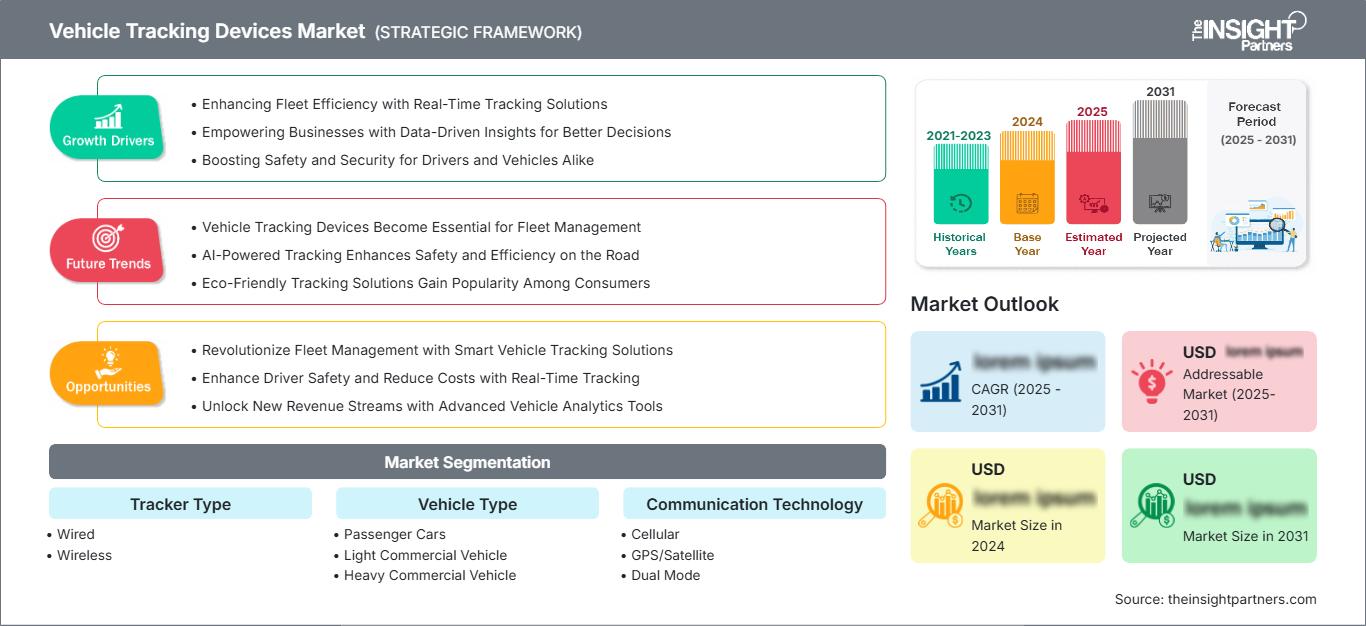
Vehicle Tracking Devices Market: Strategic Insights
Regional Insights
North America Vehicle Tracking Devices Market
North America is estimated to hold a 34–38% share of the Vehicle Tracking Devices Market in 2025 and is projected to grow at a CAGR of 10.5–12.5% through 2034. The US accounts for the main regional market due to the existence of developed fleets of commercial vehicles, logistics chains, regulation compliance, and digital fleet management technologies. Canada plays a role through the transportation industry, natural resources, construction, and government segments.
The installed base in the region is shifting from simple GPS tracking functions to diagnostics, security features, video recording, and maintenance optimization. The demand among fleet management companies for visibility on trucks, trailers, and equipment in order to minimize downtime is growing. Telematics information is becoming an important source for transport routing and insurance analytics.
U.S. Vehicle Tracking Devices Market
The U.S. represents approximately 68–72% of North America's 2025 Vehicle Tracking Devices Market share and is projected to expand at a CAGR of 10.5–12.5% during 2026–2034. Commercial trucking, last-mile delivery, construction, utility, emergency, and field service fleets continue to be key sectors for deployments. Existing compliance infrastructure fosters further investments in connected fleet solutions.
Deployment trends have moved from independent location tracking to tracking together with maintenance, safety of drivers, and video intelligence. Companies like Geotab Inc., CalAmp Corporation, Samsara Inc., etc., provide solutions to deploy connected fleet management systems. The connected data is being used to assess risk and optimize vehicle usage, along with electrification planning.
Europe Vehicle Tracking Devices Market
Europe is estimated to account for 27–31% of global Vehicle Tracking Devices Market revenue in 2025 and is expected to grow at a CAGR of 9.5–11.5%. Germany remains a leading market, supported by industrial logistics and commercial vehicle activity, while the UK has strong adoption across fleet services and public transportation. France, Italy, and Spain contribute through logistics, construction, passenger mobility, and regional delivery operations.
Germany combines a substantial industrial base with sophisticated freight networks, creating demand for route visibility, asset utilization, maintenance analytics, and compliance-oriented tracking. The UK benefits from established fleet management practices and increasing integration of telematics with safety and maintenance workflows. France, Italy, and Spain provide additional opportunities as logistics operators modernize vehicle fleets and seek greater operational visibility.
APAC Vehicle Tracking Devices Market
APAC is estimated to represent 25–29% of the Vehicle Tracking Devices Market share in 2025 and is projected to grow at a CAGR of 14.0–16.0%. China leads regional deployment, followed by Japan, South Korea, India, and Australia. Expanding logistics networks, commercial vehicle digitization, smart-city programs, and industrial automation create favorable conditions for connected tracking hardware.
China benefits from large-scale manufacturing and logistics activity, while India offers significant long-term potential through fleet formalization and expanding e-commerce distribution. Japan and South Korea emphasize connected mobility and advanced automotive technologies. Australia presents demand from mining, logistics, construction, and remote operations, where tracking reliability and broad-area connectivity are critical.
Middle East & Africa Vehicle Tracking Devices Market
Middle East and Africa Vehicle Tracking Devices Market is projected to expand at a CAGR of 8.0–10.0% through 2034. Saudi Arabia and the UAE lead regional adoption, supported by logistics modernization, infrastructure investment, and digital transformation. South Africa remains important for commercial fleets, mining, transportation, and security-related applications.
Energy operations and infrastructure projects create requirements for rugged tracking devices capable of monitoring vehicles across dispersed locations. Saudi Arabia's logistics and infrastructure programs provide significant deployment opportunities, while UAE operators emphasize fleet efficiency and smart mobility. South Africa and the rest of MEA offer demand for solutions that combine cellular coverage with satellite capabilities in remote operating environments.
Segmentation Analysis
Tracker Type
Vehicle Tracking Devices Market Trends indicate that the tracker type is segmented into wired and wireless devices. Wired systems remain important where continuous vehicle power and deep integration with vehicle electronics are required, while wireless solutions are gaining share because they simplify installation, support flexible deployment, and suit trailers, temporary fleets, and mixed assets. The segment is projected to grow at a CAGR of 12.5–14.5% during 2026–2034.
- Wired: Wired trackers remain important for permanent installations requiring stable power, ignition status, diagnostic interfaces, and continuous monitoring. They are widely suited to commercial fleets where long-term installation and deep vehicle integration justify professional installation.
- Wireless: Wireless trackers address flexible deployments where installation time, portability, and minimal vehicle modification are priorities. Demand is supported by rental fleets, trailers, temporary assets, and operators seeking scalable deployment across diverse vehicle populations.
Vehicle Type
According to the Vehicle Tracking Devices Market, vehicle type includes passenger cars, light commercial vehicles, and heavy commercial vehicles. Passenger cars provide the broadest addressable base, while commercial fleets generate higher-value use cases involving compliance, utilization, maintenance, and driver safety. The segment is projected to grow at a CAGR of 11.5–13.5% during 2026–2034.
- Passenger Cars: Passenger vehicles support demand from connected mobility, theft prevention, usage-based services, family fleet management, and shared mobility. Integration with mobile applications and insurance ecosystems expands the functional value of installed tracking systems.
- Light Commercial Vehicle: Light commercial vehicles increasingly require tracking for delivery scheduling, route optimization, field-service management, and utilization monitoring. Growth in last-mile logistics makes visibility across dispersed vans and small trucks strategically important.
- Heavy Commercial Vehicle: Heavy commercial vehicles require robust tracking for freight visibility, compliance, fuel management, maintenance, and driver safety. Long operating distances and high asset values increase the economic value of continuous location and operational data.
Communication Technology
Communication technology comprises cellular, GPS/Satellite, and dual-mode. Cellular remains the principal communications foundation for mainstream fleet tracking because of network availability and cost efficiency. Satellite connectivity serves remote applications, while dual-mode architectures improve continuity across areas with limited terrestrial coverage. The segment is projected to grow at a CAGR of 13.5–15.5% during 2026–2034.
- Cellular: Cellular tracking supports frequent location transmission and cloud connectivity across established road networks. Multi-network SIM capability and newer cellular standards improve roaming flexibility, service continuity, and deployment scalability for fleet operators.
- GPS/Satellite: GPS/Satellite solutions support operations where terrestrial connectivity is unreliable, particularly mining, energy, maritime-linked logistics, and remote infrastructure. Their strategic value increases when vehicles operate across geographically dispersed or poorly covered territories.
- Dual Mode: Dual-mode solutions combine terrestrial and satellite communication to maintain tracking continuity when vehicles leave cellular coverage. They are particularly relevant to high-value assets, remote fleets, and operations where loss of visibility creates significant financial or safety exposure.
Application
Application coverage includes transportation and logistics, construction, oil and gas, mining, and emergency services. Transportation and logistics remains the principal application because tracking directly supports routing, utilization, delivery visibility, and asset management. The segment is projected to grow at a CAGR of 12.0–14.0% during 2026–2034.
- Transportation and Logistics: Logistics operators use tracking to coordinate vehicles, monitor routes, improve delivery visibility, and manage asset utilization. Increasing shipment complexity strengthens demand for real-time location data integrated with transportation management systems.
- Construction: Construction fleets benefit from equipment location monitoring, unauthorized-use detection, maintenance scheduling, and utilization analysis. Tracking becomes particularly valuable when machinery moves between projects or operates across geographically dispersed worksites.
- Oil and Gas: Oil and gas operators require vehicle visibility across remote facilities, service routes, and support fleets. Tracking helps coordinate field movements, strengthen safety oversight, and maintain operational awareness where travel distances are substantial.
- Mining: Mining applications emphasize rugged hardware, continuous positioning, and reliable communication across remote sites. Tracking supports vehicle dispatch, equipment utilization, safety monitoring, and maintenance planning across large operating areas.
- Emergency Services: Emergency fleets use tracking to monitor response vehicles, coordinate dispatch, and improve situational awareness. Real-time location information can support faster resource allocation and post-event operational analysis across police, fire, ambulance, and rescue fleets.
Opportunity Snapshot
| Application | Revenue Contribution | Trend Tag | Adoption Stage |
| Transportation and Logistics | High | Route Visibility | Mature |
| Construction | Medium | Equipment Tracking | Scaling |
| Oil and Gas | Medium | Remote Mobility | Scaling |
| Mining | Medium | Site Visibility | Scaling |
| Emergency Services | Low | Rapid Dispatch | Scaling |
Vehicle Tracking Devices Market Growth Drivers and Impact Analysis
Expansion of Connected Fleet Operations
More and more fleet managers now need to maintain constant visibility of their operations through their vehicles, drivers, trailers, and equipment, making constant demand for tracking devices that are integrated into the Internet of Things. Telematic information can be used for route optimization, utilization analysis, maintenance management, and interventions regarding safety from one unified layer of information. The most notable effects can be seen in logistics, field services, construction, and public fleets, because these industries have a high number of dispersed assets, which makes coordination more difficult. According to Geotab's reports in 2025, 75% of all cars purchased globally in 2023 have telematics embedded by the original equipment manufacturer compared with 72% in 2022.
Rising Emphasis on Fleet Safety and Predictive Maintenance
Changes in safety and maintenance practices have led to the increased preference for equipment that is able to produce more accurate data about operations. Fleet owners seek advance warning about dangerous behavior, mechanical issues, unnecessary idle time, and any other abnormalities, so that any corrective measures can be taken before any accidents or breakdowns occur. From a commercial perspective, it is highly relevant since preventive measures would result in better availability of the assets and reduced costs for unnecessary expenses. According to the 2026 transportation study conducted by Geotab, the riskiest 10% of drivers were involved in one out of five accidents that happened within the sample set.
Migration Toward Multi-Network and Intelligent Connectivity
However, fleet activities are becoming more frequent in regions where connectivity is not equal. Although cellular tracking will work well on most roads, some special fleet applications like remote mining, oil and gas, construction, and infrastructure might face connectivity problems. The use of dual connectivity technologies, such as cellular and satellite tracking, eliminates such connectivity problems. But the market effect is greater than this since the reduction in connectivity complexity will make hybrid architecture more realistic for other asset types than remote fleets. Hence, device makers are integrating multi-network capability, efficient power consumption, and adaptive communication architecture.
Vehicle Tracking Devices Market Future Trends
AI-Enabled Edge Intelligence in Tracking Hardware
Future trackers are anticipated to have more computing power on the device side to process the collected data, as opposed to sending all the raw data points to central platforms for further analysis. The edge computing power will be able to detect aggressive driving, abnormalities of the vehicle, interference, incidents, or other abnormalities before transmitting the most relevant data to the cloud. Such an approach will reduce communication overheads and increase the reaction time for time-sensitive events. Manufacturers are also expected to offer trackers with GNSS capability, accelerometers, vehicle diagnostics, Bluetooth technology, cameras, and AI chipsets in the same modular tracker platform. With the requirement of making faster decisions for operations increasing, there will be no need to differentiate between trackers and intelligent vehicle gateways.
Convergence of Tracking, Video, and Vehicle Intelligence
It is expected that future deployments will involve not only location but also video, diagnostic, driver performance, environmental and asset data. The fusion of all this information gives an opportunity to study each particular incident using several data inputs rather than just geographic coordinates. Video may serve as context, diagnostics as a mechanical situation, location as a place and time of occurrence. In general, all these pieces of data may help to improve safety measures, insurance procedures, maintenance processes, and other aspects of operations. Moreover, the integration will help to build similar hardware and software platforms for different types of vehicles. Platform vendors, in their desire to have a bigger customer base, will pay more attention to hardware data input capability.
Vehicle Tracking Devices Market Opportunities
Remote Fleet Connectivity Solutions
Remote connectivity provides a promising investment space due to the fact that mining, energy, construction, agricultural, and infrastructure fleets often operate outside cellular coverage zones. Hybrid terminals, which switch their network type from cellular to satellite and vice versa, can eliminate blind spots without forcing users to manage two tracking systems separately. The differentiation could be based on size, reduced power consumption, flexible pricing policy, and intelligent network switching options. Cooperation of terminal suppliers, satellite operators, cellular operators, and fleet management platforms could speed up the commercialization of hybrid connectivity. The best use case is where a costly consequence occurs when equipment is down, stolen, involved in accidents, or when there is no visibility anymore.
Integrated Tracking for Mixed and Electrified Fleets
The electrification of vehicles offers an opportunity to monitor suppliers using location intelligence together with battery intelligence, charging activities, consumption, and usage. The operator managing a mixed fleet should be able to get consistent visibility into the combustion engines, hybrid engines, and electrics and not use isolated monitoring systems. Suppliers should be able to make devices that are standardized and have APIs that allow for collecting data from different types of vehicle architectures, yet still maintain consistency. An opportunity for leasing firms, delivery services, utility fleets, and municipal firms engaged in phased electrification becomes apparent.
Frequently Asked Questions

- Comprehensive Market Sizing and Forecast Analysis
- Detailed Segmentation Analysis
- In-Depth Market Dynamics Assessment
- Regional and Country-Level Insights
- Competitive Landscape and Company Benchmarking
- Strategic Business Intelligence
Recent Reports
Testimonials

The Insight Partners' SCADA System Market report is comprehensive, with valuable insights on current trends and future forecasts. The team was highly professional, responsive, and supportive throughout. We are very satisfied and highly recommend their services.
RAN KEDEM Partner, Reali Technologies LTDs
I requested a report on a very specific software market and the team produced the report in a few days. The information was very relevant and well presented. I then requested some changes and additions to the report. The team was again very responsive and I got the final report in less than a week.
JEAN-HERVE JENN Chairman, Future Analytica
We worked with The Insight Partners for an important market study and forecast. They gave us clear insights into opportunities and risks, which helped shape our plans. Their research was easy to use and based on solid data. It helped us make smart, confident decisions. We highly recommend them.
PIYUSH NAGPAL Sr. Vice President, High Beam Global
The Insight Partners delivered insightful, well-structured market research with strong domain expertise. Their team was professional and responsive throughout. The user-friendly website made accessing industry reports seamless. We highly recommend them for reliable, high-quality research services
YUKIHIKO ADACHI CEO, Deep Blue, LLC.
This is the first time I have purchased a market report from The Insight Partners.While I was unsure at first, I visited their web site and felt more comfortable to take the risk and purchase a market report.I am completely satisfied with the quality of the report and customer service. I had several questions and comments with the initial report, but after a couple of dialogs over email with their analyst I believe I have a report that I can use as input to our strategic planning process.Thank you so much for taking the extra time and making this a positive experience.I will definitely recommend your service to others and you will be my first call when we need further market data.
JOHN SUZUKI President and Chief Executive Officer, Board Director, BK Technologies
I wish to appreciate your support and the professionalism you displayed in the course of attending to my request for information regarding to infectious disease IVD market in Nigeria. I appreciate your patience, your guidance, and the fact that you were willing to offer a discount, which eventually made it possible for us to close a deal. I look forward to engaging The Insight Partners in the future, all thanks to the impression you have created in me as a result of this first encounter.
DR CHIJIOKE ONYIA MANAGING DIRECTOR, PineCrest Healthcare Ltd.Reason to Buy
- Informed Decision-Making
- Understanding Market Dynamics
- Competitive Analysis
- Identifying Emerging Markets
- Customer Insights
- Market Forecasts
- Risk Mitigation
- Boosting Operational Efficiency
- Strategic Planning
- Investment Justification
- Tracking Industry Innovations
- Aligning with Regulatory Trends





 Get Free Sample for