
Dental Regenerative Products Market Demand, Share & Growth by 2034
Coverage: By Type (Regenerative Membrane, Bone Substitute Material, Others); End user (Dental Clinic, Hospital, Others), and Geography (North America, Europe, Asia Pacific, and South and Central America)
- Status : Data Released
- Report Code : TIPRE00016641
- Category : Life Sciences
- No. of Pages : 150
- Available Report Formats :


- Last update date : September 07, 2026


2025 Market Size
US$ 3.85 Bn
Base year value
2034 Forecast
US$ 7.24 Bn
Projected by 2034
CAGR 2026-2034
7.26 %
Growth rate
Addressable Market
US$ 50.00 Bn
(2026-2034)
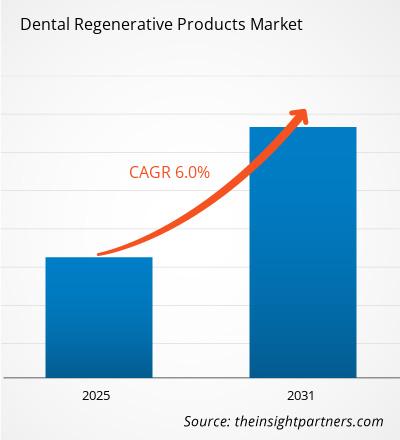
The Dental Regenerative Products Market was valued at US$ 3.85 Billion in 2025 and is projected to reach US$ 7.24 Billion by 2034, registering a CAGR of 7.26% during 2026–2034. It consists of regenerative membranes and bone substitutes used for hard and soft tissue regeneration in dental treatments. Growth is associated with treatments such as implant surgery, periodontics, alveolar ridge preservation, and growing significance of predictability in tissue regeneration.
The market in North America is structurally significant due to the presence of established implantology industry, specialized dental clinics, and higher use of biomaterials. According to the Dental Regenerative Products Market Size Outlook, the modeled regional compound annual growth rate in the period 2026-2034 will be 7.8–8.5%. The factors driving demand include aging population, periodontics, preparation of an implant site, and minimally-invasive regenerative treatment procedures.
Dental Regenerative Products Market Assessment and Insights
- North America: North America is expected to hold a 36–40% Dental Regenerative Products Market share in 2025 and grow at a CAGR of 7.8–8.5% between 2026–2034, supported by mature implant procedures, specialist infrastructure, established reimbursement pathways, and strong biomaterial adoption.
- US: The US is estimated to represent 78–82% of North America's 2025 revenue and expand at a CAGR of 7.9–8.6% between 2026–2034, reflecting high procedure volumes and specialist availability.
- Europe: Europe is estimated at a 25–29% share in 2025 and a CAGR of 6.7–7.5% between 2026–2034, with Germany, the UK, France, Italy, and Spain supported by advanced dental laboratories and regenerative treatment adoption.
- Asia Pacific: Asia Pacific is projected at a 22–26% share in 2025 and a CAGR of 8.0–9.0% between 2026–2034, led by China, Japan, South Korea, and India, where dental infrastructure and implant awareness are expanding.
- Largest Segment: Bone Substitute Material is modeled at a 58–62% market share in 2025, with a 7.0–7.8% CAGR between 2026–2034, reflecting broad use in implant-site preparation and bone reconstruction.
- High Growth Segment: Dental Clinic is modeled at a 43–47% share in 2025 and a 8.0–8.8% CAGR between 2026–2034, benefiting from outpatient workflows and increasing specialist adoption.
- Key companies analyzed in detail: Institut Straumann AG, Zimmer Biomet Holdings, Inc., ORTHOCELL LTD, Millennium Dental Technologies, Inc., SigmaGraft, Inc., Provia Laboratories, LLC, Lynch Biologics, LLC, Ethoss Regeneration Ltd, Integra LifeSciences Corporation, Datum Dental Ltd, and Geistlich Pharma AG.
Source: The Insight Partners' analysis based on proprietary research, government publications, company annual reports, investor presentations, industry databases, and expert interviews.
There has been an increasing preference for biomaterials which offer ease in handling while at the same time ensuring predictable healing. There has been an increasing use of biomaterials such as collagen membranes, particulate grafts, flowable materials, and synthetics to supplement implant planning and guided regeneration. In addition, there has been an increasing trend in terms of manufacturing towards more standardized, sterile, and ready-to-use biomaterials, thus making it easier for handling.
The importance of emerging countries over the forecast period is expected to grow significantly as the manufacturers will adapt their products according to the purchase power of the market. With proper regulatory approval, education for specialists, and investment in distribution networks, the adoption of biomaterials will continue. The success in the market will not be dependent upon novel biomaterials but on efficient performance of biomaterials along with ease of handling.
Dental Regenerative Products Market Report Scope
| Report Attribute | Details |
|---|---|
| Market size in 2025 | US$ 3.85 Billion |
| Market Size by 2034 | US$ 7.24 Billion |
| Global CAGR (2026 - 2034) | 7.26% |
| Historical Data | 2021-2024 |
| Forecast period | 2026-2034 |
Dental Regenerative Products Market Analysis
The growth drivers of the Dental Regenerative Products Market include tooth loss, periodontal defect, implant site deficiency, and ridge preservation needs. The market includes players such as raw material providers, tissue processors, dental implants manufacturers, distributors, dental clinics, hospitals, laboratories, and specialists. Bone substitutes function as scaffolding and act as volume fillers, while membranes preserve the regenerative space and restrict soft tissue movements.
Increasingly preferred in supply are dental regenerative products that feature particle consistency, predictable resorption, sterile packing, and ease of preparation. Collagen membranes continue to play a significant role in bone and tissue regeneration, but artificial materials give an opportunity to the manufacturers to enhance reproducibility and decrease reliance on donated tissues. Moreover, distribution strategies have increasingly focused on training specialists as the right case selection and preparation affect clinical results.
The Competitive Landscape of the Dental Regenerative Products Market Report shows a structure of diversified dental technology firms as well as focused regenerative firms. Institut Straumann AG offers diversified portfolios of regenerative products while Zimmer Biomet Holdings, Inc. has long-term experience in dental biomaterials. The differentiation of Geistlich Pharma AG, Integra LifeSciences Corporation, ORTHOCELL LTD and SigmaGraft, Inc. is achieved by biomaterials, collagen technologies, tissue products or regenerative platforms.
Current investment trends are shifting towards diversification, expansion into other geographies, evidence creation and integration into the workflow. Geistlich Pharma AG focuses on the emerging markets and portfolio diversification whereas ORTHOCELL LTD unites the collagen-based technologies with the international commercialization. Small-sized focused firms such as Ethoss Regeneration Ltd and Datum Dental Ltd can compete by means of their products, connections with clinicians and unique material properties.
● REPORT CUSTOMIZATION
Tailor This Report To Align With Your Specific Business Requirements
This report can be customized to align precisely with your business objectives, scope, and target markets. Customization options include tailored segmentation, geography, competitive analysis, and strategic insights to support informed decision-making.
Customize This Report →WHAT YOU CAN ADJUST
- ● Segmentations
- ● Geography
- ● Competitive Analysis
- ● Language Preferences
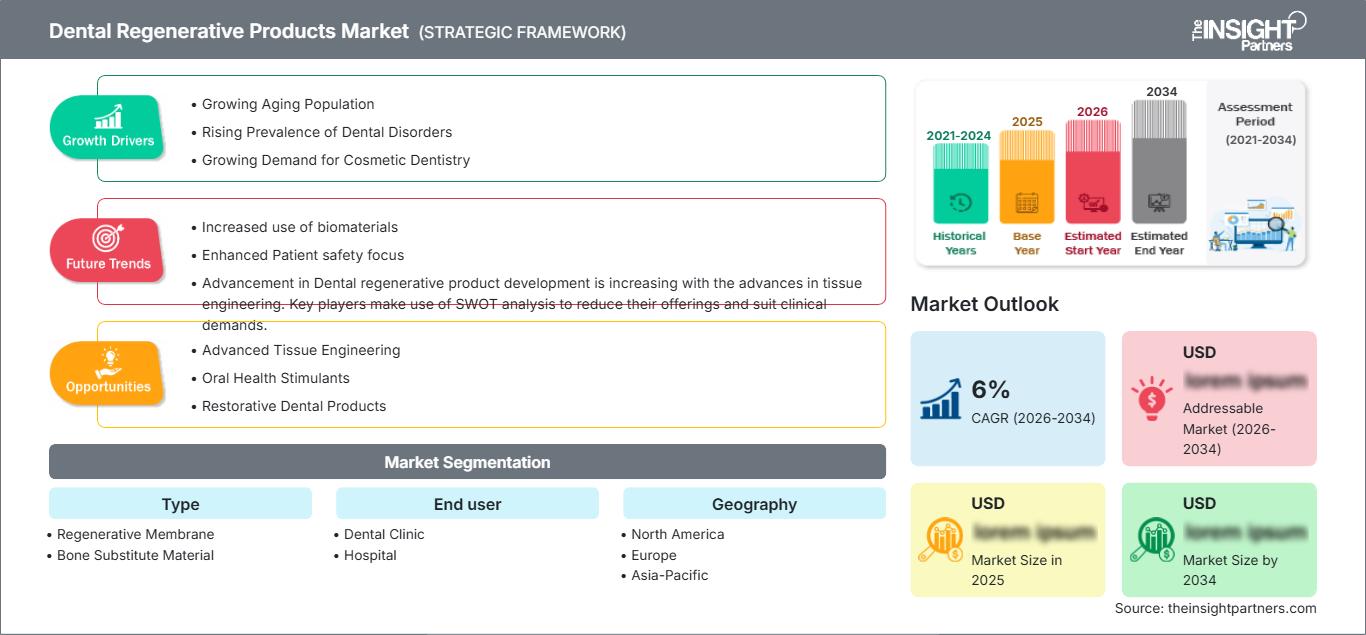
Dental Regenerative Products Market: Strategic Insights
Regional Insights
North America Dental Regenerative Products Market
The North America region is forecasted at 36-40% of worldwide revenue in 2025 with a compound annual growth rate of 7.8-8.5% through 2034. North America enjoys mature implantology, specialized periodontics, good knowledge about tissue preservation, and well-developed dental distribution channels. The US contributes 78-82% of total North America revenue, while Canada and Mexico are small but growing sources of demand. Implant site preparation, ridge augmentation, and periodontal regeneration are still key applications.
Clinical proficiency is aided by dental laboratories, oral surgeons, periodontists, and private practitioners capable of using top-of-the-line biomaterials. Moreover, the regulatory familiarity with grafts and membranes is also beneficial when it comes to the commercialization process for known vendors. In this context, the manufacturers tend to pay a lot of attention to the ease-of-use and convenience of their products since the procedure efficiency is very important for outpatient procedures.
U.S. Dental Regenerative Products Market
The United States accounts for 78–82% of the revenue generated from North America in 2025 and is anticipated to exhibit a CAGR of 7.9–8.6% from 2025 to 2034. The presence is attributed to factors such as the ability to place implants, periodontal treatment capabilities, abundance of specialists, and availability of advanced dental biomaterials. Key players like Institut Straumann AG, Zimmer Biomet Holdings, Inc., Integra LifeSciences Corporation, Geistlich Pharma AG, and ORTHOCELL LTD operate via regenerative solutions or dental channels.
Usage trends have seen an increase in the use of regenerative procedures in an outpatient basis that can be combined with other procedures such as extraction, implant placement, ridge preservation, and periodontal treatment. Dentists’ offices continue to be key purchasers while hospitals still play an important role in carrying out complicated oral surgical and medically complex procedures. Increasingly, product differentiation will be based on resorption features, handling, storage, and clinical records.
Europe Dental Regenerative Products Market
Europe is modeled at 25–29% of global revenue in 2025 and is projected to grow at a 6.7–7.5% CAGR through 2034. Germany is the leading national market, followed by the UK, France, Italy, and Spain. Germany benefits from a sophisticated dental manufacturing base, specialist practices, and established adoption of implant-related regenerative procedures.
The UK offers specialist periodontal care along with increasing popularity of evidence-based regenerative approaches. In Germany, the focus is on modern implantology and biomaterial quality, whereas in France and Italy, there is a large number of specialist and laboratory environments. The Spanish environment is facilitated by implant dentistry and dental tourism. Regulation, clinical proof, and product traceability play a role in buying decisions in the region. European companies have a chance to utilize scientific network to produce collagen membranes and regenerative products.
APAC Dental Regenerative Products Market
APAC is projected to be in the range of 22–26% of the market in 2025 and is predicted to experience an 8.0–9.0% CAGR from 2025 to 2034. China is considered the dominant market player, with significant contributions from Japan, South Korea, India, and Australia. The aging population, dental awareness, growth of specialist infrastructure, and implants drive the use of regenerative biomaterials.
India and China have considerable volume growth potential, whereas Japan and South Korea are technologically advanced. Australia has the advantages of specialist infrastructure and regulations. The manufacturers are becoming increasingly flexible regarding packaging, price, and educational approaches depending on local requirements. Investment by the industry into medical devices and improving dental infrastructure should drive usage, though affordability and availability are the major limitations.
Middle East & Africa Dental Regenerative Products Market
Demand growth in Middle East and Africa is forecast at a 6.0-7.0% CAGR up to 2034. Growth driver countries include Saudi Arabia as the leader of the region, followed by UAE and South Africa. Investment into private healthcare facilities, development of specialist dental centers, medical tourism, and infrastructure development facilitate implementation of high-level regenerative solutions.
Investment capacity into modern healthcare facilities is strong in Saudi Arabia and UAE, while South Africa provides a relatively developed dentist professional network. Other MEA markets are characterized by fragmentation and price sensitivity. Energy-based investment capacity of Gulf economies may allow for high-end products, but regional expansion is possible only through education, distribution, and regulation harmonization.
Segmentation Analysis
Type
The Type segment of the Dental Regenerative Products Market is expected to expand at a 7.0–7.8% CAGR during 2026–2034. The segment is led by bone substitute materials because they address volume deficiencies associated with implant placement and reconstruction. Regenerative membranes complement grafting procedures by maintaining space and limiting unwanted soft-tissue migration, creating substantial cross-product utilization.
- Regenerative Membrane: Collagen and related membranes support guided bone and tissue regeneration by maintaining a barrier over defects. Demand favors flexible, resorbable, easy-to-handle products that avoid secondary removal procedures.
- Bone Substitute Material: Bone substitutes occupy the dominant product position because they provide defect filling and scaffolding for regeneration. Adoption spans ridge preservation, augmentation, sinus procedures, and implant-site reconstruction.
End user
The End user segment is projected to grow at a 7.5–8.3% CAGR during 2026–2034. Dental clinics represent a major adoption channel because many regenerative procedures occur in outpatient settings. Hospitals remain strategically important for complex surgery, medically compromised patients, and procedures requiring broader multidisciplinary support.
- Dental Clinic: Clinics are increasingly integrating regenerative procedures into extraction and implant workflows. Ready-to-use grafts and membranes can reduce preparation time, supporting adoption among periodontists, implantologists, and general dentists.
- Hospital: Hospitals provide an important setting for complex defects, trauma-related reconstruction, and patients requiring coordinated surgical care. Their purchasing decisions emphasize evidence, sterility, supply continuity, and procedural versatility.
Opportunity Snapshot
| End user | Revenue Contribution (High/Medium/Low) | Trend Tag | Adoption Stage |
|---|---|---|---|
| Dental Clinic | High | Chairside Regeneration | Scaling |
| Hospital | Medium | Complex Reconstruction | Mature |
Dental Regenerative Products Market Growth Drivers and Impact Analysis
Rising Implant Procedures Increase Regenerative Material Utilization
Growing use of dental implants expands the number of cases requiring adequate bone volume and soft-tissue management. Patients with resorbed ridges may require grafting or membrane-based procedures before or during implant placement, creating recurring demand for regenerative products. The commercial impact extends beyond implant manufacturers because each additional regenerative procedure can generate demand for graft material, membranes, fixation accessories, and related surgical supplies. Product suppliers therefore benefit from increasing procedural complexity as well as procedure volume. Clinical education is particularly important because material selection depends on defect morphology, healing objectives, and surgical technique. Companies that integrate biomaterials with implant workflows can improve customer retention by addressing multiple stages of treatment rather than selling isolated regenerative products.
Preference for Minimally Invasive and Predictable Regeneration
Clinicians increasingly seek regenerative products that reduce surgical complexity while maintaining predictable healing conditions. Resorbable membranes can eliminate the need for retrieval procedures, while flowable or prehydrated graft formats can simplify preparation and placement. These characteristics can shorten chairside handling and improve workflow consistency, particularly in busy dental clinics. The market impact is significant because convenience increasingly becomes part of clinical product selection alongside biological performance. Manufacturers that demonstrate reliable resorption, stable handling, controlled particle characteristics, and appropriate tissue integration can differentiate products within crowded categories. The shift also encourages innovation in packaging, applicators, and delivery systems. As clinical workflows become more standardized, product usability can influence purchasing decisions as strongly as incremental differences in material composition.
Expansion of Regenerative Dentistry in Emerging Care Systems
Increasing dental infrastructure in emerging economies is widening access to implantology and specialist periodontal care, creating new opportunities for regenerative products. Urban dental centers in Asia Pacific and the Middle East are increasingly capable of performing advanced procedures that previously concentrated in mature markets. The impact is strongest where private healthcare investment coincides with rising patient awareness and dental tourism. However, affordability remains a constraint, encouraging suppliers to develop cost-efficient product variants without compromising essential performance attributes. Local distribution partnerships, clinician training, and region-specific packaging can accelerate adoption. Companies able to segment portfolios by clinical complexity and purchasing power can expand reach more efficiently than relying on premium products alone. This trend should gradually diversify revenue away from established Western markets.
Dental Regenerative Products Market Future Trends
Biomaterial Design Moves Toward Biological Precision
The Dental Regenerative Products Market trends are likely to increasingly emphasize biomaterials engineered around specific healing environments rather than broad, general-purpose applications. Future membranes may combine improved mechanical stability with tailored degradation profiles, while bone substitutes may incorporate surface characteristics designed to support predictable cellular attachment and remodeling. Manufacturers are also likely to evaluate combinations of scaffolds, membranes, and biologically active components as integrated treatment systems. Greater use of patient-specific imaging could influence material selection by linking defect geometry with regenerative strategy. Over time, clinical evidence may shift from isolated product performance toward outcomes across complete treatment pathways. This evolution could favor suppliers with multidisciplinary research capabilities, strong clinical networks, and the ability to translate biomaterial science into reproducible chairside protocols.
Digital Planning Connects Regeneration With Implant Workflows
Digital treatment planning is expected to become more closely connected with regenerative decision-making. Three-dimensional imaging can characterize defect morphology, implant position, available bone volume, and anatomical constraints before surgery. As software platforms become more integrated, regenerative requirements could be incorporated earlier into treatment design rather than selected after surgical deficiencies become apparent. This approach may support more standardized planning for ridge augmentation, guided regeneration, and complex implant-site management. Future workflows could also connect digital records with laboratory production and customized regenerative devices. The commercial implication is a shift toward interoperability, where biomaterial suppliers increasingly compete through workflow compatibility and digital support. Companies that connect regenerative products with planning, education, and procedural guidance may strengthen differentiation without relying solely on new material chemistry.
Dental Regenerative Products Market Opportunities
Expansion Through Emerging-Market Biomaterial Portfolios
Emerging markets offer a strategic opportunity for manufacturers to build lower-cost regenerative portfolios tailored to routine clinical needs. Rather than simply reducing prices, suppliers can redesign packaging, product sizes, distribution models, and training programs around local procedure volumes. A tiered portfolio can preserve premium products for complex cases while introducing standardized grafts and membranes for high-volume procedures. Dental Regenerative Products Market Forecasts should therefore consider not only demographic expansion but also conversion of clinical capacity into regenerative procedure volumes. Partnerships with regional distributors, dental education organizations, and specialist networks can reduce market-entry friction. Companies with scalable manufacturing and regulatory experience are positioned to transfer validated technologies into new markets while adapting commercial models to purchasing power and healthcare infrastructure.
Integrated Regeneration Solutions for Specialist Clinics
Specialist dental clinics increasingly value solutions that simplify complete treatment pathways rather than individual materials. This creates an opportunity to combine membranes, graft materials, surgical instruments, digital planning support, and clinical education into coordinated offerings. Such models can improve procedural consistency while reducing the number of suppliers clinicians must manage. The Dental Regenerative Products Market Report scope increasingly intersects with implantology, periodontal care, oral surgery, and digital dentistry, making cross-category integration commercially relevant. Suppliers can prioritize high-value specialist accounts where complex cases justify broader portfolios. Evidence-based protocols, inventory management support, and hands-on training can reinforce relationships without requiring aggressive pricing. The strongest opportunities are likely to emerge where integrated solutions demonstrably reduce workflow friction or improve treatment predictability.
Recent Developments
- April 2026: Geistlich Pharma AG launched Geistlich Bio-Gide Forte at the International Osteology Symposium in Vienna for the European market. The collagen membrane is positioned as an advanced regenerative solution with increased strength, improved stability, and easier handling. The launch formed part of a broader portfolio expansion involving new technologies, strategic partnerships, and planned introduction of products across more than 40 countries.
- January 2026: Geistlich Pharma AG appointed Istvan Galo as Chief Commercial Officer, effective February 1, 2026, with responsibility for the global sales organization. The company stated that its expansion strategy includes new regions, customer segments, and sales channels, alongside plans to introduce 20 products in more than 40 countries by the end of 2026.
- June 2026: ORTHOCELL LTD was featured in AusBiotech's Spotlight series, highlighting its regenerative medicine activities across bone, nerve, and soft-tissue repair. The company also discussed international commercialization and its partnership with BioHorizons supporting distribution of Striate+ dental bone and tissue regeneration products, reinforcing its expansion across regenerative dental applications.
Frequently Asked Questions

- Comprehensive Market Sizing and Forecast Analysis
- Detailed Segmentation Analysis
- In-Depth Market Dynamics Assessment
- Regional and Country-Level Insights
- Competitive Landscape and Company Benchmarking
- Strategic Business Intelligence
Recent Reports
Testimonials

The Insight Partners' SCADA System Market report is comprehensive, with valuable insights on current trends and future forecasts. The team was highly professional, responsive, and supportive throughout. We are very satisfied and highly recommend their services.
RAN KEDEM Partner, Reali Technologies LTDs
I requested a report on a very specific software market and the team produced the report in a few days. The information was very relevant and well presented. I then requested some changes and additions to the report. The team was again very responsive and I got the final report in less than a week.
JEAN-HERVE JENN Chairman, Future Analytica
We worked with The Insight Partners for an important market study and forecast. They gave us clear insights into opportunities and risks, which helped shape our plans. Their research was easy to use and based on solid data. It helped us make smart, confident decisions. We highly recommend them.
PIYUSH NAGPAL Sr. Vice President, High Beam Global
The Insight Partners delivered insightful, well-structured market research with strong domain expertise. Their team was professional and responsive throughout. The user-friendly website made accessing industry reports seamless. We highly recommend them for reliable, high-quality research services
YUKIHIKO ADACHI CEO, Deep Blue, LLC.
This is the first time I have purchased a market report from The Insight Partners.While I was unsure at first, I visited their web site and felt more comfortable to take the risk and purchase a market report.I am completely satisfied with the quality of the report and customer service. I had several questions and comments with the initial report, but after a couple of dialogs over email with their analyst I believe I have a report that I can use as input to our strategic planning process.Thank you so much for taking the extra time and making this a positive experience.I will definitely recommend your service to others and you will be my first call when we need further market data.
JOHN SUZUKI President and Chief Executive Officer, Board Director, BK Technologies
I wish to appreciate your support and the professionalism you displayed in the course of attending to my request for information regarding to infectious disease IVD market in Nigeria. I appreciate your patience, your guidance, and the fact that you were willing to offer a discount, which eventually made it possible for us to close a deal. I look forward to engaging The Insight Partners in the future, all thanks to the impression you have created in me as a result of this first encounter.
DR CHIJIOKE ONYIA MANAGING DIRECTOR, PineCrest Healthcare Ltd.Reason to Buy
- Informed Decision-Making
- Understanding Market Dynamics
- Competitive Analysis
- Identifying Emerging Markets
- Customer Insights
- Market Forecasts
- Risk Mitigation
- Boosting Operational Efficiency
- Strategic Planning
- Investment Justification
- Tracking Industry Innovations
- Aligning with Regulatory Trends





 Get Free Sample for