Halal Cosmetics Market Demand, Size & Forecast by 2034
Halal Cosmetics Market Size and Forecast (2021 - 2034), Global and Regional Share, Trend, and Growth Opportunity Analysis Report Coverage: By Product Type (Skincare, Haircare, Makeup, and Others), Category (Men, Women, and Unisex), Distribution Channel (Supermarkets and Hypermarkets, Specialty Stores, Online Retail, and Others), and Geography
Historic Data: 2021-2024 | Base Year: 2025 | Forecast Period: 2026-2034- Report Date : Apr 2026
- Report Code : TIPRE00017388
- Category : Consumer Goods
- Status : Upcoming
- Available Report Formats :


- No. of Pages : 150

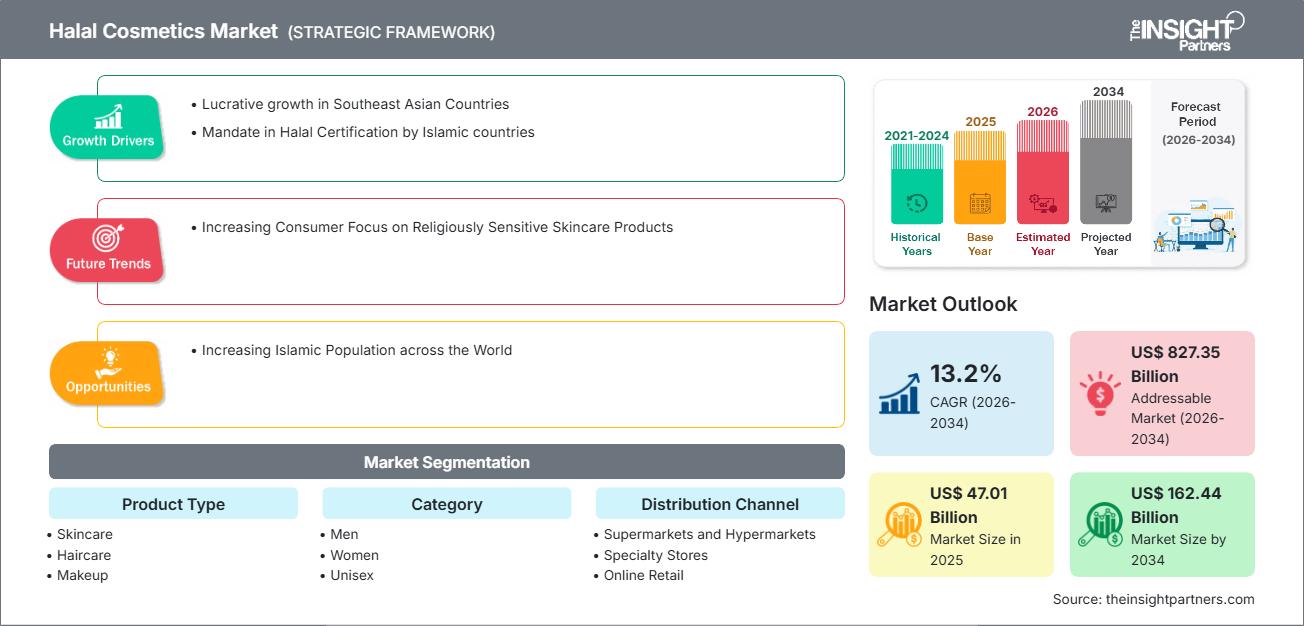
The global Halal Cosmetics market size is projected to reach US$ 162.44 billion by 2034 from US$ 47.01 billion in 2025. The market is anticipated to register a CAGR of 13.2% during the forecast period 2026–2034. Key market dynamics include the rising global Muslim population, increasing consumer preference for vegan and cruelty-free beauty products, and a significant shift toward ethical consumerism. Additionally, the market is expected to benefit from the standardization of halal certification processes, the expansion of digital-first halal beauty brands, and the growing inclusion of halal-certified ingredients in mainstream personal care categories like sunscreens and anti-aging treatments.
Halal Cosmetics Market Analysis
The halal cosmetics market analysis indicates a strategic pivot toward transparency and ethical sourcing as brands move beyond religious compliance to appeal to a broader demographic of "conscious" consumers. Strategic opportunities are emerging in the premium and masstige segments, where the absence of porcine-derived ingredients and alcohol aligns with the "clean beauty" movement. Analysis suggests that market entry for new players should focus on obtaining multi-region certifications to streamline global distribution. Furthermore, competitive differentiation is increasingly defined by scientific efficacy combined with ethical integrity, pushing brands to invest in R&D for plant-based alternatives that match the performance of traditional synthetic ingredients. The analysis also highlights that success in this sector requires localized marketing strategies that respect cultural nuances while leveraging the global trend of "skinimalism".
Halal Cosmetics Market Overview
Halal cosmetics are transitioning from a niche religious requirement to a global powerhouse in the ethical beauty industry. Originally concentrated in Southeast Asia and the Middle East, halal cosmetics are expanding rapidly into Western markets as consumers seek products free from harsh chemicals and animal by-products. The market encompasses a diverse range of products, from skincare and color cosmetics to fragrances and personal hygiene, all manufactured under strict Sharia-compliant guidelines. Innovation is currently driven by the integration of traditional ingredients—such as black seed oil and honey—with modern biotechnological processes. As major multinational corporations acquire local halal brands, the industry is witnessing a professionalization of the supply chain, moving from small-scale artisanal production to large-scale, certified manufacturing hubs. For instance, the market in the US is characterized by a growing awareness of ingredient purity among both Muslim and non-Muslim consumers. Urban centers with diverse populations and a strong preference for independent, mission-driven brands drive demand. The rise of boutique retailers and online marketplaces dedicated to ethical beauty has further enhanced product accessibility across the country.
Customize This Report To Suit Your Requirement
Get FREE CUSTOMIZATIONHalal Cosmetics Market: Strategic Insights
-
Get Top Key Market Trends of this report.This FREE sample will include data analysis, ranging from market trends to estimates and forecasts.
Halal Cosmetics Market Drivers and Opportunities
Market Drivers:
- Rising Global Muslim Population and Purchasing Power: The increasing demographic of young, fashion-conscious Muslim consumers with higher disposable income is a primary driver for certified beauty products.
- Convergence with the Clean Beauty Movement: Halal cosmetics naturally align with "clean," "vegan," and "cruelty-free" trends, attracting a wider audience of non-Muslim consumers who prioritize ingredient safety and ethical manufacturing.
- Expansion of Organized and Digital Retail: The proliferation of e-commerce and specialized retail sections for certified products has significantly increased the visibility and availability of halal brands globally.
Market Opportunities:
- Innovation in Halal-Certified Men's Grooming: While women remain the primary consumers, there is an untapped opportunity for halal-certified beard oils, hair styling products, and skincare tailored specifically for men.
- Strategic Partnerships with Mainstream Retailers: Collaborations between niche halal brands and global beauty retailers (e.g., Sephora, Ulta) can facilitate mass-market penetration and brand normalization in Western economies.
- Growth in Halal-Certified Ingredients for Professional Use: Providing certified raw materials to salons and professional spas offers a lucrative B2B opportunity as the demand for ethical professional treatments rises.
Halal Cosmetics Market Report Segmentation Analysis
The Halal Cosmetics Market share is analyzed across various segments to provide a clearer understanding of its structure, growth potential, and emerging trends. Below is the standard segmentation approach used in most industry reports:
By Product Type:
- Skincare: The leading segment due to the high frequency of use and the demand for daily essentials like cleansers and moisturizers that meet purity standards.
- Haircare: A growing category focusing on sulfate-free and alcohol-free solutions for diverse hair textures.
- Makeup: Rapidly expanding as brands launch high-pigment, long-wear halal-certified color cosmetics that cater to diverse skin tones.
- Others: Includes fragrances and personal hygiene products that avoid alcohol and prohibited animal fats.
By Category:
- Women: The dominant consumer base, characterized by a high interest in premium skincare and diverse color palettes in makeup.
- Men: A burgeoning niche segment driven by a growing focus on grooming and personal appearance among younger demographics.
- Unisex: A rising trend in fragrance and basic skincare that focuses on universal appeal and shared usage.
By Distribution Channel:
- Supermarkets & Hypermarkets: Remains a key channel for mass-market brands, benefiting from dedicated "Halal Beauty" aisles in specific regions.
- Specialty Stores: Vital for premium and boutique brands where staff expertise can educate consumers on certification benefits.
- Online Retail: The fastest-growing channel, enabling D2C brands to reach global audiences and providing a platform for niche artisanal startups.
- Others: Includes pharmacies and convenience stores offering essential personal care items.
By Geography:
- North America
- Europe
- Asia Pacific
- South & Central America
- Middle East & Africa
Halal Cosmetics Market Report Scope
| Report Attribute | Details |
|---|---|
| Market size in 2025 | US$ 47.01 Billion |
| Market Size by 2034 | US$ 162.44 Billion |
| Global CAGR (2026 - 2034) | 13.2% |
| Historical Data | 2021-2024 |
| Forecast period | 2026-2034 |
| Segments Covered |
By Product Type
|
| Regions and Countries Covered |
North America
|
| Market leaders and key company profiles |
|
Halal Cosmetics Market Players Density: Understanding Its Impact on Business Dynamics
The Halal Cosmetics Market is growing rapidly, driven by increasing end-user demand due to factors such as evolving consumer preferences, technological advancements, and greater awareness of the product's benefits. As demand rises, businesses are expanding their offerings, innovating to meet consumer needs, and capitalizing on emerging trends, which further fuels market growth.
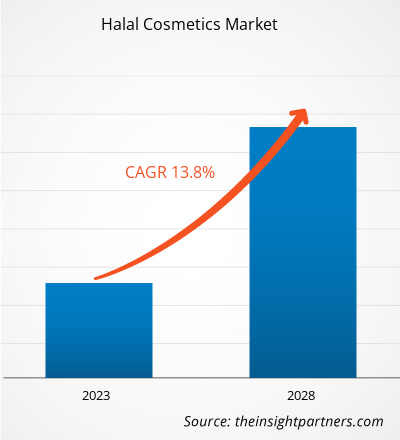
Halal Cosmetics Market Share Analysis by Geography
Asia-Pacific is expected to grow fastest in the coming years, bolstered by robust regulatory frameworks and a burgeoning middle class. Emerging markets in South & Central America, the Middle East, and Africa also present significant untapped opportunities for premium ethical beauty brands and manufacturers of personal care products to expand their global footprint.
The halal cosmetics market is undergoing a significant transformation, moving from a niche religious requirement to a global high-value functional beauty category. Growth is driven by the rising prevalence of "conscious consumerism," a surge in demand for vegan and cruelty-free alternatives, and the expansion of the luxury ethical skincare sector. Below is a summary of market share and trends by region:
Asia-Pacific
- Market Share: Holds the largest share globally (approx. 62-64%), anchored by established halal ecosystems in Indonesia, Malaysia, and India.
- Key Drivers:
- Massive consumer base seeking Sharia-compliant products that align with both religious and modern fashion trends.
- Government-supported initiatives, such as Indonesia's mandatory halal labeling laws, strengthen consumer trust.
- Rapid urbanization and rising disposable incomes are leading to a preference for premium, "smart-certified" skincare.
- Trends: Heavy reliance on social commerce and influencer-led marketing, alongside the integration of traditional Asian botanicals into certified high-performance formulations.
Middle East & Africa
- Market Share: A mature and high-spending market, with a projected high CAGR driven by a young, brand-conscious population.
- Key Drivers:
- Deep-seated cultural roots in personal grooming and high per-capita expenditure on luxury fragrances.
- Strategic investments in local manufacturing hubs to reduce import reliance and ensure supply chain integrity.
- Rising demand for "wudu-friendly" and breathable cosmetics that cater to daily religious observances.
- Trends: Implementation of modern digital traceability technologies to verify ingredient purity, coupled with a focus on high-nutrient, alcohol-free hair and body care.
North America
- Market Share: A rapidly expanding segment driven by a diverse consumer base and the mainstreaming of the "clean beauty" movement.
- Key Drivers:
- Rising consumer preference for vegan and cruelty-free products, which overlap significantly with halal standards.
- Mainstreaming of specialty ethical brands in high-end grocery and beauty chains like Sephora and Whole Foods.
- Strong demand from the tech-savvy millennial and Gen Z populations for transparent and mission-driven brands.
- Trends: Scaling of online retail and subscription models, with a successful adoption of "all-inclusive" branding that appeals to both Muslim and non-Muslim ethical shoppers.
Europe
- Market Share: A prominent market for halal cosmetics due to the surge in awareness about animal welfare and the increased Muslim population in urban centers.
- Key Drivers:
- High domestic demand for "toxin-free" and organic-certified personal care items in France, Germany, and the UK.
- Robust regulatory frameworks for traditional cosmetics that facilitate the integration of halal standards.
- Increasing presence of Western multinational corporations acquiring or launching halal-certified sub-brands.
- Trends: A strategic shift toward organic-halal hybrids to meet the demands of eco-conscious European consumers and a focus on sustainable, plastic-free packaging.
South and Central America
- Market Share: An emerging market with a growing artisanal sector in countries like Brazil and Chile.
- Key Drivers:
- Increasing awareness of the safety and purity of halal-certified products as an alternative to synthetic-heavy mainstream brands.
- Modernization of local cosmetic labs to meet international certification standards for export to the MENA regions.
- Rising interest in "farm-to-face" beauty concepts among middle-to-high income segments.
- Trends: Growth of boutique brands focusing on halal-certified oils and natural extracts, aiming to differentiate through "clean-label" transparency in the dominant bovine-ingredient market.
High Market Density and Competition
Competition is intensifying due to the presence of established leaders such as Clara International Beauty Group, Inglot Cosmetics, Inika Organic Australia, IVY Beauty Corporation, MMA Bio Lab Sdn Bhd, OnePure, LLC, PT Paragon Technology and Innovation, PHB Ethical Beauty Ltd., and Sampure Minerals, which also contribute to a diverse and rapidly expanding market landscape.
Competition is intensifying as established beauty giants enter the space to compete with dedicated halal pioneers. The competitive environment pushes vendors to differentiate through:
- Stringent Certification and Traceability: Utilizing blockchain and third-party audits to guarantee the integrity of the "farm-to-face" halal supply chain.
- Product Innovation: Developing breathable nail polishes and wudu-friendly makeup that addresses the specific lifestyle needs of Muslim consumers.
- Ethical Branding: Positioning products not just as religiously compliant, but as environmentally sustainable and socially responsible.
Opportunities and Strategic Moves
- Partner with high-end retail channels and e-commerce platforms to tap into the surging demand for alcohol-free and ethically sourced beauty products in the Asia-Pacific and North American markets.
- Incorporate sustainable packaging and transparent supply chain technologies, such as blockchain-enabled certification tracking, to appeal to environmentally conscious millennials and Gen Z consumers seeking ethical dairy alternatives.
Major Companies operating in the Halal Cosmetics Market are:
- Clara International Beauty Group
- Inglot Cosmetics
- Inika Organic Australia
- IVY Beauty Corporation
- MMA Bio Lab Sdn Bhd
- OnePure, LLC
- PT Paragon Technology and Innovation
- PHB Ethical Beauty Ltd.
- Sampure Minerals
Disclaimer: The companies listed above are not ranked in any particular order.
Halal Cosmetics Market News and Recent Developments
- In May 2025, the Indonesian Muslim beauty brand Wardah formalized a strategic collaboration in Qatar to expand its global footprint, aligning with the Al Mujadilah Women Centre—an affiliate of the Qatar Foundation—to advance faith-driven female leadership across borders. Signed in Doha on May 18, 2025, the partnership was witnessed by high-level officials, including former Indonesian Foreign Minister Retno Marsudi, which underscored the significant global influence of the ParagonCorp-owned Halal Cosmetics giant. At its heart, the collaboration aimed to cultivate an international ecosystem of women leaders grounded in faith, knowledge, and impact. Initial programs focused on capacity building, leadership development, and research exchange, drawing from the extensive networks of both institutions throughout Southeast Asia and the Gulf.
- In January 2024, the Korean premium personal care brand Kundal expanded its presence in the Southeast Asian market by offering its "REFRESHING ANTI-DANDRUFF Hair Care Line" to customers in Malaysia and Indonesia. Designed to meet the growing demand within the Muslim community, the products were certified as MUI Halal and vegan, establishing the brand as a key player in the Halal Cosmetics sector. This launch was particularly significant as the line became one of the few K-Beauty halal hair care ranges available at Guardian stores, catering specifically to consumers seeking Sharia-compliant personal care solutions.
Halal Cosmetics Market Report Coverage and Deliverables
The "Halal Cosmetics Market Size and Forecast (2021–2034)" report provides a detailed analysis of the market covering below areas:
- Halal Cosmetics Market size and forecast at global, regional, and country levels for all the key market segments covered under the scope
- Halal Cosmetics Market trends, as well as market dynamics such as drivers, restraints, and key opportunities
- Detailed PEST and SWOT analysis
- Halal Cosmetics Market analysis covering key market trends, global and regional framework, major players, regulations, and recent market developments
- Industry landscape and competition analysis covering market concentration, heat map analysis, prominent players, and recent developments in the Halal Cosmetics Market.
- Detailed company profiles
Frequently Asked Questions

- Historical Analysis (2 Years), Base Year, Forecast (7 Years) with CAGR
- PEST and SWOT Analysis
- Market Size Value / Volume - Global, Regional, Country
- Industry and Competitive Landscape
- Excel Dataset
Recent Reports
Testimonials

The Insight Partners' SCADA System Market report is comprehensive, with valuable insights on current trends and future forecasts. The team was highly professional, responsive, and supportive throughout. We are very satisfied and highly recommend their services.
RAN KEDEM Partner, Reali Technologies LTDs
I requested a report on a very specific software market and the team produced the report in a few days. The information was very relevant and well presented. I then requested some changes and additions to the report. The team was again very responsive and I got the final report in less than a week.
JEAN-HERVE JENN Chairman, Future Analytica
We worked with The Insight Partners for an important market study and forecast. They gave us clear insights into opportunities and risks, which helped shape our plans. Their research was easy to use and based on solid data. It helped us make smart, confident decisions. We highly recommend them.
PIYUSH NAGPAL Sr. Vice President, High Beam Global
The Insight Partners delivered insightful, well-structured market research with strong domain expertise. Their team was professional and responsive throughout. The user-friendly website made accessing industry reports seamless. We highly recommend them for reliable, high-quality research services
YUKIHIKO ADACHI CEO, Deep Blue, LLC.
This is the first time I have purchased a market report from The Insight Partners.While I was unsure at first, I visited their web site and felt more comfortable to take the risk and purchase a market report.I am completely satisfied with the quality of the report and customer service. I had several questions and comments with the initial report, but after a couple of dialogs over email with their analyst I believe I have a report that I can use as input to our strategic planning process.Thank you so much for taking the extra time and making this a positive experience.I will definitely recommend your service to others and you will be my first call when we need further market data.
JOHN SUZUKI President and Chief Executive Officer, Board Director, BK Technologies
I wish to appreciate your support and the professionalism you displayed in the course of attending to my request for information regarding to infectious disease IVD market in Nigeria. I appreciate your patience, your guidance, and the fact that you were willing to offer a discount, which eventually made it possible for us to close a deal. I look forward to engaging The Insight Partners in the future, all thanks to the impression you have created in me as a result of this first encounter.
DR CHIJIOKE ONYIA MANAGING DIRECTOR, PineCrest Healthcare Ltd.Reason to Buy
- Informed Decision-Making
- Understanding Market Dynamics
- Competitive Analysis
- Identifying Emerging Markets
- Customer Insights
- Market Forecasts
- Risk Mitigation
- Boosting Operational Efficiency
- Strategic Planning
- Investment Justification
- Tracking Industry Innovations
- Aligning with Regulatory Trends




 Get Free Sample For