Skincare Products Market Size, Trends & Demand by 2034
Skincare Products Market Size and Forecast (2021 - 2034), Global and Regional Share, Trend, and Growth Opportunity Analysis Report Coverage: By Product Type (Creams & Lotions, Cleansers, Serums, and Others), Category (Organic and Conventional), End User (Men, Women, and Others), and Distribution Channel (Supermarkets & Hypermarkets, Specialty Stores, Online Retail, and Others)
Historic Data: 2021-2024 | Base Year: 2025 | Forecast Period: 2026-2034- Report Date : Apr 2026
- Report Code : TIPRE00027434
- Category : Consumer Goods
- Status : Upcoming
- Available Report Formats :


- No. of Pages : 150

The global skincare products market size is projected to reach US$ 345.42 billion by 2034 from US$ 161.69 billion in 2025. The market is anticipated to register a CAGR of 8.8% during the forecast period 2026–2034. Key market dynamics include a heightening global focus on dermatological health, rising consumer awareness regarding the efficacy of active ingredients like retinoids and peptides, and a significant shift toward "skinimalism", prioritizing quality over quantity in routines. Additionally, the market is expected to benefit from the growing popularity of medical-grade skincare, expansion in digital retail channels across emerging economies, and the increasing inclusion of skincare in high-value wellness segments like anti-pollution and microbiome-friendly treatments.
Skincare Products Market Analysis
The skincare products market analysis shows a shift toward high-value functional beauty as consumers prioritize clinical results and ingredient transparency. Procurement trends indicate the market is splitting into traditional mass-market retail and high-growth, prestige "dermaceutical" sectors. Strategic opportunities are emerging in personalized skincare and male-specific grooming, where tailored formulations for different skin thicknesses and hormonal profiles offer a clear competitive advantage. The analysis also notes that market expansion depends on sustainable supply chain integrity for botanical extracts and high-efficiency delivery systems for active serums. Competitive differentiation now stands out depending on branding that tells a scientific story, highlights cruelty-free practices, and offers end-to-end traceability of ingredients.
Skincare Products Market Overview
Skincare has evolved from basic lotions to sophisticated lifestyle solutions. Skincare products now include functional barrier-repair creams, brain-beauty "neurocosmetic" serums, and pediatric-safe sun care. Both global beauty conglomerates and D2C startups compete in this market, using ingredients such as plant-based squalane, hyaluronic acid, and niacinamide. Growing demand for convenient, multi-functional products among time-poor consumers in North America and Europe has increased the popularity of serum-infused moisturizers as portable wellness solutions. Asia-Pacific leads in revenue due to its deep-seated skincare culture (notably K-beauty and J-beauty), while North America is advancing in clinical innovation and retail adoption.
The North American market is a mature landscape driven by a high-profile, health-conscious consumer base. Growth is propelled by the mainstreaming of "clean beauty," demand for medical-grade clinical formulations, and the rise of personalized routines. Established fitness cultures and influential "skinfluencer" trends among millennials and Gen Z sustain high engagement for prestige brands and innovative sun protection solutions.
Customize This Report To Suit Your Requirement
Get FREE CUSTOMIZATIONSkincare Products Market: Strategic Insights
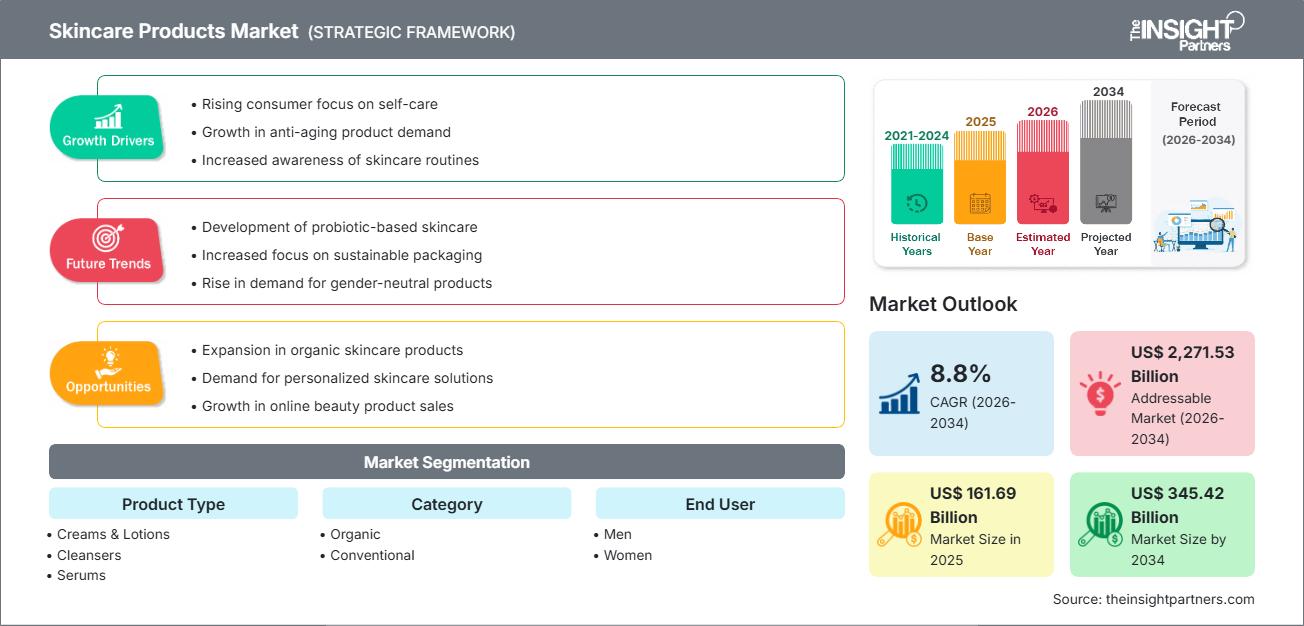
-
Get Top Key Market Trends of this report.This FREE sample will include data analysis, ranging from market trends to estimates and forecasts.
Skincare Products Market Drivers and Opportunities
Market Drivers:
- Superior Efficacy and Target-Specific Solutions: Modern skincare offers smaller molecular structures and advanced encapsulation, making ingredients like Retinol more effective and less irritating. This drive for "clinical at home" results is fueling market growth.
- Premiumization of Daily Routines: The expansion of specialty beauty counters and online "skintelligence" platforms has sustained high demand for high-end inputs. As consumers trade up to artisanal and boutique experiences, premium serums continue to see stable volume gains.
- Rapid Expansion of Digital and E-commerce Channels: Social commerce and "skinfluencer" marketing have removed traditional geographic barriers for niche brands, particularly evident in the rapid adoption of organic skincare in regions like Asia-Pacific.
Market Opportunities:
- Expansion into Men’s Grooming: Beyond basic shaving creams, there is a significant opportunity for men-specific anti-aging and sun protection products as male grooming becomes mainstream.
- Growth in Emerging APAC Corridors: Forming strategic partnerships between Western labs and Asian distributors may facilitate access to high-margin segments in China and India, where demand for premium, clean-label skincare is surging.
- Diversification into Specialty Certifications: There is a growing opportunity to target specific demographics through certifications such as Halal-certified, Vegan, and Microbiome-friendly, as seen in recent retail expansions.
Skincare Products Market Report Segmentation Analysis
The Skincare Products Market share is analyzed across various segments to provide a clearer understanding of its structure, growth potential, and emerging trends. Below is the standard segmentation approach used in most industry reports:
By Product Type:
- Creams & Lotions: The dominant volume driver, particularly within the daily hydration and sun protection sectors, due to established consumer habits and versatile formulations.
- Cleansers: A fast-growing niche that aligns with the "double cleansing" trend. It is increasingly preferred by consumers who prioritize skin barrier health and residue-free skin.
- Serums: The highest-margin segment, driven by the demand for concentrated active ingredients targeting specific concerns like aging, pigmentation, and dullness.
By Category:
- Organic: A fast-growing niche that aligns with global sustainability trends. It is increasingly preferred by high-income consumers who prioritize chemical-free production and "Clean Beauty" standards.
- Conventional: The dominant volume driver, particularly within the mass-market and pharmacy-led retail sectors, due to established supply chains and cost efficiencies.
By End User:
- Women: Remains the primary segment, driven by a long-standing culture of multi-step skincare routines and beauty enhancement.
- Men: A rapidly expanding segment with a projected high CAGR as awareness regarding grooming, skin maintenance, and "professional appearance" increases.
By Distribution Channel:
- Supermarkets & Hypermarkets: Remains a primary channel for mass-market creams and daily essentials, benefiting from high foot traffic and family-sized packaging.
- Specialty Stores: The leading revenue contributor for premium and organic brands, offering professional advice and a "prestige" shopping experience.
- Online Retail: The fastest-rising channel, especially for specialized serums and D2C artisanal brands, enabling cross-border premium imports and digital discovery.
By Geography:
- North America
- Europe
- Asia Pacific
- South & Central America
- Middle East & Africa
Skincare Products Market Report Scope
| Report Attribute | Details |
|---|---|
| Market size in 2025 | US$ 161.69 Billion |
| Market Size by 2034 | US$ 345.42 Billion |
| Global CAGR (2026 - 2034) | 8.8% |
| Historical Data | 2021-2024 |
| Forecast period | 2026-2034 |
| Segments Covered |
By Product Type
|
| Regions and Countries Covered |
North America
|
| Market leaders and key company profiles |
|
Skincare Products Market Players Density: Understanding Its Impact on Business Dynamics
The Skincare Products Market is growing rapidly, driven by increasing end-user demand due to factors such as evolving consumer preferences, technological advancements, and greater awareness of the product's benefits. As demand rises, businesses are expanding their offerings, innovating to meet consumer needs, and capitalizing on emerging trends, which further fuels market growth.
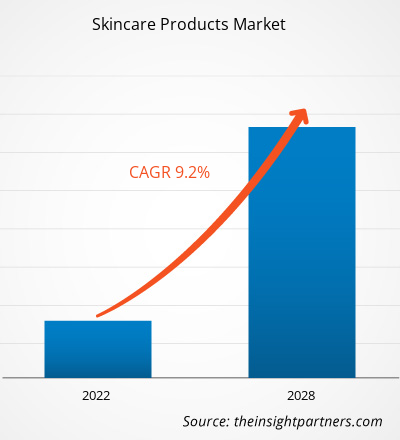
Skincare Products Market Share Analysis by Geography
Asia-Pacific is expected to grow fastest in the coming years. Emerging markets in South & Central America, the Middle East, and Africa also have many untapped opportunities for premium skincare producers and dermaceutical manufacturers to expand.
The skincare products market is undergoing a significant transformation, moving from basic hygiene to high-value functional beauty. Growth is driven by the rising prevalence of skin concerns, a surge in "clean beauty" demand, and the expansion of the luxury clinical sector. Below is a summary of market share and trends by region:
North America
- Market Share: Holds a significant share driven by high consumer spending on prestige clinical and dermatological products.
- Key Drivers:
- Rising consumer preference for clinical-grade profiles and science-backed ingredients.
- Mainstreaming of "clean" skincare in high-end chains like Sephora and Ulta.
- Successful adoption of specialty certifications (e.g., Non-GMO, EWG Verified) to appeal to health-focused millennials.
- Trends: Scaling of retail serum distribution and the rise of teledermatology tools for personalized routines.
Europe
- Market Share: Accounted for a substantial portion of the market, anchored by legacy luxury brands and pharmacy-led "dermocosmetic" ecosystems.
- Key Drivers:
- High domestic consumption of iconic premium and "pharmacy" skincare brands.
- Established processing infrastructure and strict regulatory frameworks for ingredient safety.
- Strong focus on sustainable packaging and eco-friendly manufacturing.
- Trends: A strategic shift toward organic and microbiome-friendly certifications to meet the demands of eco-conscious European consumers.
Asia-Pacific
- Market Share: The fastest-growing region, with countries like South Korea, Japan, and China acting as the primary engines for innovation and export.
- Key Drivers:
- Massive consumer base seeking premium, brightening, and anti-pollution nutrition for the skin.
- Rapid urbanization and rising disposable incomes leading to a preference for "westernized" luxury and clinical brands.
- Cultural emphasis on "prevention over cure" is driving early adoption of skincare routines.
- Trends: Heavy reliance on e-commerce platforms and "Live Stream Shopping" for high-end skincare serums and masks.
South and Central America
- Market Share: Emerging market with a growing artisanal and premium sector in countries like Brazil and Chile.
- Key Drivers:
- Increasing awareness of the importance of sun protection and skin barrier health.
- Modernization of retail chains and a rising middle-to-high income segment seeking global beauty standards.
- Rising interest in nature-inspired and botanical formulations.
- Trends: Growth of "farm-to-shelf" boutique brands and the introduction of regional ingredients like acai and cupuacu into skincare lines.
Middle East and Africa
- Market Share: Developing market with deep cultural roots in oil-based skincare, transitioning toward formalized commercial production.
- Key Drivers:
- Traditional presence of natural oils and soaps in regional culture, now being commercialized.
- High demand for high-SPF products and hydration-centric skincare in arid climates.
- Strategic investments in modern retail infrastructure to attract global luxury brands.
- Trends: Implementation of modern formulation technologies, coupled with a focus on high-nutrient Halal-certified products for the premium segment.
High Market Density and Competition
Competition is intensifying due to the presence of established leaders such as L'Oréal S.A., Unilever PLC, and The Estée Lauder Companies. Regional artisanal experts and niche players like Amorepacific Corporation and Shiseido also contribute to a diverse and rapidly expanding market landscape.
This competitive environment pushes vendors to differentiate through:
- Premiumization and Functional Branding: Positioning skincare as a superior health alternative by emphasizing clinical actives like hyaluronic acid and vitamin C for health-conscious consumers.
- Specialized Product Portfolios: Skincare products now include more than just moisturizers. Companies offer probiotic serums, stick-format sunscreens, and high-end anti-aging treatments.
- Supply Chain Control: Producers manage the entire chain, from sustainable botanical sourcing to local processing, ensuring quality, transparency, and ethical clean-label standards.
- Innovation in Technology: New delivery systems, like liposomal encapsulation and AI skin analysis, help create high-quality products used in the prestige and medical-grade segments.
Opportunities and Strategic Moves
- Partner with high-end retail channels and e-commerce platforms to tap into the surging demand for science-led and artisanal skincare products in the Asia-Pacific and North American markets.
- Incorporate sustainable farming practices and regenerative agriculture certifications to appeal to environmentally conscious millennials and Gen Z consumers seeking ethical beauty alternatives.
Major Companies operating in the Skincare Products Market are:
- L'Oréal Groupe
- Shiseido Co.
- Procter & Gamble
- Unilever
- Avon Products
- Johnson and Johnson Services, Inc
Disclaimer: The companies listed above are not ranked in any particular order.
Skincare Products Market News and Recent Developments
- In January 2026, First Aid Beauty, a sub-brand of Procter & Gamble and cult-favorite skincare brand known for its ultra-hydrating, sensitive skin-friendly formulas, announced its role as Official Skincare of Team USA at the Olympic and Paralympic Winter Games Milano Cortina 2026. First Aid Beauty will supply Team USA and all Olympic and Paralympic athletes with its bestselling Ultra Repair Cream, which soothes, moisturizes, and conditions the skin with sensitive skin-friendly ingredients, including Colloidal Oatmeal.
- In June 2025, L’Oréal Groupe announced that it had signed an agreement to acquire a majority stake in the British skincare brand Medik8. This acquisition further strengthens L’Oréal’s Luxe portfolio, adding a premium science-backed skincare brand with a proven track record of success, with strong potential for global growth.
Skincare Products Market Report Coverage and Deliverables
The Skincare Products Market Size and Forecast (2021–2034) report provides a detailed analysis of the market covering below areas:
- Skincare Products Market size and forecast at global, regional, and country levels for all the key market segments covered under the scope.
- Skincare Products Market trends, as well as market dynamics such as drivers, restraints, and key opportunities.
- Detailed PEST and SWOT analysis.
- Skincare Products Market analysis covering key market trends, global and regional framework, major players, regulations, and recent market developments.
- Industry landscape and competition analysis covering market concentration, heat map analysis, prominent players, and recent developments in the Skincare Products Market.
- Detailed company profiles.
Frequently Asked Questions

- Historical Analysis (2 Years), Base Year, Forecast (7 Years) with CAGR
- PEST and SWOT Analysis
- Market Size Value / Volume - Global, Regional, Country
- Industry and Competitive Landscape
- Excel Dataset
Recent Reports
Testimonials

The Insight Partners' SCADA System Market report is comprehensive, with valuable insights on current trends and future forecasts. The team was highly professional, responsive, and supportive throughout. We are very satisfied and highly recommend their services.
RAN KEDEM Partner, Reali Technologies LTDs
I requested a report on a very specific software market and the team produced the report in a few days. The information was very relevant and well presented. I then requested some changes and additions to the report. The team was again very responsive and I got the final report in less than a week.
JEAN-HERVE JENN Chairman, Future Analytica
We worked with The Insight Partners for an important market study and forecast. They gave us clear insights into opportunities and risks, which helped shape our plans. Their research was easy to use and based on solid data. It helped us make smart, confident decisions. We highly recommend them.
PIYUSH NAGPAL Sr. Vice President, High Beam Global
The Insight Partners delivered insightful, well-structured market research with strong domain expertise. Their team was professional and responsive throughout. The user-friendly website made accessing industry reports seamless. We highly recommend them for reliable, high-quality research services
YUKIHIKO ADACHI CEO, Deep Blue, LLC.
This is the first time I have purchased a market report from The Insight Partners.While I was unsure at first, I visited their web site and felt more comfortable to take the risk and purchase a market report.I am completely satisfied with the quality of the report and customer service. I had several questions and comments with the initial report, but after a couple of dialogs over email with their analyst I believe I have a report that I can use as input to our strategic planning process.Thank you so much for taking the extra time and making this a positive experience.I will definitely recommend your service to others and you will be my first call when we need further market data.
JOHN SUZUKI President and Chief Executive Officer, Board Director, BK Technologies
I wish to appreciate your support and the professionalism you displayed in the course of attending to my request for information regarding to infectious disease IVD market in Nigeria. I appreciate your patience, your guidance, and the fact that you were willing to offer a discount, which eventually made it possible for us to close a deal. I look forward to engaging The Insight Partners in the future, all thanks to the impression you have created in me as a result of this first encounter.
DR CHIJIOKE ONYIA MANAGING DIRECTOR, PineCrest Healthcare Ltd.Reason to Buy
- Informed Decision-Making
- Understanding Market Dynamics
- Competitive Analysis
- Identifying Emerging Markets
- Customer Insights
- Market Forecasts
- Risk Mitigation
- Boosting Operational Efficiency
- Strategic Planning
- Investment Justification
- Tracking Industry Innovations
- Aligning with Regulatory Trends




 Get Free Sample For