
Aerospace Polymer Composites Market Trends, Size & Growth by 2034
Coverage: By Fiber (Carbon, Glass, Ceramic, Aramid); Matrix (Thermoplastic, Thermosets); Aircraft Type (General Aviation, Defense Aircraft, Space, Helicopters); Structure (Laminate Composites, Sandwich Composites), and Geography (North America, Europe, Asia Pacific, and South and Central America)
- Status : Data Released
- Report Code : TIPRE00016468
- Category : Aerospace and Defense
- No. of Pages : 150
- Available Report Formats :


- Last update date : October 13, 2026


2025 Market Size
US$ 5.15 Bn
Base year value
2034 Forecast
US$ 10.19 Bn
Projected by 2034
CAGR 2026-2034
7.87 %
Growth rate
Addressable Market
US$ 69.00 Bn
(2026-2034)
The aerospace polymer composites market was valued at US$ 5.15 Billion in 2025 and is projected to reach US$ 10.19 Billion by 2034, registering a CAGR of 7.87% from 2026 to 2034. The market covers polymer-based composite materials reinforced with fibers and engineered for aerospace structures and systems, with demand shaped by lightweighting, structural performance, production efficiency, and qualification requirements across aviation, defense, space, and rotorcraft applications.
The Aerospace Polymer Composites Market Size in North America is supported by established aerospace manufacturing, defense procurement, advanced composite processing capabilities, and sustained investment in aircraft structures. The regional market is expected to register a ~7% CAGR through 2034, supported by replacement demand, aircraft production programs, increased use of carbon-fiber-reinforced structures, and continued development of automated and out-of-autoclave manufacturing processes.
Aerospace Polymer Composites Market Assessment and Insights
Regional Outlook
- North America: ~35% of the global market in 2025 | ~7% CAGR through 2034. Market position: North America represents the largest regional demand base, supported by extensive aircraft production, defense programs, composite-qualified suppliers, and established engineering capabilities spanning carbon fiber, prepregs, polymer matrices, and structural fabrication.
- US: ~78% of North American market revenue in 2025 | ~7% CAGR through 2034. Market position: The US remains the principal aerospace manufacturing center within North America, with demand distributed across commercial aircraft, military platforms, space systems, helicopters, and advanced air mobility structures requiring lightweight, high-strength materials.
- Europe: ~30% of the global market in 2025 | ~7% CAGR through 2034. Market position: Europe has a mature aerospace composites ecosystem centered on Germany, France, the UK, Italy, and Spain. France represents the leading country in Europe, supported by aircraft production, defense programs, and composite-material manufacturing capacity.
- Asia Pacific: ~25% of the global market in 2025 | ~9% CAGR through 2034. Market position: Asia Pacific is the fastest-growing region, driven by expanding aircraft assembly, defense localization, space programs, and composite adoption. China is the leading country in Asia Pacific, while Japan, South Korea, India, and Australia broaden regional demand.
Segment Outlook
- Fiber: ~70% Share in 2025 | ~8% CAGR through 2034. Market position: Fiber represents the largest main segment because reinforcement selection directly determines structural strength, stiffness, weight, impact behavior, and durability. Carbon fiber remains particularly important in primary structures, while glass and aramid fibers serve specialized applications.
- Matrix: ~30% Share in 2025 | ~9% CAGR through 2034. Market position: Matrix is the high-growth main segment as thermoplastic systems gain attention for faster processing, welding potential, impact resistance, and recyclability, while thermosets remain deeply established across qualified aerospace structures and established prepreg manufacturing routes.
Competitive Coverage
Axiom Materials, Inc., Hexcel Corporation, JPS Composite Materials, Lee Aerospace, LMI AEROSPACE, Mitsubishi Chemical Corporation, SGL Carbon SE, Solvay, Spirit AeroSystems, Inc., TORAY INDUSTRIES, INC.
Methodology
The Insight Partners follows Data Collection & Secondary Research, Primary Research, Data Analysis, and Data Triangulation & Final Review to validate market estimates and insights.
Source: The Insight Partners' analysis based on proprietary research, government publications, company annual reports, investor presentations, industry databases, and expert interviews.
The aerospace polymer composites market has evolved from selective secondary-structure applications toward broader use in airframes, wings, fuselage sections, interiors, propulsion components, and other structural assemblies. Carbon-fiber reinforcement has expanded because its strength-to-weight characteristics support aircraft lightweighting, while glass and aramid fibers retain roles where cost, impact resistance, electrical properties, or localized performance are important. Production methods are also changing, with automated fiber placement, automated tape laying, resin transfer molding, compression processes, and out-of-autoclave curing improving production economics and reducing dependence on conventional high-cost manufacturing routes.
Forward momentum in the Aerospace Polymer Composites Market Share is increasingly linked to aircraft production localization and supply-chain resilience. Asia Pacific is building aerospace manufacturing depth, while Europe and North America continue investing in advanced materials and process qualification. Regulatory emphasis on aircraft efficiency indirectly supports composites by increasing the value of weight reduction and structural optimization. Defense modernization and space-system development provide additional demand channels because these platforms require materials capable of meeting demanding mechanical, thermal, environmental, and dimensional requirements.
Aerospace Polymer Composites Market Report Scope
| Report Attribute | Details |
|---|---|
| Market size in 2025 | US$ 5.15 Billion |
| Market Size by 2034 | US$ 10.19 Billion |
| Global CAGR (2026 - 2034) | 7.87% |
| Historical Data | 2021-2024 |
| Forecast period | 2026-2034 |
Aerospace Polymer Composites Market Analysis
Demand is anchored by the aerospace industry’s continuing requirement for lighter structures without compromising stiffness, fatigue resistance, impact tolerance, or service durability. Composite materials allow designers to consolidate components, tailor fiber orientation, and reduce corrosion exposure compared with several conventional metallic solutions. The aerospace polymer composites market therefore, depends not only on material sales but also on qualification cycles, aircraft production rates, structural redesign, repair requirements, and the availability of certified manufacturing processes.
The value chain extends from polymer and fiber suppliers to prepreg manufacturers, intermediate-material producers, fabricators, aircraft component manufacturers, system integrators, and OEMs. Supply conditions are influenced by carbon-fiber availability, resin chemistry, prepreg capacity, processing equipment, and qualification requirements. Long development cycles create high switching costs, encouraging suppliers to establish technical relationships with aircraft manufacturers and tier suppliers before volume production begins.
Competition in the Aerospace Polymer Composites Market Forecast is increasingly concentrated around material performance, processability, qualification support, production scalability, and the ability to supply multiple stages of the composite value chain. Hexcel Corporation is involved in fiber, prepreg, honeycomb, engineered core, and composites technologies, while TORAY INDUSTRIES, INC. is associated with the integration of carbon-fiber and composites materials portfolio. The Solvay company is involved in competition with advanced polymers, prepregs, thermoplastic composites, adhesives, and processing technologies. The other companies, including Mitsubishi Chemical Corporation and SGL Carbon SE are differentiated in carbon-fiber technology, while JPS Composite Materials and Axiom Materials, Inc. are differentiated in composite materials and prepregs.
The investments are made in automation, thermoplastic processing, high-rate manufacturing, advanced prepregs, and local manufacturing. Spirit AeroSystems, Inc. and LMI AEROSPACE are involved in downstream structural and components capability, while Lee Aerospace is supporting specialty aerospace composites and interiors requirements. The resultant competitive environment will favor suppliers who can integrate material science and process engineering, certification, delivery, and development to their customers.
● REPORT CUSTOMIZATION
Tailor This Report To Align With Your Specific Business Requirements
This report can be customized to align precisely with your business objectives, scope, and target markets. Customization options include tailored segmentation, geography, competitive analysis, and strategic insights to support informed decision-making.
Customize This Report →WHAT YOU CAN ADJUST
- ● Segmentations
- ● Geography
- ● Competitive Analysis
- ● Language Preferences
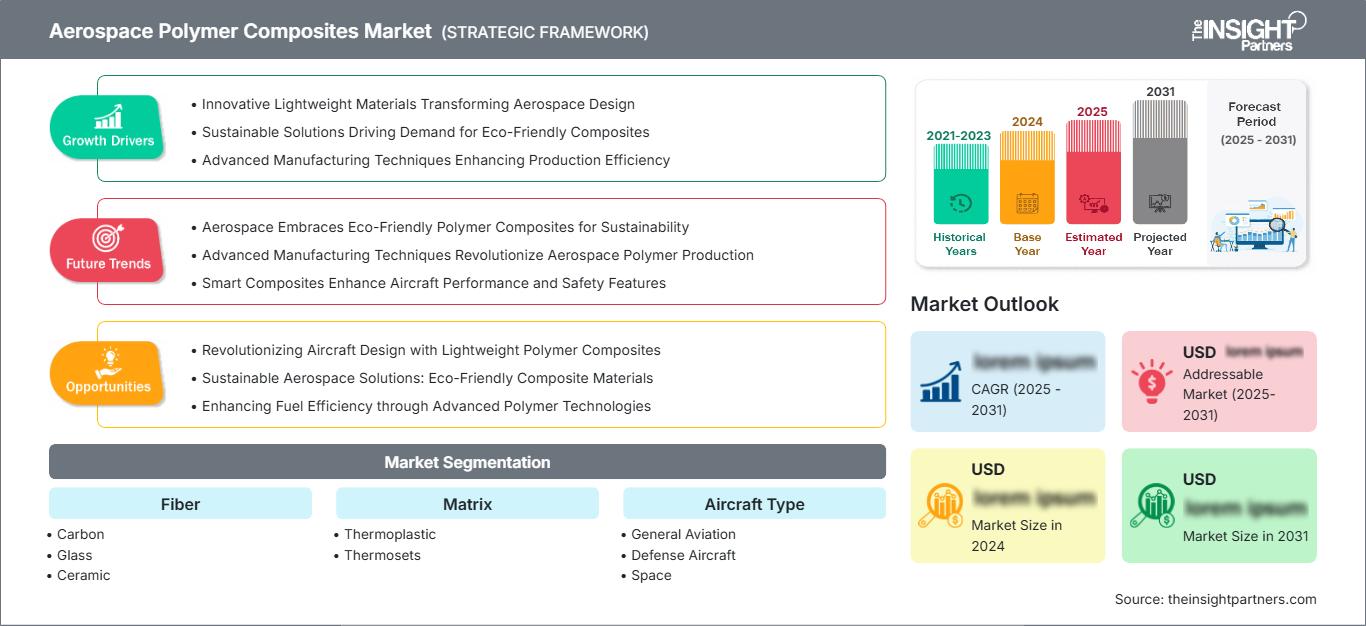
Aerospace Polymer Composites Market: Strategic Insights
Regional Insights
North America aerospace polymer composites market
North America accounted for ~35% of global demand in 2025 and is expected to expand at a ~7% CAGR through 2034. The region benefits from a dense aerospace manufacturing base, large defense procurement programs, established aircraft OEMs, and mature networks of composite-material producers and tier suppliers. Carbon-fiber prepregs, honeycomb structures, thermoset matrices, thermoplastic materials, and engineered sandwich structures are integrated into commercial aircraft, military platforms, rotorcraft, and spacecraft.
The Aerospace Polymer Composites Market Trends in North America are increasingly shaped by aircraft production, defense modernization, space exploration, and advanced air mobility development. The US represents the core of regional consumption, while Canada contributes through aircraft structures, regional aviation, and specialized aerospace manufacturing. Regional suppliers are also increasing attention to automated processing, out-of-autoclave curing, rapid-cure prepregs, and thermoplastic consolidation because production-rate requirements increasingly influence material selection. Demand is therefore linked not only to new aircraft designs but also to production-rate increases, platform upgrades, replacement structures, and the localization of strategically important composite-material capacity.
U.S. aerospace polymer composites market
The US represented ~78% of the North American aerospace polymer composites market revenue in 2025 and is projected to register a ~7% CAGR through 2034. This is determined by the wide market of commercial airplanes, military airplanes, spaceships, helicopters, and development projects in aircraft. The use of composite material is highly significant where a reduction in weight will help to increase range, payload capabilities, fuel efficiency, and system integration.
Leading composite producers have existing supply agreements within the United States’ aerospace programs, such as Hexcel Corporation, Solvay, TORAY INDUSTRIES, INC., JPS Composite Materials, Axiom Materials, Inc., LMI AEROSPACE, Lee Aerospace, and Spirit AeroSystems, Inc. Rising demand will be fueled by rising interest in automation, thermoplastic parts, and out-of-autoclave process technologies.
Europe aerospace polymer composites market
Europe represented ~30% of the global aerospace polymer composites market in 2025 and is expected to expand at a ~7% CAGR through 2034. France is the top nation in Europe due to its robust aerospace industry and extensive involvement in commercial aircraft, defense, space and rotorcraft programs. Germany provides contributions through aircraft structures, engineering, industrial manufacturing and development of advanced materials. The UK continues to play an influential role in aerostructures, engines and composite materials development. Italy plays a critical role in aircraft and rotorcraft manufacturing, while Spain adds value through aerostructures, aircraft manufacturing and aerospace supply chain management.
Material qualification, collaborative R&D and an interest in lower energy processes and higher production rate are typical features of the European market. Carbon fiber materials are very common in structural applications, whereas thermoplastic composites have drawn attention due to their ability to accommodate fast consolidation and integration of parts. Recycling, repairable capabilities, automated placement and improved bonding processes are among issues being investigated by manufacturers. Such trends will increase the demand for advanced polymer matrix and reinforcement systems while offering new opportunities for suppliers capable of meeting rigorous aerospace qualification standards.
APAC aerospace polymer composites market
APAC represented ~25% of the global market in 2025 and is projected to grow at a ~9% CAGR through 2034, making it the fastest-growing region. China is the top country in the region, backed by its efforts in developing commercial aircrafts, defense, space operations, and localization of its aerospace value chain. Japan contributes advanced carbon fiber and polymer technology, while South Korea possesses both defense and aerospace aircraft manufacturing expertise.
India is growing in the area of aircraft assembly, defense aerospace, and space manufacturing, hence raising the potential market for its composite materials. The contributions from Australia are through defense, space, and aerospace operations. Through the region's efforts to localize, develop the aerospace value chain, and invest in production facilities, there will be an increased demand for composite materials.
Middle East & Africa aerospace polymer composites market
The Middle East & Africa aerospace polymer composites market demand is expected to expand at a ~6% CAGR through 2034. Saudi Arabia and the UAE have also been developing aerospace and defense capacity through industrial diversification initiatives, and South Africa offers expertise in aerospace engineering and defense manufacturing. The region is still smaller in terms of the aerospace market as compared to North America, Europe, and APAC; however, its needs are becoming increasingly aligned with maintenance, defense platforms, airport infrastructure, and local industrial development.
The UAE is an important regional aerospace hub due to its aviation sector and investments in aerospace services, and Saudi Arabia is enhancing its industrial and defense capacities. South Africa offers capabilities in aerospace and defense engineering. In the larger MEA region, the composite demand is driven by aircraft fleet upgrades, environmental conditions, maintenance considerations, and infrastructure investment, which are conducive to the use of lightweight durable materials in structures, interiors, rotorcraft, and specialized aerospace components.
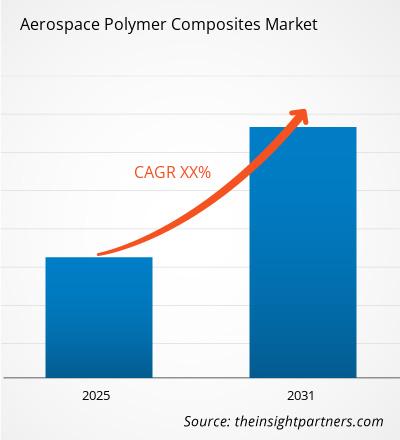
Segmentation Analysis
Fiber
Fiber is the largest segment, with a ~8% CAGR from 2026 to 2034. Fiber selection controls much of the structural performance of composite parts, including stiffness, tensile strength, fatigue behavior, impact resistance, and weight. Carbon fiber dominates demanding structural applications, while glass and aramid fibers address applications where cost, impact behavior, insulation, or specialized performance are more important. Ceramic reinforcement serves high-temperature and specialized aerospace requirements. Increasing use of automated placement and tailored laminates further supports demand for aerospace-qualified reinforcement systems.
- Carbon: Carbon fiber is central to primary and secondary aerospace structures because of its high strength-to-weight and stiffness-to-weight performance. Demand is concentrated in wings, fuselage structures, empennages, and other weight-sensitive components where structural efficiency has a direct effect on aircraft performance.
- Glass: Glass fiber remains relevant where cost efficiency, electrical properties, impact performance, and adequate structural strength are prioritized. It is used across secondary structures, interiors, radomes, panels, and other components where carbon fiber performance may not be economically necessary.
- Ceramic: Ceramic fibers serve specialized aerospace applications exposed to elevated temperatures and demanding environmental conditions. Their strategic importance is strongest in applications requiring thermal stability and resistance beyond the practical operating envelope of conventional polymer-based reinforcement systems.
- Aramid: Aramid fibers provide low density, impact resistance, and favorable energy absorption characteristics. Aerospace applications include protective structures, selected interiors, and components where impact behavior and weight reduction are important design requirements.
Matrix
Matrix is projected to register a ~9% CAGR from 2026 to 2034, making it the high-growth main segment. Matrix chemistry determines processing temperature, toughness, environmental resistance, bonding behavior, curing requirements, and production speed. Thermosets remain deeply established because of qualification maturity and extensive prepreg infrastructure, while thermoplastics are gaining attention for rapid processing, welding, impact performance, and potential recyclability. Increasing production rates make matrix processing efficiency an important consideration alongside final material performance.
- Thermoplastic: Thermoplastic matrices are gaining strategic importance because they can support rapid forming, welding, reprocessing, and shorter production cycles. Their adoption is particularly relevant to high-rate aircraft structures, interiors, advanced air mobility, and applications where assembly simplification can improve manufacturing economics.
- Thermosets: Thermoset matrices remain foundational to aerospace composite production because of established qualification, predictable curing behavior, broad prepreg availability, and extensive design experience. Epoxy-based systems continue to serve structural applications, while higher-performance chemistries address temperature and environmental requirements.
Aircraft Type
Aircraft Type is expected to record a ~8% CAGR from 2026 to 2034. Demand differs according to structural requirements, production volumes, certification pathways, and mission profiles. Defense aircraft require high-performance materials for maneuver loads and survivability, while space systems emphasize thermal, dimensional, and mass constraints. General aviation and helicopters provide additional applications through airframe modernization, lightweight interiors, rotor structures, and emerging aircraft configurations.
- General Aviation: General aviation demand includes business aircraft, light aircraft, and emerging platforms where weight reduction can improve operating economics and performance. Composite structures also support aerodynamic shaping and integrated designs, although cost and certification requirements influence the pace of adoption.
- Defense Aircraft: Defense aircraft require materials capable of meeting demanding structural, environmental, and mission requirements. Composite adoption supports weight reduction, aerodynamic optimization, signature management, and component integration across fighters, transport aircraft, unmanned systems, and specialized platforms.
- Space: Space applications emphasize low mass, dimensional stability, thermal performance, and reliability under extreme environments. Polymer composites are used in structural components and supporting systems, with advanced matrices and reinforcement technologies enabling specialized performance for spacecraft and launch-related applications.
- Helicopters: Helicopter structures benefit from composites because lower structural weight can support payload and range objectives. Applications extend across rotor components, fuselage structures, fairings, and other airframe elements where fatigue resistance, impact behavior, and corrosion resistance are important.
Structure
Structure is forecast to expand at a ~8% CAGR from 2026 to 2034. Laminate and sandwich architectures address different combinations of stiffness, weight, load distribution, and manufacturing requirements. Increasing structural integration is encouraging material suppliers and fabricators to optimize fiber orientation, core design, bonding, and component consolidation rather than treating each composite layer as an isolated material input.
- Laminate Composites: Laminate composites provide tailored directional performance by combining reinforcement layers in controlled orientations. They are widely suited to load-bearing aerospace structures where designers need precise control over stiffness, strength, fatigue response, and component geometry.
- Sandwich Composites: Sandwich composites combine lightweight cores with structural facesheets to achieve high stiffness at relatively low mass. Their strategic role is strongest in panels, fairings, interiors, control surfaces, and other applications where bending stiffness and weight efficiency are important.
Opportunity Snapshot
| Aircraft Type | Revenue Contribution | Trend Tag | Adoption Stage |
|---|---|---|---|
| General Aviation | Medium | Lightweight Airframes | Scaling |
| Defense Aircraft | High | Mission Structures | Mature |
| Space | Medium | Space Structures | Scaling |
| Helicopters | Medium | Rotor Structures | Mature |
Aerospace Polymer Composites Market Growth Drivers and Impact Analysis
Aircraft Lightweighting and Structural Efficiency
Weight reduction continues to be one of the key drivers since weight reduction means fuel savings, increased payloads, increased range, and more economical operations of the aircraft. Polymer composites permit tailoring of the fiber orientation and performing multiple functions with fewer parts, thus giving an opportunity to optimize structure beyond material substitution alone. In the case of carbon-fiber systems, these are especially applicable to the primary structures since stiffness and strength demands make lightweighting economic in these cases. This applies to commercial aircraft, military aircraft, helicopters, and space systems. When original equipment manufacturers and their suppliers demand increased performance of the existing systems, composite use increases both via structural redesign and through the development of new systems. Thus, the market effects become cumulative, since every application becomes a reference design and manufacturing capability for future uses.
Higher Aircraft Production Rates and Manufacturing Automation
Increased aircraft production rates will lead to an emphasis not only on the performance of the material but also on the throughput, repeatability, labor efficiencies, and yields of manufacture. Technologies such as automated fiber placement, automated tape laying, fast-cure prepregs, out-of-autoclave manufacture, compression molding, and thermoplastics consolidation may be able to decrease manufacturing time or make manufacturing easier for certain parts. All of these technologies increase the importance of matrix design because the material needs to be capable of being processed at higher speeds without compromising its aerospace qualification characteristics. This demand is advantageous for suppliers who can integrate the development of both materials and the manufacturing process.Defense, Space, and Advanced Aircraft Investment
Defense modernization and space-system development broaden demand beyond commercial aircraft production cycles. Military aircraft, unmanned systems, rotorcraft, launch vehicles, and spacecraft require materials that combine low mass with high structural performance, environmental resistance, and dimensional stability. These applications can support composite demand even when commercial aircraft production faces temporary supply-chain constraints. Advanced air mobility also creates a separate development pathway in which weight, structural integration, and production economics are central design considerations. Investment across these applications encourages qualification of new reinforcement and matrix combinations, while government procurement and localization objectives can stimulate regional manufacturing capacity. The market impact is a broader and more diversified demand base for aerospace polymer composites, reducing dependence on a single aircraft category.
Aerospace Polymer Composites Market Future Trends
Expansion of Thermoplastic and Rapid-Processing Architectures
The next phase of composite development is likely to place greater emphasis on thermoplastic matrices, rapid forming, welding, and integrated assembly. Thermoplastics can support processing approaches that differ materially from conventional thermoset curing, creating opportunities to shorten manufacturing cycles and reduce the number of mechanical fasteners or bonded interfaces in selected designs. Their impact resistance and potential recyclability also support interest from aerospace manufacturers examining lifecycle performance. The aerospace polymer composites market trends will therefore increasingly reflect the interaction between material chemistry and production architecture. Adoption will remain application-specific because certification, tooling, temperature requirements, and production economics differ across aircraft structures, but successful high-rate applications can create pathways for broader qualification.
Digital Composite Manufacturing and Circular Material Strategies
Digital manufacturing is expected to become more closely integrated with material placement, inspection, process monitoring, and production traceability. Automated systems can use digital part definitions to control fiber orientation and deposition, while process data can help manufacturers identify defects and improve repeatability. At the same time, sustainability requirements are encouraging research into recycling, thermoplastic recovery, lower-energy curing, and material-efficient manufacturing. These developments could change how suppliers compete because customers will increasingly evaluate materials through both performance and manufacturing lifecycle criteria. Suppliers with integrated capabilities spanning fibers, polymers, intermediate materials, processing technologies, and recycling solutions may gain greater access to future platform development programs.
Aerospace Polymer Composites Market Opportunities
Localized Composite Supply Chains in Asia Pacific
Asia Pacific offers an opportunity to expand localized production of aerospace-qualified fibers, prepregs, thermoplastic materials, and composite components. Aircraft assembly, defense localization, space programs, and domestic aerospace development are increasing the need for regional supply-chain depth. Suppliers can capture this opportunity through qualification partnerships, regional manufacturing, technical centers, and long-term supply arrangements with aircraft and component manufacturers. The opportunity is not limited to raw materials because intermediate materials and processing technologies are equally important, where local manufacturers need shorter lead times and technical support. Companies that establish production and engineering capabilities close to emerging aerospace clusters can improve responsiveness while building relationships earlier in the qualification cycle.
High-Rate Composite Manufacturing for Emerging Aircraft
Advanced air mobility, unmanned aircraft, specialized rotorcraft, and next-generation defense platforms create opportunities for composite suppliers that can deliver materials compatible with repeatable high-rate production. These aircraft require lightweight structures, but commercial viability also depends on manufacturing cost, cycle time, automation, and part consolidation. Thermoplastic prepregs, rapid-cure thermosets, automated placement materials, and molded composite systems can address different portions of this requirement. Suppliers can pursue opportunities by working with aircraft developers during early design stages, when material architecture and manufacturing methods are still being selected. Early technical collaboration can improve the probability of qualification and create downstream demand for standardized materials across multiple aircraft programs.
Frequently Asked Questions

- Comprehensive Market Sizing and Forecast Analysis
- Detailed Segmentation Analysis
- In-Depth Market Dynamics Assessment
- Regional and Country-Level Insights
- Competitive Landscape and Company Benchmarking
- Strategic Business Intelligence
Recent Reports
Testimonials

The Insight Partners provided valuable market intelligence that supported our global go-to-market strategy. Their team was professional, responsive, and attentive to our feedback, providing thoughtful analysis and helpful methodological clarifications throughout the project.
Junmo Kim Chief Financial Officer (CFO), Enertech Co., Ltd.
The Insight Partners' SCADA System Market report is comprehensive, with valuable insights on current trends and future forecasts. The team was highly professional, responsive, and supportive throughout. We are very satisfied and highly recommend their services.
RAN KEDEM Partner, Reali Technologies LTDs
I requested a report on a very specific software market and the team produced the report in a few days. The information was very relevant and well presented. I then requested some changes and additions to the report. The team was again very responsive and I got the final report in less than a week.
JEAN-HERVE JENN Chairman, Future Analytica
We worked with The Insight Partners for an important market study and forecast. They gave us clear insights into opportunities and risks, which helped shape our plans. Their research was easy to use and based on solid data. It helped us make smart, confident decisions. We highly recommend them.
PIYUSH NAGPAL Sr. Vice President, High Beam Global
The Insight Partners delivered insightful, well-structured market research with strong domain expertise. Their team was professional and responsive throughout. The user-friendly website made accessing industry reports seamless. We highly recommend them for reliable, high-quality research services
YUKIHIKO ADACHI CEO, Deep Blue, LLC.
This is the first time I have purchased a market report from The Insight Partners.While I was unsure at first, I visited their web site and felt more comfortable to take the risk and purchase a market report.I am completely satisfied with the quality of the report and customer service. I had several questions and comments with the initial report, but after a couple of dialogs over email with their analyst I believe I have a report that I can use as input to our strategic planning process.Thank you so much for taking the extra time and making this a positive experience.I will definitely recommend your service to others and you will be my first call when we need further market data.
JOHN SUZUKI President and Chief Executive Officer, Board Director, BK Technologies
I wish to appreciate your support and the professionalism you displayed in the course of attending to my request for information regarding to infectious disease IVD market in Nigeria. I appreciate your patience, your guidance, and the fact that you were willing to offer a discount, which eventually made it possible for us to close a deal. I look forward to engaging The Insight Partners in the future, all thanks to the impression you have created in me as a result of this first encounter.
DR CHIJIOKE ONYIA MANAGING DIRECTOR, PineCrest Healthcare Ltd.Reason to Buy
- Informed Decision-Making
- Understanding Market Dynamics
- Competitive Analysis
- Identifying Emerging Markets
- Customer Insights
- Market Forecasts
- Risk Mitigation
- Boosting Operational Efficiency
- Strategic Planning
- Investment Justification
- Tracking Industry Innovations
- Aligning with Regulatory Trends





 Get Free Sample for