
Air Heating Appliance Market Size, Growth & Trends by 2034
Coverage: By Type (Space Heating Appliance, Water Heating Appliance); Fuel Type (Gas Powered Heating Appliance, Oil Powered Heating Appliance, Electricity Powered Heating Appliance, Solar Energy Powered Heating Appliance); End User (Residential, Commercial, Industrial) , and Geography (North America, Europe, Asia Pacific, and South and Central America)
- Status : Data Released
- Report Code : TIPRE00019364
- Category : Electronics and Semiconductor
- No. of Pages : 150
- Available Report Formats :


- Last update date : July 10, 2026


2025 Market Size
US$ 58.13 Bn
Base year value
2034 Forecast
US$ 71.98 Bn
Projected by 2034
CAGR 2026-2034
2.71 %
Growth rate
Addressable Market
US$ 599.43 Bn
(2026-2034)
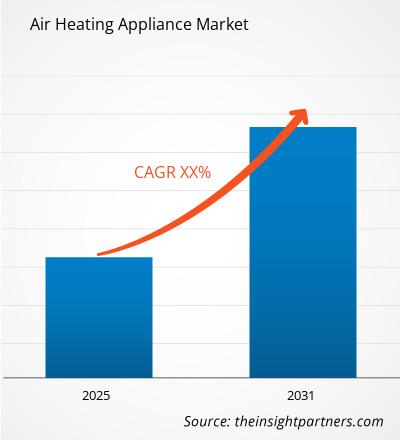
The Air Heating Appliance Market was valued at USS 58.13 Billion in 2025 and is projected to reach US$ 71.98 Billion by 2034, registering a CAGR of 2.71% from 2026 to 2034. The consistent growth is being fueled by the increased demand for efficient heating solutions, active constructions in both the residential and commercial segments, and the incorporation of smart technology in heating equipment. Air heating equipment, such as that used to provide warmth in homes and water heater equipment, is important in ensuring warmth in cold regions and seasons. The industry is experiencing significant technological innovations in heat pumps, inverter compressors, and the ability to remotely monitor the equipment via the Internet of Things. The push by governments to promote energy efficiency through regulations on the phasing out of traditional heating appliances is also contributing to market growth.
North America is estimated to account for approximately 30–34% of the global Air Heating Appliance Market share in 2025, growing at a CAGR of 2.0–3.5% during the forecast period. This regional position is supported by extensive infrastructure modernization initiatives, significant government incentives for heat pump adoption through tax credits, and stringent building codes mandating energy-efficient heating systems. The United States leads the regional market, driven by substantial federal funding for residential energy retrofits and the increasing replacement of aging heating equipment. Additionally, the growing consumer preference for smart home technologies and the rising adoption of cold-climate heat pumps are contributing to sustained market growth across the region.
Air Heating Appliance Market Assessment and Insights
- North America: Expected to hold 30–34% share in 2025, growing at 2.0–3.5% CAGR 2026–2034. Growth is driven by government incentives for heat pump adoption, building code upgrades, and increasing demand for energy-efficient residential heating solutions.
- U.S. Air Heating Appliance Market: Accounted for approximately 85–88% of the North American market in 2025, expanding at a CAGR of 2.5–3.5%. Federal tax credits for energy-efficient equipment, along with the growing trend of smart home integration, support strong market performance.
- Europe: Estimated to capture 24–28% share in 2025, with a projected CAGR of 2.0–3.0%. Germany, the UK, and France are leading adopters. Growth is propelled by strict decarbonization mandates, EU energy efficiency directives, and the transition from fossil-fuel boilers to electric heat pumps.
- Asia Pacific: Expected to be the fastest-growing region, with a 28–32% share in 2025 and a CAGR of 3.5–4.5%. China, Japan, India, and South Korea are key markets, driven by rapid urbanization, rising disposable incomes, and increasing demand for temperature-controlled environments.
- Largest Segment (Residential): Held a share of 44–48% in 2025, with a CAGR of 2.5–3.5%. The residential segment dominates due to extensive housing construction globally and the widespread upgrading of old heating devices in single-family homes.
- High Growth Segment (Commercial): Captured 28–32% share in 2025, with a CAGR of 3.0–4.0%. The commercial segment is expanding rapidly with the construction of green-certified office spaces and the renovation of HVAC systems in hospitality and healthcare facilities.
- Key Companies Analyzed in Detail: Alfa Laval Corporate AB; Daikin Industries, Ltd.; Danfoss A/S; Emerson Electric Co.; General Electric Company; Ingersoll-Rand Plc; Johnson Controls International Plc; Lennox International Inc.; Robert Bosch GmbH; Vaillant Group.
Source: The Insight Partners' analysis based on proprietary research, government publications, company annual reports, investor presentations, industry databases, and expert interviews.
The Air Heating Appliance Market is undergoing a significant evolution driven by the integration of smart technologies and the development of more energy-efficient heating systems. Manufacturers are increasingly focusing on heat pump technologies that offer both heating and cooling capabilities from a single unit, providing consumers with year-round climate control solutions. Production dynamics are shifting toward inverter-driven compressors and advanced vapor-injection systems that maintain efficiency even at sub-freezing temperatures, challenging the dominance of traditional fossil-fuel furnaces in colder regions. The industry is also navigating a transition toward next-generation, low-GWP refrigerants in compliance with environmental regulations, requiring extensive redesigns of compressors and heat exchangers to accommodate mildly flammable A2L fluids. These technological advancements are expanding the application scope of air heating appliances across residential, commercial, and industrial sectors, supporting the growth of the Air Heating Appliance Market size.
Going forward, the market is set to see continued growth, as developing countries in the Asia Pacific region and the Middle East will offer major potential owing to urbanization and rising electricity demand. The implementation of regulatory policies that require better energy efficiency and heating system electrification will be major drivers behind market growth. The trend towards smart buildings and homes will create the need for IoT-based heating devices, which can be remotely monitored and optimized for energy use using artificial intelligence technology. Furthermore, the rising adoption of renewable energy sources for heating, including solar-powered systems and air-source heat pumps, is creating new demand for advanced heating equipment, expanding the market's scope into sustainable energy applications, according to the Air Heating Appliance Market Report.
Air Heating Appliance Market Report Scope
| Report Attribute | Details |
|---|---|
| Market size in 2025 | US$ 58.13 Billion |
| Market Size by 2034 | US$ 71.98 Billion |
| Global CAGR (2026 - 2034) | 2.71% |
| Historical Data | 2021-2024 |
| Forecast period | 2026-2034 |
Air Heating Appliance Market Analysis
The escalating demand for energy-efficient heating solutions across residential, commercial, and industrial sectors is a primary driver for the Air Heating Appliance Market. With energy costs rising and climate regulations tightening, consumers and businesses are seeking heating systems that reduce electricity consumption and operating expenses without sacrificing performance. The value chain encompasses raw material suppliers, component manufacturers, assembly facilities, and distribution networks, with supply dynamics influenced by the availability of copper, aluminum, steel, and semiconductors. The integration of smart technologies, including programmable thermostats, sensors, and AI-powered learning capabilities, is transforming traditional heating units into intelligent, connected solutions. This demand is amplified by government-backed incentives promoting the replacement of older, less efficient systems and the adoption of eco-friendly heating technologies, according to the Air Heating Appliance Market Forecast.
The competitive environment is defined by the existence of global firms as well as regional producers, where Alfa Laval Corporate AB, Daikin Industries, Ltd., and Emerson Electric Co. occupy a considerable portion of the market due to the availability of a broad portfolio of products coupled with extensive marketing networks. The trends in investments are oriented towards product innovation, especially in the production of heat pumps that come with advanced compressors, variable-speed inverters, and control algorithms. Positioning strategy encompasses expansion of manufacturing capacity in high-growth regions, partnering with HVAC contractors and building automation companies, and application-specific solutions to sustain competitiveness.
● REPORT CUSTOMIZATION
Tailor This Report To Align With Your Specific Business Requirements
This report can be customized to align precisely with your business objectives, scope, and target markets. Customization options include tailored segmentation, geography, competitive analysis, and strategic insights to support informed decision-making.
Customize This Report →WHAT YOU CAN ADJUST
- ● Segmentations
- ● Geography
- ● Competitive Analysis
- ● Language Preferences
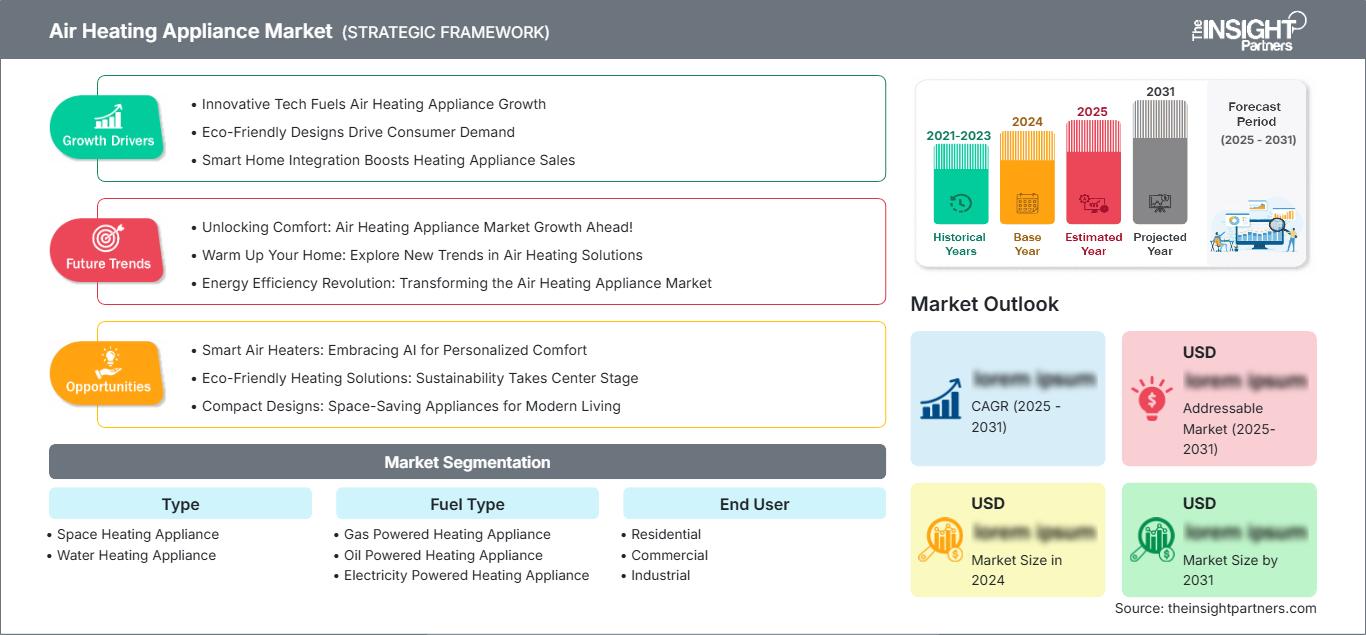
Air Heating Appliance Market: Strategic Insights
Regional Insights
North America Air Heating Appliance Market
North America is expected to be a significant market for air heating appliances, holding approximately 30–34% of the share in 2025, with a projected CAGR of 2.0–3.5% from 2026 to 2034. The region's growth is driven by substantial investments in upgrading aging heating infrastructure, increasing adoption of energy-efficient heat pumps, and strict enforcement of building codes. The residential sector is undergoing significant renovation, creating demand for modern heating equipment with smart connectivity features. The commercial segment, particularly in the United States, is investing in HVAC system upgrades to improve operational efficiency and meet sustainability targets. The focus on decarbonization and electrification is further propelling demand for electric air heating appliances with advanced inverter technologies. Government initiatives, including tax credits for heat pump installations, are playing a pivotal role in accelerating adoption across the region.
U.S. Air Heating Appliance Market
The U.S. Air Heating Appliance Market is estimated to represent 85–88% of the North American share in 2025, growing at a CAGR of 2.5–3.5%. Growth is fueled by federal funding for energy efficiency programs, the modernization of residential heating systems, and increasing investments in commercial real estate. Key application sectors include single-family homes, multi-family residential buildings, and commercial office spaces where reliability and efficiency are paramount. The presence of major manufacturers like Emerson Electric Co., Johnson Controls International Plc, and Lennox International Inc. ensures a robust supply chain and technological innovation. The growing emphasis on energy efficiency, smart home integration, and grid resilience supports sustained demand for advanced air heating appliances.
Europe Air Heating Appliance Market
Europe is anticipated to capture 24–28% of the global market share in 2025, with a CAGR of 2.0–3.0%. Germany leads the regional market due to its strong manufacturing base and ambitious decarbonization initiatives. The UK is a significant market, driven by government-backed heat pump installation programs that grew by 11% in the first nine months of 2025 compared to the previous year. France, Italy, and Spain contribute notably, with investments in building retrofits and renewable energy integration. The European market is distinguished by strict adherence to EU energy efficiency directives and a strong focus on sustainability, influencing product design and adoption. The region's commitment to reducing carbon emissions and phasing out fossil-fuel boilers is accelerating the deployment of electric and solar-powered heating appliances.
APAC Air Heating Appliance Market
Asia Pacific is poised for the highest growth, holding approximately 28–32% of the market in 2025 and projected to expand at a CAGR of 3.5–4.5%. China and India are the leading countries, with growth fueled by rapid urbanization, extensive residential construction projects, and rising disposable incomes. Japan and South Korea are key markets due to advanced manufacturing sectors and the adoption of inverter-enabled heating units. Australia is also emerging as a significant market with increasing interest in energy-efficient heating solutions. Government policies promoting sustainable urban planning and affordable electric heating appliances are catalyzing market expansion. The region's urbanization and rising electricity consumption create substantial demand for reliable and efficient heating equipment, reflecting key Air Heating Appliance Market Trends.
Middle East & Africa Air Heating Appliance Market
The Middle East & Africa region is expected to show steady growth, with a CAGR of 2.5–3.5%. Saudi Arabia and the UAE are the primary drivers, investing heavily in smart city projects, energy infrastructure, and commercial real estate development. South Africa is a notable market with increasing interest in modernizing its building stock. The region's focus on infrastructure modernization, energy diversification, and sustainable urban planning presents significant opportunities for air heating appliance deployment. Investments in hospitality, healthcare, and commercial facilities further support market growth.
Segmentation Analysis
Type
The Air Heating Appliance Market is segmented by type into Space Heating Appliance and Water Heating Appliance. The type segment is projected to grow at a CAGR of 2.5–3.5% from 2026 to 2034, driven by the diversification of application requirements across residential and commercial sectors. Space heating appliances dominate due to their essential role in maintaining thermal comfort in colder climates, while water heating appliances are experiencing steady demand from residential and hospitality applications. The integration of smart technologies into both categories is enhancing their functionality and appeal across various end-user sectors.
- Space Heating Appliances: Space heating appliances include furnaces, heat pumps, and space heaters. The appliances are used extensively in residential, commercial, and industrial buildings to provide comfort in terms of thermal comfort, especially during winter. The appliances have been adopting the technology of smart connectivity over the years.
- Water Heating Appliance: Water heating appliances include appliances that provide hot water in residential, commercial, and industrial settings to be used for cleaning and sanitation purposes, among others. The appliances include storage water heaters, tankless water heaters, and heat pump water heaters.
Fuel Type
The Air Heating Appliance Market is segmented by fuel type into Gas Powered Heating Appliance, Oil Powered Heating Appliance, Electricity Powered Heating Appliance, and Solar Energy Powered Heating Appliance. The fuel type segment is expected to exhibit a steady CAGR of 2.5–3.5% from 2026 to 2034, propelled by varying energy availability, cost considerations, and environmental regulations. Electricity-powered appliances are the fastest-growing segment due to decarbonization policies and the declining cost of renewable electricity. Gas-powered appliances remain dominant in regions with established natural gas infrastructure, while solar-powered appliances are gaining traction in sun-rich regions with supportive incentives.
- Gas-Powered Heating Appliance: Gas-powered heating appliances utilize natural gas or liquefied petroleum gas for combustion heating. They are widely adopted in regions with established gas infrastructure, offering cost-effective heating solutions for residential and commercial applications.
- Oil-Powered Heating Appliance: Oil-powered heating appliances use heating oil as a fuel source, primarily in regions where natural gas is unavailable. They are being gradually phased out due to environmental concerns and the increasing availability of cleaner alternatives.
- Electricity-Powered Heating Appliance: Electricity-powered heating appliances include heat pumps, electric furnaces, and resistance heaters. They are experiencing rapid adoption due to decarbonization mandates and the growing availability of renewable electricity.
- Solar Energy Powered Heating Appliance: Solar-powered heating appliances utilize solar thermal or photovoltaic systems to generate heat. They offer sustainable heating solutions with minimal operating costs, gaining traction in sun-rich regions with supportive government incentives.
End User
The Air Heating Appliance Market is segmented by end user into Residential, Commercial, and Industrial. The end user segment is expected to grow at a CAGR of 2.5–3.5% from 2026 to 2034, propelled by increasing construction activity and the growing emphasis on energy efficiency. The residential segment holds the largest share due to extensive housing construction globally and the widespread upgrading of old heating devices. The commercial segment is expanding rapidly with the construction of green-certified office spaces and HVAC system renovations in hospitality and healthcare facilities. The industrial segment is driven by process heating requirements and the need for reliable temperature control in manufacturing environments.
- Residential: The residential segment drives significant demand for air heating appliances across single-family homes, apartments, and multi-family buildings. Consumers prioritize energy efficiency, comfort, and smart connectivity features in their heating equipment choices.
- Commercial: Commercial applications encompass office buildings, retail centers, hotels, healthcare facilities, and educational institutions where reliable heating is essential for operations and occupant comfort. Energy efficiency and sustainability are key priorities in this segment.
- Industrial: Industrial applications include manufacturing plants, warehouses, and processing facilities requiring heating for processes and workspace comfort. Industrial heating appliances are characterized by higher capacity and durability requirements.
Opportunity Snapshot
| Segment | Revenue Contribution | Trend Tag | Adoption Stage |
| Residential | High | Home Comfort | Mature |
| Commercial | High | Green Building | Scaling |
| Industrial | Medium | Process Heating | Mature |
| Space Heating | High | Climate Control | Mature |
| Water Heating | Medium | Hot Water | Mature |
| Electric Powered | High | Electrification | Scaling |
| Gas Powered | High | Infrastructure | Mature |
| Solar Powered | Low | Renewable Heat | Emerging |
Air Heating Appliance Market Growth Drivers and Impact Analysis
Rising Demand for Energy-Efficient Heating Solutions
There have been positive developments within the industry owing to increasing concerns about energy efficiency and sustainability. As a result of the growing cost of energy, consumers want to buy products that will enable them to cut down on energy expenses and conserve energy. This explains why efficient heating appliances are currently in great demand. Consumers prefer systems that are efficient because they require little energy but deliver maximum efficiency in terms of heating.
Government Policies Promoting Decarbonization
The government’s policies and initiatives on low-carbon heating technologies have played a key role in shaping the current market scenario. Governments across the globe have been implementing strict decarbonization policies, which comprise financial subsidies, aimed at helping consumers replace their fossil fuel-based boilers with eco-friendly ones such as heat pumps. This is essential in tackling the issue of high prices of sustainable heating technologies to encourage consumers in developed countries to adapt to such technology.
Rapid Urbanization and Construction Activity in Emerging Economies
Urbanization at a fast pace in developing countries is causing a huge demand for air heating devices. The new residential areas, commercial, and industrial sectors need proper heating systems that will provide comfort to the people and work efficiently. There are many constructions going on in Asian Pacific and Middle East countries, and that is helping the industry to grow more and more. With the rise in the middle-class population having disposable income, there is an increased demand for better heating devices.
Air Heating Appliance Market Future Trends
Integration of Smart Technology and IoT Connectivity
Smart technology integration is reshaping the air heating appliance market, transforming traditional units into intelligent, connected solutions. Consumers increasingly prefer appliances that can be controlled remotely via smartphones, voice assistants, or home automation systems. These smart heaters often feature programmable thermostats, sensors, AI-powered learning capabilities, and diagnostic systems for predictive maintenance. The proliferation of smart home ecosystems and 5G connectivity is accelerating this shift, enabling real-time monitoring and automation. This trend not only enhances user convenience and energy savings but also provides manufacturers with differentiation opportunities in an increasingly competitive market. As smart homes become mainstream, the inclusion of IoT-enabled features is evolving from a luxury to a necessity in heating products.
Transition to Low-GWP Refrigerants and Eco-Friendly Materials
The industry is going through a critical change in embracing the use of environmentally friendly refrigerants in the future, an initiative that is forced upon them by ever-increasing environmental laws from around the world. This process involves manufacturers switching to using low GWP refrigerants as opposed to high-GWP refrigerants, and that, in turn, means a lot of changes in the compressor and heat exchanger design in order to safely utilize such mildly flammable compounds. All this helps in decreasing the carbon footprint of heating systems at the home and office levels.
Air Heating Appliance Market Opportunities
Expansion of Cold-Climate Heat Pump Technology
The wide application of cold climate heat pumps provides many chances for manufacturers of heating appliances. The innovative technologies eliminate the problem of reduced efficiency of electric heaters due to low temperatures by using vapor injection compressors and inverter heating systems. Such an improvement is a great challenge for the reign of furnaces burning fossil fuels in cold climate northern areas. Besides, there is a considerable economic advantage for consumers because of the elimination of the need for using additional heating systems. Companies that choose to create and sell efficient cold climate heat pumps will be able to earn a considerable market share in cold climate areas.
Growth in Green Building and Sustainable Construction
The drive towards achieving green building certifications and sustainability in construction offers numerous opportunities to manufacturers of air heating appliances. Buildings looking to gain LEED, BREEAM, or any other form of green building certification would need highly efficient heating, ventilation, and air conditioning systems that have little effect on the environment. Air heating appliances that make use of eco-friendly refrigerants, energy management capabilities, and higher seasonal performance factors will certainly fit such criteria. With the increasing demands of energy efficiency and sustainability being mandated by governments and set up by companies, more demand for such products is expected in the future.
Recent Developments
- June 2026: Systemair (NASDAQ Stockholm: SYSR) introduces Geniox HP DFN air handling unit with an integrated heat pump using the R290 refrigerant. The solution has been developed to meet the EU’s upcoming requirements regarding F‑gases (fluorinated greenhouse gases) and the increasing demand for energy‑efficient and future‑proof installations.
- March 2026: LG Electronics (LG) will unveil a new lineup of indoor units (IDUs) for air-to-water heat pump systems at Mostra Convegno Expocomfort (MCE) 2026 in Milan, Italy, from March 24-27. The all-new Combi, Hydro, and Control Units expand LG’s heating solution portfolio with cohesive design, flexible installation, and improved system integration for residential applications.
- April 2025: GE Appliances, a Haier company, is expanding its portfolio of room air conditioners (AC) to include new, powerful solutions across its GE Profile and GE brands. Equipped with customizable functionalities and exceptional performance, these modern advances feature consumer-centric designs that provide a solution for every household’s needs and preferences, from temperature control to energy efficiency to design.
Frequently Asked Questions

- Comprehensive Market Sizing and Forecast Analysis
- Detailed Segmentation Analysis
- In-Depth Market Dynamics Assessment
- Regional and Country-Level Insights
- Competitive Landscape and Company Benchmarking
- Strategic Business Intelligence
Recent Reports
Testimonials

The Insight Partners' SCADA System Market report is comprehensive, with valuable insights on current trends and future forecasts. The team was highly professional, responsive, and supportive throughout. We are very satisfied and highly recommend their services.
RAN KEDEM Partner, Reali Technologies LTDs
I requested a report on a very specific software market and the team produced the report in a few days. The information was very relevant and well presented. I then requested some changes and additions to the report. The team was again very responsive and I got the final report in less than a week.
JEAN-HERVE JENN Chairman, Future Analytica
We worked with The Insight Partners for an important market study and forecast. They gave us clear insights into opportunities and risks, which helped shape our plans. Their research was easy to use and based on solid data. It helped us make smart, confident decisions. We highly recommend them.
PIYUSH NAGPAL Sr. Vice President, High Beam Global
The Insight Partners delivered insightful, well-structured market research with strong domain expertise. Their team was professional and responsive throughout. The user-friendly website made accessing industry reports seamless. We highly recommend them for reliable, high-quality research services
YUKIHIKO ADACHI CEO, Deep Blue, LLC.
This is the first time I have purchased a market report from The Insight Partners.While I was unsure at first, I visited their web site and felt more comfortable to take the risk and purchase a market report.I am completely satisfied with the quality of the report and customer service. I had several questions and comments with the initial report, but after a couple of dialogs over email with their analyst I believe I have a report that I can use as input to our strategic planning process.Thank you so much for taking the extra time and making this a positive experience.I will definitely recommend your service to others and you will be my first call when we need further market data.
JOHN SUZUKI President and Chief Executive Officer, Board Director, BK Technologies
I wish to appreciate your support and the professionalism you displayed in the course of attending to my request for information regarding to infectious disease IVD market in Nigeria. I appreciate your patience, your guidance, and the fact that you were willing to offer a discount, which eventually made it possible for us to close a deal. I look forward to engaging The Insight Partners in the future, all thanks to the impression you have created in me as a result of this first encounter.
DR CHIJIOKE ONYIA MANAGING DIRECTOR, PineCrest Healthcare Ltd.Reason to Buy
- Informed Decision-Making
- Understanding Market Dynamics
- Competitive Analysis
- Identifying Emerging Markets
- Customer Insights
- Market Forecasts
- Risk Mitigation
- Boosting Operational Efficiency
- Strategic Planning
- Investment Justification
- Tracking Industry Innovations
- Aligning with Regulatory Trends





 Get Free Sample for