
Antiemetic Drugs Market Size, Growth & Trends by 2034
Coverage: By Drug Type (5-HT3 Receptor Antagonists, Dopamine Antagonists, NK1 Receptor Antagonist, Antihistamines, Cannabinoids, Benzodiazepines, Anticholinergics, Others); Application (Chemotherapy, Motion Sickness, Gastroenteritis, Opioid Analgesics, Dizziness, Others), and Geography (North America, Europe, Asia Pacific, and South and Central America)
- Status : Data Released
- Report Code : TIPRE00020941
- Category : Life Sciences
- No. of Pages : 150
- Available Report Formats :


- Last update date : August 21, 2026


2025 Market Size
US$ 7.3 Bn
Base year value
2034 Forecast
US$ 12.6 Bn
Projected by 2034
CAGR 2026-2034
6.25 %
Growth rate
Addressable Market
US$ 90.06 Bn
(2026-2034)
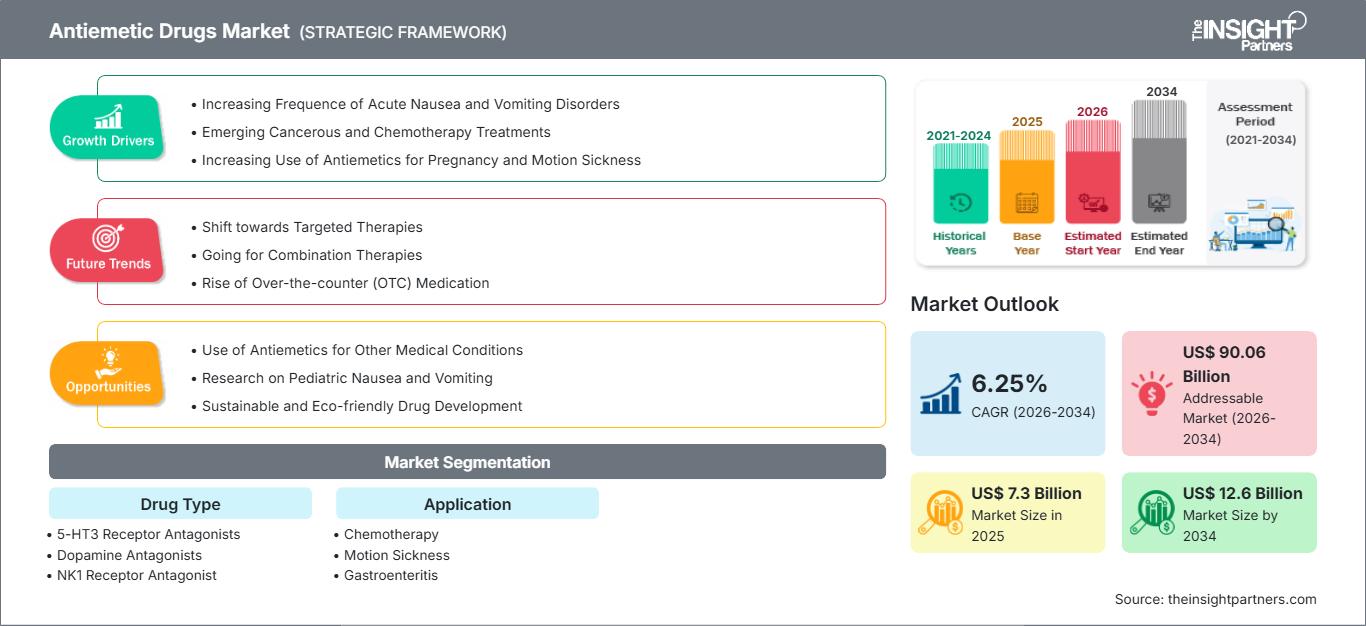
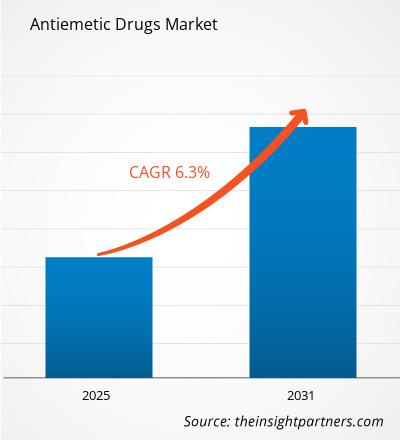
The antiemetic drugs market size is set for sustainable growth in view of supportive care gaining more acceptance in oncology, surgery, gastroenterology, and travel medicine. The market value is pegged at US$ 7.3 Billion in 2025, growing to US$ 12.6 Billion by 2034 with a 6.25% CAGR in 2026-2034. The growth is due to increased use of chemotherapy, rising awareness of therapy-induced nausea, and development of mechanism-based medications.
Strategically, North America is crucial owing to the already established oncology ecosystem, high prevalence of combination antiemetics, and presence of branded and generic drugs. The market size is driven by chemotherapy administration, post-operative care, gastroenterological conditions, and expansion of outpatient treatment. The growth rate of the market in North America is projected to be approximately 6.5-7.2% CAGR during 2026-2034.
Antiemetic Drugs Market Assessment and Insights
- North America: North America is expected to account for 38–42% share in 2025, supported by oncology treatment volumes and established supportive-care protocols, while growing at a 6.5–7.2% CAGR between 2026–2034.
- US: The US represents approximately 31–35% share of the global market in 2025, with growth of 6.6–7.3% CAGR between 2026–2034, supported by oncology and ambulatory care.
- Europe: Europe is estimated at 27–31% share in 2025, led by Germany, the UK, France, Italy, and Spain, with increasing supportive-care standardization and 5.8–6.6% CAGR between 2026–2034.
- Asia Pacific: Asia Pacific is estimated at 19–23% share in 2025, led by China, Japan, South Korea, and India, with improving cancer-care capacity and 7.0–8.0% CAGR between 2026–2034.
- Largest Segment: 5-HT3 Receptor Antagonists are estimated at 32–37% market share in 2025, supported by broad chemotherapy use and 5.7–6.5% CAGR during 2026–2034.
- High Growth Segment: NK1 Receptor Antagonist is estimated at 12–16% market share in 2025, benefiting from combination regimens and 7.2–8.3% CAGR during 2026–2034.
- Key companies analyzed in detail: GlaxoSmithKline Pharmaceuticals Limited, Johnson and Johnson, Sanofi, Merck & Co., Inc., Novartis AG, Bristol-Myers Squibb Company, Astellas Pharma Inc., Eli Lilly and Company, Abbott Laboratories, Cipla Limited, and Dr. Reddy's Laboratories Limited.
Source: The Insight Partners' analysis based on proprietary research, government publications, company annual reports, investor presentations, industry databases, and expert interviews.
There have been shifts from broad-spectrum symptomatic therapy of the antiemetics market to mechanisms-based combination products based on the emetogenicity profiles. 5-HT3 antagonists still play a key role, but NK1 antagonists, combination corticosteroids, antihistamines, anticholinergics, and new centrally acting agents offer a variety of treatment choices. The genericization of the market has also affected the procurement strategies, especially in relation to mature compounds, whereas advancements in oncology drive demand for supportive prophylaxis.
In the coming years, the market is likely to grow beyond the traditional chemotherapy indications. New opportunities in emerging countries that build their oncology capabilities will add some volumes, whereas in developed countries there will be growing preference for oral therapy, decreased doses, and out-patient settings. The issues of drug shortages, manufacturing flexibility, and evidence-based supportive therapy may also affect the choice of portfolio.
Antiemetic Drugs Market Report Scope
| Report Attribute | Details |
|---|---|
| Market size in 2025 | US$ 7.3 Billion |
| Market Size by 2034 | US$ 12.6 Billion |
| Global CAGR (2026 - 2034) | 6.25% |
| Historical Data | 2021-2024 |
| Forecast period | 2026-2034 |
Antiemetic Drugs Market Analysis
The market development of antiemetics is closely tied to growing exposure to chemotherapy, radiation therapy, surgeries, opioid treatment, and gastrointestinal disorders that necessitate anti-nausea and anti-vomiting treatment. Demand flows along pharmaceutical companies, active pharmaceutical ingredient suppliers, formulation specialists, distributors, hospitals, clinics, and drugstores. Supplies are rather diversified in mature generics, but more concentrated in specialized formulations and combinations.
The clinical value becomes increasingly dependent on matching the treatment to the emetogenic risk, rather than providing treatment of nausea once it emerges. The oncology units exert an effect through internal protocols, while drug stores exert their impact on the use of generics. Injectable formulations entail certain additional requirements related to sterile production and cold chain in selective cases, while oral drugs have simpler supply.
Antiemetic drugs market analysis suggests that there is a competitive business environment comprising multinationals, specialty players, and low cost generics manufacturers. The entry of Astellas Pharma Inc. can be justified based on oncology involvement, while the growth of Merck & Co. Inc., Bristol Myers Squibb Company, and Eli Lilly and Company in the field of cancer therapy indirectly impacts supportive care requirements. Glaxo SmithKline Pharmaceuticals Limited, Sanofi, Novartis AG, Abbott Laboratories, Cipla Limited, and Dr Reddy's Laboratories Limited will contribute in terms of existing commercial presence.
The investments are being made in differentiating delivery, combinations, oncology supportive care, and anti-nausea indications due to unmet needs in the respective fields. Consequently, the competitive positioning will not only be dependent on molecule but also on manufacturing, hospital, regulatory, and price considerations. Generic manufacturers might be benefited because of consistent supply and low costs, while the multinationals will leverage their specialty portfolio and clinical data.
● REPORT CUSTOMIZATION
Tailor This Report To Align With Your Specific Business Requirements
This report can be customized to align precisely with your business objectives, scope, and target markets. Customization options include tailored segmentation, geography, competitive analysis, and strategic insights to support informed decision-making.
Customize This Report →WHAT YOU CAN ADJUST
- ● Segmentations
- ● Geography
- ● Competitive Analysis
- ● Language Preferences
Antiemetic Drugs Market: Strategic Insights
Regional Insights
North America antiemetic drugs market
North America is projected to represent 38–42% share in 2025 and expand at 6.5–7.2% CAGR during 2026–2034. The US accounts for most regional demand because of extensive oncology treatment infrastructure, high use of combination prophylaxis, and strong availability of branded and generic products. Canada contributes through hospital-based cancer treatment and provincial reimbursement systems. Demand is also supported by ambulatory surgery and emergency care.
Regional procurement increasingly balances clinical efficacy with generic substitution, supply continuity, and formulary economics. Oncology centers remain important purchasing points, while retail pharmacies handle substantial oral volumes. The US benefits from a mature regulatory framework and established pharmaceutical distribution network. Canada emphasizes formulary evaluation and public procurement. Across the region, the antiemetic drugs market share remains structurally higher than in emerging markets because supportive treatment is embedded in standardized clinical pathways.
U.S. antiemetic drugs Market
The US is estimated to represent 82–86% of North America's 2025 share and is expected to grow at 6.6–7.3% CAGR during 2026–2034. Demand is concentrated in oncology, postoperative treatment, emergency care, and prescription management of medication-related nausea. Broad formulary availability supports multiple therapeutic classes and dosage forms.
Major pharmaceutical companies maintain commercial and clinical presence through oncology portfolios, generic operations, hospital contracts, and specialty distribution. Chemotherapy remains a particularly important application because antiemetic prophylaxis is integrated with treatment protocols. Recent FDA records continue to show active labeling and generic activity around established agents such as aprepitant, reinforcing competitive depth and supply availability.
Europe antiemetic drugs Market
Europe is estimated at 27–31% share in 2025, with a 5.8–6.6% CAGR during 2026–2034. Germany is expected to remain the leading national market, supported by its extensive hospital network and oncology treatment capacity. The UK, France, Italy, and Spain contribute through public healthcare systems and established cancer-treatment pathways.
The UK combines centralized procurement with evidence-based prescribing, supporting generic utilization and cost control. Germany has strong hospital oncology capacity and specialist prescribing. France maintains broad public reimbursement, while Italy and Spain emphasize regional healthcare procurement and hospital formularies. Across Europe, demand is increasingly influenced by cost-effectiveness, treatment standardization, and access to combination regimens. These dynamics position Europe as a mature but steadily expanding regional market.
APAC antiemetic drugs Market
The APAC region is valued at 19%-23% market share in 2025 and will grow at 7.0%-8.0% CAGR up until 2034. China takes the lead in the APAC region followed by Japan, South Korea, India, and Australia. There is a demand for expansion of oncology capacity, manufacture of pharmaceuticals, and improvements in access to hospitals in the region.
China is a combination of a high volume of patients along with an expansion of cancer infrastructure, while Japan has mature supportive care services. South Korea has the focus on advanced oncology centers, India will gain due to improved accessibility of treatment, and Australia will benefit from already developed reimbursement process. The industry policy regarding the manufacture of pharmaceuticals will favor the growth in the region.
Middle East & Africa antiemetic drugs Market
Middle East and Africa constitutes a smaller regional opportunity with an anticipated growth rate of 5.5-6.5% CAGR for 2026-2034. Saudi Arabia and the UAE drive regional penetration due to the modernization of hospitals, investments in oncology and specialist care. South Africa stands as the main market within the sub-Saharan area.
The reform plan of the Saudi Arabian healthcare system encourages specialty care capabilities; meanwhile, the UAE builds up more advanced hospitals both private and public. South Africa utilizes its existing oncology facilities and cost-savvy buying practices. RoMEA faces challenges such as lack of accessibility, reliance on imports and varying healthcare infrastructure. The revenue from energy sector along with government spending in the Gulf region could promote hospital development and improve pharmaceutical distribution capabilities.
Segmentation Analysis
Drug Type
Drug Type remains a central determinant of prescribing because therapeutic selection depends on emetogenic intensity, mechanism, patient characteristics, and treatment setting. The segment is expected to expand at 5.9–6.7% CAGR from 2026–2034. Combination approaches should gain importance as clinicians seek stronger prevention without unnecessarily increasing adverse-effect burden.
- 5-HT3 Receptor Antagonists: These agents retain a leading position because of extensive chemotherapy and postoperative applications, established clinical familiarity, multiple formulations, and broad generic availability across hospital and outpatient channels.
- Dopamine Antagonists: Dopamine antagonists remain strategically relevant for breakthrough nausea and gastrointestinal-related symptoms, particularly where lower-cost established therapies are favored by institutional formularies.
- NK1 Receptor Antagonist: NK1 therapies support higher-risk chemotherapy protocols and combination regimens, providing differentiated control of delayed nausea and strengthening their role in oncology supportive care.
- Antihistamines: Antihistamines are widely positioned for motion-related nausea and vestibular symptoms, with accessible formulations supporting use across outpatient, retail, and travel-related treatment settings.
- Cannabinoids: Cannabinoid-based therapies occupy a specialized position, with adoption influenced by jurisdictional regulation, reimbursement, tolerability considerations, and use in selected refractory nausea settings.
- Benzodiazepines: Benzodiazepines serve complementary roles, particularly where anticipatory nausea, anxiety, or treatment-associated distress influences symptom management and requires adjunctive therapy.
- Anticholinergics: Anticholinergics remain important for motion sickness and vestibular symptoms, supported by established pharmacology and demand for preventive treatment during travel or movement-related exposure.
Application
Application is expected to expand at 6.1–6.9% CAGR during 2026–2034, with oncology remaining strategically important. Demand patterns vary considerably according to disease burden, treatment intensity, care setting, and duration of therapy, making application-specific commercialization essential.
- Chemotherapy: Chemotherapy represents the principal application opportunity because treatment-induced nausea and vomiting require prophylactic protocols, creating recurring demand across oncology hospitals, infusion centers, and specialist clinics.
- Motion Sickness: Motion sickness supports established demand for preventive oral, transdermal, and antihistamine therapies, with travel activity and consumer familiarity influencing purchasing across retail channels.
- Gastroenteritis: Gastroenteritis generates episodic treatment demand, particularly where vomiting contributes to dehydration risk and symptom control becomes important in outpatient and emergency-care environments.
- Opioid Analgesics: Opioid-related nausea creates a supportive-care niche across postoperative, pain-management, and palliative settings, encouraging combination prescribing and targeted symptom-management protocols.
- Dizziness: Dizziness-related nausea creates demand for selected antiemetic and vestibular therapies, particularly in clinics and outpatient settings managing balance-associated symptoms.
Opportunity Snapshot
| Segment Name | Revenue Contribution (High/Medium/Low) | Trend Tag | Adoption Stage |
|---|---|---|---|
| Chemotherapy | High | CINV Prophylaxis | Mature |
| Motion Sickness | Medium | Travel Prevention | Mature |
| Gastroenteritis | Medium | Acute Symptom Control | Scaling |
| Opioid Analgesics | Medium | Opioid Nausea | Scaling |
| Dizziness | Low | Vestibular Relief | Mature |
Antiemetic Drugs Market Growth Drivers and Impact Analysis
Expansion of Oncology Treatment and Supportive Care Protocols
Increasing cancer-treatment complexity directly expands the need for structured nausea and vomiting prevention. Modern oncology regimens can combine chemotherapy with immunotherapy, targeted therapies, radiation, or multi-day treatment schedules, increasing the importance of proactive symptom management. This creates recurring pharmaceutical demand rather than isolated symptomatic treatment. Hospitals also increasingly standardize supportive-care protocols according to treatment emetogenicity, improving utilization consistency. The commercial effect is strongest for agents integrated into chemotherapy order sets and combination regimens. Manufacturers with reliable injectable supply, oral alternatives, and institutional contracting capabilities can benefit from this demand. Growth in oncology infrastructure across emerging markets further broadens the addressable patient pool, particularly where cancer centers transition toward standardized supportive-care pathways.
Rising Preference for Preventive and Combination-Based Treatment
Clinical management is increasingly shifting toward prevention rather than waiting for nausea or vomiting to become clinically significant. Combination therapy allows clinicians to address multiple biological pathways, particularly in patients receiving highly or moderately emetogenic chemotherapy. This supports continued demand for 5-HT3 and NK1 receptor antagonists alongside corticosteroids or adjunctive therapies. The impact extends beyond volume because combination prescribing can improve adherence to institutional protocols and create differentiated opportunities for fixed-dose or convenient formulations. Manufacturers can strengthen commercial positioning by demonstrating comparative tolerability, dosing convenience, and compatibility with existing oncology workflows. As treatment moves increasingly into outpatient settings, formulations that minimize administration burden may receive stronger consideration from providers and payers.
Broader Access to Generic and Cost-Efficient Formulations
Generic availability is an important structural driver because mature molecules can be produced at substantially lower cost than innovative therapies while retaining established clinical utility. Hospitals, pharmacy chains, and public healthcare systems increasingly use formulary management to balance efficacy with affordability, creating opportunities for manufacturers with dependable production and distribution. Competitive generic markets can also increase patient access where branded therapies remain expensive or reimbursement is constrained. However, price competition raises the importance of manufacturing scale, API security, quality compliance, and supply reliability. Companies that maintain multiple manufacturing sources or differentiated formulations can reduce exposure to shortages and procurement disruptions. This dynamic is particularly relevant in emerging markets, where affordability can determine treatment adoption.
Antiemetic Drugs Market Future Trends
Development of Therapies Targeting Unmet Nausea Indications
The antiemetic drugs market trends are likely to include greater attention to indications where established agents provide incomplete control, including motion-induced vomiting and refractory treatment-related symptoms. Regulatory activity illustrates the opportunity: FDA documentation on tradipitant identifies motion-induced vomiting as an area where no NK1 antagonist had previously been approved specifically for acute prevention. Future development should therefore emphasize differentiated mechanisms, patient subgroups, and evidence demonstrating meaningful symptom prevention. Oral convenience, rapid onset, reduced sedation, and compatibility with existing therapies could become important development criteria. Companies able to demonstrate benefit in narrowly defined unmet-need populations may create higher-value specialty positions even where overall prescription volumes remain comparatively modest.
Greater Integration of Supportive Care into Precision Oncology
Future treatment pathways are likely to connect supportive-care decisions more closely with chemotherapy intensity, patient risk factors, prior treatment response, and regimen-specific emetogenic profiles. Digital oncology systems can increasingly incorporate standardized antiemetic protocols into treatment ordering, reducing variation between clinicians and institutions. This may favor products with predictable dosing, fewer interactions, and established evidence across combination regimens. Personalized risk assessment could also improve targeting of patients who need intensified prophylaxis rather than universal escalation. Over time, pharmaceutical companies may increasingly evaluate supportive-care products as components of broader oncology pathways rather than isolated medicines. Such integration could improve adherence while creating new opportunities for partnerships between drug manufacturers, oncology networks, and digital care providers.
Antiemetic Drugs Market Opportunities
Specialty Formulations for Outpatient and Home-Based Care
The antiemetic drugs market Forecasts indicate an opportunity for formulations that reduce dependence on hospital administration and simplify symptom management outside traditional care facilities. Oral, orally disintegrating, transdermal, and convenient injectable products can address different patient needs while supporting outpatient chemotherapy and postoperative recovery. Investment should prioritize technologies that improve adherence, reduce dosing frequency, or provide predictable absorption when gastrointestinal symptoms compromise oral intake. Companies with established generic manufacturing capabilities can pursue differentiated formulations without assuming the development risk associated with entirely novel mechanisms. Partnerships with oncology centers and specialty pharmacies can help identify practical formulation gaps. Commercial success will depend on demonstrating convenience alongside adequate clinical performance, reimbursement compatibility, and reliable manufacturing economics.
Emerging-Market Oncology Supportive-Care Expansion
Emerging economies provide an attractive opportunity as cancer diagnosis and treatment capacity expands beyond major metropolitan centers. Investors can target local manufacturing, regional distribution, and hospital partnerships that improve availability of established antiemetic therapies. India, China, Southeast Asia, Latin America, and selected Middle Eastern markets offer different combinations of patient volume, generic penetration, and infrastructure development. The most defensible strategy is likely to combine affordable mature products with selected differentiated formulations rather than relying exclusively on premium pricing. Local regulatory expertise, government procurement participation, and API sourcing will remain important. Companies that build resilient regional supply networks can potentially capture demand created by oncology infrastructure growth while reducing dependence on imported finished products.
Recent Developments
- April 2026: Astellas Pharma Inc. continued reporting oncology developments that reinforce supportive-care demand. Its 2025 oncology materials highlighted VYLOY-related nausea and vomiting, including substantial treatment-emergent incidence and the requirement for antiemetic pretreatment before infusion. The development illustrates how expansion of oncology therapies can increase the need for structured prevention and management of treatment-related gastrointestinal adverse events.
- April 2026: Eli Lilly and Company disclosed a Phase 2 clinical program for LY3537021 specifically targeting chemotherapy-induced nausea and vomiting in adults with cancer. The study includes 204 planned participants and evaluates complete response during the delayed phase, indicating continued investment in differentiated supportive-care therapies for oncology patients.
- September 2025: Merck & Co., Inc. received FDA approval for KEYTRUDA QLEX, a subcutaneous pembrolizumab formulation across most adult solid-tumor indications. The company reported nausea among the most common adverse reactions when the product was administered with chemotherapy, reinforcing the continuing relevance of antiemetic management within evolving oncology treatment pathways.
Frequently Asked Questions

- Comprehensive Market Sizing and Forecast Analysis
- Detailed Segmentation Analysis
- In-Depth Market Dynamics Assessment
- Regional and Country-Level Insights
- Competitive Landscape and Company Benchmarking
- Strategic Business Intelligence
Recent Reports
Testimonials

The Insight Partners' SCADA System Market report is comprehensive, with valuable insights on current trends and future forecasts. The team was highly professional, responsive, and supportive throughout. We are very satisfied and highly recommend their services.
RAN KEDEM Partner, Reali Technologies LTDs
I requested a report on a very specific software market and the team produced the report in a few days. The information was very relevant and well presented. I then requested some changes and additions to the report. The team was again very responsive and I got the final report in less than a week.
JEAN-HERVE JENN Chairman, Future Analytica
We worked with The Insight Partners for an important market study and forecast. They gave us clear insights into opportunities and risks, which helped shape our plans. Their research was easy to use and based on solid data. It helped us make smart, confident decisions. We highly recommend them.
PIYUSH NAGPAL Sr. Vice President, High Beam Global
The Insight Partners delivered insightful, well-structured market research with strong domain expertise. Their team was professional and responsive throughout. The user-friendly website made accessing industry reports seamless. We highly recommend them for reliable, high-quality research services
YUKIHIKO ADACHI CEO, Deep Blue, LLC.
This is the first time I have purchased a market report from The Insight Partners.While I was unsure at first, I visited their web site and felt more comfortable to take the risk and purchase a market report.I am completely satisfied with the quality of the report and customer service. I had several questions and comments with the initial report, but after a couple of dialogs over email with their analyst I believe I have a report that I can use as input to our strategic planning process.Thank you so much for taking the extra time and making this a positive experience.I will definitely recommend your service to others and you will be my first call when we need further market data.
JOHN SUZUKI President and Chief Executive Officer, Board Director, BK Technologies
I wish to appreciate your support and the professionalism you displayed in the course of attending to my request for information regarding to infectious disease IVD market in Nigeria. I appreciate your patience, your guidance, and the fact that you were willing to offer a discount, which eventually made it possible for us to close a deal. I look forward to engaging The Insight Partners in the future, all thanks to the impression you have created in me as a result of this first encounter.
DR CHIJIOKE ONYIA MANAGING DIRECTOR, PineCrest Healthcare Ltd.Reason to Buy
- Informed Decision-Making
- Understanding Market Dynamics
- Competitive Analysis
- Identifying Emerging Markets
- Customer Insights
- Market Forecasts
- Risk Mitigation
- Boosting Operational Efficiency
- Strategic Planning
- Investment Justification
- Tracking Industry Innovations
- Aligning with Regulatory Trends





 Get Free Sample for