
Antimicrobial Plastic Market Drivers, Opportunities, Trends, and Forecasts by 2034
Coverage: By Type (Commodity Plastics, Engineering Plastics, High Performance Plastics, Others); Application (Packaging, Automotive, Consumer Goods, Medical and Healthcare, Building and Construction, Others) , and Geography (North America, Europe, Asia Pacific, and South and Central America)
- Status : Data Released
- Report Code : TIPRE00005317
- Category : Chemicals and Materials
- No. of Pages : 150
- Available Report Formats :


- Last update date : September 02, 2026


2025 Market Size
US$ 48.58 Bn
Base year value
2034 Forecast
US$ 94.72 Bn
Projected by 2034
CAGR 2026-2034
7.7 %
Growth rate
Addressable Market
US$ 645.23 Bn
(2026-2034)
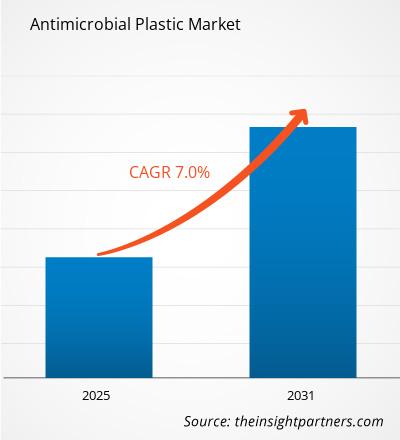
The antimicrobial plastic market was valued at US$ 48.58 Billion in 2025 and is projected to reach US$ 94.72 Billion by 2034, registering a CAGR of 7.7% during 2026–2034. Expansion is supported by increasing adoption of antimicrobial polymers across healthcare, packaging, consumer products, automotive components, and construction materials, where microbial growth can contribute to odor, discoloration, degradation, and hygiene concerns.
North America remains an important regional market, supported by established plastics processing capacity, healthcare expenditure, and regulatory attention toward antimicrobial technologies. The antimicrobial plastic market size in the region is expected to expand at approximately 6.8–7.5% CAGR through 2034, with demand increasingly shifting toward durable, non-leaching, and application-specific antimicrobial technologies.
Antimicrobial Plastic Market Assessment and Insights
- North America: North America is estimated to hold a 23–27% antimicrobial plastic market share in 2025 and expand at a 6.8–7.5% CAGR between 2026–2034, supported by healthcare, consumer products, food-contact applications, and advanced polymer compounding.
- US: The US accounts for approximately 68–73% of North America's 2025 demand and is projected to grow at a 6.9–7.6% CAGR through 2034, led by healthcare and packaging applications.
- Europe: Europe is estimated to represent 20–24% share in 2025 and grow at 6.4–7.1% CAGR, with Germany, the UK, France, Italy, and Spain supporting adoption through advanced manufacturing and regulatory requirements.
- Asia Pacific: Asia Pacific represents approximately 40–45% share in 2025 and is expected to register a 8.0–8.8% CAGR, with China, Japan, South Korea, and India benefiting from expanding plastics conversion and healthcare manufacturing.
- Largest Segment: Commodity Plastics holds an estimated 54–59% market share in 2025 and is projected to grow at a 7.2–7.8% CAGR through 2034.
- High Growth Segment: Medical and Healthcare represents an estimated 13–17% share in 2025 and is expected to advance at an 8.5–9.3% CAGR through 2034.
- Key companies analyzed in detail: BASF SE, Bayer MaterialScience AG, BioCote Limited, Clariant AG, DuPont de Nemours, Inc., King Plastic Corporation, Lonza Group AG, Microban International, Ltd., PARX Materials N.V., Avient Corporation, SANITIZED AG, Milliken & Company, RTP Company, Compounding Solutions LLC, Ray Products Company Inc., Covestro AG, SteriTouch, Doeflex Vitapol, Ticona Engineering Polymers, and Dow Inc.
Source: The Insight Partners' analysis based on proprietary research, government publications, company annual reports, investor presentations, industry databases, and expert interviews.
Antimicrobial plastic market development has been directed from polymer stabilization by traditional means toward materials engineering where antimicrobial activity is incorporated into the process of compounding, extrusion, injection molding, and masterbatch production. Commodity plastics are still used due to their established processing facilities; however, engineering and high-performance plastics become more widely used where thermal resistance, mechanical stability, and durability are critical. In addition, leach-free technologies become popular.
According to the antimicrobial plastic market report, future growth of the market is anticipated to include production in Asia Pacific centers and special uses in such areas as healthcare products, packaging, electronics, automotive interior, and products related to water. Antimicrobial agents and material migration regulations will be the factors influencing choice of materials that will stimulate development of compatible technologies.
Antimicrobial Plastic Market Report Scope
| Report Attribute | Details |
|---|---|
| Market size in 2025 | US$ 48.58 Billion |
| Market Size by 2034 | US$ 94.72 Billion |
| Global CAGR (2026 - 2034) | 7.7% |
| Historical Data | 2021-2024 |
| Forecast period | 2026-2034 |
Antimicrobial Plastic Market Analysis
The growth of the antimicrobial plastics market depends on the increasing demand for plastics that offer inherent antimicrobial resistance along with their traditional processing capabilities. The value chain consists of producers of resins and antimicrobial agents, additive formulators, masterbatch producers, compounders, molders, converters, and OEMs. Additive compatibility, dose, thermal stability, approvals, and lifecycle performance are the key parameters affecting the demand in this market.
Supply conditions differ according to each family of polymers. Commodity plastics including polypropylene, polyethylene, PVC, and polystyrene provide volume potential since antimicrobial additives can be included in these materials via standard compounding methods. In the case of engineering polymers, more precise formulation becomes necessary since additives may affect the color, clarity, physical characteristics, and thermal properties of the plastics. As a result, masterbatch and custom formulations become more popular among suppliers.
The competitive pressure continues to rise, as multinational chemical companies merge polymer science with antimicrobial technologies, while specialists are relying on formulation expertise and efficacy testing. Companies like BASF SE, Clariant AG, DuPont de Nemours, Inc., and Dow Inc. operate within materials ecosystem as a whole, while Microban International, BioCote Limited, SANITIZED AG, and PARX Materials N.V. are focusing on antimicrobial technology integration.
Increasingly, funding goes into development of long-lasting and non-leaching technologies, along with regulatory compliance and recyclable polymer compatibility. The companies such as Avient Corporation and RTP Company offer custom compounding solutions, while King Plastic Corporation focuses on antimicrobial polymers. Covestro AG and Lonza Group AG contribute to the development of the advanced materials and healthcare ecosystem as a whole.
● REPORT CUSTOMIZATION
Tailor This Report To Align With Your Specific Business Requirements
This report can be customized to align precisely with your business objectives, scope, and target markets. Customization options include tailored segmentation, geography, competitive analysis, and strategic insights to support informed decision-making.
Customize This Report →WHAT YOU CAN ADJUST
- ● Segmentations
- ● Geography
- ● Competitive Analysis
- ● Language Preferences
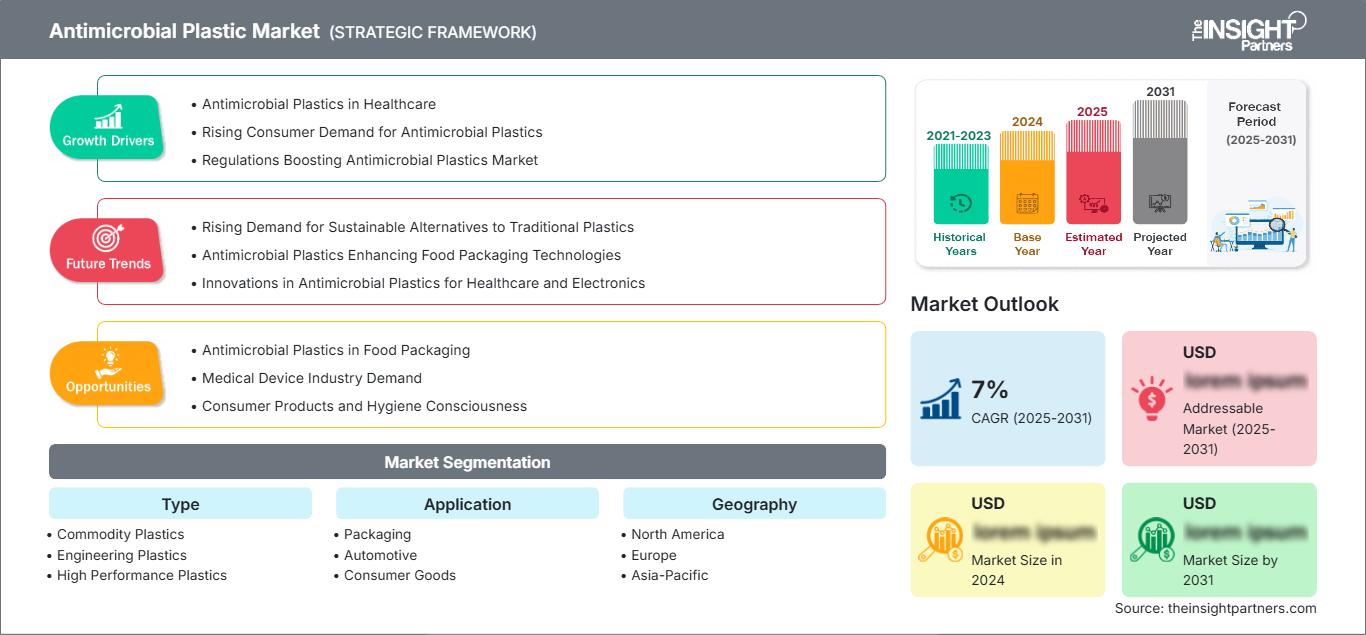
Antimicrobial Plastic Market: Strategic Insights
Regional Insights
North America antimicrobial plastic market
North America is estimated to account for 23–27% of the antimicrobial plastic market in 2025 and is projected to grow at a 6.8–7.5% CAGR through 2034. It enjoys the advantage of advanced polymer processing facilities, well-developed health care system, and availability of antimicrobial additives manufacturers. The applications range from medical parts to packaging materials, consumer goods, construction materials, and interior parts of the automobile industry, where microbial resistance may be important for longevity and hygiene considerations.
In the United States, the country enjoys the major national market due to the presence of a large manufacturing base for healthcare and consumer products and an established regulatory pathway for antimicrobial-treated products. In Canada, the demand is generated through food processing, health care, and construction industries, whereas Mexico enjoys its manufacturing linkages with the US automotive and consumer products industries.
U.S. antimicrobial plastic Market
The US represents approximately 68–73% of North America's 2025 antimicrobial plastic market and is expected to grow at a 6.9–7.6% CAGR through 2034. The demand exists for healthcare equipment, consumer goods, packaging elements, automotive interior components, and touch surfaces in buildings. Antimicrobial regulatory claims and substance regulations play a crucial role in the supply chain process.
Some of the organizations involved in the domestic ecosystem include BASF SE, DuPont de Nemours, Inc., Microban International, Ltd., RTP Company, Milliken & Company, King Plastic Corporation, and Dow Inc. The application focus lies in durability, polymer compatibilities, and demonstrated effectiveness. Health care applications form an important part of the strategy since antimicrobial properties can be incorporated into molded parts without altering the basic product design.
Europe antimicrobial plastic Market
Europe is estimated to hold a 20–24% share in 2025 and expand at a 6.4–7.1% CAGR through 2034. German demand is strongest in the region, followed by UK, French, Italian, and Spanish demand. Regulatory discipline, sophisticated plastics production, healthcare uses, and sustainability issues motivate manufacturers to produce low migration and long-lasting products.
The UK market is advantaged by its specialist suppliers of antimicrobial technologies and healthcare uses, while Germany is characterized by large polymer processing facilities in combination with automotive, medical, and industrial manufacturing uses. France, Italy, and Spain represent additional demand in the form of packaging and healthcare uses. European consumers are becoming more cognizant of antimicrobial products in terms of circularity and chemical management.
APAC antimicrobial plastic Market
APAC represents approximately 40–45% of the antimicrobial plastic market in 2025 and is expected to record an 8.0–8.8% CAGR through 2034. China drives regional demand due to its heavy plastics conversion, packaging, electronics, automobiles, and healthcare industry production. Japan and South Korea focus on advanced engineering resins and healthcare uses.
India is growing with healthcare, packaging, consumer goods, and infrastructure products manufacturing, and Australia is focusing on niche healthcare and construction sectors. Regional growth is driven by industrialization, urbanization, polymer processing capacity expansion, and rising importance of hygiene. The balance between manufacturing volumes and application variety makes APAC the largest regional growth driver.
Middle East & Africa antimicrobial plastic Market
The Middle East and Africa market is developing from a smaller base, with Saudi Arabia leading regional activity through industrial diversification, healthcare investment, and plastics manufacturing. The UAE contributes through infrastructure, healthcare, hospitality, and consumer-product applications, while South Africa represents a key African processing center.
Growth is expected to remain supported by infrastructure development, healthcare modernization, food processing, and polymer conversion investments. Energy and petrochemical advantages in Gulf economies can support resin availability, while demand in the Rest of MEA remains concentrated in healthcare, packaging, water systems, and durable consumer applications.
Segmentation Analysis
Type
The Type segment is projected to grow at a 7.1–7.9% CAGR during 2026–2034. Commodity plastics retain volume leadership because polypropylene, polyethylene, PVC, and related polymers are widely processed across packaging, consumer, construction, and healthcare applications. Engineering and high-performance plastics provide higher-value opportunities where antimicrobial functionality must coexist with thermal, mechanical, chemical, or dimensional requirements.
- Commodity Plastics: Commodity polymers represent the principal volume base because antimicrobial masterbatches can be integrated into established extrusion, injection molding, and blow molding processes across numerous applications.
- Engineering Plastics: Engineering polymers gain adoption where antimicrobial functionality must coexist with dimensional stability, impact resistance, thermal performance, and demanding healthcare or automotive specifications.
- High Performance Plastics: High-performance materials address specialized environments requiring elevated temperature resistance, chemical durability, and long service life alongside antimicrobial functionality.
- Others: This category covers specialized polymer systems outside the principal classifications and provides niche opportunities where customized antimicrobial performance is required.
Application
The Application segment is projected to register a 7.5–8.2% CAGR from 2026–2034. Packaging and consumer products provide substantial demand because antimicrobial functionality can be integrated during manufacturing without requiring additional surface treatment. Medical and healthcare applications offer faster value growth because specialized polymers can address hygiene requirements in equipment housings, connectors, devices, and other frequently handled components.
- Packaging: Packaging applications benefit from antimicrobial functionality where surface hygiene, product protection, and material durability are important, particularly across food, beverage, and household product formats.
- Automotive: Automotive applications include interior components, touch surfaces, ventilation-related parts, and molded products where odor, microbial growth, and long-term material appearance influence product performance.
- Consumer Goods: Consumer products represent diverse demand across appliances, household articles, personal-use products, sports equipment, and frequently handled plastic components.
- Medical and Healthcare: Healthcare applications prioritize validated antimicrobial performance, biocompatibility, processing stability, and compatibility with stringent manufacturing requirements for medical components and equipment.
- Building and Construction: Construction applications include high-touch components, plumbing products, surfaces, fixtures, and polymer-based materials exposed to moisture and microbial growth.
- Others: Specialized uses include water-related products, industrial components, electronics, and niche applications requiring microbial-control functionality.
Opportunity Snapshot
| Application | Revenue Contribution | Trend Tag | Adoption Stage |
|---|---|---|---|
| Packaging | High | Hygiene Packaging | Scaling |
| Automotive | Medium | Interior Protection | Scaling |
| Consumer Goods | High | Durable Hygiene | Mature |
| Medical and Healthcare | Medium | Device Protection | Scaling |
| Building and Construction | Medium | Moisture Control | Scaling |
| Others | Low | Niche Protection | Emerging |
Antimicrobial Plastic Market Growth Drivers and Impact Analysis
Rising healthcare and medical-device hygiene requirements
Healthcare manufacturers increasingly evaluate material surfaces for microbial-control performance, particularly in frequently handled equipment, connectors, housings, and reusable components. Antimicrobial plastic offers the advantage of offering built-in properties without the need for an additional coating process. This factor becomes more pronounced in the case of engineering plastic, where there is a demand for dimensional stability, chemical resistance, sterilization compatibility, and mechanical properties at the same time. Increased production of medical devices in North America, Europe, and Asia Pacific increases the number of applications. Antimicrobial material suppliers who can offer properties together with biocompatibility data and stable processing become better positioned to gain from such applications.
Expansion of antimicrobial functionality into consumer and packaging products
Consumer and packaging manufacturers are increasingly examining antimicrobial functionality as an additional material-performance feature rather than a standalone hygiene treatment. The opportunity is particularly relevant to reusable products, food-contact-related components, household articles, personal-care packaging, and frequently handled consumer goods. Incorporating additives during compounding allows manufacturers to preserve existing molding and extrusion infrastructure while adding a differentiated property. This approach can also support longer product service life by limiting microbial-related odor, staining, or polymer degradation. However, food-contact and consumer applications require careful assessment of active substances, migration, regulatory status, and intended claims. As brand owners seek multifunctional materials, antimicrobial properties can increasingly be combined with color, flame resistance, UV stabilization, recycled content, or impact modification within customized polymer formulations.
Increasing adoption of durable and non-leaching antimicrobial technologies
The shift toward durable antimicrobial technologies is becoming an important technical driver as customers seek performance that remains consistent over the intended service life. Conventional additive systems may depend on controlled release, while non-leaching technologies seek to maintain functionality at the polymer surface without continuous migration. This distinction is particularly relevant for medical, reusable consumer, food-related, and environmentally sensitive applications. Suppliers are therefore investing in surface-active technologies, zinc-based systems, silver technologies, and polymer-integrated approaches that can withstand processing and repeated use. The commercial impact extends beyond additive sales because technology providers can build differentiation through formulation expertise, testing, regulatory documentation, and licensing. Long-term performance validation can also strengthen customer retention where material qualification cycles are lengthy.
Antimicrobial Plastic Market Future Trends
Greater use of non-leaching and biocide-free polymer technologies
Future product development is expected to move toward antimicrobial systems that reduce migration while maintaining effective surface protection. This trend will favor technologies based on contact-active mechanisms, surface modification, and materials designed to limit microbial adhesion rather than continuously releasing active substances. Suppliers are likely to emphasize compatibility with recycling, food-contact requirements, medical applications, and long-duration consumer use. Material developers will also seek lower additive concentrations and improved dispersion to minimize effects on optical, mechanical, and thermal properties. Partnerships between antimicrobial technology developers and polymer compounders should become more common as qualification requirements become increasingly application-specific. The resulting competitive advantage will depend on independently validated performance, regulatory documentation, processing consistency, and demonstrated lifecycle durability.
Integration of antimicrobial functionality with circular polymer strategies
The antimicrobial plastic market trends show that antimicrobial plastics are likely to increasingly incorporate recycled and bio-based polymer feedstocks where technical performance can be maintained. This development creates formulation challenges because recycled polymers can show greater variation in molecular weight, contaminants, color, and thermal history than virgin materials. Antimicrobial additive suppliers will therefore need formulations that tolerate wider processing windows while preserving efficacy. Compounders may develop application-specific grades combining recycled polymer content with antimicrobial masterbatches, stabilizers, and impact modifiers. The strongest opportunities are expected in consumer goods, construction, packaging components, and selected automotive interiors where sustainability targets intersect with durability requirements. Over time, recyclability testing and chemical compatibility will become more important purchasing criteria alongside antimicrobial performance.
Antimicrobial Plastic Market Opportunities
Application-specific antimicrobial compounds for medical components
Medical-device manufacturers represent an attractive opportunity for suppliers capable of delivering validated antimicrobial compounds tailored to sterilization, mechanical, thermal, and biocompatibility requirements. Rather than offering generic antimicrobial masterbatches, producers can develop grades optimized for individual resin families and molding conditions. Such customization can reduce formulation uncertainty and accelerate qualification with device manufacturers. Opportunity areas include equipment housings, connectors, handles, reusable components, fluid-management products, and selected implant-related applications where appropriate regulatory pathways exist. Suppliers can strengthen commercial positioning through laboratory testing, regulatory support, traceability, and technical assistance during product development. Strategic partnerships with medical compounders and device manufacturers may also create longer-term contracts because material changes in regulated products typically require extensive validation before commercialization.
Antimicrobial polymer solutions for high-growth Asian manufacturing clusters
Asia Pacific offers investment opportunities for antimicrobial technology suppliers through its concentration of plastics conversion, electronics, automotive, healthcare, packaging, and consumer-product manufacturing. Local production and technical-service capabilities can reduce logistics costs while improving formulation support for regional processors. China, India, Japan, and South Korea offer differentiated opportunities based on their respective manufacturing structures and application requirements. Companies can pursue partnerships with masterbatch producers, compounders, converters, and original equipment manufacturers rather than relying solely on direct additive sales. Localized testing capabilities can further shorten product-development cycles. The antimicrobial plastic market Forecasts indicate sustained expansion, making regional application engineering and regulatory expertise strategically important for suppliers seeking durable positions across Asia's diverse polymer-processing ecosystem.
Recent Developments
- February 24, 2026: Microban International, Ltd. showcased antimicrobial and odor-control technologies for polymer applications at PLASTINDIA 2026, highlighting integration directly into plastics during manufacturing. The company presented technologies for high-touch polymer applications and engaged manufacturers, compounders, and brand owners seeking durable antimicrobial functionality.
- May 15, 2025: Covestro AG highlighted high-performance plastic solutions for AI-related applications, including TPU materials offering antibacterial properties for frequently used components. The development demonstrates how functional polymer properties, including antibacterial performance, can increasingly be combined with durability and advanced application requirements.
Frequently Asked Questions

- Comprehensive Market Sizing and Forecast Analysis
- Detailed Segmentation Analysis
- In-Depth Market Dynamics Assessment
- Regional and Country-Level Insights
- Competitive Landscape and Company Benchmarking
- Strategic Business Intelligence
Recent Reports
Testimonials

The Insight Partners provided valuable market intelligence that supported our global go-to-market strategy. Their team was professional, responsive, and attentive to our feedback, providing thoughtful analysis and helpful methodological clarifications throughout the project.
Junmo Kim Chief Financial Officer (CFO), Enertech Co., Ltd.
The Insight Partners' SCADA System Market report is comprehensive, with valuable insights on current trends and future forecasts. The team was highly professional, responsive, and supportive throughout. We are very satisfied and highly recommend their services.
RAN KEDEM Partner, Reali Technologies LTDs
I requested a report on a very specific software market and the team produced the report in a few days. The information was very relevant and well presented. I then requested some changes and additions to the report. The team was again very responsive and I got the final report in less than a week.
JEAN-HERVE JENN Chairman, Future Analytica
We worked with The Insight Partners for an important market study and forecast. They gave us clear insights into opportunities and risks, which helped shape our plans. Their research was easy to use and based on solid data. It helped us make smart, confident decisions. We highly recommend them.
PIYUSH NAGPAL Sr. Vice President, High Beam Global
The Insight Partners delivered insightful, well-structured market research with strong domain expertise. Their team was professional and responsive throughout. The user-friendly website made accessing industry reports seamless. We highly recommend them for reliable, high-quality research services
YUKIHIKO ADACHI CEO, Deep Blue, LLC.
This is the first time I have purchased a market report from The Insight Partners.While I was unsure at first, I visited their web site and felt more comfortable to take the risk and purchase a market report.I am completely satisfied with the quality of the report and customer service. I had several questions and comments with the initial report, but after a couple of dialogs over email with their analyst I believe I have a report that I can use as input to our strategic planning process.Thank you so much for taking the extra time and making this a positive experience.I will definitely recommend your service to others and you will be my first call when we need further market data.
JOHN SUZUKI President and Chief Executive Officer, Board Director, BK Technologies
I wish to appreciate your support and the professionalism you displayed in the course of attending to my request for information regarding to infectious disease IVD market in Nigeria. I appreciate your patience, your guidance, and the fact that you were willing to offer a discount, which eventually made it possible for us to close a deal. I look forward to engaging The Insight Partners in the future, all thanks to the impression you have created in me as a result of this first encounter.
DR CHIJIOKE ONYIA MANAGING DIRECTOR, PineCrest Healthcare Ltd.Reason to Buy
- Informed Decision-Making
- Understanding Market Dynamics
- Competitive Analysis
- Identifying Emerging Markets
- Customer Insights
- Market Forecasts
- Risk Mitigation
- Boosting Operational Efficiency
- Strategic Planning
- Investment Justification
- Tracking Industry Innovations
- Aligning with Regulatory Trends





 Get Free Sample for