
Antineoplastic Interferon Drug Market Size, Demand & Growth by 2034
Coverage: By Type (Alpha interferon, Beta interferon, Gamma interferon); Disease Condition (Angioblastoma, Chronic myelogenius leukemia, Renal cell carcinoma, Hepatitis B, Hepatitis C, Others) , and Geography (North America, Europe, Asia Pacific, and South and Central America)
- Status : Data Released
- Report Code : TIPRE00025962
- Category : Life Sciences
- No. of Pages : 150
- Available Report Formats :


- Last update date : August 21, 2026


2025 Market Size
US$ 1.76 Bn
Base year value
2034 Forecast
US$ 3.05 Bn
Projected by 2034
CAGR 2026-2034
7.11 %
Growth rate
Addressable Market
US$ 22.68 Bn
(2026-2034)
The antineoplastic interferon drug market refers to a biopharmaceutical specialty market that includes recombinant and interferon-modified drugs used in selected cancer and virus-related disease conditions. The market has a total value of US$ 1.76 billion in 2025 and is expected to reach US$ 3.05 billion by 2034, growing at a 7.11% CAGR during the period of 2026-2034. At present, demand is driven by line of treatment, production of biologics, clinical evidence, and alternative treatments.
The North American region will continue to be one of the largest commercial markets, with the antineoplastic interferon drugs market size driven by existing infrastructure in oncology, speciality prescriptions, and available use of interferon drugs in selected hematological and solid tumor types. The North American antineoplastic interferon drugs market will grow at a CAGR of 6.8-7.4% during 2026-2034.
Antineoplastic Interferon Drug Market Assessment and Insights
- North America: North America is projected to account for 34–38% antineoplastic interferon drug Market share in 2025, with growth of 6.8–7.4% CAGR between 2026–2034, supported by specialist oncology networks, biologic treatment infrastructure, and established access pathways.
- US: The US is estimated at 29–33% share of the global market in 2025, growing at 6.7–7.3% CAGR during 2026–2034, led by specialized oncology centers and clinical development.
- Europe: Europe is estimated to hold 27–31% share in 2025, advancing at 6.4–7.0% CAGR between 2026–2034. Germany, France, Italy, Spain, and the UK remain important markets because of specialist oncology capacity and established biologics procurement.
- Asia Pacific: Asia Pacific is estimated at 22–26% share in 2025, expanding at 7.2–7.9% CAGR during 2026–2034, with China, Japan, India, and South Korea supported by expanding biologics manufacturing and oncology access.
- Largest Segment: Alpha interferon is estimated at 55–60% market share in 2025, with 6.1–6.7% CAGR during 2026–2034, reflecting its broader historical clinical utilization.
- High Growth Segment: Gamma interferon is modeled at 8–12% market share in 2025, with 8.0–8.8% CAGR during 2026–2034, supported by niche immunomodulatory applications.
- Key companies analyzed in detail: Novartis AG, Bayer AG, Pfizer Inc., Biogen Inc., Roche, Merck & Co., Inc., Zydus Cadila, Amega Biotech, Biosidus, Rhein-Minapharm.
Source: The Insight Partners' analysis based on proprietary research, government publications, company annual reports, investor presentations, industry databases, and expert interviews.
The market has transitioned from traditional recombinant interferons to longer-lasting forms, higher purification processes, new forms of expression, and specific treatment regimens. The production process requires controlled cell lines, fermentation or mammalian expression, downstream purification, sterile filling, and rigorous testing. These factors have led to better consistency but have also created a competitive environment based on manufacturing capabilities, regulatory approval, formulation innovation, and availability of biologic API.
The antineoplastic interferon drug Market report indicates that future growth will most likely be in oncology markets where the framework for biologics production is improving and where there is an increasing ability to access treatments. Regulated harmonization, biosimilar research, local manufacturing initiatives, and production of recombinant proteins could aid in availability. At the same time, developers need to showcase their clinical advantages because they face competition from checkpoint inhibitors, targeted therapies, cell therapies, and novel immunomodulators.
Antineoplastic Interferon Drug Market Report Scope
| Report Attribute | Details |
|---|---|
| Market size in 2025 | US$ 1.76 Billion |
| Market Size by 2034 | US$ 3.05 Billion |
| Global CAGR (2026 - 2034) | 7.11% |
| Historical Data | 2021-2024 |
| Forecast period | 2026-2034 |
Antineoplastic Interferon Drug Market Analysis
The demand factors that will affect the antineoplastic interferon drug Market size are chosen applications such as leukemia, renal-cell, melanoma and virus-associated diseases, although their use will differ greatly depending on geographical location and treatment procedures. The supply chain starts from the manufacturing of the recombinant proteins and the management of cell banks and continues with the upstream process, followed by purification, formulation, filling, quality control, regulatory release and distribution through pharmaceutical channels.
Factors affecting the supply are the complicated nature of manufacturing the biological substances, along with requirements for the same to be consistent in terms of their potency, purity, sterility and batches. Manufacturers will have an advantage because of established manufacturing processes and regulatory experience, but regional producers will have an advantage because of the low cost of manufacturing and distribution. This means that the number of patients does not define the demand.
The antineoplastic interferon drug Market trends indicate that competition in this field is scattered among multinationals in pharmaceutical companies, biotechnology firms and regional firms in the manufacture of biologics. Novartis AG, Bayer AG, Pfizer Inc. and Roche have a lot of oncology strength, while Biogen Inc. has experience in making interferons. Merck & Co., Inc. has strong oncology development infrastructure, while Zydus Cadila, Amega Biotech, Biosidus and Rhein-Minapharm have relevant regional or recombinant biologic strengths.
The positioning of these players is no longer limited to their interferon exposure but more towards portfolio economics. Those that are integrated in their biologics capabilities will be able to exert better control over the API supply, formulation, quality assurance and documentation. Those smaller firms can concentrate on certain geographical areas, licensing and even manufacturing cost-effectively. The investment is thus moving towards differentiated formulations, manufacturing strength, lifecycle management and combinations.
● REPORT CUSTOMIZATION
Tailor This Report To Align With Your Specific Business Requirements
This report can be customized to align precisely with your business objectives, scope, and target markets. Customization options include tailored segmentation, geography, competitive analysis, and strategic insights to support informed decision-making.
Customize This Report →WHAT YOU CAN ADJUST
- ● Segmentations
- ● Geography
- ● Competitive Analysis
- ● Language Preferences
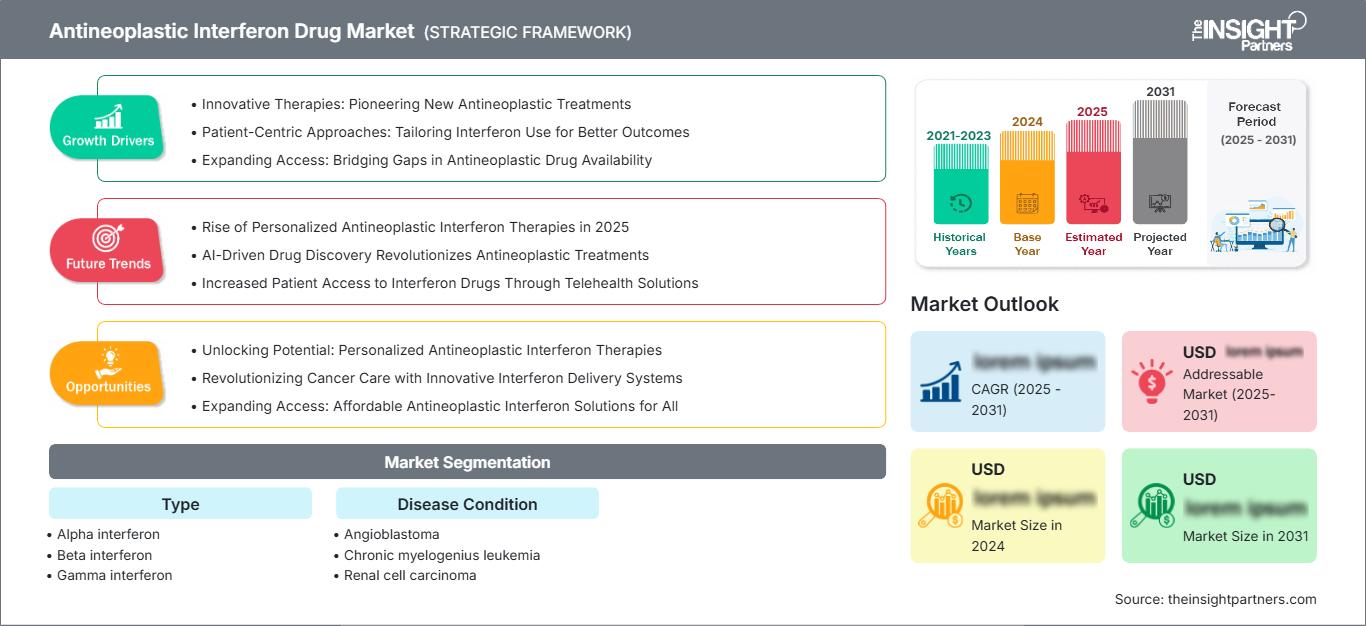
Antineoplastic Interferon Drug Market: Strategic Insights
Regional Insights
North America antineoplastic interferon drug market
North America is forecasted to hold 34-38% market share in 2025, growing at a CAGR of 6.8-7.4% in the period between 2026 and 2034. The United States represents the main region due to presence of special oncology centers, high-level distribution of biologicals, clinical research infrastructure, and relatively high accessibility to innovative cancer therapies. Canada has its contribution to the market due to centralized purchasing and special healthcare facilities.
Demand in the region is however selective, as interferon-based treatments have competitors in targeted therapies, inhibitors, monoclonal antibodies, and cell therapy. Availability, positioning on the line of therapy, and reimbursement conditions are the main factors impacting commercial success. Companies with proven regulatory approval skills and biologic manufacturing will be able to ensure consistent supply, while less expensive products could see their potential in certain indications.
U.S. antineoplastic interferon drug Market
US holds about 29–33% of global market in 2025 and about 82–87% of North America demand, with 6.7–7.3% modeled CAGR between 2026 and 2034. Availability of specialist cancer care centers, academic medical centers, and reimbursement infrastructure facilitate sustained usage in appropriate clinical applications. Bayer AG, Pfizer Inc., Roche, and Merck & Co., Inc. have substantial oncology presence.
Application will be driven in clinical scenarios where interferon has known therapeutic application, but not in first-line oncology therapy broadly. Usage is increasingly driven by relative efficacy, toxicity, administration burden, and overall costs. Thus, differentiation of applications, specific refractory scenarios, and approaches which integrate immune modulation with precision oncology offer opportunities in the US market. Regulatory considerations are important due to importance of consistent biologic manufacturing for product quality and sustainability.
Europe antineoplastic interferon drug Market
Europe is estimated at 27–31% share in 2025, with a 6.4–7.0% CAGR during 2026–2034. Germany is the leading national market, followed by the UK, France, Italy, and Spain. National reimbursement structures, centralized procurement, treatment guidelines, and pharmaceutical price controls create substantial variation in commercial opportunity across countries.
The UK has an advantage of having specialist oncology capacity along with evidence-based prescribing, while Germany is lucky to have an ecosystem comprising of large pharma and hospitals. France enjoys both the benefits of state funding and specialist cancer networks, whereas Italy and Spain offer chances with regional health care networks and increased availability of biologics. Pricing competition and health technology assessment still figure prominently in procurement decisions.
APAC antineoplastic interferon drug Market
The share of APAC is estimated to be between 22 and 26% in 2025, with a CAGR of 7.2 and 7.9% in 2026-2034. The largest markets include China, Japan, South Korea, India, and Australia. Drivers for growth include an increase in oncology capacity, development of local biologics manufacturing and government efforts to increase access to innovative medicines.
Opportunities for manufacturing and volumes are offered by China and India, while advanced biologics development is offered by Japan and South Korea. Contribution from Australia comes through existing clinical trial infrastructure. Local manufacturing, technology transfer, biosimilars and public procurement can drive affordability, while cancer diagnosis and specialist treatment will drive demand.
Middle East & Africa antineoplastic interferon drug Market
Middle East and Africa comprises a smaller commercial footprint, yet presents selected opportunities for expansion, with forecasted growth rate of 6.0–6.8% during 2026–2034. Saudi Arabia emerges as the most prominent Gulf country, while UAE, South Africa, and others follow. Investment in tertiary hospitals will help in obtaining access to specialty biologics.
Revenues from energy sectors in the Gulf states can finance development of healthcare infrastructure and purchase of advanced treatment, while South Africa features larger oncology ecosystem. The Rest-of-MEA geographies are limited due to affordability, availability of specialists, and need for biologics distribution. Thus, in this case, regional cooperation, local manufacturing, and hospital purchasing may matter more than commercial expansion.
Segmentation Analysis
Type
The Type segment is expected to expand at a 6.6–7.2% CAGR during 2026–2034. Product differentiation is primarily determined by interferon biology, indication-specific efficacy, dosing requirements, formulation stability, and historical clinical acceptance. Alpha interferon remains the commercial anchor, while beta and gamma interferons address more specialized therapeutic requirements. The antineoplastic interferon drug market scope therefore varies substantially by clinical indication and regulatory positioning.
- Alpha interferon: Alpha interferon retains the broadest commercial position because of established clinical history across selected malignancies and virus-associated diseases. Its mature manufacturing base and formulation experience support continued availability, although substitution by newer therapies limits expansion.
- Beta interferon: Beta interferon occupies a more specialized position, with demand influenced by immunomodulatory applications and product-specific evidence. Manufacturing expertise and established biologic delivery systems remain strategically relevant for maintaining specialist use.
- Gamma interferon: Gamma interferon serves a narrower clinical opportunity, with strategic relevance linked to immune-response modulation and selected specialty indications. Its smaller installed base creates opportunities for focused development and specialist commercialization.
Disease Condition
The Disease Condition segment is projected to grow at a 6.8–7.4% CAGR during 2026–2034. Demand varies according to treatment guidelines, disease prevalence, alternative therapies, and the extent to which interferon remains incorporated into clinical pathways. The antineoplastic interferon drug market analysis therefore requires indication-level assessment rather than assuming uniform growth across disease categories.
- Angioblastoma: This represents a specialized treatment opportunity where clinical utilization depends heavily on physician preference, evidence development, and availability of alternative oncology interventions. Commercial volumes are therefore concentrated within specialist treatment centers.
- Chronic myelogenius leukemia: Demand is influenced by the availability of targeted therapies and the historical role of interferon-based treatment. Continued use is more likely in selected patients, treatment strategies, or settings where immune-mediated disease control remains relevant.
- Renal cell carcinoma: Interferon has an established historical role in renal-cell carcinoma, although modern targeted and immuno-oncology therapies have materially changed treatment algorithms. Current demand consequently reflects selected therapeutic positioning.
- Hepatitis B: Hepatitis B represents an important interferon-associated disease category because immune-mediated antiviral treatment can influence long-term disease management. Treatment eligibility, duration, tolerability, and competing antivirals determine utilization.
- Hepatitis C: Hepatitis C has historically generated substantial interferon use, but direct-acting antiviral therapies have transformed treatment. Remaining utilization is consequently concentrated in specific settings and legacy treatment pathways.
Opportunity Snapshot
| Segment Name | Revenue Contribution (High/Medium/Low) | Trend Tag | Adoption Stage |
|---|---|---|---|
| Angioblastoma | Low | Specialist Care | Emerging |
| Chronic myelogenius leukemia | Medium | Disease Control | Mature |
| Renal cell carcinoma | High | Immune Therapy | Mature |
| Hepatitis B | High | Long-term Care | Scaling |
| Hepatitis C | Medium | Legacy Therapy | Mature |
Antineoplastic Interferon Drug Market Growth Drivers and Impact Analysis
Expansion of Recombinant Biologics Manufacturing Capacity
Growing recombinant biologics capabilities are improving the ability of regional manufacturers to produce interferon products with consistent quality and competitive economics. Integrated facilities covering cell-line development, fermentation or mammalian expression, purification, analytical testing, and sterile filling can reduce dependence on external suppliers and shorten manufacturing lead times. This is particularly relevant in emerging pharmaceutical markets where governments increasingly encourage domestic production of complex biologics. The impact extends beyond cost because reliable manufacturing supports regulatory submissions, tender participation, lifecycle management, and supply continuity. Companies with established biologics platforms can also adapt production assets for related recombinant proteins, improving facility utilization. As manufacturing maturity increases, competition is likely to shift toward formulation quality, regulatory reliability, process yields, and the ability to serve multiple geographic markets.
Persistent Demand for Immune-Modulating Therapeutic Approaches
Interferon remains scientifically relevant because it can influence immune signaling, antiviral responses, cell proliferation, and tumor-associated biological pathways. Although many historical oncology uses have been displaced by targeted and immune checkpoint therapies, selected clinical situations continue to create demand for interferon-based approaches. The impact is strongest where treatment objectives involve immune modulation rather than direct cytotoxicity alone. Research into tumor microenvironment biology and interferon signaling can also identify patient subsets in which interferon pathways may contribute to therapeutic response. For manufacturers, this creates opportunities to reposition established molecules through new formulations, dosing strategies, combinations, or biomarker-defined populations. Commercial success will depend on demonstrating clinically meaningful differentiation against increasingly sophisticated alternatives rather than relying on historical indications.
Improving Specialty Oncology Infrastructure in Emerging Markets
Expansion of cancer hospitals, diagnostic networks, specialist physicians, and pharmaceutical distribution infrastructure in emerging economies is broadening access to biologic therapies. China, India, selected Southeast Asian countries, Gulf states, and Latin American markets are strengthening treatment capacity through public investment and private healthcare expansion. The resulting impact is particularly relevant for established biologics whose manufacturing economics can support lower-cost treatment models. Regional suppliers may benefit from local procurement, technology transfer, and regulatory familiarity, while multinational companies can leverage established distribution and quality systems. Increased availability does not automatically translate into proportional interferon demand because newer oncology therapies remain competitive. However, improved infrastructure creates a larger addressable treatment base and gives manufacturers greater flexibility to position interferon products in selected indications where clinical and economic considerations remain favorable.
Antineoplastic Interferon Drug Market Future Trends
Biomarker-Guided Interferon Positioning
Future development is likely to move toward more selective use of interferon according to tumor biology, immune signatures, treatment history, and response characteristics. Instead of positioning interferon as a broad oncology treatment, developers may identify patient groups where interferon signaling contributes materially to therapeutic response. Companion diagnostics, transcriptomic profiling, and immune-response markers could improve patient selection and reduce exposure among individuals unlikely to benefit. This approach would potentially improve clinical efficiency while supporting premium positioning for differentiated formulations. Pharmaceutical companies may increasingly combine established interferon molecules with targeted agents, checkpoint inhibitors, or localized delivery technologies. Such combinations could create new intellectual-property opportunities around dosing, sequencing, and patient selection, although clinical validation requirements would remain substantial.
Long-Acting and Patient-Centric Formulations
Formulation development is expected to focus increasingly on reducing administration burden and improving treatment persistence. Long-acting formulations, optimized injection devices, improved stability, and controlled-release approaches could make interferon therapies easier to administer while reducing treatment frequency. These changes may be particularly relevant in chronic disease settings and selected oncology applications where adherence affects treatment effectiveness. Pharmaceutical developers can also use formulation improvements to extend product lifecycles and differentiate mature molecules from lower-cost alternatives. Manufacturing must accommodate tighter control over protein aggregation, potency, release characteristics, and storage stability. Consequently, future competition may depend not only on molecule selection but also on formulation engineering, delivery technology, patient convenience, and evidence demonstrating that the revised administration profile produces meaningful clinical or economic benefits.
Antineoplastic Interferon Drug Market Opportunities
Regional Manufacturing and Licensing Platforms
The antineoplastic interferon drug market Forecasts indicate opportunities for manufacturers that combine regional production with licensing arrangements and technology transfer. Emerging pharmaceutical markets increasingly value local manufacturing because it can improve supply resilience, reduce import exposure, and support public procurement objectives. Companies possessing validated recombinant-protein processes can partner with regional manufacturers to transfer selected production or fill-finish activities while retaining control over critical quality attributes. Such structures can lower market-entry barriers and create scalable routes into countries where regulatory and procurement requirements favor domestic participation. Investors should prioritize partners with established biologics facilities, quality systems, regulatory experience, and access to specialist healthcare networks. A staged model beginning with licensing and distribution, followed by local manufacturing, can limit capital exposure while testing commercial demand.
Lifecycle Expansion Through Differentiated Formulations
Established interferon products provide opportunities for lifecycle management through improved dosing schedules, delivery systems, stability, and combination strategies. Rather than competing solely on price, manufacturers can seek incremental clinical value by reducing administration frequency, improving storage characteristics, or targeting specific patient populations. Reformulation can also support regulatory exclusivity or differentiated positioning where intellectual-property pathways remain available. Partnerships between biotechnology companies and established pharmaceutical manufacturers may accelerate development by combining formulation expertise with regulatory and commercial infrastructure. Investment decisions should prioritize products with identifiable unmet needs, defensible formulation advantages, and realistic reimbursement pathways. The strongest opportunities are likely to emerge where a differentiated presentation solves a practical treatment problem rather than simply reproducing an established interferon formulation.
Recent Developments
- February 2026: Merck & Co., Inc. reported continued progress across its oncology portfolio and highlighted regulatory and clinical advances in multiple cancer programs. The company reported 2025 worldwide sales of US$65.0 billion and continued investment in a broad oncology pipeline spanning more than 30 tumor types, demonstrating the increasing competitive intensity surrounding immune-mediated cancer treatment.
- November 2025: Biogen Inc. maintained AVONEX and other interferon-based products within its commercial portfolio, while its 2025 reporting indicated global interferon revenue of US$945.6 million. The company attributed the decline primarily to patients transitioning toward higher-efficacy therapies, highlighting competitive pressure from newer treatment modalities on established interferon products.
- 2025: Zydus Healthcare Limited remained associated with pegylated interferon alfa-2b manufacturing in India. A CDSCO inspection compilation identifies pegylated interferon alfa-2b injection among products manufactured at Zydus facilities, illustrating continued domestic manufacturing capability for recombinant interferon products within India's biologics ecosystem.
Frequently Asked Questions

- Comprehensive Market Sizing and Forecast Analysis
- Detailed Segmentation Analysis
- In-Depth Market Dynamics Assessment
- Regional and Country-Level Insights
- Competitive Landscape and Company Benchmarking
- Strategic Business Intelligence
Recent Reports
Testimonials

The Insight Partners' SCADA System Market report is comprehensive, with valuable insights on current trends and future forecasts. The team was highly professional, responsive, and supportive throughout. We are very satisfied and highly recommend their services.
RAN KEDEM Partner, Reali Technologies LTDs
I requested a report on a very specific software market and the team produced the report in a few days. The information was very relevant and well presented. I then requested some changes and additions to the report. The team was again very responsive and I got the final report in less than a week.
JEAN-HERVE JENN Chairman, Future Analytica
We worked with The Insight Partners for an important market study and forecast. They gave us clear insights into opportunities and risks, which helped shape our plans. Their research was easy to use and based on solid data. It helped us make smart, confident decisions. We highly recommend them.
PIYUSH NAGPAL Sr. Vice President, High Beam Global
The Insight Partners delivered insightful, well-structured market research with strong domain expertise. Their team was professional and responsive throughout. The user-friendly website made accessing industry reports seamless. We highly recommend them for reliable, high-quality research services
YUKIHIKO ADACHI CEO, Deep Blue, LLC.
This is the first time I have purchased a market report from The Insight Partners.While I was unsure at first, I visited their web site and felt more comfortable to take the risk and purchase a market report.I am completely satisfied with the quality of the report and customer service. I had several questions and comments with the initial report, but after a couple of dialogs over email with their analyst I believe I have a report that I can use as input to our strategic planning process.Thank you so much for taking the extra time and making this a positive experience.I will definitely recommend your service to others and you will be my first call when we need further market data.
JOHN SUZUKI President and Chief Executive Officer, Board Director, BK Technologies
I wish to appreciate your support and the professionalism you displayed in the course of attending to my request for information regarding to infectious disease IVD market in Nigeria. I appreciate your patience, your guidance, and the fact that you were willing to offer a discount, which eventually made it possible for us to close a deal. I look forward to engaging The Insight Partners in the future, all thanks to the impression you have created in me as a result of this first encounter.
DR CHIJIOKE ONYIA MANAGING DIRECTOR, PineCrest Healthcare Ltd.Reason to Buy
- Informed Decision-Making
- Understanding Market Dynamics
- Competitive Analysis
- Identifying Emerging Markets
- Customer Insights
- Market Forecasts
- Risk Mitigation
- Boosting Operational Efficiency
- Strategic Planning
- Investment Justification
- Tracking Industry Innovations
- Aligning with Regulatory Trends





 Get Free Sample for