
Artificial Ventilation and Anesthesia Masks Market Size & Share 2034
Coverage: ByProduct Type (Face Masks, Oral, Nasal); Application (Operation Room, Intensive Care Units, Emergency Rooms, Home Care) , and Geography (North America, Europe, Asia Pacific, and South and Central America)
- Status : Data Released
- Report Code : TIPRE00021556
- Category : Life Sciences
- No. of Pages : 150
- Available Report Formats :


- Last update date : September 08, 2026


2025 Market Size
US$ 2.71 Bn
Base year value
2034 Forecast
US$ 4.71 Bn
Projected by 2034
CAGR 2026-2034
6.33 %
Growth rate
Addressable Market
US$ 33.57 Bn
(2026-2034)
The global Artificial Ventilation And Anesthesia Masks market was valued at US$ 2.71 billion in 2025 and is expected to reach US$ 4.71 billion by 2034; it is estimated to record a CAGR of 6.33% during 2026-2034.
Artificial Ventilation And Anesthesia Masks Market Assessment and Insights
- North America accounted for a 38–42% share in 2025 and is projected to grow at a 6.2–6.8% CAGR between 2026–2034, supported by mature hospital infrastructure, respiratory therapy utilization, home-care adoption, and replacement of aging interfaces.
- US represented 31–35% of the North American share in 2025 and is expected to expand at a 6.1–6.7% CAGR between 2026–2034, supported by critical-care capacity and home respiratory therapy.
- Europe held a 27–31% share in 2025 and is expected to register a 6.0–6.6% CAGR between 2026–2034, with Germany, the UK, France, Italy, and Spain providing substantial demand through hospital respiratory-care and anesthesia applications.
- Asia Pacific represented a 21–25% share in 2025 and is anticipated to expand at a 7.4–8.2% CAGR between 2026–2034, led by China, Japan, South Korea, India, and Australia as hospital capacity and respiratory-care access improve.
- Largest Segment: Face Masks held a 58–63% market share in 2025 and is projected to grow at a 6.4–7.0% CAGR between 2026–2034, reflecting broad use across ventilation and anesthesia.
- High Growth Segment: Home Care represented a 13–17% market share in 2025 and is forecast to expand at a 7.8–8.6% CAGR between 2026–2034, supported by decentralized respiratory management.
- Key companies analyzed in detail: Becton, Dickinson and Company, Air Liquide Healthcare, Koninklijke Philips N.V., Fisher & Paykel Healthcare Corporation Limited, Resmed Inc., Ambu A/S, Acutronic Medical Systems AG, GaleMed Corporation, HOFFRICHTER GmbH, Drägerwerk AG & Co. KGaA, Armstrong Medical Limited, Flexicare Medical Limited, Hsneir, HYZ Medical Equipment Limited, VBM Medizintechnik GmbH, BioMatrix Healthcare Private Limited, and Comepa Industries.
Source: The Insight Partners' analysis based on proprietary research, government publications, company annual reports, investor presentations, industry databases, and expert interviews.
The technological development has led to an increase in design focus from simple molded parts to anatomical designs that focus on sealing, comfort, dead space, and compatibility with ventilation systems. Silicone, PVC, and other medical-grade plastics will continue to meet different needs of clinical applications; the design of cushions and headgear will become more advanced. This would drive the market for masks for artificial ventilation and anesthesia.
In future, innovations are expected to focus on next-generation healthcare systems, home care devices, and procurement practices. The need for compliance to regulatory guidelines on aspects like biocompatibility, infection control, traceability, and manufacturing processes is a key factor that should be taken into consideration for future investments. Increase in respiratory-care capability in the Asia-Pacific region and some select countries in the Middle East could expand the pool of demand.
Artificial Ventilation And Anesthesia Masks Market Report Scope
| Report Attribute | Details |
|---|---|
| Market size in 2025 | US$ 2.71 Billion |
| Market Size by 2034 | US$ 4.71 Billion |
| Global CAGR (2026 - 2034) | 6.33% |
| Historical Data | 2021-2024 |
| Forecast period | 2026-2034 |
Artificial Ventilation And Anesthesia Masks Market Analysis
The demand is driven by intensive-care ventilation, anesthesia services, emergencies ventilation, and home ventilation. The growth of artificial ventilation and anesthesia masks market, therefore, is dependent on hospital admissions, surgeries, treatment of chronic respiratory diseases, and respiratory equipment. The World Health Organization estimates that there are over half a billion people suffering from asthma and COPD combined.
The value chain ranges from polymers and silicone suppliers to molding, assembly, sterilization, packaging, distribution, and purchase in hospitals. The challenge for manufacturers lies in material consistency, seal reliability, ergonomic characteristics, compliance with regulations, and cost-effectiveness. Favorable trends in supply are emerging for those companies which can provide different configurations of masks but use the same manufacturing process. The hospitals, in turn, take into account disposability, cleaning, inter-device compatibility, and replaceable components of respiratory interface.
Competition merges diversified medical technology companies with specialists in respiratory and anesthesia segments. The artificial ventilation and anesthesia masks market report reveals that diversification, clinical application, distribution, and flexibility of production are some positioning factors. Companies such as Koninklijke Philips N.V., Resmed Inc., Fisher & Paykel Healthcare Corporation Limited, and Becton, Dickinson and Company operate in the wider scope of respiratory care market, whereas Ambu A/S, Drägerwerk AG & Co. KGaA, and specialists focus on airways management and anesthesia interfaces.
Strategies are becoming more focused on optimization of existing products rather than replacement of technologies. Manufacturers are improving their regional production capabilities, increasing range of single-use products and increasing compatibility between mask and devices. Fisher & Paykel Healthcare Corporation Limited provides respiratory care products for hospitals and home-care interfaces, while Ambu A/S keeps a wide portfolio of airways management. Drägerwerk AG & Co. KGaA combines anesthesia masks with anesthesia and ventilation systems.
● REPORT CUSTOMIZATION
Tailor This Report To Align With Your Specific Business Requirements
This report can be customized to align precisely with your business objectives, scope, and target markets. Customization options include tailored segmentation, geography, competitive analysis, and strategic insights to support informed decision-making.
Customize This Report →WHAT YOU CAN ADJUST
- ● Segmentations
- ● Geography
- ● Competitive Analysis
- ● Language Preferences
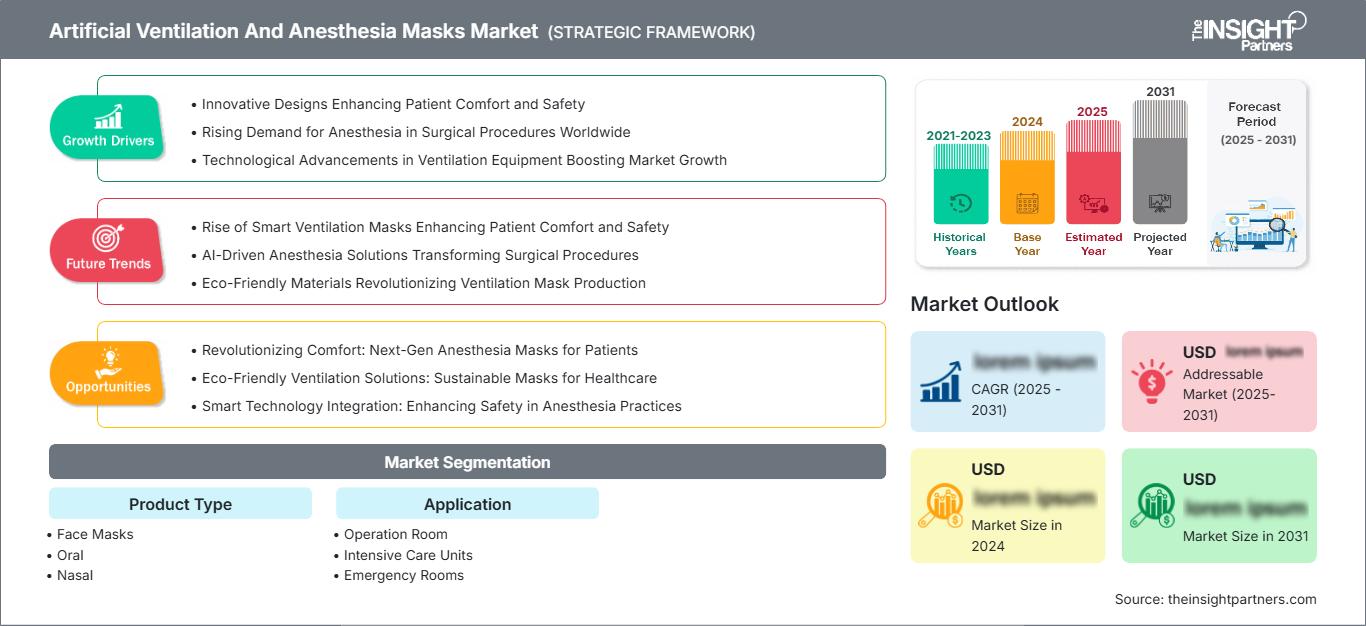
Artificial Ventilation And Anesthesia Masks Market: Strategic Insights
Regional Insights
North America artificial ventilation and anesthesia masks market
The North American market will hold 38–42% in 2025 and grow at 6.2–6.8% CAGR through 2034. The North American market enjoys good ICU infrastructure, matured anesthesia services, high respiratory devices penetration, and well-developed reimbursement structures. The US continues to drive the demand, whereas Canada will be driving the demand due to its hospital modernization initiatives and home respiratory programs.
Buyers focus on infection control, fit, disposability, and compatibility with current ventilators. Hospitals look for the economic benefit of a product over its life cycle rather than just looking at purchasing cost. The growth drivers include respiratory diseases management, aging population, and more usage of non-invasive ventilations. The domestic manufacturing and multinational distribution network, along with the developed service network, helps overcome supply issues.
U.S. artificial ventilation and anesthesia masks market
In 2025, the US accounted for 31-35% of the North American region and is projected to witness a CAGR of 6.1-6.7% up to 2034. High demand arises from large hospital chains, dedicated critical care facilities, ambulatory surgeries, and established home respiratory service providers. Becton, Dickinson and Company, Resmed Inc., Koninklijke Philips N.V., Fisher & Paykel Healthcare Corporation Limited, and Ambu A/S are major players owing to their respiratory, anesthesia, or airway management segments.
High demand arises from face mask assemblies used for non-invasive ventilation and anesthesia, whereas nasal assemblies are driven by home respiratory therapies. Patient comfort, leakage, disposability, procurement, and inter-operability factors are becoming important drivers behind procurement decisions. Replacement demand will also drive the market, as hospitals replace respiratory equipment fleet and consolidate consumables for several hospitals.
Europe artificial ventilation and anesthesia masks market
In 2025, Europe accounted for 27–31%, and the artificial ventilation and anesthesia masks market share will be 6.0–6.6%. Germany will become one of the leading markets in the region due to its developed hospital systems, anesthesiology, and device manufacturing. The UK will experience growth due to healthcare procurement process, respiratory care plans, and hospitals renovation. Germany also features strong manufacturing sector and high clinical use. France supports its demand because of the network of public hospitals and respiratory disease treatment. Meanwhile, Italy and Spain offer the extra volume due to surgical procedures, critical care, and home respiratory care.
The regulatory compliance and quality systems requirements determine the choice of suppliers. Suppliers should show consistency in terms of materials, traceability, biocompatibility, and performance of their devices depending on the product configuration. Germany, France, and the UK are still important commercial centers. Meanwhile, Italy and Spain can offer suppliers opportunities in working with regional hospitals and homecare organizations. Drägerwerk AG & Co. KGaA, HOFFRICHTER GmbH, Comepa Industries, and VBM Medizintechnik GmbH create competition in the region.
APAC artificial ventilation and anesthesia masks market
In APAC, market size was accounted for between 21% and 25% in 2025 and is estimated to record a CAGR of 7.4%-8.2%, led by China as the dominant regional demand source. In China, Japan, South Korea, India, and Australia, there is growing investment in healthcare facilities to develop the capacity of managing patients with respiratory care.
The presence of local manufacturing base, public sector procurement, and availability of equipment for critical care will present opportunities in the regional market. Particularly for India and China, there is significant growth potential due to volume of sales, while Japan and Australia will focus on product quality and integration with medical practice.
Middle East & Africa artificial ventilation and anesthesia masks market
Middle East and Africa demand is expected to expand at a 6.6–7.4% CAGR, with Saudi Arabia leading regional opportunities. Saudi Arabia and the UAE are investing in hospital infrastructure and advanced clinical services, while South Africa remains an important gateway for respiratory-care products. Rest of MEA demand is more dependent on procurement budgets and imported medical technologies.
Energy revenue and infrastructure development play an important role in investment in healthcare facilities in the Gulf regions. Expansion of hospitals, critical care, and medical tourism programs provide a good platform for respiratory products of greater value. In Africa, distributors and government purchases will continue to be crucial distribution routes, but there is limited demand due to cost and supply constraints.
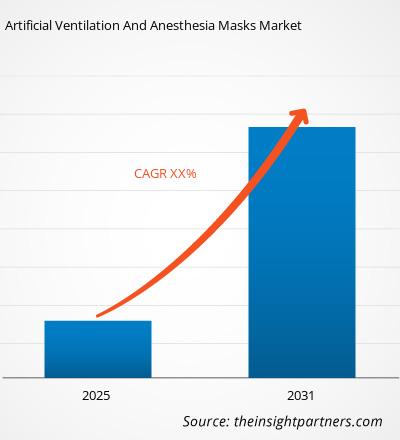
Segmentation Analysis
Product Type
Product Type is projected to expand at a 6.3–6.9% CAGR during 2026–2034. Face masks remain central because they support multiple clinical applications, while oral and nasal interfaces provide targeted alternatives for selected ventilation and patient-comfort requirements. Design differentiation increasingly centers on seal stability, anatomical fit, dead-space control, and compatibility with respiratory systems. The artificial ventilation and anesthesia masks market scope therefore extends across acute, procedural, emergency, and home settings.
- Face Masks remain the dominant product configuration because they can support anesthesia delivery and noninvasive ventilation across broad patient populations. Their adaptability makes them important for standardized hospital procurement.
- Oral interfaces serve selected patients requiring unobstructed nasal breathing or specialized respiratory support. Demand is influenced by clinician preference, patient anatomy, therapy requirements, and availability of compatible systems.
- Nasal interfaces are strategically important in home respiratory care because they can reduce facial coverage and support comfort. Their adoption benefits from personalized therapy and increasing long-duration respiratory management.
Application
Application is projected to grow at a 6.6–7.2% CAGR during 2026–2034. Hospital applications remain dominant because anesthesia and critical-care procedures require dependable respiratory interfaces. Emergency and home-care applications offer additional growth avenues as respiratory support becomes more decentralized. Procurement priorities differ by setting, with hospitals emphasizing infection control and workflow efficiency while home-care providers place greater weight on comfort, fit, durability, and ease of use.
- Operation Room demand is supported by anesthesia procedures and perioperative respiratory management. Product selection emphasizes rapid fitting, reliable seals, patient comfort, and compatibility with anesthesia breathing circuits.
- Intensive Care Units require masks capable of sustained respiratory support, particularly for noninvasive ventilation. Reliability, leakage control, sizing, and compatibility with ventilators are central purchasing considerations.
- Emergency Rooms require readily deployable interfaces suitable for rapid respiratory intervention. Standardized sizing, disposable availability, and ease of connection can influence procurement and emergency stock management.
- Home Care is increasingly important as respiratory support moves beyond hospitals. Products must balance therapeutic performance with comfort, simple maintenance, portability, and patient adherence during prolonged use.
Opportunity Snapshot
| Application | Revenue Contribution | Trend Tag | Adoption Stage |
|---|---|---|---|
| Operation Room | High | Procedure Volume | Mature |
| Intensive Care Units | High | NIV Adoption | Mature |
| Emergency Rooms | Medium | Rapid Response | Scaling |
| Home Care | Medium | Home Ventilation | Scaling |
Artificial Ventilation And Anesthesia Masks Market Growth Drivers and Impact Analysis
Rising Burden of Chronic Respiratory Conditions
Chronic respiratory conditions are creating sustained demand for interfaces used in assisted ventilation and long-term respiratory support. WHO indicates that asthma and COPD together affect more than half a billion people, while chronic respiratory disease remains a major contributor to disability and premature mortality. This burden increases the number of patients requiring diagnosis, acute intervention, noninvasive ventilation, and home respiratory management. For manufacturers, the implication is broader demand across hospital and home settings rather than dependence on surgical activity alone. Suppliers that provide multiple interface geometries and sizes can address more patient profiles. Healthcare systems also have incentives to reduce avoidable admissions through earlier intervention and home-based care, supporting recurring demand for respiratory interfaces.
Expansion of Critical-Care and Perioperative Capacity
Hospital investment in intensive-care beds, operating rooms, emergency departments, and respiratory equipment directly expands the installed base requiring compatible interfaces. Growth in surgical capacity increases anesthesia-mask utilization, while critical-care modernization supports demand for noninvasive ventilation masks. Emerging healthcare systems are particularly relevant because new hospitals frequently procure complete respiratory-support ecosystems rather than isolated replacement products. This creates opportunities for manufacturers with standardized product families that can be integrated across departments. Procurement teams increasingly evaluate equipment interoperability, consumable availability, sterilization requirements, and supplier continuity. Consequently, manufacturers that align masks with ventilators, anesthesia systems, circuits, and humidification technologies can strengthen institutional relationships. The effect is particularly significant where hospitals are moving from basic respiratory equipment toward integrated critical-care infrastructure.
Shift Toward Home-Based Respiratory Management
Healthcare delivery is gradually moving selected respiratory therapies from hospitals toward homes and long-term care environments. This transition changes product requirements because patients and caregivers generally need lighter, easier-to-fit, and simpler-to-maintain interfaces than those designed primarily for acute clinical environments. Home-care suppliers therefore have greater incentive to improve comfort, minimize skin pressure, reduce leakage, and simplify cleaning or replacement. Remote monitoring and connected respiratory devices can further support adherence, although the mask remains a critical physical interface between patient and therapy system. For manufacturers, the commercial opportunity extends beyond initial device placement to recurring consumable demand. Distribution capabilities, reimbursement access, patient education, and clinician support will consequently become increasingly important determinants of market penetration.
Artificial Ventilation And Anesthesia Masks Market Future Trends
Personalized Interface Design and Digital Fit Assessment
Future product development in the artificial ventilation and anesthesia masks market trends is likely to move toward more personalized interfaces using improved facial geometry, adjustable cushions, and digital fitting methods. Manufacturers can use patient dimensions and clinical feedback to reduce leakage while maintaining comfort during prolonged therapy. Artificial intelligence-assisted fitting tools may eventually support clinicians and home-care providers in selecting appropriate sizes and configurations. This direction could reduce treatment interruptions associated with discomfort and poor seal performance. Material engineering will also evolve toward softer surfaces, lower-contact designs, and improved moisture management. As hospitals and home-care providers increasingly focus on patient experience alongside therapeutic performance, suppliers that can demonstrate measurable improvements in adherence, fitting time, or skin protection may gain stronger positions in premium procurement categories.
Integrated Respiratory Ecosystems and Consumable Standardization
Respiratory interfaces are expected to become more closely integrated with ventilators, anesthesia workstations, humidification systems, circuits, and monitoring platforms. Manufacturers may increasingly design masks as components of broader respiratory ecosystems rather than standalone consumables. This could encourage standardized connectors, improved circuit compatibility, and data-enabled device configurations. Hospitals may favor suppliers capable of simplifying inventory through compatible product families covering intensive care, anesthesia, emergency, and home-care requirements. At the same time, purchasing organizations may demand evidence of lifecycle value, including waste management and supply continuity. Companies with broad respiratory portfolios can therefore pursue system-level contracts, while specialized manufacturers may differentiate through interface performance, regional customization, or targeted clinical applications.
Artificial Ventilation And Anesthesia Masks Market Opportunities
Localized Manufacturing and Regional Supply Partnerships
Investment opportunities exist in localized production of masks and related respiratory consumables in high-growth healthcare markets. Regional manufacturing can reduce logistics exposure, shorten replenishment cycles, and improve responsiveness to public-sector procurement requirements. India, China, Southeast Asia, and selected Middle Eastern economies offer potential where hospital capacity is expanding and imported respiratory products remain important. Manufacturers can pursue contract manufacturing, technology-transfer arrangements, or regional assembly models while retaining centralized quality controls. Local partnerships may also improve tender participation and distribution coverage. Investors should assess regulatory registration, polymer availability, sterilization capacity, skilled labor, and quality-system maturity before committing capital. A flexible regional manufacturing model can provide cost advantages without requiring complete relocation of advanced product development activities.
Premium Home-Care Interfaces and Specialized Patient Segments
The artificial ventilation and anesthesia masks market Forecasts indicate an opportunity to develop premium interfaces for patients requiring long-duration respiratory therapy and differentiated comfort characteristics. Products targeting sensitive skin, facial anatomical variation, pediatric use, or high-compliance home ventilation can command stronger clinical relevance than standardized commodity masks. Companies can combine ergonomic design with patient education, fitting services, replacement programs, and digital adherence support. Strategic partnerships with home-care providers and respiratory clinics can improve product selection and reduce patient discontinuation. Investors should prioritize products with clear clinical differentiation, scalable manufacturing, and reimbursement compatibility. This approach can create recurring revenue opportunities while addressing unmet needs that are less effectively served by standardized hospital-focused interfaces.
Recent Developments
- February 2026: Resmed Inc. launched the AirTouch F30i Comfort full-face CPAP mask in the US after introduction in Australia and Canada. The product uses a soft, breathable fabric interface and reflects continued development around comfort, fit, and patient acceptance in respiratory therapy. Resmed announcement
- May 2025: Fisher & Paykel Healthcare Corporation Limited reported record FY2025 operating revenue of US$2.02 billion, with hospital product revenue reaching US$1.28 billion. The company highlighted growth across respiratory, acute, surgical, and hospital consumables, alongside continued mask innovation for respiratory therapy. Fisher & Paykel Healthcare announcement
- January 2025: Ambu A/S raised its 2024/25 organic revenue growth outlook to 11–14%, citing stronger-than-expected performance in Anaesthesia & Patient Monitoring, including price increases and solid volume growth. The update indicates continued commercial momentum in anesthesia-related products and respiratory-care applications. Ambu company announcement
Frequently Asked Questions

- Comprehensive Market Sizing and Forecast Analysis
- Detailed Segmentation Analysis
- In-Depth Market Dynamics Assessment
- Regional and Country-Level Insights
- Competitive Landscape and Company Benchmarking
- Strategic Business Intelligence
Recent Reports
Testimonials

The Insight Partners provided valuable market intelligence that supported our global go-to-market strategy. Their team was professional, responsive, and attentive to our feedback, providing thoughtful analysis and helpful methodological clarifications throughout the project.
Junmo Kim Chief Financial Officer (CFO), Enertech Co., Ltd.
The Insight Partners' SCADA System Market report is comprehensive, with valuable insights on current trends and future forecasts. The team was highly professional, responsive, and supportive throughout. We are very satisfied and highly recommend their services.
RAN KEDEM Partner, Reali Technologies LTDs
I requested a report on a very specific software market and the team produced the report in a few days. The information was very relevant and well presented. I then requested some changes and additions to the report. The team was again very responsive and I got the final report in less than a week.
JEAN-HERVE JENN Chairman, Future Analytica
We worked with The Insight Partners for an important market study and forecast. They gave us clear insights into opportunities and risks, which helped shape our plans. Their research was easy to use and based on solid data. It helped us make smart, confident decisions. We highly recommend them.
PIYUSH NAGPAL Sr. Vice President, High Beam Global
The Insight Partners delivered insightful, well-structured market research with strong domain expertise. Their team was professional and responsive throughout. The user-friendly website made accessing industry reports seamless. We highly recommend them for reliable, high-quality research services
YUKIHIKO ADACHI CEO, Deep Blue, LLC.
This is the first time I have purchased a market report from The Insight Partners.While I was unsure at first, I visited their web site and felt more comfortable to take the risk and purchase a market report.I am completely satisfied with the quality of the report and customer service. I had several questions and comments with the initial report, but after a couple of dialogs over email with their analyst I believe I have a report that I can use as input to our strategic planning process.Thank you so much for taking the extra time and making this a positive experience.I will definitely recommend your service to others and you will be my first call when we need further market data.
JOHN SUZUKI President and Chief Executive Officer, Board Director, BK Technologies
I wish to appreciate your support and the professionalism you displayed in the course of attending to my request for information regarding to infectious disease IVD market in Nigeria. I appreciate your patience, your guidance, and the fact that you were willing to offer a discount, which eventually made it possible for us to close a deal. I look forward to engaging The Insight Partners in the future, all thanks to the impression you have created in me as a result of this first encounter.
DR CHIJIOKE ONYIA MANAGING DIRECTOR, PineCrest Healthcare Ltd.Reason to Buy
- Informed Decision-Making
- Understanding Market Dynamics
- Competitive Analysis
- Identifying Emerging Markets
- Customer Insights
- Market Forecasts
- Risk Mitigation
- Boosting Operational Efficiency
- Strategic Planning
- Investment Justification
- Tracking Industry Innovations
- Aligning with Regulatory Trends





 Get Free Sample for