
Bike Computer Market Demand, Trends & Forecast by 2034
Coverage: by Type (Wired Computer, Wireless Computer); Application (Fitness and Commuting, Athletics and Sports) , and Geography (North America, Europe, Asia Pacific, and South and Central America)
- Status : Data Released
- Report Code : TIPRE00012526
- Category : Electronics and Semiconductor
- No. of Pages : 150
- Available Report Formats :


- Last update date : July 21, 2026


2025 Market Size
US$ 741.73 Mn
Base year value
2034 Forecast
US$ 1,044.75 Mn
Projected by 2034
CAGR 2026-2034
4.37 %
Growth rate
Addressable Market
US$ 8,317.87 Mn
(2026-2034)
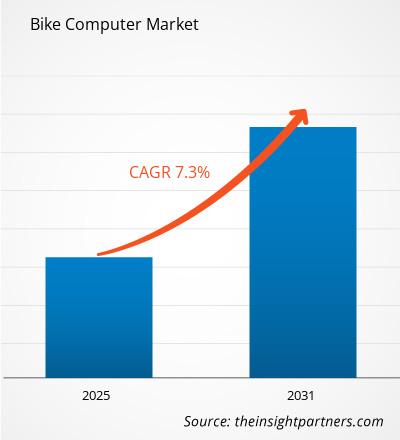
The Bike Computer market size was estimated to be US$ 741.73 Million in 2025 and is forecasted to touch US$ 1,044.75 Million in 2034 with a CAGR of 4.37%. The factors influencing the growth of this market include increased bicycle use, sensor-based monitoring, small navigation gadgets, e-bikes adoption, and transition from basic speed indicators to connected wireless systems being used by commuter cyclists, fitness cyclists, and racing cyclists.
In North America, Bike Computer market growth is forecast to grow at a CAGR of 3.9–4.7% over 2026–2034 due to recreational riding, gravel riding, city commuting, and bike shop renovations. Cyclists are updating their devices with features such as GPS tracking, mobile app integration, and ANT+/Bluetooth sensor connectivity while cycling clubs, cycling events, and use of e-bikes lead to increased measurement of distance, route, cadence, elevation, and training.
Bike Computer Market Assessment and Insights
- North America held 27–31% Bike Computer market share in 2025 and is growing at a CAGR of 3.9–4.7% during 2026–2034, supported by fitness cycling, gravel events, e-bike upgrades, and strong specialty retail service.
- US represented 78–82% of North American revenue in 2025 and is growing at a CAGR of 4.0–4.8% during 2026–2034, led by connected training and commuter safety demand.
- Europe accounted for 30–34% share in 2025 and is growing at a CAGR of 3.7–4.5% during 2026–2034, with Germany, France, the UK, Italy, and Spain leading sales.
- Asia Pacific held 28–32% share in 2025 and is growing at a CAGR of 4.8–5.7% during 2026–2034, led by China, Japan, South Korea, India, and Australia.
- Largest Segment Wireless Computer held 68–72% market share in 2025 and is growing at a CAGR of 4.6–5.4% during 2026–2034 as riders prioritize sensor pairing and cleaner installation.
- High Growth Segment Athletics and Sports represented 38–42% market share in 2025 and is growing at a CAGR of 5.1–6.0% during 2026–2034 as structured training adoption rises.
- Key companies analyzed in detail: Bryton Inc.; CATEYE Co., Ltd.; Cycle Parts GmbH; Garmin Ltd.; Giant Manufacturing Co. Ltd.; MSW Bicycle Accessories; Polar Electro Oy; SIGMA-ELEKTRO GmbH; Stages Cycling, LLC; Trek Bicycle Corporation.
Source: The Insight Partners' analysis based on proprietary research, government publications, company annual reports, investor presentations, industry databases, and expert interviews.
From the use of magnetic odometers, the industry has transitioned to the manufacture of smaller and portable units that utilize GPS technology along with wireless sensors, apps, uploaders and sometimes radar information and even data from e-bikes. Production considerations revolve around availability of chips, low power displays, waterproof casings, secure mounting options, and firmware capability. Bike Computers manufacturers now focus on making their products user-friendly, power-saving, and interoperable.
The Bike Computer Market forecasts indicate that future demand for the product will be influenced by urban cycling regulations, increased spending on bicycles accessories, and growing popularity of data-driven fitness programs. New geographies will be able to acquire these products via online platforms, while existing players will be focusing on color displays, tracking, and training capabilities. The emphasis on road safety and development will encourage adoption of these products among city commuters who require route knowledge and secure mountings.
Bike Computer Market Report Scope
| Report Attribute | Details |
|---|---|
| Market size in 2025 | US$ 741.73 Million |
| Market Size by 2034 | US$ 1,044.75 Million |
| Global CAGR (2026 - 2034) | 4.37% |
| Historical Data | 2021-2024 |
| Forecast period | 2026-2034 |
Bike Computer Market Analysis
Bike Computers are fuelled by bike enthusiasts’ search for better data about their ride than smartphones can offer while mounted on the handlebar. Specialized devices feature longer battery life, resistance to weather conditions, physical buttons and sensor continuity through long rides. Ride data became more important because of fitness platforms like Strava, TrainingPeaks and brand-specific applications, making the bike computer a source for performance, navigation and post-ride data analysis.
The value chain involves the GNSS chipsets manufacturers, display producers, firmware developers, sensor manufacturers, mount producers, bicycle distributors and e-commerce providers. Dynamics of supply chains depend on miniaturization of parts, efficient battery consumption, Bluetooth and ANT+ compatibility and quick software updates. Bike brands should satisfy both price-conscious commuter and professional athletes’ needs for maps, power meters connectivity and structured workouts.
Bike Computer market analysis reflects competition based on ecosystem strength and tier of products. Garmin Ltd. dominates the top-end GPS market; whereas Bryton Inc., SIGMA-ELEKTRO GmbH, CATEYE Co., Ltd., and Polar Electro Oy cater to training and utility requirements. Giant Manufacturing Co. Ltd., Trek Bicycle Corporation, Cycle Parts GmbH, MSW Bicycle Accessories, and Stages Cycling, LLC assist in widening the channels and offering accessories as well as bike-based distribution.
There is a trend towards investment in better display screens, quick routing capability, solar compatibility, firmware-driven features, and safer group rides communication. Positioning strategy revolves around the ability to turn a hardware purchase into an ecosystem involving sensors, mounts, training apps, radar lights, and compatibility with e-bikes. Companies that have reliable customer service and regularly update their products are more likely to sustain margins in a category where smartphone competition is evident.
● REPORT CUSTOMIZATION
Tailor This Report To Align With Your Specific Business Requirements
This report can be customized to align precisely with your business objectives, scope, and target markets. Customization options include tailored segmentation, geography, competitive analysis, and strategic insights to support informed decision-making.
Customize This Report →WHAT YOU CAN ADJUST
- ● Segmentations
- ● Geography
- ● Competitive Analysis
- ● Language Preferences
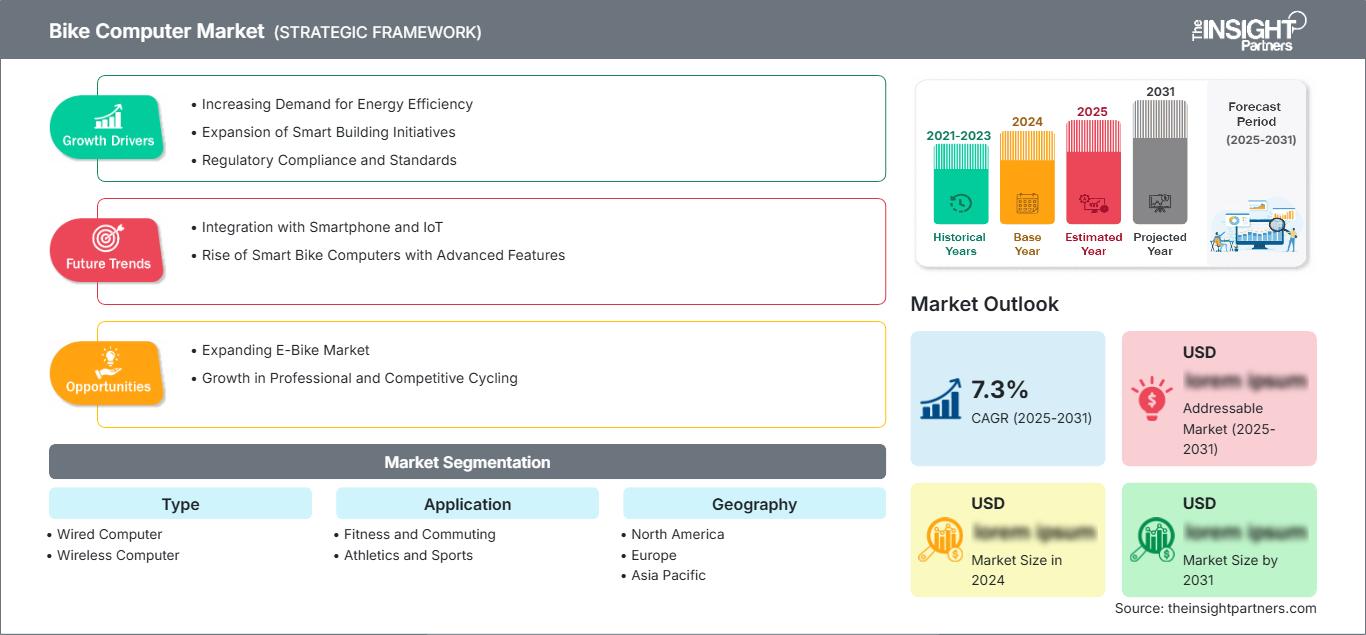
Bike Computer Market: Strategic Insights
Regional Insights
North America Bike Computer Market
North America is expected to capture 27–31% market share in 2025 and further exhibit a CAGR of 3.9–4.7% from 2026 to 2034. The growth is attributed to fitness riding, gravel racing, triathlon practice, e-bike commute, and specialty bike shops explaining the pairing and route planning using sensors.
The structural factors driving demand include tiredness of using a phone for longer rides, road safety, organized cycling community using data to pace, endurance development, and route sharing. The companies such as Garmin Ltd., Trek Bicycle Corporation, CATEYE Co., Ltd., and Bryton Inc. derive benefits due to the wide availability online, and a local bike shop is crucial for mounting.
U.S. Bike Computer Market
U.S. accounted for 78-82% share of North America revenue in 2025 and expected to witness a CAGR of 4.0-4.8% between 2026 and 2034. Highest application demands are from fitness and commuting in which case users utilize navigational features, speed and distance measurement, heart rate pairing, and safety device compatibility for regular short-distance cycling.
Corporate strength is achieved by Garmin Ltd., Trek Bicycle Corporation, MSW Bicycle Accessories, along with CATEYE Co., Ltd., Bryton Inc., and SIGMA-ELEKTRO GmbH products availability. Demand for higher-end products among athletics and sports consumers is fueled by power meters, training packages, and multiple band positioning, while commuter cyclists prefer rugged wireless devices with easy app downloads.
Europe Bike Computer Market
Europe had a share of 30–34% in 2025 and was projected to witness a growth rate of CAGR between 3.7–4.5% during 2026–2034. Germany was leading the market due to cycling culture, high penetration of e-bikes, and specialized retailers for wireless computer upgrade services. The UK contributed to endurance, commuting, and club cycling needs.
France, Italy, and Spain were contributing to road cycling tourism, amateur races, and a performance bike community. Map accuracy, weather resistance, mount replaceability, privacy settings, and compatibility with e-bike systems are some of the considerations by consumers of the region. SIGMA-ELEKTRO GmbH and Cycle Parts GmbH boost the regional presence, whereas Garmin Ltd. and Bryton Inc. are key competitors.
APAC Bike Computer Market
Asia Pacific accounted for 28–32% share in 2025 and is forecast to grow at a CAGR of 4.8–5.7% during 2026–2034. China leads through manufacturing scale, e-commerce depth, and cycling accessory affordability.
Japan and South Korea add premium electronics expectations, while India and Australia support growth through urban fitness, endurance events, and bikepacking. Policy support for cycling lanes, congestion reduction, and health-oriented mobility improves the adoption base. Giant Manufacturing Co. Ltd. and Bryton Inc. benefit from regional production and brand familiarity.
Middle East & Africa Bike Computer Market
The Middle East & Africa market is projected to grow at a CAGR of 3.2–4.1% during 2026–2034. The UAE leads through premium cycling communities, organized events, and indoor-outdoor training habits.
Saudi Arabia is improving sports infrastructure, while South Africa contributes through road cycling, mountain biking, and specialty retail. Rest of MEA demand remains concentrated in urban pockets where distributors can provide warranty support, mounts, sensors, and replacement accessories. Harsh climate conditions make battery endurance, screen visibility, and water resistance important purchase criteria.
Segmentation Analysis
Type
Type is projected to grow at a CAGR of 4.1–4.9% during 2026–2034. The Bike Computer scope covers wired and wireless computers, with demand moving toward wireless devices because riders prefer easier installation, cleaner cockpits, app connectivity, and compatibility with cadence, heart-rate, speed, radar, and power sensors. Wired models remain relevant for low-cost utility use.
- Wired Computer devices serve commuters, students, entry-level riders, and fleet bicycles where price, long battery life, and simple speed-distance measurement matter more than navigation or app synchronization.
- Wireless Computer devices lead adoption because they support cleaner installation, broader sensor pairing, GPS functions, smartphone uploads, route guidance, and premium features needed by fitness and sport cyclists.
Application
Application is forecast to grow at a CAGR of 4.3–5.1% during 2026–2034. Fitness and commuting generate broad recurring demand as riders track distance, time, speed, navigation, and ride history. Athletics and sports produce higher average selling prices because competitive cyclists require power integration, structured workouts, race pacing, climb analytics, and device reliability across long training blocks.
- Fitness and Commuting remains the broadest use case, supported by daily route tracking, calorie monitoring, safer navigation, e-bike data, and affordable wireless devices for practical urban riders.
- Athletics and Sports is strategically important because serious riders buy premium displays, power compatibility, mapping, nutrition alerts, training analytics, and race-focused firmware that lift margins.
Opportunity Snapshot
| Application | Revenue Contribution | Trend Tag | Adoption Stage |
| Fitness and Commuting | High | Route Safety | Scaling |
| Athletics and Sports | Medium | Training Analytics | Mature |
Bike Computer Market Growth Drivers and Impact Analysis
Connected training ecosystems increase device stickiness
Cyclists increasingly want one device to capture ride data, display structured workouts, pair with power meters, and upload automatically to training platforms. This changes purchasing behavior because the computer becomes part of a recurring fitness routine rather than a one-time accessory. The market impact is higher replacement frequency for riders who need better displays, faster processors, and improved battery life. Brands also gain subscription, app, and accessory opportunities by linking devices with heart-rate straps, cadence sensors, radar lights, and coaching tools. As users accumulate ride history, switching costs rise, helping established ecosystems protect share while giving mid-range brands room to compete through compatibility and price.
Urban cycling and e-bike adoption widen the user base
Commuters and e-bike riders are expanding demand beyond performance cycling. A handlebar computer can show speed, distance, battery-related data, navigation cues, and trip history without draining a phone. The impact is strongest where cities invest in cycling lanes, employers support active commuting, and consumers buy e-bikes for practical mobility. These users often begin with simple wireless computers, then upgrade to GPS units as route planning and safety features become important. Suppliers can address this segment with readable screens, theft-resistant mounts, intuitive setup, and bundles that combine computers with lights or sensors.
Navigation reliability supports premium replacement cycles
Route guidance has become a primary reason to choose a dedicated computer over a basic odometer. Riders on gravel, touring, mountain, and endurance routes need stable positioning, long battery life, and clear prompts in variable weather. The market impact is a shift toward color displays, multi-band satellite reception, faster map redraws, and offline route storage. Premium products are better placed to monetize this need, but mid-range models are also adding turn-by-turn guidance. Manufacturers that simplify route import from popular apps can reduce setup friction and reach riders who previously relied on phones.
Bike Computer Market Future Trends
Smarter ride context and adaptive coaching
Bike Computer market trends point toward devices that interpret ride context rather than merely recording metrics. Future computers will combine route profile, weather, rider history, power output, heart-rate response, and nutrition timing to offer more useful prompts during a ride. This direction should appeal to endurance athletes and serious recreational cyclists who want coaching support without constant phone interaction. It will also raise expectations for firmware quality, data privacy, and sensor accuracy. Vendors that deliver actionable guidance in simple language can differentiate even if hardware specifications become similar across price tiers.
Safety-device integration becomes a standard feature
Rear radar, smart lights, crash alerts, and group-ride communication are likely to become more common in mainstream computers. The future value proposition will extend from performance measurement to situational awareness, especially for commuters and road cyclists sharing traffic corridors. This trend will push manufacturers to improve display alerts, audible warnings, battery coordination, and compatibility with third-party safety accessories. Retailers may also bundle computers with lights and radar to position connected visibility as a practical upgrade. As safety features broaden, product comparisons will include alert reliability and ecosystem breadth alongside screen size and navigation.
Bike Computer Market Opportunities
Mid-range GPS upgrades for daily riders
Bike Computer Market Forecasts support investment in mid-range GPS models that convert commuters and fitness riders from basic wired displays. The opportunity is to deliver simple route guidance, phone-free tracking, weather resistance, and clean wireless setup at prices below premium racing units. Brands can act through retail bundles, app-based onboarding, commuter-focused messaging, and compatibility with e-bike systems. This segment is attractive because many riders need reliability and usability rather than advanced race analytics. Suppliers that reduce setup complexity and provide strong customer support can unlock repeat purchases for mounts, sensors, and upgraded devices.
E-bike data integration for OEM and aftermarket channels
E-bike adoption creates an opportunity for computers that display ride metrics alongside assist level, battery status, range, and navigation. Bicycle manufacturers and accessory brands can cooperate on factory-ready mounts, dealer installation, and app integration. The aftermarket opportunity is also meaningful because existing e-bike owners often want a clearer display than a small controller screen. Vendors should prioritize compatibility, rugged connectors, and regional language support. Successful products can reach commuters, cargo-bike users, touring riders, and rental fleets that need reliable data visibility for daily operations and maintenance planning.
Recent Developments
- May 2026: iGPSPORT, a trusted name in cycling GPS technology, has officially launched the BSC500 full-color large-screen GPS cycling computer. Designed for riders looking to level up without breaking the bank, the BSC500 is priced at €159.90 and packs features normally found on higher-end devices.
- September 2025: Garmin (NYSE: GRMN) announced the Edge 550 and 850, advanced and compact cycling computers built to help riders better prepare and train for an event or goal. By tracking their progress through adaptive Garmin Cycling Coach plans, cyclists can feel their best going into race day. When in-ride, smart fueling alerts offer custom nutrition and hydration recommendations while real-time weather overlays keep riders informed from start to finish. Boasting a bright and colorful 2.7-inch display, Edge 550 and 850 are also highly responsive and feature fast, smooth map redraw while navigating. And with up to 36 hours of ride time in battery saver mode and up to 12 hours in demanding use cases, these cycling computers can support cyclists through their longest rides.
- June 2024: After years of innovating the industry's leading GPS sport watches–defined by long battery life, an incredibly easy-to-use interface, and robust training software–COROS announced that it will bring the same winning formula to an all-new, solar-powered GPS bike computer, the COROS DURA. Using simplicity as the guiding principle for the new bike computer, COROS has prioritized rider experience by addressing multiple pain points. From seemingly endless battery life, to using Google Maps for navigation, to lightning-fast upload speeds, and much more – the innovation packed into this head unit is unrivaled in the GPS computer market.
Frequently Asked Questions

- Comprehensive Market Sizing and Forecast Analysis
- Detailed Segmentation Analysis
- In-Depth Market Dynamics Assessment
- Regional and Country-Level Insights
- Competitive Landscape and Company Benchmarking
- Strategic Business Intelligence
Recent Reports
Testimonials

The Insight Partners' SCADA System Market report is comprehensive, with valuable insights on current trends and future forecasts. The team was highly professional, responsive, and supportive throughout. We are very satisfied and highly recommend their services.
RAN KEDEM Partner, Reali Technologies LTDs
I requested a report on a very specific software market and the team produced the report in a few days. The information was very relevant and well presented. I then requested some changes and additions to the report. The team was again very responsive and I got the final report in less than a week.
JEAN-HERVE JENN Chairman, Future Analytica
We worked with The Insight Partners for an important market study and forecast. They gave us clear insights into opportunities and risks, which helped shape our plans. Their research was easy to use and based on solid data. It helped us make smart, confident decisions. We highly recommend them.
PIYUSH NAGPAL Sr. Vice President, High Beam Global
The Insight Partners delivered insightful, well-structured market research with strong domain expertise. Their team was professional and responsive throughout. The user-friendly website made accessing industry reports seamless. We highly recommend them for reliable, high-quality research services
YUKIHIKO ADACHI CEO, Deep Blue, LLC.
This is the first time I have purchased a market report from The Insight Partners.While I was unsure at first, I visited their web site and felt more comfortable to take the risk and purchase a market report.I am completely satisfied with the quality of the report and customer service. I had several questions and comments with the initial report, but after a couple of dialogs over email with their analyst I believe I have a report that I can use as input to our strategic planning process.Thank you so much for taking the extra time and making this a positive experience.I will definitely recommend your service to others and you will be my first call when we need further market data.
JOHN SUZUKI President and Chief Executive Officer, Board Director, BK Technologies
I wish to appreciate your support and the professionalism you displayed in the course of attending to my request for information regarding to infectious disease IVD market in Nigeria. I appreciate your patience, your guidance, and the fact that you were willing to offer a discount, which eventually made it possible for us to close a deal. I look forward to engaging The Insight Partners in the future, all thanks to the impression you have created in me as a result of this first encounter.
DR CHIJIOKE ONYIA MANAGING DIRECTOR, PineCrest Healthcare Ltd.Reason to Buy
- Informed Decision-Making
- Understanding Market Dynamics
- Competitive Analysis
- Identifying Emerging Markets
- Customer Insights
- Market Forecasts
- Risk Mitigation
- Boosting Operational Efficiency
- Strategic Planning
- Investment Justification
- Tracking Industry Innovations
- Aligning with Regulatory Trends





 Get Free Sample for