
Blood Glucose Monitoring Devices Market Size, Share & Trends by 2034
Coverage: By Product (Self-Monitoring Devices, Continuous Blood Glucose Monitoring Devices); End User (Hospitals, Home care, Diagnostic centers) , and Geography (North America, Europe, Asia Pacific, and South and Central America)
- Status : Data Released
- Report Code : TIPRE00021559
- Category : Life Sciences
- No. of Pages : 150
- Available Report Formats :


- Last update date : July 22, 2026


2025 Market Size
US$ 18.61 Bn
Base year value
2034 Forecast
US$ 34.37 Bn
Projected by 2034
CAGR 2026-2034
7.05 %
Growth rate
Addressable Market
US$ 239.12 Bn
(2026-2034)
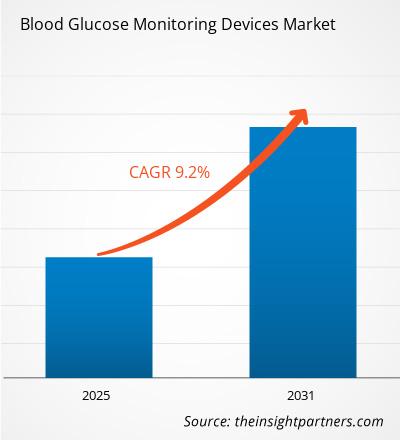
The Blood Glucose Monitoring Devices Market was valued at US$ 18.61 Billion in 2025 and is projected to reach US$ 34.37 Billion by 2034, expanding at a CAGR of 7.05% during 2026–2034. Growth reflects accelerating use of glucose testing systems across diabetes care pathways, wider adoption of continuous sensing platforms, and the sustained need for self-management tools among patients requiring routine glycemic monitoring.
North America remains a structurally advanced demand center, with the Blood Glucose Monitoring Devices Market size supported by high diagnosed diabetes prevalence, broad private and public reimbursement, and rapid integration of continuous glucose monitoring into insulin-management protocols. The region is estimated to expand at a CAGR range of 6.4–6.9% during 2026–2034, driven by connected care adoption and expanding use among type 2 diabetes patients.
Blood Glucose Monitoring Devices Market Assessment and Insights
- North America accounted for 37–39% share in 2025 and is growing at a CAGR between 2026–2034 of 6.4–6.9%, supported by CGM reimbursement, pharmacy-channel expansion, and high clinician familiarity with digital diabetes management.
- US represented 84–87% share of North America in 2025 and is growing at a CAGR between 2026–2034 of 6.5–7.0%, aided by OTC CGM pathways and insulin-user penetration.
- Europe held 26–28% share in 2025 and is growing at a CAGR between 2026–2034 of 6.0–6.5%, with Germany, the UK, France, Italy, and Spain leading uptake through structured diabetes programs.
- Asia Pacific captured 23–25% share in 2025 and is growing at a CAGR between 2026–2034 of 8.0–8.6%, led by China, Japan, India, South Korea, and Australia as screening improves.
- Largest Segment Self-Monitoring Devices held 57–60% market share in 2025, with CAGR range 2026–2034 of 4.7–5.3%, reflecting affordability, test-strip replacement demand, and primary-care use.
- High-Growth Segment Continuous Blood Glucose Monitoring Devices held 40–43% market share in 2025, with CAGR range 2026–2034 of 10.0–10.8%, driven by sensor miniaturization and automated insulin delivery.
- Key companies analyzed in detail: Abbott Laboratories, Medtronic plc, F. Hoffmann-La Roche Ltd, Bayer AG, Becton, Dickinson and Company, Insulet Corporation, DexCom, Inc., Sanofi S.A., Eli Lilly and Company, Novo Nordisk A/S.
Source: The Insight Partners' analysis based on proprietary research, government publications, company annual reports, investor presentations, industry databases, and expert interviews.
The trend in innovation has moved the landscape from finger-stick sampling on an as-needed basis to continuous, application-linked, and decision-support systems. The production focus is now on high-volume sensors, stability of enzymes, reduced power usage, and adhesive efficacy. Strip technologies remain the backbone of critical care applications in economies where costs are a key factor, whereas CGM solutions dominate clinical value differentiation. According to the IDF, 589 million adults are suffering from diabetes around the world.
The forecasted period will see the growth of insurance programs, telemedicine facilities, and national programs on noncommunicable diseases in new geographic regions. The regulatory environment is characterized by sensor over-the-counter clearance and increased interoperability standards. Affordable pricing, distribution through pharmacies, and integration with insulin delivery devices and coaching software are anticipated by manufacturers as health systems switch their strategy from acute glucose control to metabolic risk management.
Blood Glucose Monitoring Devices Market Report Scope
| Report Attribute | Details |
|---|---|
| Market size in 2025 | US$ 18.61 Billion |
| Market Size by 2034 | US$ 34.37 Billion |
| Global CAGR (2026 - 2034) | 7.05% |
| Historical Data | 2021-2024 |
| Forecast period | 2026-2034 |
Blood Glucose Monitoring Devices Market Analysis
Blood Glucose Monitoring Devices Market growth is tied to diagnosed diabetes prevalence, insulin intensification, and the clinical need to reduce hypoglycemia, hyperglycemia, and avoidable admissions. According to the WHO, there are now 830 million diabetics in 2022, while according to IDF, there are over 252 million undiagnosed diabetics among adults, resulting in a continuous need for affordable testing and monitoring devices.
The value chain is shifting from production of meters and distribution of strips to sensors, transmitters, apps, dashboard software, and analytics solutions. Sourcing continues to be influenced by semiconductors, polymer adhesives, sterilization capabilities, and inventory control at pharmacies. Companies with an integrated platform of sensors and logistics have a competitive advantage over those who solely rely on commodity meters.
Competitive intensity is high because the Blood Glucose Monitoring Devices Market analysis increasingly centers on precision, digital ecosystems, payer evidence, and interoperability. Abbott Laboratories and DexCom, Inc. are prominent in CGM, whereas Medtronic plc and Insulet Corporation integrate sensing with automated insulin delivery solutions. F. Hoffmann-La Roche Ltd, Bayer AG, and Becton, Dickinson and Company remain pertinent due to their presence through conventional diabetes management pathways.
New investment considerations include automation of manufacturing processes, extended-life sensors, artificial intelligence-driven pattern detection, and direct consumer access. Sanofi S.A., Eli Lilly and Company, and Novo Nordisk A/S exert indirect influence through their diabetes treatment portfolios and patient programs. Positioning within the space is now driven by outcomes data, subscription income, and cooperation with payers, pharmacies, and digital health players.
● REPORT CUSTOMIZATION
Tailor This Report To Align With Your Specific Business Requirements
This report can be customized to align precisely with your business objectives, scope, and target markets. Customization options include tailored segmentation, geography, competitive analysis, and strategic insights to support informed decision-making.
Customize This Report →WHAT YOU CAN ADJUST
- ● Segmentations
- ● Geography
- ● Competitive Analysis
- ● Language Preferences
Blood Glucose Monitoring Devices Market: Strategic Insights

Regional Insights
North America Blood Glucose Monitoring Devices Market
North America accounted for 37–39% share in 2025 and is expanding at a CAGR range of 6.4–6.9% during 2026–2034. The region benefits from high diabetes diagnosis rates, broad reimbursement for insulin users, and rapid movement of CGM systems into pharmacy channels. Blood Glucose Monitoring Devices Market share remains concentrated in the US because prescriber networks, payer coverage, and specialist endocrinology pathways are well developed.
Demand is also supported by consumer-facing glucose biosensing, remote patient monitoring, and value-based care models that reward fewer acute episodes. FDA pathways for integrated and over-the-counter CGM systems have encouraged faster product cycles. Canada adds steady demand through provincial reimbursement expansions, while Mexico contributes through private hospital networks and rising urban diabetes screening.
U.S. Blood Glucose Monitoring Devices Market
The US represented 84–87% of North America share in 2025 and is growing at a CAGR range of 6.5–7.0% during 2026–2034. The market benefits from large insulin-treated populations, established pharmacy benefit channels, and broader payer coverage for type 2 diabetes. Dexcom’s Stelo pediatric OTC clearance in June 2026 illustrates continued regulatory expansion beyond conventional insulin-dependent use.
Company presence is unusually dense, with Abbott Laboratories, DexCom, Inc., Medtronic plc, Insulet Corporation, and Becton, Dickinson and Company maintaining commercial, clinical, or distribution operations. Application trends emphasize CGM-guided therapy adjustment, integration with pumps, and data sharing with caregivers. Hospitals use connected monitoring selectively, while home care remains the dominant growth setting for recurring sensor and strip consumption.
Europe Blood Glucose Monitoring Devices Market
Europe held 26–28% share in 2025 and is expanding at a CAGR range of 6.0–6.5% during 2026–2034. The UK is a leading adopter because national diabetes pathways support structured monitoring, while integrated primary-care records make ongoing review easier. Procurement discipline keeps average selling prices controlled, but clinical acceptance of CGM is increasing among insulin-intensive patients.
Germany leads Europe in revenue contribution, supported by statutory insurance coverage, specialist diabetology networks, and strong medical device distribution. Reimbursement evidence remains central, so suppliers must demonstrate improved time-in-range, fewer hypoglycemic events, and lower emergency utilization. Domestic clinical research infrastructure also supports product evaluation and post-market evidence generation.
France, Italy, and Spain contribute through expanding hospital endocrinology services, public-sector tendering, and growing home-monitoring awareness. Adoption remains more uneven in Southern Europe, but aging populations and national prevention initiatives are improving testing frequency. These countries provide important volume growth for self-monitoring devices while gradually widening CGM access.
APAC Blood Glucose Monitoring Devices Market
APAC held 23–25% share in 2025 and is growing at a CAGR range of 8.0–8.6% during 2026–2034. China is the leading country by volume, while Japan and Australia show higher CGM penetration. India, South Korea, and Southeast Asian markets are expanding through urban screening, private insurance, and digital pharmacy access.
Policy drivers include noncommunicable disease programs, public hospital modernization, and wider primary-care testing. Industrial advantages are emerging in electronics assembly, sensor component sourcing, and lower-cost meter production. Growth is strongest where reimbursement, smartphone adoption, and diabetes education converge.
Middle East & Africa Blood Glucose Monitoring Devices Market
The Middle East & Africa market is growing at a CAGR range of 6.8–7.4% during 2026–2034. The leading market adopter in the region is Saudi Arabia due to a large burden of diabetes, investment in hospitals, and planned transformation in national health. Premium CGM market adopter in the UAE is due to the use of private care and wellness consumer base.
South Africa forms the bedrock of Sub-Saharan demand through private hospital networks. RoMEA demand will remain tender-driven, with clinics funded by donors and affordability. Oil-exporting Gulf markets provide the means for healthcare infrastructure investment, but accessibility issues exist in poor healthcare systems where strips are affordable and devices are available.
Segmentation Analysis
Product
The Product segment is projected to grow at a CAGR range of 6.2–6.8% during 2026–2034. The Blood Glucose Monitoring Devices Market scope is widening as self-monitoring systems serve affordability-driven testing needs, while CGM platforms reshape intensive diabetes management. Product demand is increasingly divided between disposable consumables, connected sensors, mobile applications, and integrated insulin-delivery ecosystems.
- Self-Monitoring Devices remain strategically important because meters and strips are affordable, familiar, and widely used in primary care, diagnostic centers, and low-reimbursement settings requiring periodic glucose checks.
- Continuous Blood Glucose Monitoring Devices are gaining strategic relevance as users and clinicians prioritize trend visibility, alerts, time-in-range metrics, and data sharing across home care and insulin-management workflows.
End User
The End User segment is projected to grow at a CAGR range of 6.7–7.3% during 2026–2034. Home-based use dominates recurring demand as patients shift from clinic-dependent testing to continuous self-management. Hospitals remain influential for initiation, education, and complex cases, while diagnostic centers support screening and early detection in high-risk populations.
- Hospitals provide assistance in device initiation, inpatient glycemic assessment, consulting with specialists, and therapy management, especially for those on insulin, pregnant women with diabetes, and those switching to connected devices.
- Home care creates a high ongoing demand as the patient needs regular readings, sensor changes, alerts, and caregiver connectivity, thus convenience and coverage become key to adoption.
- Diagnostic Centers act as screening facilities, especially in urban and semi-urban areas where undiagnosed diabetes cases are still high, and a doctor needs to know the initial level of glucose.
Opportunity Snapshot
| Segment Name | Revenue Contribution | Trend Tag | Adoption Stage |
| Hospitals | Medium | Inpatient CGM | Scaling |
| Home care | High | Connected Care | Mature |
| Diagnostic Centers | Medium | Early Screening | Scaling |
Blood Glucose Monitoring Devices Market Growth Drivers and Impact Analysis
Rising Diabetes Burden and Need for Earlier Intervention
Globally, the occurrence of diabetes will ensure a robust testing audience in developed and developing health care setups. According to the IDF, 589 million adults have diabetes, which will increase to 853 million in 2050, while the WHO indicates that more than half of the adults with diabetes had not been on any drugs in 2022. This reflects that the need for monitoring does not stop at those patients using insulin. The market effect in reality will be an extension of the market within the screening, diagnosing, treatment, and follow-ups. Manufacturers are favored by health systems that emphasize early identification, as each identified patient will need periodic visibility of glucose levels.
Shift from Episodic Testing to Continuous Data-Driven Care
The process of clinical decision-making is shifting from sporadic glucose testing to analyzing glucose trends. The benefit of continuous monitoring is the ability for physicians to detect nighttime low blood sugar, post-meal glucose spikes, and time-in-range metrics that cannot be achieved with the help of finger stick testing. The effect is influencing the purchase decision in favor of not one-time use meter devices but subscription-based sensor ecosystems. CGM systems are used by hospitals and specialists to fine-tune therapy, and by at-home users who receive alerts and monitoring capabilities. It is especially true of insulin-dependent patients, pregnancy-induced diabetes management, and high-risk type 2 diabetes cases.
Reimbursement Expansion and Pharmacy Channel Penetration
Improvement of coverage has increased affordability and access outside specialized clinics. Pharmacy distribution alleviates this issue through the convenient provision of sensors, meters, and strips at consumer touchpoints, where refill and education are easy to handle. In the US, OTC pathway and payer approval are motivating newer users to consider their glucose monitoring. In Europe and APAC, evidence reimbursement requirements for outcomes are forcing companies to develop outcomes-based evidence and increase the confidence of the physicians. Market impact of such reimbursement trend is an increased recurring volume and faster replacement cycle. Reimbursement itself supports companies who can document, train, and deliver reliably.
Blood Glucose Monitoring Devices Market Future Trends
Preventive Glucose Biosensing for Non-Insulin Users
Blood Glucose Monitoring Devices Market trends will increasingly include preventive biosensing among non-insulin users, prediabetes populations, and cardiometabolic wellness programs. OTC glucose sensors are creating a new pathway for patients whereby information about glucose level will help in altering their lifestyle and only later move towards more intense pharmacotherapy. This does not mean that such a trend will substitute any kind of regulated diabetes management; however, it can be used to extend the user base if there is clarity in the process of interpretation and consultation with the healthcare professionals. There are several players who will be able to use glucose insights to provide nutrition coaching and patient segmentation.
Interoperable Closed-Loop and Multi-Analyte Platforms
The future competitive landscape for devices will revolve around interoperability between insulin pumps, smart pens, and multi-analyte sensing. The approval of Medtronic's Simplera Sync for MiniMed 780G and CE Mark by Abbott for the first ever dual glucose-ketone sensor demonstrate the direction that the roadmaps are headed towards for decision-making in metabolic health. Long wear-time sensors, compact hardware design, and standardization of data exchange can play an important role for compliance. Multi-analyte sensor technologies may aid in detection of any potential ketoacidosis risk, specifically among people using intensive insulin therapy and therapies prone to ketones.
Blood Glucose Monitoring Devices Market Opportunities
Affordable CGM Models for Emerging Health Systems
Manufacturers can unlock the Blood Glucose Monitoring Devices Market Forecasts by developing affordability-tier CGM systems for emerging economies. Opportunities lie in lowering sensor prices, the reuse of parts, simple app functionality, and partnering for distribution with pharmacies and clinics. There is a need for China, India, Southeast Asia, and Gulf region solutions that strike a balance between accuracy and price. Success lies in reimbursement pilots, educating clinicians, and supply chain management to avoid stockouts. Organizations can bundle their CGM start-up kits along with diabetes counseling services. The best way forward is through selective market entry, starting with urban insulin users and then moving towards Type 2 diabetes patients.
Integrated Data Services for Providers and Payers
There is a significant investment opportunity for analytical platforms that help make use of glucose levels to develop workflows for care management. There is a need to develop patient dashboards that identify the individuals with repeat excursions, missed scans, or risk for hypoglycemia. Both clinicians and payers need the link between monitoring and fewer acute episodes. Device manufacturers can go beyond making devices and offer services such as clinical reporting, remote monitoring and integration with EHRs. There is the biggest opportunity for the markets with value-based care motivation and coaching programs for diabetes.
Recent Developments
- June 2026: DexCom, Inc. announced regulatory milestones for Stelo, including FDA clearance expanding use to children aged two years and older who do not use insulin, along with plans for a redesigned Stelo app and broader international availability in the UK, Australia, New Zealand, and South Korea.
- May 2026: Abbott Laboratories secured CE Mark for what it described as the world’s first dual glucose-ketone sensing technology for people with diabetes, advancing its biowearable roadmap toward multi-analyte monitoring aimed at earlier detection of metabolic risk in intensive diabetes management.
- April 2025: Medtronic plc received US FDA approval for the Simplera Sync sensor for use with the MiniMed 780G system, expanding its CGM portfolio with an all-in-one disposable sensor designed for no fingersticks with SmartGuard and a simplified two-step insertion process.
Frequently Asked Questions

- Comprehensive Market Sizing and Forecast Analysis
- Detailed Segmentation Analysis
- In-Depth Market Dynamics Assessment
- Regional and Country-Level Insights
- Competitive Landscape and Company Benchmarking
- Strategic Business Intelligence
Recent Reports
Testimonials

The Insight Partners provided valuable market intelligence that supported our global go-to-market strategy. Their team was professional, responsive, and attentive to our feedback, providing thoughtful analysis and helpful methodological clarifications throughout the project.
Junmo Kim Chief Financial Officer (CFO), Enertech Co., Ltd.
The Insight Partners' SCADA System Market report is comprehensive, with valuable insights on current trends and future forecasts. The team was highly professional, responsive, and supportive throughout. We are very satisfied and highly recommend their services.
RAN KEDEM Partner, Reali Technologies LTDs
I requested a report on a very specific software market and the team produced the report in a few days. The information was very relevant and well presented. I then requested some changes and additions to the report. The team was again very responsive and I got the final report in less than a week.
JEAN-HERVE JENN Chairman, Future Analytica
We worked with The Insight Partners for an important market study and forecast. They gave us clear insights into opportunities and risks, which helped shape our plans. Their research was easy to use and based on solid data. It helped us make smart, confident decisions. We highly recommend them.
PIYUSH NAGPAL Sr. Vice President, High Beam Global
The Insight Partners delivered insightful, well-structured market research with strong domain expertise. Their team was professional and responsive throughout. The user-friendly website made accessing industry reports seamless. We highly recommend them for reliable, high-quality research services
YUKIHIKO ADACHI CEO, Deep Blue, LLC.
This is the first time I have purchased a market report from The Insight Partners.While I was unsure at first, I visited their web site and felt more comfortable to take the risk and purchase a market report.I am completely satisfied with the quality of the report and customer service. I had several questions and comments with the initial report, but after a couple of dialogs over email with their analyst I believe I have a report that I can use as input to our strategic planning process.Thank you so much for taking the extra time and making this a positive experience.I will definitely recommend your service to others and you will be my first call when we need further market data.
JOHN SUZUKI President and Chief Executive Officer, Board Director, BK Technologies
I wish to appreciate your support and the professionalism you displayed in the course of attending to my request for information regarding to infectious disease IVD market in Nigeria. I appreciate your patience, your guidance, and the fact that you were willing to offer a discount, which eventually made it possible for us to close a deal. I look forward to engaging The Insight Partners in the future, all thanks to the impression you have created in me as a result of this first encounter.
DR CHIJIOKE ONYIA MANAGING DIRECTOR, PineCrest Healthcare Ltd.Reason to Buy
- Informed Decision-Making
- Understanding Market Dynamics
- Competitive Analysis
- Identifying Emerging Markets
- Customer Insights
- Market Forecasts
- Risk Mitigation
- Boosting Operational Efficiency
- Strategic Planning
- Investment Justification
- Tracking Industry Innovations
- Aligning with Regulatory Trends





 Get Free Sample for