
Blood Glucose Monitoring Systems Market Growth, Demand & Size by 2034
Coverage: By Product (Self-Monitoring Blood Glucose Systems, Continuous Glucose Monitoring Systems); Testing Type (Invasive, Non-Invasive); Application (Type 1 Diabetes, Type 2 Diabetes, Gestational Diabetes), and Geography (North America, Europe, Asia Pacific, and South and Central America)
- Status : Data Released
- Report Code : TIPRE00017781
- Category : Life Sciences
- No. of Pages : 150
- Available Report Formats :


- Last update date : July 22, 2026


2025 Market Size
US$ 17.37 Bn
Base year value
2034 Forecast
US$ 36.56 Bn
Projected by 2034
CAGR 2026-2034
8.62 %
Growth rate
Addressable Market
US$ 241.79 Bn
(2026-2034)
The Blood Glucose Monitoring Systems Market is projected to grow from US$ 17.37 Billion in 2025 to US$ 36.56 Billion by 2034, registering a CAGR of 8.62% during 2026–2034. Growth is supported by rising diabetes prevalence, higher adoption of connected monitoring devices, and expanding reimbursement for continuous glucose monitoring across developed healthcare systems. Demand is also moving from episodic testing toward real-time glucose visibility.
Across North America, the Blood Glucose Monitoring Systems Market size is supported by strong payer coverage, endocrine care networks, and early adoption of wearable biosensors. The region is estimated to expand at 7.8–8.6% CAGR during 2026–2034, driven by integrated insulin delivery, OTC glucose biosensors, and remote patient monitoring programs that improve adherence among insulin-dependent and non-insulin Type 2 diabetes populations.
Blood Glucose Monitoring Systems Market Assessment and Insights
- North America: The region accounted for 40–43% share in 2025 and is expected to grow at a CAGR of 7.8–8.6% during 2026–2034, led by reimbursement expansion, CGM penetration, and dense specialist care access.
- US: The US represented 82–86% of North America revenue in 2025 and is projected to grow at a CAGR of 7.9–8.7% during 2026–2034, supported by OTC CGM launches.
- Europe: Europe held 26–29% share in 2025 and is set to grow at a CAGR of 7.4–8.2% during 2026–2034, with Germany, the UK, France, Italy, and Spain leading structured diabetes management.
- Asia Pacific: Asia Pacific captured 22–25% share in 2025 and is forecast to grow at a CAGR of 9.4–10.3% during 2026–2034, led by China, Japan, India, South Korea, and Australia.
- Largest Segment: Self-Monitoring Blood Glucose Systems held 56–60% market share in 2025 and is projected to grow at a CAGR of 6.5–7.3% during 2026–2034.
- High Growth Segment: Continuous Glucose Monitoring Systems held 40–44% market share in 2025 and is expected to grow at a CAGR of 10.6–11.8% during 2026–2034.
- Key companies analyzed in detail: Abbott Laboratories, Medtronic plc, Ypsomed Holding AG, F. Hoffmann-La Roche Ltd, LifeScan IP Holdings, LLC, Ascensia Diabetes Care Holdings AG, DexCom, Inc., B. Braun SE, Nipro Corporation, Sanofi S.A.
Source: The Insight Partners' analysis based on proprietary research, government publications, company annual reports, investor presentations, industry databases, and expert interviews.
The technology architecture has moved from meter-strip ecosystems to app-connected sensors, automated alerts, cloud-based dashboards, and integrated insulin dose delivery systems. There are efforts to optimize the chemical composition of sensors, longevity, calibration, and data interoperability without compromising on strip availability for market economies with limited resources. The production process is becoming dual track, whereby the high volume production of strips will continue and the production of sensors will be achieved through automation of electronics, adhesive patches, and sterilized disposables.
In the future, emerging regions will drive up incremental demand for units due to diabetes screening and growth in public/private health initiatives to monitor diabetes at home. In addition, there are increasing tailwinds of regulation for devices enabled by software technology, OTC availability, and pathways for CGM interoperability. Investments are now moving to sensors, lower-cost pharmacy distribution, and analytics that can be used in primary care facilities rather than specialty-based care.
Blood Glucose Monitoring Systems Market Report Scope
| Report Attribute | Details |
|---|---|
| Market size in 2025 | US$ 17.37 Billion |
| Market Size by 2034 | US$ 36.56 Billion |
| Global CAGR (2026 - 2034) | 8.62% |
| Historical Data | 2021-2024 |
| Forecast period | 2026-2034 |
Blood Glucose Monitoring Systems Market Analysis
Rising diagnosed diabetes, wider use of insulin therapy, and clinician preference for time-in-range metrics continue to support the Blood Glucose Monitoring Systems Market growth. This includes enzyme chemistry, sensor electrodes, lancets, meters, transmitters, mobile applications, cloud analysis, payers, pharmacies, and diabetes clinics. The supply structure continues to maintain equilibrium between consumable materials and durable equipment with CGM manufacturers emphasizing yield, sensor efficiency, adhesion and app functionality.
Similarly, the demand is driven by guidelines encouraging frequent visibility of glucose among insulin-dependent individuals and those with high-risk Type 2 diabetes. Manufacturers with reimbursement and distribution agreements will decrease the barrier to entry. On the other hand, glucometers continue to have their role in price-sensitive geographies, hospitals and alternative testing even as CGMs are rapidly adopted.
The Blood Glucose Monitoring Systems Market analysis shows a competitive landscape led by Abbott Laboratories and DexCom, Inc. in CGM, while F. Hoffmann-La Roche Ltd, LifeScan IP Holdings, LLC, Ascensia Diabetes Care Holdings AG, Nipro Corporation, and B. Braun SE retain important positions in self-monitoring and clinical supply channels. Medtronic plc links glucose sensing to automated insulin delivery, while Ypsomed Holding AG and Sanofi S.A. support connected diabetes care ecosystems.
Strategic positioning is increasingly defined by wear duration, reimbursement reach, patient onboarding, and integration with insulin pumps or smart pens. Abbott Laboratories’ FreeStyle Libre platform emphasizes scale and accessibility, DexCom, Inc. focuses on accuracy and connectivity, and Medtronic plc strengthens closed-loop differentiation. Smaller specialists and legacy meter companies are defending relevance through affordability, pharmacy access, and regional distribution partnerships.
● REPORT CUSTOMIZATION
Tailor This Report To Align With Your Specific Business Requirements
This report can be customized to align precisely with your business objectives, scope, and target markets. Customization options include tailored segmentation, geography, competitive analysis, and strategic insights to support informed decision-making.
Customize This Report →WHAT YOU CAN ADJUST
- ● Segmentations
- ● Geography
- ● Competitive Analysis
- ● Language Preferences
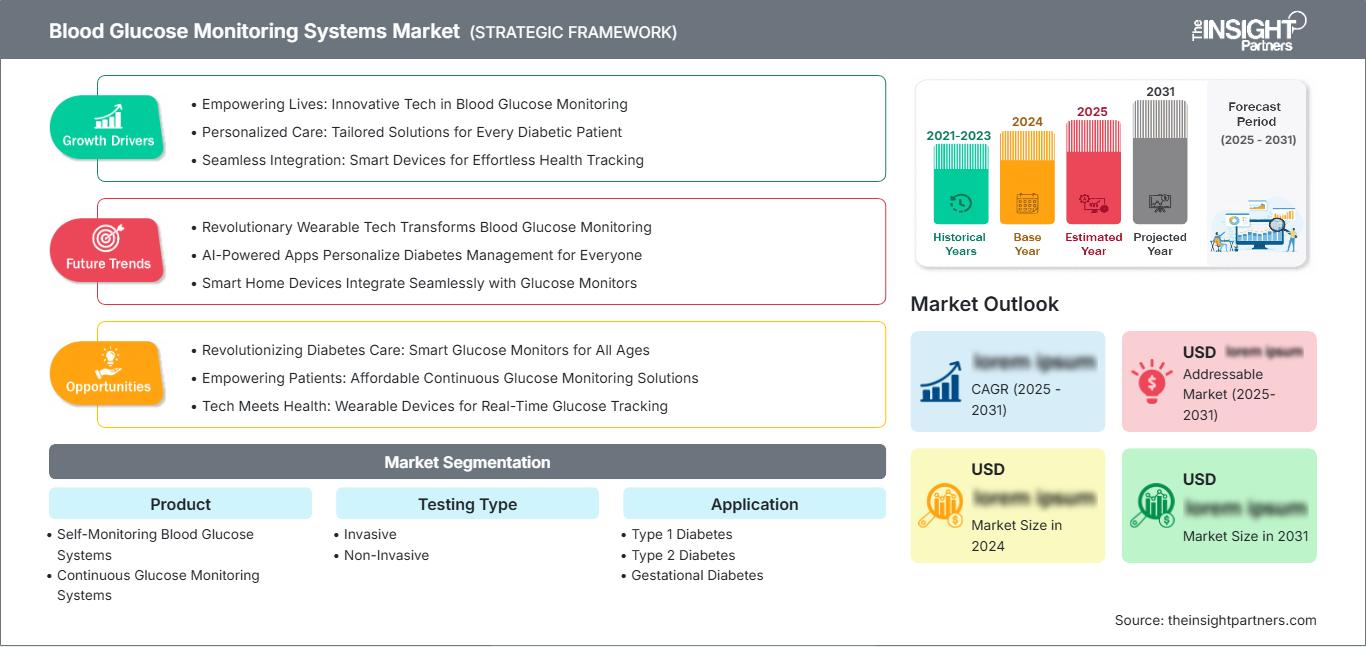
Blood Glucose Monitoring Systems Market: Strategic Insights
Regional Insights
North America Blood Glucose Monitoring Systems Market
North America accounted for 40–43% share of the Blood Glucose Monitoring Systems Market in 2025 and is projected to grow at a CAGR of 7.8–8.6% during 2026–2034. The region benefits from high diabetes diagnosis rates, specialist availability, pharmacy-based distribution, and expanding coverage for CGM among insulin-treated and selected Type 2 populations. The Blood Glucose Monitoring Systems Market share is also reinforced by the strong adoption of app-enabled devices.
The region’s structural drivers include remote monitoring reimbursement, automated insulin delivery adoption, and broader OTC glucose biosensor availability. Manufacturers prioritize the US and Canada for launches because regulatory pathways, payer evidence requirements, and digital health infrastructure are relatively mature. Demand is strongest in real-time CGM, but self-monitoring remains essential for backup testing, hospitals, and lower-cost care pathways.
U.S. Blood Glucose Monitoring Systems Market
The US represented 82–86% of North America Blood Glucose Monitoring Systems Market revenue in 2025 and is forecast to grow at a CAGR of 7.9–8.7% during 2026–2034. Adoption is supported by large diagnosed and undiagnosed diabetes populations, employer health plans, Medicare coverage, and pharmacy access. Company presence is dense, with Abbott Laboratories, DexCom, Inc., Medtronic plc, LifeScan IP Holdings, LLC, and Ascensia Diabetes Care Holdings AG operating across channels.
Application trends differ by diabetes type. Type 1 diabetes users prioritize real-time CGM and pump integration, while Type 2 diabetes demand is widening through non-intensive insulin use, behavior coaching, and OTC biosensors. Gestational diabetes monitoring remains episodic but clinically important, especially where obstetric programs support structured glucose tracking during pregnancy and postpartum follow-up.
Europe Blood Glucose Monitoring Systems Market
Europe held 26–29% of the Blood Glucose Monitoring Systems Market share in 2025 and is expected to grow at a CAGR of 7.4–8.2% during 2026–2034. Germany is the leading country due to statutory reimbursement, strong diabetes specialist networks, and early technology adoption. The UK benefits from national guidance and NHS-backed access programs, although procurement discipline encourages evidence-based device selection and price negotiation.
Germany and the UK together shape clinical adoption benchmarks for CGM and self-monitoring reimbursement. France, Italy, and Spain continue to expand access through regional tendering, pharmacy channels, and chronic disease programs. Western Europe shows higher CGM penetration, while Central and Southern Europe maintain stronger reliance on meter-strip products because of budget constraints and gradual reimbursement adjustments.
APAC Blood Glucose Monitoring Systems Market
Asia Pacific accounted for 22–25% of the Blood Glucose Monitoring Systems Market share in 2025 and is projected to grow at a CAGR of 9.4–10.3% during 2026–2034. China is the leading country by scale, supported by rising diagnoses, urban hospital capacity, and local device manufacturing. Japan and South Korea favor advanced sensors, while India shows high volume potential through affordable meters and expanding private diabetes care.
Policy drivers include screening programs, domestic medtech manufacturing incentives, and broader insurance coverage for chronic disease management. Australia remains an early adopter of CGM in selected populations. The region’s growth profile is highly mixed, with premium sensor adoption in developed markets and strong self-monitoring demand in cost-sensitive systems.
Middle East & Africa Blood Glucose Monitoring Systems Market
The Middle East & Africa is projected to grow at a CAGR of 8.1–8.9% during 2026–2034. Saudi Arabia is the leading country, followed by the UAE and South Africa, owing to high diabetes prevalence, hospital infrastructure investment, and policy focus on noncommunicable diseases. Gulf markets are also adopting connected devices through private providers and specialist clinics.
Energy-linked fiscal capacity supports modern healthcare infrastructure in Gulf countries, while South Africa anchors regional distribution for meters and consumables. Rest of MEA remains underpenetrated because affordability and diagnosis gaps limit sensor uptake. Growth will depend on public screening, pharmacy access, and lower-cost monitoring options.
Segmentation Analysis
Product
The Product segment is expected to grow at a CAGR of 8.4–9.2% during 2026–2034. The Blood Glucose Monitoring Systems Market scope spans durable meters, disposable strips, lancets, wearable sensors, transmitters, receivers, and software-enabled data platforms. Self-monitoring remains the installed base foundation, while CGM is redefining clinical expectations through trend visibility, alerts, and digital integration with care teams.
- Self-Monitoring Blood Glucose Systems: This sub-segment remains widely used because meters and strips are affordable, familiar, and suitable for intermittent testing, hospital workflows, backup confirmation, and lower-income markets with limited reimbursement.
- Continuous Glucose Monitoring Systems: This sub-segment is gaining strategic importance as patients, clinicians, and payers emphasize time-in-range, hypoglycemia prevention, automated insulin delivery, and app-based data sharing across diabetes care pathways.
Testing Type
The Testing Type segment is projected to grow at a CAGR of 8.2–9.0% during 2026–2034. Invasive monitoring dominates current revenue because fingerstick testing and minimally invasive interstitial sensors are clinically validated and widely reimbursed. Non-invasive approaches remain commercially early, but investment interest is increasing as users seek painless, continuous, and lower-burden monitoring alternatives.
- Invasive: This sub-segment dominates adoption through fingerstick blood testing and minimally invasive CGM sensors, offering validated accuracy, established reimbursement, and broad compatibility with diabetes treatment decisions.
- Non-Invasive: This sub-segment is emerging through optical, spectroscopy, and wearable concepts, but large-scale adoption depends on clinical accuracy, regulatory confidence, manufacturing consistency, and physician acceptance.
Application
The Application segment is expected to grow at a CAGR of 8.3–9.1% during 2026–2034. Type 2 diabetes contributes the largest user base, while Type 1 diabetes drives advanced CGM and pump-linked demand. Gestational diabetes creates periodic testing needs, particularly in maternal care settings where glucose control reduces pregnancy complications and supports timely clinical decisions.
- Type 1 Diabetes: This sub-segment has high device intensity because users require frequent glucose visibility, hypoglycemia alerts, insulin adjustment support, and integration with pumps or automated insulin delivery systems.
- Type 2 Diabetes: This sub-segment contributes the largest patient pool, with demand expanding from insulin users to non-insulin patients seeking behavioral feedback, medication optimization, and structured lifestyle management.
- Gestational Diabetes: This sub-segment is clinically important because pregnancy-related glucose monitoring supports obstetric decision-making, nutrition therapy, insulin initiation when needed, and postpartum metabolic risk follow-up.
Opportunity Snapshot
| Application | Revenue Contribution | Trend Tag | Adoption Stage |
| Type 1 Diabetes | High | Closed Loop | Mature |
| Type 2 Diabetes | High | OTC Sensors | Scaling |
| Gestational Diabetes | Medium | Maternal Care | Scaling |
Blood Glucose Monitoring Systems Market Growth Drivers and Impact Analysis
Rising diabetes burden and earlier diagnosis
There are trends of rising prevalence rates of diabetes worldwide, in developed as well as developing nations, which form a larger repeating consumer base for meters, test strips, sensors, and telemonitoring devices. Global associations on diabetes state hundreds of millions of cases of people with diabetes worldwide, with a large number of the undiagnosed category that may become part of monitoring programs once tested. This trend helps drive both basic-level monitoring and continuous glucose monitoring needs. The consequence for manufacturers is a larger consumables market along with requirements for a tiered product range. For the healthcare system, the monitoring serves such purposes as medication titration, complications prevention, and patient education.
Shift from episodic testing to continuous data
There is an emerging focus on glucose trends, time in range, and preventing hypoglycemia in clinical practice. Such a development favors the growth of CGMs, connected devices, and smartphone analytics since clinicians can analyze trends rather than discrete measurements. From a market perspective, the effects can be seen in increased sensor subscription revenue, software differentiation, and the increased need for interoperability to integrate with insulin pumps, smart pens, and clinical dashboards. While self-monitoring is still significant, the importance of such approaches becomes more supportive in sophisticated scenarios.
Expanded reimbursement and pharmacy access
Access expansion is reducing the cost burden for eligible patients, whereas pharmacy distribution is creating smoother access relative to specialist-only device supply chains. OTC glucose monitors have expanded the accessible market through access to non-insulin-dependent Type 2 diabetic patients as well as consumers with metabolic disorders. The result is accelerated enrollment, greater compliance with refills, and higher volumes of disposable devices and test strips. Firms that have established relationships with payers, patient education initiatives, and pharmacy partners can leverage clinical eligibility into continuous usage. Payment remains country-specific, but data on compliance and results are making monitoring devices an everyday part of care.
Blood Glucose Monitoring Systems Market Future Trends
Consumer-grade biosensing will reshape entry pathways
Blood Glucose Monitoring Systems Market trends point to a wider boundary between medical diabetes management and consumer metabolic feedback. OTC biosensors will bring visibility of glucose levels to those having Type 2 diabetes in its initial stage, being at risk of developing it, or needing general lifestyle monitoring. These devices do not substitute professional medical diagnosis, but they can contribute to the normalization of using sensors, increased consciousness of the user and creation of future demand for clinically-managed devices. Eventually, manufacturers will be able to differentiate app experience by user needs: coaching, clinical alerts, provider notifications, and prescription management.
Interoperability will become a procurement requirement
Healthcare purchasers should place emphasis on the systems that can be integrated into electronic health record systems, insulin delivery systems, remote monitoring, and population health systems. Accuracy will continue to be a major consideration for healthcare purchasers; however, the focus of procurement teams is likely to shift to issues such as cybersecurity, data export, work load for clinicians, and patient support. Companies with open and standards-based systems will be preferred over those with closed hardware systems. Healthcare vendors could differentiate themselves by providing analytics for identifying high-risk glucose profiles and intervening at the right time.
Blood Glucose Monitoring Systems Market Opportunities
Scaling CGM access for Type 2 diabetes
Type 2 diabetes represents the largest commercial expansion opportunity because many patients remain underserved by intensive monitoring despite medication complexity and comorbidity risk. Blood Glucose Monitoring Systems Market Forecasts indicate that lower-cost sensors, pharmacy onboarding, and simplified coaching apps can expand adoption beyond intensive insulin users. Companies should invest in evidence packages that demonstrate improved adherence, better medication decisions, and reduced glycemic excursions. Partnerships with primary care networks and payers can accelerate uptake, particularly for patients starting insulin, GLP-1 therapy, or structured lifestyle programs. The opportunity is strongest where affordability and education barriers are addressed together.
Localized manufacturing and affordable consumables
There is a requirement for robust solutions that would be affordable in terms of cost for families with low budgets and complex reimbursement systems in developing countries. There are options like localized assembly, strip manufacturing, and regional distribution to help minimize costs and make products more accessible to the masses. The companies that would produce such robust meters along with low-cost strips and basic connectivity features could take advantage of high-volume business before CGM gets universally reimbursable. It is particularly important in Asia Pacific, Middle East, Africa, and Latin America, where diagnosis rates have gone up but sensors have not been adopted widely yet.
Recent Developments
- April 2025: Medtronic plc announced US FDA approval for the Simplera Sync sensor for use with the MiniMed 780G system. The disposable, all-in-one CGM option requires no fingersticks with SmartGuard, supports simplified insertion, and expands sensor choice for users of Medtronic’s automated insulin delivery platform.
- April 2025: DexCom, Inc. announced US FDA clearance for Dexcom G7 15 Day for adults with diabetes. The system extends wear duration to 15.5 days, reports an overall MARD of 8.0%, and is expected to support fewer monthly sensor changes while strengthening Dexcom’s competitive position in CGM.
- June 2024: Abbott Laboratories received US FDA clearance for two over-the-counter CGM systems, Lingo and Libre Rio. Lingo targets adults seeking metabolic insights, while Libre Rio is designed for adults with Type 2 diabetes who do not use insulin, expanding Abbott’s biowearables strategy beyond prescription CGM.
Frequently Asked Questions

- Comprehensive Market Sizing and Forecast Analysis
- Detailed Segmentation Analysis
- In-Depth Market Dynamics Assessment
- Regional and Country-Level Insights
- Competitive Landscape and Company Benchmarking
- Strategic Business Intelligence
Recent Reports
Testimonials

The Insight Partners' SCADA System Market report is comprehensive, with valuable insights on current trends and future forecasts. The team was highly professional, responsive, and supportive throughout. We are very satisfied and highly recommend their services.
RAN KEDEM Partner, Reali Technologies LTDs
I requested a report on a very specific software market and the team produced the report in a few days. The information was very relevant and well presented. I then requested some changes and additions to the report. The team was again very responsive and I got the final report in less than a week.
JEAN-HERVE JENN Chairman, Future Analytica
We worked with The Insight Partners for an important market study and forecast. They gave us clear insights into opportunities and risks, which helped shape our plans. Their research was easy to use and based on solid data. It helped us make smart, confident decisions. We highly recommend them.
PIYUSH NAGPAL Sr. Vice President, High Beam Global
The Insight Partners delivered insightful, well-structured market research with strong domain expertise. Their team was professional and responsive throughout. The user-friendly website made accessing industry reports seamless. We highly recommend them for reliable, high-quality research services
YUKIHIKO ADACHI CEO, Deep Blue, LLC.
This is the first time I have purchased a market report from The Insight Partners.While I was unsure at first, I visited their web site and felt more comfortable to take the risk and purchase a market report.I am completely satisfied with the quality of the report and customer service. I had several questions and comments with the initial report, but after a couple of dialogs over email with their analyst I believe I have a report that I can use as input to our strategic planning process.Thank you so much for taking the extra time and making this a positive experience.I will definitely recommend your service to others and you will be my first call when we need further market data.
JOHN SUZUKI President and Chief Executive Officer, Board Director, BK Technologies
I wish to appreciate your support and the professionalism you displayed in the course of attending to my request for information regarding to infectious disease IVD market in Nigeria. I appreciate your patience, your guidance, and the fact that you were willing to offer a discount, which eventually made it possible for us to close a deal. I look forward to engaging The Insight Partners in the future, all thanks to the impression you have created in me as a result of this first encounter.
DR CHIJIOKE ONYIA MANAGING DIRECTOR, PineCrest Healthcare Ltd.Reason to Buy
- Informed Decision-Making
- Understanding Market Dynamics
- Competitive Analysis
- Identifying Emerging Markets
- Customer Insights
- Market Forecasts
- Risk Mitigation
- Boosting Operational Efficiency
- Strategic Planning
- Investment Justification
- Tracking Industry Innovations
- Aligning with Regulatory Trends





 Get Free Sample for