
Carbon Dioxide (CO2) Monitors Market Demand, Share & Growth by 2034
Coverage: By Type (End-Tidal Carbon Dioxide (EtCO2) Monitors, Transcutaneous Carbon Dioxide (tcpCO2) Monitors); Application (Hospital, Clinic, Household, Other) , and Geography (North America, Europe, Asia Pacific, and South and Central America)
- Status : Data Released
- Report Code : TIPRE00020747
- Category : Electronics and Semiconductor
- No. of Pages : 150
- Available Report Formats :


- Last update date : July 27, 2026


2025 Market Size
US$ 794.77 Mn
Base year value
2034 Forecast
US$ 1,844.47 Mn
Projected by 2034
CAGR 2026-2034
9.81 %
Growth rate
Addressable Market
US$ 11,756.99 Mn
(2026-2034)
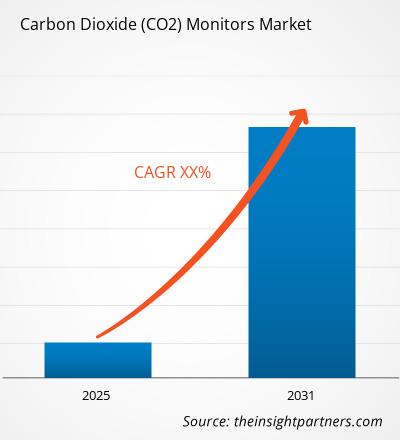
The Carbon Dioxide Monitors Market size in 2025 was US$ 794.77 Million and is expected to reach US$ 1,844.47 Million by 2034, growing at a CAGR of 9.81% during the forecast period of 2026-2034. Growing demand is driven by use of continuous ventilation monitoring for anesthesia, emergency, critical care, neonatal, procedural sedation, and chronic respiratory care procedures by healthcare providers.
North America is fueling Carbon Dioxide Monitors Market size due to developed patient monitoring facilities, procedural sedation procedures, and focus on early detection of respiratory problems. The market CAGR in North America region is anticipated between 8.9 and 9.7% during 2026-2034.
Carbon Dioxide (CO2) Monitors Market Assessment and Insights
- North America: The region is estimated to hold 36–40% share in 2025 and grow at a CAGR of 8.9–9.7% during 2026–2034, supported by anesthesia safety standards, ICU monitoring upgrades, and ambulatory procedural demand.
- US: The country represents 78–82% of North America in 2025 and is projected to grow at a CAGR of 9.0–9.8% during 2026–2034.
- Europe: Europe accounts for 25–29% share in 2025 and is expected to grow at a CAGR of 8.2–9.0% during 2026–2034, led by Germany, the UK, France, Italy, and Spain.
- Asia Pacific: Asia Pacific represents 22–26% share in 2025 and is forecast to grow at a CAGR of 10.8–11.7% during 2026–2034, with China, Japan, South Korea, India, and Australia expanding critical care capacity.
- Largest Segment: End-Tidal Carbon Dioxide Monitors holds 68–72% market share in 2025 and is expected to grow at a CAGR of 9.3–10.1% during 2026–2034.
- High Growth Segment: Household holds 10–14% market share in 2025 and is expected to grow at a CAGR of 11.2–12.1% during 2026–2034.
- Key companies analyzed in detail: Criticare Systems, Inc.; GE HealthCare Technologies Inc.; Invivo Corporation; Masimo Corporation; Mindray DS USA, Inc.; Nihon Kohden Corporation; Nonin Medical, Inc.; Koninklijke Philips N.V.; Radiometer Medical ApS; ICU Medical, Inc.
Source: The Insight Partners' analysis based on proprietary research, government publications, company annual reports, investor presentations, industry databases, and expert interviews.
The evolution of CO2 monitoring involves going from simple numeric capnometry to sophisticated waveform analysis, sidestream sampling, mainstream airway measurement, and transcutaneous techniques in vulnerable populations. Generation issues involve miniaturized infrared technology, low flow sampling, neonatal friendly technology, calibration issues, infection control features, and easy integration with multiparameters monitor. The market is dependent on the clinical need of immediate proof of ventilation, perfusion, airway positioning, and effectiveness of therapy.
Future trends will depend on increasing number of surgeries, the burden of respiratory diseases, opioid and sedative risk management, and decentralization of healthcare facilities. New markets are evolving from limited use in operating rooms to increased use in emergency departments, ICUs, and even transportation as facilities improve. Trends related to regulatory issues and professional societies still remain favorable for quantitative waveform capnography.
Carbon Dioxide (CO2) Monitors Market Report Scope
| Report Attribute | Details |
|---|---|
| Market size in 2025 | US$ 794.77 Million |
| Market Size by 2034 | US$ 1,844.47 Million |
| Global CAGR (2026 - 2034) | 9.81% |
| Historical Data | 2021-2024 |
| Forecast period | 2026-2034 |
Carbon Dioxide (CO2) Monitors Market Analysis
There is a need to detect the occurrence of hypoventilation, airway obstruction, accidental extubation, and cardiopulmonary deterioration before oxygen saturation alone. Value Chain consists of infrared sensor makers, manufacturers of sampling line, monitor OEM, anesthesia workstations makers, hospital buyers, distributors, service engineers, and the end-users. Carbon Dioxide Monitors Market expansion occurs most strongly in regions where there are established patient safety programs which include the use of capnography in procedures like anesthesia, emergency airway management, procedural sedation, and ventilator transport.
Platforms which offer precise end tidal CO2 values, stable waveforms, quick warming up, minimum sample flow, and patient range from neonates to adults are favored in the supply situation. Consumables such as cannulas, adaptors, and sampling lines affect recurring revenues and device usage rates. The hospitals are evaluating the accuracy, alarms intelligence, cleaning process, services, and interfacing capabilities with electronic records for vendor standardization.
Competitive environment features diversified patient monitors players along with the specialty respiratory technology vendors. The competition in the market is based on installed bases of monitors, modules, and relations with hospitals and includes GE HealthCare Technologies Inc., Koninklijke Philips N.V., Nihon Kohden Corporation, Mindray DS USA, Inc., Masimo Corporation, and ICU Medical, Inc. Radiometer Medical ApS, Nonin Medical, Inc., Criticare Systems, Inc., and Invivo Corporation support their specialty positioning in blood gas adjacent, portable monitors, and MRI compatible patient monitoring products.
Trends in investments include capnography module connectivity, wearable and transportable form factors, transcutaneous monitoring of neonates and chronic patients, and software that enhances alarm significance. Analysis of Carbon Dioxide Monitors Market reveals that strategic positioning of companies changes to ecosystem monitoring solutions rather than single device monitoring solutions. Companies with extensive consumables portfolio, well-developed algorithms, and clinical education could defend their procurement market share in hospitals by standardizing ventilation monitoring.
● REPORT CUSTOMIZATION
Tailor This Report To Align With Your Specific Business Requirements
This report can be customized to align precisely with your business objectives, scope, and target markets. Customization options include tailored segmentation, geography, competitive analysis, and strategic insights to support informed decision-making.
Customize This Report →WHAT YOU CAN ADJUST
- ● Segmentations
- ● Geography
- ● Competitive Analysis
- ● Language Preferences
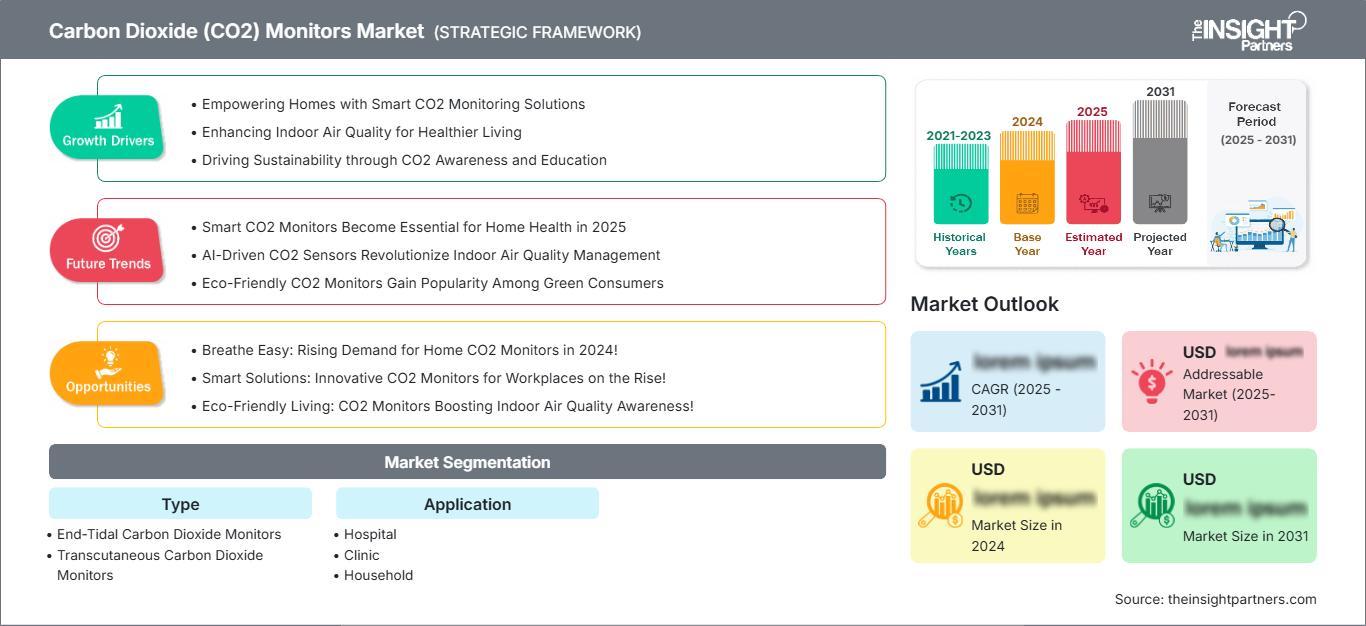
Carbon Dioxide (CO2) Monitors Market: Strategic Insights
Regional Insights
North America Carbon Dioxide Monitors Market
Market share in North America in 2025 is 36%-40% and is expected to grow at a rate of CAGR of 8.9%-9.7% from 2026 to 2034. The factors that contribute to carbon dioxide monitors market share include anesthesia standards, density of intensive care units, use of emergency medical services, and procedural sedation monitoring.
The purchasing trends indicate preference for built-in modules for multiparameter monitors as well as portable capnometers for use in emergencies and transportation. According to professional nurses and anesthetists, end tidal monitoring is helpful in detecting ventilatory impairment at an earlier stage than pulse oximetry. Capnography has been recognized as an essential safety monitor in operating rooms, ICUs, emergency departments, and sedation facilities.
U.S. Carbon Dioxide Monitors Market
The US market holds a share of 78-82% in 2025 of the North American market and would be growing at a CAGR of 9.0-9.8% from 2026 to 2034. The application areas are anesthesia monitoring, ventilation monitoring in intensive care units, airway verification in emergencies, opioid sedation monitoring, neonatal monitoring, and post-surgery respiratory risk assessment.
This sector is validated through GE HealthCare Technologies Inc., Masimo Corporation, Mindray DS USA, Inc., Nonin Medical, Inc., ICU Medical, Inc., and Philips distributors. Hospitals value compatibility, visibility of waveforms, accessibility of consumables, and reliability of equipment. However, the home segment is small but gaining significance due to interests in respiratory treatment, sleep disorders, and home ventilation programs.
Europe Carbon Dioxide Monitors Market
Europe holds a market share of 25-29% in 2025 and is estimated to witness a CAGR of 8.2-9.0% during 2026-2034. Germany takes a lead for the region owing to intensive care capabilities, engineering-driven procurement and adherence to anesthesia monitoring for replacement purposes. The United Kingdom focuses on safety during procedures and post-operative monitoring, whereas France increases utilization in critical and emergency care processes.
The market in Italy and Spain is fueled by hospital upgrading, endoscopy procedures, and the need for pediatric monitoring. European customers value CE-approved devices, cybersecurity, accessory validation, and life cycle services. Major companies supporting the market demand include Koninklijke Philips N.V., GE HealthCare Technologies Inc., Nihon Kohden Corporation, Radiometer Medical ApS, Masimo Corporation, and ICU Medical, Inc.
APAC Carbon Dioxide Monitors Market
APAC’s market share will be between 22 and 26 percent in 2025 and is forecasted to increase with a CAGR of 10.8–11.7 percent from 2026 to 2034. China leads due to increased construction of hospitals, manufacture of devices, and increased ICU facilities. Japan and South Korea prefer advanced monitoring while India and Australia have procedural and emergency care demands.
Drivers will be investments in healthcare infrastructure, management of respiratory diseases, localization of medical devices, and training of emergency airway procedures. The adoption of Carbon Dioxide Monitors Market will rise due to portable capnometers, low-cost sampling lines, and monitor modules.
Middle East & Africa Carbon Dioxide Monitors Market
Middle East & Africa is projected to grow at a CAGR of 8.0–8.8% during 2026–2034. Saudi Arabia is the leading country as hospital expansion, emergency medicine investment, and surgical capacity rise. The UAE supports advanced private hospitals, while South Africa adds ICU and emergency monitoring demand.
Energy and infrastructure contexts increase demand for reliable portable monitoring in remote hospitals, industrial clinics, and medical transport. Rest of MEA adoption remains project-led, especially where donor-funded critical care programs or private hospital groups upgrade anesthesia and ventilation monitoring. Suppliers need training, service coverage, and consumable availability to sustain utilization.
Segmentation Analysis
Type
The Type segment is projected to grow at a CAGR of 9.4–10.2% during 2026–2034 as providers balance fast end-tidal readings with longer-term transcutaneous assessment. Carbon Dioxide Monitors Market scope covers devices used for ventilation confirmation, respiratory trend monitoring, neonatal assessment, and noninvasive chronic care support. Adoption depends on clinical setting, patient acuity, sensor placement, and workflow complexity.
- End-Tidal Carbon Dioxide Monitors lead demand because they provide immediate waveform and numeric feedback during anesthesia, intubation, emergency airway care, procedural sedation, and ventilator transport.
- Transcutaneous Carbon Dioxide Monitors serve neonatal, pediatric, sleep, and chronic respiratory applications where continuous noninvasive trend monitoring helps reduce repeated arterial sampling and supports longer observation periods.
Application
The Application segment is estimated to grow at a CAGR of 9.7–10.5% during 2026–2034 because monitoring is expanding from operating rooms into clinics, transport, and selected home-care pathways. Hospitals remain the primary revenue base, while clinics adopt compact capnometers for sedation and respiratory assessment. Household use is emerging around chronic ventilation support and remote respiratory supervision.
- Hospital users require integrated capnography for operating rooms, ICUs, emergency departments, neonatal units, and recovery areas where continuous ventilation evidence supports rapid clinical decisions.
- Clinic adoption is linked to outpatient procedures, dental sedation, endoscopy, pulmonary assessment, and urgent care workflows that need compact, easy-to-clean, and staff-friendly monitoring systems.
- Household demand is developing around home ventilation, chronic respiratory disease follow-up, sleep-related observation, and caregiver alerts, although adoption depends on usability, reimbursement, and clinician oversight.
Opportunity Snapshot
| Application | Revenue Contribution | Trend Tag | Adoption Stage |
| Hospital | High | ICU Integration | Mature |
| Clinic | Medium | Sedation Safety | Scaling |
| Household | Low | Home Ventilation | Emerging |
Carbon Dioxide (CO2) Monitors Market Growth Drivers and Impact Analysis
Capnography Adoption Across Sedation and Airway Care
There is now a growing tendency to make use of carbon dioxide monitoring as a method of ensuring ventilation during intubation, anesthesiology, emergencies, as well as moderate to deep sedation. This is an important commercial aspect of the driver in question since it makes capnography a must rather than an additional security measure in various departments. Waveform data allows clinical staff to detect such conditions as apnea, hypoventilation, airway obstruction, circuit disconnect, and reduced perfusion before any changes become apparent. Market implications include increased purchase of the technology in operating theaters, endoscopic suites, EDs, ICUs, and ambulances.
Rising Respiratory Disease and Critical Care Burden
Respiratory disorders, sepsis, trauma, and post-operative complications increase the need for continuous ventilation assessment. Carbon dioxide values reflect ventilation, perfusion, and metabolism, giving clinicians actionable information during deterioration and recovery. The impact is strongest in ICUs, emergency departments, respiratory wards, and transport services where patients can change status quickly. Transcutaneous monitoring adds value for neonates and patients needing longer observation without repeated blood draws. As hospitals expand critical care capacity and manage higher-acuity patients, procurement shifts toward monitors that provide stable trends, clear waveforms, and interoperability with broader patient monitoring networks.
Expansion of Ambulatory Procedures and Portable Monitoring
Outpatient surgery, endoscopy, dental sedation, urgent care, and interfacility transport are expanding use cases for compact carbon dioxide monitors. These settings need devices that are easy to move, quick to start, simple to clean, and compatible with spontaneously breathing patients. The market impact is a shift from fixed bedside systems toward handheld, modular, and battery-powered solutions. Clinics benefit from improved sedation safety, while EMS and transport teams gain confirmation of airway placement and ventilation continuity. Suppliers that package monitors with affordable cannulas, training materials, and service support can reach smaller facilities that previously relied on pulse oximetry alone.
Carbon Dioxide (CO2) Monitors Market Future Trends
Algorithmic Waveform Interpretation and Smarter Alarms
Carbon Dioxide Monitors Market trends will increasingly favor software that interprets waveform quality, breathing patterns, and alarm context. Future systems will help clinicians distinguish true ventilation decline from sampling-line blockage, motion artifacts, cannula displacement, or transient patient movement. This will not replace bedside judgment, but it can reduce alarm fatigue and shorten response time. Vendors will compete on validated algorithms, transparent event histories, cybersecurity, and integration with clinical documentation. Smarter alarms also support lower-acuity areas where staff manage multiple patients and need clear escalation signals.
Connected Monitoring Beyond Acute Care Units
Future adoption will move carbon dioxide monitoring into step-down units, hospital-at-home programs, sleep-related observation, and supervised home ventilation. Connected devices will transmit trends to care teams, allowing earlier intervention when ventilation patterns change. This trend requires reliable sensors, patient-friendly interfaces, secure connectivity, and reimbursement models that recognize preventive monitoring value. Hospitals will prefer platforms that share data with existing patient monitoring networks rather than isolated devices. Manufacturers that simplify remote setup and consumable replacement can open new recurring revenue pools.
Carbon Dioxide (CO2) Monitors Market Opportunities
Transcutaneous Monitoring in Neonatal and Chronic Care
Carbon Dioxide Monitors Market Forecasts point to attractive investment potential in transcutaneous systems for neonatal units, pediatric respiratory care, sleep assessment, and chronic ventilation follow-up. These devices can reduce reliance on repeated arterial or capillary blood sampling while giving clinicians continuous trend visibility. Suppliers should focus on sensor comfort, temperature safety, calibration simplicity, and integration with neonatal monitors. The opportunity is strongest where hospitals are upgrading NICUs and respiratory wards. Partnerships with clinicians and training programs can improve confidence in placement, interpretation, and long-duration monitoring protocols.
Clinic-Ready Capnography for Procedural Sedation
Clinics, ambulatory surgery centers, dental practices, and endoscopy units need practical capnography packages that fit constrained budgets and limited staff time. Device makers can create value through portable monitors, preconfigured alarm profiles, disposable sampling kits, and short competency modules. The opportunity is investment-oriented because outpatient procedures continue shifting away from inpatient settings, while safety expectations follow the patient. Companies that reduce setup complexity and provide reliable consumable supply can convert intermittent sedation cases into repeat purchasing. Service contracts and remote troubleshooting can further improve adoption among smaller providers.
Recent Developments
- April 2026: Accuenergy launched the AcuCO₂ DM Series CO₂ sensors for Building Automation Systems (BAS), designed to improve indoor air quality (IAQ), ventilation control, and energy efficiency in commercial and industrial buildings. The duct-mounted sensors use Non-Dispersive Infrared (NDIR) technology with Automatic Baseline Correction (ABC Logic) to provide accurate, low-maintenance CO₂ monitoring for demand-controlled ventilation applications. The series offers measurement ranges up to 5,000 ppm, ±30 ppm accuracy, and 4–20 mA / 0–10 VDC analog outputs for integration with BAS controllers, enabling HVAC systems to optimize fresh-air intake based on occupancy levels and reduce unnecessary energy consumption.
- January 2026: Senseair, a subsidiary of Asahi Kasei Microdevices (AKM), developed the S12 CO₂ sensor, a next-generation compact CO₂ sensing solution designed for demand-controlled ventilation (DCV) systems in zero-energy buildings and indoor air quality (IAQ) monitoring applications. The sensor is approximately 75% smaller in volume than previous models while maintaining high accuracy and low power consumption. Based on NDIR (Non-Dispersive Infrared) technology, the S12 CO₂ sensor supports SMD surface mounting, offers a measurement range of 400–10,000 ppm, and enables easier integration into air-conditioning equipment, wall-mounted monitors, and battery-powered CO₂ monitoring devices. The technology is aimed at improving building energy efficiency, ventilation control, and smart building management systems.
- June 2025: CO₂Meter published a guide on ammonia (NH₃) gas detectors, highlighting the importance of continuous ammonia monitoring in industrial environments such as refrigeration facilities, agriculture, and chemical processing. The article explains that ammonia detectors typically use electrochemical sensing technology to measure gas concentrations and provide early warnings of hazardous leaks. These detection systems help protect personnel, improve workplace safety, and support compliance in applications where ammonia exposure risks exist
Frequently Asked Questions

- Comprehensive Market Sizing and Forecast Analysis
- Detailed Segmentation Analysis
- In-Depth Market Dynamics Assessment
- Regional and Country-Level Insights
- Competitive Landscape and Company Benchmarking
- Strategic Business Intelligence
Recent Reports
Testimonials

The Insight Partners' SCADA System Market report is comprehensive, with valuable insights on current trends and future forecasts. The team was highly professional, responsive, and supportive throughout. We are very satisfied and highly recommend their services.
RAN KEDEM Partner, Reali Technologies LTDs
I requested a report on a very specific software market and the team produced the report in a few days. The information was very relevant and well presented. I then requested some changes and additions to the report. The team was again very responsive and I got the final report in less than a week.
JEAN-HERVE JENN Chairman, Future Analytica
We worked with The Insight Partners for an important market study and forecast. They gave us clear insights into opportunities and risks, which helped shape our plans. Their research was easy to use and based on solid data. It helped us make smart, confident decisions. We highly recommend them.
PIYUSH NAGPAL Sr. Vice President, High Beam Global
The Insight Partners delivered insightful, well-structured market research with strong domain expertise. Their team was professional and responsive throughout. The user-friendly website made accessing industry reports seamless. We highly recommend them for reliable, high-quality research services
YUKIHIKO ADACHI CEO, Deep Blue, LLC.
This is the first time I have purchased a market report from The Insight Partners.While I was unsure at first, I visited their web site and felt more comfortable to take the risk and purchase a market report.I am completely satisfied with the quality of the report and customer service. I had several questions and comments with the initial report, but after a couple of dialogs over email with their analyst I believe I have a report that I can use as input to our strategic planning process.Thank you so much for taking the extra time and making this a positive experience.I will definitely recommend your service to others and you will be my first call when we need further market data.
JOHN SUZUKI President and Chief Executive Officer, Board Director, BK Technologies
I wish to appreciate your support and the professionalism you displayed in the course of attending to my request for information regarding to infectious disease IVD market in Nigeria. I appreciate your patience, your guidance, and the fact that you were willing to offer a discount, which eventually made it possible for us to close a deal. I look forward to engaging The Insight Partners in the future, all thanks to the impression you have created in me as a result of this first encounter.
DR CHIJIOKE ONYIA MANAGING DIRECTOR, PineCrest Healthcare Ltd.Reason to Buy
- Informed Decision-Making
- Understanding Market Dynamics
- Competitive Analysis
- Identifying Emerging Markets
- Customer Insights
- Market Forecasts
- Risk Mitigation
- Boosting Operational Efficiency
- Strategic Planning
- Investment Justification
- Tracking Industry Innovations
- Aligning with Regulatory Trends





 Get Free Sample for