
Deep Hyperthermia Devices Market Size, Growth & Trends by 2034
Coverage: By Devices Type (Microwave Hyperthermia Device, Ultrasound Hyperthermia Device); Application (Breast Cancer, Soft Tissue Cancer, Head And Neck Tumor, Prostate Cancer, Others); End Users (Hospitals, Clinics, Research Institutes, Cancer Centers, Others) , and Geography (North America, Europe, Asia Pacific, and South and Central America)
- Status : Data Released
- Report Code : TIPRE00008452
- Category : Life Sciences
- No. of Pages : 150
- Available Report Formats :


- Last update date : August 17, 2026


2025 Market Size
US$ 500.14 Mn
Base year value
2034 Forecast
US$ 777.66 Mn
Projected by 2034
CAGR 2026-2034
5.03 %
Growth rate
Addressable Market
US$ 5,799.38 Mn
(2026-2034)
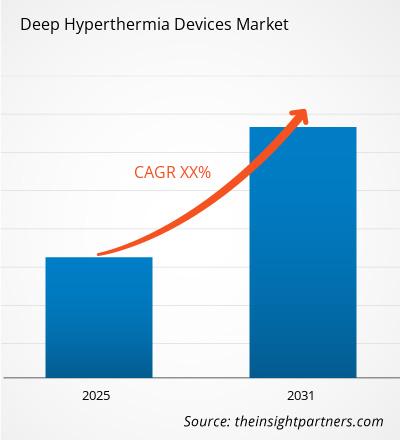
The Deep Hyperthermia Devices Market was valued at US$ 500.14 Million in 2025 and is projected to reach US$ 777.66 Million by 2034, registering a CAGR of 5.03% during 2026–2034. The market encompasses technologies designed to deliver controlled thermal energy to deep-seated tumors and is positioned as a complementary modality alongside radiation and systemic therapies. Demand is influenced by oncology treatment volumes, device precision, clinical evidence, and expansion of specialized cancer-care infrastructure.
The Deep Hyperthermia Devices Market size is increasingly shaped by North American adoption, where established oncology networks, specialized treatment centers, and clinical research capabilities support utilization. The region is expected to record a CAGR of 5.4–5.8% during 2026–2034. Structural drivers include investment in advanced radiation-oncology platforms and demand for treatment approaches that can integrate thermal therapy with existing multidisciplinary cancer protocols.
Deep Hyperthermia Devices Market Assessment and Insights
- North America: North America represents an estimated 34–38% share in 2025 and is expected to grow at a CAGR of 5.4–5.8% between 2026–2034, supported by mature oncology infrastructure, specialized centers, clinical research, and established device-service ecosystems.
- US: The US accounts for an estimated 78–82% share of North America in 2025 and is projected to grow at a CAGR of 5.2–5.6% during 2026–2034, led by advanced cancer-care capacity and research activity.
- Europe: Europe holds an estimated 27–31% share in 2025 and is forecast to expand at a CAGR of 4.7–5.1% during 2026–2034, with Germany, Italy, France, the UK, and Spain supporting adoption through specialized oncology services.
- Asia Pacific: Asia Pacific is estimated to represent 22–26% share in 2025 and is projected to register a CAGR of 5.8–6.3% during 2026–2034, led by China, Japan, South Korea, India, and Australia.
- Largest Segment: Breast Cancer is estimated to command a 36–40% market share in 2025 and is expected to grow at a CAGR of 5.0–5.4% during 2026–2034, reflecting its substantial treatment burden and multimodal-care applications.
- High Growth Segment: Ultrasound Hyperthermia Device is estimated to account for a 18–22% market share in 2025 and is expected to grow at a CAGR of 6.8–7.5% during 2026–2034 as precision-focused thermal delivery gains attention.
- Key companies analyzed in detail: Pyrexar Medical, Inc., Oncotherm Kft., Andromedic S.r.l., Yamamoto Vinita Co., Ltd., Thermosome GmbH, Gentherm Incorporated, Celsius42 GmbH, GAMIDA, Medica S.p.A., RanD S.p.A.
Source: The Insight Partners' analysis based on proprietary research, government publications, company annual reports, investor presentations, industry databases, and expert interviews.
The market has developed from traditional thermal therapy to systems that rely on controlled energy delivery, patient positioning, temperature management, and suitability with multimodal oncology. Manufacturing trends have moved towards modular electronic and software-based systems, treatment planning and service solutions. The architecture of devices varies greatly among microwave, radiofrequency and ultrasound-based systems, generating unique manufacturing and procurement needs in hospitals and specialized centers.
During the forecast period, new regions will be favored for development opportunities owing to the increase in oncology capacity and sophistication of clinical networks. Technology assessment will benefit from regulatory convergence, hospital modernization and the demand for personalized treatment. The developers will focus on system interactivity, treatment documentation, remote diagnostics and automation due to the ability of such features to increase the efficiency of treatments.
Deep Hyperthermia Devices Market Report Scope
| Report Attribute | Details |
|---|---|
| Market size in 2025 | US$ 500.14 Million |
| Market Size by 2034 | US$ 777.66 Million |
| Global CAGR (2026 - 2034) | 5.03% |
| Historical Data | 2021-2024 |
| Forecast period | 2026-2034 |
Deep Hyperthermia Devices Market Analysis
Demand is generated on account of rising global cancer incidence rates and the necessity for complementary treatment techniques that are able to be integrated into existing treatment regimens. Deep Hyperthermia Devices Market growth will be especially associated with cancers where local treatments are needed, such as breast, soft tissue, head & neck, and prostate cancers. Hospitals, cancer institutes, and specialty clinics make up the main demand front, whereas research institutes provide the necessary clinical validation and protocols.
The value chain includes device design, production of RF or microwave energy, energy delivery devices, temperature sensors, treatment control software, installation, calibration, training, and post-sale service of the systems. Supply continues to remain specialized since the systems require technical integration and oncology knowledge. This is why purchases involve consideration of factors such as price, clinical work flows, maintenance, training needs, treatment planning, and staffing issues.
The Deep Hyperthermia Devices Market Report reveals a fragmented competitive landscape with technology specialization and geographical spread as important positioning factors. Pyrexar Medical, Inc. continues to be relevant in phased-array and RF/microwave technologies whereas Oncotherm Kft., Andromedic S.r.l., Yamamoto Vinita Co., Ltd., and Celsius42 GmbH focus on capacitive or RF technology. Thermosome GmbH complements the picture with an innovative drug delivery approach through hyperthermia-based oncology development.
Positioning is affected by different regulatory maturity, installed base strength, clinical partnership, and international presence of the competitors. Gentherm Incorporated, GAMIDA, Medica S.p.A., and RanD S.p.A. operate within the thermal management or hyperthermia applications, whereas the suppliers are more competing in terms of service, software, and integration of work flow. Investment focus is gradually moving towards control, clinical evidence, interoperability, and market penetration where oncology expertise infrastructure is being developed.
● REPORT CUSTOMIZATION
Tailor This Report To Align With Your Specific Business Requirements
This report can be customized to align precisely with your business objectives, scope, and target markets. Customization options include tailored segmentation, geography, competitive analysis, and strategic insights to support informed decision-making.
Customize This Report →WHAT YOU CAN ADJUST
- ● Segmentations
- ● Geography
- ● Competitive Analysis
- ● Language Preferences
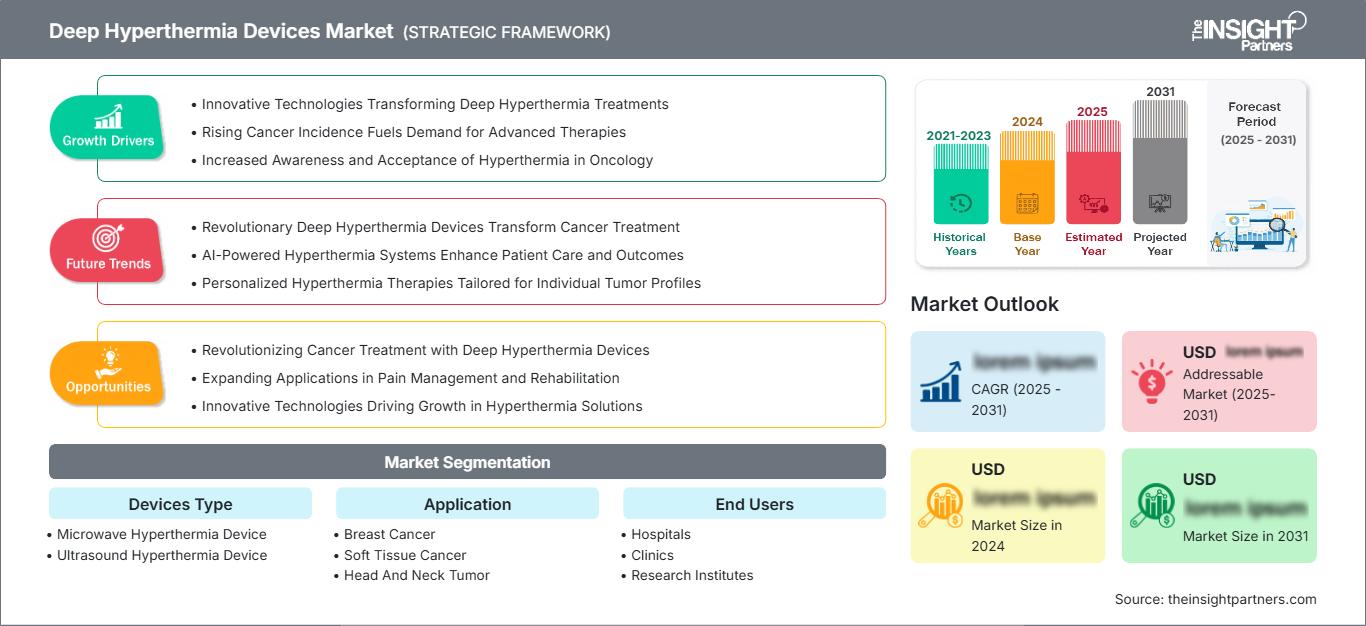
Deep Hyperthermia Devices Market: Strategic Insights
Regional Insights
North America Deep Hyperthermia Devices Market
North America is estimated to hold a 34–38% of the Deep Hyperthermia Devices Market share in 2025 and is projected to register a CAGR of 5.4–5.8% through 2034. The region benefits from advanced oncology facilities, established radiation-treatment networks, specialist cancer centers, and comparatively strong clinical research capabilities. These conditions support evaluation of hyperthermia as an adjunctive treatment rather than an isolated modality.
The US is the major part of the regional market, and Canada comes into play with its oncology facilities and research work. The adoption process is now based on integration issues, reimbursement concerns, evidence needs, and staffing issues. Regional suppliers and international firms can benefit from the existing channels of distribution and service and help meet the replacement demand that is being created with updating of old systems.
U.S. Deep Hyperthermia Devices Market
The U.S. accounts for an estimated 78–82% share of North America in 2025 and is expected to grow at a CAGR of 5.2–5.6% through 2034. Its position reflects a large oncology treatment ecosystem, sophisticated tertiary hospitals, cancer centers, clinical research institutions, and established medical-device procurement processes. Prostate and breast cancers remain particularly relevant application areas for advanced oncology infrastructure.
Corporate representation comprises firms such as Pyrexar Medical, Inc., Gentherm Incorporated, among others. Applications have been trending towards multimodality approaches where thermotherapy is to be administered alongside other existing medical procedures including radiotherapy. This implies that capital acquisitions will take into account such factors as the availability of clinical proof, possibility of utilization, serviceability, licensing, and availability of oncologists.
Europe Deep Hyperthermia Devices Market
Estimated Europe accounts for 27-31% of total demand in 2025 and is expected to grow at a CAGR of 4.7-5.1% during 2025-2034. Germany is an important market driven by specialist oncology centers and existing medical technology capabilities. The United Kingdom and France are important contributors through structured cancer services and clinical networks.
In Germany, there is availability of infrastructure for oncology, as well as development of medical technologies in the country itself, which makes an excellent environment for assessing advanced thermotherapy. The presence of Celsius42 GmbH, as well as regional companies that develop technologies, is another advantage. Variables affecting demand consist of clinical information, cycle for equipment replacement, and European regulations for medical devices.
France, Italy, and Spain contribute to the demand due to cancer clinics, surgical oncology treatments, and specialists who provide treatment. In particular, Italy is of special significance for companies such as Andromedic S.r.l. and Medica S.p.A., while in France applications of hyperthermic oncology are driven by specialist clinics. The adoption process is selective, and purchase decisions are increasingly dependent on clinical utility, services, and treatment of oncology.
APAC Deep Hyperthermia Devices Market
APAC is estimated to hold a 22–26% share in 2025 and is expected to record the fastest regional CAGR of 5.8–6.3% through 2034. China leads regional opportunity, followed by Japan, South Korea, India, and Australia. Japan benefits from established RF expertise and specialized oncology practices, while China and India offer substantial expansion potential.
The factors that are crucial from the demand side include localization of industries, modernization of hospitals, increase in cancer treatment facilities, and investment in public health care. For example, Japan's Yamamoto Vinita Co., Ltd. has proven expertise whereas South Korea and China are increasing their oncology facilities. India and Australia provide potential through tertiary hospitals and cancer centers.
Middle East & Africa Deep Hyperthermia Devices Market
Middle East and Africa represent a smaller installed base but provide developing opportunities as oncology infrastructure expands. The region is expected to register a CAGR of 4.2–4.8% during 2026–2034, with Saudi Arabia and the UAE leading adoption through tertiary-care investment, specialist hospitals, and healthcare modernization.
Despite South Africa being a key regional center in oncology care, RO MEA continues to experience disparities in infrastructure and availability of specialists. Hence, purchase of energy-intensive devices will depend on the hospital’s capacity to provide necessary expertise and maintenance services. Investment in new centers and healthcare in public-private sectors will contribute towards increasing access to specialized thermal treatment platforms.
Segmentation Analysis
Devices Type
Devices Type segment in the Deep Hyperthermia Devices Market is expected to expand at a CAGR of 4.8–5.2% during 2026–2034. Technology selection depends on tumor depth, treatment geometry, energy-delivery precision, temperature monitoring, and compatibility with clinical protocols. Procurement increasingly emphasizes controllability, treatment repeatability, software support, and serviceability.
- Microwave Hyperthermia Device: Microwave systems maintain a strong position where electromagnetic energy can be directed toward localized malignant tissue. Demand is linked to established clinical protocols, treatment precision, and integration with radiation-based oncology services.
- Ultrasound Hyperthermia Device: Ultrasound approaches provide a differentiated energy-delivery pathway and are gaining strategic attention where focused thermal control is important. Their development supports broader technology diversification and precision-oriented treatment planning.
Application
Application is projected to grow at a CAGR of 4.9–5.3% during 2026–2034. Demand varies according to cancer prevalence, treatment protocols, tumor accessibility, and the extent to which thermal therapy can complement radiation or systemic treatment. Breast cancer remains the largest application category.
- Breast Cancer: Breast cancer represents a major addressable application because of its high global incidence and established multimodal treatment pathways. Hyperthermia can be evaluated as an adjunct where localized treatment and radiation sensitization are clinically appropriate.
- Soft Tissue Cancer: Soft tissue cancer represents a specialized application with meaningful potential for regional hyperthermia combinations. Treatment centers value controlled heating because locally advanced tumors can present difficult therapeutic and surgical challenges.
- Head And Neck Tumor: Head and neck tumors create demand for carefully controlled thermal delivery because anatomical proximity to sensitive structures increases the importance of treatment planning, temperature monitoring, and precise energy localization.
- Prostate Cancer: Prostate cancer offers a substantial addressable population and supports interest in localized thermal approaches. Adoption depends on clinical evidence, integration with existing treatment protocols, device accessibility, and physician familiarity.
End Users
End Users are expected to grow at a CAGR of 4.7–5.1% during 2026–2034. Hospitals and cancer centers remain the principal procurement environments because they can support multidisciplinary teams, capital equipment, treatment planning, and ongoing technical maintenance. Research institutes remain important for clinical development.
- Hospitals: Hospitals represent a core end-user group because they combine oncology departments, radiation services, surgical teams, and technical infrastructure. Procurement is increasingly evaluated through utilization potential, service contracts, and integration with existing equipment.
- Clinics: Specialist clinics provide a smaller but strategically relevant setting for outpatient-oriented thermal treatment. Adoption depends on compact system configurations, operational simplicity, staffing availability, and local referral networks.
- Research Institutes: Research institutes support technology validation, protocol development, treatment optimization, and clinical evidence generation. Their importance extends beyond equipment sales because research adoption can influence subsequent hospital procurement decisions.
- Cancer Centers: Cancer centers are strategically important because they concentrate oncology specialists, advanced treatment infrastructure, and multidisciplinary care. Their adoption can accelerate protocol standardization and provide manufacturers with opportunities for clinical collaboration and technology refinement.
Opportunity Snapshot
| End Users | Revenue Contribution (High/Medium/Low) | Trend Tag (MAX 2 words) | Adoption Stage |
|---|---|---|---|
| Hospitals | High | Integrated Oncology | Mature |
| Clinics | Medium | Outpatient Care | Scaling |
| Research Institutes | Medium | Clinical Validation | Scaling |
| Cancer Centers | High | Precision Oncology | Mature |
Deep Hyperthermia Devices Market Growth Drivers and Impact Analysis
Rising Cancer Treatment Volumes
The expanding global cancer burden creates a broader clinical environment in which complementary treatment technologies can be evaluated. Global cancer incidence is increasing with population growth and aging, while breast and prostate cancers remain among the most frequently diagnosed malignancies. This creates a larger pool of patients entering radiation, chemotherapy, and multidisciplinary treatment pathways. For device manufacturers, the commercial implication is not simply higher patient volume but greater demand for technologies that can be incorporated into established care protocols. Hospitals are consequently assessing hyperthermia platforms based on their ability to support repeatable treatment, integrate with existing workflows, and address selected tumor types. Market impact is strongest in countries where cancer centers are expanding and specialist oncology capacity is being concentrated into larger treatment hubs.
Integration With Multimodal Oncology
Hyperthermia is increasingly evaluated according to its potential role alongside radiation and systemic therapies rather than as a standalone intervention. This positioning broadens the commercial relevance of devices because treatment centers can assess thermal platforms within existing oncology pathways. The resulting demand favors systems capable of accurate temperature control, reproducible energy delivery, and clear treatment documentation. Manufacturers that demonstrate operational compatibility with radiation oncology, chemotherapy scheduling, and multidisciplinary decision-making can improve procurement relevance without relying solely on standalone treatment volumes. The impact is also visible in clinical research, where investigators can examine how controlled heating affects tumor response and drug distribution. As oncology becomes increasingly personalized, device developers have greater incentive to improve treatment planning and patient-specific parameter selection.
Advances in Treatment Control and Monitoring
Technological improvements in treatment control are changing the operational requirements for thermal oncology equipment. Modern systems increasingly incorporate automated parameter management, patient-specific settings, temperature monitoring, digital records, and remote service functions. These capabilities can reduce dependence on manual adjustments and improve consistency between treatment sessions. For hospitals, the commercial benefit extends to staff utilization, documentation, preventive maintenance, and equipment uptime. For manufacturers, software differentiation creates an additional competitive layer beyond heating hardware and generator specifications. Better monitoring can also support clinical confidence because operators can track treatment parameters more systematically. As procurement teams increasingly assess total cost of ownership rather than acquisition price alone, platforms offering integrated controls, service analytics, and workflow support are positioned to address both clinical and operational requirements.
Deep Hyperthermia Devices Market Future Trends
AI-Assisted Thermal Treatment Planning
Artificial intelligence is likely to become increasingly relevant in the Deep Hyperthermia Devices Market Trends to thermal treatment planning as manufacturers seek to improve patient-specific energy delivery. Future systems may combine anatomical imaging, historical treatment parameters, tissue characteristics, and real-time temperature measurements to recommend optimized heating configurations. Such capabilities could help clinicians manage complex treatment geometries and reduce variability between sessions. The commercial opportunity lies in transforming hyperthermia equipment from hardware-centered systems into software-supported treatment platforms. Vendors may increasingly compete through algorithmic performance, data integration, visualization, and decision-support capabilities. Adoption will depend on clinical validation, cybersecurity, interoperability, and regulatory acceptance. Over time, AI-supported planning could also generate structured datasets that enable treatment centers to compare thermal dose, treatment duration, and response patterns across patient cohorts.
Connected Devices and Remote Clinical Support
Connected hyperthermia systems are expected to place greater emphasis on remote diagnostics, equipment monitoring, software updates, and centralized technical support. These capabilities can be particularly valuable for hospitals operating specialist equipment with limited access to local engineering expertise. Remote monitoring may identify equipment-performance deviations before they become treatment interruptions, while digital maintenance records can support preventive servicing and regulatory documentation. Manufacturers can also use connected platforms to improve post-installation support and understand recurring operational issues. The trend is likely to favor standardized connectivity architectures and secure data exchange with hospital information systems. As treatment networks expand beyond major metropolitan cancer centers, remote support can become an important factor in deployment economics, particularly where hospitals need reliable access to specialist technical assistance.
Deep Hyperthermia Devices Market Opportunities
Expansion Across Emerging Oncology Infrastructure
The Deep Hyperthermia Devices Market Forecasts indicate meaningful opportunity in countries where cancer-center capacity is expanding faster than specialized treatment availability. Asia Pacific offers the clearest geographic opportunity because China, India, South Korea, and other markets are investing in tertiary oncology infrastructure. Manufacturers can pursue growth through distributor partnerships, local service networks, clinical education, and collaborations with leading hospitals. Market entry strategies should prioritize regulatory pathways and evidence requirements before broad commercial deployment. Compact system configurations may also improve accessibility where hospitals face space and staffing constraints. Local manufacturing or assembly partnerships could reduce logistics costs and improve responsiveness to procurement requirements. The most attractive opportunities are therefore likely to emerge where rising oncology demand intersects with hospital modernization and an established willingness to adopt adjunctive treatment technologies.
Thermal Therapy and Targeted Drug Delivery Convergence
An important strategic opportunity lies at the intersection of hyperthermia devices and temperature-responsive drug delivery. Technologies using heat-triggered mechanisms can potentially concentrate therapeutic agents within selected tumor regions, creating a more integrated treatment proposition. This convergence expands the addressable value chain beyond equipment sales toward clinical partnerships, pharmaceutical collaborations, and combination-treatment development. Companies with expertise in thermal control can benefit by supporting studies that establish how treatment temperature, timing, and drug exposure interact. The opportunity is particularly relevant to soft tissue malignancies and other solid tumors where localized drug delivery remains challenging. Successful commercialization would require robust clinical evidence, regulatory coordination, and reproducible treatment protocols. Nevertheless, the convergence could create a higher-value ecosystem around precision thermal oncology.
Recent Developments
- January 2026: Oncotherm Kft. received Philippines Food and Drug Administration approval for its EHY-2030 oncological hyperthermia device. The clearance confirms compliance with applicable safety, quality, and performance requirements and permits clinical use in the Philippines. The development strengthens the company's Southeast Asian market position and provides a regulatory pathway for broader regional deployment of oncological hyperthermia technology.
- 2026: Andromedic S.r.l. introduced updated HY-DEEP 600WM software capabilities centered on device management, remote monitoring, automated power control, patient-specific treatment protocols, and remote troubleshooting. The updated architecture is designed to support clinical workflow efficiency and treatment consistency while reducing the operational burden associated with equipment monitoring and technical intervention.
- October 2025: Thermosome GmbH presented Phase I clinical data for THE001 combined with regional hyperthermia at the ESMO 2025 Annual Meeting. The program evaluated thermosensitive liposomal doxorubicin in heavily pretreated soft tissue sarcoma patients, supporting further investigation of localized drug delivery combined with regional hyperthermia in subsequent clinical development.
Frequently Asked Questions

- Comprehensive Market Sizing and Forecast Analysis
- Detailed Segmentation Analysis
- In-Depth Market Dynamics Assessment
- Regional and Country-Level Insights
- Competitive Landscape and Company Benchmarking
- Strategic Business Intelligence
Recent Reports
Testimonials

The Insight Partners' SCADA System Market report is comprehensive, with valuable insights on current trends and future forecasts. The team was highly professional, responsive, and supportive throughout. We are very satisfied and highly recommend their services.
RAN KEDEM Partner, Reali Technologies LTDs
I requested a report on a very specific software market and the team produced the report in a few days. The information was very relevant and well presented. I then requested some changes and additions to the report. The team was again very responsive and I got the final report in less than a week.
JEAN-HERVE JENN Chairman, Future Analytica
We worked with The Insight Partners for an important market study and forecast. They gave us clear insights into opportunities and risks, which helped shape our plans. Their research was easy to use and based on solid data. It helped us make smart, confident decisions. We highly recommend them.
PIYUSH NAGPAL Sr. Vice President, High Beam Global
The Insight Partners delivered insightful, well-structured market research with strong domain expertise. Their team was professional and responsive throughout. The user-friendly website made accessing industry reports seamless. We highly recommend them for reliable, high-quality research services
YUKIHIKO ADACHI CEO, Deep Blue, LLC.
This is the first time I have purchased a market report from The Insight Partners.While I was unsure at first, I visited their web site and felt more comfortable to take the risk and purchase a market report.I am completely satisfied with the quality of the report and customer service. I had several questions and comments with the initial report, but after a couple of dialogs over email with their analyst I believe I have a report that I can use as input to our strategic planning process.Thank you so much for taking the extra time and making this a positive experience.I will definitely recommend your service to others and you will be my first call when we need further market data.
JOHN SUZUKI President and Chief Executive Officer, Board Director, BK Technologies
I wish to appreciate your support and the professionalism you displayed in the course of attending to my request for information regarding to infectious disease IVD market in Nigeria. I appreciate your patience, your guidance, and the fact that you were willing to offer a discount, which eventually made it possible for us to close a deal. I look forward to engaging The Insight Partners in the future, all thanks to the impression you have created in me as a result of this first encounter.
DR CHIJIOKE ONYIA MANAGING DIRECTOR, PineCrest Healthcare Ltd.Reason to Buy
- Informed Decision-Making
- Understanding Market Dynamics
- Competitive Analysis
- Identifying Emerging Markets
- Customer Insights
- Market Forecasts
- Risk Mitigation
- Boosting Operational Efficiency
- Strategic Planning
- Investment Justification
- Tracking Industry Innovations
- Aligning with Regulatory Trends





 Get Free Sample for