
Dendritic Cell Cancer Vaccine Market Growth, Size & Forecast by 2034
Coverage: By Product Type (CreaVax, Sipuleucel-T (Provenge), Others) ; Age Group (Adults, Pediatrics) , and Geography (North America, Europe, Asia Pacific, and South and Central America)
- Status : Data Released
- Report Code : TIPRE00008688
- Category : Life Sciences
- No. of Pages : 150
- Available Report Formats :


- Last update date : August 17, 2026


2025 Market Size
US$ 2.7 Bn
Base year value
2034 Forecast
US$ 6.48 Bn
Projected by 2034
CAGR 2026-2034
10.24 %
Growth rate
Addressable Market
US$ 40.83 Bn
(2026-2034)
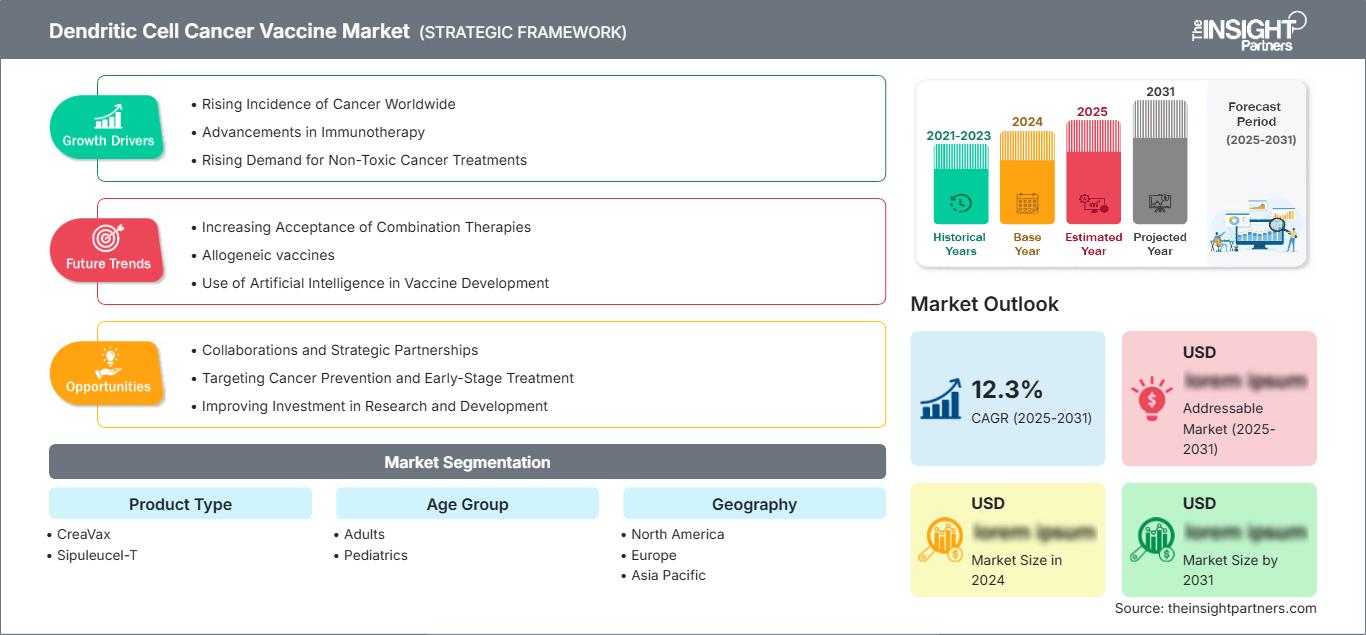
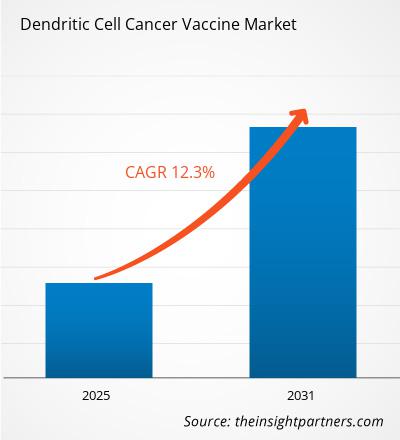
The Dendritic Cell Cancer Vaccine Market is valued at US$ 2.7 Billion in 2025 and is projected to reach US$ 6.48 Billion by 2034, registering a CAGR of 10.24% during 2026–2034. There seems to be rising demand for personalized immunotherapy, immune activation via antigen-specific mechanism, and cell-based approach for treating cancer. The commercial development is currently focused on autologous technologies, while scientific developments pay more attention to better antigen delivery, immune cells activation, and combinational therapy approaches.
North America will continue to lead, and the regional market of Dendritic Cell Cancer Vaccines will grow at a CAGR of 10.7–11.4% through 2034. North America's favorable Dendritic Cell Cancer Vaccine market size is driven by developed oncology industry, active cell therapy research, and extensive capabilities of clinical trials. Improved regulatory environment for cellular therapy, including the FDA's guidelines on developing such therapy, also supports personalized immunotherapy investments.
Dendritic Cell Cancer Vaccine Market Assessment and Insights
- North America: North America is estimated to account for a 42–46% share in 2025 and grow at a CAGR of 10.7–11.4% between 2026–2034, supported by advanced oncology centers, cell-therapy infrastructure, and clinical research activity.
- US: The US represents approximately 78–82% of North America's 2025 market share and is projected to expand at a CAGR of 10.6–11.3% between 2026–2034, led by clinical development and specialized cancer centers.
- Europe: Europe is estimated to hold a 25–29% share in 2025 and expand at a CAGR of 9.4–10.2% between 2026–2034. Germany, the UK, France, and Spain provide established oncology networks and advanced therapy capabilities.
- Asia Pacific: Asia Pacific is estimated to represent an 18–22% share in 2025 and record a CAGR of 11.2–12.0% between 2026–2034, with China, Japan, South Korea, and India supporting clinical translation and biotechnology investment.
- Largest Segment: Product Type is the largest segment, with an estimated 68–72% market share in 2025 and a CAGR of 9.7–10.4% between 2026–2034, reflecting commercial concentration.
- High Growth Segment: Age Group is the high-growth segment, representing approximately 24–28% in 2025 and advancing at a CAGR of 11.1–11.8% between 2026–2034, supported by broader personalized oncology research.
- Key companies analyzed in detail: Activartis Biotech GmbH, Argos Therapeutics, Inc., Batavia Bioservices B.V., Bellicum Pharmaceuticals, Inc., DanDrit Biotech A/S, DCPrime B.V., Sanpower Corporation, JW CreaGene Corporation, Northwest Biotherapeutics, Inc., and SOTIO Biotech.
Source: The Insight Partners' analysis based on proprietary research, government publications, company annual reports, investor presentations, industry databases, and expert interviews.
Technological advancements have moved from rather basic antigen pulsed methodologies to dendritic cell maturation and tumor antigen selection for personalized activation of the immune system. Manufacturing processes are resource intensive since autologous therapies depend on individualized cell harvesting, processing, testing, storage, and delivery. Sipuleucel-T has demonstrated commercial viability for dendritic cell vaccines, whereas CreaVax exemplifies ongoing research in antigen loaded autologous approaches.
In the future, there will be investments in platforms that minimize variability in manufacturing, reduce manufacturing timelines, and have reproducible clinical benefits. The emerging Asian market may become significant as oncology capabilities increase and as expertise in cell therapy expands. Regulation focusing on chemistry, manufacturing and controls, comparability, and post-marketing data is expected to play an important role in commercial strategy, especially for personalized therapies.
Dendritic Cell Cancer Vaccine Market Report Scope
| Report Attribute | Details |
|---|---|
| Market size in 2025 | US$ 2.7 Billion |
| Market Size by 2034 | US$ 6.48 Billion |
| Global CAGR (2026 - 2034) | 10.24% |
| Historical Data | 2021-2024 |
| Forecast period | 2026-2034 |
Dendritic Cell Cancer Vaccine Market Analysis
The current demand scenario in this market is influenced by the growing requirement for drugs that have the ability to cause tumor-specific immune reactions without using cytotoxic therapies alone. Growth in the Dendritic Cell Cancer Vaccine Market is thus related to the field of personalized oncology, rising prevalence of cancers, and increased usage of immune-based therapy combinations. WHO/IARC estimated 20.6 million global cases of cancer in 2022, projecting nearly 35 million cancer cases per year by 2050.
The value chain starts from patient selection, tumor or blood material collection, antigen identification, dendritic cell preparation, maturation, quality control, cryopreservation, and delivery. Manufacturing costs will be driven by labor, facility utilization, release testing, and logistics. Those companies that can standardize the processes will find it easier to streamline the processes, although hospitals and specialized centers will continue to play an important role owing to the nature of delivery.
Competitive positioning has shifted towards a focus on clinical evidences, manufacturability, antigen repertoire, and potential for combining vaccines with checkpoint inhibitors or other immuno-modulators. Thus, the Dendritic Cell Cancer Vaccine Market Report separates commercialized concepts from the less developed platforms that depend upon their clinical validation. NW Bio has highlighted personalized DCVax platform, whereas SOTIO has a portfolio of candidates (DCVAC series) targeting multiple indications of solid tumors.
Innovations also move away from single cancer indications to platform-based technologies which can be employed in treating multiple indications. JW CreaGene has developed dendritic cell vaccine platform along with CreaVax programs, while Argos Therapeutics and DCPrime represent early approaches in the development of technologies in the field. Activartis Biotech GmbH, Bellicum Pharmaceuticals, Inc., Batavia Bioservices B.V., DanDrit Biotech A/S, and Sanpower Corporation represent other companies that add to competition through their historical or enabling capabilities in cellular immunotherapy/biotechnology.
● REPORT CUSTOMIZATION
Tailor This Report To Align With Your Specific Business Requirements
This report can be customized to align precisely with your business objectives, scope, and target markets. Customization options include tailored segmentation, geography, competitive analysis, and strategic insights to support informed decision-making.
Customize This Report →WHAT YOU CAN ADJUST
- ● Segmentations
- ● Geography
- ● Competitive Analysis
- ● Language Preferences
Dendritic Cell Cancer Vaccine Market: Strategic Insights
Regional Insights
North America Dendritic Cell Cancer Vaccine Market
North America Dendritic Cell Cancer Vaccine Market Share is projected to maintain a 42–46% share in 2025 and expand at a CAGR of 10.7–11.4% through 2034. The region benefits from dense oncology networks, sophisticated clinical research organizations, specialized cell-processing laboratories, and comparatively mature pathways for advanced biological therapies. The United States remains the principal contributor because of its concentration of academic cancer centers and biotechnology companies.
Other drivers of demand include the rising incidence of research into personalized cancer therapies. Regulatory development can be identified as one of the important structural factors because FDA guidance documents now cover manufacturing, comparability, design of clinical trials, and post-market evidence collection for cellular products. Canada is represented via university-based oncology research programs and biotech activities; however, the commercial presence of Canada in the market is inferior to that of the USA.
U.S. Dendritic Cell Cancer Vaccine Market
The US constitutes around 78–82% of North America’s market in 2025, which is expected to expand at a CAGR of 10.6–11.3% between 2025 and 2034. This is owing to the presence of strong infrastructure of cancer centers, participation in clinical trials, biotech activities, and experience with autologous cellular products. Northwest Biotherapeutics has DCVax-based personalized therapy program, while academic centers will continue to explore dendritic cells.
Patterns of use will remain limited to challenging solid cancers such as glioblastoma, prostate cancer, melanoma, and selected cases of breast and ovarian cancers. Sipuleucel-T serves as the first commercially successful personalized cellular immunotherapy product, though its application has been restricted to advanced prostate cancer only. Future adoption will be more influenced by survival, patient selection, therapy sequencing, manufacturing time, and reimbursement evidence than immunological effects.
Europe Dendritic Cell Cancer Vaccine Market
Europe is forecast to have a market share ranging between 25-29% in 2025 and a CAGR growth of 9.4-10.2% up until 2034, with Germany being one of the key players. Europe brings together the academic oncology knowledge base, advanced therapy research capabilities, and specific hospital setups, but reimbursement and regulation regulations are different from country to country.
The UK possesses a good research infrastructure and still remains important for personalized cell therapies; regulatory approval becomes more centered around the quality of the evidence and manufacturing. Germany has a wide range of academic centers dealing with cancer and experience in advanced therapies, thus representing a major European center of development. France, Italy, and Spain play their part through university hospitals and clinical research networks.
APAC Dendritic Cell Cancer Vaccine Market
In 2025, APAC is forecasted to make up an 18-22% market share and grow at a CAGR of 11.2-12.0% until 2034, with South Korea and Japan being prominent in development. The large patient pools will come from China and India, whereas Australia will have solid clinical trial experience.
South Korea has experience in the development of dendritic cells via JW CreaGene, while Japan has a regenerative medicine environment, promoting the research of cellular therapies. China and India will have developing oncology centers and patient pools. The industrial investments, biotechnology infrastructure, and support for advanced therapies should promote the region's development especially when there is integration of manufacturing with major cancer centers.
Middle East & Africa Dendritic Cell Cancer Vaccine Market
The Middle East and Africa are expected to expand at a CAGR of 8.8–9.6% through 2034, with Saudi Arabia representing a leading regional market. UAE healthcare investment and South Africa's established oncology infrastructure provide additional development capacity, while the rest of MEA remains more dependent on specialist referral centers.
Investments in infrastructure have enabled better access to sophisticated oncology facilities, especially within Gulf economies. The two major nations of Saudi Arabia and UAE are investing in medical infrastructures that will be able to cater to complex procedures, while South Africa has a wider platform of research and treatments. Access to such technology away from the major cities will be limited because of the manufacturing needs, expertise, costs, and logistics involved.
Segmentation Analysis
Product Type
Product Type remains the principal market segmentation, with an estimated CAGR of 9.7–10.4% between 2026–2034. Commercial concentration reflects the established role of Sipuleucel-T and continued development of CreaVax. Strategic competition centers on antigen selection, dendritic-cell maturation, treatment personalization, manufacturing consistency, and the ability to integrate vaccines into broader oncology treatment pathways.
- CreaVax: CreaVax represents an autologous dendritic-cell approach associated with JW CreaGene and Korean cellular-therapy development. Its strategic relevance stems from antigen-specific immune activation and potential expansion across tumor indications.
- Sipuleucel-T: Sipuleucel-T is the established commercial precedent within dendritic-cell-based therapeutic vaccination. Its patient-specific manufacturing model demonstrates the feasibility of integrating leukapheresis, ex-vivo activation, and reinfusion into oncology practice.
Age Group
Age Group is projected to advance at a CAGR of 11.1–11.8% between 2026–2034. Adults remain the dominant clinical population because most development programs target adult solid tumors. Pediatric applications are strategically important but face smaller patient populations, specialized trial requirements, and greater emphasis on safety, manufacturing feasibility, and long-term monitoring.
- Adults: Adults represent the primary treatment population because most therapeutic cancer-vaccine programs address malignancies with higher incidence in mature populations. Clinical infrastructure and established oncology pathways facilitate patient identification and treatment.
- Pediatrics: Pediatric development remains an emerging opportunity centered on high-unmet-need malignancies. Specialized centers, smaller eligible populations, and stringent safety expectations make collaborative trial networks particularly important.
Opportunity Snapshot
| Segment Name | Revenue Contribution | Trend Tag | Adoption Stage |
|---|---|---|---|
| Adults | High | Solid Tumors | Scaling |
| Pediatrics | Low | Pediatric Trials | Emerging |
Dendritic Cell Cancer Vaccine Market Growth Drivers and Impact Analysis
Rising Cancer Burden and Unmet Therapeutic Need
The global cancer burden creates a durable clinical rationale for therapies capable of improving disease control and reducing recurrence. WHO and IARC estimate that annual cancer incidence could approach 35 million cases by 2050, increasing pressure on healthcare systems to develop treatments with differentiated mechanisms. Dendritic-cell vaccines address a distinct biological objective by presenting tumor-associated or tumor-specific antigens to immune cells, potentially generating targeted cellular responses. Their impact is strongest where conventional treatments leave substantial residual disease or where immune memory could support longer-term control. For developers, the expanding patient pool supports broader trial recruitment, but commercial success still depends on demonstrating clinically meaningful survival benefits rather than immune-response measurements alone. This distinction is likely to influence investment allocation and partnership decisions.
Advances in Personalized Cell Manufacturing
Manufacturing innovation is becoming a central commercial determinant because autologous vaccines require individualized processing rather than conventional batch production. Improvements in cell isolation, culture control, cryopreservation, automated processing, and release testing can reduce variability and increase treatment-center throughput. FDA guidance issued in 2026 specifically addresses chemistry, manufacturing, and controls flexibilities for cellular and gene therapy products, illustrating the growing regulatory focus on efficient development and consistent manufacturing. For developers, better process control can improve scalability without eliminating the personalized nature of therapy. The market impact extends across suppliers, contract manufacturing organizations, specialized laboratories, and hospitals. Companies able to demonstrate reproducible potency and reliable chain-of-identity management should be better positioned to support multicenter trials and eventual commercial deployment.
Integration With Combination Immunotherapy
Combination treatment represents an important clinical strategy because dendritic-cell vaccination alone may be insufficient when tumors suppress antigen presentation or T-cell activity. Pairing vaccines with checkpoint inhibitors, chemotherapy, radiation, targeted therapy, or immune-modulating agents can address different stages of the antitumor response. Current research increasingly evaluates dendritic-cell platforms within broader immunotherapy regimens rather than as isolated interventions. This approach may expand addressable indications by allowing vaccines to be used before or after standard treatments, particularly in settings involving minimal residual disease. For developers, combination strategies also create opportunities for biomarker-driven patient selection and differentiated clinical endpoints. However, combination development increases trial complexity, creates additional safety considerations, and may require clearer attribution of treatment benefit. Commercial programs will therefore need disciplined sequencing and evidence-generation strategies.
Dendritic Cell Cancer Vaccine Market Future Trends
Personalized Neoantigen Selection
The Dendritic Cell Cancer Vaccine Market trends are moving toward increasingly individualized antigen selection using tumor sequencing, transcriptomic analysis, and computational prediction. Future platforms are likely to combine genomic profiling with algorithms that prioritize neoantigens according to expression, mutation characteristics, HLA presentation, and predicted immunogenicity. This could improve the biological precision of autologous vaccines while reducing reliance on broad tumor lysates. Manufacturing workflows may consequently become more integrated, linking biopsy acquisition, sequencing, antigen selection, dendritic-cell preparation, and quality release through a coordinated digital chain. The next stage of development will depend on whether these refinements translate into stronger clinical outcomes. Successful platforms could also use standardized computational workflows to reduce design time, improve consistency between treatment centers, and support regulatory documentation for individualized products.
Immune Memory and Multi-Epitope Activation
Future vaccine platforms are likely to emphasize broader immune engagement by activating both helper and cytotoxic T-cell populations rather than relying on a single immune pathway. Recent preclinical work with PROTEXI illustrates this direction by combining tumor-specific epitopes with helper signals designed to strengthen CD4 and CD8 responses in immune-cold tumors. Such approaches could improve antigen spreading, immune-cell infiltration, and durability of response. Development may increasingly focus on multi-epitope designs, immune-memory reinforcement, and combination with checkpoint modulation. These strategies could shift the competitive basis from simply producing dendritic cells toward engineering more effective immune-response architectures. Translation into humans will remain the critical test, particularly because promising preclinical immune effects do not necessarily predict clinically meaningful survival improvements.
Dendritic Cell Cancer Vaccine Market Opportunities
Regional Manufacturing and Treatment Hubs
The Dendritic Cell Cancer Vaccine Market Forecasts point toward opportunities to establish regional manufacturing and treatment hubs near major oncology centers. Personalized products require close coordination between patient collection, manufacturing, quality release, storage, and administration, making distributed production attractive where patient volumes justify specialized infrastructure. Investors can prioritize countries with large oncology populations, established cell-therapy regulation, and tertiary-care concentration. APAC markets are particularly relevant because South Korea, Japan, China, and India combine expanding cancer-care capacity with growing biotechnology capabilities. Hub models could also support multicenter clinical trials by standardizing processing and reducing transportation complexity. Partnerships among biotechnology companies, hospitals, and specialized manufacturing providers may create scalable operating models while preserving patient-specific production. The strongest opportunities will likely emerge where infrastructure can serve several therapeutic programs rather than one vaccine.
Biomarker-Guided Combination Programs
Investment opportunities also exist in biomarker-guided programs that position dendritic-cell vaccines within defined treatment sequences. Developers can prioritize tumor types where antigen expression, immune infiltration, molecular characteristics, or residual-disease status identify patients most likely to respond. Combining these biomarkers with checkpoint inhibition or standard therapy may produce more informative clinical designs than unselected patient populations. The opportunity extends beyond vaccine manufacturing into sequencing, diagnostics, bioinformatics, and companion-testing capabilities. Strategic investors should favor platforms capable of generating reusable clinical evidence across several indications, because shared biomarkers and manufacturing processes can reduce development duplication. Partnerships with academic cancer centers may accelerate patient stratification and translational research. Over time, integrated diagnostic and therapeutic offerings could strengthen differentiation and provide a clearer value proposition to healthcare providers and reimbursement stakeholders.
Recent Developments
- July 2026: Northwest Biotherapeutics, Inc. presented updated survival data from its Phase III DCVax-L program for glioblastoma at the British Neuro-Oncology Society Annual Meeting. The company reported additional individual-patient-level analyses and stated that the updated analyses supported the previously reported survival benefit, while its UK regulatory application remained under review.
- April 2026: Northwest Biotherapeutics, Inc. appointed Dr. Annalisa Jenkins as a strategic adviser to support continued development and expansion of its dendritic-cell cancer vaccine platform. The appointment adds extensive biopharmaceutical development and regulatory experience to the company's efforts around personalized DCVax programs.
- July 2026: Celloram Inc. supported publication of research on the PROTEXI dendritic-cell cancer vaccine platform in Nature Communications. The preclinical study evaluated tumor-specific and antiviral helper epitopes in mouse models of melanoma and breast cancer, reporting reduced tumor growth and improved survival compared with conventional dendritic-cell vaccination approaches.
Frequently Asked Questions

- Comprehensive Market Sizing and Forecast Analysis
- Detailed Segmentation Analysis
- In-Depth Market Dynamics Assessment
- Regional and Country-Level Insights
- Competitive Landscape and Company Benchmarking
- Strategic Business Intelligence
Recent Reports
Testimonials

The Insight Partners' SCADA System Market report is comprehensive, with valuable insights on current trends and future forecasts. The team was highly professional, responsive, and supportive throughout. We are very satisfied and highly recommend their services.
RAN KEDEM Partner, Reali Technologies LTDs
I requested a report on a very specific software market and the team produced the report in a few days. The information was very relevant and well presented. I then requested some changes and additions to the report. The team was again very responsive and I got the final report in less than a week.
JEAN-HERVE JENN Chairman, Future Analytica
We worked with The Insight Partners for an important market study and forecast. They gave us clear insights into opportunities and risks, which helped shape our plans. Their research was easy to use and based on solid data. It helped us make smart, confident decisions. We highly recommend them.
PIYUSH NAGPAL Sr. Vice President, High Beam Global
The Insight Partners delivered insightful, well-structured market research with strong domain expertise. Their team was professional and responsive throughout. The user-friendly website made accessing industry reports seamless. We highly recommend them for reliable, high-quality research services
YUKIHIKO ADACHI CEO, Deep Blue, LLC.
This is the first time I have purchased a market report from The Insight Partners.While I was unsure at first, I visited their web site and felt more comfortable to take the risk and purchase a market report.I am completely satisfied with the quality of the report and customer service. I had several questions and comments with the initial report, but after a couple of dialogs over email with their analyst I believe I have a report that I can use as input to our strategic planning process.Thank you so much for taking the extra time and making this a positive experience.I will definitely recommend your service to others and you will be my first call when we need further market data.
JOHN SUZUKI President and Chief Executive Officer, Board Director, BK Technologies
I wish to appreciate your support and the professionalism you displayed in the course of attending to my request for information regarding to infectious disease IVD market in Nigeria. I appreciate your patience, your guidance, and the fact that you were willing to offer a discount, which eventually made it possible for us to close a deal. I look forward to engaging The Insight Partners in the future, all thanks to the impression you have created in me as a result of this first encounter.
DR CHIJIOKE ONYIA MANAGING DIRECTOR, PineCrest Healthcare Ltd.Reason to Buy
- Informed Decision-Making
- Understanding Market Dynamics
- Competitive Analysis
- Identifying Emerging Markets
- Customer Insights
- Market Forecasts
- Risk Mitigation
- Boosting Operational Efficiency
- Strategic Planning
- Investment Justification
- Tracking Industry Innovations
- Aligning with Regulatory Trends





 Get Free Sample for