
Natural Language Processing Market Growth, Share & Trends by 2034
Coverage: By Component (Solutions, Services), Technology (Transformer-based, NLP Rule-based NLP, Others), Deployment (Cloud, On-Premise, Hybrid), Organization Size (Large Enterprises, SMEs), Application (Customer Experience and Support, Marketing and Brand Intelligence, Research and Information Intelligence, Knowledge Management and Discovery, Translation and Localization, Compliance Legal and Risk Intelligence, Others), Industry Vertical (BFSI, IT and Telecommunication, Healthcare and Life Sciences, Retail and E-commerce, Media and Entertainment, Government and Public Sector, Education and Ed-Tech, Others), and Geography
- Status : Published
- Report Code : TIPRE00007797
- Category : Technology, Media and Telecommunications
- No. of Pages : 379
- Available Report Formats :


- Last update date : September 03, 2026


2025 Market Size
US$ 91,569.54 Mn
Base year value
2034 Forecast
US$ 751,376.04 Mn
Projected by 2034
CAGR 2026-2034
26.3 %
Growth rate
Addressable Market
US$ 3,156,332.71 Mn
(2026-2034)
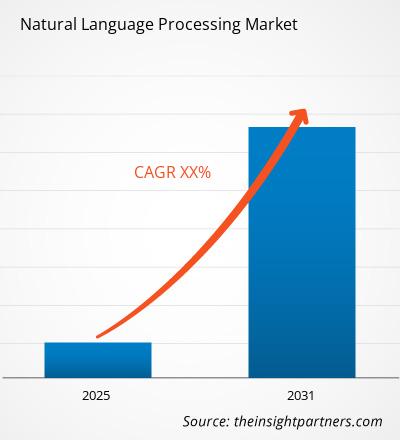
The Natural Language Processing Market was valued at US$ 91,569.55 million in 2025 and is projected to reach US$ 751,376.05 million by 2034, expanding at a CAGR of 26.3% over the forecast period. Growth is being driven by rapid adoption of generative AI, transformer-based models, conversational interfaces, enterprise search, automated customer support, compliance intelligence, and multilingual content workflows across regulated and digital-first industries.
North America held 36.51% of global revenue in 2025 and is expected to grow at a 25.1% CAGR, supported by broad adoption of cloud AI platforms, enterprise automation, and advanced customer experience solutions. Europe followed with a 29.35% share and 26.6% CAGR, while Asia Pacific accounted for 26.92% of 2025 revenue and is projected to record the fastest regional CAGR of 28.3%, reflecting rising digital transformation, multilingual AI deployment, and expanding AI investments across China, India, Japan, South Korea, and Southeast Asia.
Natural Language Processing Market Assessment and Insights
- The Natural Language Processing Market size stood at US$ 91,569.55 million in 2025 and is forecast to reach US$ 751,376.05 million by 2034, growing at a CAGR of 26.3%.
- North America: accounted for 36-40% of the global market in 2025 and is growing at a CAGR of 25-27% during 2026-2034.
- US: held 85-90% of the North American market in 2025 and is growing at a CAGR of 26-28% during 2026-2034.
- Europe: accounted for 28-32% of the global market in 2025 and is growing at a CAGR of 26-28% during 2026-2034. Leading countries include Germany, the UK, and France.
- Asia Pacific: accounted for 25-28% of the global market in 2025 and is growing at a CAGR of 28-30% during 2026-2034. Leading countries include China, India, Japan, and South Korea.
- Largest Segment: Solutions held a 72-76% share in 2025 and is growing at a CAGR of 26-28% during 2026-2034.
- High Growth Segment: Transformer-based NLP held a 45-50% share in 2025 and is growing at a CAGR of 28-32% during 2026-2034.
- Key companies analyzed in detail include Microsoft Corp, Alphabet Inc, Amazon.com Inc, International Business Machines Corp, Oracle Corp, SAP SE, Salesforce Inc, Intel Corporation, Baidu Inc, and OpenAI, Inc.
Source: The Insight Partners' analysis based on proprietary research, government publications, company annual reports, investor presentations, industry databases, and expert interviews.
Natural language processing has evolved from rules-based text handling into a strategic enterprise layer powered by transformers, large language models, vector search, speech-to-text, translation systems, and intelligent document processing. Enterprises are increasingly using NLP to convert unstructured text, voice, chats, contracts, claims, emails, logs, and knowledge repositories into searchable, actionable, and automated workflows. The shift toward generative AI and transformer architectures has fundamentally changed how organizations approach language-based automation, moving beyond simple keyword extraction toward contextual understanding and human-like interaction capabilities. This evolution is supported by advancements in cloud infrastructure, model efficiency, and domain-specific fine-tuning techniques that enable deployment across diverse industry settings.
Demand is intensifying as organizations seek AI systems that can understand context, intent, sentiment, compliance risk, and domain vocabulary. The strongest growth opportunities are emerging in customer support automation, multilingual localization, compliance and legal intelligence, knowledge discovery, healthcare documentation, financial risk analysis, retail personalization, and marketing intelligence. Investments in AI research and development continue to expand globally, with governments and private enterprises allocating substantial resources toward NLP innovation. Regulatory frameworks in Europe and North America are also shaping deployment strategies, encouraging the development of privacy-preserving architectures and explainable AI systems that meet compliance requirements while delivering operational value.
Natural Language Processing Market Report Scope
| Report Attribute | Details |
|---|---|
| Market size in 2025 | US$ 91,569.54 Million |
| Market Size by 2034 | US$ 751,376.04 Million |
| Global CAGR (2026 - 2034) | 26.3% |
| Historical Data | 2021-2024 |
| Forecast period | 2026-2034 |
Natural Language Processing Market Analysis
Natural Language Processing Market growth is strongly tied to enterprise adoption of AI for automation, decision intelligence, and digital customer engagement. The rapid increase in unstructured data across emails, documents, call transcripts, social media, contracts, and enterprise knowledge bases is pushing organizations to deploy NLP systems that can classify, summarize, translate, extract, and generate language at scale. Cloud platforms have become the primary delivery mechanism for these capabilities, offering scalable compute resources, pretrained models, and API-based access that reduce deployment barriers for both large enterprises and SMEs. The need for real-time language processing across customer service, compliance monitoring, and knowledge management continues to accelerate adoption, with organizations seeking to extract actionable insights from growing volumes of textual data.
The market is also being reshaped by generative AI and transformer-based architectures. Unlike earlier rules-based NLP, transformer systems can process long context, infer intent, support multilingual tasks, generate human-like responses, and adapt to domain-specific workflows through fine-tuning, retrieval-augmented generation, guardrails, and model orchestration. These advancements have expanded the addressable market for NLP, enabling applications that were previously impractical or cost-prohibitive. Recent developments in model efficiency and context windows have further accelerated enterprise adoption, allowing organizations to process longer documents, maintain conversation history, and handle more complex reasoning tasks.
Competitive intensity is rising as cloud hyperscalers, enterprise software vendors, AI-native companies, semiconductor providers, and regional AI platforms compete across model access, infrastructure, copilots, data governance, and application-layer integration. Microsoft Corp, Alphabet Inc, Amazon.com Inc, International Business Machines Corp, Oracle Corp, SAP SE, Salesforce Inc, Intel Corporation, Baidu Inc, and OpenAI, Inc. are central to the competitive landscape. Strategic positioning increasingly depends on ecosystem strength, with vendors building comprehensive platforms that combine language models with data integration, workflow automation, and governance capabilities. Partnerships between cloud providers and AI specialists are becoming more common, enabling faster innovation and broader market reach.
Vendors are differentiating through model performance, integration depth, enterprise security, domain tuning, cost efficiency, compliance controls, and ease of deployment. The market is shifting from standalone NLP tools toward embedded AI assistants, workflow copilots, intelligent search layers, and industry-specific language intelligence platforms. Organizations are prioritizing platforms that offer seamless integration with existing business applications, support for multiple deployment models, and transparent pricing structures. Open-source language models are also gaining traction, particularly among organizations seeking to reduce vendor lock-in and maintain greater control over their AI infrastructure.
● REPORT CUSTOMIZATION
Tailor This Report To Align With Your Specific Business Requirements
This report can be customized to align precisely with your business objectives, scope, and target markets. Customization options include tailored segmentation, geography, competitive analysis, and strategic insights to support informed decision-making.
Customize This Report →WHAT YOU CAN ADJUST
- ● Segmentations
- ● Geography
- ● Competitive Analysis
- ● Language Preferences
Natural Language Processing Market: Strategic Insights

Regional Insights
North America Natural Language Processing Market
North America accounted for 36.51% of the market in 2025 and is projected to expand at a 25.1% CAGR through 2034. The region benefits from early AI adoption, strong cloud infrastructure, and significant generative AI investment across customer service, financial services, healthcare, and legal technology. The US remains the core growth engine, accounting for 80-85% of North American revenue and growing at 26-28% CAGR. Canada contributes through AI research clusters and adoption of multilingual language technologies across public-sector and healthcare workflows.
U.S. Natural Language Processing Market
The U.S. market captured approximately 80-85% of North American revenue in 2025 and is growing at a 26-28% CAGR. The country hosts headquarters of major NLP vendors including Microsoft Corp, Alphabet Inc, Amazon.com Inc, OpenAI, Inc., and Salesforce Inc, creating a concentration of innovation and commercial activity. Enterprise adoption spans financial services, healthcare, technology, retail, and government sectors. Substantial venture capital investment and extensive cloud infrastructure support continued growth as organizations move from pilots to enterprise-wide deployments.
Europe Natural Language Processing Market
Europe held 29.35% of global revenue in 2025 and is anticipated to grow at a 26.6% CAGR. Demand is supported by multilingual business requirements, regulatory focus on responsible AI, and digital transformation across banking, telecom, and government. The UK, Germany, France, Italy, and Spain are key contributors, with the UK and Germany growing at 26-28% CAGR. European enterprises prioritize secure deployment, explainability, and data residency, creating demand for compliance-ready NLP solutions aligned with the EU AI Act framework.
Asia Pacific Natural Language Processing Market
Asia Pacific accounted for 26.92% of global revenue in 2025 and is projected to register the fastest CAGR of 28.3%. Growth is driven by rapid digitalization, multilingual AI adoption, and government-backed initiatives across China, India, Japan, South Korea, and Australia. China and India are major demand centers, supported by large digital user bases and language diversity. Japan and South Korea contribute through advanced enterprise automation and semiconductor ecosystems. Government programs including China's Next Generation AI Development Plan and India's Digital India initiative further accelerate adoption.
Middle East and Africa Natural Language Processing Market
The Middle East and Africa region is expected to grow at a 23.5% CAGR, supported by national AI strategies, digital government programs, and smart-city investments. Gulf countries including Saudi Arabia and the UAE are prioritizing AI-powered public service delivery and Arabic-language AI systems in banking, telecom, and citizen services. South Africa and other regional economies are adopting NLP for financial services and healthcare documentation. Growth remains concentrated in GCC countries where government investment is strongest.
South and Central America Natural Language Processing Market
South and Central America is gaining traction as enterprises modernize contact centers, banking operations, and retail engagement. Demand is supported by Spanish- and Portuguese-language NLP models and rising cloud adoption. Brazil, Mexico, Chile, Colombia, and Argentina remain important adoption centers, with organizations using NLP for chatbots, document processing, fraud monitoring, sentiment analysis, and regulatory communication across BFSI, retail, telecom, and government sectors.
Segmentation Analysis
Component
The component segment includes solutions and services, with solutions leading the market due to strong demand for NLP platforms, conversational AI, text analytics, translation software, and embedded AI capabilities.
- Solutions: The largest component segment, driven by enterprise demand for NLP platforms, APIs, copilots, analytics tools, and language intelligence applications.
- Services: Includes consulting, implementation, integration, model customization, governance, training, and managed services supporting NLP deployment.
Technology
The technology segment is led by transformer-based NLP, supported by the rapid adoption of large language models, generative AI, multilingual models, and advanced language understanding.
- Transformer-based NLP: Largest technology segment driven by LLMs, generative AI, multilingual models, and AI assistants.
- Rule-based NLP: Used in compliance-focused and deterministic workflows requiring explainability and controlled outputs.
- Others: Includes statistical NLP, hybrid systems, semantic search, speech-language processing, knowledge graphs, and multimodal AI.
Deployment
The deployment segment comprises cloud, on-premise, and hybrid models, with cloud deployment leading due to scalability, lower infrastructure requirements, and easy access to advanced AI models.
- Cloud: Largest deployment model offering scalability, rapid implementation, and subscription-based access.
- On-Premise: Preferred for strict data control, regulatory compliance, and proprietary AI model hosting.
- Hybrid: Combines cloud innovation with secure on-premise infrastructure and data governance.
Organization Size
The market is segmented into large enterprises and SMEs. Large enterprises lead adoption due to extensive AI investments and high-volume language processing requirements, while SMEs are rapidly expanding adoption through cloud-based AI solutions.
- Large Enterprises: Deploy NLP for customer support, compliance, enterprise search, multilingual communication, and productivity enhancement.
- SMEs: Adopt cloud-based NLP for chatbots, translation, marketing analytics, content generation, and workflow automation.
Application
The application segment is driven by the growing use of NLP across customer engagement, business intelligence, research, compliance, and enterprise knowledge management.
- Customer Experience and Support: Largest application driven by chatbots, virtual assistants, agent copilots, and sentiment analysis.
- Marketing and Brand Intelligence: Supports sentiment analysis, social listening, campaign optimization, and brand monitoring.
- Research and Information Intelligence: Enables document summarization, knowledge extraction, and research automation.
- Knowledge Management and Discovery: Supports semantic search, enterprise search, automated tagging, and knowledge retrieval.
- Translation and Localization: Facilitates multilingual communication and localization workflows.
- Compliance, Legal, and Risk Intelligence: Used for contract analysis, policy monitoring, fraud detection, and regulatory compliance.
- Others: Includes healthcare documentation, HR automation, education, media analytics, and public services.
Industry Vertical
The industry vertical segment includes BFSI, IT and Telecommunication, Healthcare and Life Sciences, Retail and E-commerce, Media and Entertainment, Government and Public Sector, Education and Ed-Tech, and other industries adopting NLP to improve operational efficiency and customer engagement.
- BFSI: Uses NLP for fraud detection, compliance, customer service, claims processing, and document automation.
- IT and Telecommunication: Deploys NLP for service automation, ticket management, customer analytics, and knowledge management.
- Healthcare and Life Sciences: Uses NLP for clinical documentation, medical coding, literature analysis, and drug discovery.
- Retail and E-commerce: Applies NLP in product search, recommendations, chatbots, customer reviews, and personalization.
- Media and Entertainment: Enables content moderation, subtitle generation, audience analytics, and multilingual content management.
- Government and Public Sector: Uses NLP for citizen services, document processing, translation, and policy analysis.
- Education and Ed-Tech: Supports intelligent tutoring, automated assessment, translation, and personalized learning.
- Others: Includes manufacturing, travel, energy, legal services, and professional services.
Opportunity Snapshot
| Application | Revenue Contribution | Trend Tag | Adoption Stage |
| Customer Experience and Support | High | Conversational AI and Agent Assist | Mature and Scaling |
| Marketing and Brand Intelligence | High | Sentiment and Social Listening | Scaling |
| Research and Information Intelligence | Medium to High | Summarization and Insight Extraction | Scaling |
| Knowledge Management and Discovery | High | Semantic Search and RAG | Scaling |
| Translation and Localization | Medium | Multilingual AI | Mature |
| Compliance, Legal, and Risk Intelligence | Medium to High | Document Intelligence | Emerging and Scaling |
Natural Language Processing Market Growth Drivers and Impact Analysis
Rising Enterprise Adoption of Generative AI and Automation
Generative AI adoption is a primary growth driver for the Natural Language Processing Market. Enterprises are deploying NLP-enabled copilots, chatbots, intelligent search systems, and automated content workflows to improve productivity, reduce manual effort, and deliver faster customer and employee support. As language models become more capable, NLP is moving from isolated text analytics into core business applications. The shift from experimentation to production deployment is accelerating, with organizations recognizing tangible ROI from automation initiatives. Investment in generative AI reached substantial levels in 2025, with technology majors committing significant capital to AI research and infrastructure development. This investment is driving innovation in model capabilities, cost efficiency, and deployment tools, making advanced NLP accessible to a broader range of organizations.
Growing Need to Extract Value from Unstructured Enterprise Data
Enterprises generate large volumes of unstructured data across emails, contracts, support tickets, call transcripts, reports, medical notes, social media, compliance files, and knowledge repositories. NLP enables organizations to classify, summarize, search, translate, extract, and interpret this content at scale, turning language data into operational intelligence and faster decision-making. The exponential growth of digital communication and documentation continues to increase the volume of unstructured data, creating urgent demand for scalable language processing capabilities. Organizations that successfully leverage NLP gain competitive advantages through faster insights, improved customer understanding, and more efficient document-intensive processes.
Expansion of Cloud AI Platforms and API-Based NLP Delivery
Cloud deployment is accelerating NLP adoption by giving enterprises access to scalable compute, pretrained models, language APIs, vector search, managed governance tools, and rapid integration with business applications. This delivery model reduces infrastructure barriers and enables both large enterprises and SMEs to adopt advanced language intelligence without building full AI stacks internally. Cloud providers continue to expand their NLP offerings, with services providing accessible, pay-as-you-go options that lower entry barriers. The cloud delivery model also supports faster innovation cycles, allowing organizations to benefit from model improvements and new features without infrastructure upgrades.
Natural Language Processing Market Future Trends
Rise of Domain-Specific and Enterprise-Tuned Language Models
Organizations are moving beyond general-purpose language models toward domain-tuned NLP systems for finance, healthcare, law, education, government, telecom, and retail. These models are designed to understand industry terminology, compliance requirements, internal knowledge structures, and enterprise-specific workflows, improving accuracy and trust in production use cases. The shift toward domain-specific models reflects growing recognition that general-purpose models often lack the precision required for regulated or specialized applications. Enterprises are increasingly fine-tuning models on proprietary data, building custom embeddings, and developing domain-specific evaluation frameworks. This trend is creating opportunities for vendors that offer vertical-specific solutions, industry-aligned model training, and domain-optimized deployment tools.
Growing Adoption of Retrieval-Augmented Generation and Semantic Search
Retrieval-augmented generation is becoming a core design pattern for enterprise NLP because it connects language models to trusted internal data sources. By combining semantic search, vector databases, knowledge graphs, and governed content repositories, organizations can improve answer quality, reduce hallucination risk, and make AI assistants more useful for knowledge management and compliance-sensitive workflows. This approach addresses a key limitation of standalone language models—lack of access to current, proprietary, or domain-specific information—by enabling grounded responses based on internal knowledge bases. The RAG trend is driving demand for vector databases, enterprise search platforms, and integration tools that connect language models to business data sources.
Natural Language Processing Market Opportunities
Customer Support Automation and Agent Copilots
Customer service remains one of the strongest commercial opportunities for NLP vendors. Enterprises are deploying virtual agents, automated routing, real-time agent assist, call summarization, sentiment analysis, and knowledge retrieval to improve response speed, reduce service costs, and deliver more consistent customer experiences across digital and voice channels. The opportunity spans both customer-facing chatbots and employee-facing copilots that help service agents resolve issues faster. Organizations that successfully implement NLP-powered support automation achieve measurable improvements in response times, customer satisfaction scores, and operational efficiency. The addressable market continues to expand as contact centers adopt AI capabilities, with integration between NLP platforms and existing customer service infrastructure creating opportunities for vendors that offer comprehensive solutions.
Compliance, Legal, and Risk Intelligence
Regulated industries are creating demand for NLP systems that can review contracts, monitor communications, classify sensitive information, detect policy violations, summarize regulatory changes, and support audit workflows. This opportunity is especially strong in BFSI, healthcare, government, legal services, telecom, and life sciences. Organizations face increasing regulatory scrutiny and growing volumes of compliance-related documentation, making NLP an essential tool for risk management. The compliance opportunity is characterized by requirements for high accuracy, explainability, and auditability, creating opportunities for vendors that can deliver domain-specific models and governance frameworks.
Recent Developments
- February 2026: Microsoft has launched the AI QuickStart programme, a new initiative to help digitally mature enterprises – including small and medium-sized enterprises (SMEs) as well as large enterprises – known as Digital Leaders to rapidly deploy practical, enterprise-ready artificial intelligence (AI) solutions. Supported by the Infocomm Media Development Authority (IMDA) and United Overseas Bank (UOB), the programme focuses on accelerating AI deployment in key business areas, including knowledge mining, customer engagement, operations automation, content creation and conversational analytics.
- February 2026: Google is reportedly bringing the power of Gemini AI to YouTube. The company is said to be experimenting with bringing its Gemini-powered conversational AI tool to YouTube on smart TVs, along with gaming consoles and streaming devices. This will allow users to ask questions about videos using voice commands through their remote controls – just like the way they converse with Gemini Live.
- December 2025: Amazon (AMZN.O) is reorganizing its artificial intelligence team, with a long-standing veteran leaving and another leader stepping in to oversee a larger unit that now encompasses AI models, custom chips, and quantum computing. This change comes just two weeks after Amazon Web Services held its annual cloud computing conference in Las Vegas, which the company has increasingly used to highlight its AI tools and services.
Frequently Asked Questions

- Comprehensive Market Sizing and Forecast Analysis
- Detailed Segmentation Analysis
- In-Depth Market Dynamics Assessment
- Regional and Country-Level Insights
- Competitive Landscape and Company Benchmarking
- Strategic Business Intelligence
Recent Reports
Testimonials

The Insight Partners provided valuable market intelligence that supported our global go-to-market strategy. Their team was professional, responsive, and attentive to our feedback, providing thoughtful analysis and helpful methodological clarifications throughout the project.
Junmo Kim Chief Financial Officer (CFO), Enertech Co., Ltd.
The Insight Partners' SCADA System Market report is comprehensive, with valuable insights on current trends and future forecasts. The team was highly professional, responsive, and supportive throughout. We are very satisfied and highly recommend their services.
RAN KEDEM Partner, Reali Technologies LTDs
I requested a report on a very specific software market and the team produced the report in a few days. The information was very relevant and well presented. I then requested some changes and additions to the report. The team was again very responsive and I got the final report in less than a week.
JEAN-HERVE JENN Chairman, Future Analytica
We worked with The Insight Partners for an important market study and forecast. They gave us clear insights into opportunities and risks, which helped shape our plans. Their research was easy to use and based on solid data. It helped us make smart, confident decisions. We highly recommend them.
PIYUSH NAGPAL Sr. Vice President, High Beam Global
The Insight Partners delivered insightful, well-structured market research with strong domain expertise. Their team was professional and responsive throughout. The user-friendly website made accessing industry reports seamless. We highly recommend them for reliable, high-quality research services
YUKIHIKO ADACHI CEO, Deep Blue, LLC.
This is the first time I have purchased a market report from The Insight Partners.While I was unsure at first, I visited their web site and felt more comfortable to take the risk and purchase a market report.I am completely satisfied with the quality of the report and customer service. I had several questions and comments with the initial report, but after a couple of dialogs over email with their analyst I believe I have a report that I can use as input to our strategic planning process.Thank you so much for taking the extra time and making this a positive experience.I will definitely recommend your service to others and you will be my first call when we need further market data.
JOHN SUZUKI President and Chief Executive Officer, Board Director, BK Technologies
I wish to appreciate your support and the professionalism you displayed in the course of attending to my request for information regarding to infectious disease IVD market in Nigeria. I appreciate your patience, your guidance, and the fact that you were willing to offer a discount, which eventually made it possible for us to close a deal. I look forward to engaging The Insight Partners in the future, all thanks to the impression you have created in me as a result of this first encounter.
DR CHIJIOKE ONYIA MANAGING DIRECTOR, PineCrest Healthcare Ltd.Reason to Buy
- Informed Decision-Making
- Understanding Market Dynamics
- Competitive Analysis
- Identifying Emerging Markets
- Customer Insights
- Market Forecasts
- Risk Mitigation
- Boosting Operational Efficiency
- Strategic Planning
- Investment Justification
- Tracking Industry Innovations
- Aligning with Regulatory Trends





 Get Free Sample for