
Wearable Tracking Devices Market Size, Trends & Growth by 2034
Coverage: by Application ( Consumer Electronics, Healthcare, Others ); Type ( Foot Ware, Wrist Ware, Eye Ware, Others ), and Geography (North America, Europe, Asia Pacific, and South and Central America)
- Status : Data Released
- Report Code : TIPRE00007607
- Category : Electronics and Semiconductor
- No. of Pages : 150
- Available Report Formats :


- Last update date : September 28, 2026


2025 Market Size
US$ 11.3 Bn
Base year value
2034 Forecast
US$ 26.53 Bn
Projected by 2034
CAGR 2026-2034
9.95 %
Growth rate
Addressable Market
US$ 168.36 Bn
(2026-2034)
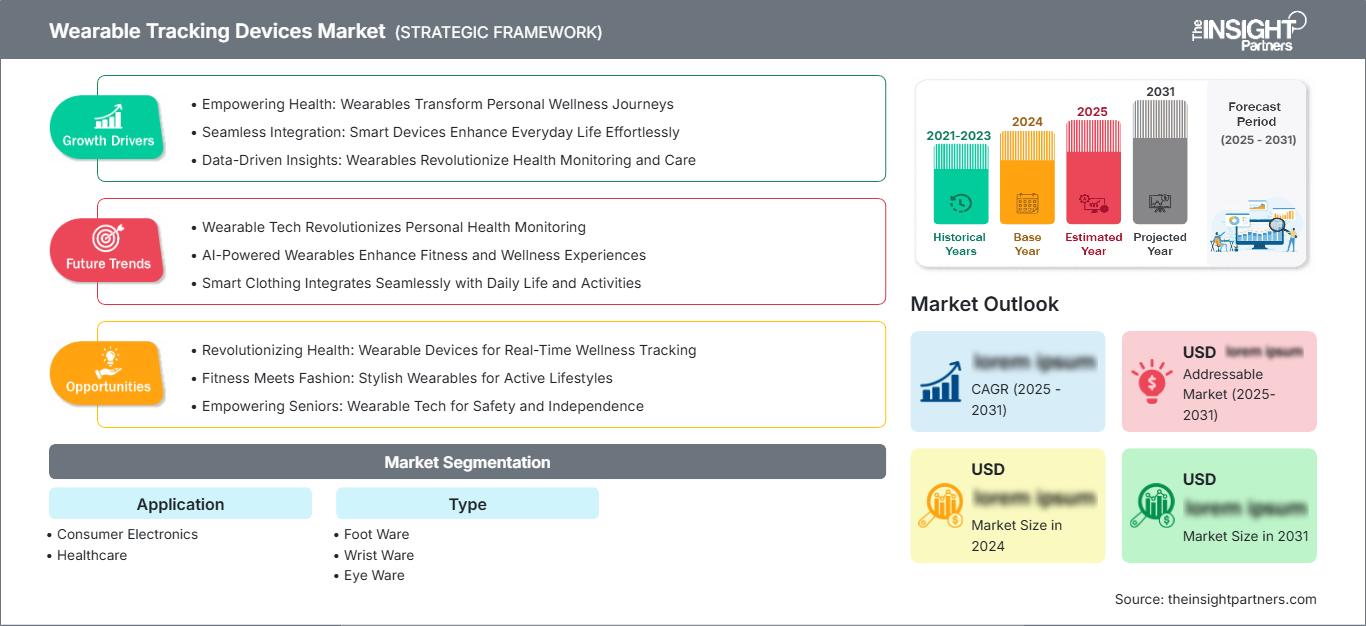
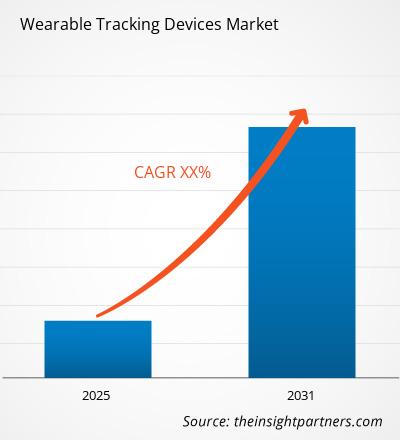
The Wearable tracking devices market is projected to expand from US$ 11.3 Billion in 2025 to US$ 26.53 Billion by 2034, registering a CAGR of 9.95% during 2026–2034. Expansion is supported by increasing adoption of connected fitness products, health-monitoring wearables, and sensor-enabled accessories across consumer and healthcare applications. Product innovation increasingly combines physiological sensing, connectivity, artificial intelligence, and personalized analytics, broadening the role of wearable devices beyond activity tracking toward continuous wellness and preventive health management.
North America is expected to maintain a strong position as connected health ecosystems, employer wellness programs, advanced healthcare infrastructure, and high consumer acceptance support adoption. The wearable tracking devices market size outlook indicates a regional CAGR of approximately 8.8–10.2% through 2034. Growth is reinforced by integration with smartphones, telehealth platforms, health applications, and increasingly sophisticated biometric monitoring capabilities.
Wearable Tracking Devices Market Assessment and Insights
- North America is expected to account for approximately 34–38% of global revenue in 2025 and expand at a CAGR of 8.8–10.2% between 2026–2034, supported by connected healthcare adoption, high purchasing power, and mature digital ecosystems.
- US represents approximately 27–30% of global revenue in 2025 and is projected to grow at a CAGR of 8.7–10.0% between 2026–2034, supported by healthcare integration and strong smartwatch penetration.
- Europe is estimated to hold approximately 24–28% share in 2025 and grow at a CAGR of 8.5–9.8% during 2026–2034, with Germany, the UK, France, Italy, and Spain supporting demand through preventive healthcare and digital wellness adoption.
- Asia Pacific is estimated to represent approximately 27–31% share in 2025 and expand at a CAGR of 10.2–12.0% during 2026–2034, led by China, Japan, South Korea, and India, where electronics manufacturing and mobile connectivity strengthen adoption.
- Largest Segment: Wrist Ware, estimated at approximately 68–72% market share in 2025 and projected to grow at a CAGR of 9.2–10.4% during 2026–2034, reflecting broad functionality and established consumer familiarity.
- High Growth Segment: Healthcare, estimated at approximately 31–35% market share in 2025 and projected to expand at a CAGR of 11.0–12.8% during 2026–2034 as continuous monitoring becomes increasingly integrated into care pathways.
- Key companies analyzed in detail: Adidas AG, Apple Inc., Fitbit, Inc., Google LLC, Garmin Ltd., LG Electronics Inc., Pebble Technology Corp., Samsung Electronics Co., Ltd., Sony Corporation, Xiaomi Technology Co., Ltd., Huawei Technologies Co., Ltd., and Polar Electro Oy.
Source: The Insight Partners' analysis based on proprietary research, government publications, company annual reports, investor presentations, industry databases, and expert interviews.
Technology development has shifted the category from basic pedometers and activity bands toward multifunctional connected platforms capable of measuring heart rate, sleep, movement, blood oxygen, temperature, location, and exercise performance. Miniaturized sensors, low-power processors, Bluetooth connectivity, improved batteries, and cloud analytics have reduced barriers to continuous monitoring. Production dynamics increasingly emphasize sensor accuracy, lightweight materials, software integration, and interoperability, while manufacturers differentiate through proprietary algorithms and device ecosystems.
Looking ahead, emerging markets are likely to contribute disproportionately to unit expansion as smartphone ownership, mobile broadband, and affordable smart wearables improve. Healthcare reimbursement experimentation, employer wellness initiatives, and preventive-care policies can broaden professional use. Investment is also moving toward artificial intelligence, sensor fusion, and secure health-data platforms. Regulatory scrutiny around medical claims, privacy, cybersecurity, and clinical validation will increasingly influence product development, particularly where consumer devices transition into health-monitoring applications, according to the Wearable Tracking Devices Market report.
Wearable Tracking Devices Market Report Scope
| Report Attribute | Details |
|---|---|
| Market size in 2025 | US$ 11.3 Billion |
| Market Size by 2034 | US$ 26.53 Billion |
| Global CAGR (2026 - 2034) | 9.95% |
| Historical Data | 2021-2024 |
| Forecast period | 2026-2034 |
Wearable Tracking Devices Market Analysis
The wearable tracking devices market growth is being shaped by the convergence of consumer electronics and digital health. Increasingly, users need information more than just the number of activities, ranging from sleep quality, activity preparation level, cardiovascular performance, and recovery measurements. The value chain ranges from sensors, semiconductors, battery technology, display devices, housing, connectivity modules, operating systems, mobile apps, cloud services, and analytics. Suppliers that can boost accuracy and decrease power usage become critical.
Supplier issues are determined by semiconductor technology availability, sensor availability, display technology, and high manufacturing focus in Asia. Established electronics companies will have advantages in large-scale purchases and supply chains, while brand names will compete based on their sports science, health analytics, design, or application. Economics for the product is moving towards subscriptions and ecosystem participation, forcing manufacturers to retain customers more than just replace products.
The wearable tracking devices market analysis shows a competitive structure dominated by technology platforms with strong hardware, software, and ecosystem capabilities. Apple Inc. focuses on the integration of health features, whereas Samsung Electronics Co., Ltd. combines Galaxy Watch products with Samsung Health. Google LLC uses Fitbit features and Android integration, and Xiaomi Technology Co., Ltd. has product line coverage and value-based connected devices. Garmin Ltd. specializes in sport and performance applications.
Key investment areas include artificial intelligence, proprietary algorithms, sensor miniaturization, battery optimization, and interoperability of health data. Adidas AG and Sony Corporation provide adjacent consumer technologies and lifestyle features, whereas LG Electronics Inc. can use broader expertise in connected devices. Fitbit, Inc. continues to bring health and fitness specialty, whereas Pebble Technology Corp. offers specialized smartwatches. Huawei Technologies Co., Ltd. and Polar Electro Oy further strengthen competition across health, fitness, and connected-device segments, as highlighted in the Wearable Tracking Devices Market forecast.
● REPORT CUSTOMIZATION
Tailor This Report To Align With Your Specific Business Requirements
This report can be customized to align precisely with your business objectives, scope, and target markets. Customization options include tailored segmentation, geography, competitive analysis, and strategic insights to support informed decision-making.
Customize This Report →WHAT YOU CAN ADJUST
- ● Segmentations
- ● Geography
- ● Competitive Analysis
- ● Language Preferences
Wearable Tracking Devices Market: Strategic Insights
Regional Insights
North America Wearable Tracking Devices Market
North America is estimated to represent 34–38% of the global Wearable Tracking Devices Market share in 2025 and is projected to expand at a CAGR of 8.8–10.2% through 2034. The US remains the principal contributor because of high smartphone ownership, strong smartwatch adoption, established digital-health platforms, and consumer willingness to purchase premium connected devices. Canada contributes through fitness adoption and digitally enabled healthcare services.
An added benefit that comes with the structural advantage in healthcare integration comes from the increased use of remotely monitored physiological data for preventative purposes and to facilitate consumer engagement. Wellness programs for employers and health-care-related programs associated with insurance can also serve as an incentive for device usage. Medical privacy laws and medical device regulations continue to be critical due to the development of increasingly more clinical monitoring-like capabilities in medical devices.
U.S. Wearable Tracking Devices Market
The US is estimated to account for approximately 79–82% of the North American Wearable Tracking Devices Market revenue in 2025 and is expected to grow at a CAGR of 8.7–10.0% through 2034. Demand spans consumer fitness, chronic-condition awareness, sleep monitoring, sports performance, and workplace wellness. Major technology platforms maintain a substantial presence across the country.
Trends of usage are going towards continuous monitoring of one’s health state and not to individual measurement results. Apple Inc., Google LLC, Fitbit Inc., Garmin Ltd. and Samsung Electronics Co. Ltd. have already built notable ecosystems. Healthcare providers start to assess the generated information from wearables to get engaged with patients remotely. Growth is enabled by solid digital-healthcare infrastructure but at the same time, there are restrictions in reimbursement, data privacy concerns, and differences between wellness and medical claims.
Europe Wearable Tracking Devices Market
Europe is estimated to hold 24–28% of the global Wearable Tracking Devices Market revenue in 2025 and is projected to expand at a CAGR of 8.5–9.8% through 2034. Germany is a leading market because of its large consumer-electronics base, established healthcare infrastructure, and growing interest in preventive monitoring. The UK also represents a significant market, supported by high digital adoption, fitness participation, and increasing experimentation with remote health technologies.
France, Italy, and Spain provide additional demand through expanding wellness, sports, and connected-health applications. European buyers increasingly evaluate privacy, interoperability, sustainability, and product durability alongside functionality. Data governance requirements create both compliance costs and competitive differentiation for companies able to demonstrate transparent data practices. Regional growth is consequently expected to favor vendors combining strong hardware capabilities with secure software ecosystems and credible health-related functionality.
APAC Wearable Tracking Devices Market
APAC is estimated to represent 27–31% of the global Wearable Tracking Devices Market revenue in 2025 and is expected to grow at a CAGR of 10.2–12.0% through 2034, making it the fastest-growing major region. China leads the regional opportunity through extensive electronics manufacturing, domestic brands, and large digitally connected populations.
Japan and South Korea support premium technology adoption, while India and Australia provide expanding opportunities across affordable fitness devices and health applications. Industrial capabilities, smartphone ecosystems, improving mobile connectivity, and government-supported digital-health initiatives create favorable conditions. Local manufacturing also supports competitive pricing and rapid product launches, particularly across China and India.
Middle East & Africa Wearable Tracking Devices Market
The Middle East and Africa Wearable Tracking Devices Market is expected to expand at a CAGR of approximately 7.5–9.0% through 2034. Saudi Arabia and the UAE represent leading Gulf opportunities because smart-city programs, healthcare modernization, high smartphone penetration, and wellness initiatives encourage connected-device adoption. South Africa provides the largest established opportunity in sub-Saharan Africa.
Infrastructure investment and rising interest in preventive healthcare support longer-term demand, while affordability remains a major constraint in several African markets. Regional vendors and global brands increasingly use tiered pricing, smartphone compatibility, and localized distribution to reach broader consumer groups. Sports participation, workplace wellness, and health-monitoring applications provide additional demand beyond traditional consumer electronics.
Segmentation Analysis
Application
Application segmentation reflects the widening role of wearable devices across personal technology and health-related use cases. The Consumer Electronics segment remains foundational, while Healthcare is gaining strategic importance as sensors and analytics become more capable. The application segment is projected to expand at a CAGR of 9.4–10.8% during 2026–2034 as connected devices become more deeply integrated with mobile and digital-health ecosystems, reflecting key Wearable Tracking Devices Market trends.
- Consumer Electronics: Demand is supported by fitness tracking, notifications, entertainment, navigation, communication, and smartphone connectivity. Product differentiation increasingly depends on battery life, design, ecosystem integration, and personalized software experiences.
- Healthcare: Adoption is increasingly linked to remote monitoring, wellness management, patient engagement, and early identification of changes in physiological indicators. Clinical validation and secure data handling are becoming key purchasing considerations.
Type
Type segmentation comprises Foot Ware, Wrist Ware, and Eye Ware, with wrist-based products maintaining the broadest functionality. The segment is projected to grow at a CAGR of 9.1–10.3% during 2026–2034 as device miniaturization and sensor integration expand applications across multiple body-worn formats.
- Foot Ware: Connected footwear and sensor-enabled inserts address movement analysis, sports performance, gait assessment, and activity measurement. Their strategic relevance is strongest where detailed lower-body motion data provides advantages over wrist-based monitoring.
- Wrist Ware: Smartwatches and fitness bands remain the central product format because they combine sensors, displays, connectivity, notifications, and health functions in a familiar form factor. Continuous wear supports recurring data collection and service engagement.
- Eye Ware: Smart glasses and related products provide opportunities for hands-free information access, navigation, visual assistance, and contextual computing. Adoption depends on comfort, battery constraints, privacy considerations, and practical everyday applications.
Opportunity Snapshot
| Application | Revenue Contribution | Trend Tag | Adoption Stage |
| Consumer Electronics | High | Smart Wellness | Mature |
| Healthcare | Medium | Remote Monitoring | Scaling |
Wearable Tracking Devices Market Growth Drivers and Impact Analysis
AI-Enabled Personalization Improves the Utility of Continuous Data
The development of artificial intelligence is transforming the value proposition of wearable technology in terms of transforming the vast amount of sensor data into personalized advice. Rather than providing the user with fragmented information, recent systems focus on deriving insights from patterns around activity, sleep, heart rate, recovery, and exercise behavior. In this way, it is possible to increase consumer engagement since they receive personalized advice instead of numbers. It also forces companies to focus on creating their own algorithms, clouds, and datasets. Competitive advantage is shifting from hardware towards software capabilities. However, for applications targeting healthcare needs, it is essential to validate the results of algorithms and provide the limitations transparently.
Expansion of Preventive and Remote Health Monitoring
The trend towards prevention opens up additional application cases of connected monitoring beyond traditional clinical environments. Consumers increasingly demand easy-to-access information about sleep, cardiovascular parameters, exercise, and overall well-being, whereas the healthcare community evaluates remote technologies that would help engage patients. Such a shift expands the addressable market for products that collect information over a longer period of time. Additionally, it sets higher standards in terms of accuracy, interoperability, cybersecurity, and medical validation. Product development efforts will be rewarded when devices are developed with communication between the consumer and healthcare professionals in mind, without overpromising diagnostic solutions. With advances in digital health infrastructure, wearable devices might become data-gathering layers integrated into health applications.
Improving Sensor and Battery Efficiency Expands Continuous Use
Technological developments such as those in optical sensors, motion detection systems, thermal sensing, low-power processors, and batteries make continuous wear increasingly feasible. Longer operating time periods eliminate interruptions related to recharging of the devices, while smaller components make it possible for manufacturers to produce devices that are lighter and therefore more comfortable to wear. More sophisticated sensor fusion technology helps to interpret several readings in combination, which adds value to the activity and wellness data. These developments have implications for purchase decisions, since comfort, reliability, and battery life have a direct impact on daily wearing of the devices. This also opens up possibilities for new types of wearable devices, such as connected shoes and eyewear. Component manufacturers have a significant role to play here.
Wearable Tracking Devices Market Future Trends
Ambient Health Intelligence Becomes More Contextual
The future of wearable technology would be built on an ambient intelligence approach, where technology would make sense of physiology and behavior in real time without any continuous input from the users. Rather than asking the users to look into the dashboard, the system will summarize any changes and detect any significant changes along with the context-sensitive suggestions. Fusion of sensors may include activities, sleep patterns, environmental factors, heartbeat, and behavior patterns in order to generate a personal profile of the individual. In this case, edge computing will play an important role, as sometimes information may have to be processed locally due to various reasons like latency, privacy issues, and even network limitations. Companies that will build a framework of transparency regarding the consent and explanation of automated recommendation systems will have an advantage.
Interoperable Wearables Connect Consumer and Care Ecosystems
Interoperability is likely to become more crucial as individuals make use of various devices and health care organizations strive for standardized access to pertinent information. Future platforms might prioritize security in data transfers between smartphones, health apps, clinical systems, fitness providers, and peripheral devices. Standardization of interfaces would help eliminate fragmentation and add value to the data captured through various sensors. On the other hand, privacy-by-design techniques will become more important as the amount and type of personal information increases. Different vendors will distinguish themselves through permission control, portability of data, encryption techniques, and transparency of data storage as opposed to merely using hardware. Increased interoperability will also lower switching costs among platforms and hence create more competition for manufacturers.
Wearable Tracking Devices Market Opportunities
Healthcare Partnerships and Employer Wellness Programs
Healthcare providers, employers, insurance companies, and wellness portals constitute viable areas for partnership, as they may promote the use of devices beyond single consumer purchases. Well-designed programs can motivate employees or patients to use the connected devices regularly and create valuable longitudinal data related to wellness goals or engagement goals. Businesses can seek partnerships involving not just the sale of the device but its combination with other elements like software subscriptions, analytics, and services. Such efforts will need proper consent, data governance, and program outcome measures. Vendors should focus on use cases where longitudinal data is valuable from an application standpoint, e.g., adherence, sleep monitoring, rehabilitation, and lifestyle management. Partnership with the healthcare industry can help increase credibility in the context of device functionality validated by professionals.
Affordable Connected Devices for Emerging Markets
Emerging economies offer substantial room for expansion as smartphones, mobile broadband, and digital payment ecosystems become more accessible. Manufacturers can address these markets through lower-cost bands and watches that preserve essential tracking functions while limiting premium hardware features. Localized languages, regional applications, durable construction, and long battery life can improve product suitability. Distribution partnerships with mobile operators, electronics retailers, healthcare networks, and e-commerce platforms can reduce customer-acquisition barriers. India, Southeast Asia, Latin America, and selected Middle Eastern markets provide opportunities for tiered portfolios that cover entry-level fitness tracking through advanced health monitoring. Companies should balance affordability with sensor reliability because poor measurement quality can undermine consumer trust and increase replacement rates.
Frequently Asked Questions

- Comprehensive Market Sizing and Forecast Analysis
- Detailed Segmentation Analysis
- In-Depth Market Dynamics Assessment
- Regional and Country-Level Insights
- Competitive Landscape and Company Benchmarking
- Strategic Business Intelligence
Recent Reports
Testimonials

The Insight Partners provided valuable market intelligence that supported our global go-to-market strategy. Their team was professional, responsive, and attentive to our feedback, providing thoughtful analysis and helpful methodological clarifications throughout the project.
Junmo Kim Chief Financial Officer (CFO), Enertech Co., Ltd.
The Insight Partners' SCADA System Market report is comprehensive, with valuable insights on current trends and future forecasts. The team was highly professional, responsive, and supportive throughout. We are very satisfied and highly recommend their services.
RAN KEDEM Partner, Reali Technologies LTDs
I requested a report on a very specific software market and the team produced the report in a few days. The information was very relevant and well presented. I then requested some changes and additions to the report. The team was again very responsive and I got the final report in less than a week.
JEAN-HERVE JENN Chairman, Future Analytica
We worked with The Insight Partners for an important market study and forecast. They gave us clear insights into opportunities and risks, which helped shape our plans. Their research was easy to use and based on solid data. It helped us make smart, confident decisions. We highly recommend them.
PIYUSH NAGPAL Sr. Vice President, High Beam Global
The Insight Partners delivered insightful, well-structured market research with strong domain expertise. Their team was professional and responsive throughout. The user-friendly website made accessing industry reports seamless. We highly recommend them for reliable, high-quality research services
YUKIHIKO ADACHI CEO, Deep Blue, LLC.
This is the first time I have purchased a market report from The Insight Partners.While I was unsure at first, I visited their web site and felt more comfortable to take the risk and purchase a market report.I am completely satisfied with the quality of the report and customer service. I had several questions and comments with the initial report, but after a couple of dialogs over email with their analyst I believe I have a report that I can use as input to our strategic planning process.Thank you so much for taking the extra time and making this a positive experience.I will definitely recommend your service to others and you will be my first call when we need further market data.
JOHN SUZUKI President and Chief Executive Officer, Board Director, BK Technologies
I wish to appreciate your support and the professionalism you displayed in the course of attending to my request for information regarding to infectious disease IVD market in Nigeria. I appreciate your patience, your guidance, and the fact that you were willing to offer a discount, which eventually made it possible for us to close a deal. I look forward to engaging The Insight Partners in the future, all thanks to the impression you have created in me as a result of this first encounter.
DR CHIJIOKE ONYIA MANAGING DIRECTOR, PineCrest Healthcare Ltd.Reason to Buy
- Informed Decision-Making
- Understanding Market Dynamics
- Competitive Analysis
- Identifying Emerging Markets
- Customer Insights
- Market Forecasts
- Risk Mitigation
- Boosting Operational Efficiency
- Strategic Planning
- Investment Justification
- Tracking Industry Innovations
- Aligning with Regulatory Trends





 Get Free Sample for