
Wrist Dive Computer Market Size, Trends & Demand by 2034
Coverage: By Display Type (Colorless Display, Color Display); End-User (Individual, Commercial) , and Geography (North America, Europe, Asia Pacific, and South and Central America)
- Status : Data Released
- Report Code : TIPRE00020883
- Category : Electronics and Semiconductor
- No. of Pages : 150
- Available Report Formats :


- Last update date : September 28, 2026


2025 Market Size
US$ 260.72 Mn
Base year value
2034 Forecast
US$ 332.46 Mn
Projected by 2034
CAGR 2026-2034
2.74 %
Growth rate
Addressable Market
US$ 2,692.60 Mn
(2026-2034)
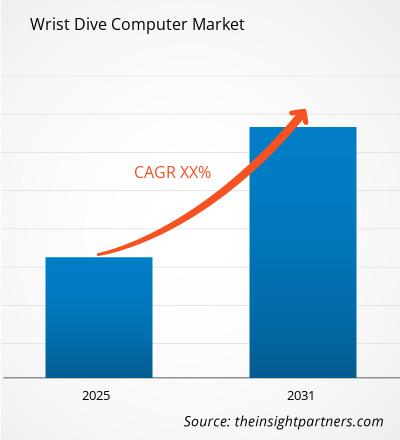
The wrist dive computer market is valued at US$ 260.72 Million in 2025 and is projected to reach US$ 332.46 Million by 2034, registering a CAGR of 2.74% during 2026–2034. The market encompasses wrist-worn electronic instruments that calculate dive parameters, display critical information, and increasingly connect with sensors, mobile applications, and broader outdoor ecosystems for recreational and professional underwater use.
North America is expected to maintain a comparatively mature position, with modeled growth of about 2.2–3.0% CAGR through 2034. The wrist dive computer market size is supported by established recreational diving communities, specialty retailers, training infrastructure, and demand for connected equipment that combines dive functionality with everyday sports and navigation features.
Wrist Dive Computer Market Assessment and Insights
- North America: North America is expected to account for approximately 31–35% wrist dive computer market share in 2025 and expand at a 2.4–3.1% CAGR between 2026 – 2034, supported by established dive training, equipment replacement, and premium connected-device adoption.
- US: The US represents about 25–29% share of global demand in 2025 and is projected to grow at a 2.3–3.0% CAGR between 2026–2034, led by recreational, technical, and instructor use.
- Europe: Europe is estimated at 27–31% share in 2025 and a 2.5–3.2% CAGR between 2026–2034, with Germany, the UK, France, Italy, and Spain supporting replacement demand and specialist diving activity.
- Asia Pacific: Asia Pacific is modeled at 20–24% share in 2025 and a 3.1–4.0% CAGR between 2026–2034, with Australia, Japan, China, South Korea, and India benefiting from marine tourism and expanding equipment access.
- Largest Segment: Color Display is modeled at a 58–63% market share in 2025 and a 3.0–3.7% CAGR between 2026–2034, reflecting readability and multifunctional interface preferences.
- High Growth Segment: Commercial end users are modeled at a 3.2–4.1% CAGR between 2026–2034, with a 29–34% market share in 2025 as professional applications favor durable, connected equipment.
- Key companies analyzed in detail: Suunto Oy, Mares S.p.A., Cressi Sub S.p.A., Huish Outdoors LLC, Aqualung Group, Shearwater Research Inc., Sherwood Scuba, Johnson Outdoors Inc., Garmin Ltd., and Genesis Scuba.
Source: The Insight Partners' analysis based on proprietary research, government publications, company annual reports, investor presentations, industry databases, and expert interviews.
Wrist dive computer technology has seen advancements from devices with separate depth and time features to small-scale digital devices incorporating decompression algorithms, several diving modes, electronic compasses, Bluetooth connectivity and post-dive recording. Innovations like color screen display, re-chargeable batteries, air integration and phone connectivity will change the architecture of these products, while manufacturers may tend to utilize common watch hardware, software and other elements to simplify manufacturing processes and reach out to broader consumer base.
In the coming decade, it is expected that there would be emphasis on developing product differentiation through software, efficient battery utilization and interoperability instead of only hardware. The availability of new dive sites in Southeast Asia, Middle East and some parts of Latin America markets will help in meeting incremental demand with increased number of dive schools and marine tourism in these regions.
Wrist Dive Computer Market Report Scope
| Report Attribute | Details |
|---|---|
| Market size in 2025 | US$ 260.72 Million |
| Market Size by 2034 | US$ 332.46 Million |
| Global CAGR (2026 - 2034) | 2.74% |
| Historical Data | 2021-2024 |
| Forecast period | 2026-2034 |
Wrist Dive Computer Market Analysis
Demands for the product are rooted in the necessity to enhance visibility of the data received from underwater conditions, minimize the need for manual recording, and make decisions easier. The ecosystem includes semiconductor and sensor providers, makers of displays and batteries, enclosure manufacturers, programmers of algorithms, dive equipment distributors, instructors, resorts, and niche sellers. Modern computing modules of these products gain their value through software, sensors, connectivity, and post-sale services.
The growth rate of the market of wrist dive computers will be influenced by replacement cycles and innovations of products, as the more expensive products benefit from the divers consolidating dive computer, sports watch, navigation system, and activity tracker. Supply factors will be more specialized due to the complexity of waterproof casing, pressure sensors, durable buttons, optical display, and validated algorithms of dive. Planning of inventory becomes important since the demand is seasonal.
In accordance with the wrist dive computer market forecast, the competitive situation is characterized by the presence of traditional dive-equipment specialists and general outdoor electronics players. In this respect, Suunto Oy, Mares S.p.A., Cressi Sub S.p.A., Huish Outdoors LLC, Aqualung Group, and Shearwater Research Inc. rely on dive credibility, algorithms, durability, and channel distribution, whereas Garmin Ltd. benefits from its wearable ecosystem. Sherwood Scuba, Johnson Outdoors Inc., and Genesis Scuba contribute to the specialist environment via equipment portfolios and distribution channels.
As per the forecast report, companies are pursuing targeted investment into software, connectivity, and premium displays instead of production capacity enhancement. Suppliers are introducing their products in recreational and technical categories via modular sensors and application platforms, thus prolonging their life cycles. The wrist dive computer market Report can be valuable for suppliers considering premiumization strategies, channel specialization, and integration of underwater devices with outdoor digital ecosystems.
● REPORT CUSTOMIZATION
Tailor This Report To Align With Your Specific Business Requirements
This report can be customized to align precisely with your business objectives, scope, and target markets. Customization options include tailored segmentation, geography, competitive analysis, and strategic insights to support informed decision-making.
Customize This Report →WHAT YOU CAN ADJUST
- ● Segmentations
- ● Geography
- ● Competitive Analysis
- ● Language Preferences
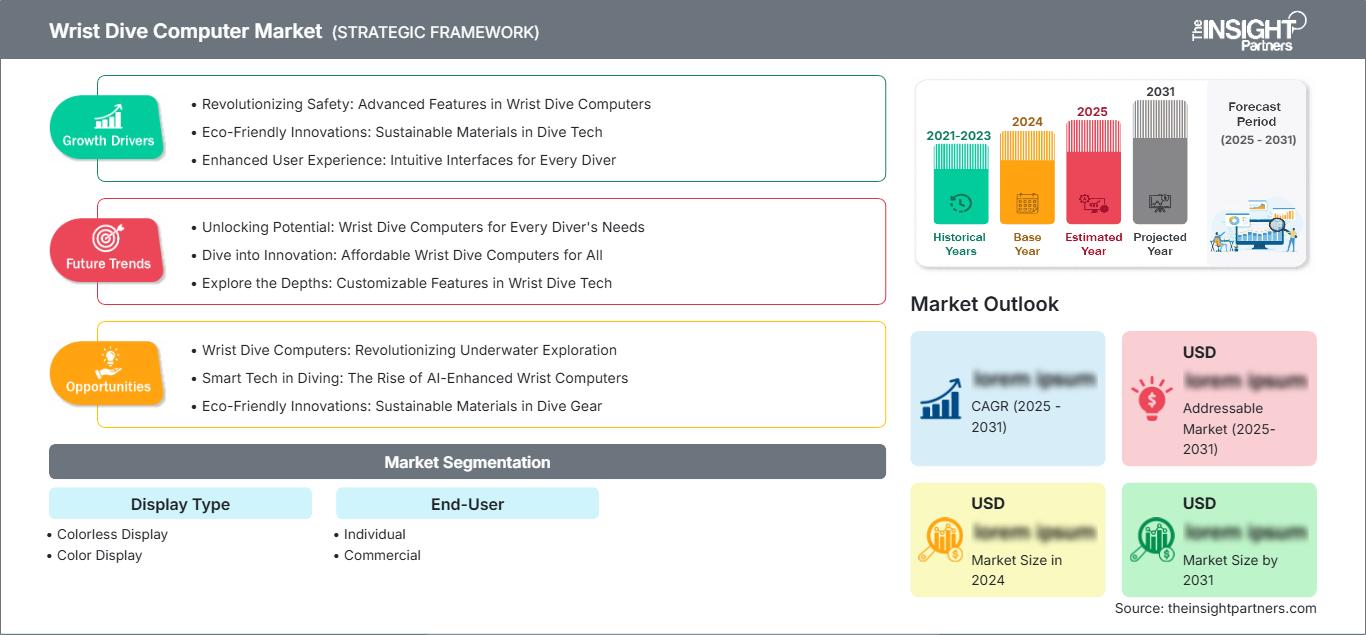
Wrist Dive Computer Market: Strategic Insights
Regional Insights
North America wrist dive computer market
North America is modeled to hold 31–35% share in 2025 and grow at 2.4–3.1% CAGR through 2034. There is a presence of established recreational diving community, certification network, specialty stores, and great availability of premium outdoor electronics. The USA continues to be the key demand hub while Canada is an additional source of demand via the recreational and cold water diving community.
There is also a presence of developed after sales structure catering to the needs of accessories, service, software updating and repurchase. Technical divers and instructors look for reliability, readability of data, decompression and compatibility with transmitter while recreational buyers focus more on wearability of the device. Such factors result in manufacture’s need to provide differentiated product lines instead of one universal design. Growth of the regional market is modeled to be moderate due to its high penetration level.
U.S. wrist dive computer market
The US is modeled to represent 79–83% of North American demand in 2025 and grow at 2.3–3.0% CAGR through 2034. The strength of the market is due to the presence of a well-developed infrastructure for certification and training, specialist retailers, online channels for the distribution of equipment, and the large customer base among recreational and technical divers. Garmin Ltd., Shearwater Research Inc., Huish Outdoors LLC, and other well-known manufacturers have a good presence in specialist and outdoor channels.
Application trends in the segment move towards multi-functional wearables, integration with air tanks, digital dive loggers, and reusable solutions even between diving trips. Customers start comparing performance such as screen readability, battery life, navigation capabilities, wireless communications, and software alongside standard dive-related capabilities. Fleet-oriented clients and instructors care more about uniformity and maintenance possibilities, while individual consumers care more about the comfort of wearing and usefulness as a smartwatch.
Europe wrist dive computer market
Europe is estimated at 27–31% share in 2025 and a 2.5–3.2% CAGR through 2034, with Germany, the UK, France, Italy, and Spain representing important demand centers. Purchasing within regions is driven by diving clubs that are already formed, Mediterranean destinations, technical diving scene, and quality European equipment brands.
The United Kingdom and Germany are sources of specialist distribution channels and users. The German market is especially crucial when it comes to engineering-driven equipment and applications, whereas the UK consumers drive the market in the recreational and cold water diving. France, Italy, and Spain enjoy diving tourism in the Mediterranean and intensive coastline activity that results in the demand for compact and well-read equipment. Europe is forecasted to continue its leadership because of the replacement purchases and adoption of quality equipment.
APAC wrist dive computer market
APAC is modeled at 20–24% share in 2025 and 3.1–4.0% CAGR through 2034, led by Australia and supported by Japan, China, South Korea, India, and Southeast Asian diving destinations. Australia offers the best specialist support, whereas marine tourism opens more prospects in other areas.
Demand arises from professionals, recreation, resorts, and training needs. Whereas Australia and Japan have a preference for tried and tested technology standards, China, South Korea, and India appear to offer future potential because of the increase in outdoor sports and specialized stores. Policy by the government regarding coastal tourism and marine facilities could indirectly offer advantages in terms of equipment availability, but cost considerations need to be made.
Middle East & Africa wrist dive computer market
MEA is expected to grow at 2.8–3.6% CAGR through 2034, with Saudi Arabia and the UAE benefiting from investment in marine tourism, coastal leisure infrastructure, and premium hospitality. South Africa adds an established diving base and technical expertise.
The UAE is positioned as a leading commercial hub because of its tourism infrastructure and concentration of premium outdoor retail. Saudi Arabia can generate incremental demand through Red Sea tourism development, while South Africa supports specialist and recreational applications. The rest of MEA remains smaller but offers selective opportunities where resort development, marine conservation, and diving tourism increase equipment requirements.
Segmentation Analysis
Display Type
Display Type is expected to grow at a modeled 2.8–3.5% CAGR from 2026–2034. Display engineering influences readability, battery consumption, interface complexity, and product positioning. Manufacturers are balancing bright screens and richer data with underwater visibility, glove-friendly controls, power efficiency, and durability. The segment will remain central to product differentiation as divers increasingly expect clear digital information without sacrificing compact form factors.
- Colorless Display: Colorless displays retain relevance where battery endurance, straightforward information presentation, and high contrast are priorities. They appeal to users seeking dependable dive-specific functionality and simpler interfaces, particularly in value-oriented and long-duration applications.
- Color Display: Color displays support richer navigation, alerts, maps, graphical data, and smartwatch-style interfaces. Their strategic importance is increasing as manufacturers combine dive functions with everyday wearability, encouraging premium positioning and broader consumer appeal.
End-User
End-User is projected to grow at a modeled 2.7–3.6% CAGR from 2026–2034. Demand differs between personal ownership and professional deployment, with individual buyers prioritizing comfort, usability, connectivity, and lifestyle integration. Commercial operators emphasize durability, repeatable configurations, service support, and compatibility with operational procedures. This segmentation creates room for differentiated pricing and feature packages.
- Individual: Individual users represent the broadest purchasing base, covering recreational and advanced divers. Demand is increasingly influenced by wearable convenience, application integration, battery life, and readable displays that reduce dependence on separate instruments.
- Commercial: Commercial users include instructors, operators, guides, resorts, and professional teams. Their purchasing decisions emphasize durability, standardization, serviceability, reliable data, and communication capabilities that can support repeated dives and operational oversight.
Opportunity Snapshot
| End-User | Revenue Contribution | Trend Tag | Adoption Stage |
|---|---|---|---|
| Individual | High | Wearable Integration | Mature |
| Commercial | Medium | Fleet Connectivity | Scaling |
Wrist Dive Computer Market Growth Drivers and Impact Analysis
Connected dive ecosystems are broadening device utility
The integration of these devices with mobile apps, wireless sensors, digital logging services, navigation services, and other outdoor services is increasing the utility of wearable diving devices beyond that of being simple underwater calculators. These new devices can allow pre-dive planning, post-dive analysis, fitness tracking, and equipment management as well. Such increased utility allows decreasing the cost of ownership of a single piece of hardware, which can perform various tasks. At the same time, it motivates manufacturers to increase their competition not on the production stage but after the product sale through updating software and providing interoperability. This effect is particularly effective for the premium consumer segment where users are ready to pay for utility integration.
Improved display and interface technology is raising usability expectations
Display technology is becoming increasingly significant due to the fact that visibility under water, lighting, viewing angles, and the use of gloves will directly impact the utility of essential information. Brighter color displays, customizable data fields, larger font sizes, touch controls, and better backlighting can make complex information more comprehensible. Garmin’s latest products exemplify how display technology innovations have been combined with overall functions, whereas specialized companies are focusing on display technology relevant for diving. Such competition makes suppliers push display technologies without growing display size and lowering battery life. Consumers will choose to replace their devices based on usability even if the computer functions well enough.
Expansion of organized diving and marine tourism supports equipment replacement
The global diving ecosystem provides a recurring base of certified users, instructors, resorts, and specialty operators that requires dependable equipment. PADI reports more than 30 million certified divers and 6,600 dive centers and resorts worldwide, demonstrating the scale of the organized training and service network. As marine tourism develops across established and emerging destinations, operators can require durable devices for instruction, guided activities, and repeated use. This does not automatically translate into rapid unit growth because many users retain equipment for years. However, replacement cycles, safety-oriented upgrades, and the increasing availability of multifunctional models create a stable foundation for demand. Commercial purchases can also influence consumer adoption when divers become familiar with newer digital interfaces during training or guided experiences.
Wrist Dive Computer Market Future Trends
Software-defined dive personalization
The wrist dive computer market trends are likely to move toward software-defined personalization in which users configure data screens, alerts, dive profiles, connectivity preferences, and post-dive analytics through companion applications. Algorithms may increasingly incorporate individual history, recent activity, environmental inputs, and equipment data to present more context-sensitive information. Manufacturers can use software to differentiate products without redesigning hardware for every feature tier. This approach also creates opportunities for controlled feature updates during a device’s lifecycle, extending relevance and supporting customer retention. However, personalization will require careful validation because underwater calculations and alerts are safety-sensitive. Vendors will need disciplined software governance, transparent update practices, and clear separation between convenience features and information that divers should interpret only within established training and operational procedures.
Hybrid dive-and-lifestyle wearables
According to the wrist dive computer market forecast, future products are likely to combine dedicated dive functionality with increasingly capable everyday wearable features, making the device useful before, during, and after a trip. Health monitoring, activity tracking, navigation, payments, notifications, and sleep-related metrics can increase utilization beyond occasional dives. The strongest designs will avoid allowing lifestyle functions to compromise battery endurance, waterproof integrity, or underwater readability. Manufacturers may therefore create differentiated software modes that simplify the interface during a dive while expanding capabilities on the surface. Hybridization can also change purchasing behavior because consumers may evaluate a dive computer against the utility of premium sports watches rather than against dedicated instruments alone. This competitive frame favors companies with established wearable ecosystems, strong applications, and broad hardware engineering capabilities.
Wrist Dive Computer Market Opportunities
Premium commercial fleet solutions
Commercial diving operators represent an opportunity for suppliers able to package hardware, accessories, software, servicing, and fleet-level support. Resorts, instructors, charter businesses, and professional teams can value standardized configurations because common equipment reduces training complexity and simplifies maintenance. Suppliers can build differentiated offerings around multi-device management, shared settings, service reminders, replacement programs, and compatibility with wireless sensors. The opportunity is particularly relevant in regions where marine tourism is expanding and operators are professionalizing equipment procurement. Companies entering this space should prioritize reliability, rapid service turnaround, transparent lifecycle costs, and compatibility with existing operational procedures rather than relying solely on advanced consumer features.
Regional channel expansion through specialist partnerships
Selective expansion through diving schools, resorts, specialty retailers, and local distributors can improve market access without requiring extensive physical infrastructure. This model is particularly relevant in emerging APAC and Middle Eastern destinations where awareness of premium equipment may rise alongside tourism investment. Training centers can influence purchase decisions because instructors and experienced divers often shape equipment preferences among new entrants. Suppliers can strengthen channel economics through demonstration units, staff education, localized digital support, and service partnerships. Product portfolios should be adapted to regional price sensitivity while preserving core safety and durability attributes. A focused partnership strategy can therefore provide market access with lower fixed costs and generate feedback about local diving conditions, preferred interfaces, and purchasing priorities.
Frequently Asked Questions

- Comprehensive Market Sizing and Forecast Analysis
- Detailed Segmentation Analysis
- In-Depth Market Dynamics Assessment
- Regional and Country-Level Insights
- Competitive Landscape and Company Benchmarking
- Strategic Business Intelligence
Recent Reports
Testimonials

The Insight Partners provided valuable market intelligence that supported our global go-to-market strategy. Their team was professional, responsive, and attentive to our feedback, providing thoughtful analysis and helpful methodological clarifications throughout the project.
Junmo Kim Chief Financial Officer (CFO), Enertech Co., Ltd.
The Insight Partners' SCADA System Market report is comprehensive, with valuable insights on current trends and future forecasts. The team was highly professional, responsive, and supportive throughout. We are very satisfied and highly recommend their services.
RAN KEDEM Partner, Reali Technologies LTDs
I requested a report on a very specific software market and the team produced the report in a few days. The information was very relevant and well presented. I then requested some changes and additions to the report. The team was again very responsive and I got the final report in less than a week.
JEAN-HERVE JENN Chairman, Future Analytica
We worked with The Insight Partners for an important market study and forecast. They gave us clear insights into opportunities and risks, which helped shape our plans. Their research was easy to use and based on solid data. It helped us make smart, confident decisions. We highly recommend them.
PIYUSH NAGPAL Sr. Vice President, High Beam Global
The Insight Partners delivered insightful, well-structured market research with strong domain expertise. Their team was professional and responsive throughout. The user-friendly website made accessing industry reports seamless. We highly recommend them for reliable, high-quality research services
YUKIHIKO ADACHI CEO, Deep Blue, LLC.
This is the first time I have purchased a market report from The Insight Partners.While I was unsure at first, I visited their web site and felt more comfortable to take the risk and purchase a market report.I am completely satisfied with the quality of the report and customer service. I had several questions and comments with the initial report, but after a couple of dialogs over email with their analyst I believe I have a report that I can use as input to our strategic planning process.Thank you so much for taking the extra time and making this a positive experience.I will definitely recommend your service to others and you will be my first call when we need further market data.
JOHN SUZUKI President and Chief Executive Officer, Board Director, BK Technologies
I wish to appreciate your support and the professionalism you displayed in the course of attending to my request for information regarding to infectious disease IVD market in Nigeria. I appreciate your patience, your guidance, and the fact that you were willing to offer a discount, which eventually made it possible for us to close a deal. I look forward to engaging The Insight Partners in the future, all thanks to the impression you have created in me as a result of this first encounter.
DR CHIJIOKE ONYIA MANAGING DIRECTOR, PineCrest Healthcare Ltd.Reason to Buy
- Informed Decision-Making
- Understanding Market Dynamics
- Competitive Analysis
- Identifying Emerging Markets
- Customer Insights
- Market Forecasts
- Risk Mitigation
- Boosting Operational Efficiency
- Strategic Planning
- Investment Justification
- Tracking Industry Innovations
- Aligning with Regulatory Trends





 Get Free Sample for