
Hand Biometrics Reader Market Demand, Trends & Forecast by 2034
Coverage: By Application (Access Control, Time and Attendance Systems); Industry (Government and Defense, Hospitality, Healthcare, IT and Telecommunication, Education, BFSI, Others) , and Geography (North America, Europe, Asia Pacific, and South and Central America)
- Status : Data Released
- Report Code : TIPRE00020418
- Category : Electronics and Semiconductor
- No. of Pages : 150
- Available Report Formats :


- Last update date : August 19, 2026


2025 Market Size
US$ 2.94 Bn
Base year value
2034 Forecast
US$ 6.69 Bn
Projected by 2034
CAGR 2026-2034
9.57 %
Growth rate
Addressable Market
US$ 42.96 Bn
(2026-2034)
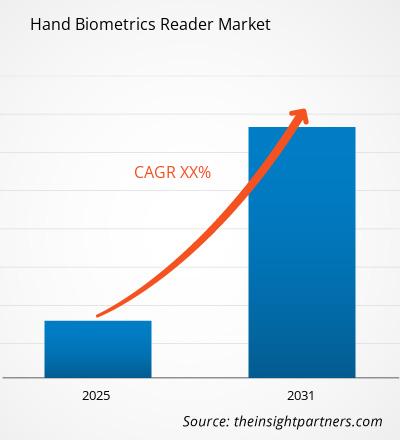
The Hand Biometrics Reader market was valued at US$ 2.94 Billion in 2025 and is projected to reach US$ 6.69 Billion by 2034, registering a CAGR of 9.57% from 2026 to 2034. The above trend is a result of the rising trend in terms of moving from conventional methods of authentication to contactless biometric-based solutions. Factors driving the market include increased security concerns within the government, defense, BFSI, and healthcare verticals, as well as the rising need for touchless biometric systems.
North America is expected to represent a sizable portion of the Hand Biometrics Reader Market Share in 2025 with the growth rate projected at a constant 8.5–9.5% CAGR during the forecast period. This growth is attributed to strict regulations surrounding data security, early adoption of biometric technologies by governments and the defense sector, and implementation of access control systems in corporate enterprises. Increasing investment in smart buildings and efficiency in workforce management is expected to fuel regional market growth.
Hand Biometrics Reader Market Assessment and Insights
- North America: Estimated to hold approximately 30–34% share in 2025, growing at a CAGR of 8.5–9.5% from 2026 to 2034. Growth is driven by the high concentration of technology enterprises, robust defense spending, and early adoption of biometric solutions across commercial sectors.
- United States: Representing nearly 85–90% of the North American market in 2025, expanding at a CAGR of 8.0–9.0%. The market is supported by substantial government investments in identity management systems and growing deployment of biometric readers in BFSI and healthcare applications.
- Europe: Accounting for approximately 24–28% of the global market in 2025, with a CAGR of 8.0–9.0%. Leading countries include the United Kingdom, Germany, and France, driven by stringent data protection regulations and growing adoption in public sector and hospitality applications.
- Asia Pacific: Representing roughly 26–30% of the global market in 2025, growing at the highest CAGR of 11.0–12.0%. Key contributors include China, Japan, India, and South Korea, fueled by rapid urbanization, large-scale government digitization programs, and smart city initiatives.
- Largest Segment: Application segment dominates with a market share of approximately 55–60% in 2025, growing at a CAGR of 9.0–10.0%. This is driven by the extensive deployment of access control systems and time and attendance solutions across enterprise and government facilities.
- High Growth Segment: Industry segment projected to expand at a CAGR of 10.0–11.0%, driven by rising adoption of hand biometrics in healthcare for patient identification and in BFSI for secure transaction authentication.
- Key companies analyzed in detail: Inception Technologies, Ibiosoft Ltd, ATR Systems, Inc., Rosistem, Fulcrum Biometrics LLC., Siemens, FUJITSU, Honeywell International Inc., Attendance on Demand, Inc., Bayometric.
Source: The Insight Partners' analysis based on proprietary research, government publications, company annual reports, investor presentations, industry databases, and expert interviews.
From traditional fingerprint scanners, the Hand Biometrics Reader market is migrating towards more sophisticated hand geometry and palm vein recognition solutions, which provide better accuracy and hygienic advantages. Dynamics of production change in a way that the companies widen the range of biometric solutions available through development of multi-modal biometrics and cloud solutions. Rapid development of sensors, algorithms for AI-matching and liveness detection allows deploying hand biometric readers in new conditions, including public and commercial areas and government premises.
In terms of future, the Hand Biometrics Reader market can expect continued growth thanks to the development of digital identity infrastructure and e-government in emerging countries. Favorable regulatory winds in favor of secure authentication in finance and healthcare industry, combined with growing demand for contactless solutions after pandemic, create a favorable environment for market penetration.
Hand Biometrics Reader Market Report Scope
| Report Attribute | Details |
|---|---|
| Market size in 2025 | US$ 2.94 Billion |
| Market Size by 2034 | US$ 6.69 Billion |
| Global CAGR (2026 - 2034) | 9.57% |
| Historical Data | 2021-2024 |
| Forecast period | 2026-2034 |
Hand Biometrics Reader Market Analysis
The major force behind the demand for Hand Biometrics Readers is the rising cases of identity fraud and security breaches, together with the weaknesses associated with the existing password or card-based methods of identity verification. In view of the increasing focus on identity verification among various organizations, especially those in government, BFSI, and healthcare, the demand for biometrics will continue to grow. Hand Biometrics Readers are driven by developments in the area of palm vein and hand geometry biometric recognition, which have higher accuracy rates than other existing methods of biometric identification. The value chain in this industry involves component providers, software providers, system integrators, and users.
The Hand Biometrics Reader market competitive structure features the active involvement of security technology vendors and vendors of biometrics solutions. Among the major vendors, FUJITSU, Honeywell International Inc., and Siemens rely on a broad portfolio and well-developed distribution channels to increase their presence in the market. Based on the Hand Biometrics Reader market report, there is a tendency to introduce integrated solutions comprising hardware, software, and management through the cloud in order to meet the needs of a particular industry. Inception Technologies and Fulcrum Biometrics LLC. target healthcare patient identification and workforce management niche applications.
● REPORT CUSTOMIZATION
Tailor This Report To Align With Your Specific Business Requirements
This report can be customized to align precisely with your business objectives, scope, and target markets. Customization options include tailored segmentation, geography, competitive analysis, and strategic insights to support informed decision-making.
Customize This Report →WHAT YOU CAN ADJUST
- ● Segmentations
- ● Geography
- ● Competitive Analysis
- ● Language Preferences
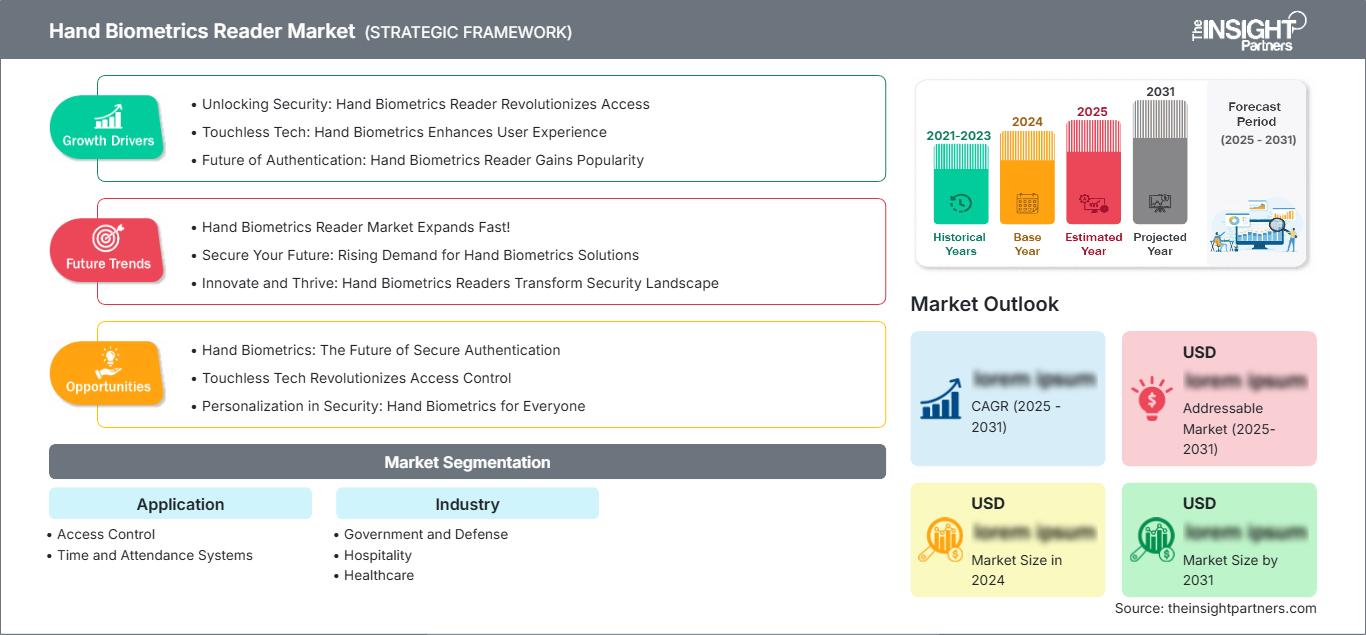
Hand Biometrics Reader Market: Strategic Insights
Regional Insights
North America Hand Biometrics Reader Market
North America is a developed market but continues to grow, accounting for an important Hand Biometrics Reader Market share of approximately 30%-34% of worldwide revenue in 2025. The growth of this region is driven by the early adoption of cutting-edge biometric technology, tight regulation regarding data protection laws, and huge investments in governmental identification management programs. Structural drivers include federal programs to provide secured access control in government buildings, key players in this region such as Honeywell International Inc. and Fulcrum Biometrics LLC., and high demand from BFSI and health care industries for securing authentication. The market of Hand Biometrics Readers in North America is also experiencing growth due to the use of time and attendance systems in corporations and educational institutions. CAGR for North America is forecasted at 8.5%-9.5% during 2026-2034.
U.S. Hand Biometrics Reader Market
United States constitutes the most dominant market player in the North American Hand Biometrics Reader industry, accounting for 85-90% of the regional share in 2025 with the expected CAGR of 8.0%-9.0%. The reason behind the dominance of the United States is because of the highly concentrated biometric technology vendors, large-scale expenditure by the federal government on identity management solutions, and a healthy commercial security industry. The market has seen strong adoption in the government and defense domain for biometric authentication of individuals and in the healthcare sector for patient identification and access to electronic health records. Honeywell International Inc., Fulcrum Biometrics LLC., and Bayometric are some of the important players in the market who have been growing their market shares through product launches and strategic collaborations with system integrators.
Europe Hand Biometrics Reader Market
The Europe segment is estimated to hold about 24–28% share in the worldwide Market and is expected to have a CAGR of 8.0–9.0% during the forecast period. In terms of countries, the United Kingdom and Germany lead in the market owing to their robust regulations for data protection via GDPR and the use of biometrics in public sector applications. France, Italy, and Spain are making huge contributions to the market owing to the digital identity initiative and access control in healthcare and financial services in the region.
APAC Hand Biometrics Reader Market
The Asia-Pacific market represents the fastest growing market for Hand Biometrics Readers, with a market share of about 26-30%, in 2025, owing to a strong CAGR of 11.0-12.0%. The market in China and Japan leads, fueled by large-scale government-driven initiatives on digital identity, fast pace of urbanization, and investment in smart city projects. India and South Korea are witnessing tremendous growth due to increased digitization efforts by the government and implementation of biometrics in the banking sector and healthcare industry. Regional industrial policies encouraging local manufacturing of biometric hardware and technology self-reliance are further driving the implementation of hand biometric technology in the region.
Middle East & Africa Hand Biometrics Reader Market
Middle East and Africa represents an upcoming market for Hand Biometrics Readers because of their significant investment in smart city infrastructure and digitization, and major countries such as Saudi Arabia and UAE are leading the market adoption. This market holds a CAGR of about 9.0-11.0% growth rate because of the requirement of security authentication solutions in the energy sector, modernization projects in the government sector, and hospitality sector. South Africa holds a key share in the market, owing to rising demand from the financial and government sector for identity verification solutions.
Segmentation Analysis
Application
The Application segment is a cornerstone of the Hand Biometrics Reader market, encompassing access control and time and attendance systems. This segment is projected to grow at a CAGR of 9.0–10.0% from 2026 to 2034, driven by the expanding demand for secure and efficient workforce management solutions. Market dynamics are shaped by continuous innovations in biometric sensors and matching algorithms aimed at enhancing recognition speed, accuracy, and user convenience. The segment's growth is further propelled by the rising adoption of contactless biometric solutions in enterprise, government, and educational facilities.
- Access Control: Serves as a primary application for hand biometric readers, providing secure entry management for corporate offices, government buildings, and critical infrastructure facilities. The growing emphasis on physical security and the integration of biometrics with smart building systems is significantly boosting demand.
- Time and Attendance Systems: Facilitates accurate employee attendance tracking, eliminating time theft and buddy punching. The strategic importance of this sub-segment is growing with the increasing adoption of cloud-based workforce management platforms and the need for contactless check-in solutions in healthcare and manufacturing sectors.
Industry
The Industry segment is a key driver of the market, growing at a CAGR of 10.0–11.0% from 2026 to 2034. This growth is underpinned by the increasing need for secure identity verification across diverse end-user sectors. The adoption of hand biometrics in healthcare is accelerating, driven by the need for accurate patient identification and electronic health record management. Government and defense sectors are also significant contributors, utilizing biometric readers for personnel authentication and access control in secure facilities.
- Government and Defense: Relies on hand biometric readers for personnel authentication, access control to secure facilities, and identity management programs. The increasing defense budgets in several regions and the need for enhanced security measures are driving demand for robust biometric systems.
- Hospitality: Utilizes hand biometric readers for employee attendance tracking, access control to staff areas, and guest identity verification. The growing emphasis on operational efficiency and guest security is fueling adoption in this sector.
- Healthcare: Employs hand biometric readers for patient identification, staff authentication, and access to electronic health records. The healthcare sector's digital transformation and the need for accurate patient matching are significant drivers for biometric adoption.
- IT and Telecommunication: Uses hand biometric readers for data center access control, employee authentication, and securing sensitive infrastructure. The increasing focus on cybersecurity and data protection is driving demand in this sector.
- Education: Adopts hand biometric readers for campus access control, student attendance tracking, and library management. The growing emphasis on campus safety and efficient administration is fueling market growth.
- BFSI: Employs hand biometric readers for employee authentication, customer identity verification, and access to secure vaults. The high-security requirements of the banking sector and the need to prevent fraud are significant drivers for biometric adoption.
Opportunity Snapshot
| Application | Revenue Contribution | Trend Tag | Adoption Stage |
|---|---|---|---|
| Access Control | High | Smart Security | Mature |
| Time and Attendance | High | Workforce Mgmt. | Scaling |
Hand Biometrics Reader Market Growth Drivers and Impact Analysis
Rising Security Concerns and Identity Fraud Incidents
The exponential increase in identity theft, unauthorized access, and security breaches is a primary driver for the Hand Biometrics Reader market forecast. Traditional authentication methods such as passwords, PINs, and smart cards are increasingly vulnerable to compromise, creating strong demand for robust biometric solutions. The impact is most pronounced in the BFSI and government sectors, where data security and identity verification are critical. This driver is expected to significantly boost demand for advanced hand biometric readers with multi-factor authentication capabilities.
Growing Demand for Contactless and Hygienic Solutions
The COVID-19 pandemic accelerated the adoption of contactless biometric technologies, creating a lasting shift in user preferences. Hand geometry and palm vein recognition offer touchless authentication, reducing the risk of pathogen transmission compared to fingerprint-based systems. This driver is particularly influential in healthcare, hospitality, and public sector applications where hygiene is paramount. The trend towards contactless solutions is expected to sustain demand for hand biometric readers in the forecast period.
Increasing Government Initiatives for Digital Identity
Government programs aimed at establishing secure digital identity ecosystems are fueling the demand for biometric readers. National ID projects, e-passport programs, and border control systems are driving significant procurement of biometric hardware. This driver is impacting government and defense sectors globally, with rising investments in identity management infrastructure in both developed and emerging economies.
Hand Biometrics Reader Market Future Trends
Integration with Artificial Intelligence and Machine Learning
The Hand Biometrics Reader market trends indicate a significant shift towards AI-driven biometric systems capable of delivering enhanced accuracy, faster matching speeds, and adaptive learning capabilities. Machine learning algorithms are being integrated into biometric software to improve recognition performance, particularly in challenging conditions such as varying lighting or hand positioning. This trend is expected to accelerate as AI becomes more accessible and as security requirements become more demanding.
Adoption of Cloud-Based Biometric Platforms
An emerging trend is the increasing adoption of cloud-based hand biometric platforms that enable centralized management of biometric data across distributed enterprise environments. These platforms reduce the operational burden on internal IT teams and ensure consistent security policies across multiple locations. The trend is expected to accelerate adoption among small and medium-sized enterprises and organizations with geographically dispersed operations.
Hand Biometrics Reader Market Opportunities
Expansion in Healthcare Patient Identification Systems
There is a significant opportunity to penetrate the healthcare sector with hand biometric solutions for patient identification and electronic health record management. Accurate patient matching is critical to reducing medical errors and improving care coordination. This opportunity is particularly relevant in hospital networks with multiple facilities where patient data consistency is essential. The Hand Biometrics Reader forecasts indicate significant growth potential in this segment.
Developing Solutions for Emerging Workforce Management Applications
Developing hand biometric solutions for emerging workforce management applications presents a substantial growth opportunity. Industries such as construction, manufacturing, and logistics are increasingly adopting biometric time and attendance systems to improve productivity and reduce labor costs. This focused approach allows vendors to address specific industry needs, fostering deeper market penetration in high-growth application areas.
Recent Developments
- August 2026: Visa agreed to acquire BioCatch, a pioneer in behavioral biometrics and digital fraud prevention, as part of its strategy to strengthen its fraud-management and identity-security capabilities. BioCatch uses behavioral intelligence and machine learning to analyze user interactions and identify potentially fraudulent activity in digital transactions, helping financial institutions detect scams, account takeovers, and other forms of cyber-enabled fraud. The acquisition will combine BioCatch’s behavioral biometrics capabilities with Visa’s global payments network and fraud-prevention technologies, enabling enhanced risk assessment and real-time fraud detection.
- June 2025: HID Global expanded its biometric access-control portfolio in North America with the launch of the HID Amico facial recognition readers. The solution is designed to provide secure, frictionless access using facial biometrics and supports applications across commercial, healthcare, education, government, and other environments. The readers incorporate advanced biometric authentication capabilities and are designed to integrate with existing access-control infrastructure, enabling organizations to strengthen security while improving user convenience.
- April 2025: Fingerprint Cards (FPC) expanded its presence in the Indian biometrics market through a new distribution partnership with SM Electronic Technologies (SMET). Under the agreement, SMET will distribute FPC’s fingerprint and iris biometric products and services across India, leveraging its nationwide sales and marketing network and technical support capabilities. The partnership is intended to address growing demand for secure biometric technologies across government, healthcare, finance, consumer, industrial, and automotive applications.
Frequently Asked Questions

- Comprehensive Market Sizing and Forecast Analysis
- Detailed Segmentation Analysis
- In-Depth Market Dynamics Assessment
- Regional and Country-Level Insights
- Competitive Landscape and Company Benchmarking
- Strategic Business Intelligence
Recent Reports
Testimonials

The Insight Partners' SCADA System Market report is comprehensive, with valuable insights on current trends and future forecasts. The team was highly professional, responsive, and supportive throughout. We are very satisfied and highly recommend their services.
RAN KEDEM Partner, Reali Technologies LTDs
I requested a report on a very specific software market and the team produced the report in a few days. The information was very relevant and well presented. I then requested some changes and additions to the report. The team was again very responsive and I got the final report in less than a week.
JEAN-HERVE JENN Chairman, Future Analytica
We worked with The Insight Partners for an important market study and forecast. They gave us clear insights into opportunities and risks, which helped shape our plans. Their research was easy to use and based on solid data. It helped us make smart, confident decisions. We highly recommend them.
PIYUSH NAGPAL Sr. Vice President, High Beam Global
The Insight Partners delivered insightful, well-structured market research with strong domain expertise. Their team was professional and responsive throughout. The user-friendly website made accessing industry reports seamless. We highly recommend them for reliable, high-quality research services
YUKIHIKO ADACHI CEO, Deep Blue, LLC.
This is the first time I have purchased a market report from The Insight Partners.While I was unsure at first, I visited their web site and felt more comfortable to take the risk and purchase a market report.I am completely satisfied with the quality of the report and customer service. I had several questions and comments with the initial report, but after a couple of dialogs over email with their analyst I believe I have a report that I can use as input to our strategic planning process.Thank you so much for taking the extra time and making this a positive experience.I will definitely recommend your service to others and you will be my first call when we need further market data.
JOHN SUZUKI President and Chief Executive Officer, Board Director, BK Technologies
I wish to appreciate your support and the professionalism you displayed in the course of attending to my request for information regarding to infectious disease IVD market in Nigeria. I appreciate your patience, your guidance, and the fact that you were willing to offer a discount, which eventually made it possible for us to close a deal. I look forward to engaging The Insight Partners in the future, all thanks to the impression you have created in me as a result of this first encounter.
DR CHIJIOKE ONYIA MANAGING DIRECTOR, PineCrest Healthcare Ltd.Reason to Buy
- Informed Decision-Making
- Understanding Market Dynamics
- Competitive Analysis
- Identifying Emerging Markets
- Customer Insights
- Market Forecasts
- Risk Mitigation
- Boosting Operational Efficiency
- Strategic Planning
- Investment Justification
- Tracking Industry Innovations
- Aligning with Regulatory Trends





 Get Free Sample for