
Smart Waste Collection Market Growth, Trends & Forecast by 2034
Coverage: by System (Smart Waste Bin Collection System, Smart Fleet Management and Logistic Solution, Smart Waste Recycling System, Cloud Computing ( IoT) Interface); Waste Type (Industrial Waste, Residential Waste) , and Geography (North America, Europe, Asia Pacific, and South and Central America)
- Status : Data Released
- Report Code : TIPRE00011845
- Category : Electronics and Semiconductor
- No. of Pages : 150
- Available Report Formats :


- Last update date : September 01, 2026


2025 Market Size
US$ 563.51 Mn
Base year value
2034 Forecast
US$ 1,244.47 Mn
Projected by 2034
CAGR 2026-2034
9.20 %
Growth rate
Addressable Market
US$ 8,080.01 Mn
(2026-2034)
The Smart Waste Collection Market is valued at US$ 563.51 Million in 2025 and is projected to reach US$ 1,244.47 Million by 2034, expanding at a CAGR of 9.20% during 2026–2034. The market reflects the transition from scheduled waste pickup toward sensor-enabled collection, connected fleet operations, automated recycling, and cloud-based monitoring. Adoption is increasingly linked with municipal efficiency objectives, resource recovery requirements, and the need to manage rising waste volumes through data-driven infrastructure.
North America represents a structurally mature opportunity, supported by established municipal collection networks, connected fleet infrastructure, and comparatively high technology adoption. The Smart Waste Collection Market size is strengthened by demand for overflow prevention, labor optimization, route efficiency, and sustainability reporting. Public-space deployments, commercial facilities, campuses, airports, and large municipalities provide recurring applications, while replacement of conventional containers creates an additional technology-upgrade pathway.
Smart Waste Collection Market Assessment and Insights
- North America: Mature municipal infrastructure supports strong deployment, with a 35–38% Smart Waste Collection Market share in 2025 and a CAGR of 8.8–9.3% between 2026–2034, led by connected bins, fleet optimization, and recycling analytics.
- US: The US represents the dominant North American market, accounting for 68–72% of regional value in 2025 and expanding at 8.9–9.4% CAGR through 2034.
- Europe: Europe holds a 27–30% share in 2025 and is expected to grow at 8.7–9.2% CAGR, with Germany, the UK, France, Italy, and Spain advancing digital collection and recycling infrastructure.
- Asia Pacific: Asia Pacific accounts for 23–26% in 2025 and is projected to grow at 10.0–10.6% CAGR, supported by China, Japan, South Korea, and India, where urbanization and smart-city investment reinforce adoption.
- Largest Segment: Smart Fleet Management and Logistic Solution represents a 36–40% market share in 2025 and is expected to grow at 9.4–9.8% CAGR.
- High Growth Segment: Smart Waste Recycling System holds a 15–18% market share in 2025 and is projected to expand at 10.3–10.8% CAGR.
- Key companies analyzed in detail: Bigbelly Solar, LLC; BIN-e sp. z o.o.; Reworld Holding Corporation; Ecube Labs Co., Ltd.; Enerkem Inc.; Enevo, Inc.; OnePlus Systems, Inc.; Sensoneo j. s. a.; SUEZ SA; Veolia Environnement SA.
Source: The Insight Partners' analysis based on proprietary research, government publications, company annual reports, investor presentations, industry databases, and expert interviews.
The system has progressed from compaction machines and telemetry to advanced systems which consist of fill-level detection, global positioning system (GPS), wireless connectivity, analysis, dynamic routing and sorting. The smart waste receptacles continue to send their performance data into central platforms, while artificial intelligence (AI) enhanced identification is improving waste classification. The industry solutions will continue to link the process of collecting garbage with transfer, sorting and recycling.
During the forecast period, investments will expand beyond the largest cities and go into airports, universities, industrial estates, residential areas and second tier cities. The regulatory focus on recycling, separate collection, resource recovery and landfill minimization is likely to favor connected infrastructure. According to the World Bank, growing waste quantities and inadequate infrastructure are the key investment areas.
Smart Waste Collection Market Report Scope
| Report Attribute | Details |
|---|---|
| Market size in 2025 | US$ 563.51 Million |
| Market Size by 2034 | US$ 1,244.47 Million |
| Global CAGR (2026 - 2034) | 9.20% |
| Historical Data | 2021-2024 |
| Forecast period | 2026-2034 |
Smart Waste Collection Market Analysis
Growth in the Smart Waste Collection Market depends on the economics of optimal collection. Sensors offer fill-level information, and the software translates the information into routes. The market consists of container manufacturers, sensors, connectivity, cloud, fleet operators, municipalities, recyclers, and waste processors. There is increasing demand for integrated solutions that can integrate existing bins and not necessarily require an entire new fleet of bins.
There are changes in the supply side where modular platforms that consist of hardware along with software services are becoming popular among vendors who are competing on sensor reliability, battery longevity, connectivity range, level of analytics, integration, and deployment economics. Ecube Labs, Bigbelly Solar, LLC, and Sensoneo are some of the players offering solutions ranging from smart bins, fill-level sensors, route optimization, and recyclers-oriented digital infrastructure.
According to the Smart Waste Collection Market analysis, the competition is relatively fragmented with specialist players competing with diversified environmental services providers. Bigbelly Solar, LLC focuses on connectivity of the public space infrastructure, whereas Ecube Labs Co., Ltd offers smart bins together with sensors, analytics and fleet management. Sensoneo j.s.a. is involved in monitoring as well as in recycling and deposit return systems, whereas Veolia Environnement SA and SUEZ SA offer digitized waste services solutions.
There is a shift in the investment trends in the Smart Waste Collection Market towards artificial intelligence (AI), computer vision, predictive analytics and digital platform technology rather than hardware only. For example, according to Veolia Environnement SA, the route optimization led to savings of up to 6%, whereas the company developed AI-powered industrial waste characterization. Similarly, SUEZ SA has developed AI-powered waste recognition for various collection and sorting processes.
● REPORT CUSTOMIZATION
Tailor This Report To Align With Your Specific Business Requirements
This report can be customized to align precisely with your business objectives, scope, and target markets. Customization options include tailored segmentation, geography, competitive analysis, and strategic insights to support informed decision-making.
Customize This Report →WHAT YOU CAN ADJUST
- ● Segmentations
- ● Geography
- ● Competitive Analysis
- ● Language Preferences
Smart Waste Collection Market: Strategic Insights
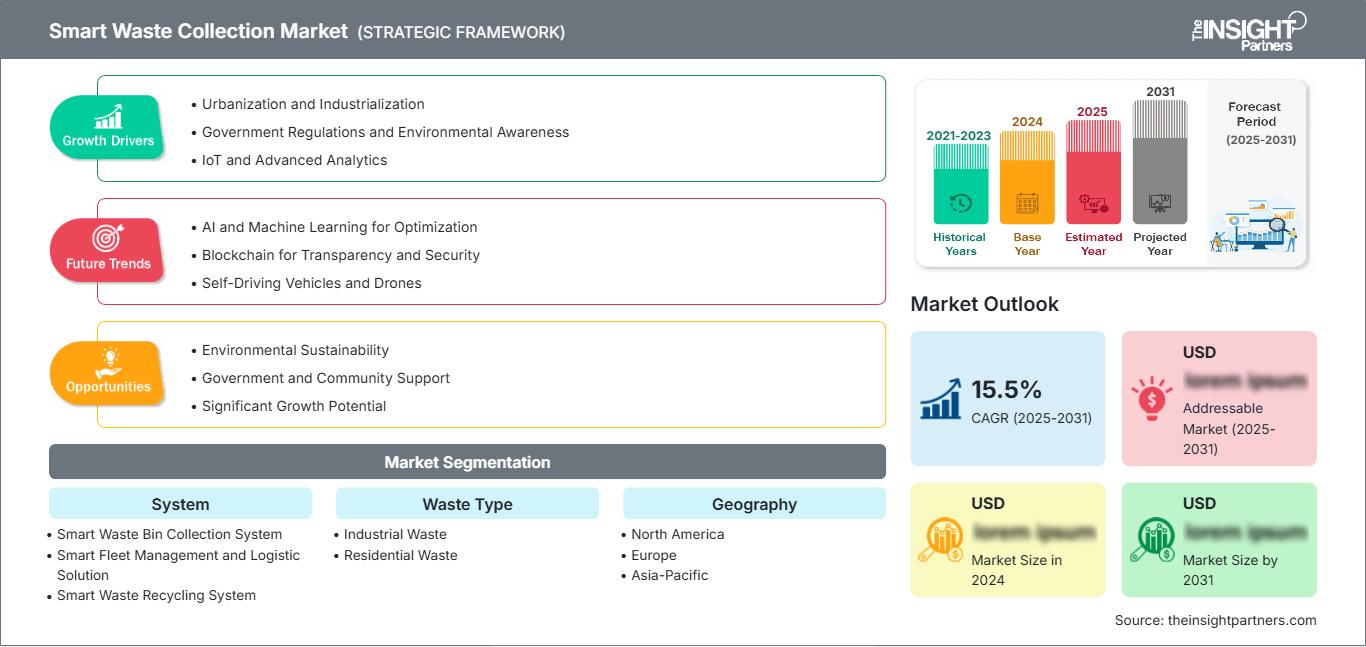
Regional Insights
North America Smart Waste Collection Market
North America commands a 35–38% share in 2025 and is projected to grow at 8.8–9.3% CAGR through 2034. The area has waste haulage infrastructure, advanced municipal technology adoption levels, and high demand for routes optimization. The applications in public places are still significant in parks, campuses, airports, transportation hubs, and commercial areas.
There is an increasing trend in the area for integrating connected containers with fleet management software, recycling systems, and operational dashboard applications. Bigbelly Solar, LLC is making deployments of its products in public spaces, while OnePlus Systems, Inc. and Enevo, Inc. specialize in collection tracking and optimization.
U.S. Smart Waste Collection Market
The US accounts for 68–72% of North America's 2025 market and is forecast to grow at 8.9–9.4% CAGR. Adoption is strongest where labor, fuel, overflow, and service-quality pressures justify connected collection infrastructure.
Municipalities, universities, airports, retail properties, and waste operators are deploying smart bins and route analytics. Bigbelly Solar, LLC maintains a broad US presence, while Ecube Labs Co., Ltd. and Enevo, Inc. provide sensor and optimization capabilities. Demand is shifting toward platforms that support mixed waste, recycling, composting, and performance reporting.
Europe Smart Waste Collection Market
Europe represents 27–30% of the 2025 market and is expected to expand at 8.7–9.2% CAGR. The market leader is Germany, driven by the presence of mature municipal systems, recycling systems, and industrial demand. The UK is implementing digitalized collection along with extended producer responsibility and preparation of deposit returns. France is implementing connected collection along with AI-driven sorting of waste, whereas Italy and Spain have potential for growth through development of digital municipal infrastructure and recycling services.
Germany continues to be a high-value market owing to the focus of municipalities and industries on recycling quality, logistical efficiency, and traceability. The UK offers an alternative technology route through digitalized collection and packaging policy. France holds significance for AI-driven waste characterization owing to efforts of companies such as SUEZ SA and Veolia Environnement SA.
APAC Smart Waste Collection Market
APAC holds a 23–26% share in 2025 and is projected to grow at 10.0–10.6% CAGR. China is leading regional deployment, with Japan, South Korea, India, and Australia following in that order. Urbanization and development of industrial regions, urban density, and smart city initiatives have been contributing to connected collection efforts, particularly those areas where traditional collection systems face challenges due to difficulties in routing.
South Korea has a technological foundation with the help of Ecube Labs Co., Ltd., while India is making efforts towards smart city infrastructure and connected waste management systems. While China and Japan are more inclined towards automation and resource recovery, Australia is becoming interested in recycling efficiency.
Middle East & Africa Smart Waste Collection Market
Middle East & Africa is projected to expand at 8.2–8.8% CAGR, led by Saudi Arabia and the UAE. Large urban developments, tourism infrastructure, and waste-diversion objectives are creating demand for connected collection and centralized monitoring.
South Africa represents the principal subregional opportunity, while the Rest of MEA remains more infrastructure constrained. Energy-intensive waste operations, landfill pressure, and smart-city investments support technology adoption where digital systems can improve route efficiency and asset utilization. Sensor-based collection is likely to enter through high-density districts, new developments, industrial zones, and integrated environmental-service contracts.
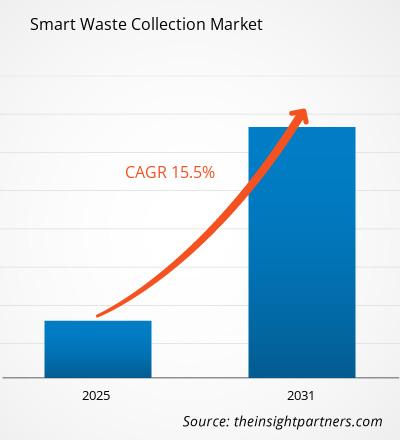
Segmentation Analysis
System
The System segment is expected to grow at 9.4–9.8% CAGR during 2026–2034. Adoption is moving toward integrated architectures that connect collection hardware, fleet operations, recycling workflows, and cloud analytics. The Smart Waste Collection Market scope therefore increasingly encompasses interoperable platforms rather than isolated smart-bin deployments. Municipal operators favor modular systems that can be expanded from monitoring to routing and recycling management.
- Smart Waste Bin Collection System: Connected containers provide fill-level visibility, overflow alerts, and collection status, supporting more responsive service planning. Their strategic importance is highest in dense public, commercial, and municipal environments.
- Smart Fleet Management and Logistic Solution: Route optimization combines vehicle, container, and traffic information to improve dispatching. Demand is strongest among operators managing large fleets where unnecessary trips materially affect labor, fuel, maintenance, and emissions.
- Smart Waste Recycling System: Automated identification, segregation, weighing, and reporting improve material recovery workflows. Adoption is strengthened by recycling targets and the increasing commercial value of higher-quality secondary materials.
- Cloud Computing Interface: Cloud platforms consolidate sensor, fleet, and recycling information into operational dashboards. Their importance rises as operators seek centralized visibility, remote management, analytics, and integration across geographically dispersed assets.
Waste Type
The Waste Type segment is forecast to expand at 8.9–9.3% CAGR during 2026–2034. Residential waste remains the larger application base, while industrial users increasingly adopt connected monitoring because of complex waste streams, compliance requirements, and the financial value of material recovery.
- Industrial Waste: Industrial facilities require accurate container monitoring, scheduled pickups, traceability, and waste-stream visibility. Demand is concentrated in manufacturing, logistics, processing, and large commercial sites with multiple collection points.
- Residential Waste: Residential applications benefit from connected communal bins, optimized municipal routes, and better service visibility. Adoption is particularly relevant in dense urban districts where overflow, collection frequency, and recycling participation affect operating costs.
Opportunity Snapshot
| Waste Type | Revenue Contribution | Trend Tag | Adoption Stage |
|---|---|---|---|
| Industrial Waste | Medium | ESG Tracking | Scaling |
| Residential Waste | High | Route Optimization | Mature |
Smart Waste Collection Market Growth Drivers and Impact Analysis
Rising Waste Volumes Increase Pressure on Collection Productivity
In 2022, the world generated 2.56 billion tons of waste and could see the figure go up to 3.86 billion tons in 2050 through the business-as-usual pathway. The trend places more strain on local authorities and commercial companies to scale up their operational capacity without necessarily scaling up the number of vehicles, staff members, or fuel usage. The concept of smart garbage collection provides the solution by adopting condition-based vehicle dispatching as well as the discovery of unused and overloaded bins. Commercially, the technology becomes most effective in urban settings, since inefficiency in routing can quickly become magnified with thousands of locations.
Recycling Targets Strengthen Demand for Data-Rich Waste Infrastructure
The European policies mandate that municipal recycling levels achieve 55%, 60%, and 65% for 2025, 2030, and 2035, respectively. These policies provide a need for a system that is able to measure the collection, flow of materials, contamination, and recycling efficiency. Smart recycling infrastructure allows linking container data to sorting and reporting processes. Commercial impact goes beyond Europe since multinational waste management companies tend to use one technology platform across different regions. Enhanced data is also useful in implementing product responsibility and resource recovery agreements. This way, suppliers who are able to integrate collection and recycling analytics would be well-positioned to serve both purposes.
Digital Fleet Management Converts Operational Data into Measurable Savings
Collection fleets represent a major recurring cost because vehicles consume fuel, require maintenance, and depend on skilled drivers and dispatch personnel. Digital fleet platforms can combine fill-level data, geographic information, vehicle status, and collection history to improve dispatch decisions. The impact is particularly meaningful where operators manage geographically dispersed assets or variable waste-generation patterns. Veolia Environnement SA states that route optimization can generate cost savings of up to 6%, demonstrating why software increasingly forms part of waste-service modernization. As operators evaluate technology through return-on-investment metrics, systems capable of linking operational recommendations to measurable reductions in unnecessary trips, fuel use, or maintenance requirements gain stronger procurement relevance.
Smart Waste Collection Market Future Trends
AI Will Shift Smart Collection from Monitoring toward Autonomous Decision Support
Smart Waste Collection Market trends are moving toward AI systems that interpret sensor, image, vehicle, and historical demand data simultaneously. Future platforms will increasingly predict container demand, classify materials, identify contamination, and recommend dynamic collection schedules without requiring manual analysis of separate dashboards. Edge computing will complement cloud platforms by processing selected information closer to the collection point, reducing latency and communication requirements. Computer vision will also expand from sorting facilities into collection environments, enabling operators to identify recurring contamination patterns and prioritize targeted interventions. Over time, AI-enabled systems should evolve from advisory tools into semi-autonomous operating layers that continuously adjust routes, workforce allocation, container servicing, and recycling workflows according to changing demand conditions.
Connected Recycling Networks Will Become More Integrated Across the Value Chain
Future systems are likely to connect collection points directly with transfer stations, sorting facilities, recyclers, and reporting platforms. This integration will improve material traceability and enable operators to compare collection performance with downstream recovery results. Digital product information, extended producer responsibility requirements, and deposit-return systems will further increase the value of standardized data structures. Sensoneo j. s. a. already operates technology across waste monitoring, logistics optimization, and nationwide deposit-return systems, illustrating how collection data can become part of a broader circular-economy platform.
Smart Waste Collection Market Opportunities
Modernization Programs in Rapidly Urbanizing Cities
Smart Waste Collection Market Forecasts indicate an attractive opportunity in rapidly urbanizing cities where conventional collection capacity is constrained by population density, limited fleet visibility, and inconsistent service coverage. Technology suppliers can target modular deployments beginning with high-overflow districts, commercial corridors, transport hubs, and municipal facilities before extending across broader networks. The World Bank estimates that US$556 billion of investment will be required in low- and lower-middle-income countries between 2022 and 2050 to address waste-management needs. Vendors that combine financing, implementation support, interoperable sensors, and measurable operating outcomes can therefore reduce procurement barriers while addressing infrastructure modernization requirements.
Industrial Waste Intelligence and Resource Recovery
Industrial facilities provide a second opportunity because waste streams are often more heterogeneous, operationally valuable, and compliance-sensitive than household waste. Suppliers can develop integrated solutions that monitor containers, identify waste categories, track collection events, and connect information with recycling or treatment outcomes. The opportunity is especially relevant for manufacturing clusters, logistics centers, food-processing facilities, and large commercial properties. AI-enabled characterization can improve sorting quality while generating auditable data for sustainability reporting. Veolia Environnement SA's industrial waste initiatives demonstrate the direction of the opportunity, with AI being applied to characterize waste continuously and reduce pollutants entering recyclable streams.
Recent Developments
- January 2026: Envac launched the world’s first automatic collection system for infectious waste at the CHU University Hospital of Rennes, France. A standout feature of this project is its advanced automated system for managing hospital waste and linen. Through an innovative pneumatic transport system, dirty linen, general waste, recyclable materials, and, for the first time globally, infectious waste are collected and processed effectively. The new logistics platform integrates both clean and soiled flows, allowing them to share the same logistics centre without any risk of cross-contamination.
- December 2025: The City of Clarence-Rockland announced today the rollout of the test phase for its new multi-collection management module, powered by ATNA, the responsible artificial intelligence engine (pronounced “a-T-na,” like Athena) integrated directly into the bciti+ platform already used by the municipality’s residents. This initiative marks a Canadian first and a decisive step toward a modern, proactive, and environmentally conscious approach to waste and recycling management.
- February 2025: For the first time, Veolia, a global leader in ecological transformation, and Mistral AI, a key player in generative artificial intelligence, announce a strategic partnership aimed at transforming the management and monitoring of industrial sites for water management, waste recycling and local energy production. By combining Mistral AI’s cutting-edge technology with Veolia’s data and expertise, the two companies are paving the way for a new era of innovation and efficiency, actively contributing to the ecological transformation.
Frequently Asked Questions

- Comprehensive Market Sizing and Forecast Analysis
- Detailed Segmentation Analysis
- In-Depth Market Dynamics Assessment
- Regional and Country-Level Insights
- Competitive Landscape and Company Benchmarking
- Strategic Business Intelligence
Recent Reports
Testimonials

The Insight Partners' SCADA System Market report is comprehensive, with valuable insights on current trends and future forecasts. The team was highly professional, responsive, and supportive throughout. We are very satisfied and highly recommend their services.
RAN KEDEM Partner, Reali Technologies LTDs
I requested a report on a very specific software market and the team produced the report in a few days. The information was very relevant and well presented. I then requested some changes and additions to the report. The team was again very responsive and I got the final report in less than a week.
JEAN-HERVE JENN Chairman, Future Analytica
We worked with The Insight Partners for an important market study and forecast. They gave us clear insights into opportunities and risks, which helped shape our plans. Their research was easy to use and based on solid data. It helped us make smart, confident decisions. We highly recommend them.
PIYUSH NAGPAL Sr. Vice President, High Beam Global
The Insight Partners delivered insightful, well-structured market research with strong domain expertise. Their team was professional and responsive throughout. The user-friendly website made accessing industry reports seamless. We highly recommend them for reliable, high-quality research services
YUKIHIKO ADACHI CEO, Deep Blue, LLC.
This is the first time I have purchased a market report from The Insight Partners.While I was unsure at first, I visited their web site and felt more comfortable to take the risk and purchase a market report.I am completely satisfied with the quality of the report and customer service. I had several questions and comments with the initial report, but after a couple of dialogs over email with their analyst I believe I have a report that I can use as input to our strategic planning process.Thank you so much for taking the extra time and making this a positive experience.I will definitely recommend your service to others and you will be my first call when we need further market data.
JOHN SUZUKI President and Chief Executive Officer, Board Director, BK Technologies
I wish to appreciate your support and the professionalism you displayed in the course of attending to my request for information regarding to infectious disease IVD market in Nigeria. I appreciate your patience, your guidance, and the fact that you were willing to offer a discount, which eventually made it possible for us to close a deal. I look forward to engaging The Insight Partners in the future, all thanks to the impression you have created in me as a result of this first encounter.
DR CHIJIOKE ONYIA MANAGING DIRECTOR, PineCrest Healthcare Ltd.Reason to Buy
- Informed Decision-Making
- Understanding Market Dynamics
- Competitive Analysis
- Identifying Emerging Markets
- Customer Insights
- Market Forecasts
- Risk Mitigation
- Boosting Operational Efficiency
- Strategic Planning
- Investment Justification
- Tracking Industry Innovations
- Aligning with Regulatory Trends





 Get Free Sample for