
Wireless Gas Detection Market Demand, Share & Growth by 2034
Coverage: by Components (Hardware, Software and Services); Connectivity Technology (Wi-Fi, Bluetooth, Cellular, and License-free ISM Band); and Application (Industrial Safety, National Security and Military Applications, and Environmental Safety); End User (Oil & Gas, Chemical & Petrochemicals, Power & Utilities, Mining & Metals, Government & Military), and Geography (North America, Europe, Asia Pacific, and South and Central America)
- Status : Data Released
- Report Code : TIPTE100001077
- Category : Electronics and Semiconductor
- No. of Pages : 150
- Available Report Formats :


- Last update date : September 30, 2026


2025 Market Size
US$ 7.66 Bn
Base year value
2034 Forecast
US$ 15.66 Bn
Projected by 2034
CAGR 2026-2034
8.28 %
Growth rate
Addressable Market
US$ 104.79 Bn
(2026-2034)
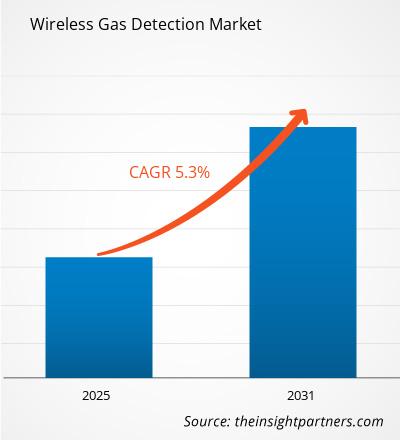
The Wireless gas detection market was valued at US$ 7.66 Billion in 2025 and is projected to reach US$ 15.66 Billion by 2034, expanding at a CAGR of 8.28% from 2026 to 2034. The market covers connected hardware, software, and services used to identify hazardous gases and communicate alerts without extensive fixed cabling. Adoption is supported by industrial safety requirements, expanding process facilities, and demand for flexible monitoring across complex operating environments.
North America is expected to remain a major regional contributor, with the wireless gas detection market size supported by a mature industrial safety ecosystem and established oil and gas infrastructure. Regional expansion is also encouraged by modernization of aging facilities, worker-protection requirements, and increasing use of connected monitoring across difficult-to-wire areas. The region is expected to record a modelled CAGR of 8.0–9.0% during 2026–2034.
Wireless Gas Detection Market Assessment and Insights
- North America: North America is estimated to account for 34–38% share in 2025, supported by oil and gas, chemicals, utilities, and mining applications. The region is expected to grow at a CAGR of 8.0–9.0% between 2026–2034.
- US: The US represents an estimated 70–75% of North America's 2025 demand, with extensive refinery, petrochemical, and industrial infrastructure. It is projected to grow at a CAGR of 8.0–9.0% during 2026–2034.
- Europe: Europe is estimated to hold 25–29% share in 2025, with Germany, the UK, France, Italy, and Spain supporting adoption through process-industry modernization and stringent occupational safety requirements. Growth is modelled at a CAGR of 7.5–8.5% through 2034.
- Asia Pacific: Asia Pacific is estimated at 23–27% share in 2025 and is expected to expand at a CAGR of 9.0–10.0%, led by China, Japan, South Korea, India, and Australia as industrial capacity and safety digitization increase.
- Largest Segment: Hardware is estimated to hold a 50–55% share in 2025 and is expected to expand at a CAGR of 7.5–8.5%, reflecting continued investment in connected detectors and gateways.
- High Growth Segment: Software is estimated to represent 15–20% share in 2025 and is projected to grow at a CAGR of 10.0–11.0%, supported by analytics, fleet management, and centralized monitoring.
- Key companies analyzed in detail: Honeywell International Inc.; Drägerwerk AG & Co. KGaA; Agilent Technologies, Inc.; Sensidyne, LP; United Electric Controls Company; Siemens AG; Johnson Controls International plc; Yokogawa Electric Corporation; RAE Systems, Inc.; Pem-Tech, Inc.; MSA Safety Incorporated.
Source: The Insight Partners' analysis based on proprietary research, government publications, company annual reports, investor presentations, industry databases, and expert interviews.
The wireless gas detection industry has evolved from standalone wireless transmitter technology to complex wireless networking that includes sensors, gateway, communications technology, industrial communication protocols, dashboards, and remote diagnostics. Wireless battery-powered equipment brings benefits because of fewer cables, temporary monitoring, facility extension, and hard-to-trench monitoring. Developments in infrared sensing, energy-saving electronics, mesh networking, and industrial cybersecurity lead to increased flexibility but do not negate the necessity for proper safety engineering practices.
Going forward, the future of the wireless gas detection market looks favorable in terms of investment in brownfield upgrades, offshore platforms, hydrogen technologies, and process plants with digital management. Growing industrialized nations are creating demands for safety systems through increased production capacity, while mature markets are upgrading old systems. The regulation of hazardous gas exposure, functional safety, cybersecurity, and emergency response should provide an incentive for customers to consider full detection systems over individual sensors.
Wireless Gas Detection Market Report Scope
| Report Attribute | Details |
|---|---|
| Market size in 2025 | US$ 7.66 Billion |
| Market Size by 2034 | US$ 15.66 Billion |
| Global CAGR (2026 - 2034) | 8.28% |
| Historical Data | 2021-2024 |
| Forecast period | 2026-2034 |
Wireless Gas Detection Market Analysis
The demand for the wireless gas detection market is highly associated with hazardous-area monitoring in oil and gas, chemicals, petrochemicals, mining, power, and utilities. The wireless technology minimizes the infrastructure required for the installation of additional monitoring points and helps to speed up the process when cable installations prove to be expensive or challenging. The ecosystem involves sensor makers, detector providers, wireless network suppliers, gateway providers, software suppliers, engineering companies, calibrators, and plant operators. In addition to detector performance, total cost of ownership, battery management, network robustness, interoperability, and certification are becoming increasingly important factors in procurement.
The supply chain is driven by sensor technology, hazardous area certifications, communication technology, batteries, gateways, and software technology. Component availability may have an impact on project timing due to the need for validation and environmental testing of the detector. Thus, apart from unit sales, the growth of the wireless gas detection market depends also on the capability of suppliers to provide the complete solution. Engineering-intensive vendors can integrate sensor technology, connectivity, analytics, installation, and maintenance into their offerings, making them distinctive on projects.
The competition in the wireless gas detection market analysis is gradually getting based on technological integration instead of the hardware itself. Honeywell International Inc. has integrated sensing, connected safety software, and industrial automation technologies, whereas Drägerwerk AG & Co. KGaA focuses on intrinsically safe wireless transmitters and industrial gas monitoring solutions. The wireless safety architecture through ISA100 technology has been developed by Yokogawa Electric Corporation, whereas Johnson Controls International plc has contributed through its Tyco and Crowcon divisions. Siemens AG is known for its expertise in industrial automation in connected safety settings.
Other specialized firms like Sensidyne, LP; United Electric Controls Company; Agilent Technologies, Inc.; RAE Systems, Inc.; Pem-Tech, Inc.; and MSA Safety Incorporated meet specific sensing, instrumentations, detection, and industrial safety needs. The competitiveness of these companies is gradually getting affected by issues related to interoperability, cybersecurity, long-term sensor life, remote diagnostics, and service coverage. There is a tendency of investment towards monitoring software, hydrogen detectors, cloud-connected fleet management, and technologies that minimize false alarms.
● REPORT CUSTOMIZATION
Tailor This Report To Align With Your Specific Business Requirements
This report can be customized to align precisely with your business objectives, scope, and target markets. Customization options include tailored segmentation, geography, competitive analysis, and strategic insights to support informed decision-making.
Customize This Report →WHAT YOU CAN ADJUST
- ● Segmentations
- ● Geography
- ● Competitive Analysis
- ● Language Preferences
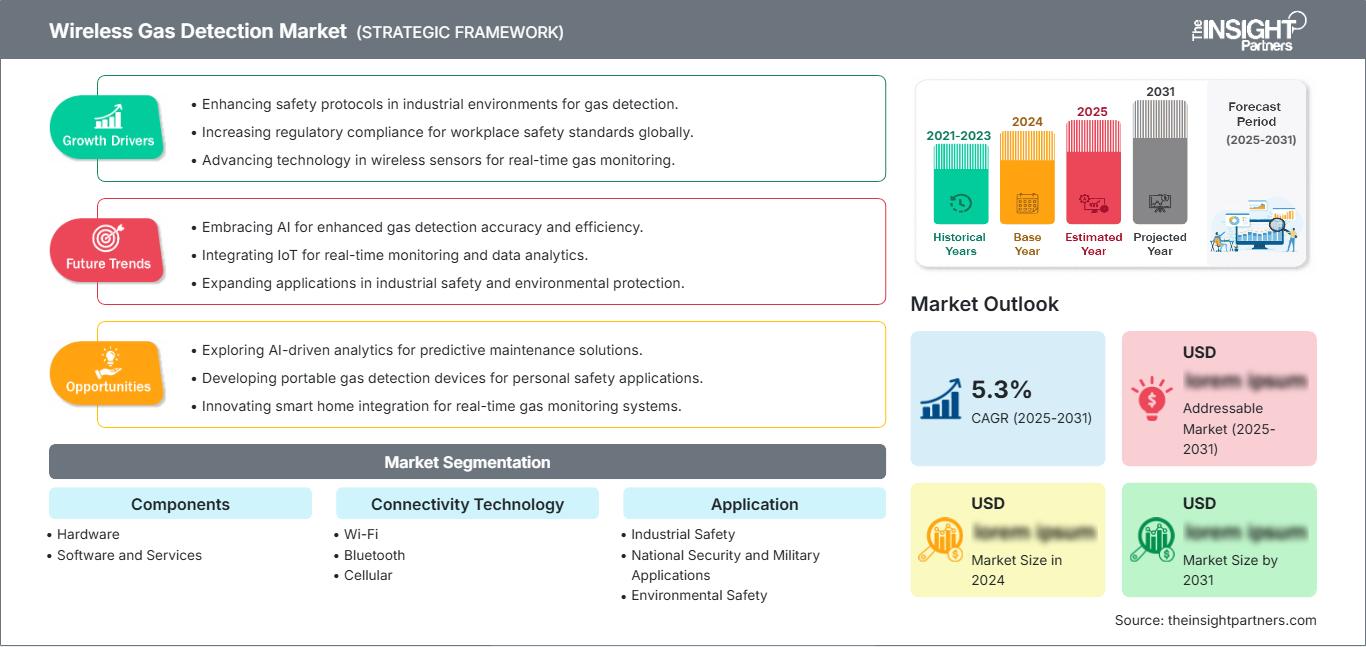
Wireless Gas Detection Market: Strategic Insights
Regional Insights
North America Wireless Gas Detection Market
North America is estimated to represent 34–38% of the 2025 market and is modelled to expand at a CAGR of 8.0–9.0% through 2034. The US dominates regional demand because of extensive refining, petrochemical, natural gas, chemical, mining, and utility infrastructure. Wireless deployments are particularly relevant where plants require additional detection points without major shutdowns or cable installation.
The regional growth is aided by modernization of existing aged industrial facilities, focus on safety of workers, and growing use of integrated industrial safety systems. Wireless networking is being used by operators for temporary projects, turnarounds, tank farms, and difficult to access areas. Canada is contributing through oil sands, LNG, mining and chemical industries, whereas USA continues to be the main hub for the technology and investments in this region.
U.S. Wireless Gas Detection Market
It is estimated that the US will constitute 70% to 75% of the demand of North America in 2025 and will be growing at a rate of 8.0% to 9.0% CAGR. There are different application requirements in refinery, LNG, petrochemicals, semiconductors, utilities, and mining segments. Honeywell International Inc., MSA Safety Incorporated, RAE Systems, Inc., among others, are key players in this market.
There is a trend towards the use of wireless systems for brownfield installations, confined spaces, temporary working areas, and assets, where wiring would otherwise be intrusive. End-users are looking for improved reliability, intrinsic safety, battery life, alarms, and compatibility with existing control systems. Wireless systems may facilitate phased implementation without disrupting installation, but network architecture, security, redundancy, and certifications are crucial procurement factors.
Europe Wireless Gas Detection Market
Europe is expected to have 25-29% share of the 2025 market and to experience growth at the rate of 7.5-8.5%. Germany will have the highest demand in the region driven by chemicals, manufacturing, energy, and process automation. The UK will continue being important through offshore energy, terminals, refineries, and industrial applications. France, Italy, and Spain will also have demand driven by chemicals, utilities, manufacturing, energy, and infrastructure.
The industrial base in Germany drives demand for the connected technology in chemicals and manufacturing industry, where plant owners and operators increasingly look into flexible instrumentation and remote diagnostics. The UK will benefit from offshore and energy applications that will require installation of connected technology in places where it is costly and impractical to have wiring. France, Italy, and Spain will continue showing steady adoption of the technology because of industrial modernization and hazardous area safety regulations.
APAC Wireless Gas Detection Market
APAC is projected to have market share of 23-27% in 2025 and to be the fastest growing major region with CAGR at 9.0-10.0%. It will be led by Chinese demand followed by Japan, South Korea, India, and Australia. Chemicals, refining, mining, LNG, manufacturing, and power capacities are expanding in the region, thus driving more applications.
There are efforts in APAC to develop automation projects and improve safety at work, thus increasing demand for monitoring technology. China will benefit from large-scale investments into process industries, Japan will benefit from established automation practices, South Korea will benefit from chemicals and advanced manufacturing, India from building its energy and industrial infrastructure, and Australia from mining and LNG.
Middle East & Africa Wireless Gas Detection Market
The MEA segment will grow with a CAGR of 7.0–8.0% with the leading demands being from Saudi Arabia. Projects in UAE, mining in South Africa, and more generally oil and gas infrastructure in the Middle East will represent opportunities for Wireless Systems. The region includes Saudi Arabia and the UAE that benefit from the energy diversification, petrochemical investment, and industrial infrastructure programs and South Africa through mining and utility segments. Rest-of-MEA growth is highly dependent on oil and gas, LNG, mining and infra projects. The procurement trend focuses now on hazard area approval, robust network design, remote maintainability and integration of wireless emergency shutdown systems and fire and gas.
Segmentation Analysis
Components
Hardware remains the principal component category, supported by detector deployment across hazardous industrial environments. The component segment is projected to grow at a CAGR of 7.5–8.5% from 2026–2034. Software and services are increasingly important as customers seek centralized visibility, remote diagnostics, compliance management, and lifecycle support.
- Hardware: Hardware includes sensors, transmitters, communication modules, gateways, batteries, and related devices. Demand centers on intrinsically safe products capable of reliable operation in harsh environments and compatibility with established industrial safety architectures.
- Software: Software supports centralized monitoring, configuration, alarm management, analytics, reporting, and fleet administration. Its strategic importance is increasing as operators connect distributed detectors to enterprise and plant-level safety workflows.
- Services: Services include installation, commissioning, calibration, maintenance, consulting, and system support. Buyers increasingly value lifecycle expertise because wireless performance depends on network planning, battery management, certification, and periodic verification.
Connectivity Technology
Connectivity determines how detector information reaches gateways, control systems, or monitoring platforms. This segment is projected to expand at a CAGR of 8.5–9.5% during 2026–2034, supported by greater demand for flexible industrial communication and remote monitoring.
- Wi-Fi: Wi-Fi is suited to facilities with established industrial wireless infrastructure and applications requiring relatively high data availability. Its strategic role increases where existing networks can support safety monitoring without extensive additional infrastructure.
- Bluetooth: Bluetooth is valuable for short-range commissioning, configuration, diagnostics, and maintenance. It can simplify technician interaction with compatible detectors while limiting unnecessary physical access to hazardous or difficult locations.
- Cellular: Cellular connectivity supports geographically dispersed assets and temporary deployments where local industrial networks are unavailable. It is particularly relevant for remote energy, utility, pipeline, and infrastructure applications requiring centralized visibility.
- License-free ISM Band: License-free ISM communication supports cost-conscious industrial deployments and specialized wireless architectures. Its adoption depends on local regulations, interference management, network design, range requirements, and the safety characteristics of the intended application.
Application
Application demand is driven by the consequences associated with undetected hazardous gases. The application segment is projected to grow at a CAGR of 8.0–9.0% from 2026–2034, with industrial safety remaining the core use case.
- Industrial Safety: Industrial safety applications cover process plants, refineries, chemical facilities, utilities, and manufacturing environments. Wireless detection enables additional monitoring points where fixed wiring is expensive, disruptive, or difficult to install.
- National Security and Military Applications: Defense and security applications require ruggedized detection, rapid deployment, and reliable monitoring in challenging environments. Wireless architecture can support mobile or temporary operational zones where fixed infrastructure is unsuitable.
- Environmental Safety: Environmental applications focus on identifying hazardous releases and supporting broader site monitoring. Wireless devices can extend coverage across storage areas, remote facilities, and locations where conventional infrastructure would constrain sensor placement.
End User
End-user demand is projected to expand at a CAGR of 8.0–9.0% during 2026–2034. Oil and gas remains a major application base, while chemicals, utilities, mining, and government facilities broaden the addressable opportunity.
- Oil & Gas: Oil and gas facilities require continuous monitoring across production, processing, storage, transportation, and offshore environments. Wireless detectors can address large or difficult-to-wire zones while supporting flexible expansion.
- Chemical & Petrochemicals: Chemical and petrochemical plants face risks from toxic, flammable, and reactive gases. Connected detection supports dense monitoring architectures and integration with established process and emergency safety systems.
- Power & Utilities: Utilities increasingly use connected monitoring around generation, storage, transmission support facilities, and fuel-handling areas. Wireless deployment can reduce installation disruption during modernization projects.
- Mining & Metals: Mining operations require monitoring across underground, processing, storage, and material-handling environments. Rugged wireless equipment can improve coverage where cable installation and maintenance are challenging.
- Government & Military: Government and military users require dependable detection for facilities, vehicles, temporary operations, and security-sensitive environments. Procurement prioritizes ruggedness, secure communications, portability, and operational continuity.
Opportunity Snapshot
| End User | Revenue Contribution | Trend Tag | Adoption Stage |
|---|---|---|---|
| Oil & Gas | High | Tank Farms | Scaling |
| Chemical & Petrochemicals | High | Process Safety | Scaling |
| Power & Utilities | Medium | Grid Assets | Scaling |
| Mining & Metals | Medium | Remote Mining | Scaling |
| Government & Military | Low | Tactical Safety | Emerging |
Wireless Gas Detection Market Growth Drivers and Impact Analysis
Expansion of Brownfield Industrial Modernization
Brownfield modernization is creating a structural opportunity because many industrial facilities need additional detection coverage without extensive shutdowns or civil works. Wireless instruments can be positioned around existing equipment, storage areas, temporary work zones, and difficult-to-access locations without requiring every sensing point to be connected through new cable routes. This flexibility can shorten installation activities and allow operators to phase investments according to risk priorities. Refineries, chemical plants, utilities, and mining facilities can therefore address monitoring gaps while maintaining production continuity. The resulting purchasing model favors modular systems that can begin with a limited number of detectors and expand later. Suppliers able to integrate wireless networks with existing fire-and-gas, control, and emergency systems are positioned to capture larger modernization projects.
Growing Requirement for Continuous Hazardous-Gas Visibility
The safety approaches in industries are also increasingly shifting from inspection to continual visibility of dangerous environments. Detection through wireless technology can increase the quantity of detection points without having to incur proportional infrastructure costs, especially in tank farms, remote equipment, storage, and temporary operations locations. Continuous monitoring helps in the process of centralizing alarms and detecting abnormal situations more quickly. The effects of the business model go beyond the sale of detectors since the client might have other needs like gateways, software, analysis, calibration, network design, and maintenance. With increased digitalization of industrial safety processes, the data collected from the detectors might also be incorporated into asset management and operational decisions making. The approach favors vendors with complete architecture systems rather than just selling products.
Increasing Focus on Hydrogen and New Energy Safety
Hydrogen production, storage, transportation, and utilization are creating additional requirements for specialized gas monitoring. Hydrogen has distinctive detection challenges because of its low molecular weight, wide flammability range, and rapid dispersion characteristics. As industrial projects incorporate hydrogen into energy and manufacturing strategies, operators need detection architectures that can accommodate new risk profiles while integrating with established safety systems. Wireless technology is particularly relevant to demonstration facilities, distributed infrastructure, and retrofit projects where monitoring points may change as processes evolve. The commercial impact includes opportunities for hydrogen-specific sensors, intrinsically safe transmitters, wireless gateways, analytics, and engineering services. Suppliers that combine established gas-detection expertise with new-energy applications can address emerging demand while leveraging existing industrial relationships and installed safety infrastructure.
Wireless Gas Detection Market Future Trends
Greater Integration of Edge Intelligence
Wireless gas detectors are expected to incorporate greater edge intelligence, allowing devices and gateways to evaluate signal quality, sensor condition, abnormal readings, and communication status closer to the point of detection. This development can reduce dependence on constant centralized processing and improve the usefulness of alarms when network conditions fluctuate. Future systems may increasingly distinguish between transient measurement anomalies and persistent hazardous conditions using local algorithms, environmental compensation, and historical patterns. Edge processing can also support predictive maintenance by identifying sensor degradation, battery deterioration, or communication instability before a failure affects coverage. As these capabilities mature, buyers may evaluate detection platforms according to their diagnostic depth and decision-support functions rather than sensing performance alone. The resulting architectures should combine local intelligence with centralized oversight, maintaining human control over safety-critical responses.
Convergence of Safety and Industrial Data Platforms
Future wireless detection architectures are likely to connect more closely with industrial data platforms, maintenance systems, digital twins, and enterprise safety applications. Instead of treating gas alarms as isolated events, operators can correlate detector information with equipment status, process conditions, maintenance records, weather conditions, and workforce activity. Such convergence can improve incident investigation and support risk-based placement of additional sensors. Secure gateways will become increasingly important because broader connectivity increases the potential cybersecurity exposure of safety-related devices. Industrial users are therefore likely to demand stronger authentication, segmentation, encrypted communication, secure device management, and auditable software updates. This trend can shift purchasing decisions toward interoperable platforms capable of supporting both safety requirements and broader digital transformation initiatives while preserving appropriate separation between monitoring and critical control functions.
Wireless Gas Detection Market Opportunities
Development of Modular Wireless Safety Networks
A significant opportunity exists in modular wireless safety networks designed for phased deployment. Many industrial operators do not need to replace entire detection architectures simultaneously, particularly when existing wired equipment remains operational. Vendors can provide gateways and compatible detectors that allow customers to add coverage around high-risk areas, temporary projects, expansions, and brownfield modifications. Modular architecture can reduce initial capital requirements while creating a pathway toward broader connected monitoring. Commercial models may combine hardware with software subscriptions, commissioning, calibration, and lifecycle services. The strongest opportunities are likely to emerge where plants have geographically dispersed assets or frequent layout changes. Suppliers should emphasize interoperability, network redundancy, battery management, certification, and straightforward integration with existing fire-and-gas systems. This approach can expand adoption without requiring customers to undertake large-scale infrastructure replacement projects.
Connected Detection for Emerging Industrial Energy Projects
Emerging energy projects create opportunities for suppliers to establish early positions in new safety architectures. Hydrogen, LNG, renewable-gas facilities, energy storage sites, and decentralized industrial infrastructure can require monitoring across locations where conventional cabling is expensive or operationally restrictive. Wireless detection can provide flexible coverage while projects evolve from pilot facilities into larger commercial installations. Vendors can strengthen their position by developing application-specific sensor configurations, secure gateways, remote diagnostics, and engineering packages tailored to new energy hazards. Partnerships with engineering contractors and automation providers may also accelerate specification into project designs. The opportunity extends beyond initial equipment sales because new facilities require commissioning, calibration, maintenance, software updates, and periodic safety verification. Suppliers that establish reference architectures early can influence future standards and procurement specifications.
Recent Developments
- March 2026: Honeywell International Inc. introduced its 4-Series NDIR Hydrocarbon Gas Sensor for detecting flammable gases including methane, propane, and butane. The sensor is designed for industrial environments such as oil and gas, mining, petrochemicals, and manufacturing, with features intended to improve durability, poisoning resistance, moisture handling, and power efficiency.
- February 2026: Drägerwerk AG & Co. KGaA launched the Breathguard 2500, a bespoke gas-detection device developed for defense, industrial, construction, and emergency-rescue confined-space applications. The system continuously monitors carbon dioxide and carbon monoxide and was developed in response to a requirement from Rheinmetall Landsysteme GmbH for rugged atmospheric monitoring.
- July 2025: Johnson Controls International plc maintained certification activity for Tyco fire-and-gas detection equipment, including the 601F-M and 601FEx-M intrinsically safe flame detector models. The certification covered marine and offshore environments and reinforced the continuing role of certified detection equipment within hazardous industrial safety architectures.
Frequently Asked Questions

- Comprehensive Market Sizing and Forecast Analysis
- Detailed Segmentation Analysis
- In-Depth Market Dynamics Assessment
- Regional and Country-Level Insights
- Competitive Landscape and Company Benchmarking
- Strategic Business Intelligence
Recent Reports
Testimonials

The Insight Partners provided valuable market intelligence that supported our global go-to-market strategy. Their team was professional, responsive, and attentive to our feedback, providing thoughtful analysis and helpful methodological clarifications throughout the project.
Junmo Kim Chief Financial Officer (CFO), Enertech Co., Ltd.
The Insight Partners' SCADA System Market report is comprehensive, with valuable insights on current trends and future forecasts. The team was highly professional, responsive, and supportive throughout. We are very satisfied and highly recommend their services.
RAN KEDEM Partner, Reali Technologies LTDs
I requested a report on a very specific software market and the team produced the report in a few days. The information was very relevant and well presented. I then requested some changes and additions to the report. The team was again very responsive and I got the final report in less than a week.
JEAN-HERVE JENN Chairman, Future Analytica
We worked with The Insight Partners for an important market study and forecast. They gave us clear insights into opportunities and risks, which helped shape our plans. Their research was easy to use and based on solid data. It helped us make smart, confident decisions. We highly recommend them.
PIYUSH NAGPAL Sr. Vice President, High Beam Global
The Insight Partners delivered insightful, well-structured market research with strong domain expertise. Their team was professional and responsive throughout. The user-friendly website made accessing industry reports seamless. We highly recommend them for reliable, high-quality research services
YUKIHIKO ADACHI CEO, Deep Blue, LLC.
This is the first time I have purchased a market report from The Insight Partners.While I was unsure at first, I visited their web site and felt more comfortable to take the risk and purchase a market report.I am completely satisfied with the quality of the report and customer service. I had several questions and comments with the initial report, but after a couple of dialogs over email with their analyst I believe I have a report that I can use as input to our strategic planning process.Thank you so much for taking the extra time and making this a positive experience.I will definitely recommend your service to others and you will be my first call when we need further market data.
JOHN SUZUKI President and Chief Executive Officer, Board Director, BK Technologies
I wish to appreciate your support and the professionalism you displayed in the course of attending to my request for information regarding to infectious disease IVD market in Nigeria. I appreciate your patience, your guidance, and the fact that you were willing to offer a discount, which eventually made it possible for us to close a deal. I look forward to engaging The Insight Partners in the future, all thanks to the impression you have created in me as a result of this first encounter.
DR CHIJIOKE ONYIA MANAGING DIRECTOR, PineCrest Healthcare Ltd.Reason to Buy
- Informed Decision-Making
- Understanding Market Dynamics
- Competitive Analysis
- Identifying Emerging Markets
- Customer Insights
- Market Forecasts
- Risk Mitigation
- Boosting Operational Efficiency
- Strategic Planning
- Investment Justification
- Tracking Industry Innovations
- Aligning with Regulatory Trends





 Get Free Sample for