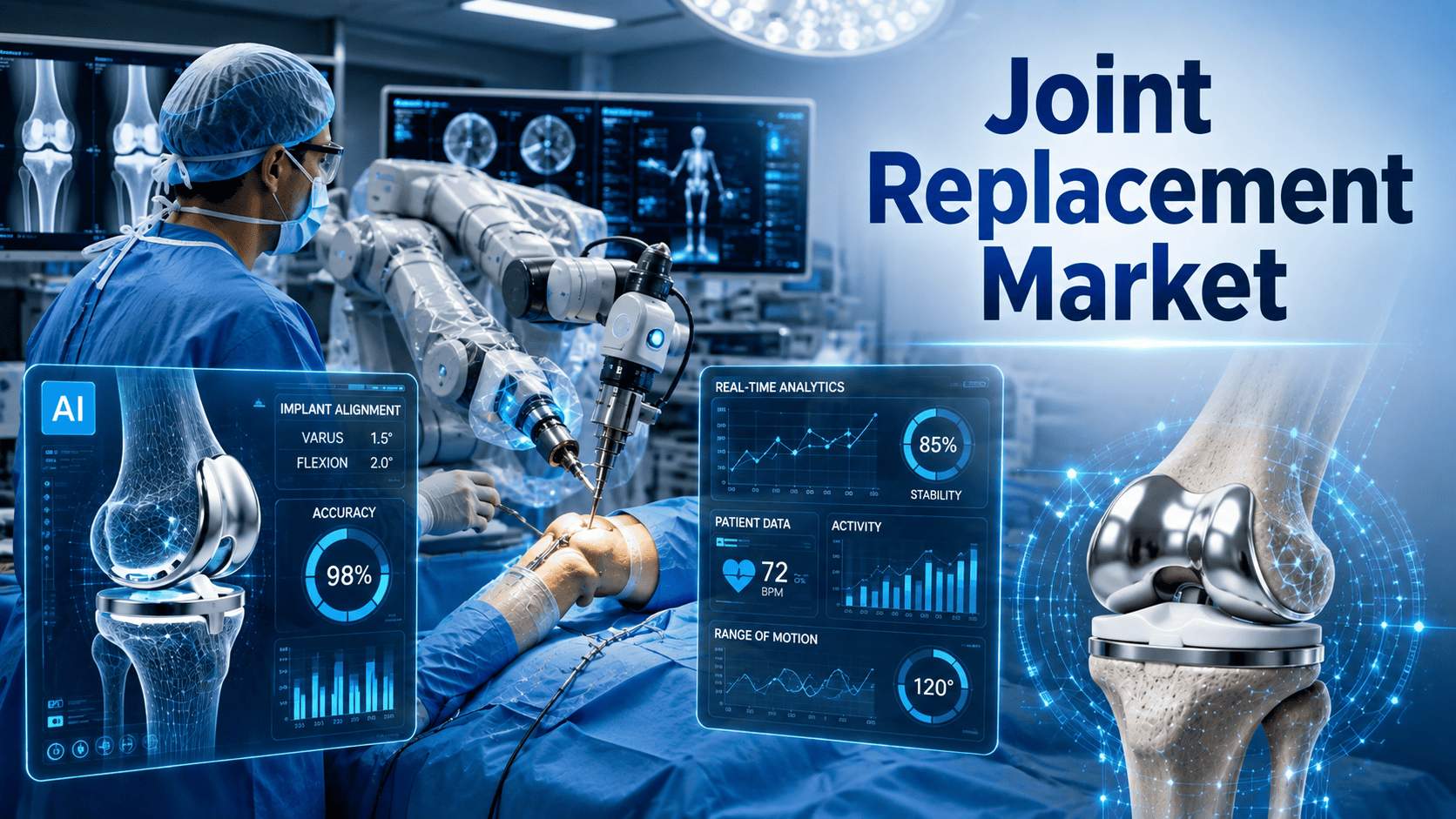
Joint replacement surgery has become one of the most successful medical procedures for restoring mobility and improving the quality of life for patients suffering from osteoarthritis, rheumatoid arthritis, traumatic injuries, and other degenerative joint disorders. As healthcare systems continue to embrace digital transformation, orthopedic surgery is entering a new era powered by artificial intelligence (AI), robotics, advanced imaging, and data analytics. These innovations are not only enhancing surgical precision but also improving patient outcomes, reducing recovery times, and enabling more personalized treatment approaches.
According to The Insight Partners, the Joint Replacement Market was valued at US$ 24.67 billion in 2024 and is projected to reach US$ 35.18 billion by 2031, expanding at a CAGR of 5.2% during 2025-2031. The market's growth is supported by the increasing prevalence of orthopedic disorders, a rapidly aging global population, technological advancements in knee and hip replacement procedures, and growing adoption of minimally invasive surgical techniques. These factors are accelerating the transition toward digital orthopedics across hospitals, ambulatory care centers, and specialized orthopedic clinics worldwide.
AI Is Bringing Precision to Orthopedic Care
Artificial intelligence is transforming every stage of the joint replacement journey, from diagnosis and treatment planning to postoperative care. AI-powered software analyzes medical imaging such as CT scans, MRI scans, and X-rays to provide surgeons with detailed insights into bone quality, joint alignment, and implant positioning before surgery.
Machine learning algorithms can evaluate thousands of historical patient cases to recommend optimal implant sizes and surgical approaches based on an individual's anatomy and lifestyle. This personalized planning reduces the likelihood of implant misalignment, one of the leading causes of revision surgeries.
AI also enables predictive analytics that help physicians identify patients at higher risk of complications, infections, or slower recovery. Early intervention strategies supported by predictive models improve patient safety while optimizing hospital resources.
Robotic-Assisted Surgery Is Redefining Joint Replacement
Among the most significant technological advancements highlighted in the Joint Replacement Market is the rapid adoption of robotic-assisted surgery. Robotic systems provide orthopedic surgeons with enhanced visualization, greater control, and exceptional accuracy during procedures involving the knee, hip, shoulder, and other joints.
Unlike conventional procedures, robotic platforms create detailed three-dimensional surgical maps that allow surgeons to execute highly precise bone cuts while preserving healthy tissue. The robotic system continuously monitors instrument positioning and provides real-time guidance throughout the operation.
Benefits of robotic-assisted joint replacement include:
- Improved implant positioning and alignment
- Reduced surgical variability
- Smaller incisions through minimally invasive techniques
- Lower blood loss
- Reduced postoperative pain
- Faster rehabilitation
- Higher implant longevity
As healthcare providers increasingly invest in robotic surgical systems, hospitals remain the leading end users, while ambulatory care centers are also witnessing growing adoption due to shorter hospital stays and improved operational efficiency.
Data Analytics Is Driving Better Clinical Decisions
Digital orthopedics extends beyond the operating room. Modern healthcare organizations increasingly rely on data analytics to optimize treatment pathways and monitor long-term implant performance.
Large clinical databases help physicians compare patient outcomes across various implant types, fixation methods, and rehabilitation protocols. By analyzing real-world evidence, orthopedic specialists can continuously improve surgical techniques and select implants that deliver better long-term success rates.
Healthcare providers are also using predictive analytics to:
- Forecast patient recovery timelines
- Reduce hospital readmission rates
- Optimize rehabilitation programs
- Improve inventory management for orthopedic implants
- Enhance value-based healthcare delivery
The growing integration of wearable devices further strengthens postoperative monitoring by tracking mobility, gait, walking speed, and range of motion. These digital insights enable clinicians to identify recovery issues earlier and recommend personalized rehabilitation plans.
Advanced Imaging and Computer Navigation Enhance Surgical Accuracy
Another important trend shaping the Joint Replacement Market is the adoption of 3D imaging and computer-assisted navigation technologies.
Traditional orthopedic surgeries relied heavily on surgeon experience and two-dimensional imaging. Today's digital navigation systems create comprehensive three-dimensional models of the patient's anatomy, allowing surgeons to simulate procedures before entering the operating room.
Computer-assisted navigation provides continuous intraoperative feedback, helping surgeons achieve precise implant placement while reducing complications associated with improper alignment.
These technologies contribute to:
- Higher surgical accuracy
- Better joint stability
- Improved implant longevity
- Reduced revision surgeries
- Enhanced patient satisfaction
As imaging technologies continue to evolve, digital planning is becoming an essential component of modern orthopedic practice.
Smarter Biomaterials and Personalized Implants
Innovation in implant materials is another major trend influencing market growth. Manufacturers are developing advanced prosthetics using titanium alloys, ceramic coatings, and nanomaterials that offer superior durability, corrosion resistance, and biocompatibility.
Combined with AI-driven surgical planning, these next-generation biomaterials support personalized joint replacement solutions tailored to each patient's anatomical structure.
Customized implants improve joint function while reducing wear over time, making them particularly valuable for younger and more active patients who require long-lasting orthopedic solutions.
Growing Demand Continues to Support Market Expansion
Several structural factors continue to create strong growth opportunities for the Joint Replacement Market.
The global increase in osteoarthritis, osteoporosis, obesity, sports injuries, and other musculoskeletal disorders has significantly expanded the patient population requiring joint replacement procedures.
Additionally, rising life expectancy has increased the number of elderly individuals seeking treatments that restore mobility and independence.
The report also highlights Asia Pacific as one of the fastest-growing regional markets. Countries such as China, India, and Japan are experiencing rising demand due to improving healthcare infrastructure, increased awareness, technological advancements, and greater adoption of minimally invasive procedures.
Medical tourism is further supporting market expansion, particularly in countries including India, Thailand, and Malaysia, where patients benefit from high-quality orthopedic care at competitive costs. Government initiatives encouraging domestic manufacturing of orthopedic implants and expanding healthcare access are expected to strengthen long-term market growth.
Looking Ahead
Digital orthopedics represents the future of joint replacement surgery. The convergence of artificial intelligence, robotic-assisted procedures, advanced imaging, computer navigation, smart biomaterials, and data analytics is transforming orthopedic care into a more precise, personalized, and patient-centric discipline.
As healthcare providers continue investing in digital technologies, patients can expect safer procedures, faster recovery, improved implant performance, and better long-term quality of life. At the same time, manufacturers and healthcare organizations are leveraging innovation to improve efficiency and meet the growing global demand for orthopedic treatments.

.png)