The aviation industry is experiencing a rapid digital transformation as airports strive to accommodate growing passenger volumes, improve operational efficiency, and deliver seamless travel experiences. Modern airports are no longer just transportation hubs. They have evolved into intelligent ecosystems where real-time information, automation, and data-driven decision-making play a critical role in ensuring safe and efficient operations.
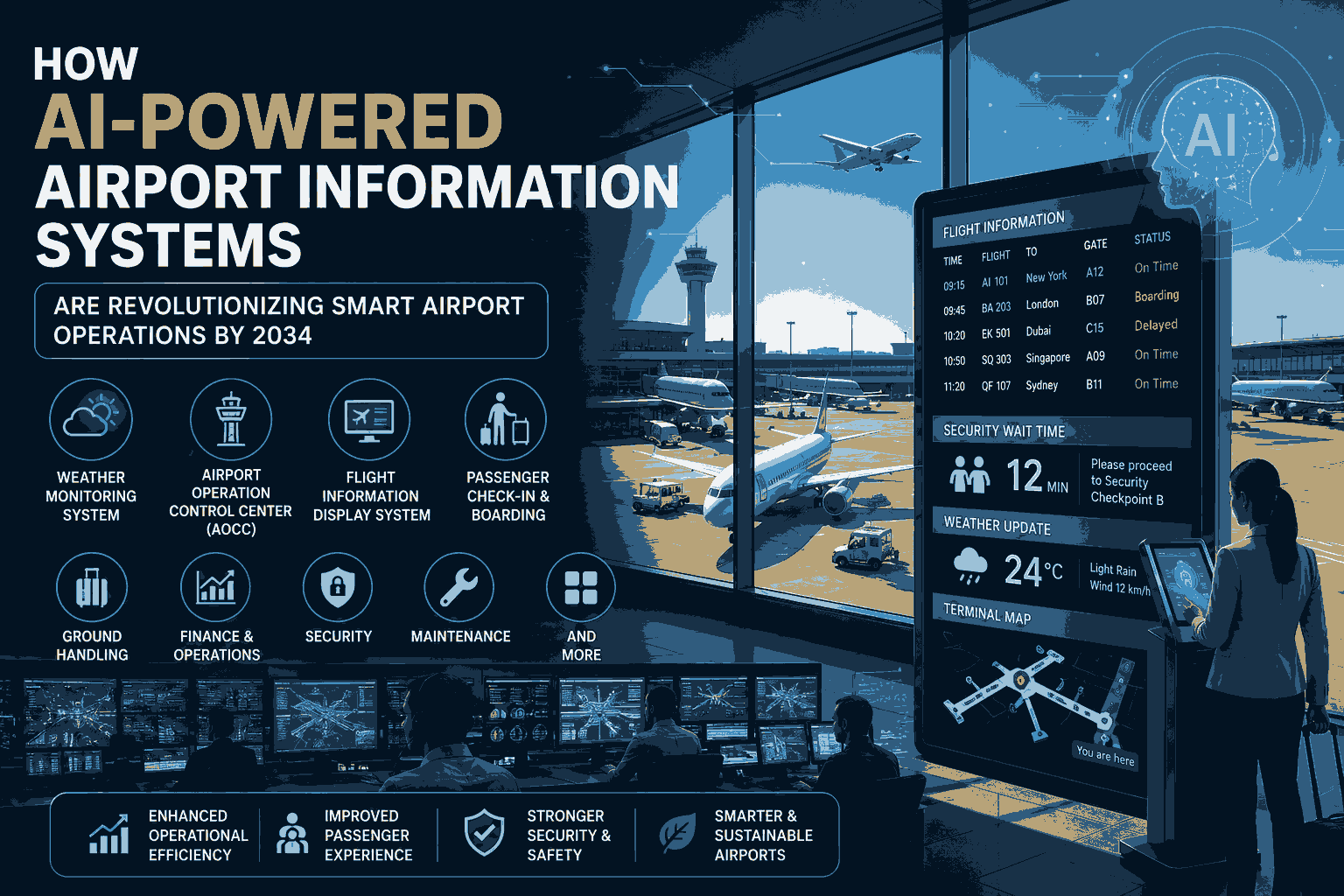
At the center of this transformation is the Airport Information System (AIS), an integrated platform that connects multiple airport functions, including passenger processing, flight operations, weather monitoring, security, maintenance, and ground handling. As Artificial Intelligence (AI) becomes increasingly embedded in airport technologies, Airport Information Systems are evolving into smarter platforms capable of analyzing massive volumes of operational data, predicting disruptions, and supporting informed decision-making.
According to The Insight Partners, the Airport Information System Market was valued at US$ 14.56 billion in 2025 and is projected to reach US$ 28.83 billion by 2034, expanding at a CAGR of 7.89% from 2026 to 2034. This growth is driven by the increasing focus on airport modernization, digital infrastructure, and smart airport initiatives. Airports across both developed and emerging economies are investing in intelligent Airport Information Systems to enable real-time passenger communication, integrated operations control, and resilient digital infrastructure across passenger-facing and non-passenger systems.
The Growing Importance of Smart Airport Information Systems
Airports handle thousands of interconnected activities every day. Flight arrivals and departures, passenger check-in, baggage handling, aircraft maintenance, security screening, weather monitoring, and ground operations all require continuous coordination.
Traditional systems often operate independently, making it difficult to share information across departments. Airport Information Systems overcome this challenge by integrating operational data into a centralized platform, enabling airport authorities and stakeholders to access accurate, real-time information.
With AI integration, these systems become even more intelligent by identifying operational patterns, generating predictive insights, and automating routine processes. This allows airport operators to respond quickly to changing conditions while improving overall airport efficiency.
As global air travel continues to recover and expand, intelligent Airport Information Systems are becoming an essential investment for airports seeking long-term operational excellence.
AI Is Transforming Airport Operations
Artificial Intelligence is reshaping how airports manage daily operations. Rather than simply displaying operational data, AI-powered Airport Information Systems analyze information from multiple sources to support faster and more accurate decision-making.
AI can process data generated from flight schedules, passenger movement, airport infrastructure, weather conditions, aircraft positioning, and operational resources. By continuously monitoring these inputs, intelligent systems can identify potential bottlenecks before they impact airport operations.
For example, if severe weather affects incoming flights, AI-enabled systems can automatically recommend revised gate assignments, update flight schedules, notify operational teams, and optimize resource allocation. This proactive approach minimizes delays and helps airports maintain smoother operations even during unexpected disruptions.
The increasing adoption of AI is enabling airports to become more resilient while improving efficiency across multiple operational functions.
Airport Operation Control Centers Become Smarter
The Airport Operation Control Center (AOCC) serves as the command center for airport operations. It coordinates activities involving airlines, air traffic management, security personnel, maintenance teams, and ground handling services.
AI significantly enhances AOCC capabilities by providing predictive analytics and real-time operational visibility. Instead of reacting to problems after they occur, airport operators can anticipate disruptions and take preventive action.
Intelligent AOCC platforms help airports optimize runway utilization, aircraft turnaround time, gate allocation, workforce scheduling, and emergency response planning. This results in improved coordination among airport stakeholders and more efficient airport operations.
As airports continue expanding their infrastructure, AI-powered AOCC solutions are expected to become increasingly valuable for managing operational complexity.
Enhancing Passenger Check-In and Boarding Experience
Passenger expectations continue to evolve as travelers seek faster, more convenient, and contactless airport experiences. Airport Information Systems powered by AI are helping airports modernize passenger processing while reducing waiting times.
Modern passenger systems support digital check-in, automated boarding, self-service kiosks, biometric authentication, and mobile notifications. AI further enhances these services by analyzing passenger flow and identifying congestion points throughout airport terminals.
Airport operators can proactively deploy additional resources to busy areas, improve queue management, and streamline boarding procedures.
These intelligent passenger services not only improve traveler satisfaction but also enable airports to accommodate higher passenger volumes without significantly increasing operational costs.
Intelligent Flight Information Display Systems Improve Communication
Accurate communication is essential for efficient airport operations. Flight Information Display Systems (FIDS) provide passengers with real-time updates regarding flight schedules, boarding gates, delays, baggage claim information, and terminal navigation.
AI enhances these systems by automatically synchronizing operational updates across multiple digital channels. Information displayed on airport screens, websites, mobile applications, and passenger notification systems remains consistent and up to date.
This real-time communication reduces passenger confusion while improving operational transparency throughout the airport.
As airports continue adopting digital passenger engagement strategies, intelligent Flight Information Display Systems will play an increasingly important role in enhancing customer experience.
AI Improves Weather Monitoring and Operational Planning
Weather conditions remain one of the most significant challenges affecting airport operations. Heavy rainfall, fog, storms, and strong winds can disrupt flight schedules and impact passenger movement.
AI-powered weather monitoring systems enable airports to analyze weather patterns more effectively by combining meteorological data with operational information. Airport operators receive early insights into changing weather conditions, allowing them to adjust flight schedules, runway operations, and resource allocation before disruptions occur.
This proactive approach helps airports improve safety while minimizing operational delays.
Optimizing Ground Handling and Maintenance Operations
Ground handling activities directly influence airport performance. Aircraft refueling, baggage loading, catering, cleaning, maintenance inspections, and passenger boarding must all be completed within limited turnaround times.
Airport Information Systems help coordinate these activities by providing real-time operational visibility across ground service teams.
AI further strengthens these capabilities by optimizing workforce deployment, monitoring equipment utilization, and identifying maintenance requirements before equipment failures occur.
Predictive maintenance supported by AI allows airports to reduce downtime, improve equipment reliability, and extend the lifespan of critical airport assets.
These improvements contribute to greater operational efficiency while supporting uninterrupted airport operations.
Strengthening Airport Security Through Intelligent Systems
Airport security continues to evolve alongside growing passenger traffic and increasingly sophisticated operational environments.
AI-powered Airport Information Systems support airport security by integrating information from surveillance systems, access control platforms, passenger management systems, and operational databases.
Intelligent analytics assist security teams by identifying unusual operational patterns, supporting faster incident response, and improving situational awareness.
Integrated security information also enables better coordination between airport authorities and operational teams, contributing to safer airport environments for passengers and staff.
Supporting Sustainable Airport Development
Sustainability has become a major priority across the global aviation industry. Airport operators are investing in technologies that improve operational efficiency while reducing environmental impact.
AI-powered Airport Information Systems contribute to these objectives by optimizing energy usage, improving gate allocation, reducing unnecessary aircraft idle time, and enhancing resource planning.
Better coordination across airport operations can also reduce fuel consumption during aircraft movement and improve the utilization of airport infrastructure.
As governments and airport authorities continue prioritizing sustainable aviation initiatives, intelligent Airport Information Systems will play an important role in supporting environmentally responsible airport operations.
Regional Outlook
Airport modernization initiatives continue to gain momentum across major aviation markets. North America remains a key region for advanced airport technologies due to ongoing investments in digital infrastructure and operational modernization. Europe continues to focus on improving passenger experience, operational efficiency, and sustainable airport management through smart technologies.
Asia Pacific is expected to witness strong demand as expanding airport infrastructure, rising passenger traffic, and increasing investments in smart airport projects accelerate technology adoption. South and Central America are also gradually strengthening airport infrastructure through digital transformation initiatives designed to improve operational efficiency and passenger services.
These regional developments are expected to support sustained growth in the Airport Information System Market throughout the forecast period.
Looking Ahead
The future of airport operations will be defined by intelligence, connectivity, and automation. AI-powered Airport Information Systems are transforming the way airports manage operations by enabling real-time collaboration, predictive decision-making, and seamless information sharing across every stage of the passenger journey.
As airports continue investing in smart infrastructure, integrated operational platforms, and advanced digital technologies, Airport Information Systems will remain a critical component of next-generation airport ecosystems.
The Insight Partners provides comprehensive insights into the Airport Information System Industry, including detailed analysis by System, Airport Type, Application, End User, and Geography. The report offers valuable market intelligence on emerging trends, growth opportunities, competitive landscape, and future developments, helping technology providers, airport authorities, investors, and industry stakeholders make informed strategic decisions through 2034.