
3D Cardiac Mapping System Market Expert Analysis by Size and Share 2034
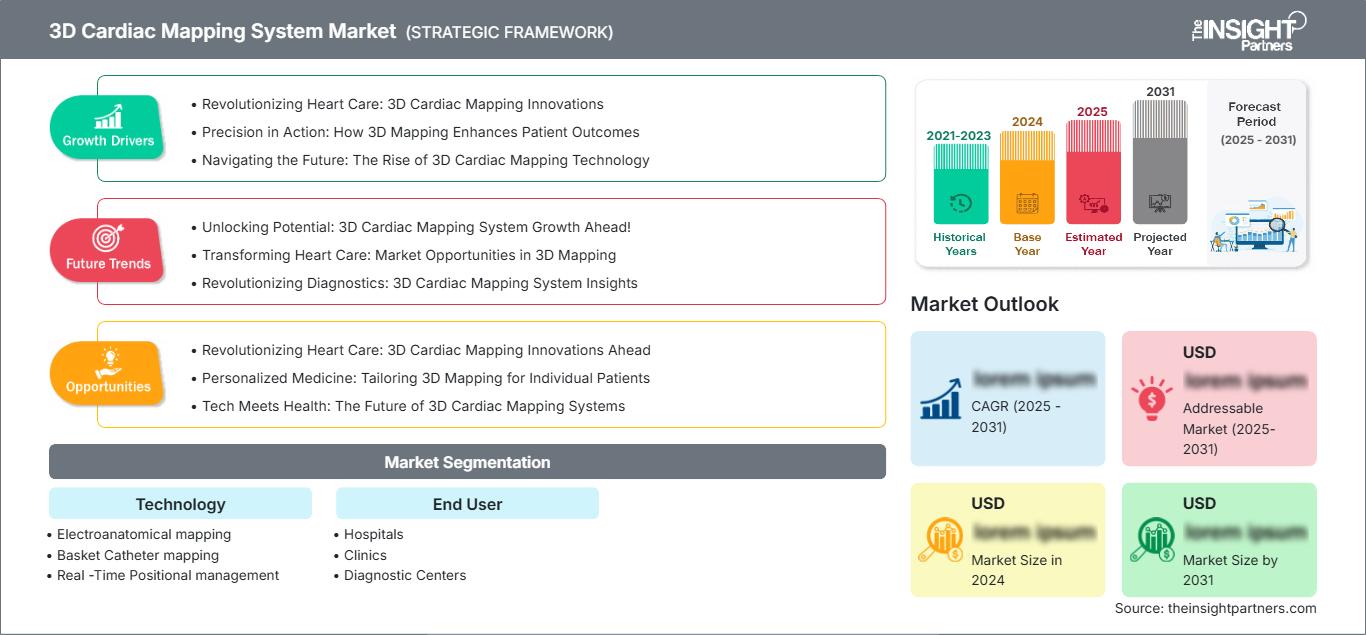
Coverage: By Technology (Electro anatomical mapping, Basket Catheter mapping, Real -Time Positional management); End User (Hospitals, Clinics, Diagnostic Centers), and Geography (North America, Europe, Asia Pacific, and South and Central America)
- Status : Data Released
- Report Code : TIPRE00004722
- Category : Technology, Media and Telecommunications
- No. of Pages : 150
- Available Report Formats :


- Last update date : August 05, 2026


2025 Market Size
US$ 1.96 Bn
Base year value
2034 Forecast
US$ 3.94 Bn
Projected by 2034
CAGR 2026-2034
8.1 %
Growth rate
Addressable Market
US$ 26.57 Bn
(2026-2034)
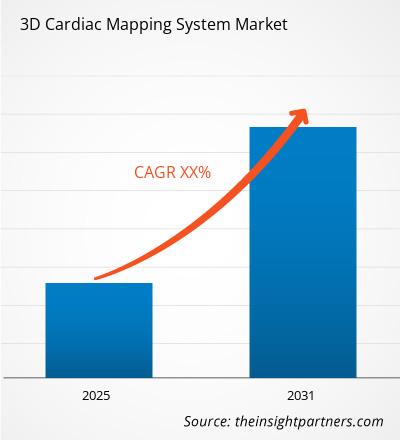
The 3D cardiac mapping system market was valued at US$ 1.96 Billion in 2025 and is projected to reach US$ 3.12 Billion by 2034, registering a CAGR of 8.1% during 2026–2034. Market expansion is being supported by the increasing prevalence of cardiac arrhythmias, rising adoption of catheter ablation procedures, and growing clinical demand for precise electrophysiology navigation technologies. Advancements in imaging integration, mapping accuracy, and real-time cardiac visualization continue to enhance procedural outcomes and strengthen market adoption across healthcare systems.
Across North America, healthcare providers continue investing in advanced electrophysiology laboratories to improve diagnosis and treatment of complex cardiac rhythm disorders. The 3D cardiac mapping system market size in the region is supported by a high volume of catheter ablation procedures, favorable reimbursement environments, and early adoption of innovative mapping platforms. Regional growth is anticipated to remain within a 7.5–8.8% CAGR range through 2034, driven by increasing atrial fibrillation prevalence and continued investment in cardiovascular care infrastructure.
3D Cardiac Mapping System Market Assessment and Insights
- North America: Accounted for an estimated 39–43% share in 2025, supported by advanced electrophysiology infrastructure, strong reimbursement frameworks, and widespread adoption of minimally invasive cardiac procedures. CAGR between 2026–2034: 7.5–8.8%.
- US: Represented approximately 82–86% of North American revenue in 2025, driven by high procedure volumes, established hospital networks, and strong presence of electrophysiology technology vendors. CAGR between 2026–2034: 7.8–9.0%.
- Europe: Held an estimated 26–30% share in 2025, led by Germany, the United Kingdom, and France. Expanding cardiac care investments and aging populations support a CAGR of 7.2–8.4% during 2026–2034.
- Asia Pacific: Captured approximately 21–25% share in 2025, supported by healthcare modernization in China, Japan, India, and South Korea. CAGR between 2026–2034: 8.8–10.2%.
- Largest Segment: Hospitals represented a 62–68% market share in 2025, reflecting concentration of electrophysiology procedures within tertiary and specialized cardiac care centers. CAGR between 7.8–8.9%.
- High Growth Segment: Real-Time Positional Management accounted for a 24–28% market share in 2025 and is projected to expand at a CAGR of 9.2–10.5% owing to growing demand for navigation precision and workflow efficiency.
- Key companies analyzed in detail: Abbott Laboratories, Boston Scientific Corporation, Johnson & Johnson Services, Inc., Medtronic plc, MicroPort Scientific Corporation, Scranton Gillette Communications, EP Solutions SA, St. Jude Medical, LLC, Acutus Medical, Inc., Biosense Webster, Inc.
Source: The Insight Partners' analysis based on proprietary research, government publications, company annual reports, investor presentations, industry databases, and expert interviews.
Clinical electrophysiology has evolved significantly through the integration of advanced mapping techniques capable of generating highly detailed three-dimensional representations of cardiac anatomy and electrical activity. Improvements in catheter technology, software algorithms, and imaging compatibility have enhanced procedural precision while reducing dependence on fluoroscopy-based navigation. Healthcare providers increasingly rely on sophisticated mapping systems to improve treatment outcomes for atrial fibrillation and other complex arrhythmias, supporting broader technology adoption across major cardiac centers.
The market outlook remains favorable as emerging healthcare systems expand electrophysiology capabilities and governments prioritize cardiovascular disease management. Growing awareness of arrhythmia-related complications, increasing access to specialized cardiac treatment, and continued technological innovation are expected to drive investment. Regulatory approvals for next-generation mapping platforms and expansion of cardiac care infrastructure across developing economies are likely to create additional growth opportunities throughout the forecast horizon.
3D Cardiac Mapping System Market Report Scope
| Report Attribute | Details |
|---|---|
| Market size in 2025 | US$ 1.96 Billion |
| Market Size by 2034 | US$ 3.94 Billion |
| Global CAGR (2026 - 2034) | 8.1% |
| Historical Data | 2021-2024 |
| Forecast period | 2026-2034 |
3D Cardiac Mapping System Market Analysis
The 3D cardiac mapping system market growth is being driven by the increasing global burden of cardiovascular diseases and the rising incidence of atrial fibrillation. Healthcare providers are emphasizing early diagnosis and minimally invasive treatment approaches to reduce long-term complications and healthcare costs. Three-dimensional mapping systems enable physicians to accurately identify electrical abnormalities, improve catheter navigation, and enhance procedural outcomes. As hospitals expand electrophysiology departments and increase procedural capacity, demand for advanced mapping technologies continues to rise across developed and emerging healthcare markets.
The value chain comprises technology developers, catheter manufacturers, software providers, healthcare institutions, regulatory agencies, and specialized electrophysiology practitioners. Supply-side innovation remains focused on improving mapping accuracy, reducing procedure duration, and integrating artificial intelligence into workflow optimization. Strategic collaboration between device manufacturers and healthcare providers is supporting the adoption of advanced procedural solutions, while increasing physician training initiatives continue improving utilization rates across healthcare systems.
The 3D cardiac mapping system market analysis indicates a competitive landscape characterized by technological differentiation, clinical validation, and procedural integration capabilities. Biosense Webster, Inc., a Johnson & Johnson Services, Inc. company, maintains a strong competitive position through its CARTO platform. Abbott Laboratories continues strengthening its electrophysiology portfolio, while Boston Scientific Corporation and Medtronic plc remain focused on expanding mapping and ablation-related product capabilities. Competition increasingly centers on mapping precision, interoperability, and workflow optimization.
Investment activity continues to target advanced visualization technologies, software integration, and enhanced procedural guidance capabilities. Acutus Medical, Inc. and EP Solutions SA are focusing on innovative mapping approaches designed to improve arrhythmia identification and treatment planning. Meanwhile, MicroPort Scientific Corporation and St. Jude Medical, LLC contribute to broader market competitiveness through technological development and geographic expansion strategies. Strategic product launches and regulatory achievements are expected to remain key competitive priorities during the forecast period.
● REPORT CUSTOMIZATION
Tailor This Report To Align With Your Specific Business Requirements
This report can be customized to align precisely with your business objectives, scope, and target markets. Customization options include tailored segmentation, geography, competitive analysis, and strategic insights to support informed decision-making.
Customize This Report →WHAT YOU CAN ADJUST
- ● Segmentations
- ● Geography
- ● Competitive Analysis
- ● Language Preferences
3D Cardiac Mapping System Market: Strategic Insights
Regional Insights
North America 3D cardiac mapping system market
North America accounted for an estimated 39–43% 3D cardiac mapping system market share in 2025 and remains the largest regional market. Demand is supported by high procedural volumes for atrial fibrillation treatment, advanced electrophysiology infrastructure, and widespread availability of specialized cardiac care centers. Increasing adoption of minimally invasive procedures continues to encourage healthcare providers to invest in sophisticated mapping systems capable of improving navigation accuracy and treatment outcomes. The regional market is projected to expand at a CAGR of 7.5–8.8% during 2026–2034.
The region benefits from substantial cardiovascular research activity, strong reimbursement environments, and extensive physician training programs. Leading healthcare institutions continue upgrading electrophysiology laboratories with advanced navigation and visualization systems. Growing prevalence of obesity, hypertension, and aging-related cardiac disorders is expected to sustain demand. Continuous product innovation and favorable regulatory pathways further strengthen adoption prospects throughout the forecast period.
U.S. 3D cardiac mapping system market
The United States represented approximately 82–86% of North American revenue in 2025 and is expected to record a CAGR of 7.8–9.0% through 2034. Strong demand stems from a large patient population affected by atrial fibrillation and other cardiac rhythm disorders. The country maintains one of the world's most advanced electrophysiology infrastructures, with widespread availability of specialized cardiac treatment facilities and experienced clinical practitioners.
Major companies including Abbott Laboratories, Biosense Webster, Inc., Boston Scientific Corporation, and Medtronic plc maintain substantial commercial and research activities across the country. Adoption trends increasingly favor integrated procedural platforms that combine mapping, navigation, and ablation capabilities. Healthcare providers are prioritizing technologies that improve procedural efficiency, reduce radiation exposure, and support enhanced patient outcomes, contributing to sustained market expansion.
Europe 3D cardiac mapping system market
Europe accounted for an estimated 26–30% share in 2025 and is projected to expand at a CAGR of 7.2–8.4% through 2034. Germany remains the leading regional market due to strong electrophysiology infrastructure, advanced hospital networks, and high adoption of innovative cardiac technologies. Significant investment in cardiovascular disease management continues supporting demand for sophisticated diagnostic and procedural guidance systems.
The United Kingdom benefits from growing adoption of catheter ablation therapies and increasing focus on reducing cardiovascular disease burden through specialized cardiac treatment pathways. France, Italy, and Spain continue expanding electrophysiology capabilities through public and private healthcare investment. Rising healthcare expenditure, favorable treatment accessibility, and increasing awareness of arrhythmia management collectively support continued regional growth while maintaining Europe as an essential market for leading industry participants.
APAC 3D cardiac mapping system market
Asia Pacific accounted for approximately 21–25% of global revenue in 2025 and is expected to register the fastest regional CAGR of 8.8–10.2% through 2034. China remains the largest market in the region due to expanding cardiovascular care infrastructure, increasing electrophysiology procedure volumes, and growing adoption of advanced cardiac diagnostics. Japan and South Korea continue demonstrating strong uptake of technologically advanced mapping platforms supported by highly developed healthcare systems.
India and Australia are experiencing increasing demand as hospitals expand specialized cardiac care capabilities and improve access to arrhythmia treatment procedures. Government initiatives focused on healthcare modernization, rising awareness of cardiovascular disease management, and increasing investments in advanced medical technologies continue to support regional growth. Asia Pacific is expected to remain a significant opportunity area for global manufacturers.
Middle East & Africa 3D cardiac mapping system market
The Middle East and Africa market remains comparatively smaller but is demonstrating steady adoption of advanced cardiac electrophysiology technologies. Saudi Arabia and the United Arab Emirates are investing in specialized cardiovascular centers and upgrading hospital infrastructure to improve treatment availability for complex arrhythmia conditions. These investments are contributing to increasing demand for advanced procedural guidance systems.
South Africa represents a key market within the region owing to ongoing improvements in cardiac care services and growing adoption of minimally invasive treatment approaches. The broader regional market is projected to grow at a CAGR of 6.8–7.8% during 2026–2034. Continued healthcare infrastructure development, physician training initiatives, and rising cardiovascular disease prevalence are expected to support gradual market expansion.
Segmentation Analysis
Technology
The Technology segment market is forecast to grow at a CAGR of 8.2%-9.1% by 2034. The development of technology is key to market development, as there is a continuous need for greater accuracy in mapping, real-time visualization, and procedural efficiency for healthcare professionals. The 3D Cardiac Mapping System Market Scope is continually expanding through the integration of innovative software algorithms, imaging, and navigation. Ongoing clinical demand for improved arrhythmia identification and catheter positioning is expected to sustain the adoption of sophisticated mapping technologies across global electrophysiology centers.
- Electroanatomical Mapping: Represents the dominant technology category due to its ability to create highly detailed anatomical and electrical maps that assist physicians in diagnosing and treating complex arrhythmias with greater precision.
- Basket Catheter Mapping: Supports rapid collection of electrical activity data from multiple cardiac locations simultaneously, improving efficiency in identifying arrhythmia sources during complex electrophysiology procedures.
- Real-Time Positional Management: Increasingly adopted because of its capability to provide continuous catheter location tracking, improved navigation accuracy, and enhanced workflow efficiency during minimally invasive cardiac interventions.
End User
The End User segment is expected to grow at a CAGR of 7.8-8.9% during the forecast period. The demand persists among institutions that perform electrophysiology procedures because the use of these devices improves procedural success rates, efficiency, and patient safety. The increasing number of patients with cardiac rhythm disorders, coupled with the rise in specialized cardiovascular treatment facilities, continues to support market penetration across healthcare systems. Continued investment in electrophysiology infrastructure is expected to strengthen utilization across major care settings.
- Hospitals: Remain the largest end-user category because most advanced electrophysiology procedures are performed within tertiary hospitals and specialized cardiac centers equipped with dedicated laboratories and trained clinical teams.
- Clinics: Growing adoption is being observed among specialized cardiovascular clinics that are expanding electrophysiology capabilities to provide more localized diagnosis and treatment of arrhythmia conditions.
- Diagnostic Centers: Support early assessment and monitoring of cardiac rhythm abnormalities through integration of advanced diagnostic technologies and referral networks connected to electrophysiology service providers.
Opportunity Snapshot
| End User | Revenue Contribution | Trend Tag | Adoption Stage |
| Hospitals | High | EP Expansion | Mature |
| Clinics | Medium | Outpatient Ablation | Scaling |
| Diagnostic Centers | Low | Rhythm Screening | Emerging |
3D Cardiac Mapping System Market Growth Drivers and Impact Analysis
Rising prevalence of atrial fibrillation and complex arrhythmias
Growing incidence of atrial fibrillation, ventricular tachycardia, atrial flutter, and other cardiac rhythm disorders continues to increase demand for precise diagnostic and treatment technologies. Aging populations, higher rates of obesity, hypertension, diabetes, and cardiovascular disease are contributing to a larger patient population requiring electrophysiology interventions. Three-dimensional mapping systems enable physicians to identify abnormal electrical pathways with greater accuracy and support more effective catheter ablation procedures. As healthcare systems prioritize early intervention and improved clinical outcomes, adoption of advanced mapping technologies is expected to increase. The resulting procedural demand continues to create sustained revenue opportunities for manufacturers while encouraging investment in next-generation electrophysiology platforms.
Expansion of catheter ablation procedures worldwide
Catheter ablation has become a preferred treatment approach for many cardiac arrhythmias because it offers a minimally invasive alternative to long-term pharmaceutical management. Successful ablation procedures often depend on accurate visualization of electrical pathways and precise catheter navigation. Cardiac three-dimensional mapping systems are useful in providing doctors with essential procedural information while reducing reliance on fluoroscopy. Growing clinical evidence indicating that the ablative technique is effective is prompting healthcare professionals to expand their procedural capabilities. Healthcare facilities are investing in the creation of electrophysiology laboratories and in adopting new navigational systems to enhance the quality and efficiency of treatment. Increased procedure volume is ensuring steady demand for such systems in the healthcare industry.
Advancements in electrophysiology visualization technologies
Advances in algorithm development, imaging integration, real-time navigation, and data analytics continue to increase the clinical value of modern mapping systems. Modern systems offer more precise visualization of cardiac anatomy and electrical activity, as well as faster decision-making during procedures. The use of imaging devices and advanced catheters improves mapping accuracy and confidence during the procedure. Healthcare organizations are increasingly choosing systems that help reduce the time required to perform procedures and improve their outcomes. Moreover, the developers have begun investing in workflow automation and intelligent mapping systems to simplify complex procedures. This is leading to increased clinical acceptance of advanced mapping technologies.
3D Cardiac Mapping System Market Future Trends
Integration of artificial intelligence in electrophysiology mapping
The use of artificial intelligence is expected to become crucial to the development of electrophysiological procedures. The 3D cardiac mapping system market trends indicate growing interest in intelligent mapping systems that can identify arrhythmogenic areas, perform automated signal analysis, and facilitate decision-making during the procedure. In the future, the next generation of such mapping systems may use machine-learning-based algorithms, which will accelerate the mapping process and reduce physicians' workload. Hospitals are expected to prefer technologies that enable shorter procedure times and high clinical accuracy. As artificial intelligence becomes more deeply embedded in electrophysiology workflows, vendors offering advanced analytical capabilities are expected to strengthen their competitive positioning and accelerate clinical adoption in both developed and emerging healthcare markets.
Increasing adoption of low-fluoroscopy and fluoroless procedures
The trend towards lower radiation exposure will impact technological innovation during the forecast period. Healthcare facilities and electrophysiologists are becoming increasingly interested in products that offer low reliance on fluoroscopy while maintaining procedural accuracy. The availability of advanced 3D-mapping systems facilitates the process by providing real-time visualization and navigation. In future product innovation, efforts will focus on improving navigation accuracy, imaging, and visualization to reduce the need for radiation. In line with patient and clinician safety, demand for mapping systems that facilitate low-fluoroscopy and fluoroless procedures will be higher across global electrophysiology facilities.
3D Cardiac Mapping System Market Opportunities
Expansion of electrophysiology infrastructure in emerging markets
Emerging healthcare economies continue investing in cardiovascular care infrastructure to address growing disease burdens and improve access to specialized treatment services. According to 3D cardiac mapping system market Forecasts, countries across Asia Pacific, Latin America, and parts of the Middle East are expected to expand electrophysiology laboratory capacity considerably over the coming decade. The rise in healthcare expenditure, growing focus on physician training programs, and advancements in reimbursement practices are contributing towards the adoption of innovative cardiology products. Companies that build effective distribution channels, physician training programs, and service offerings in their local markets could be well-positioned to capture substantial growth opportunities in the future.
Development of integrated mapping and ablation ecosystems
Healthcare providers are becoming more inclined to adopt integrated technologies that combine mapping, navigation integration, and therapeutic intervention into a single platform. Such a trend presents opportunities for companies that can provide integrated ecosystems and help healthcare providers improve efficiency in their work processes and make procedures easier to execute. Organizations that can ensure seamless integration among mapping systems, ablation catheters, imaging technologies, and software tools will be well positioned to gain a competitive edge. Enhanced integration could also improve patient outcomes and efficiency in electrophysiology laboratories.
Frequently Asked Questions

- Comprehensive Market Sizing and Forecast Analysis
- Detailed Segmentation Analysis
- In-Depth Market Dynamics Assessment
- Regional and Country-Level Insights
- Competitive Landscape and Company Benchmarking
- Strategic Business Intelligence
Recent Reports
Testimonials

The Insight Partners' SCADA System Market report is comprehensive, with valuable insights on current trends and future forecasts. The team was highly professional, responsive, and supportive throughout. We are very satisfied and highly recommend their services.
RAN KEDEM Partner, Reali Technologies LTDs
I requested a report on a very specific software market and the team produced the report in a few days. The information was very relevant and well presented. I then requested some changes and additions to the report. The team was again very responsive and I got the final report in less than a week.
JEAN-HERVE JENN Chairman, Future Analytica
We worked with The Insight Partners for an important market study and forecast. They gave us clear insights into opportunities and risks, which helped shape our plans. Their research was easy to use and based on solid data. It helped us make smart, confident decisions. We highly recommend them.
PIYUSH NAGPAL Sr. Vice President, High Beam Global
The Insight Partners delivered insightful, well-structured market research with strong domain expertise. Their team was professional and responsive throughout. The user-friendly website made accessing industry reports seamless. We highly recommend them for reliable, high-quality research services
YUKIHIKO ADACHI CEO, Deep Blue, LLC.
This is the first time I have purchased a market report from The Insight Partners.While I was unsure at first, I visited their web site and felt more comfortable to take the risk and purchase a market report.I am completely satisfied with the quality of the report and customer service. I had several questions and comments with the initial report, but after a couple of dialogs over email with their analyst I believe I have a report that I can use as input to our strategic planning process.Thank you so much for taking the extra time and making this a positive experience.I will definitely recommend your service to others and you will be my first call when we need further market data.
JOHN SUZUKI President and Chief Executive Officer, Board Director, BK Technologies
I wish to appreciate your support and the professionalism you displayed in the course of attending to my request for information regarding to infectious disease IVD market in Nigeria. I appreciate your patience, your guidance, and the fact that you were willing to offer a discount, which eventually made it possible for us to close a deal. I look forward to engaging The Insight Partners in the future, all thanks to the impression you have created in me as a result of this first encounter.
DR CHIJIOKE ONYIA MANAGING DIRECTOR, PineCrest Healthcare Ltd.Reason to Buy
- Informed Decision-Making
- Understanding Market Dynamics
- Competitive Analysis
- Identifying Emerging Markets
- Customer Insights
- Market Forecasts
- Risk Mitigation
- Boosting Operational Efficiency
- Strategic Planning
- Investment Justification
- Tracking Industry Innovations
- Aligning with Regulatory Trends





 Get Free Sample for