
Acidity Regulators Market Size, Trends & Growth by 2034
Coverage: By Type (Acetic Acid, Citric Acid, Lactic Acid, Malic Acid, and Others), Application (Beverages, Bakery Products, Confectionery, Processed Food, Dairy Products, and Others), and Geography (North America, Europe, Asia Pacific, and South and Central America)
- Status : Data Released
- Report Code : TIPRE00009512
- Category : Food and Beverages
- No. of Pages : 150
- Available Report Formats :


- Last update date : August 07, 2026


2025 Market Size
US$ 9.33 Bn
Base year value
2034 Forecast
US$ 16.56 Bn
Projected by 2034
CAGR 2026-2034
6.58 %
Growth rate
Addressable Market
US$ 117.05 Bn
(2026-2034)
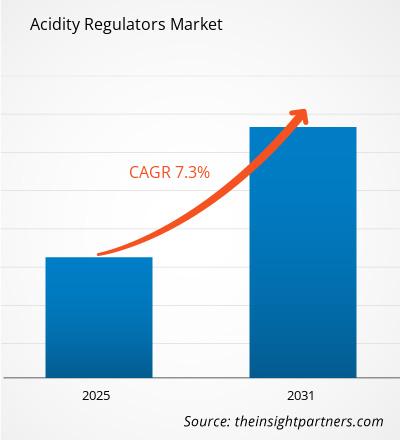
The acidity regulators market was valued at US$ 9.33 Billion in 2025 and is projected to reach US$ 16.56 Billion by 2034, expanding at a CAGR of 6.58% during 2026–2034. The market continues to benefit from rising demand for processed and packaged foods, increasing beverage consumption, and growing requirements for shelf-life enhancement. Acidity regulators play a critical role in maintaining product stability, taste balance, preservation efficiency, and quality consistency across food and beverage manufacturing operations worldwide.
Across North America, demand remains supported by advanced food processing infrastructure and increasing adoption of clean-label ingredient formulations. The acidity regulators market size in the region is strengthened by strong consumption of packaged beverages, dairy products, and ready-to-eat foods. Manufacturers continue investing in multifunctional ingredients that combine pH control, preservation support, and flavor optimization while complying with evolving food safety and labeling regulations.
Acidity Regulators Market Assessment and Insights
- North America: Strong demand from beverage, dairy, and processed food sectors supports regional expansion. Share in 2025 is estimated at 31–33%, while the market is projected to grow at a CAGR range of 5.8–6.4% during 2026–2034.
- US: The country benefits from extensive food manufacturing capacity and premium ingredient adoption. The share of North America in 2025 is estimated at 74–78% with CAGR ranging between 5.9–6.5% during 2026–2034.
- Europe: Stringent food-quality regulations and a mature processed-food industry drive demand. Acidity regulators market share in 2025 is estimated at 26–28% with CAGR ranging from 5.7–6.3% during 2026–2034. Germany, France, Italy, and the UK remain leading contributors.
- Asia Pacific: Expanding urban populations, rising packaged-food consumption, and industrial food production stimulate growth. Share in 2025 is estimated at 30–32% with CAGR ranging from 7.2–7.8% during 2026–2034. China, India, Japan, and South Korea lead regional demand.
- Largest Segment: Beverages represent the leading application category with an estimated acidity regulators market share of 30–34% in 2025 and CAGR of 6.2–6.8% during 2026–2034.
- High Growth Segment: Dairy Products are expected to record the fastest expansion, holding 14–18% market share in 2025 and growing at a CAGR of 7.0–7.6% during 2026–2034.
- Key companies analyzed in detail: Cargill, Incorporated; Corbion N.V.; ATPGroup; Archer-Daniels-Midland Company (ADM); Tate & Lyle PLC; Bartek Ingredients Inc.; FBC Industries, Inc.; Hawkins Watts Limited; CZARNIKOW Group; Chemelco International B.V.
Source: The Insight Partners' analysis based on proprietary research, government publications, company annual reports, investor presentations, industry databases, and expert interviews.
The acidity regulators market has evolved considerably as food manufacturers increasingly prioritize ingredient functionality alongside consumer acceptance. Production technologies have improved acidification efficiency, purity levels, and formulation flexibility, enabling suppliers to address diverse processing requirements. Growth in convenience foods, functional beverages, and premium dairy products has encouraged manufacturers to develop specialized acidity regulation systems tailored to different product categories while maintaining regulatory compliance and quality standards.
Future expansion is expected to emerge from developing food manufacturing hubs in Asia Pacific, the Middle East, and selected Latin American countries. Investment in food processing facilities, rising packaged-food penetration, and modernization of cold-chain infrastructure are expected to support adoption. Regulatory emphasis on food safety, product stability, and ingredient transparency may further encourage producers to adopt advanced acidity regulation solutions that enhance manufacturing performance and product consistency.
Acidity Regulators Market Report Scope
| Report Attribute | Details |
|---|---|
| Market size in 2025 | US$ 9.33 Billion |
| Market Size by 2034 | US$ 16.56 Billion |
| Global CAGR (2026 - 2034) | 6.58% |
| Historical Data | 2021-2024 |
| Forecast period | 2026-2034 |
Acidity Regulators Market Analysis
The acidity regulators market growth trajectory is supported by increasing demand for packaged foods and beverages requiring effective pH management. Acidity regulators contribute to flavor enhancement, microbial stability, texture maintenance, and process optimization across a broad range of food products. Consumer lifestyle shifts, urbanization, and growing demand for convenience foods continue expanding the addressable market. Food manufacturers increasingly rely on acidulants and buffering agents to maintain product consistency while extending shelf life and reducing spoilage risks.
Supply chains continue to benefit from global availability of fermentation-based and naturally derived raw materials. Citric acid, lactic acid, and acetic acid remain core components within the value chain due to their versatility and broad regulatory acceptance. Strategic investments in fermentation technology and manufacturing capacity are strengthening supply reliability and cost efficiencies across major production regions.
The acidity regulators market analysis indicates that competition is characterized by a mix of global ingredient leaders and specialized regional suppliers. Cargill, Incorporated, Corbion N.V., Archer-Daniels-Midland Company, and Tate & Lyle PLC continue strengthening product portfolios through innovation and manufacturing optimization. Specialized participants such as Bartek Ingredients Inc. and Hawkins Watts Limited focus on customized ingredient solutions designed for niche food and beverage applications.
Investment activities increasingly target fermentation technologies, sustainable ingredient sourcing, and clean-label product development. Companies are positioning themselves around technical expertise, regulatory support capabilities, and application-specific formulation services. Competitive differentiation is increasingly linked to product purity, traceability standards, and the ability to support customers in reformulating products for evolving consumer preferences and regulatory requirements.
● REPORT CUSTOMIZATION
Tailor This Report To Align With Your Specific Business Requirements
This report can be customized to align precisely with your business objectives, scope, and target markets. Customization options include tailored segmentation, geography, competitive analysis, and strategic insights to support informed decision-making.
Customize This Report →WHAT YOU CAN ADJUST
- ● Segmentations
- ● Geography
- ● Competitive Analysis
- ● Language Preferences
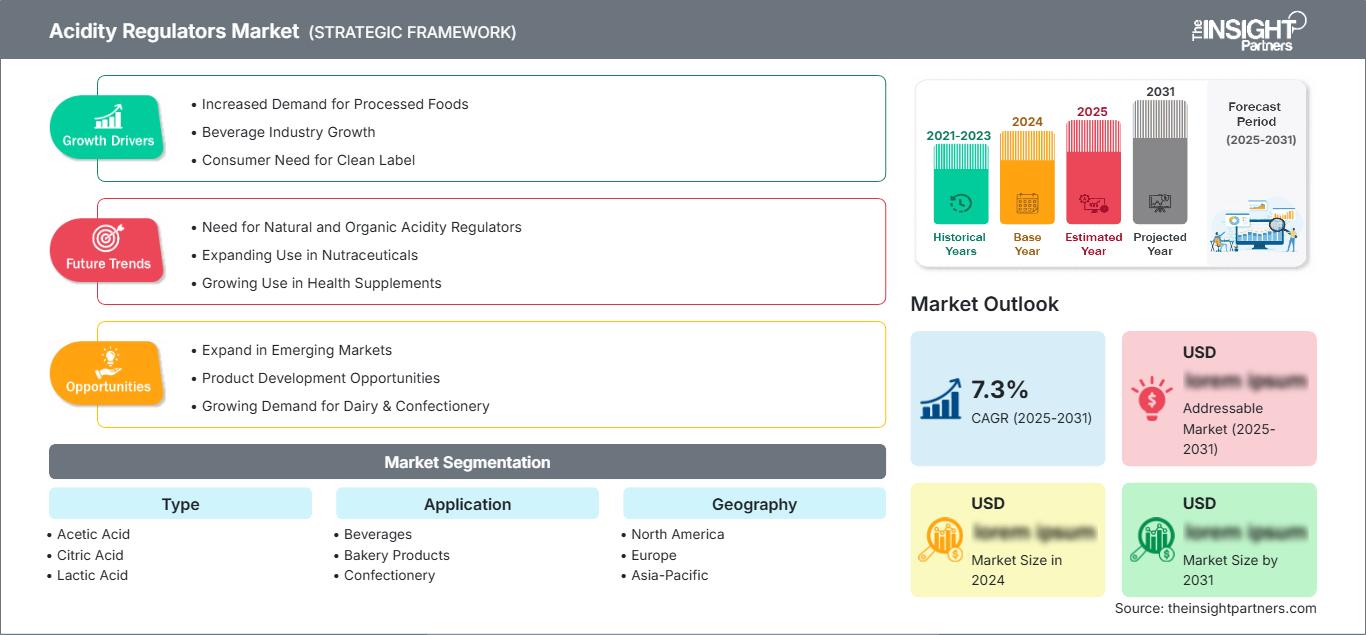
Acidity Regulators Market: Strategic Insights
Regional Insights
North America Acidity Regulators Market
North America accounted for an estimated 31–33% share of global revenue in 2025 and remains one of the most mature markets for acidity regulators. The regional market is projected to expand at a CAGR of 5.8–6.4% during 2026–2034. Strong demand from packaged foods, soft drinks, sports nutrition products, and dairy applications underpins market performance. Manufacturers continue investing in ingredient optimization to improve flavor stability and product shelf life.
Food processors increasingly seek multifunctional ingredients that support clean-label positioning while maintaining desired acidity levels. The region also benefits from sophisticated supply networks, strong research capabilities, and extensive adoption of processing technologies. Regulatory oversight concerning food quality and safety further supports the use of standardized acidity regulation systems across industrial manufacturing operations.
U.S. Acidity Regulators Market
The United States represents approximately 74–78% of the North American market and is expected to grow at a CAGR of 5.9–6.5% through 2034. Large-scale food manufacturing capacity, high consumption of packaged beverages, and innovation in processed food categories continue creating demand for citric acid, lactic acid, and other acidity regulators.
The country hosts several major ingredient suppliers and food technology innovators, supporting product development activities across multiple application areas. Demand is particularly strong in beverage formulations, dairy processing, and convenience-food manufacturing. The acidity regulators market share held by the US remains dominant within the region due to extensive industrial infrastructure and consistent investment in value-added food ingredient technologies.
Europe Acidity Regulators Market
Europe is estimated to account for 26–28% of global revenue in 2025 and is projected to grow at a CAGR of 5.7–6.3% during 2026–2034. Demand is supported by stringent food quality requirements, advanced food manufacturing systems, and sustained consumption of processed foods across major economies.
Germany dominates the regional acidity regulator market due to its strong food processing industry and the use of diverse manufacturing processes and ingredient innovation. The United Kingdom ensures considerable demand for the product through bakery, beverage, and convenience food manufacturing. France gains an advantage due to its wide use in dairy and confectionery applications. Italy and Spain make their contributions through food manufacturing and export-oriented food manufacturing activities.
APAC Acidity Regulators Market
Asia Pacific accounts for approximately 30–32% of global demand and is expected to register a CAGR of 7.2–7.8% during 2026–2034, making it the fastest-growing major region. Rapid urbanization and increasing packaged-food consumption remain key growth catalysts.
China leads regional demand, followed by India, Japan, South Korea, and Australia. Expansion of food processing industries, modernization of retail networks, and rising household income levels continue supporting wider adoption of acidity regulators across multiple food categories.
Middle East & Africa Acidity Regulators Market
The Middle East & Africa market is developing steadily and benefits from investments in food manufacturing and distribution infrastructure. Growth is expected to reach a CAGR of 6.0–6.6% during 2026–2034.
Saudi Arabia and the UAE lead regional demand through food security initiatives and expanding processing capacity, while South Africa remains a significant manufacturing hub. Rising consumption of packaged foods and beverages continues supporting market expansion across the broader region.
Segmentation Analysis
Type
The Type segment is projected to grow at a CAGR of 6.4–7.0% during 2026–2034. Product selection varies according to target pH level, flavor profile, preservation requirement, and processing conditions. Continuous innovation in natural and fermentation-derived ingredients is supporting wider adoption across food and beverage manufacturing while improving operational efficiency and formulation flexibility. The acidity regulators market scope continues expanding as manufacturers seek ingredients capable of delivering multiple functional benefits within a single formulation.
- Acetic Acid: Widely used in preservation applications and processed foods. Its antimicrobial functionality and acidification capability support extended shelf life while maintaining product quality across multiple food categories.
- Citric Acid: The most broadly utilized acidulant due to excellent flavor compatibility, buffering functionality, and application flexibility across beverages, confectionery, processed foods, and dairy formulations.
- Lactic Acid: Increasingly adopted in clean-label food formulations because of its fermentation origin, mild acidity characteristics, and ability to support product stability and texture management.
- Malic Acid: Frequently utilized in beverages and confectionery products where enhanced flavor impact and prolonged taste perception are required for product differentiation.
Application
The Application segment of this market will experience growth at a CAGR of 6.6–7.2% in 2026-2034. Rising consumer preference for product safety, stability, and flavor is further fueling the use of acidity regulators across various food segments. This market for acidity regulators is widely used in industrial formulations to ensure proper preservation and pH balance of food products, while maintaining their taste and quality during storage and distribution. Demand remains particularly strong among manufacturers seeking formulation consistency while complying with evolving food safety standards and ingredient transparency expectations.
- Beverages: The largest application category benefits from extensive use in carbonated drinks, juices, sports beverages, flavored waters, and functional drinks where pH stabilization and flavor balance are essential requirements.
- Bakery Products: Acidity regulators support dough conditioning, flavor management, preservation performance, and product consistency, making them important ingredients across industrial bakery manufacturing operations.
- Confectionery: Demand is driven by flavor enhancement requirements, sour taste profiles, and stability management in candies, gummies, chewing gums, and specialty confectionery products.
- Processed Food: Broad utilization across sauces, dressings, canned products, ready meals, and convenience foods supports steady adoption due to preservation and product stability benefits.
- Dairy Products: The fastest-growing application category benefits from increasing consumption of yogurt, cultured products, flavored dairy beverages, and protein-enriched nutritional offerings requiring precise acidity control.
Opportunity Snapshot
| Application | Revenue Contribution | Trend Tag | Adoption Stage |
| Beverages | High | Functional Drinks | Mature |
| Bakery Products | Medium | Clean Label | Mature |
| Confectionery | Medium | Sour Profiles | Mature |
| Processed Food | High | Shelf Stability | Scaling |
| Dairy Products | High | Protein Dairy | Scaling |
| Others | Low | Specialty Foods | Emerging |
Acidity Regulators Market Growth Drivers and Impact Analysis
Expansion of Processed and Packaged Food Consumption
The growing popularity of food products that are packed and ready to eat constitutes another key growth factor. The urbanized lifestyle, increased workforce participation rate, and evolving dietary habits will continue to drive demand for food products requiring longer shelf life and quality assurance. Acidity regulators can be used by food producers to protect their products against microbial degradation, ensure consistent taste, and increase stability during storage and transportation. Their use has become an important part of food processing for products such as processed foods, beverages, dairy products, and confectionery. Developing nations are experiencing rapid growth in organized retail and food distribution systems, which is creating greater demand for preservation agents.
Growing Demand for Functional and Premium Beverage Products
Beverages remain one of the largest consumption areas for acidity regulators due to the need for pH management, flavor consistency, and microbiological stability. The segment of functional beverages, energy drinks, sports nutrition, flavored water, and fortified beverages has experienced strong growth, thereby creating high demand for acidification solutions. Companies strive to give consumers unique products with balanced taste and shelf life, which is achievable through acidity regulators since they help formulate products with specific sensory profiles. Health awareness among consumers has prompted beverage manufacturers to launch sugar-reduction programs, thereby increasing opportunities to balance flavors in ingredients.
Advancements in Fermentation and Sustainable Ingredient Production
Innovation in fermentation-technology-based manufacturing techniques has improved efficiency, ingredient purity, and supply stability. Manufacturers are making ongoing investments in sustainable sourcing techniques and bioprocessing technologies for environmental and customer satisfaction purposes. Citric acid and lactic acid produced via fermentation have gained widespread popularity, especially among food manufacturers seeking cleaner labels. Improvements in production techniques help make the process more scalable and cost-effective, enabling the supply of larger quantities to meet growing global demand. With increasing emphasis on sustainability in food supply chains, investments in sustainable production techniques will accelerate.
Acidity Regulators Market Future Trends
Rising Integration of Clean-Label Ingredient Strategies
The acidity regulators market trends increasingly reflect consumer preference for recognizable ingredient declarations and naturally derived formulations. Food manufacturers are expected to prioritize fermentation-based acidulants and ingredients perceived as more natural by consumers. Requirements for transparency in sourcing and simple formulae are bound to impact product design for beverages, dairy products, bakery items, and specialty foods. Companies will be motivated to implement ingredient traceability systems and sustainable manufacturing technologies to keep pace with purchase preferences. In light of rising regulation and consumer awareness, the clean-label approach is sure to remain relevant in formulation strategies and new product design.
Increasing Adoption of Multifunctional Formulation Systems
Product development for the future is expected to center on multi-purpose ingredients that provide the benefits of preservatives, flavoring, pH adjustment, and quality control all at once. The food processing industry is increasingly seeking efficiency by using ingredients that satisfy multiple technical needs in a single formulation. These will enable process simplification, cost efficiency, and quality control of their products. Further studies could focus on optimizing synergies between the acidity regulators and other ingredient systems. As companies strive for operational flexibility and creativity, multifunctional approaches will likely play an increasing role in the industrial production of food and beverages.
Acidity Regulators Market Opportunities
Investment Expansion Across Emerging Food Manufacturing Hubs
Developing nations remain at the forefront of building processing infrastructure for their food products, presenting considerable opportunities for ingredient manufacturers. Nations in the Asia-Pacific, the Middle East, and some in Africa are developing food manufacturing capacity to meet the needs of increasing domestic food consumption and food security initiatives. Processors' investments in infrastructure, including logistics and cold chain operations, will likely enable wider use of acidity regulators. The Acidity Regulators Market forecasts that manufacturers who establish processing alliances, regional distribution, and technical support infrastructure can enjoy a competitive advantage.
Development of Application-Specific Ingredient Solutions
A significant opportunity exists in developing customized acidity-regulation systems for specific food and drink applications. There is an increasing need for customized ingredients that meet specific process requirements and are suitable for manufacturing products with different flavors and shelf lives. The potential is especially high in specific categories of functional beverages, premium dairy products, nutritional foods, and confectionery. Ingredient suppliers that offer both innovative ingredients and technical expertise have the potential to build strong customer relationships and generate more revenue. The increasing complexity of food product development will continue to drive the demand for the technology.
Frequently Asked Questions

- Comprehensive Market Sizing and Forecast Analysis
- Detailed Segmentation Analysis
- In-Depth Market Dynamics Assessment
- Regional and Country-Level Insights
- Competitive Landscape and Company Benchmarking
- Strategic Business Intelligence
Recent Reports
Testimonials

The Insight Partners' SCADA System Market report is comprehensive, with valuable insights on current trends and future forecasts. The team was highly professional, responsive, and supportive throughout. We are very satisfied and highly recommend their services.
RAN KEDEM Partner, Reali Technologies LTDs
I requested a report on a very specific software market and the team produced the report in a few days. The information was very relevant and well presented. I then requested some changes and additions to the report. The team was again very responsive and I got the final report in less than a week.
JEAN-HERVE JENN Chairman, Future Analytica
We worked with The Insight Partners for an important market study and forecast. They gave us clear insights into opportunities and risks, which helped shape our plans. Their research was easy to use and based on solid data. It helped us make smart, confident decisions. We highly recommend them.
PIYUSH NAGPAL Sr. Vice President, High Beam Global
The Insight Partners delivered insightful, well-structured market research with strong domain expertise. Their team was professional and responsive throughout. The user-friendly website made accessing industry reports seamless. We highly recommend them for reliable, high-quality research services
YUKIHIKO ADACHI CEO, Deep Blue, LLC.
This is the first time I have purchased a market report from The Insight Partners.While I was unsure at first, I visited their web site and felt more comfortable to take the risk and purchase a market report.I am completely satisfied with the quality of the report and customer service. I had several questions and comments with the initial report, but after a couple of dialogs over email with their analyst I believe I have a report that I can use as input to our strategic planning process.Thank you so much for taking the extra time and making this a positive experience.I will definitely recommend your service to others and you will be my first call when we need further market data.
JOHN SUZUKI President and Chief Executive Officer, Board Director, BK Technologies
I wish to appreciate your support and the professionalism you displayed in the course of attending to my request for information regarding to infectious disease IVD market in Nigeria. I appreciate your patience, your guidance, and the fact that you were willing to offer a discount, which eventually made it possible for us to close a deal. I look forward to engaging The Insight Partners in the future, all thanks to the impression you have created in me as a result of this first encounter.
DR CHIJIOKE ONYIA MANAGING DIRECTOR, PineCrest Healthcare Ltd.Reason to Buy
- Informed Decision-Making
- Understanding Market Dynamics
- Competitive Analysis
- Identifying Emerging Markets
- Customer Insights
- Market Forecasts
- Risk Mitigation
- Boosting Operational Efficiency
- Strategic Planning
- Investment Justification
- Tracking Industry Innovations
- Aligning with Regulatory Trends





 Get Free Sample for