
Airport Management System Market Demand, Size & Forecast by 2034
Coverage: by Component (Software and Service); Airport Classification (Class A, Class B, Class C and Class D); and Application (Logistics, Security, Content Management, Integration, Collaboration and Gate Management), and Geography (North America, Europe, Asia Pacific, and South and Central America)
- Status : Data Released
- Report Code : TIPAD00002461
- Category : Technology, Media and Telecommunications
- No. of Pages : 150
- Available Report Formats :


- Last update date : August 10, 2026


2025 Market Size
US$ 6.56 Bn
Base year value
2034 Forecast
US$ 8.87 Bn
Projected by 2034
CAGR 2026-2034
3.41 %
Growth rate
Addressable Market
US$ 70.08 Bn
(2026-2034)
The airport management system market was valued at US$ 6.56 Billion in 2025 and is projected to reach US$ 8.87 Billion by 2034, registering a CAGR of 3.41% during 2026–2034. Demand is being shaped by higher passenger throughput, tighter airport capacity, and the need to coordinate terminal, airside, security, logistics, and gate operations through integrated software and services.
North America remains a major adoption center as large hub airports modernize operational control, passenger processing, security coordination, and collaborative decision-making. The airport management system market size in the region is supported by mature airport infrastructure, digital identity pilots, cybersecure airport networks, and steady replacement of fragmented legacy tools with interoperable platforms.
Airport Management System Market Assessment and Insights
- North America: Accounted for an estimated 34–37% share in 2025 and is expected to grow at a CAGR of 3.0–3.5% during 2026–2034, supported by airport modernization and biometric passenger processing.
- US: represented 78–82% of North America in 2025 and is projected to expand at a CAGR of 3.1–3.6% during 2026–2034.
- Europe: Held an estimated 26–29% share in 2025 and is forecast to grow at a CAGR of 2.8–3.3%, led by the UK, Germany, France, Spain, and Italy.
- Asia Pacific: Represented 23–26% share in 2025 and is expected to record a CAGR of 4.0–4.7%, with China, India, Japan, South Korea, and Australia driving airport digitalization.
- Largest Segment: Software accounted for 60–64% market share in 2025 and is projected to grow at a CAGR of 3.2–3.8% during 2026–2034.
- High Growth Segment: Security held 19–22% market share in 2025 and is expected to grow at a CAGR of 4.1–4.8% during 2026–2034.
- Key companies analyzed in detail: Cisco Systems, Inc.; International Business Machines Corporation; Siemens AG; Honeywell International Inc.; RTX Corporation; QinetiQ Group plc; Amadeus IT Group, S.A.; SITA; INFORM GmbH; IBS Software Private Limited.
Source: The Insight Partners' analysis based on proprietary research, government publications, company annual reports, investor presentations, industry databases, and expert interviews.
Airport operating environments have shifted from stand-alone terminal tools toward integrated control platforms that connect flight information, baggage status, passenger flow, gate planning, security alerts, and resource allocation. The airport management system market growth reflects this transition because airports now need real-time operational visibility while airlines face constrained aircraft availability, high load factors, and stricter service-level expectations.
The future deployment will be influenced by investing in digital travel credentials, AI-enabled disruption management systems, and regional airport enhancements. Growing hub airports in the Asia Pacific and Middle Eastern regions will adopt scalable solutions sooner within the infrastructure cycle, whereas mature airports in North America and Europe will concentrate on cybersecurity, interoperability, and automation.
Airport Management System Market Report Scope
| Report Attribute | Details |
|---|---|
| Market size in 2025 | US$ 6.56 Billion |
| Market Size by 2034 | US$ 8.87 Billion |
| Global CAGR (2026 - 2034) | 3.41% |
| Historical Data | 2021-2024 |
| Forecast period | 2026-2034 |
Airport Management System Market Analysis
Demand is rising as airports manage higher traffic without proportionate terminal expansion. Global air travel demand increased strongly in 2025, with IATA reporting 5.3% growth in full-year passenger demand and record load factors, intensifying pressure on airport operating systems. This reinforces airport management system market growth by making predictive gate allocation, queue monitoring, baggage visibility, and resource planning central to daily resilience.
Supply dynamics are also evolving through the integration of airport operations databases, cybersecurity, biometrics, analytics, and cloud-native modules by platform providers. There is an increasing trend towards modular solutions which can interoperate with systems of airlines, border control and ground handlers. Vendors having aviation interoperability capabilities, local implementation capabilities, and ongoing service support will be preferred in such situations.
The competitive positioning is determined by the coverage and domain experience. SITA and Amadeus IT Group, S.A. have a deep presence in the passenger and airport IT landscape, while Cisco Systems, Inc., International Business Machines Corporation, Siemens AG, and Honeywell International Inc. offer strengths in infrastructure, analytics, automation, and security, respectively. RTX Corporation, QinetiQ Group plc, INFORM GmbH, and IBS Software Private Limited cater to specialized operational and optimization requirements.
The airport management system market analysis indicates that spending is increasingly tied to measurable outcomes rather than standalone software replacement. Airports are prioritizing platforms that reduce aircraft turnaround friction, improve passenger processing, strengthen cyber resilience, and support data-led collaboration among airlines, airport operators, border agencies, and service partners.
● REPORT CUSTOMIZATION
Tailor This Report To Align With Your Specific Business Requirements
This report can be customized to align precisely with your business objectives, scope, and target markets. Customization options include tailored segmentation, geography, competitive analysis, and strategic insights to support informed decision-making.
Customize This Report →WHAT YOU CAN ADJUST
- ● Segmentations
- ● Geography
- ● Competitive Analysis
- ● Language Preferences
Airport Management System Market: Strategic Insights
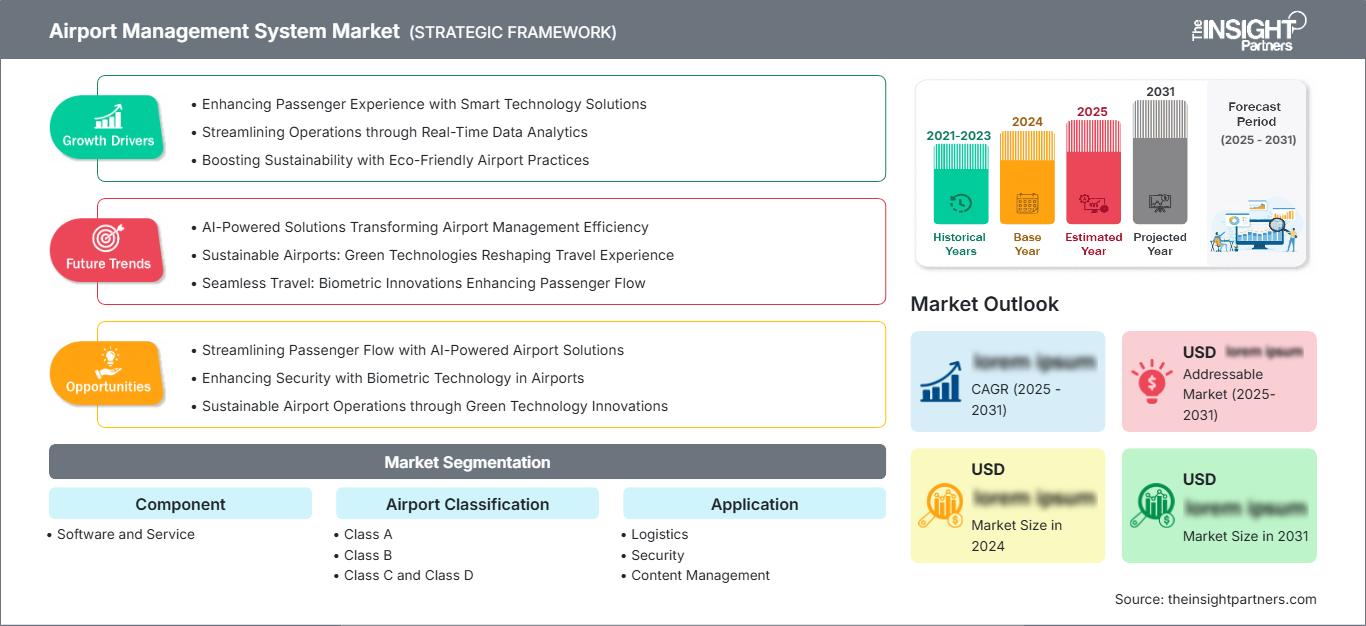
Regional Insights
North America airport management system market
North America held an estimated 34–37% airport management system market share in 2025, supported by large hub airports, strong vendor presence, and sustained investment in security modernization. Adoption is centered on integrated operations centers, biometric arrivals, automated baggage handling, and cybersecure connectivity across airport stakeholders.
The region is expected to grow at a CAGR of 3.0–3.5% during 2026–2034. US airports are advancing passenger verification and enhanced processing initiatives, while Canadian airports continue investing in collaborative decision-making tools, cloud services, and passenger flow analytics.
U.S. airport management system Market
The U.S. accounted for 78–82% of North America in 2025 and is forecast to expand at a CAGR of 3.1–3.6%, according to the Airport Management System Market report. There is increased emphasis on terminal automation, customs handling, identity management, and gate management in high-utilization and risk-prone situations in large airports. The increasing use of smart airport technology, passenger flow optimization, and integrated platforms is increasingly favoring the adoption of airport management systems.
The market provides good opportunities for technology vendors because of the lengthy replacement cycles and complicated integration requirements. The demand for such systems is highest in cases where airlines, TSA process management, border handling, baggage handling, and passenger communications need to be integrated within a secure environment.
Europe airport management system Market
Europe represented 26–29% share in 2025 and is expected to grow at a CAGR of 2.8–3.3%. The United Kingdom and Germany lead in implementation owing to their key international airports, sophisticated passenger handling systems, and focus on resilience, whereas countries such as France, Spain, and Italy are improving their airport coordination and security systems.
There is European demand for the technology because of sustainability goals, limitations on slots, cross-border traffic, and security compliance. Airports are applying management systems in order to increase the efficiency of the stand utilization and improve information coordination between airlines, handlers, and border control services.
APAC airport management system Market
Asia Pacific accounted for 23–26% share in 2025 and is expected to grow at a CAGR of 4.0–4.7%. Airports in China and India are increasing capacity, whereas airports in Japan, South Korea, and Australia are building smart terminals, automating processes, and enhancing passenger experience.
The development of the industry is influenced by increased foreign traffic, airport development, and digital infrastructure planning. Local airport authorities implement platforms for logistics, security, collaboration, integration, and gate management faster than many other regions.
Middle East & Africa airport management system Market
The Middle East & Africa is projected to grow at a CAGR of 3.7–4.4% during 2026–2034. Saudi Arabia and the UAE spearhead implementation in relation to airport expansions and aviation hubs, while South Africa invests in enhancing airport systems to build on resiliency and operational control.
The regional prospects are connected to mega-infrastructural investments, biometric journeys, and passenger processing. There is considerable investment in systems that will ensure high volumes of transfers, coordination of security, and capacity management based on data.
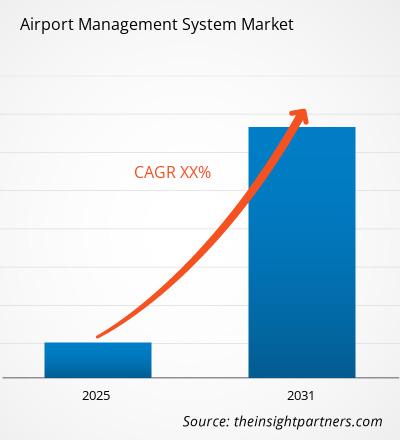
Segmentation Analysis
Component
Component is expected to grow at a CAGR of 3.2–3.8% during 2026–2034. The airport management system market scope across software and service reflects rising demand for implementation support, integration, cybersecurity hardening, and lifecycle upgrades as airports shift from isolated applications to connected operating platforms.
- Software remains the largest component because airports need centralized dashboards, operations databases, gate planning, logistics visibility, security alerts, and collaboration tools that improve decision-making across departments.
- Service demand is rising as operators require consulting, integration, customization, maintenance, and managed support to align platforms with local regulations, legacy systems, and airport-specific workflows.
Airport Classification
Airport Classification is forecast to grow at a CAGR of 3.0–3.6% during 2026–2034. Class A and Class B airports dominate spending because large traffic volumes require real-time coordination, while smaller airports adopt modular systems as digital transformation becomes more affordable.
- Class A airports require advanced integration, cybersecure networks, predictive resource allocation, and collaborative decision-making because they manage complex passenger flows, aircraft schedules, and multi-stakeholder operations.
- Class B airports invest in scalable platforms to improve gate utilization, baggage flow, security coordination, and passenger services without the cost profile of major global hubs.
- Class C airports prioritize practical modules for operations control, incident handling, flight information, and service coordination as regional air connectivity expands.
- Class D airports adopt basic digital tools for scheduling, communication, compliance reporting, and operational visibility, often through cloud-based or service-led deployment models.
Application
Application is projected to grow at a CAGR of 3.4–4.0% during 2026–2034. Security, logistics, integration, collaboration, content management, and gate management remain central because airports need consistent information flows across passenger-facing and back-office operations.
- Logistics supports baggage, cargo, ground-handling coordination, and asset movement, helping airports reduce operational bottlenecks and improve real-time visibility across terminal and airside processes.
- Security is the fastest-growing application as airports deploy biometric verification, access control, incident monitoring, and integrated alerts to strengthen safety and passenger processing.
- Content Management enables consistent communication through flight displays, passenger alerts, wayfinding systems, and disruption notices across terminals and digital channels.
- Integration connects airlines, airport databases, border agencies, ground handlers, and facility systems, making it essential for real-time operational coordination.
- Collaboration improves shared decision-making among airport operators, airlines, handlers, and authorities, particularly during weather disruption, irregular operations, and peak travel periods.
- Gate Management optimizes aircraft stands, boarding readiness, turnaround timing, and passenger movement, reducing delays in airports with constrained terminal capacity.
Opportunity Snapshot
| Application | Revenue Contribution | Trend Tag | Adoption Stage |
| Logistics | High | Baggage Visibility | Scaling |
| Security | High | Biometric Identity | Scaling |
| Content Management | Medium | Passenger Alerts | Mature |
| Integration | High | System Interop | Scaling |
| Collaboration | Medium | Shared Decisions | Scaling |
| Gate Management | Medium | Turnaround Control | Mature |
Airport Management System Market Growth Drivers and Impact Analysis
Passenger Growth and Airport Capacity Pressure
Increasing demand for passengers is putting pressure on the operations at airports where it may not be possible to construct new terminal buildings rapidly. IATA recorded an all-time record demand for passengers in 2025 as well as high load factors, indicating that capacity usage is highly constrained. Airport management systems assist airport authorities in optimizing operations related to gates, queues, baggage handling, and staff deployment without any immediate need for physical expansion.
Digital Identity and Contactless Processing
Digital identity implementation has become a pragmatic enabler of airport systems owing to the fact that biometric authentication, self-check-in, automated baggage drop, and border screening rely on connectivity through the flow of information. The collaboration between SITA and NEC in creating interoperable digital identities by 2025 illustrates the shift towards the exchange of secure credentials between airports, airlines, and governments.
Need for Integrated Operational Resilience
Weather disturbances, flight delays, labor shortages, and cyber threats necessitate more timely integration among airport operations. Disconnected processes reduce transparency, while integrated airport management systems facilitate situational awareness and automatic escalation. More and more airports are looking at their operational resilience through the lens of technology spending, not only staff augmentation. This driver helps in explaining the need for dashboards, predictive analytics, collaborative decision-making, incident management, and secure communication.
Airport Management System Market Future Trends
AI-Based Airport Operations Control
The airport management system market trends are moving toward AI-assisted decision support in operations rooms. Predictive modeling will help future platforms predict passenger congestion, bag delays, gate conflicts, and airside resource shortages before they impact service delivery. The trend is not meant to take away from the work done by human controllers but will help with prioritization and testing scenarios. Airports with developed data architecture will get the first benefit of these tools because AI tools need clean operational data to function.
Interoperable Digital Travel Ecosystems
The next stage of digital transformation at airports will be based on interoperability between airlines, airports, government, and technology providers. Digital credentialing, biometric boarding, and pre-clearance before travel will necessitate the creation of secure exchange systems rather than individual implementations. The move is expected to favor technology providers that offer solutions using open standards, a privacy-by-design approach, and flexible integration into border and airline systems.
Airport Management System Market Opportunities
Cloud-Based Modernization for Mid-Sized Airports
The airport management system market Forecasts indicate a clear opportunity in mid-sized airports that need better operational control but cannot justify large custom deployments. Cloud-based platforms can lower upfront costs, shorten implementation cycles, and provide modular capabilities for gate management, content management, collaboration, and security. Vendors that offer preconfigured workflows, cybersecurity assurance, and scalable service packages can address airports upgrading from manual processes or disconnected legacy applications.
Security-Led Platform Expansion
The security solution provides a business opportunity for investments since the elements of biometric identity, access control, video analysis, and incident management have become more integrated with the overall functioning of the airport. It is possible to move from the provision of security solutions to a complete operational platform by tying up alerts with gate planning, passenger notification, and resource management.
Frequently Asked Questions

- Comprehensive Market Sizing and Forecast Analysis
- Detailed Segmentation Analysis
- In-Depth Market Dynamics Assessment
- Regional and Country-Level Insights
- Competitive Landscape and Company Benchmarking
- Strategic Business Intelligence
Recent Reports
Testimonials

The Insight Partners' SCADA System Market report is comprehensive, with valuable insights on current trends and future forecasts. The team was highly professional, responsive, and supportive throughout. We are very satisfied and highly recommend their services.
RAN KEDEM Partner, Reali Technologies LTDs
I requested a report on a very specific software market and the team produced the report in a few days. The information was very relevant and well presented. I then requested some changes and additions to the report. The team was again very responsive and I got the final report in less than a week.
JEAN-HERVE JENN Chairman, Future Analytica
We worked with The Insight Partners for an important market study and forecast. They gave us clear insights into opportunities and risks, which helped shape our plans. Their research was easy to use and based on solid data. It helped us make smart, confident decisions. We highly recommend them.
PIYUSH NAGPAL Sr. Vice President, High Beam Global
The Insight Partners delivered insightful, well-structured market research with strong domain expertise. Their team was professional and responsive throughout. The user-friendly website made accessing industry reports seamless. We highly recommend them for reliable, high-quality research services
YUKIHIKO ADACHI CEO, Deep Blue, LLC.
This is the first time I have purchased a market report from The Insight Partners.While I was unsure at first, I visited their web site and felt more comfortable to take the risk and purchase a market report.I am completely satisfied with the quality of the report and customer service. I had several questions and comments with the initial report, but after a couple of dialogs over email with their analyst I believe I have a report that I can use as input to our strategic planning process.Thank you so much for taking the extra time and making this a positive experience.I will definitely recommend your service to others and you will be my first call when we need further market data.
JOHN SUZUKI President and Chief Executive Officer, Board Director, BK Technologies
I wish to appreciate your support and the professionalism you displayed in the course of attending to my request for information regarding to infectious disease IVD market in Nigeria. I appreciate your patience, your guidance, and the fact that you were willing to offer a discount, which eventually made it possible for us to close a deal. I look forward to engaging The Insight Partners in the future, all thanks to the impression you have created in me as a result of this first encounter.
DR CHIJIOKE ONYIA MANAGING DIRECTOR, PineCrest Healthcare Ltd.Reason to Buy
- Informed Decision-Making
- Understanding Market Dynamics
- Competitive Analysis
- Identifying Emerging Markets
- Customer Insights
- Market Forecasts
- Risk Mitigation
- Boosting Operational Efficiency
- Strategic Planning
- Investment Justification
- Tracking Industry Innovations
- Aligning with Regulatory Trends





 Get Free Sample for