
Amaranth Market Share, Growth & Demand by 2034
Coverage: by End Use (Food and beverage, Pharmaceuticals, Personal care and cosmetic); Product Form (Amaranth seeds, Amaranth oil, Amaranth leafs, Amaranth flour); Sales Channel (Hyper market / super market, Retail stores, Online stores, Speciality stores, Others) , and Geography (North America, Europe, Asia Pacific, and South and Central America)
- Status : Data Released
- Report Code : TIPRE00010447
- Category : Food and Beverages
- No. of Pages : 150
- Available Report Formats :


- Last update date : August 19, 2026


2025 Market Size
US$ 11.54 Bn
Base year value
2034 Forecast
US$ 50.04 Bn
Projected by 2034
CAGR 2026-2034
17.71 %
Growth rate
Addressable Market
US$ 256.05 Bn
(2026-2034)
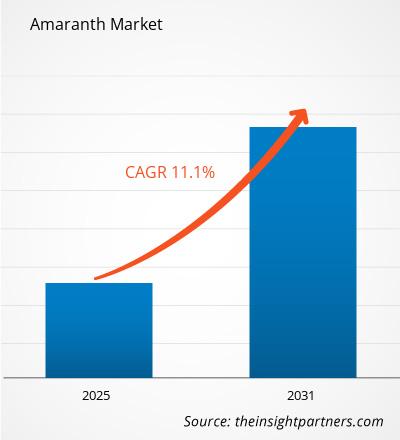
The amaranth market was valued at US$ 11.54 Billion in 2025 and is projected to reach US$ 50.04 Billion by 2034, expanding at a CAGR of 17.71% during 2026–2034. Growth is being supported by increasing adoption of gluten-free grains, expansion of plant-based nutrition, and rising utilization of amaranth-derived ingredients across food processing, nutraceutical, pharmaceutical, and personal care applications. The market is also benefiting from higher consumer awareness regarding protein-rich ancient grains and sustainable agricultural production systems.
Across North America, demand continues to strengthen as consumers shift toward nutrient-dense food ingredients and clean-label formulations. The amaranth market size in the region is supported by expanding functional food portfolios, increasing gluten-intolerance awareness, and greater utilization of ancient grains in bakery and snack applications. Regional demand is projected to advance at a CAGR range of 15.5–17.0%, supported by innovation in health-focused consumer products and premium nutrition categories.
Amaranth Market Assessment and Insights
- North America: Share in 2025 estimated at 34–38% with sustained demand from functional food and nutraceutical applications. The region is projected to grow at a 15.5–17.0% CAGR between 2026–2034.
- US: Accounted for 72–76% of North America in 2025. Growing consumer preference for plant-based and gluten-free products supports a projected 15.8–17.3% CAGR between 2026–2034.
- Europe: Share in 2025 estimated at 24–28%, led by Germany, the UK, and France. Expanding organic food consumption supports a 16.0–17.5% CAGR between 2026–2034.
- Asia Pacific: Share in 2025 estimated at 28–32%, with China, India, Japan, and Australia as key demand centers. Regional expansion is forecast at 18.5–20.0% CAGR between 2026–2034.
- Largest Segment: F&B represented approximately 48–52% market share in 2025 and is expected to expand at a 16.5–18.0% CAGR during 2026–2034.
- High Growth Segment: Personal care and cosmetics held 17–21% share in 2025 and is projected to advance at a 19.5–21.0% CAGR during 2026–2034.
- Key companies analyzed in detail: Proderna Biotech Pvt. Ltd., AMR Amaranth A.S., Nans Products Pvt. Ltd., Flaveko Trade Spol. s r.o., Nu-World Foods Inc., Amaranth Bio Company, Amaranth Nord, RusOliva Pvt. Ltd., D.K. Mass s.r.o., Spol s.r.o.
Source: The Insight Partners' analysis based on proprietary research, government publications, company annual reports, investor presentations, industry databases, and expert interviews.
The industry has transformed itself from being a narrow grain sector into a comprehensive ecosystem of ingredients serving the needs of food companies, nutraceutical companies, pharmaceutical firms, and cosmetic companies. The rising interest in ancient grains and the rising demand for plant-based protein have led to more cultivation and processing activity in the industry. Technological advancement in the area of cold-pressed oil, specialty flour, and ingredient concentrate has contributed to better commercial exploitation of the products in many downstream industries.
Going forward, during the next ten years, investments in agriculture are likely to go up in developing agricultural regions in the Asia-Pacific and selected Latin America. Sustainable agricultural practices, rising demand for alternative protein, and emphasis on food security are some of the key trends that are likely to drive investments and capacity addition.
Amaranth Market Report Scope
| Report Attribute | Details |
|---|---|
| Market size in 2025 | US$ 11.54 Billion |
| Market Size by 2034 | US$ 50.04 Billion |
| Global CAGR (2026 - 2034) | 17.71% |
| Historical Data | 2021-2024 |
| Forecast period | 2026-2034 |
Amaranth Market Analysis
The amaranth market growth trajectory is being shaped by increasing consumer demand for nutritious and naturally sourced ingredients. As knowledge on gluten-sensitive disorders and preventive nutrition increases, food producers are using amaranth in bakery products, cereals, snacks, and functional foods. The high presence of protein, fiber, minerals, and amino acids makes the grain appealing to various market segments. There is also increased use by sports nutrition firms as an alternative raw material with good nutritional values.
Regarding the supply chain, production is still limited to areas that offer ideal agricultural conditions and growing expertise on specialty grains. Advancements in farming techniques, seed quality, and post-harvest processing have facilitated increased production volumes. Increased organic production and contract farming have ensured supply stability and created strong ties between producers and end users.
The competitive environment remains fragmented, with both specialized ingredient suppliers and regional processors competing across product categories. This amaranth market analysis indicates that differentiation is increasingly based on product purity, traceability, organic certification, and customized ingredient offerings. Proderna Biotech Pvt. Ltd., RusOliva Pvt. Ltd., D.K. Mass s.r.o., and Amaranth Bio Company are among those companies that continue to emphasize their products’ added value.
Investments become more and more concentrated around innovation and expansion. Companies try to improve processing facilities and cooperate with food and cosmetic producers for multiple income streams. New premium wellness products, along with increasing consumers' readiness to spend money on clean-label ingredients, will bring more competition and opportunities for niche suppliers of high-quality and regulation-compliant products.
● REPORT CUSTOMIZATION
Tailor This Report To Align With Your Specific Business Requirements
This report can be customized to align precisely with your business objectives, scope, and target markets. Customization options include tailored segmentation, geography, competitive analysis, and strategic insights to support informed decision-making.
Customize This Report →WHAT YOU CAN ADJUST
- ● Segmentations
- ● Geography
- ● Competitive Analysis
- ● Language Preferences
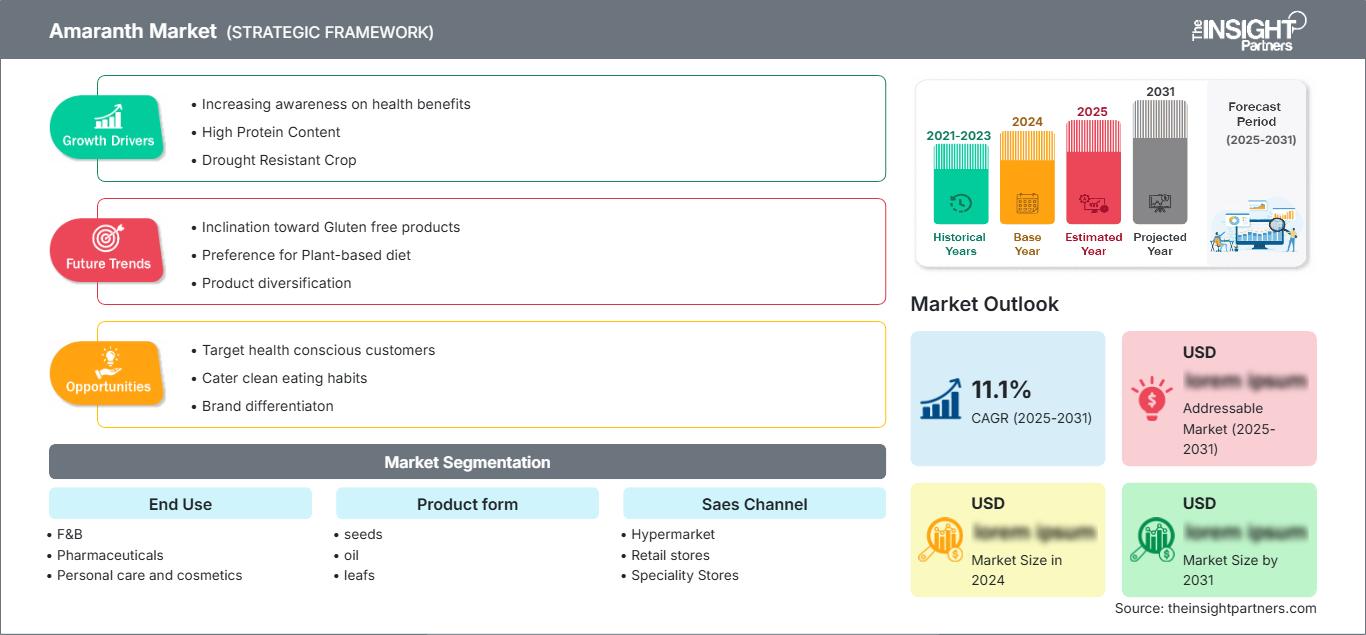
Amaranth Market: Strategic Insights
Regional Insights
North America Amaranth market
North America represented 34–38% of the amaranth market share in 2025 and remains a mature yet steadily expanding region. Increasing demand for healthier food options, rising awareness regarding gluten-free products, and broader adoption of plant-based nutrition are supporting consumption growth. Food manufacturers continue introducing innovative formulations incorporating ancient grains, helping strengthen commercial demand throughout the region.
The regional market is projected to expand at a 15.5–17.0% CAGR during 2026–2034. Growth is supported by strong retail distribution systems, advanced food processing infrastructure, and increasing utilization of amaranth ingredients in sports nutrition, nutraceuticals, and premium food categories. Regulatory emphasis on transparent labeling and nutritional quality further supports adoption across consumer and industrial applications.
U.S. Amaranth Market
The United States accounted for approximately 72–76% of North American demand in 2025, making it the largest national market in the region. Rising consumer interest in natural foods, growing health awareness, and the expansion of specialty food stores continue supporting adoption across food and beverage applications. Product innovation remains a significant competitive factor.
The U.S. market is expected to grow at a 15.8–17.3% CAGR through 2034. The presence of ingredient suppliers, premium food manufacturers, and nutraceutical brands has accelerated commercialization. Increasing use of amaranth flour in gluten-free bakery products and adoption of amaranth oil in wellness formulations are expected to promote sustained long-term demand.
Europe Amaranth Market
Europe held approximately 24–28% market share in 2025 and is projected to expand at a 16.0–17.5% CAGR during 2026–2034. Germany continues to be at the forefront, backed by high levels of organic food consumption and well-developed health food supply chains. The UK demand is fueled by growing interests in alternative grains, premium bakery products, and plant-based nutrition solutions in both retail and food service categories.
The contribution from France, Italy, and Spain towards regional demand keeps on growing, owing to the growing manufacturing of clean-label foods and the preference for wellness among consumers. Growing demand for sustainable agriculture and alternative grains is leading to higher adoption of these grains in food product formulations.
APAC Amaranth Market
Asia Pacific accounted for 28–32% of global demand in 2025 and represents the fastest-expanding regional market. China and India remain significant contributors due to large consumer bases and growing awareness regarding nutritional foods. Japan and South Korea continue to support premium ingredient demand through functional food development.
The region is projected to grow at a 18.5–20.0% CAGR during 2026–2034. Government support for agricultural diversification, expanding middle-class populations, and increasing investments in health-oriented food production continue driving market momentum. Australia also contributes through specialty grain cultivation and export opportunities.
Middle East & Africa Amaranth Market
The Middle East and African market is still relatively small but holds growing potential. Saudi Arabia and the UAE are experiencing rising demand for health food products and exotic ingredients. South Africa still holds significance as a major region of consumer interest, driven by the increasing wellness trend.
The regional market is expected to advance at a 16.5–18.0% CAGR during 2026–2034. Rising investments in food security, agricultural modernization initiatives, and increasing health awareness are creating opportunities for market participants. Demand growth is particularly evident across specialty retail and nutritional product categories.
Segmentation Analysis
End Use
The End Use segment is expected to expand at a 17.5–18.5% CAGR during 2026–2034. The amaranth market scope within end-use applications continues to broaden as manufacturers increasingly utilize amaranth-derived ingredients for nutritional enhancement, product differentiation, and clean-label positioning. Growing consumer demand for natural ingredients and functional benefits remains a key growth catalyst.
- F&B: Largest application area supported by expanding use in snacks, cereals, bakery products, beverages, and nutritional formulations. Manufacturers increasingly integrate amaranth to improve protein and fiber content while addressing gluten-free demand.
- Pharmaceuticals: Growing use in nutraceutical ingredients, wellness products, dietary supplements, and specialized formulations focused on preventive health and nutritional support.
- Personal care and cosmetics: Increasing incorporation of amaranth oil and extracts in skincare, haircare, and beauty products due to moisturizing, antioxidant, and premium botanical positioning.
Product form
The Product Form segment is projected to record a 17.0–18.0% CAGR during 2026–2034. Product diversification remains a key industry trend as manufacturers develop specialized ingredient formats tailored to multiple industrial and consumer applications. Enhanced processing technologies continue improving quality, consistency, and shelf stability.
- Seeds: Dominant product category owing to extensive application in direct consumption, cereals, health foods, and ingredient processing operations across numerous geographic markets.
- Oil: Positioned as a high-value derivative with increasing demand from cosmetics, nutraceuticals, and premium health-oriented food formulations.
- Leafs: Consumed in selected regional cuisines and increasingly promoted for nutritional benefits within specialty food applications.
- Flour: Highly valued across gluten-free bakery, snack, and food manufacturing sectors due to its nutritional profile and application flexibility.
Sales Channel
The Sales Channel segment is anticipated to grow at a 16.8–17.8% CAGR during 2026–2034. Distribution diversification has expanded product availability and increased consumer accessibility. Retailers continue strengthening ancient grain product assortments to address expanding health-conscious consumer demand.
- Hypermarket: Important sales channel benefiting from broad product visibility, strong consumer traffic, and increasing shelf space dedicated to specialty nutrition products.
- Retail stores: Continue supporting market penetration by providing convenient access to packaged foods, nutritional products, and wellness-oriented ingredients.
- Speciality Stores: Strategic distribution channel attracting health-focused consumers seeking premium, organic, and functional food products with differentiated nutritional characteristics.
Opportunity Snapshot
| End Use | Revenue Contribution | Trend Tag | Adoption Stage |
| F&B | High | Functional Foods | Mature |
| Pharmaceuticals | Medium | Nutraceuticals | Scaling |
| Personal care and cosmetics | Medium | Botanical Oils | Scaling |
Amaranth Market Growth Drivers and Impact Analysis
Expansion of Gluten-Free Food Consumption
The rise in gluten intolerance cases, coupled with increased interest in digestive health among consumers, will keep fueling the demand for alternative grains. The benefits offered by amaranth, which include proteins, fiber, and other micronutrients, make it an ideal option for premium health food products. Food manufacturers are diversifying their product range by incorporating ancient grains into their products, thus enhancing their usage in bakery, cereals, and snacks. In addition, retail development and consumer education activities have helped enhance market penetration. The demand for amaranth-containing products is poised to grow in the coming years.
Rising Adoption of Plant-Based Nutrition
The dietary habits related to the consumption of plants as sources of nutrients are growing around the world as people opt for sustainable protein sources. The composition of amino acids present in amaranth increases the value of this grain as a product that attracts interest from the part of producers targeting sports nutrition, functional drinks, and wellness food. With more resources being invested into the development of alternative proteins, innovation in relation to ancient grains and plant-based components continues to grow.
Growth in Natural Personal Care Ingredients
Consumer demand for botanical raw materials has prompted cosmetic and personal care companies to include plant-based oils and extracts in their products. Amaranth oil is being used more and more in luxurious skincare products because of its skin-nourishing and antioxidant characteristics. With the growing trend of natural formulations and clean beauty products, the impact on buying decisions regarding the choice of ingredients persists. With the emphasis on transparency and sustainability, there is an increasing demand for specialty botanical ingredients.
Amaranth Market Future Trends
Advanced Ingredient Customization
Future product development is expected to focus on highly specialized ingredient formats designed for targeted applications. The amaranth market trends indicate increasing emphasis on customized flours, protein concentrates, and specialty oils tailored to food, nutraceutical, and cosmetic manufacturers. Improved extraction technologies and precision processing methods are expected to enhance product performance while addressing customer-specific requirements. As competition intensifies, suppliers that provide differentiated, application-focused ingredient solutions may gain stronger commercial advantages.
Integration into Premium Wellness Ecosystems
Integration of the industry into the larger market for wellness and preventive healthcare would be seen as an increasing trend. Product launches in the future would focus on nutritional value, sustainability, and ingredient disclosure. Consumer demand for a complete solution regarding their health needs would result in more synergy between ancient grains, nutritional supplements, and preventive healthcare products.
Amaranth Market Opportunities
Premium Functional Food Innovation
Amaranth-derived ingredients present significant opportunities within premium functional foods and nutritional formulations. Manufacturers can capitalize on growing consumer interest in natural products by introducing fortified snacks, beverages, cereals, and meal solutions. Amaranth market Forecasts indicate sustained demand for health-focused products supported by increasing awareness of nutritional benefits. Companies investing in advanced processing, branding, and product differentiation strategies may strengthen their competitive positioning while targeting higher-margin consumer segments across developed and emerging markets.
Expansion into Emerging Consumer Markets
Favorable situations can be created due to rapid urbanization, growing incomes, and health consciousness among the emerging markets. The firms can take advantage of the local supply chain setup, building strong retail relations, and creating regional product lines. Educating consumers and promoting high-nutrition food products can fast-track the process. Those firms that will be able to match their capabilities with dietary trends can achieve sustainable growth prospects.
Frequently Asked Questions

- Comprehensive Market Sizing and Forecast Analysis
- Detailed Segmentation Analysis
- In-Depth Market Dynamics Assessment
- Regional and Country-Level Insights
- Competitive Landscape and Company Benchmarking
- Strategic Business Intelligence
Recent Reports
Testimonials

The Insight Partners' SCADA System Market report is comprehensive, with valuable insights on current trends and future forecasts. The team was highly professional, responsive, and supportive throughout. We are very satisfied and highly recommend their services.
RAN KEDEM Partner, Reali Technologies LTDs
I requested a report on a very specific software market and the team produced the report in a few days. The information was very relevant and well presented. I then requested some changes and additions to the report. The team was again very responsive and I got the final report in less than a week.
JEAN-HERVE JENN Chairman, Future Analytica
We worked with The Insight Partners for an important market study and forecast. They gave us clear insights into opportunities and risks, which helped shape our plans. Their research was easy to use and based on solid data. It helped us make smart, confident decisions. We highly recommend them.
PIYUSH NAGPAL Sr. Vice President, High Beam Global
The Insight Partners delivered insightful, well-structured market research with strong domain expertise. Their team was professional and responsive throughout. The user-friendly website made accessing industry reports seamless. We highly recommend them for reliable, high-quality research services
YUKIHIKO ADACHI CEO, Deep Blue, LLC.
This is the first time I have purchased a market report from The Insight Partners.While I was unsure at first, I visited their web site and felt more comfortable to take the risk and purchase a market report.I am completely satisfied with the quality of the report and customer service. I had several questions and comments with the initial report, but after a couple of dialogs over email with their analyst I believe I have a report that I can use as input to our strategic planning process.Thank you so much for taking the extra time and making this a positive experience.I will definitely recommend your service to others and you will be my first call when we need further market data.
JOHN SUZUKI President and Chief Executive Officer, Board Director, BK Technologies
I wish to appreciate your support and the professionalism you displayed in the course of attending to my request for information regarding to infectious disease IVD market in Nigeria. I appreciate your patience, your guidance, and the fact that you were willing to offer a discount, which eventually made it possible for us to close a deal. I look forward to engaging The Insight Partners in the future, all thanks to the impression you have created in me as a result of this first encounter.
DR CHIJIOKE ONYIA MANAGING DIRECTOR, PineCrest Healthcare Ltd.Reason to Buy
- Informed Decision-Making
- Understanding Market Dynamics
- Competitive Analysis
- Identifying Emerging Markets
- Customer Insights
- Market Forecasts
- Risk Mitigation
- Boosting Operational Efficiency
- Strategic Planning
- Investment Justification
- Tracking Industry Innovations
- Aligning with Regulatory Trends





 Get Free Sample for