
Antihypertensive Drugs Market Trends, Size & Forecast by 2034
Coverage: By Therapeutics (Diuretics, Angiotensin Receptor Blockers (ARBs), Beta Blockers, Alpha Blockers, Calcium Channel Blockers, Renin Inhibitors, Vasodilators); Distribution Channel (E-Commerce, Hospital Pharmacies, Retail Pharmacies) , and Geography (North America, Europe, Asia Pacific, and South and Central America)
- Status : Data Released
- Report Code : TIPRE00003746
- Category : Life Sciences
- No. of Pages : 150
- Available Report Formats :


- Last update date : August 24, 2026


2025 Market Size
US$ 26.13 Bn
Base year value
2034 Forecast
US$ 36.03 Bn
Projected by 2034
CAGR 2026-2034
3.64 %
Growth rate
Addressable Market
US$ 282.40 Bn
(2026-2034)
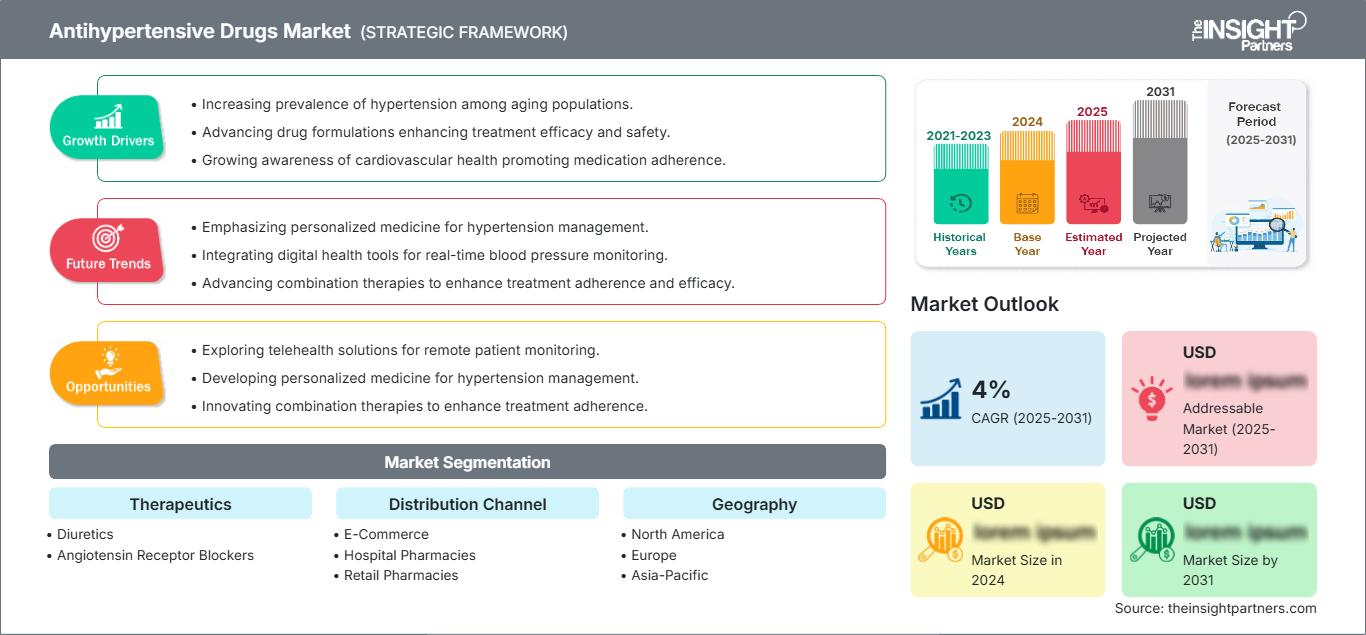
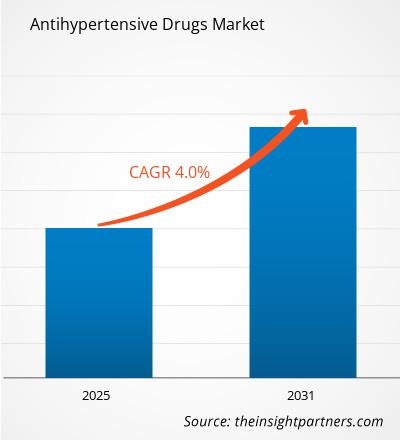
The antihypertensive drugs market size is characterized by being a mature yet growing pharmaceutical market related to cardiovascular diseases, which is fueled by constant hypertension prevalence rates, demographic changes towards an elderly population, and long-term need for medications. It represents US$ 26.13 Billion in 2025 and is forecasted to become US$ 36.03 Billion by 2034, recording a CAGR of 3.64% during 2026-2034. Future growth will be driven by the need for patients’ compliance, polypharmacy and wider access to treatments of chronic diseases.
The North American region has been structurally attractive because of well-developed systems for diagnosis of hypertension, high prescription levels and cardiovascular care infrastructure. Anti-hypertensive drugs market size will continue to grow at the rate of 3.2-3.8% CAGR in 2026-2034, due to growing elderly population, cardiometabolic risks, generic drugs usage and early blood pressure control focus.
Antihypertensive Drugs Market Assessment and Insights
- North America: North America is expected to represent a 38–42% antihypertensive drugs Market share in 2025 and grow at a 3.2–3.8% CAGR between 2026–2034, supported by mature prescribing systems, high treatment penetration, and cardiovascular risk management.
- US: The US is estimated to account for 82–86% of North America's 2025 revenue and expand at a 3.1–3.7% CAGR during 2026–2034, led by chronic therapy demand.
- Europe: Europe is projected to hold a 27–31% share in 2025 and grow at a 3.0–3.6% CAGR, with Germany, the UK, France, Italy, and Spain supported by established hypertension management.
- Asia Pacific: Asia Pacific is estimated at a 20–24% share in 2025 and is expected to grow at a 5.0–5.8% CAGR, with China, Japan, India, and South Korea benefiting from expanding diagnosis and treatment access.
- Largest Segment: Diuretics are estimated to hold a 36–40% market share in 2025 and grow at a 3.1–3.7% CAGR, reflecting broad first-line use and affordability.
- High Growth Segment: E-Commerce is estimated to represent a 10–14% market share in 2025 and grow at a 6.0–7.0% CAGR as refill convenience and digital pharmacy adoption expand.
- Key companies analyzed in detail: Pfizer Inc., Novartis AG, Boehringer Ingelheim International GmbH, Glenmark Pharmaceuticals Limited, Johnson & Johnson Services, Inc., AstraZeneca, FDC Limited, Takeda Pharmaceutical Company Limited, Bayer AG, Merck Sharp & Dohme LLC, Dr. Reddy's Laboratories Limited, Sun Pharmaceutical Industries Limited, Teva Pharmaceutical Industries Ltd., Cipla Limited, Himalaya Wellness Company.
Source: The Insight Partners' analysis based on proprietary research, government publications, company annual reports, investor presentations, industry databases, and expert interviews.
This industry has seen development from mainly monotherapy to combination therapy, fixed-dose combination, and more tailored prescriptions. The competition has increased due to greater use of generics, while branded products rely on differentiation based on cardiovascular efficacy and compliance. According to treatment guidelines issued by WHO, initial pharmacological interventions include thiazide and thiazide-like diuretics, ACE inhibitors/ARBs, and long-acting dihydropyridine calcium channel blockers.
The antihypertensive drugs Market forecast indicates that future growth opportunities will be largely driven by better diagnosis and management outside specialists' practice. There is considerable room for development in emerging markets where high prevalence of hypertension is combined with low levels of awareness and control. A regulatory focus on cardiovascular efficacy, real-world evidence, affordable generic alternatives, and treatment simplicity should work to the benefit of providers that offer affordability and product differentiation.
Antihypertensive Drugs Market Report Scope
| Report Attribute | Details |
|---|---|
| Market size in 2025 | US$ 26.13 Billion |
| Market Size by 2034 | US$ 36.03 Billion |
| Global CAGR (2026 - 2034) | 3.64% |
| Historical Data | 2021-2024 |
| Forecast period | 2026-2034 |
Antihypertensive Drugs Market Analysis
Need for antihypertensive drug is essentially a repetitive one, because of the requirement for long-term treatment in most cases along with changes in regimens. Antihypertensive drugs market growth can be driven by rising incidences of hypertension, aging, diabetes, obesity, renal disorder and better diagnosis practices. Market value chain includes API providers, formulation producers, contract manufacturers, distributors, pharmacy, hospital, doctors and dispensers via digital channels. Supply side issues are still impacted by generics, availability of API, regulations and pricing pressure.
As per WHO, around 1.4 billion adults are estimated to suffer from hypertension in 2024, highlighting the size of the patient base. Therefore, the industry now becomes increasingly appreciative of those manufacturers who are able to provide reliable supply along with offering various formulations. Hospital is relevant for initiating and complicated cases, whereas retail pharmacy and online are relevant for repeat business.
Competitive landscape in the antihypertensive drugs industry features multinational pharma players and big generic players. Among them are Pfizer Inc., Novartis AG, Boehringer Ingelheim International GmbH, AstraZeneca, Bayer AG, Merck Sharp & Dohme LLC – these players have developed cardiovascular portfolios, and Glenmark Pharmaceuticals Limited, FDC Limited, Dr. Reddy's Laboratories Limited, Sun Pharmaceutical Industries Limited, Teva Pharmaceutical Industries Ltd. and Cipla Limited bring value in generic and regional aspects. Johnson & Johnson Services, Inc., Takeda Pharmaceutical Company Limited and Himalaya Wellness Company diversify positioning.
Increasingly investment is allocated in combination products, lifecycle management, supply chain resilience and broader cardiovascular portfolios beyond blood pressure control. Novartis still sees cardiovascular, renal and metabolic diseases as strategically important sectors, and Bayer continues to have hypertension in cardiovascular portfolio. Thus, the basis for competitive differentiation in the antihypertensive drugs market moves away from novelty of molecule to adherence, outcomes, reach and portfolio.
● REPORT CUSTOMIZATION
Tailor This Report To Align With Your Specific Business Requirements
This report can be customized to align precisely with your business objectives, scope, and target markets. Customization options include tailored segmentation, geography, competitive analysis, and strategic insights to support informed decision-making.
Customize This Report →WHAT YOU CAN ADJUST
- ● Segmentations
- ● Geography
- ● Competitive Analysis
- ● Language Preferences
Antihypertensive Drugs Market: Strategic Insights
Regional Insights
North America antihypertensive drugs market
North America is projected to have a share of 38-42% in 2025 and grow at a CAGR of 3.2-3.8% during 2026-2034. North America is favored due to developed cardiovascular screening processes, large number of doctors, established reimbursement schemes, and heavy use of chronic prescription drugs. United States constitutes the leading domestic market, whereas Canada makes its contribution via universal health care and organized primary care management.
The demand for antihypertensive therapies is driven by the issues of aging population, obesity, diabetes, renal disorders, and blood pressure regulation. Generic drugs maintain affordable prices and create pressure on producers of medications. Online refills and remote monitoring also improve treatment compliance. Manufacturers that can offer diverse dosing options, combined drugs, and reliable pharmaceutical delivery systems will be able to capitalize on the repeat purchases.
U.S. antihypertensive drugs Market
The US is expected to account for 82-86% of North America's 2025 revenues and expand at a CAGR of 3.1-3.7% through 2034. This large size of the US market is attributable to comprehensive hypertension screening programs, high usage of prescriptions, excellent cardiovascular infrastructure, and high demand for long-term treatment. Some major pharmaceutical companies like Pfizer Inc., Johnson & Johnson Services, Inc., AstraZeneca, Bayer AG, and Merck Sharp & Dohme LLC have extensive capabilities in this field.
Application trends increasingly focus on prevention of stroke, myocardial infarction, heart failure, and kidney problems by early blood pressure control. There are fixed-dose combinations, generic switching, mail-order pharmacy and digital pharmacy that impact prescription and purchase behavior. The level of competitiveness in the market remains high since there is generic competition to existing molecules.
Europe antihypertensive drugs Market
Europe is projected to account for a 27–31% share in 2025 and grow at a 3.0–3.6% CAGR. Germany is expected to remain the leading national market because of its large healthcare expenditure base, extensive outpatient treatment network, and aging population. The UK, France, Italy, and Spain also contribute materially through established hypertension screening and treatment systems.
The UK enjoys the advantages of managed care and guidelines-based prescribing in primary care, whereas Germany is characterized by good access to specialists and high spending on chronic disease. Cardiovascular prevention via primary care is the focus of France, whereas Italy and Spain enjoy a large number of elderly people who need to maintain their blood pressure levels for a long time.
APAC antihypertensive drugs Market
APAC is estimated to represent a 20–24% share in 2025 and expand at a 5.0–5.8% CAGR. China is the leading market, followed by Japan, India, South Korea, and Australia. Rising diagnosis, urbanization, aging, and improving healthcare infrastructure broaden the treated population.
China and India provide substantial volume opportunities, while Japan and South Korea offer mature cardiovascular treatment environments. Government screening programs, primary-care strengthening, generic manufacturing, and expanding insurance coverage support access. Manufacturers with local production, broad affordability strategies, and reliable distribution can address substantial unmet treatment demand.
Middle East & Africa antihypertensive drugs Market
Middle East and Africa will see a 4.0–4.8% CAGR. Saudi Arabia is seen as a prominent Gulf market along with the UAE and South Africa. Urbanization, diabetes, obesity, and cardiovascular risk ensure long-term demand for treatments, with better health-care infrastructure investments improving diagnostics.
Hospital and pharmaceutical procurement systems are relatively well developed in Saudi Arabia and the UAE. South Africa is important due to its large population and high rates of chronic diseases. Markets in Rest of MEA represent access challenges but also offer opportunities, as governments develop their primary care and local procurement infrastructure for chronic disease management.
Segmentation Analysis
Therapeutics
Therapeutics remains the principal product dimension, with an estimated 3.3–3.9% CAGR during 2026–2034. Treatment demand is shaped by guideline-based first-line therapy, combination prescribing, comorbid cardiovascular conditions, and long-term adherence. Diuretics and angiotensin receptor blockers provide important therapeutic foundations across primary and specialist care, while lifecycle management and fixed-dose combinations support portfolio optimization.
- Diuretics: Diuretics retain broad clinical relevance because they are established first-line options, relatively affordable, and frequently incorporated into combination regimens for sustained blood-pressure control.
- Angiotensin Receptor Blockers: Angiotensin receptor blockers remain strategically important where renin-angiotensin system modulation is appropriate, supported by extensive physician familiarity and availability across branded and generic formulations.
Distribution Channel
Distribution Channel is expected to register a 4.5–5.2% CAGR during 2026–2034. Channel evolution reflects the recurring nature of hypertension prescriptions and growing demand for convenient refills. Retail pharmacies continue to dominate routine dispensing, hospital pharmacies remain important for treatment initiation, and digital channels increasingly support chronic-care purchasing.
- E-Commerce: E-commerce is gaining strategic importance through prescription refills, home delivery, digital payment integration, and improved access for patients managing recurring medication requirements.
- Hospital Pharmacies: Hospital pharmacies remain central for newly diagnosed patients, complex comorbidities, medication reconciliation, and transitions from inpatient to outpatient cardiovascular treatment.
- Retail Pharmacies: Retail pharmacies provide the principal community-based dispensing infrastructure, supporting recurring refills, pharmacist interaction, generic substitution, and convenient access to established therapies.
Opportunity Snapshot
| Segment Name | Revenue Contribution (High/Medium/Low) | Trend Tag | Adoption Stage |
|---|---|---|---|
| E-Commerce | Low | Home Delivery | Scaling |
| Hospital Pharmacies | Medium | Care Transition | Mature |
| Retail Pharmacies | High | Chronic Refills | Mature |
Antihypertensive Drugs Market Growth Drivers and Impact Analysis
Rising Hypertension Burden and Earlier Diagnosis
The expanding treated population remains the strongest structural demand driver. WHO reports that the number of adults with hypertension increased to approximately 1.4 billion in 2024, with growth concentrated substantially in low- and middle-income countries. Earlier detection converts previously untreated individuals into recurring pharmaceutical users, increasing prescription volumes across primary care and community settings. For manufacturers, the commercial impact extends beyond molecule sales because newly diagnosed patients typically require dose titration, follow-up, and potentially combination therapy. Rising awareness also encourages routine screening among patients with diabetes, obesity, kidney disease, and cardiovascular risk. Companies able to provide affordable formulations and dependable distribution can benefit from this widening treatment pool, particularly in markets where diagnosis is improving faster than treatment infrastructure.
Expansion of Combination Therapy and Adherence-Focused Treatment
Clinical practice increasingly recognizes that controlling blood pressure frequently requires more than one pharmacological mechanism. WHO recommends combination therapy, preferably through single-pill combinations, when pharmacological treatment is required. This creates commercial opportunities for fixed-dose formulations that simplify daily medication schedules and potentially improve persistence. The impact is particularly relevant in aging populations and among patients managing multiple chronic conditions simultaneously. Combination products can also strengthen lifecycle strategies for mature molecules by creating differentiated formulations, additional dosage options, and more convenient prescribing pathways. Manufacturers therefore face a dual opportunity: defend established portfolios through improved formulations while expanding access through competitively priced generic combinations. The result is a market increasingly influenced by treatment simplicity rather than molecule availability alone.
Growth of Chronic Disease Management Infrastructure
Investment in primary-care infrastructure is expanding the addressable treatment population by moving hypertension management closer to communities. Screening programs, electronic health records, remote monitoring, pharmacist participation, and structured follow-up can identify patients who previously remained untreated or poorly controlled. The commercial consequence is a shift from episodic prescription demand toward more predictable chronic-treatment cycles. Pharmaceutical companies can benefit when distribution networks align with these care pathways, particularly in emerging markets where healthcare access is expanding. Hospitals continue to initiate complex treatment, but community physicians and pharmacies increasingly manage maintenance therapy. This broadening ecosystem creates opportunities for manufacturers with dependable supply, multiple pack sizes, patient-support capabilities, and partnerships that improve medication continuity without relying exclusively on specialist channels.
Antihypertensive Drugs Market Future Trends
Data-Enabled Personalized Blood-Pressure Management
The antihypertensive drugs market trends are moving toward treatment decisions informed by longitudinal blood-pressure data rather than isolated clinic measurements. Wider use of connected home monitors, electronic records, and algorithm-assisted risk assessment can help clinicians identify treatment response, adherence gaps, and patterns requiring regimen adjustment. Over the next decade, pharmaceutical companies may increasingly differentiate portfolios through evidence demonstrating effectiveness in specific risk profiles, such as patients with kidney disease, diabetes, or difficult-to-control hypertension. Digital monitoring can also support persistence by providing reminders and feedback between consultations. This trend should favor manufacturers willing to integrate medicines with broader chronic-care ecosystems, while creating new evidence requirements around real-world outcomes, patient engagement, and responsible use of health data.
Long-Acting and Simplified Treatment Architectures
Future treatment development is likely to emphasize formulations and therapeutic architectures that reduce dosing complexity. Patients managing hypertension often take several medicines alongside therapies for diabetes, cholesterol, kidney disease, or cardiovascular conditions, creating adherence challenges. Pharmaceutical developers may therefore prioritize longer-acting formulations, optimized fixed-dose combinations, and delivery approaches that reduce daily pill burden. Such innovations could be particularly valuable for populations with inconsistent access to follow-up care. Commercial success will depend on demonstrating meaningful adherence or control advantages without creating excessive cost premiums. Regulators and payers are also likely to scrutinize comparative effectiveness, persistence, safety, and health-economic outcomes. As a result, formulation innovation may become a more important competitive lever as traditional molecules continue facing generic competition.
Antihypertensive Drugs Market Opportunities
Emerging-Market Access and Localized Manufacturing
The antihypertensive drugs market scope extends substantially across emerging economies where hypertension prevalence is high but treatment access remains uneven. Companies can pursue localized manufacturing, regional API sourcing, public procurement partnerships, and tiered pricing to improve availability while protecting supply continuity. India, China, Southeast Asia, Latin America, and selected Middle Eastern markets offer differentiated opportunities because healthcare infrastructure and reimbursement systems are developing at different speeds. Local packaging and manufacturing can reduce logistics exposure and improve tender competitiveness, while regional distribution partnerships can expand reach beyond major cities. Strategic investment should prioritize products already supported by strong clinical familiarity, including affordable combination therapies and widely used first-line medicines. This approach can create volume growth without depending on premium pricing.
Digital Pharmacy and Chronic-Care Partnerships
Digital dispensing creates an opportunity to connect pharmaceutical manufacturers with recurring medication journeys rather than individual transactions. E-commerce platforms, telemedicine providers, insurers, and pharmacy networks can facilitate refill reminders, prescription renewal, adherence monitoring, and home delivery. Manufacturers can use these partnerships to understand refill patterns and identify potential discontinuation points while maintaining appropriate privacy and regulatory safeguards. The opportunity is especially relevant for patients with long-term therapy requirements who experience access barriers or limited mobility. Strategic programs can combine digital engagement with pharmacist counseling and physician follow-up, creating a more coordinated treatment pathway. Companies that develop channel-specific packaging, reliable fulfillment, and compliant patient-support models may strengthen retention even where the underlying medicines are mature and highly commoditized.
Recent Developments
- April 2026: Novartis AG expanded its community health programs from 11 countries toward more than 30 by 2030, including initiatives addressing hypertension. The company reported that a Vietnam pilot screened 400,000 people and linked 35,000 to local treatment, while high-blood-pressure control increased from 32% to 76%. The expansion reinforces community-based detection and treatment as a strategic cardiovascular-health pathway.
- December 2025: Bayer AG maintained hypertension as a core cardiovascular focus in its 2025 business portfolio, alongside pulmonary hypertension, heart failure, chronic kidney disease, and related cardiovascular conditions. Its portfolio includes Adalat and other cardiovascular products, while the company continues to position cardiovascular disease as a principal pharmaceutical area. This supports Bayer's continued participation across blood-pressure and broader cardiovascular management.
- March 2025: Boehringer Ingelheim International GmbH continued to support evidence around empagliflozin, including its effects on blood pressure in patients with diabetes and hypertension receiving antihypertensive therapy. Product information reports reductions in ambulatory systolic and diastolic blood pressure, reinforcing the growing clinical intersection between hypertension, diabetes, cardiovascular disease, and kidney-risk management.
Frequently Asked Questions

- Comprehensive Market Sizing and Forecast Analysis
- Detailed Segmentation Analysis
- In-Depth Market Dynamics Assessment
- Regional and Country-Level Insights
- Competitive Landscape and Company Benchmarking
- Strategic Business Intelligence
Recent Reports
Testimonials

The Insight Partners provided valuable market intelligence that supported our global go-to-market strategy. Their team was professional, responsive, and attentive to our feedback, providing thoughtful analysis and helpful methodological clarifications throughout the project.
Junmo Kim Chief Financial Officer (CFO), Enertech Co., Ltd.
The Insight Partners' SCADA System Market report is comprehensive, with valuable insights on current trends and future forecasts. The team was highly professional, responsive, and supportive throughout. We are very satisfied and highly recommend their services.
RAN KEDEM Partner, Reali Technologies LTDs
I requested a report on a very specific software market and the team produced the report in a few days. The information was very relevant and well presented. I then requested some changes and additions to the report. The team was again very responsive and I got the final report in less than a week.
JEAN-HERVE JENN Chairman, Future Analytica
We worked with The Insight Partners for an important market study and forecast. They gave us clear insights into opportunities and risks, which helped shape our plans. Their research was easy to use and based on solid data. It helped us make smart, confident decisions. We highly recommend them.
PIYUSH NAGPAL Sr. Vice President, High Beam Global
The Insight Partners delivered insightful, well-structured market research with strong domain expertise. Their team was professional and responsive throughout. The user-friendly website made accessing industry reports seamless. We highly recommend them for reliable, high-quality research services
YUKIHIKO ADACHI CEO, Deep Blue, LLC.
This is the first time I have purchased a market report from The Insight Partners.While I was unsure at first, I visited their web site and felt more comfortable to take the risk and purchase a market report.I am completely satisfied with the quality of the report and customer service. I had several questions and comments with the initial report, but after a couple of dialogs over email with their analyst I believe I have a report that I can use as input to our strategic planning process.Thank you so much for taking the extra time and making this a positive experience.I will definitely recommend your service to others and you will be my first call when we need further market data.
JOHN SUZUKI President and Chief Executive Officer, Board Director, BK Technologies
I wish to appreciate your support and the professionalism you displayed in the course of attending to my request for information regarding to infectious disease IVD market in Nigeria. I appreciate your patience, your guidance, and the fact that you were willing to offer a discount, which eventually made it possible for us to close a deal. I look forward to engaging The Insight Partners in the future, all thanks to the impression you have created in me as a result of this first encounter.
DR CHIJIOKE ONYIA MANAGING DIRECTOR, PineCrest Healthcare Ltd.Reason to Buy
- Informed Decision-Making
- Understanding Market Dynamics
- Competitive Analysis
- Identifying Emerging Markets
- Customer Insights
- Market Forecasts
- Risk Mitigation
- Boosting Operational Efficiency
- Strategic Planning
- Investment Justification
- Tracking Industry Innovations
- Aligning with Regulatory Trends





 Get Free Sample for