
Aortic and Peripheral Vascular Interventional Therapy Product Market Size, Share & Forecast by 2034
Coverage: By Type (Peripheral Vascular Interventional, Aortic Interventional); Application (Hospital, Clinics, Others), and Geography (North America, Europe, Asia Pacific, and South and Central America)
- Status : Data Released
- Report Code : TIPRE00015187
- Category : Life Sciences
- No. of Pages : 150
- Available Report Formats :


- Last update date : August 24, 2026


2025 Market Size
US$ 82.96 Bn
Base year value
2034 Forecast
US$ 235.76 Bn
Projected by 2034
CAGR 2026-2034
12.31 %
Growth rate
Addressable Market
US$ 1,394.88 Bn
(2026-2034)
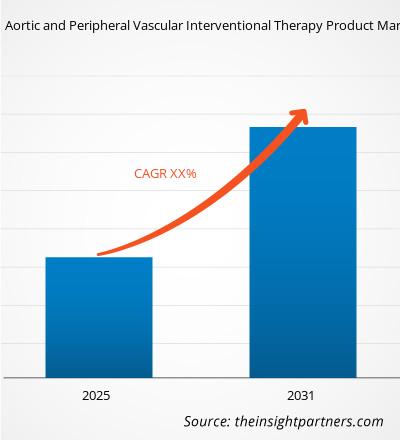
The aortic and peripheral vascular interventional therapy product market was valued at US$ 82.96 Billion in 2025 and is projected to reach US$ 235.76 Billion by 2034, expanding at a 12.31% CAGR from 2026 to 2034. The market encompasses devices used for endovascular management of aortic and peripheral vascular conditions, with demand shaped by minimally invasive treatment adoption, procedural standardization, device innovation, and expanding intervention capacity across hospitals and specialized clinics.
North America is expected to remain a major revenue center, supported by established endovascular infrastructure, experienced vascular specialists, and broad availability of advanced intervention technologies. The aortic and peripheral vascular interventional therapy product market size is expected to expand at an estimated 10.8–11.8% CAGR during 2026–2034, with growth supported by complex lesion treatment, replacement demand, and increasing preference for catheter-based procedures over open surgical approaches.
Aortic and Peripheral Vascular Interventional Therapy Product Market Assessment and Insights
- North America: North America is expected to account for 37–41% share in 2025, growing at a 10.8–11.8% CAGR between 2026–2034, supported by mature vascular intervention centers, reimbursement infrastructure, and high utilization of endovascular technologies.
- US: The US is expected to represent 82–86% of North America in 2025, expanding at a 10.6–11.6% CAGR between 2026–2034, driven by procedure volumes, specialist availability, and device innovation.
- Europe: Europe is projected to hold 24–28% share in 2025 and grow at a 10.9–11.9% CAGR during 2026–2034, with Germany, the UK, France, Italy, and Spain providing substantial procedural demand and established vascular care networks.
- Asia Pacific: Asia Pacific is estimated at 24–28% share in 2025, with a 14.0–15.0% CAGR during 2026–2034. China, Japan, South Korea, and India are central to expansion as intervention capacity, hospital investment, and local manufacturing develop.
- Largest Segment: Peripheral Vascular Interventional is expected to hold 62–66% market share in 2025, with a 11.8–12.8% CAGR during 2026–2034, reflecting broad disease prevalence and procedural applications.
- High Growth Segment: Aortic Interventional is projected to represent 34–38% market share in 2025, advancing at a 13.0–14.0% CAGR during 2026–2034, supported by increasing endovascular management of complex aortic disease.
- Key companies analyzed in detail: Medtronic plc, Cook Medical LLC, W. L. Gore & Associates, Inc., B. Braun Melsungen AG, Abbott Laboratories, Terumo Corporation, Johnson & Johnson Services, Inc., Endologix LLC, Meril Life Sciences Pvt. Ltd., Bard Peripheral Vascular, Inc., and Boston Scientific Corporation.
Source: The Insight Partners' analysis based on proprietary research, government publications, company annual reports, investor presentations, industry databases, and expert interviews.
The aortic and peripheral vascular interventional therapy product market has evolved from conventional balloon angioplasty and basic stenting toward sophisticated endovascular platforms incorporating drug delivery, embolic protection, thrombectomy, branched grafts, fenestrated grafts, and improved navigation systems. The approach to manufacturing will place more importance on polymer engineering, nitinol design, delivery system miniaturization, and consistency in manufacturing for procedures with complex anatomy.
Future growth is likely to be driven by the new Asian markets, healthcare infrastructure investments, clinical proof in the local environment, and regulatory support for minimal invasive procedures. In addition, there is increasing interest from hospitals in efficient procedure conduct, inventory reduction, and consistent performance. These trends will encourage manufacturers to build scalable product lines capable of addressing peripheral and aortic procedures.
Aortic and Peripheral Vascular Interventional Therapy Product Market Report Scope
| Report Attribute | Details |
|---|---|
| Market size in 2025 | US$ 82.96 Billion |
| Market Size by 2034 | US$ 235.76 Billion |
| Global CAGR (2026 - 2034) | 12.31% |
| Historical Data | 2021-2024 |
| Forecast period | 2026-2034 |
Aortic and Peripheral Vascular Interventional Therapy Product Market Analysis
The aortic and peripheral vascular interventional therapy product market growth is closely linked to the rising procedural burden associated with peripheral artery disease, aneurysmal disease, vascular occlusion, and other circulatory disorders. Demand follows a value chain that includes polymer and metal suppliers, component suppliers, catheter and graft makers, sterilization firms, distributors, hospitals, vascular facilities, and doctors. Product choices have been influenced more recently by the complexity of the lesion, vessel anatomy, delivery characteristics, and suitability to the procedure.
Dynamics of the supply vary by the category of the product. Devices for peripheral procedures may profit from greater procedure volume and repetition, whereas aortic graft systems need specialized production, high-quality standards, sizing to anatomy, and physician experience. Competitors have relied not only on their product performances but also on their portfolios of products. Hospitals have started to look at the overall economic picture of the procedure, such as OR time, ancillary devices, and post-procedure costs.
Competitive positioning continues to be dominated by diversified cardiovascular device makers and dedicated vascular players. Medtronic plc covers peripheral interventions, embolizations, thrombectomies, and the aorta, while Cook Medical LLC retains a comprehensive range of products related to the aorta and peripherals. W. L. Gore & Associates, Inc. is well-positioned when it comes to technologies for endovascular grafts, while Terumo Corporation specializes in catheter-based interventions and vascular access. Abbott Laboratories and Boston Scientific Corporation offer wider cardiovascular platforms.
Investment efforts are increasingly being focused on innovations in delivery systems, coated technologies, thrombectomies, embolic protections, and advanced aortic repair technologies. Meril Life Sciences Pvt. Ltd. is an emerging markets competitive player, while B. Braun Melsungen AG specializes in vascular access and intervention technologies. Endologix LLC continues to specialize in aorta endovascular solutions, while Bard Peripheral Vascular, Inc. contributes technologies for peripheral interventions. Johnson & Johnson Services, Inc. adds scale via its cardiovascular platform.
● REPORT CUSTOMIZATION
Tailor This Report To Align With Your Specific Business Requirements
This report can be customized to align precisely with your business objectives, scope, and target markets. Customization options include tailored segmentation, geography, competitive analysis, and strategic insights to support informed decision-making.
Customize This Report →WHAT YOU CAN ADJUST
- ● Segmentations
- ● Geography
- ● Competitive Analysis
- ● Language Preferences
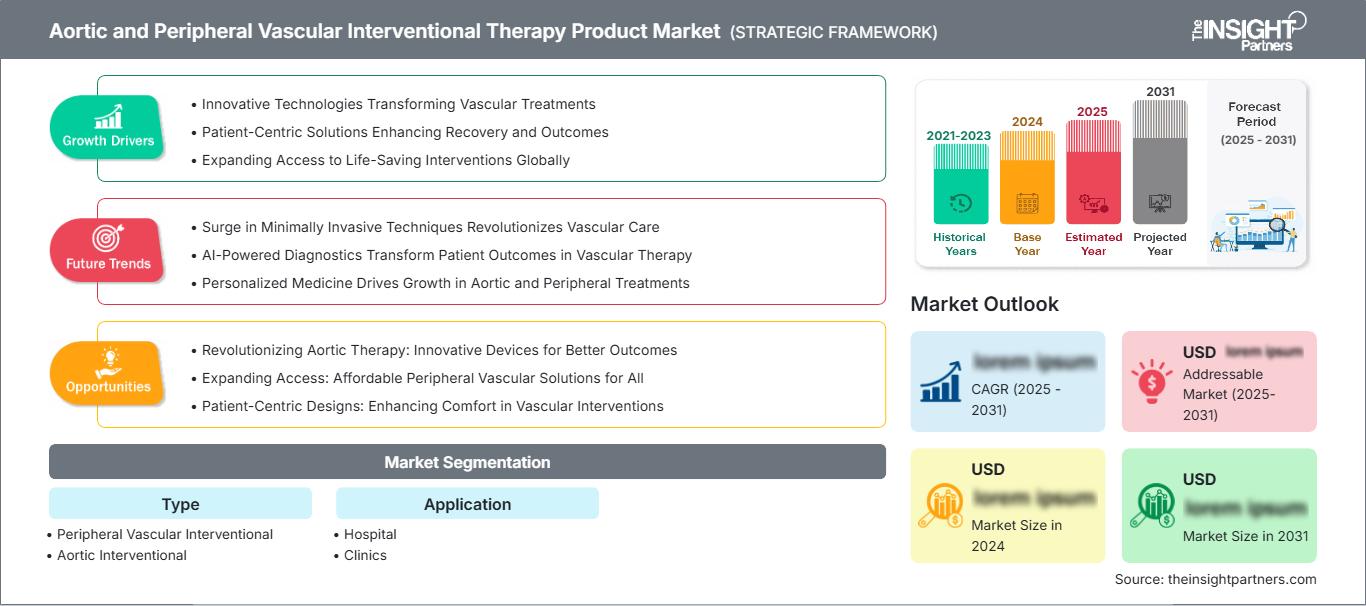
Aortic and Peripheral Vascular Interventional Therapy Product Market: Strategic Insights
Regional Insights
North America Aortic and Peripheral Vascular Interventional Therapy Product Market
North America is expected to maintain a 37–41% of the aortic and peripheral vascular interventional therapy product market share in 2025, with the regional market expanding at a 10.8–11.8% CAGR during 2026–2034. The region benefits from extensive vascular intervention infrastructure, established specialist networks, sophisticated imaging capabilities, and relatively rapid adoption of new endovascular technologies. The US remains the dominant contributor because of its procedure intensity, specialist density, and broad availability of advanced intervention products.
Canada contributes through tertiary hospitals and expanding minimally invasive vascular programs, although its purchasing environment is more centralized than the US. Regional growth is also supported by demand for complex peripheral intervention, aortic repair, thrombectomy, and embolization. Device manufacturers increasingly emphasize evidence generation and procedural efficiency to secure hospital adoption, while clinicians continue to favor systems that reduce access trauma and support treatment of challenging anatomy.
U.S. Aortic and Peripheral Vascular Interventional Therapy Product Market
The US represents 82–86% of North America in 2025 and, according to the Aortic and Peripheral Vascular Interventional Therapy Product Market forecast, is projected to expand at a 10.6–11.6% CAGR during 2026–2034. Its position reflects extensive hospital infrastructure, established reimbursement mechanisms, high procedure volumes, and rapid uptake of differentiated vascular technologies. Major manufacturers maintain significant commercial and clinical footprints across the country.
Applications increasingly extend beyond straightforward angioplasty toward drug-coated balloons, thrombectomy, embolization, carotid intervention, and complex aortic repair. Medtronic plc, Cook Medical LLC, W. L. Gore & Associates, Inc., Abbott Laboratories, Terumo Corporation, Boston Scientific Corporation, and Bard Peripheral Vascular, Inc. compete across overlapping categories. Physician preference, clinical evidence, device availability, and hospital value-analysis processes remain important purchasing determinants.
Europe Aortic and Peripheral Vascular Interventional Therapy Product Market
Europe is estimated to hold 24–28% share in 2025 and grow at a 10.9–11.9% CAGR through 2034, with Germany representing the leading national market. Demand is supported by aging populations, specialized vascular centers, and established endovascular treatment pathways.
The UK maintains demand through centralized procurement and specialized vascular services, while Germany benefits from extensive hospital capacity and strong procedural expertise in the Aortic and Peripheral Vascular Interventional Therapy Product Market report. France, Italy, and Spain contribute through established public healthcare networks and increasing use of minimally invasive interventions. Product adoption varies according to reimbursement, procurement structures, clinical guidelines, and availability of specialist centers. Manufacturers, therefore, need differentiated evidence and country-specific commercialization strategies to navigate Europe's fragmented purchasing environment.
APAC Aortic and Peripheral Vascular Interventional Therapy Product Market
Key Aortic and Peripheral Vascular Interventional Therapy Product Market trends in APAC include rapid hospital modernization, expanding interventional procedure capacity, increasing clinician training programs, and growth in domestic device manufacturing. APAC is expected to account for 24–28% share in 2025 and grow at a 14.0–15.0% CAGR during 2026–2034, making it the fastest-growing major region. China leads regional demand, followed by Japan, South Korea, India, and Australia. These trends are accelerating access to vascular procedures and supporting broader adoption of advanced interventional technologies across the region.
China benefits from healthcare infrastructure investment and localization initiatives, while Japan has mature endovascular expertise. India is developing rapidly through private hospital investment and broader specialist access, and Australia maintains sophisticated vascular centers. The regional outlook also benefits from government emphasis on advanced medical technologies, although pricing pressure and regulatory differences remain important constraints.
Middle East & Africa Aortic and Peripheral Vascular Interventional Therapy Product Market
The Middle East and Africa Aortic and Peripheral Vascular Interventional Therapy Product Market is projected to grow at an 11.8–12.8% CAGR during 2026–2034, supported by healthcare infrastructure expansion, specialist hospital development, and investment in advanced intervention capabilities. Saudi Arabia and the UAE are leading adoption centers because of higher healthcare spending and modern tertiary facilities.
South Africa provides an important regional hub for advanced vascular procedures, while the rest of MEA remains more uneven due to specialist shortages and equipment-access constraints. Energy-sector revenues in Gulf economies have supported hospital modernization, enabling the procurement of sophisticated endovascular systems. Training partnerships, distributor networks, and regional referral centers are expected to remain important for expanding access beyond major metropolitan hospitals.
Segmentation Analysis
Type
The Type segment of the Aortic and Peripheral Vascular Interventional Therapy Product Market is divided into Peripheral Vascular Interventional and Aortic Interventional. The segment structure reflects two distinct procedural ecosystems, with peripheral intervention benefiting from higher case volumes and aortic intervention gaining momentum through advanced endovascular repair. Product selection depends strongly on anatomical complexity, clinical indication, delivery profile, procedural workflow, and physician expertise. Across both categories, manufacturers are prioritizing smaller delivery systems, improved navigation, enhanced imaging compatibility, and more predictable deployment.
- Peripheral Vascular Interventional: Peripheral intervention represents the larger product category because it addresses a broad range of arterial disease and occlusive conditions. Demand is supported by balloon angioplasty, stenting, drug delivery, thrombectomy, atherectomy, and embolization procedures across hospitals and specialized intervention centers.
- Aortic Interventional: Aortic intervention is strategically important because complex aneurysms and dissections increasingly require minimally invasive repair. Endovascular grafts, branched systems, fenestrated solutions, and improved delivery mechanisms are expanding treatment options for anatomically challenging patients.
Application
The Application segment of the Aortic and Peripheral Vascular Interventional Therapy Product Market comprises hospitals and clinics. It is expected to expand at a 12.0–12.9% CAGR during 2026–2034, supported by greater procedural migration toward minimally invasive settings and investment in dedicated vascular services. Hospitals remain central because complex interventions require advanced imaging, operating infrastructure, specialist teams, and post-procedure monitoring.
- Hospital: Hospitals remain the principal application environment because they provide hybrid operating rooms, catheterization facilities, vascular surgery teams, and intensive post-procedure support. Complex aortic repair and high-risk peripheral intervention are particularly dependent on hospital-based infrastructure.
- Clinics: Clinics are increasingly relevant for selected peripheral procedures that require shorter observation periods and standardized workflows. Their strategic role is strongest where ambulatory intervention infrastructure, specialist availability, imaging access, and reimbursement arrangements support lower-complexity vascular procedures.
Opportunity Snapshot
| Segment Name | Revenue Contribution (High/Medium/Low) | Trend Tag (MAX 2 words) | Adoption Stage (Emerging/Scaling/Mature) |
| Hospital | High | Complex Intervention | Mature |
| Clinics | Medium | Ambulatory Vascular | Scaling |
Aortic and Peripheral Vascular Interventional Therapy Product Market Growth Drivers and Impact Analysis
Expansion of minimally invasive vascular treatment pathways
This trend towards a more catheterized approach in medical procedures is driving the need for less traumatic, quicker, and safer treatment options for people at higher surgical risks. This particular transition is especially significant in treating peripheral artery disease and certain conditions of the aorta, where endovascular techniques can be applied within existing vascular care workflows. Institutions are outfitting their facilities with hybrid operating rooms, imaging capabilities, and specialized staff to allow for more procedures. The effect for manufacturers is not limited to increased demand on an individual basis because a platform that allows for a minimally invasive procedure will require a continuous supply of balloons, stents, grafts, guidewires, sheaths, and embolization products.
Increasing treatment of complex vascular anatomy
The advancement in device technology is increasing the scope of people who can be addressed using an endovascular technique. More flexible devices, smaller delivery devices, branched grafting, fenestrated devices, and crossing technology have allowed doctors to target areas of disease or aortic geometry that otherwise could only be approached by more invasive methods. This would lead to a high commercial opportunity since complex cases need high-end devices and specialized planning. The companies that can deliver on deployment reliability, anatomical flexibility, and workflow efficiency would get an upper hand in tertiary facilities. Moreover, as knowledge of complex interventions increases in clinics, clinics themselves encourage dedicated programs to avoid relying solely on referral centers for these procedures.
Growth of specialist vascular centers and intervention capacity
Spending on dedicated cardiovascular and vascular treatment is enhancing access to endovascular treatments in both mature and developing health care settings. Expansion of tertiary care hospitals in terms of catheterization capabilities, doctor training, and referral systems will enhance the number of centers that can perform these advanced treatments. This is especially relevant in the Asia Pacific and certain Middle Eastern countries, as there is growth in health care capacity from a lower base level. The market consequences include spending on equipment, initial provisioning of procedural tools, and ongoing purchases once volume levels are established. Suppliers can seize this opportunity through product bundling along with physician training and reliable delivery systems.
Aortic and Peripheral Vascular Interventional Therapy Product Market Future Trends
Integration of procedural planning and device personalization
The next level of development is expected to focus even more on personalized planning of interventions, especially for cases of complicated anatomy of the aorta. More advanced imaging, 3D reconstruction, digital planning, and anatomical measurements can help to choose the device before starting the procedure. This approach will promote wider usage of the technology of customized or configurable grafts and will decrease uncertainty during its implementation. Planning functionality will be integrated with the portfolio of devices by manufacturers and will become a differentiated workflow and not a separate product. Eventually, hospitals will assess the quality of systems based on their capability to combine imaging, planning, sizing, and the procedure itself. Such an integration will increase loyalty because the clinical staff gets accustomed to a whole workflow and not just to one device.
Greater use of drug-based and mechanical lesion management
In addition, the peripheral intervention is forecasted to shift towards the use of increasingly targeted combinations of mechanical lesion preparation, drug delivery, thrombectomy, and embolic protection. The aim will be to increase patency rates while decreasing repeat procedures. Devices such as drug-coated balloons, atherectomy devices, thrombectomy devices, and procedural combinations will gain greater importance as patients present with increasingly complex lesions. Clinical evidence and regulatory needs will prove crucial since hospitals will not adopt premium technologies just based on their innovative features. Companies with good evidence, reliable reimbursement, and easy-to-use procedural techniques will benefit greatly from this. The trend will also provide a platform for bundling of technologies to create a portfolio of devices for each procedure.
Aortic and Peripheral Vascular Interventional Therapy Product Market Opportunities
Localized manufacturing and regional portfolio expansion
Manufacturers can pursue substantial opportunities by developing localized production and distribution models in high-growth emerging markets. China, India, and selected Southeast Asian markets combine expanding hospital capacity with increasing demand for advanced vascular intervention. Local manufacturing can improve supply reliability, reduce selected logistics costs, and support pricing strategies aligned with regional procurement conditions. Companies entering these markets should prioritize products with established clinical demand before expanding into highly specialized categories. Partnerships with hospitals, distributors, and physician-training institutions can accelerate adoption while generating local clinical experience. Regulatory strategies should also be designed around country-specific requirements rather than assuming a uniform APAC pathway. A phased approach combining core peripheral products with selected aortic technologies can improve capital efficiency and reduce market-entry risk.
Procedure-based portfolios for tertiary vascular centers
A second opportunity lies in developing integrated portfolios for high-volume vascular centers. Rather than selling isolated devices, suppliers can combine access products, balloons, stents, graft systems, embolization technologies, thrombectomy tools, and supporting accessories around defined procedures. This model can simplify procurement and strengthen the supplier relationship with hospitals that are attempting to standardize inventories. The opportunity is particularly relevant for complex aortic repair and advanced peripheral intervention, where multiple products may be required within a single procedure. Companies can differentiate through technical training, inventory management, clinical education, and post-market evidence. Successful execution would also provide greater visibility into procedure volumes and purchasing patterns, helping manufacturers optimize product availability and identify opportunities for new device development.
Recent Developments
- June 2026: Cook Medical LLC announced commercial availability of the Volante Steerable Guiding Sheath in the US and selected global markets. The device provides five lengths and six French sizes and is designed to facilitate intracardiac, renal, and peripheral placement while complementing Cook's Aortic Essentials portfolio. The development strengthens the company's positioning across access and aortic intervention workflows.
- May 2026: Terumo Corporation launched the TR Band Distal in Japan for distal radial artery procedures. The device is intended to support hemostasis management following distal radial access and reflects the company's broader focus on vascular access technologies and procedural workflow. The launch demonstrates continued expansion of minimally invasive vascular access options within Japan's established intervention ecosystem.
- May 2026: Medtronic plc announced successful early commercial use of the Concerto Versa Detachable Coil, with initial procedures performed at Mount Sinai Hospital and UNC Hospitals in the US. The development expands Medtronic's peripheral vascular intervention portfolio into detachable coil technology and supports its broader strategy of addressing embolization procedures through differentiated catheter-based products.
Frequently Asked Questions

- Comprehensive Market Sizing and Forecast Analysis
- Detailed Segmentation Analysis
- In-Depth Market Dynamics Assessment
- Regional and Country-Level Insights
- Competitive Landscape and Company Benchmarking
- Strategic Business Intelligence
Recent Reports
Testimonials

The Insight Partners' SCADA System Market report is comprehensive, with valuable insights on current trends and future forecasts. The team was highly professional, responsive, and supportive throughout. We are very satisfied and highly recommend their services.
RAN KEDEM Partner, Reali Technologies LTDs
I requested a report on a very specific software market and the team produced the report in a few days. The information was very relevant and well presented. I then requested some changes and additions to the report. The team was again very responsive and I got the final report in less than a week.
JEAN-HERVE JENN Chairman, Future Analytica
We worked with The Insight Partners for an important market study and forecast. They gave us clear insights into opportunities and risks, which helped shape our plans. Their research was easy to use and based on solid data. It helped us make smart, confident decisions. We highly recommend them.
PIYUSH NAGPAL Sr. Vice President, High Beam Global
The Insight Partners delivered insightful, well-structured market research with strong domain expertise. Their team was professional and responsive throughout. The user-friendly website made accessing industry reports seamless. We highly recommend them for reliable, high-quality research services
YUKIHIKO ADACHI CEO, Deep Blue, LLC.
This is the first time I have purchased a market report from The Insight Partners.While I was unsure at first, I visited their web site and felt more comfortable to take the risk and purchase a market report.I am completely satisfied with the quality of the report and customer service. I had several questions and comments with the initial report, but after a couple of dialogs over email with their analyst I believe I have a report that I can use as input to our strategic planning process.Thank you so much for taking the extra time and making this a positive experience.I will definitely recommend your service to others and you will be my first call when we need further market data.
JOHN SUZUKI President and Chief Executive Officer, Board Director, BK Technologies
I wish to appreciate your support and the professionalism you displayed in the course of attending to my request for information regarding to infectious disease IVD market in Nigeria. I appreciate your patience, your guidance, and the fact that you were willing to offer a discount, which eventually made it possible for us to close a deal. I look forward to engaging The Insight Partners in the future, all thanks to the impression you have created in me as a result of this first encounter.
DR CHIJIOKE ONYIA MANAGING DIRECTOR, PineCrest Healthcare Ltd.Reason to Buy
- Informed Decision-Making
- Understanding Market Dynamics
- Competitive Analysis
- Identifying Emerging Markets
- Customer Insights
- Market Forecasts
- Risk Mitigation
- Boosting Operational Efficiency
- Strategic Planning
- Investment Justification
- Tracking Industry Innovations
- Aligning with Regulatory Trends





 Get Free Sample for