
Application Shielding Software Market Share, Growth & Demand by 2034
Coverage: by Deployment Type (On-Premise, Cloud); Application (Mobile Devices, Computers); Industry (Automotive, BFSI, Entertainment, Healthcare, Government, Others) , and Geography (North America, Europe, Asia Pacific, and South and Central America)
- Status : Data Released
- Report Code : TIPRE00012427
- Category : Technology, Media and Telecommunications
- No. of Pages : 150
- Available Report Formats :


- Last update date : August 26, 2026


2025 Market Size
US$ 1.34 Bn
Base year value
2034 Forecast
US$ 3.48 Bn
Projected by 2034
CAGR 2026-2034
11.19 %
Growth rate
Addressable Market
US$ 21.27 Bn
(2026-2034)
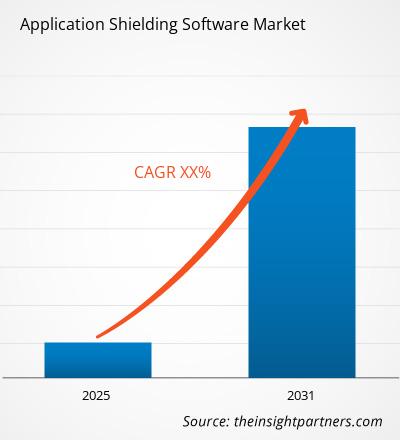
The global Application Shielding Software market was valued at US$ 1.34 billion in 2025 and is expected to reach US$ 3.48 billion by 2034; it is estimated to record a CAGR of 11.19% during 2026-2034.
Application Shielding Software Market Assessment and Insights
- North America accounted for 36–39% share in 2025 and is expected to grow at a CAGR of 11.8–12.6% during 2026–2034, driven by mobile fraud controls and compliance-led procurement.
- U.S. represented 78–82% of North America in 2025 and is projected to expand at a CAGR of 11.9–12.7%, led by BFSI, healthcare, and software vendors.
- Europe held 25–28% share in 2025 and may grow at a CAGR of 11.0–11.8%, with the UK, Germany, and France leading regulated enterprise adoption.
- Asia Pacific captured 22–25% share in 2025 and is forecast to record a CAGR of 13.6–14.8%, supported by China, India, Japan, South Korea, and Australia.
- Largest Segment: Cloud deployment held 58–62% share in 2025 and is projected to grow at a CAGR of 13.1–14.0%, reflecting API-driven delivery and CI/CD integration.
- High Growth Segment: Mobile devices held 62–66% share in 2025 and may grow at a CAGR of 13.8–15.0%, as mobile banking, payments, gaming, and streaming expand.
- Key companies analyzed in detail: Digital.ai Software, Inc., Cloud Security Alliance, Data Theorem, Inc., DNP HyperTech Co., Ltd., Entersekt International Limited, Intertrust Technologies Corporation, OneSpan Inc., Promon AS, Trustonic Limited, Thales Group, Guardsquare NV, Appdome Inc., and Zimperium, Inc.
Source: The Insight Partners' analysis based on proprietary research, government publications, company annual reports, investor presentations, industry databases, and expert interviews.
Application protection has evolved from post-development testing into embedded runtime defense. Vendors now combine obfuscation, anti-debugging, anti-tampering, white-box cryptography, and RASP-style controls to protect applications at rest and during execution. The application shielding software market growth is closely tied to faster release cycles, lower tolerance for app fraud, and increased security automation inside DevSecOps workflows.
For the period under consideration, procurement will extend from banking and payments to connected cars, digital health, media subscriptions, government citizen applications, and enterprise mobility. Investment is moving away from unsheltered build pipelines to policy-driven risk response and telemetry-driven security, which assists the security team in focusing on relevant threats while ensuring a good user experience.
Application Shielding Software Market Report Scope
| Report Attribute | Details |
|---|---|
| Market size in 2025 | US$ 1.34 Billion |
| Market Size by 2034 | US$ 3.48 Billion |
| Global CAGR (2026 - 2034) | 11.19% |
| Historical Data | 2021-2024 |
| Forecast period | 2026-2034 |
Application Shielding Software Market Analysis
Demand is being shaped by mobile-first service delivery, rising API exposure, and attacker interest in client-side code. The application shielding software market growth is reinforced by the need to defend applications after deployment, where traditional perimeter tools provide limited visibility. Enterprises increasingly seek controls that detect rooted devices, emulators, hooking frameworks, code modification, overlay attacks, and abnormal runtime behavior before transactions or sensitive workflows proceed.
The market comprises specialized application security companies, identity and fraud solutions vendors, cloud security solutions, and major cybersecurity firms. The delivery mechanisms have evolved from being manually SDK-integrated to becoming build-time automated, thus allowing for application security hardening without code changes during deployment. The dynamics of the supply chain favor vendors who provide wide platform capabilities, policy configuration, performance savings, and compliance.
Competitive positioning is defined by depth of mobile protection, ease of integration, fraud intelligence, and support for Android, iOS, desktop, and cloud-facing applications. The application shielding software market analysis shows that Digital.ai Software, Inc., OneSpan Inc., Promon AS, Guardsquare NV, Appdome Inc., and Zimperium, Inc. compete through automation, runtime telemetry, and specialized mobile defense capabilities.
Investments made by organizations tend to be strategic in nature, with regard to the use of AI for threat identification, fraud protection, continuous monitoring, and enterprise reporting. Strategic partnerships have become essential with banks, payment gateways, digital identity service providers, and regulated software companies as customers now assess the shielding solution along with their zero-trust security program.
● REPORT CUSTOMIZATION
Tailor This Report To Align With Your Specific Business Requirements
This report can be customized to align precisely with your business objectives, scope, and target markets. Customization options include tailored segmentation, geography, competitive analysis, and strategic insights to support informed decision-making.
Customize This Report →WHAT YOU CAN ADJUST
- ● Segmentations
- ● Geography
- ● Competitive Analysis
- ● Language Preferences
Application Shielding Software Market: Strategic Insights

Regional Insights
North America Application Shielding Software Market
North America led the application shielding software market share with 36–39% in 2025 and is expected to grow at a CAGR of 11.8–12.6% through 2034. Adoption is anchored in mobile banking, healthcare apps, digital identity, streaming media, and federal or state digital services, where runtime abuse can create direct financial and reputational exposure.
Security buyers in the region prioritize automated shielding inside development pipelines, device risk checks, anti-tamper responses, and evidence for audits. U.S. enterprises remain the largest spending base, while Canada contributes through banking modernization, privacy obligations, and public-sector digitization that require stronger protection for consumer-facing mobile applications.
U.S. Application Shielding Software Market
The U.S. accounted for 78–82% of the North American market in 2025 and is forecast to grow at a CAGR of 11.9–12.7% during the study period. According to the Application Shielding Software Market report, demand is concentrated in BFSI, healthcare, government, gaming, and media sectors, where high transaction volumes, sensitive customer data, and valuable intellectual property increase the need for robust in-app defense solutions.
Large banks and application developers use shielding to address overlay attacks, app repackaging, malware interaction, and reverse engineering. Vendor presence is strong, with Digital.ai Software, Inc., Data Theorem, Inc., Intertrust Technologies Corporation, OneSpan Inc., Appdome Inc., and Zimperium, Inc. supporting enterprise-grade deployments and partner ecosystems.
Europe Application Shielding Software Market
Europe held 25–28% share in 2025 and is projected to grow at a CAGR of 11.0–11.8%. GDPR, PSD2-related assurance expectations, healthcare data protection, and digital identity programs support steady adoption. Use case leaders include the UK for banks, Germany for automotive software, industrial platforms, and enterprise mobile security solutions.
Use cases continue to grow in France, Italy, and Spain by way of payment applications, media platforms, insurance websites, and government digital services. European buyers frequently insist on risk transparency, privacy-aware telemetry, regional data processing, and secure-development governance compatibility.
APAC Application Shielding Software Market
APAC represented 22–25% share in 2025 and is expected to grow at a CAGR of 13.6–14.8%, the fastest regional pace. China, India, Japan, South Korea, and Australia are increasing investment in mobile payments, super-app ecosystems, gaming, connected vehicles, and digital public infrastructure as they expand.
Adoption is strongest where high app volumes meet fraud risk and regulatory attention. India and Southeast Asia support cloud-delivered protection, Japan and South Korea emphasize device integrity and gaming security, while Australia’s banking and government sectors require resilient mobile services with measurable runtime controls.
Middle East & Africa Application Shielding Software Market
The Middle East & Africa is forecast to grow at a CAGR of 12.2–13.4% during 2026–2034. Saudi Arabia and the UAE lead adoption through digital government, banking modernization, tourism platforms, and smart infrastructure programs, while South Africa contributes demand from financial services and telecom-led mobile commerce.
The region remains at an earlier stage than North America or Europe, but risk awareness is rising as mobile payment penetration and citizen-service apps increase. Buyers often favor cloud-based shielding that can be deployed quickly, managed centrally, and aligned with national cybersecurity and critical infrastructure priorities.
Segmentation Analysis
Deployment Type
Deployment Type is expected to grow at a CAGR of 12.4–13.3% during 2026–2034. The application shielding software market scope across deployment types reflects enterprise preference for scalable protection, integration with release pipelines, and internal control over sensitive application logic. Cloud models dominate new purchases, while on-premise remains relevant in banks, defense, and highly regulated environments.
- On-Premise remains important for organizations requiring complete control over application code, policies, cryptographic materials, and audit evidence, especially in government, defense, core banking, and high-assurance enterprise environments.
- Cloud leads adoption because it supports automated builds, faster policy updates, centralized reporting, distributed development teams, and easier scaling across large mobile and desktop application portfolios.
Application
Application is projected to grow at a CAGR of 13.0–14.1% during 2026–2034. Mobile devices remain the highest-growth use case because consumer transactions, identity checks, payments, and entertainment services increasingly occur on exposed endpoints. Computers continue to require protection where desktop software contains intellectual property, licensing logic, or sensitive local processing.
- Mobile Devices dominate demand due to banking apps, digital wallets, healthcare portals, streaming services, and games that face malware, rooting, emulation, repackaging, overlay fraud, and reverse-engineering attempts.
- Computers support steady adoption in licensed software, enterprise tools, gaming clients, and regulated desktop applications where anti-tamper controls protect intellectual property and high-value workflows.
Industry
Industry is expected to grow at a CAGR of 12.1–13.2% during 2026–2034. BFSI remains the anchor vertical, but healthcare, government, entertainment, and automotive are expanding adoption. Buyers use shielding to protect transactions, personal data, premium content, digital keys, diagnostic workflows, and secure access mechanisms across consumer and enterprise-facing applications.
- Automotive adoption is rising as connected vehicle apps, digital keys, charging platforms, and infotainment software require stronger protection against tampering and unauthorized access.
- BFSI remains the leading industry because banks, fintechs, and payment providers require runtime controls to reduce fraud, protect credentials, and support regulated digital transactions.
- Entertainment uses shielding to protect premium content, gaming logic, subscription access, in-app purchases, and anti-piracy mechanisms across mobile and desktop channels.
- Healthcare adoption is increasing as patient portals, telehealth apps, and digital therapeutics handle sensitive data and require secure execution on potentially compromised devices.
- Government demand reflects digital identity, citizen services, tax portals, and public safety applications that must withstand tampering while maintaining secure access at scale.
Opportunity Snapshot
| Industry | Revenue Contribution | Trend Tag | Adoption Stage |
| Automotive | Medium | Digital Keys | Scaling |
| BFSI | High | Mobile Fraud | Mature |
| Entertainment | Medium | Content Defense | Scaling |
| Healthcare | Medium | Patient Apps | Scaling |
| Government | Medium | Citizen Identity | Emerging |
Application Shielding Software Market Growth Drivers and Impact Analysis
Rising Mobile Fraud and Runtime Attack Exposure
Payment transactions, credentials, identities, healthcare records, and premium content have started being processed by mobile applications beyond protected enterprise networks. Attackers use methods such as root attacks, emulation, overlays, repackaging, and code injection to circumvent conventional security measures. Thus, there is a need for application shielding that can detect runtime attacks and take appropriate actions. There is a particularly high requirement in the BFSI, entertainment, and healthcare sectors due to potential loss, compliance pressures, and erosion of trust.
DevSecOps Integration and Faster Release Cycles
Businesses have shortened their release cycles, making it increasingly difficult for them to manage manual security hardening. The use of security products that offer protection to platforms that interact with CI/CD tools makes it easier for developers to implement code obfuscation, code tamper checking, and runtime security without affecting the release schedule. There is now a valid purchasing motivation because security groups get the necessary defense, and product teams are able to maintain their speed.
Regulatory and Compliance Pressure on Digital Services
There is more demand for data protection in regulated industries as well as protection of payments, health information, and government transactions. While there are very few regulatory frameworks that specifically suggest one approach to shield their systems, they recommend that better management be done in order to manage software, access, and data security. This will assist organizations to prove their due diligence efforts in terms of limiting reverse engineering, modifications, and interaction with malware.
Application Shielding Software Market Future Trends
AI-Assisted Runtime Risk Scoring
Application shielding software market trends increasingly point toward intelligent runtime scoring rather than static allow-or-block rules. It is important that vendors augment telemetry with information about device posture, behavioral deviations, malware signals, hooking operations, and transactional context. AI-augmented solutions can assist in identifying the riskiest sessions and decreasing friction for good actors. The future development of this approach will make it possible to adopt it in the financial sector and healthcare, where the tradeoff between usability and risk should be managed well.
Unified Mobile App Defense Platforms
Future solutions will be consolidating app shielding, fraud prevention, bot detection, jailbreak detection, code obfuscation, and reporting compliance into comprehensive mobile defense solutions. The buyers will want fewer systems and more visibility within different apps, geographies, and divisions. The trend will benefit vendors that offer automation of security, analytical features, and response policy flexibility. There is potential for partnership among app shielding vendors, identity service providers, payment gateways, and cloud security platforms.
Application Shielding Software Market Opportunities
Expansion in Digital Banking and Wallet Ecosystems
The strongest application shielding software market Forecasts are linked to digital banking, wallets, instant payments, and fintech ecosystems. These applications run on unmanaged devices and are popular targets for malware, overlay attacks, credential harvesting, and transaction manipulations. The vendors can capitalize on this trend by providing pre-configured banking policies, fraud intelligence and monitoring, compliance dashboards, and easy deployment. APAC, the Middle East, and Latin American banks present a particular opportunity for mobile-first financial services.
Protection for Connected Vehicle and Smart Infrastructure Apps
Connected vehicles, charging, mobility, and smart infrastructure use cases present new opportunity areas, as any compromise of the application will impact access, transactions, user data, and services. Shielding can help to safeguard digital keys, firmware companion applications, infotainment control systems, and service platforms from tampering and reverse engineering. Vendors who comply with automotive cybersecurity standards and cloud-connected mobility workflows have an additional growth route apart from BFSI in the mid-term.
Frequently Asked Questions

- Comprehensive Market Sizing and Forecast Analysis
- Detailed Segmentation Analysis
- In-Depth Market Dynamics Assessment
- Regional and Country-Level Insights
- Competitive Landscape and Company Benchmarking
- Strategic Business Intelligence
Recent Reports
Testimonials

The Insight Partners provided valuable market intelligence that supported our global go-to-market strategy. Their team was professional, responsive, and attentive to our feedback, providing thoughtful analysis and helpful methodological clarifications throughout the project.
Junmo Kim Chief Financial Officer (CFO), Enertech Co., Ltd.
The Insight Partners' SCADA System Market report is comprehensive, with valuable insights on current trends and future forecasts. The team was highly professional, responsive, and supportive throughout. We are very satisfied and highly recommend their services.
RAN KEDEM Partner, Reali Technologies LTDs
I requested a report on a very specific software market and the team produced the report in a few days. The information was very relevant and well presented. I then requested some changes and additions to the report. The team was again very responsive and I got the final report in less than a week.
JEAN-HERVE JENN Chairman, Future Analytica
We worked with The Insight Partners for an important market study and forecast. They gave us clear insights into opportunities and risks, which helped shape our plans. Their research was easy to use and based on solid data. It helped us make smart, confident decisions. We highly recommend them.
PIYUSH NAGPAL Sr. Vice President, High Beam Global
The Insight Partners delivered insightful, well-structured market research with strong domain expertise. Their team was professional and responsive throughout. The user-friendly website made accessing industry reports seamless. We highly recommend them for reliable, high-quality research services
YUKIHIKO ADACHI CEO, Deep Blue, LLC.
This is the first time I have purchased a market report from The Insight Partners.While I was unsure at first, I visited their web site and felt more comfortable to take the risk and purchase a market report.I am completely satisfied with the quality of the report and customer service. I had several questions and comments with the initial report, but after a couple of dialogs over email with their analyst I believe I have a report that I can use as input to our strategic planning process.Thank you so much for taking the extra time and making this a positive experience.I will definitely recommend your service to others and you will be my first call when we need further market data.
JOHN SUZUKI President and Chief Executive Officer, Board Director, BK Technologies
I wish to appreciate your support and the professionalism you displayed in the course of attending to my request for information regarding to infectious disease IVD market in Nigeria. I appreciate your patience, your guidance, and the fact that you were willing to offer a discount, which eventually made it possible for us to close a deal. I look forward to engaging The Insight Partners in the future, all thanks to the impression you have created in me as a result of this first encounter.
DR CHIJIOKE ONYIA MANAGING DIRECTOR, PineCrest Healthcare Ltd.Reason to Buy
- Informed Decision-Making
- Understanding Market Dynamics
- Competitive Analysis
- Identifying Emerging Markets
- Customer Insights
- Market Forecasts
- Risk Mitigation
- Boosting Operational Efficiency
- Strategic Planning
- Investment Justification
- Tracking Industry Innovations
- Aligning with Regulatory Trends





 Get Free Sample for