
Arrhythmia Treatment Devices Market Demand, Size & Forecast by 2034
Coverage: By Treatment Type (Defibrillator, Cardioversion, Catheter Ablation, Pacemaker, ICD); End User (Hospital, Clinic, Others) , and Geography (North America, Europe, Asia Pacific, and South and Central America)
- Status : Data Released
- Report Code : TIPRE00008166
- Category : Life Sciences
- No. of Pages : 150
- Available Report Formats :


- Last update date : September 02, 2026


2025 Market Size
US$ 20.74 Bn
Base year value
2034 Forecast
US$ 32.89 Bn
Projected by 2034
CAGR 2026-2034
5.26 %
Growth rate
Addressable Market
US$ 243.31 Bn
(2026-2034)
The arrhythmia treatment devices market is positioned at the intersection of electrophysiology innovation, cardiac rhythm management, and hospital-based procedural care. The market is valued at US$ 20.74 Billion in 2025 and is projected to reach US$ 32.89 Billion by 2034, expanding at a CAGR of 5.26% during 2026–2034. Demand is supported by increasing arrhythmia diagnosis, procedural adoption, device replacement cycles, and continuing innovation across ablation and implantable rhythm-management technologies.
North America remains a structurally attractive market, supported by established electrophysiology infrastructure, comparatively high procedure volumes, and reimbursement pathways for advanced cardiac devices. The regional market is expected to expand at approximately 5.0–5.8% CAGR between 2026 and 2034. Growing atrial fibrillation intervention, broader adoption of pulsed-field ablation, and replacement demand for implanted devices are expected to sustain the regional arrhythmia treatment devices market size.
Arrhythmia Treatment Devices Market Assessment and Insights
- North America: North America is expected to represent a 39–43% arrhythmia treatment devices market share in 2025 and expand at a 5.0–5.8% CAGR between 2026–2034, supported by advanced electrophysiology infrastructure, reimbursement coverage, and high adoption of implantable rhythm-management technologies.
- US: The US is expected to account for 88–92% of North America's 2025 market, expanding at a 4.9–5.7% CAGR between 2026–2034 as ablation volumes and replacement procedures increase.
- Europe: Europe is projected to hold a 27–31% share in 2025 and grow at a 4.7–5.5% CAGR during 2026–2034. Germany, the UK, France, Italy, and Spain remain important markets because of established cardiac centers and electrophysiology capabilities.
- Asia Pacific: Asia Pacific is estimated at a 20–24% share in 2025, with a 6.0–6.8% CAGR through 2034. China, Japan, South Korea, India, and Australia are supported by expanding cardiac infrastructure and increasing specialist capacity.
- Largest Segment: Defibrillator is expected to remain the largest treatment type, with a 29–34% market share in 2025 and a 4.8–5.6% CAGR during 2026–2034, reflecting established clinical utilization.
- High Growth Segment: Catheter Ablation is expected to hold a 18–22% market share in 2025 and achieve a 6.8–7.7% CAGR during 2026–2034, driven by electrophysiology innovation and AF treatment expansion.
- Key companies analyzed in detail: Medtronic, Boston Scientific Corporation, Abbott, Stryker, Medical Devices Business Services, Inc., Koninklijke Philips N.V., Biotronik, Cardiac Science Corporation (ZOLL Medical), SCHILLER, LivaNova PLC, Lepu Medical Technology (Beijing) Co., Ltd., MicroPort Scientific Corporation, and Bardy Diagnostics, Inc.
Source: The Insight Partners' analysis based on proprietary research, government publications, company annual reports, investor presentations, industry databases, and expert interviews.
The arrhythmia treatment devices market has advanced from the use of implantable rhythm correction devices to more advanced electrophysiology platforms, smaller implants, remote monitoring capabilities, 3D mapping, and selective energy ablation. Production processes have been becoming increasingly complex with advanced techniques being used in catheter design, software development, sensors and the application of biocompatible material. There is also an increasing technological advancement in pulsed field ablation, with Boston Scientific launching its FARAPULSE system in various new indications.
During the forecast period, there is an expectation that more investment will be made in electrophysiology laboratories, implantable device products and training in the developing countries. Regulatory approval of the next generation ablation devices will lead to more treatment choices, while aging population will ensure increased demands for replacement and first-time implants. There will be also increased interoperability of implanted devices and monitoring systems with clinical software.
Arrhythmia Treatment Devices Market Report Scope
| Report Attribute | Details |
|---|---|
| Market size in 2025 | US$ 20.74 Billion |
| Market Size by 2034 | US$ 32.89 Billion |
| Global CAGR (2026 - 2034) | 5.26% |
| Historical Data | 2021-2024 |
| Forecast period | 2026-2034 |
Arrhythmia Treatment Devices Market Analysis
The rising linkages between demand and atrial fibrillation, bradyarrhythmias, ventricular tachyarrhythmias, and the growing role of catheter-based treatment are major factors influencing the growth of the arrhythmia treatment devices industry. Consequently, diagnosis-to-treatment ratio, availability of procedures, replacement rate, and physician preference drive market growth. The value chain includes component suppliers, manufacturers of medical devices, contract manufacturers, regulatory organizations, distributors, electrophysiology labs, hospitals, and post procedure monitors providers.
The supply chains in the arrhythmia treatment devices market are markedly different from the treatment methodology. Pacemakers and ICDs rely on advanced semiconductors, batteries, sensors and leads, while ablation systems are based on specific catheters, generators, map systems, and access devices. The manufacturers of arrhythmia treatment devices tend to focus more and more on comprehensive procedural solutions rather than individual products. This may positively affect process efficiency, as well as increase switching costs for hospitals.
Competitive intensity remains high in implantable and electrophysiology segments. Medtronic, Abbott, and Boston Scientific Corp. have extensive cardiac product lines, whereas Biotronik and LivaNova PLC offer niche offerings for rhythm management. MicroPort Scientific Corp. and Lepu Medical Technology (Beijing) Co., Ltd. enhance competition in China and other price-sensitive geographies. Stryker, Koninklijke Philips N.V., and Medical Devices Business Services, Inc. offer adjacent capabilities in cardiovascular or technology sectors.
Strategic positioning in the arrhythmia treatment devices market is increasingly focused on clinical data, regulatory reach, physician education, and portfolio depth. Boston Scientific's FARAPULSE program demonstrates the need to develop an electrophysiology platform with a broader range of arrhythmia indications. Boston Scientific announced positive ADVANTAGE AF clinical data in 2025 and then received additional US label approval for persistent atrial fibrillation. Strategic focus is accordingly moving towards energy delivery, mapping, catheters, and procedural integration.
● REPORT CUSTOMIZATION
Tailor This Report To Align With Your Specific Business Requirements
This report can be customized to align precisely with your business objectives, scope, and target markets. Customization options include tailored segmentation, geography, competitive analysis, and strategic insights to support informed decision-making.
Customize This Report →WHAT YOU CAN ADJUST
- ● Segmentations
- ● Geography
- ● Competitive Analysis
- ● Language Preferences
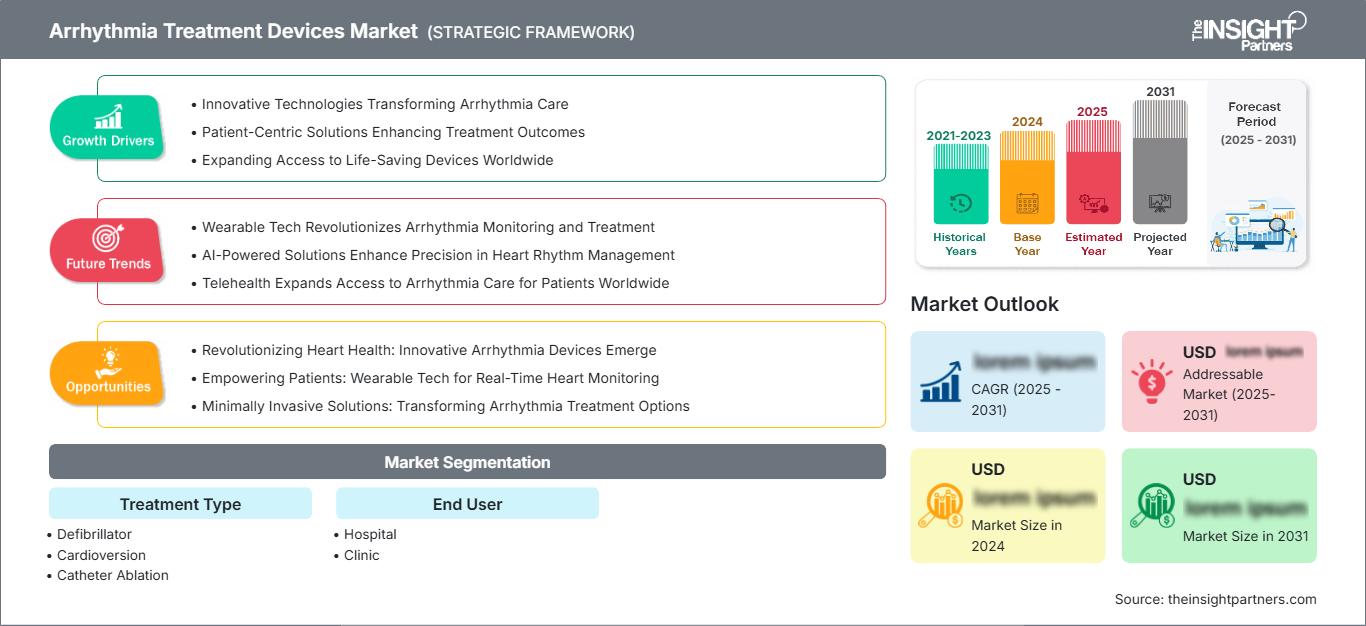
Arrhythmia Treatment Devices Market: Strategic Insights
Regional Insights
North America arrhythmia treatment devices market
North America is estimated to hold a 39–43% arrhythmia treatment devices market share in 2025 and is expected to grow at a 5.0–5.8% CAGR through 2034. The region enjoys well-developed electrophysiology labs, reimbursement structure, expertise availability, and adoption of implantable cardiac devices. The US is a major source of revenue while Canada offers an advanced yet smaller market driven by tertiary cardiac facilities.
Replacement surgeries, growth in atrial fibrillation interventions, and newer ablation technologies also play their role in demand generation. Hospitals have started to consider a full-fledged ecosystem for mapping, ablation, access, monitoring, and post-procedural follow-ups. The approval and evidence still play an important role in procurement, especially of high-end technology. These trends should keep North America ahead in the market while motivating manufacturers to develop differentiating systems.
U.S. arrhythmia treatment devices market
The US represents approximately 88–92% of North America's 2025 market and is expected to expand at a 4.9–5.7% CAGR through 2034. Its placement is due to considerable electrophysiology infrastructure, reimbursement of cardiac devices, and a need to replace many devices already installed. Medtronic, Abbott, Boston Scientific Corporation, and many other major players are well-represented clinically and commercially.
The application need in the arrhythmia treatment devices market covers pacemakers, ICDs, defibrillation, cardioversion, and catheter ablation. Atrial fibrillation plays a particular role in the development of electrophysiology procedures, while implantable devices continue being used in cases of bradyarrhythmia and sudden cardiac death. The American market is also the environment of early adoption of pulsed field ablation, advanced mapping, remote monitoring, and leadless technologies. An example of this is the expansion of FARAPULSE to persistent atrial fibrillation by Boston Scientific in 2025 FDA approval.
Europe arrhythmia treatment devices market
Europe is expected to account for 27–31% of the 2025 arrhythmia treatment devices market market and grow at a 4.7–5.5% CAGR through 2034, with Germany positioned as a leading country. The regional opportunity reflects established cardiac-care networks, increasing electrophysiology capacity, and substantial procedure volumes across major Western European economies.
In the UK, there is the presence of specialized electrophysiology facilities and increasing need for catheter rhythm therapy. Germany derives strength from its hospital network and procedure volumes, which are high enough to support implantable device therapies and ablation. France, Italy, and Spain are some other countries where opportunities exist, but depending on reimbursement, hospital density, specialization, and equipment purchase. In the 2025 ESC-EHRA Atlas, the median volume of ablation procedures for heart rhythm disorder was 432 per million people in Europe.
APAC arrhythmia treatment devices market
APAC is projected to represent 20–24% of the 2025 arrhythmia treatment devices market and grow at a 6.0–6.8% CAGR through 2034. China is expected to lead the region, followed by Japan, South Korea, India, and Australia. Expansion is supported by increasing cardiac infrastructure and specialist training.
China combines large patient volumes with domestic manufacturing development, while Japan and South Korea emphasize sophisticated rhythm-management technologies. India and Australia offer expanding procedural opportunities as cardiac centers increase capacity. Industrial localization, healthcare investment, and government efforts to improve access to advanced cardiovascular care should support regional adoption, although pricing and reimbursement remain important constraints.
Middle East & Africa arrhythmia treatment devices market
Middle East and Africa is expected to remain a smaller but developing market, with growth concentrated in Saudi Arabia, the UAE, and South Africa. Saudi Arabia is expected to lead regional demand, supported by healthcare modernization and investment in tertiary cardiac infrastructure.
The UAE is developing advanced specialist centers, while South Africa remains an important gateway for sophisticated cardiovascular procedures in sub-Saharan Africa. Rest of MEA markets remain constrained by specialist availability and procurement budgets. Healthcare infrastructure investment, hospital modernization, and broader access to energy-intensive electrophysiology laboratories should support a measured expansion at approximately 4.8–5.7% CAGR through 2034.
Segmentation Analysis
Treatment Type
The Treatment Type segment is expected to expand at a 5.1–5.9% CAGR during 2026–2034. Demand is distributed across implantable and procedural therapies, with selection determined by arrhythmia type, disease severity, clinical guidelines, physician expertise, and hospital capabilities. Catheter-based technologies are gaining strategic importance as electrophysiology centers adopt more sophisticated intervention platforms, while established implantable therapies retain substantial replacement-driven demand.
- Defibrillator: Defibrillators remain strategically important for acute rhythm correction and emergency cardiac care. Demand is supported by hospital emergency departments, critical-care settings, and continued requirements for reliable shock delivery and monitoring.
- Cardioversion: Cardioversion remains relevant for restoring sinus rhythm in selected tachyarrhythmia patients. Its position is supported by established clinical protocols and continued use alongside pharmaceutical and catheter-based treatment pathways.
- Catheter Ablation: Catheter ablation is increasingly important for rhythm modification, particularly atrial fibrillation. Technology development in energy delivery, mapping, and catheter design is improving procedural options for electrophysiology specialists.
- Pacemaker: Pacemakers maintain a mature clinical role in bradyarrhythmia management. Demand is sustained by aging populations, implantation eligibility, device replacement, and technological progression toward smaller and more physiologically responsive systems.
- ICD: ICDs remain essential for patients at elevated risk of life-threatening ventricular arrhythmias. Product differentiation increasingly involves sensing, programming, remote monitoring, battery longevity, and integration with broader cardiac-care pathways.
End User
The End User segment is forecast to grow at a 5.0–5.8% CAGR from 2026 to 2034. Hospitals are expected to retain the dominant role because complex implantations, electrophysiology procedures, emergency rhythm treatment, and postoperative monitoring require specialized infrastructure. Clinics will gradually gain relevance for selected follow-up and lower-complexity services as outpatient cardiac care expands.
- Hospital: Hospitals remain the primary treatment setting because they provide electrophysiology laboratories, cardiac surgery support, intensive monitoring, specialist teams, and reimbursement infrastructure required for complex arrhythmia interventions.
- Clinic: Clinics support consultation, device follow-up, selected cardioversion services, monitoring, and patient management. Their strategic importance increases as healthcare systems seek lower-cost pathways for appropriate non-acute cardiac care.
Opportunity Snapshot
| End User | Revenue Contribution (High/Medium/Low) | Trend Tag (MAX 2 words) | Adoption Stage |
|---|---|---|---|
| Hospital | High | EP Labs | Mature |
| Clinic | Medium | Remote Follow-up | Scaling |
Arrhythmia Treatment Devices Market Growth Drivers and Impact Analysis
Rising Atrial Fibrillation Intervention Volumes
The prevalence of atrial fibrillation is driving the broadening of the treatment funnel for electrophysiology products as diagnostics, risk stratification, and pathway refinement continues to evolve. The number of patients with AF globally is high, and rising awareness in the clinical setting is shifting patients from management of symptoms to rhythm control procedures. The market influence will extend beyond the ablation catheter to the mapping system, access devices, and post-procedure monitoring. A company with a full portfolio of products can thus be able to leverage multiple parts of a single procedure. The example of Boston Scientific expanding the FARAPULSE label indication to persistent AF by 2025 showcases how an expanded indication directly broadens the application of a procedure.
Expansion of Advanced Electrophysiology Infrastructure
The development of electrophysiology laboratories due to investments being made is helping create a capacity for procedures which previously were limited to being conducted only in major academic centers. The setting up of new laboratories involves the acquisition of capital equipment, mapping systems, ablation generators, catheters, monitoring facilities, and professionals. Infrastructure development has special relevance for the Asia Pacific region and the Middle East, where tertiary hospitals are developing their cardiovascular capabilities. Well-established European markets are also expanding their procedure capacity, in areas where waiting list issues and specialization of certain professionals have created gaps. For medical device companies, infrastructure development opens up possibilities for technology standardization via training and bundling of procedure offerings.
Replacement Demand and Device Longevity Management
Implantable technologies create recurrent demand as batteries, leads, generators, and related components need periodic evaluation and replacement. With the increasing number of implanted pacemakers and ICDs, there is a stable pattern of replacement for the manufacturers even if the rate of new implants slows down. Remote monitoring could further reinforce such dynamics by providing early detection of depleted batteries, problems with leads, and rhythm changes. The business implication here is the transition from the sale of devices to management of patients through time. Companies who have both hardware as well as the ability to monitor and manage data would retain more patients within their installed base. Hospitals take into account the life cycle costs including battery life, complication rates, programming options, and the burden of follow up when purchasing devices.
Arrhythmia Treatment Devices Market Future Trends
Expansion of Pulsed-Field Ablation Platforms
The role of pulsed-field ablation is expected to increase in electrophysiology toolkits with increasing clinical data, approval, and physician experience. The system's non-thermal mechanism of energy generation is gaining interest for atrial fibrillation treatment and beyond. Positive clinical data was seen by Boston Scientific for the year 2025 in persistent AF patients and the company later widened FARAPULSE label in the US. Competition going forward will depend on catheter flexibility, lesion creation, integration of mapping, procedure time, and evidence in challenging patient populations. With platform development, the companies will aim at expanding their indications and integrating systems. This can eventually change the buying criterion from catheter to procedure-based system.
Convergence of Devices and Continuous Rhythm Intelligence
The arrhythmia treatment devices market trends show that future development will increasingly connect implanted devices, wearable monitoring, remote follow-up, and clinical decision-support platforms. Continuous rhythm data can help clinicians identify changes earlier and prioritize patients requiring intervention, while device manufacturers gain opportunities to provide longitudinal services around implanted hardware. Artificial intelligence may contribute to signal interpretation, risk stratification, and workflow prioritization, although clinical validation and regulatory oversight will remain essential. Remote monitoring can also reduce unnecessary in-person visits and improve follow-up efficiency for large installed populations. Over time, interoperability will become a competitive differentiator as hospitals seek systems capable of sharing information across device categories. Vendors with hardware, software, connectivity, and clinical-data capabilities should therefore have stronger opportunities to build integrated cardiac-care ecosystems.
Arrhythmia Treatment Devices Market Opportunities
Localized Manufacturing and Tiered Product Strategies
Manufacturers can pursue localized production and tiered product strategies in price-sensitive markets where advanced arrhythmia treatment remains constrained by affordability. China, India, Southeast Asia, Latin America, and selected Middle Eastern countries offer opportunities to combine lower manufacturing costs with locally appropriate specifications. Domestic production can shorten supply chains, improve tender competitiveness, and support government objectives for medical-device localization. However, localization should prioritize components with meaningful cost or logistics advantages rather than simply duplicating high-complexity manufacturing. Companies should also develop differentiated portfolios covering premium hospitals and value-oriented institutions. Strategic partnerships with regional distributors, cardiac centers, and training institutions can accelerate adoption while reducing market-entry friction. Such strategies may broaden access without requiring premium-market pricing models to be replicated universally.
Integrated EP Workflow and Service Platforms
The arrhythmia treatment devices market Forecasts point toward stronger commercial potential for integrated electrophysiology platforms combining mapping, ablation, access, monitoring, and analytics. Suppliers can pursue partnerships or acquisitions that close portfolio gaps and provide hospitals with standardized procedural workflows. The opportunity is particularly relevant where hospitals are building new EP laboratories and need multiple technologies simultaneously. Integrated platforms can improve training consistency, simplify procurement, and create recurring revenue through disposable catheters, software, service agreements, and upgrades. Companies should prioritize interoperability and evidence generation because hospitals increasingly assess workflow economics alongside clinical outcomes. A platform strategy can also create switching barriers without relying solely on device differentiation, making it a potentially durable approach for competing in mature markets.
Recent Developments
- November 2025: Boston Scientific Corporation received the CE mark for the FARAPOINT Pulsed Field Ablation Catheter for treatment of right atrial flutter. The approval expanded the FARAPULSE platform into another cardiac arrhythmia indication and strengthened its European electrophysiology portfolio. The development demonstrates continued movement toward broader PFA applications beyond atrial fibrillation.
- July 2025: Boston Scientific Corporation received US FDA approval expanding FARAPULSE labeling to include pulmonary vein and posterior wall ablation for drug-refractory symptomatic persistent atrial fibrillation. The decision broadened the system's clinical application and reinforced the strategic importance of PFA for complex AF treatment.
- April 2025: Boston Scientific Corporation announced positive 12-month primary endpoint results from the second phase of the ADVANTAGE AF study evaluating FARAPULSE with FARAPOINT in persistent atrial fibrillation. The results supported continued clinical development of PFA and were presented alongside scientific dissemination at the 2025 PFA Live Case Summit.
Frequently Asked Questions

- Comprehensive Market Sizing and Forecast Analysis
- Detailed Segmentation Analysis
- In-Depth Market Dynamics Assessment
- Regional and Country-Level Insights
- Competitive Landscape and Company Benchmarking
- Strategic Business Intelligence
Recent Reports
Testimonials

The Insight Partners provided valuable market intelligence that supported our global go-to-market strategy. Their team was professional, responsive, and attentive to our feedback, providing thoughtful analysis and helpful methodological clarifications throughout the project.
Junmo Kim Chief Financial Officer (CFO), Enertech Co., Ltd.
The Insight Partners' SCADA System Market report is comprehensive, with valuable insights on current trends and future forecasts. The team was highly professional, responsive, and supportive throughout. We are very satisfied and highly recommend their services.
RAN KEDEM Partner, Reali Technologies LTDs
I requested a report on a very specific software market and the team produced the report in a few days. The information was very relevant and well presented. I then requested some changes and additions to the report. The team was again very responsive and I got the final report in less than a week.
JEAN-HERVE JENN Chairman, Future Analytica
We worked with The Insight Partners for an important market study and forecast. They gave us clear insights into opportunities and risks, which helped shape our plans. Their research was easy to use and based on solid data. It helped us make smart, confident decisions. We highly recommend them.
PIYUSH NAGPAL Sr. Vice President, High Beam Global
The Insight Partners delivered insightful, well-structured market research with strong domain expertise. Their team was professional and responsive throughout. The user-friendly website made accessing industry reports seamless. We highly recommend them for reliable, high-quality research services
YUKIHIKO ADACHI CEO, Deep Blue, LLC.
This is the first time I have purchased a market report from The Insight Partners.While I was unsure at first, I visited their web site and felt more comfortable to take the risk and purchase a market report.I am completely satisfied with the quality of the report and customer service. I had several questions and comments with the initial report, but after a couple of dialogs over email with their analyst I believe I have a report that I can use as input to our strategic planning process.Thank you so much for taking the extra time and making this a positive experience.I will definitely recommend your service to others and you will be my first call when we need further market data.
JOHN SUZUKI President and Chief Executive Officer, Board Director, BK Technologies
I wish to appreciate your support and the professionalism you displayed in the course of attending to my request for information regarding to infectious disease IVD market in Nigeria. I appreciate your patience, your guidance, and the fact that you were willing to offer a discount, which eventually made it possible for us to close a deal. I look forward to engaging The Insight Partners in the future, all thanks to the impression you have created in me as a result of this first encounter.
DR CHIJIOKE ONYIA MANAGING DIRECTOR, PineCrest Healthcare Ltd.Reason to Buy
- Informed Decision-Making
- Understanding Market Dynamics
- Competitive Analysis
- Identifying Emerging Markets
- Customer Insights
- Market Forecasts
- Risk Mitigation
- Boosting Operational Efficiency
- Strategic Planning
- Investment Justification
- Tracking Industry Innovations
- Aligning with Regulatory Trends





 Get Free Sample for